
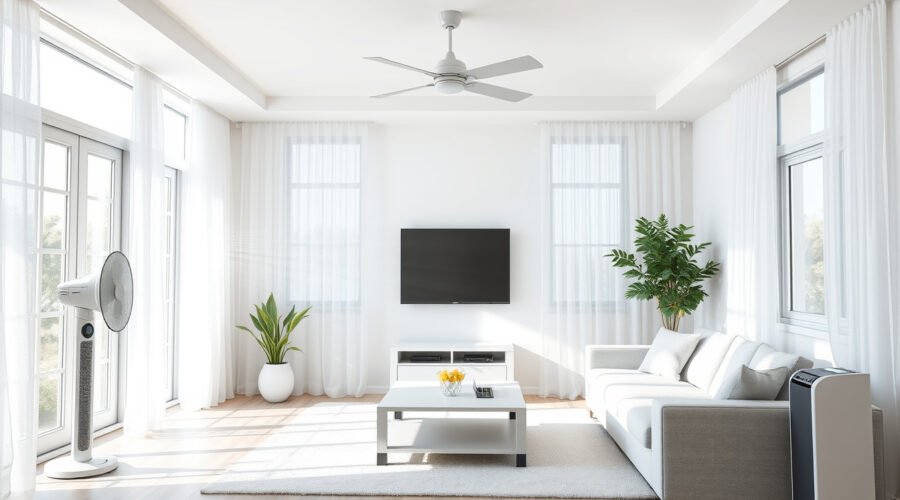
A stuffy living room usually needs a mix of fresh outdoor air, better air movement, cleaner filtration, and humidity control. Start with the simple fixes: open safe airflow paths, use fans intentionally, keep vents clear, and maintain your HVAC filter. Then add an appropriately sized air purifier if dust, smoke, pollen, pet dander, or odors are part of the problem.
Quick Answer
To improve air circulation in a living room, open windows and doors when outdoor air is clean, create cross-ventilation, place fans to move air through the room instead of into a wall, keep vents and returns unblocked, replace dirty HVAC filters, manage humidity around 30% to 50%, and use a properly sized air purifier.
Key Takeaways
- Open windows only when outdoor air quality, pollen, humidity, and weather are reasonable.
- Cross-ventilation works best when air can enter from one side and leave from another without furniture blocking the path.
- Fans move air; they do not clean it or lower the actual room temperature.
- A portable air cleaner works best when its CADR or recommended room size matches your living room.
- Dirty HVAC filters, blocked vents, and high humidity can make a room feel stale even when the fan is running.
At a Glance
| Time Required | 10 minutes for quick fixes; 30–60 minutes for a full airflow check |
| Difficulty | Easy |
| Tools Needed | Fans, clean HVAC filter, hygrometer, vacuum, optional portable air cleaner |
| Cost | $0 for window and furniture changes; usually $10–$40 for a filter or hygrometer; more for an air purifier |
Check Outdoor Air Before Opening Windows
Opening windows can quickly refresh a living room, but it is not always the right first move. Before you bring outside air in, consider outdoor smoke, heavy traffic pollution, pollen, high humidity, extreme heat, and strong odors nearby. The EPA’s indoor air quality guidance explains that ventilation can dilute indoor pollutants, but outdoor pollutant sources should be evaluated before using ventilation as the fix.
Warning: Do not open windows for “fresh air” during wildfire smoke, nearby construction dust, chemical odors, high-pollen periods that trigger symptoms, or very humid weather. Use filtration, source control, and HVAC circulation instead.
Open Windows for Fresh Air Exchange
When outdoor air is cleaner than indoor air, open windows and doors to replace stale indoor air with fresh air. The best setup is not always “open every window.” Instead, create a clear route for air to enter and leave.
- Open one intake window on the side where air is coming from.
- Open one exit window or door across the room or down the hall.
- Keep interior doors open so air does not dead-end in the living room.
- Use window screens to keep insects and debris out.
- Close windows again when the room feels refreshed or outdoor conditions change.
If your living room has only one window, open the room door and use a fan near the doorway to help pull stale air out or push fresher air in from another part of the home.
Use Cross-Ventilation Techniques
Cross-ventilation works by giving air a path across the living room. It is strongest when openings are on opposite or adjacent walls, but you can still improve airflow in less ideal layouts.
Optimize Window and Door Placement
Open the window or door on the breezier side of the home slightly, then open a second window or door wider on the opposite side. This can help draw air through the room instead of letting it swirl near one opening. If the air path crosses a sofa, bookcase, curtain, or entertainment center, move the obstruction or choose a different opening.
Enhance Airflow Paths
Walk the likely air path from the intake opening to the exit opening. Remove anything that blocks that route, including tall plants, heavy curtains, stacked storage, or furniture pressed tightly against vents. Air moves best through open pathways, around low-profile furniture, and through doorways that remain fully open.
Use High and Low Openings When Possible
Warm air rises. If your living room has a high transom, upper window, stairwell, or nearby upstairs opening, use it as an exhaust point while cooler air enters from a lower window or doorway. This can help move trapped warm air out of the room.
Pro Tip: Use a tissue test. Hold a tissue near the doorway, vent, or window. If it barely moves, adjust your fan or open a second exit point until you can see a steady pull or push of air.
Position Fans to Enhance Air Circulation
Fans are most useful when they move air through a room instead of blasting air into a wall or directly into one person’s face. Keep fan backs and fronts clear so the motor can pull and push air freely.
- Ceiling fans: In warm weather, use the setting that creates a downward breeze. On many reversible fans, that is counterclockwise when viewed from below, but check your fan manual because designs vary.
- Oscillating fans: Place them where they can sweep across the seating area and toward the main exit path.
- Floor or tower fans: Aim them across the room, not straight into furniture.
- Window fans: Use one fan to exhaust stale air out, or use two fans in separate windows: one pulling outdoor air in and one pushing indoor air out.
Turn fans off when you leave the room if comfort is the only goal. Fans make people feel cooler by moving air over skin, but they do not lower the actual room temperature.
Recommended Products

𝗢𝗻𝗲 𝗙𝗮𝗻 𝗳𝗼𝗿 𝗔𝗹𝗹 𝗬𝗼𝘂𝗿 𝗡𝗲𝗲𝗱𝘀: From a gentle breeze to a powerful wind, it adapts to your everyday needs with up to 28 ft/s airflow and a wide oscillation angle to deliver fast, whole-room cooling

𝑾𝒉𝒐𝒍𝒆-𝒓𝒐𝒐𝒎 𝑨𝒊𝒓𝒇𝒍𝒐𝒘 𝑷𝒐𝒘𝒆𝒓: The DREO fan for bedroom delivers powerful airflow up to 100 ft with 1000 CFM. Advanced Air Circulation Technology helps distribute airflow throughout the room in just 1 min for spaces up to 105 ft². (TurboPoly Fan 508S)
Use Air Purifiers for Cleaner Air
Air purifiers do not create fresh air, but they can reduce airborne particles when they are properly sized and maintained. The EPA’s guide to air cleaners in the home recommends choosing a portable air cleaner with a CADR large enough for the room where it will be used.
Recommended Products

WHY CHOOSE AHAM VERIFIDE AIR PURIFIERS: AHAM (Association of Home Appliance Manufacturers) is an ANSI-accredited organization that sets strict standards for appliance performance. Air purifiers with the AHAM VERIFIDE seal have been independently tested for air cleaning performance and energy efficiency. When you choose an AHAM certified air purifier, you're choosing a product trusted for reliable and effective indoor air quality improvement

Effortless Operation: Simplified control panel with intuitive design makes it easy to operate. No complicated setup—just one tap, and you're on your way to cleaner air, saving time and letting you relax with ease
Select the Right Size
Measure your living room’s length and width, then multiply them to estimate square footage. Compare that number with the purifier’s recommended room size or CADR. A purifier that is too small may run constantly without making much difference, especially in open-plan living rooms or rooms with high ceilings.
Choose the Right Filter Type
- For dust, pollen, pet dander, smoke particles, and fine particles: choose a portable cleaner with a high-efficiency particle filter and an appropriate CADR.
- For odors and some gases: choose a model with activated carbon or another gas-phase filter. Particle-only filters are not designed to remove gases.
- For best performance: replace filters on schedule and run the unit at a fan speed that still moves enough air for the room.
Note: Avoid relying on houseplants as an air-cleaning strategy. Plants can make a room feel more pleasant, but they are not a substitute for source control, ventilation, filtration, or humidity control. Overwatered soil can also add moisture and support microbial growth.
Manage Humidity for Better Airflow
A living room can feel stuffy even when air is moving if humidity is too high. The EPA’s mold and moisture guidance recommends keeping indoor humidity below 60% and ideally between 30% and 50% relative humidity.
For comfort and mold prevention, aim for about 30% to 50% indoor relative humidity, and act quickly when condensation appears on windows, walls, or pipes.
- Use a hygrometer to measure humidity instead of guessing.
- Run a dehumidifier if the living room often stays above 50% to 60% relative humidity.
- Fix leaks and damp materials quickly, especially around windows, exterior walls, and carpets.
- Use kitchen and bathroom exhaust fans when cooking, showering, or running hot water nearby.
- Do not overwater plants or let damp soil sit in decorative pots.
Arrange Furniture for Optimal Airflow
Furniture placement can make or break airflow. Even a strong HVAC system will struggle if the supply vent, return grille, or main air path is blocked.
- Keep sofas, media consoles, rugs, and curtains away from supply vents and return grilles.
- Leave several inches of space between large furniture and walls so air can move behind it.
- Use low-profile furniture when possible to keep air paths open.
- Avoid placing tall bookcases or room dividers directly between a window and the rest of the room.
- Vacuum vents and returns regularly so dust buildup does not restrict airflow.
Maintain HVAC Systems and Filters Regularly
Your HVAC system can help circulate and filter air, but it needs a clean filter and unobstructed vents. The U.S. Department of Energy’s air conditioner maintenance guidance explains that dirty, clogged filters reduce airflow and efficiency, and that filters should be cleaned or replaced according to manufacturer or HVAC contractor guidance.
- Check filters monthly during heavy heating or cooling seasons.
- Replace or clean filters every 1–3 months, or more often if you have pets, dust, smoke, renovations, or constant HVAC use.
- Use the highest-efficiency filter your system can handle without restricting airflow. If you want to upgrade to a higher-MERV filter, check your system manual or ask an HVAC professional.
- Keep vents and returns open and unblocked unless your HVAC contractor says otherwise.
- Use fan “on” temporarily during gatherings to increase filtration, then return to normal settings if long run times affect comfort, energy use, or humidity.
- Schedule professional maintenance if airflow is weak, rooms heat or cool unevenly, or the system makes unusual noises.
Warning: Do not open HVAC electrical panels, modify ductwork, or force a filter that does not fit. Poorly matched filters and DIY HVAC changes can reduce airflow, damage equipment, or create safety issues.
Recommended Products
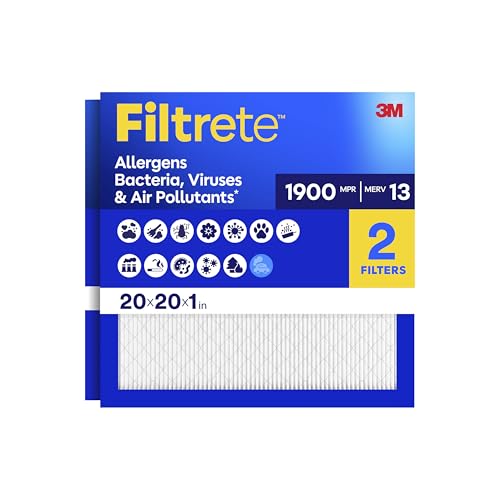
MAKE YOUR HOME YOUR SANCTUARY: 2-pack of 3-month pleated Filtrete 20x20x1 MERV 13 MPR 1900 AC Furnace Air Filter helps capture unwanted particles from your household air to contribute to a cleaner, fresher home environment

20x20x1 MERV 13 air filter replacement for your air conditioner, furnace or HVAC system. Actual Size: 19 11/16’’ x 19 11/16’’ x 3/4‘’. Comparable with MPR 1500-1900 & FPR 10. Provides optimal defense with electrostatically charged filter media and industry leading low air flow resistance.

SIZE & COMPATIBILITY: Nominal 20x25x1 (Actual 19.75 x 24.75 x 0.75 in). Select nominal size based on your current filter's frame or measurements. Fits standard furnaces, ACs & HVAC return grilles
Troubleshoot a Stuffy Living Room
If the room still feels stale after opening windows or running fans, use the symptoms below to narrow down the cause.
| Problem | Likely Cause | Fix |
| Room feels humid or heavy | High indoor humidity | Measure humidity, run a dehumidifier, fix leaks, and use exhaust fans |
| Weak air from vents | Dirty filter, blocked vent, or HVAC issue | Replace filter, clear vents, and call a professional if airflow stays weak |
| Air moves but odors remain | Source odor or gases, not just particles | Remove the odor source and consider activated carbon filtration |
| One corner stays stale | Dead zone behind furniture or away from airflow | Move furniture, redirect a fan, or open a better exit path |
Frequently Asked Questions
How do you fix poor air circulation in a living room?
Start by clearing vents and returns, opening safe airflow paths, using fans to move air across the room, and replacing dirty HVAC filters. If the room still feels stale, check humidity, look for blocked ductwork or weak HVAC airflow, and use a properly sized air purifier for particles.
How do I make a living room feel less suffocating?
Bring in fresh air when outdoor conditions are good, reduce humidity, remove odor sources, and use a fan to keep air from settling in one area. If opening windows is not a good option, run the HVAC fan temporarily and use an air purifier matched to the room size.
How can I improve air circulation in a room without windows?
Keep the door open, place a fan near the doorway, clear supply and return vents, replace the HVAC filter, and use an air purifier. If the room is always stale, ask an HVAC professional whether the room has enough supply air, return air, or mechanical ventilation.
What are the symptoms of poor air circulation in a room?
Common signs include stale or musty odors, lingering cooking smells, condensation on windows, uneven temperatures, weak airflow from vents, heavy humidity, and dust that returns quickly after cleaning. Allergy or respiratory symptoms can also feel worse in rooms with poor airflow or high pollutant levels.
Should a fan face in or out of a window?
For quick stale-air removal, face the fan outward to exhaust indoor air. For bringing in cooler, cleaner outdoor air, face it inward. If you have two windows, use one fan facing inward on the cleaner, cooler side and another facing outward on the opposite side.
Will an air purifier improve circulation?
An air purifier circulates air through its filter, but its main job is cleaning air, not bringing in fresh outdoor air. It can help reduce particles when sized correctly, but it should be used alongside source control, ventilation when safe, and good HVAC maintenance.
Sources
- U.S. Environmental Protection Agency: Improving Indoor Air Quality — ventilation, source control, filtration, and outdoor-air caveats
- U.S. Environmental Protection Agency: Guide to Air Cleaners in the Home — portable air cleaner selection, CADR, filtration limits, and filter maintenance
- U.S. Environmental Protection Agency: A Brief Guide to Mold, Moisture and Your Home — humidity range, condensation, moisture control, and mold prevention
- U.S. Department of Energy: Air Conditioner Maintenance — HVAC filter maintenance, airflow, coils, and professional service guidance
- Centers for Disease Control and Prevention: Taking Steps for Cleaner Air — fresh air, HVAC fan use, pleated filters, and portable HEPA cleaners
Conclusion
Improving air circulation in your living room does not require a major renovation. Start with the basics: check outdoor conditions, open smart airflow paths, position fans with a purpose, keep vents clear, replace dirty filters, and control humidity. If dust, pollen, smoke particles, pet dander, or odors linger, add a properly sized air purifier and remove the source whenever possible. With a few practical changes, your living room can feel fresher, cleaner, and more comfortable every day.





[url=https://akbweaexfx.com]Edikihii[/url] Onpuhoha https://royvlweoq.com
[url=https://akbweaexfx.com]Zahasiwe[/url] Orehudu https://royvlweoq.com
[url=https://akbweaexfx.com]Ezioli[/url] Ogudeg https://royvlweoq.com