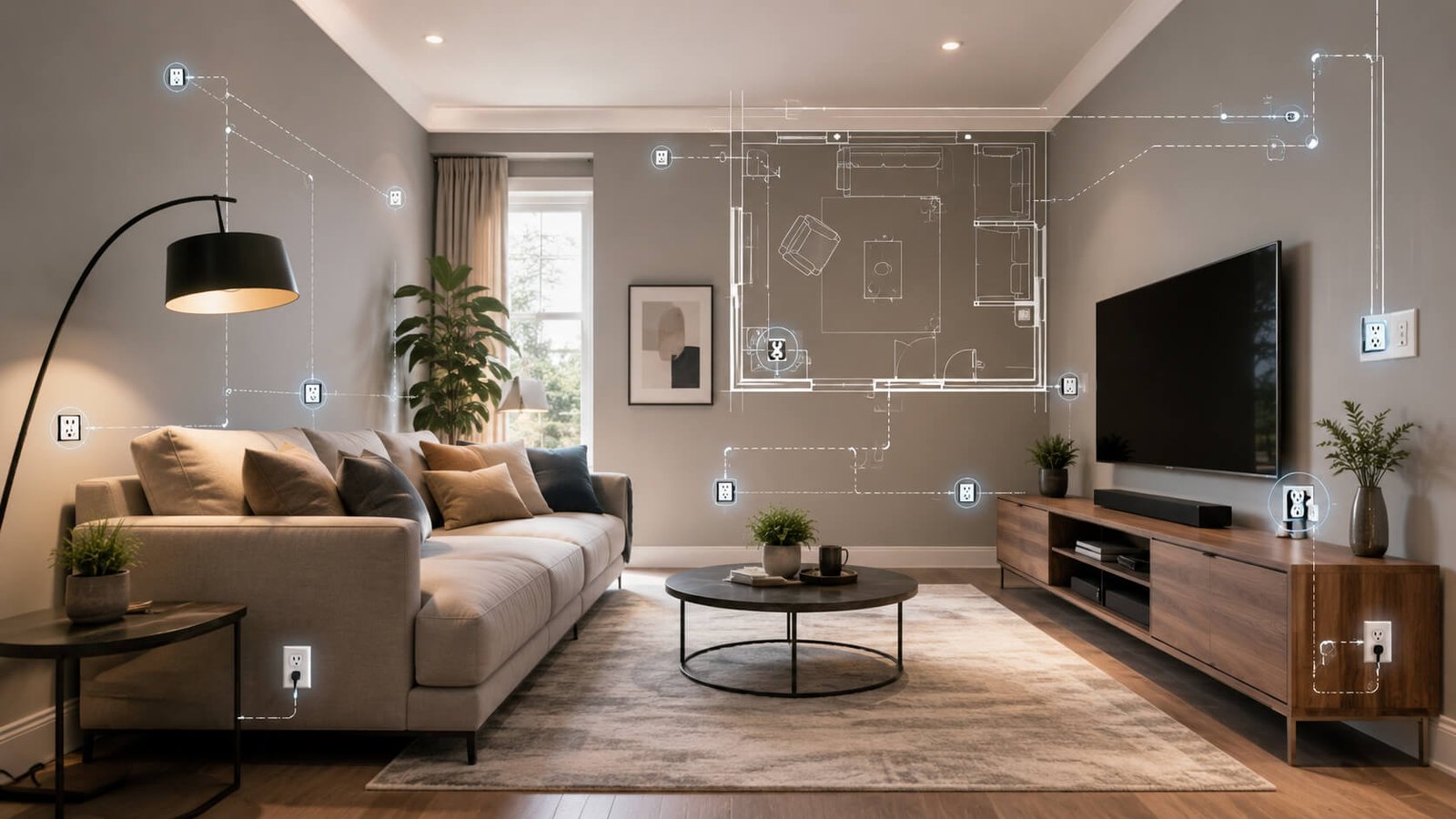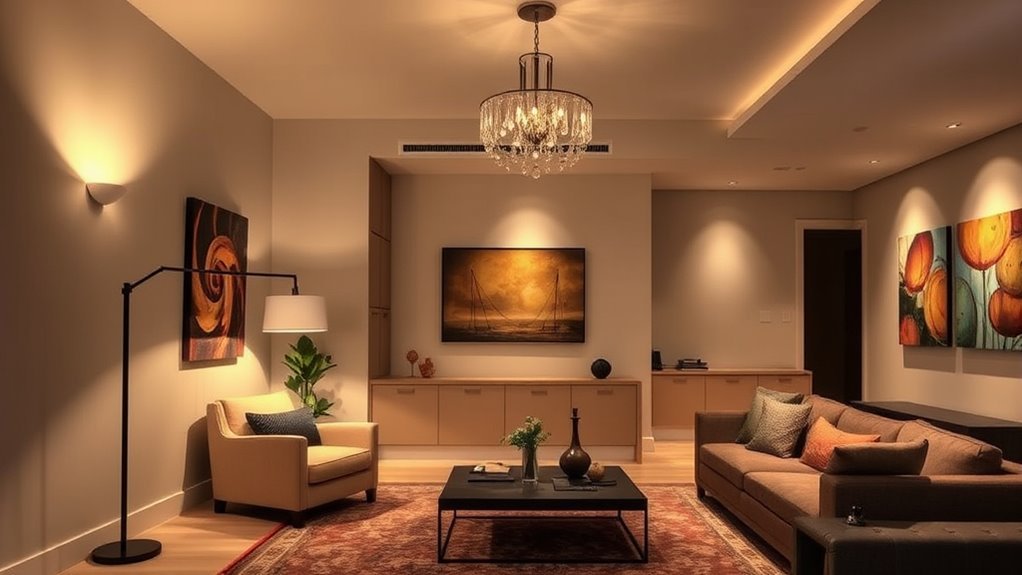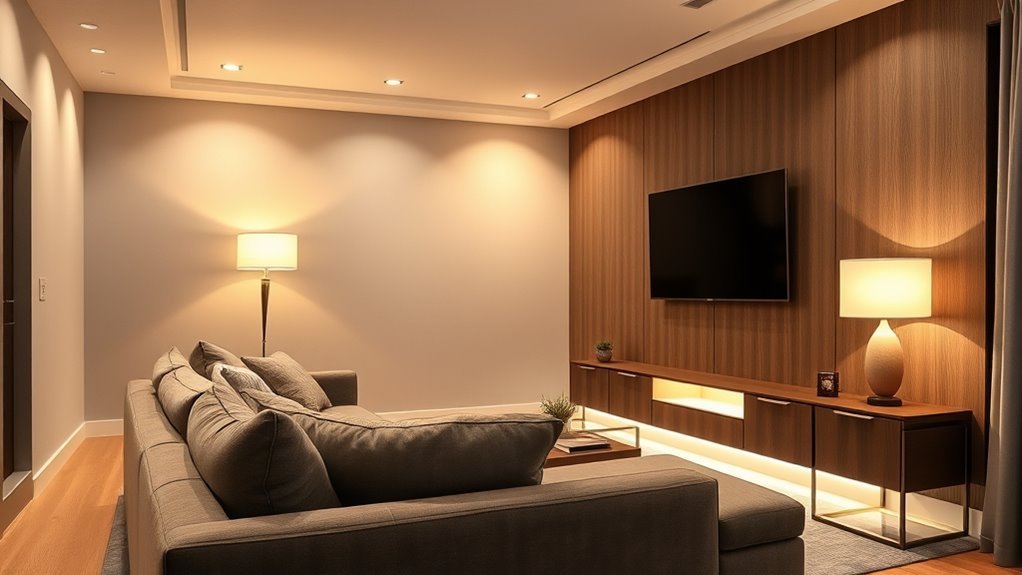
A strong living room lighting plan with a TV uses three layers: soft ambient light for the room, focused task light for reading, and subtle accent or back lighting near the media wall. Keep bright fixtures and exposed bulbs out of the screen’s reflection path, use dimmable LED bulbs where compatible, and control each layer separately so movie night, reading, hosting, and cleaning can use different light levels.
Quick Answer
For a living room with a TV, start with soft ambient light, add a focused reading lamp where needed, then use low-output accent or back lighting near the TV wall. Keep bright fixtures and windows out of the screen’s reflection path, choose dimmable LED bulbs that match the control, and test the setup both at night and in daylight.
Key Takeaways
- Build the plan in layers: ambient light for general comfort, task light for reading, and accent light for depth.
- Place lamps and fixtures so they do not reflect directly on the TV screen.
- Shop by lumens for brightness. For a warm home setting, 2700K–3000K is a practical starting range, then adjust for your preference and task needs.
- Use separate switches, smart bulbs, or dimmers so movie night, reading, and hosting each have a different setting.
- Use a qualified electrician for hardwired fixtures, recessed lighting, new circuits, or switch and dimmer work you are not trained to perform safely.
At a Glance
| Time Required | 30–60 minutes to map the room; longer if adding new fixtures or controls |
| Difficulty | Easy for lamp placement and bulb upgrades; moderate to advanced for hardwired changes |
| Tools Needed | Tape measure, phone camera, paper floor plan or notes app, bulb packages, dimmable lamps or controls |
| Cost | Varies by fixture and labor; rearranging existing lamps may cost nothing, while hardwired changes require a local electrician quote |
How to Create a Living Room Lighting Plan With a TV
Use this five-step sequence before buying new fixtures. It keeps the plan focused on the way the room is actually used instead of on fixture style alone.
- Map the TV, seating, windows, doors, and outlets. Mark where reflections appear on the screen from each main seat.
- Set the ambient layer. Use diffused ceiling, wall, or portable lighting for a soft base level that can be dimmed or switched separately.
- Add task light where activities happen. Put an adjustable floor or table lamp beside reading seats rather than making the whole room brighter.
- Add accent or media-wall light carefully. Keep it low output and outside the direct screen reflection path so it adds depth without competing with the picture.
- Test day and night. Check every main seat, adjust shades or lamp positions, then save simple settings for movie night, reading, hosting, and cleaning.
Why a Lighting Plan Matters for Your Living Room
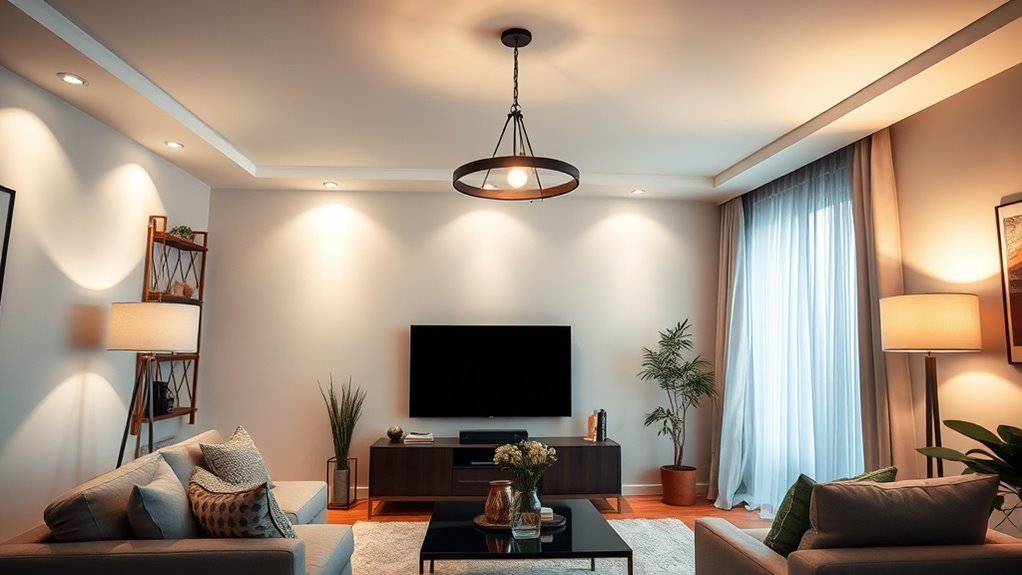
A well-planned living room lighting setup makes the space feel comfortable without washing out the TV or leaving corners dark. Good lighting design is about matching the amount, direction, and quality of light to the activity instead of simply adding more brightness everywhere.
In a living room with a TV, that balance matters even more. A bright ceiling light directly in front of the screen can create reflections. A room that is completely dark can make the TV feel harsh. A single lamp in one corner can leave the rest of the room flat. The best plan uses several softer sources that can be controlled separately.
More light is not always better. A comfortable TV room usually needs controlled, layered light instead of one bright overhead fixture.
Identifying Essential Lighting Types: Ambient, Task, and Accent
Start with the three basic lighting layers. Each layer has a different job, and the room works best when you can control them separately.
Ambient Lighting
Ambient lighting is the room’s general glow. It can come from recessed lights, a ceiling fixture, wall sconces, cove lighting, or several lamps. For TV rooms, ambient light should be soft and dimmable so the space feels relaxed without causing screen glare.
Task Lighting
Task lighting helps with specific activities such as reading, puzzles, games, or working on a laptop. A floor lamp beside a chair or a table lamp near the sofa works well because the light is close to the task instead of flooding the whole room.
Accent Lighting
Accent lighting adds depth by highlighting artwork, shelves, plants, textured walls, or the media wall. In a TV room, keep accent lighting subtle. The goal is to soften contrast around the screen, not compete with it.
Note: If your living room currently has only one ceiling light, you do not need to renovate immediately. Add plug-in floor or table lamps where the room needs another layer, test their placement for glare, then decide whether hardwired fixtures are still necessary.
How to Map Your Living Room for Effective Lighting Placement
Before buying anything, map the room. A simple floor plan prevents the most common mistakes: placing a lamp where it reflects on the TV, choosing a fixture that is too bright for the seating area, or forgetting a dark corner that needs its own source.
Identify Key Activity Zones
Walk through the room and label each zone by how you actually use it:
- TV viewing zone: sofa, sectional, media console, and the screen reflection path.
- Reading zone: armchair, sofa corner, side table, or window seat.
- Conversation zone: main seating group where guests gather.
- Display zone: artwork, shelves, fireplace, plants, or architectural details.
- Traffic zone: walkways from doors, stairs, or hallways.
Once those zones are marked, assign a lighting layer to each one. The TV zone needs low-glare ambient or back/side light. The reading zone needs task light. The display zone needs gentle accent light. The traffic zone needs enough illumination to move safely.
Measure Space Dimensions
Measure the room so fixtures feel proportional and light lands where it is useful. Use this completed planning table instead of guessing.
| What to Record | Why It Matters | How to Use It |
|---|---|---|
| Room length and width | Helps you spread light evenly. | Place light sources on at least two sides of the room instead of relying on one center fixture. |
| Ceiling height | Affects fixture scale and brightness. | Use lower-output, diffused fixtures in low-ceiling rooms and taller lamps or sconces in higher rooms. |
| TV location | Controls glare and reflection planning. | Avoid placing exposed bulbs opposite the screen. |
| Outlet locations | Determines where plug-in lamps can go. | Choose cord covers, smart plugs, or electrician-installed outlets instead of stretching cords across walkways. |
| Windows and doors | Affects daylight, glare, and furniture placement. | Use shades or curtains where daylight hits the TV directly. |
Consider Light Sources
After you mark the room, choose where each source belongs:
- Ceiling or wall ambient light: use diffused, dimmable light for an even base layer.
- Reading lamps: place them beside or slightly behind seating so the light falls onto the page, not into the viewer’s eyes.
- Media-wall accent light: use low-output sconces, shelf lights, or a soft light behind the TV area to reduce the “bright screen in a black room” effect.
- Decorative lamps: spread them across the room so the eye sees depth instead of one bright corner.
Pro Tip: Take a photo of the TV wall at night with each lamp turned on. Reflections that are hard to notice in person often show up clearly in a phone photo.
Choosing Fixtures for TV Viewing and Reading
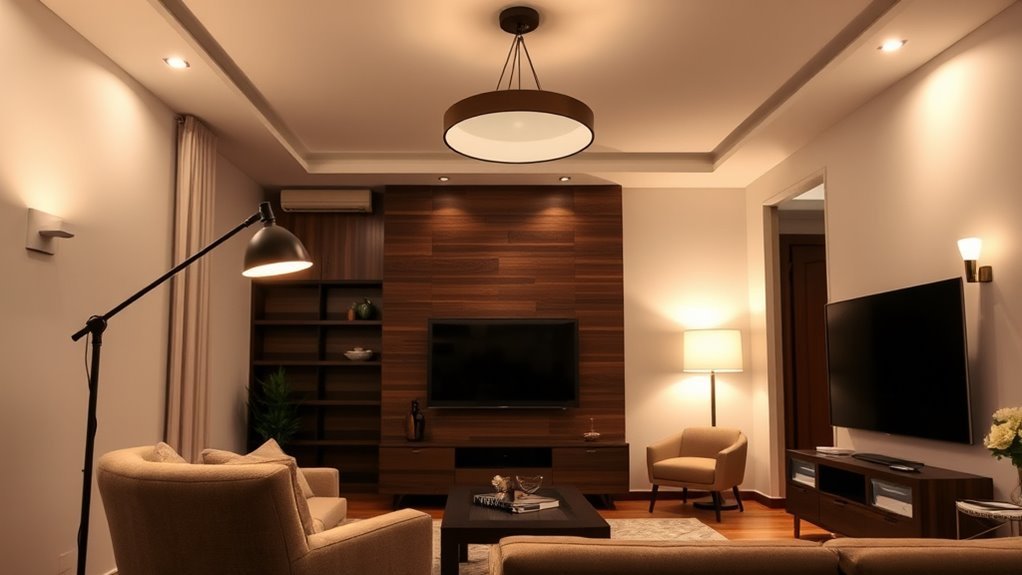
The right fixture depends on the activity. For TV viewing, choose fixtures that create soft side light or indirect light. For reading, choose fixtures that aim light onto the book or task. For hosting, choose lamps and sconces that make faces look natural without casting harsh shadows.
Recommended Products

【Wireless Sconces & Easy Installation】 NO Wiring Required! Our battery operated wall sconce set of 2 are home-friendly and incredibly easy to install: fix the scones lighting on the wall with included screws(Tips: If the wall lights cannot be light up, please rotate the lamp tube slightly)
Best Fixtures for TV Viewing
- Wall sconces beside the TV wall: good for soft side light when they are diffused and dimmable.
- LED strip or small lamp behind the TV: useful for soft background glow, as long as it is not overly bright or colorful during normal viewing.
- Table lamps away from the screen reflection path: good for warmth and balance.
- Recessed lights on dimmers: helpful only when they do not shine directly onto the screen or seating.
Best Fixtures for Reading
- Adjustable floor lamp: best beside a sofa or armchair.
- Table lamp with an opaque or fabric shade: good for side tables and reading corners.
- Swing-arm sconce: useful when floor space is limited, but it requires safe installation if hardwired.
How to Avoid TV Glare
Sit in your normal TV-watching spot and look at the screen while each light is on. If you can see a bulb, lamp shade, window, or ceiling fixture reflected in the screen, move it, dim it, shade it, or switch it off for movie mode. The best TV lighting usually comes from the sides of the room, behind the seating, or softly behind the TV wall rather than directly in front of the screen.
Use a Three-Position TV Glare Test
- Front check: sit in the main viewing seat and turn on one light at a time. Remove or dim any source that appears clearly on the screen.
- Side-seat check: repeat the test from the left and right seats. A lamp that is invisible from the center can still reflect for someone sitting off-axis.
- Daylight check: repeat the test when the room gets its strongest daylight. Adjust shades, curtains, or the TV angle before adding more electric light.
This simple three-position check separates a placement problem from a brightness problem. Move the source first; dim it only if the position is already good.
Choosing Bulbs: Lumens, Color Temperature, and Compatibility
Bulb choice can make a good fixture feel wrong. When shopping, compare lumens instead of watts. Lumens measure light output, while watts measure power input. The U.S. Department of Energy lists 800 lumens as a guide for replacing a 60-watt incandescent, 1,100 lumens for a 75-watt incandescent, and 1,600 lumens for a 100-watt incandescent.
For a warm home setting, 2700K–3000K is a practical starting range for ambient lamps. DOE lists 2700K as a common warm home light and 3000K as a soft, warm option for homes. Keep nearby ambient lamps at a similar color temperature so the room does not look patchy, then use a separate task lamp if you want a different feel for reading or work. Check the package for the Lighting Facts label, which includes brightness, energy cost, life expectancy, light appearance, wattage, and other product information.
- For ambient lamps: start around 2700K–3000K if you want a warm residential look, then adjust to preference.
- For reading lamps: choose enough lumens to see clearly without making the whole room bright.
- For accent lights: choose lower output so art, shelves, or the media wall glow instead of glare.
- For dimmers: choose LED bulbs that are labeled dimmable and confirm compatibility with the dimming control.
Recommended Products

【Dimmable & Versatile】Smoothly adjust brightness with TRIAC dimmer compatibility. Tailor your lighting from soft to bright, ideal for relaxing evenings or task-focused environments. Not compatible with smart dimmers

[Smooth Dimmable] With stepless dimmable range from 800lm down to 10%, adjust LED light bulb brightness of your space according to preference; No buzz & No flicker, smooth and comfortable lighting experience
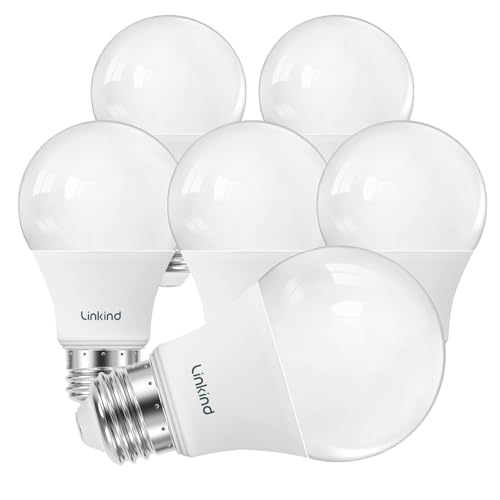
✔ 2700K WARM YELLOWISH LIGHT: The A19 dimmable LED light bulbs give off 800 lumens of 2700k cozy color light. Easy installation with the standard medium screw base E26. NOTE: Please confirm the Kelvin (K) value. This is the most accurate way to select your desired light color. This bulb is 2700K light, which produces a WARM YELLOWISH light. It is not a Bright White or Daylight White bulb. If you prefer a whiter light, please consider our 4000k Cool White or 5000K Daylight options.
Implementing Dimmable Lighting for Flexible Use
Dimmable lighting is one of the easiest ways to make a living room work for several activities. The U.S. Department of Energy advises checking LED packaging or specifications for dimming capability and compatibility with the dimming system. Choose the bulb and control as a compatible pair rather than assuming every LED will dim smoothly.
Warning: Do not install hardwired fixtures, replace switches, add recessed lights, or modify circuits unless you are qualified to do so safely. The Electrical Safety Foundation International lists frequent breaker trips, dimming lights when other devices turn on, buzzing switches or outlets, and discolored outlets as warning signs of an overloaded electrical system. Have a qualified electrician inspect those conditions.
Recommended Products
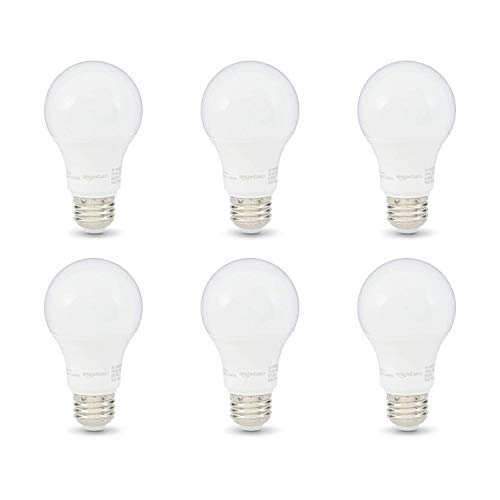
ENERGY EFFICIENT: These 9W LED light bulbs provide the brightness of 60 watt light bulbs, saving $55.87 in energy costs over their lifetime compared to the incandescent equivalent
Use Scenes Instead of One Brightness Level
Create a few simple lighting scenes:
- Movie night: TV backlight or side lamps low, overhead lights off or very dim.
- Reading: task lamp bright enough for the page, ambient light low to medium.
- Hosting: several lamps on low to medium, accent lights on, TV lights reduced.
- Cleaning: ceiling or ambient lights at full brightness.
- Daytime: window treatments adjusted, lamps used only in dark corners.
How to Maximize Natural Light in Your Living Room
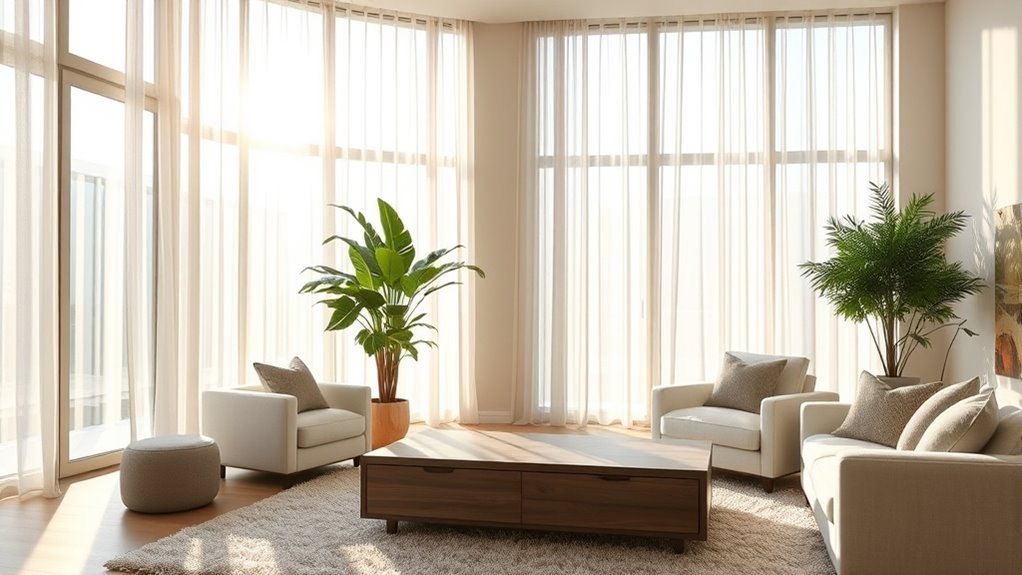
Natural light can make a living room feel open during the day, but in a TV room it needs control. Window direction, season, and time of day change where bright daylight lands, so a screen that looks glare-free in the morning may reflect a window later in the day.
To make daylight work with a TV:
- Use light-filtering curtains where you want softness and blackout or lined curtains where the sun hits the screen.
- Place mirrors carefully so they bounce daylight into the room without reflecting into the TV.
- Keep the TV perpendicular to bright windows when possible instead of directly opposite them.
- Use adjustable shades so you can reduce glare for daytime sports, gaming, or movies.
- Keep windows clean and avoid blocking daylight with bulky furniture when glare is not an issue.
Evaluating Your Lighting Plan for Comfort and Functionality
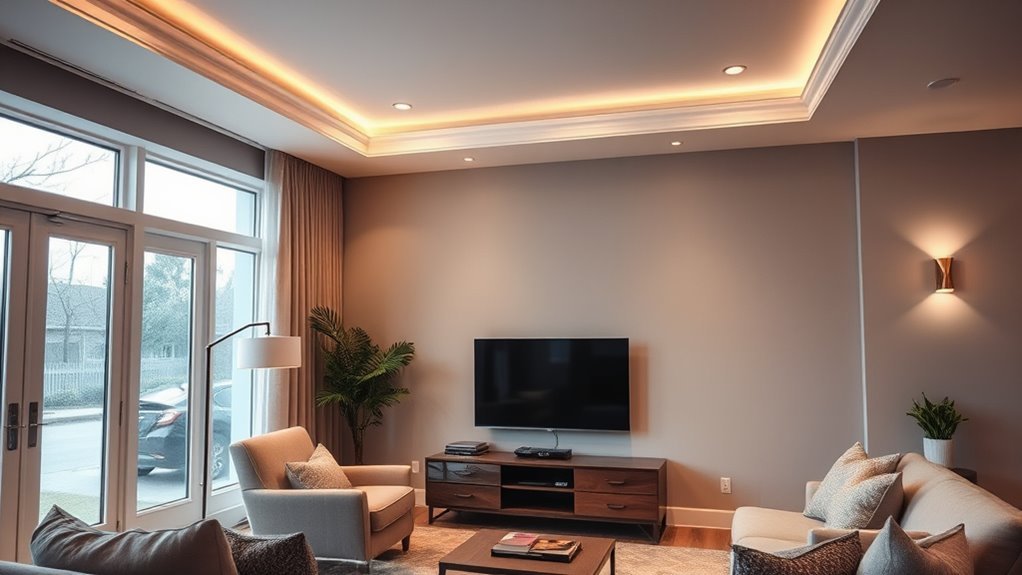
After you place the fixtures, test the room during the times you actually use it. A plan that looks perfect at noon may create TV glare at sunset. A lamp that feels cozy during a movie may be too dim for reading.
Assess Lighting Effectiveness Regularly
- Turn on the TV at night and check for visible reflections.
- Sit in every main seat and look for exposed bulbs or harsh shadows.
- Try reading in your usual chair for 10 minutes and note whether you squint or lean toward the lamp.
- Turn on all lights for hosting and check whether the room feels balanced.
- Walk through the room and make sure cords are not crossing traffic paths.
Adjust Based On Activities
If the room feels too bright, lower the ambient layer before removing task light. If the TV feels harsh, add a soft lamp behind or beside the screen rather than turning on a bright overhead light. If reading feels difficult, increase the task lamp brightness instead of making the whole room brighter.
Troubleshooting Common Living Room Lighting Problems
| Problem | Likely Cause | Fix |
|---|---|---|
| TV glare | Fixture, window, or exposed bulb reflected on screen | Move the lamp, add shades, dim the source, or use side/back lighting. |
| Room feels flat | Only one ceiling light or one lamp is doing all the work | Add a second and third light source at different heights. |
| Reading area is too dim | Ambient light is being used as task light | Add an adjustable lamp close to the reading seat. |
| Bulbs flicker on dimmer | Bulb and dimmer may not be compatible | Use dimmable LED bulbs and a compatible LED-rated dimmer. |
| Room feels too yellow or too cool | Mixed bulb color temperatures | Use a consistent color appearance for ambient lamps and reserve brighter/cooler light for task areas only if needed. |
Frequently Asked Questions
How do you light a living room with a TV?
Use soft ambient light, task lamps near reading seats, and subtle accent or back lighting near the TV wall. Keep bright lamps, exposed bulbs, and windows out of the screen’s reflection path. Use dimmers or separate switches so the room can shift from movie mode to reading mode.
How do you design lighting for a living room?
Start by mapping the room’s seating, TV, windows, outlets, and activity zones. Add ambient lighting for general comfort, task lighting for reading or work, and accent lighting for shelves, art, plants, or the media wall. Then test the setup during day and night.
How do you create a lighting layout plan?
Sketch the room, mark the TV and seating, note windows and outlets, then assign each zone a lighting job. Place ambient light for overall glow, task light where activities happen, and accent light where you want depth. Test for glare before buying permanent fixtures.
What is the 5-7 lighting rule?
The 5-7 lighting rule is a design guideline that suggests using about five to seven light sources in a room, spread across ambient, task, and accent layers. It is not an electrical code or a fixed requirement. A small living room may need fewer sources, while a large open-plan room may need more.
Should you use overhead lights while watching TV?
You can use overhead lights for TV if they are dimmable, diffused, and not reflected in the screen. In many rooms, side lamps, wall sconces, or a soft light behind the TV are more comfortable than a bright ceiling fixture.
What bulb brightness is best for living room lamps?
Use lower or medium brightness for ambient lamps and higher brightness only where you need task light. The easiest way to compare bulbs is by lumens, not watts. About 800 lumens is a common replacement level for a traditional 60-watt incandescent bulb.
What color temperature is best for a living room with a TV?
For a warm residential look, 2700K–3000K is a practical starting range for ambient lighting. Keep nearby ambient lamps close in color temperature so the room feels consistent, then choose task lighting separately if you want a different light appearance for reading or work.
Should you put a light behind your TV?
A soft, dim light behind the TV can reduce the visual contrast between a bright screen and a dark wall and can add depth to the media area. Keep it subtle, avoid visible LED dots from the seating area, and make sure the light does not reflect on the screen.
Are ceiling lights enough for a living room?
Ceiling lights can provide the ambient layer, but they are usually not enough for a living room that also supports TV viewing, reading, and hosting. Add task lighting near seats and accent lighting where you want depth, then control the layers separately.
Conclusion
A strong living room lighting plan gives every activity its own setting. Map the TV, seats, windows, and outlets first; build ambient, task, and accent layers; then run the three-position glare test before buying permanent fixtures. Choose bulbs by lumens, keep ambient color temperature consistent, and use compatible dimmers so the room can shift easily from movie night to reading, hosting, or cleaning.
Sources
- U.S. Department of Energy – Purchasing Energy-Efficient Light Bulbs – supports lumen comparisons, 2700K/3000K home-light examples, dimming compatibility checks, and Lighting Facts label details.
- Electrical Safety Foundation International – Home Electrical Safety – supports warning signs of overloaded electrical systems and the recommendation to use a qualified electrician for new circuits.