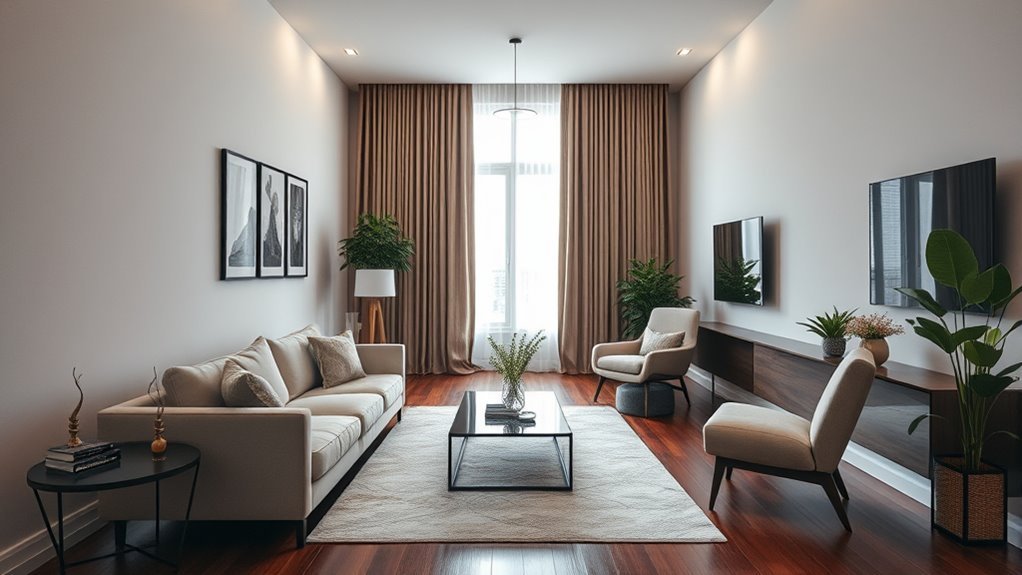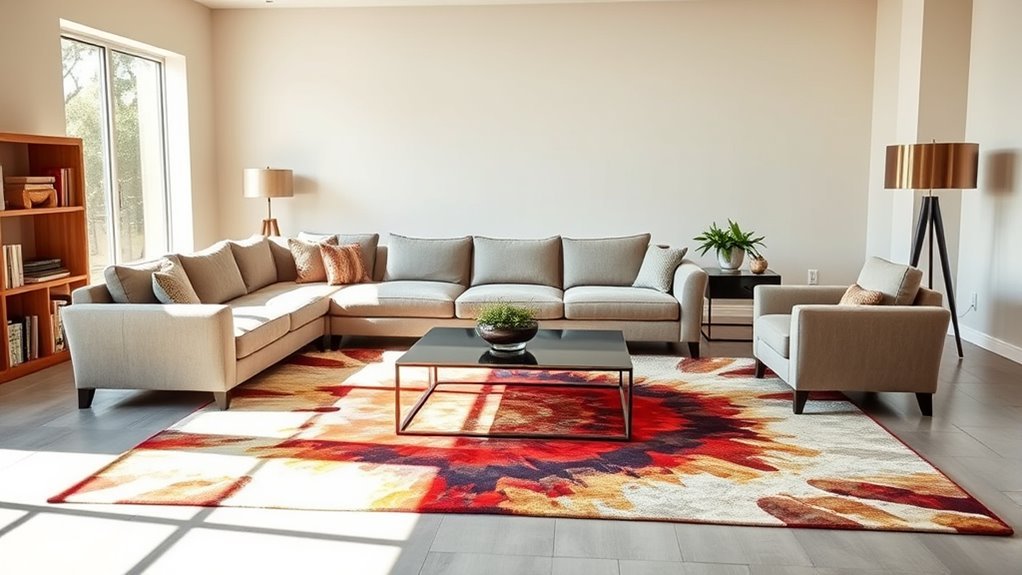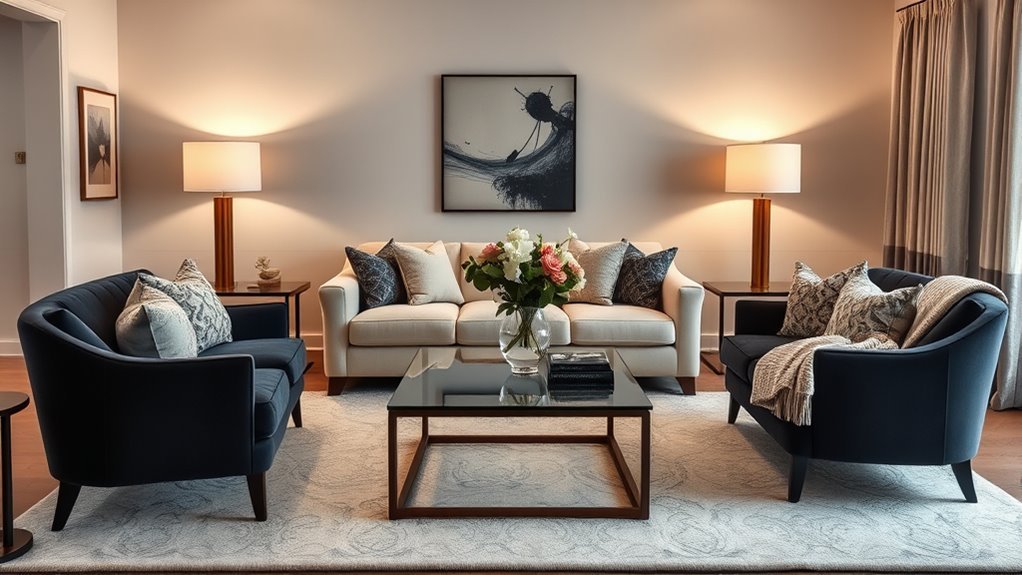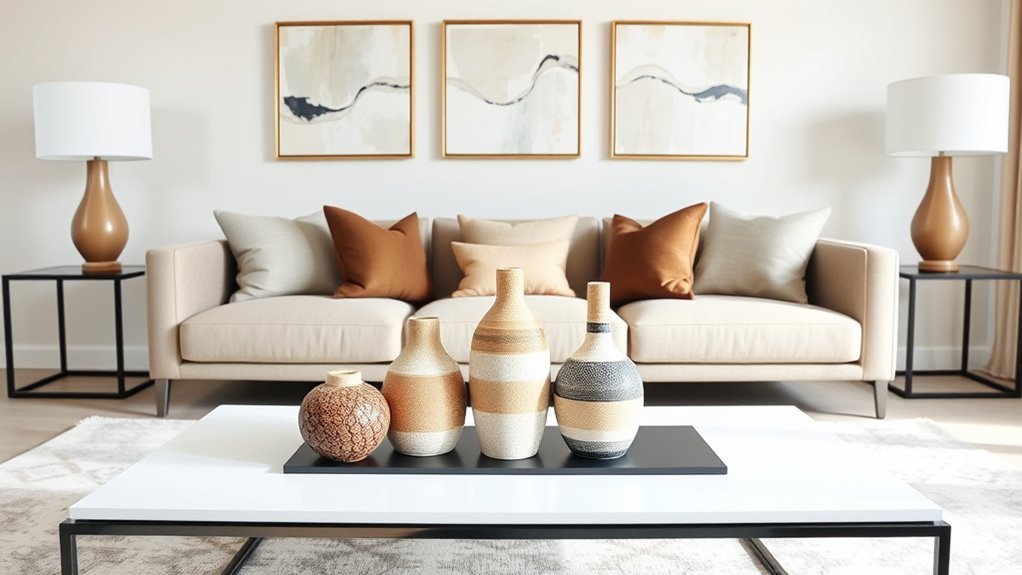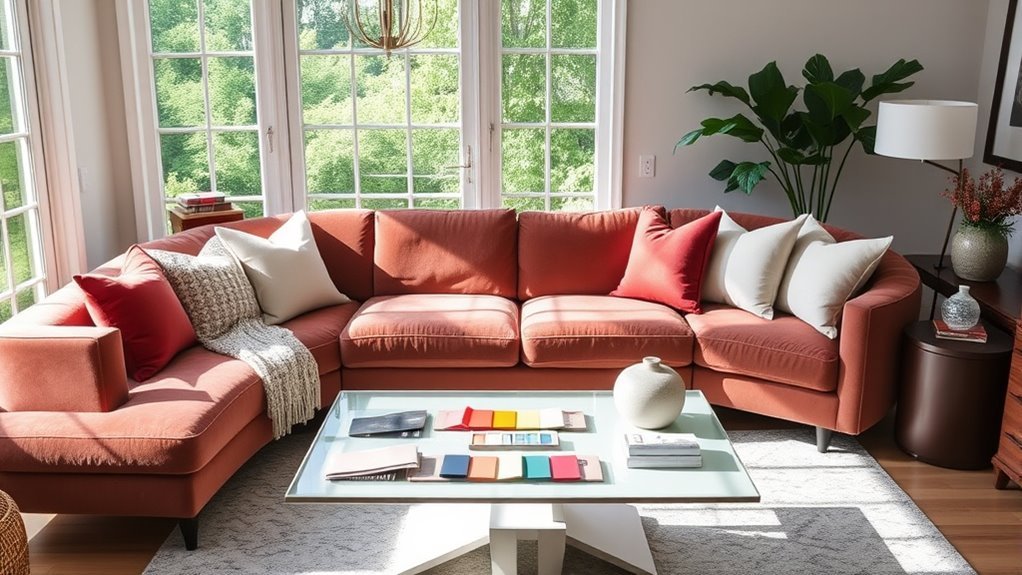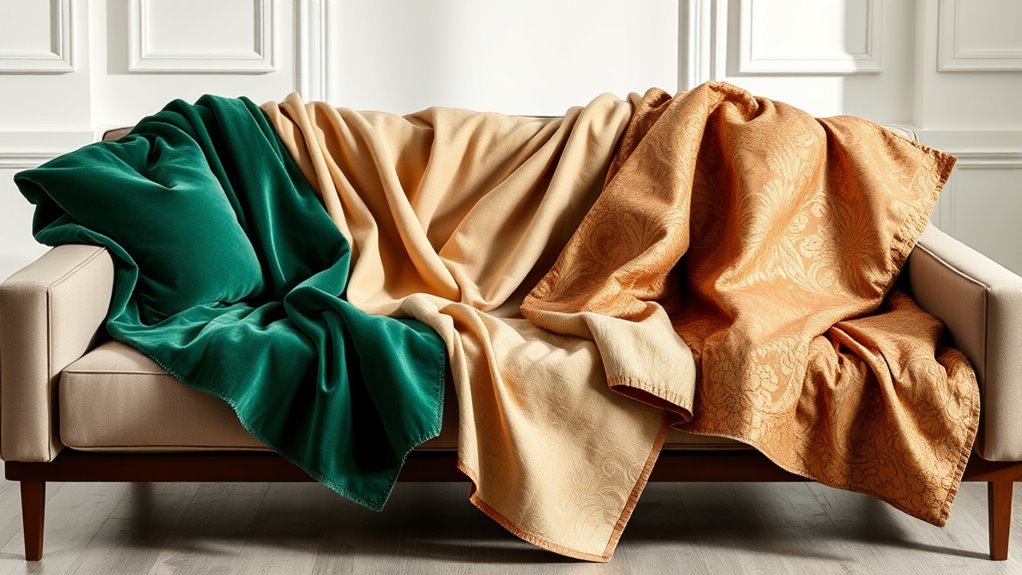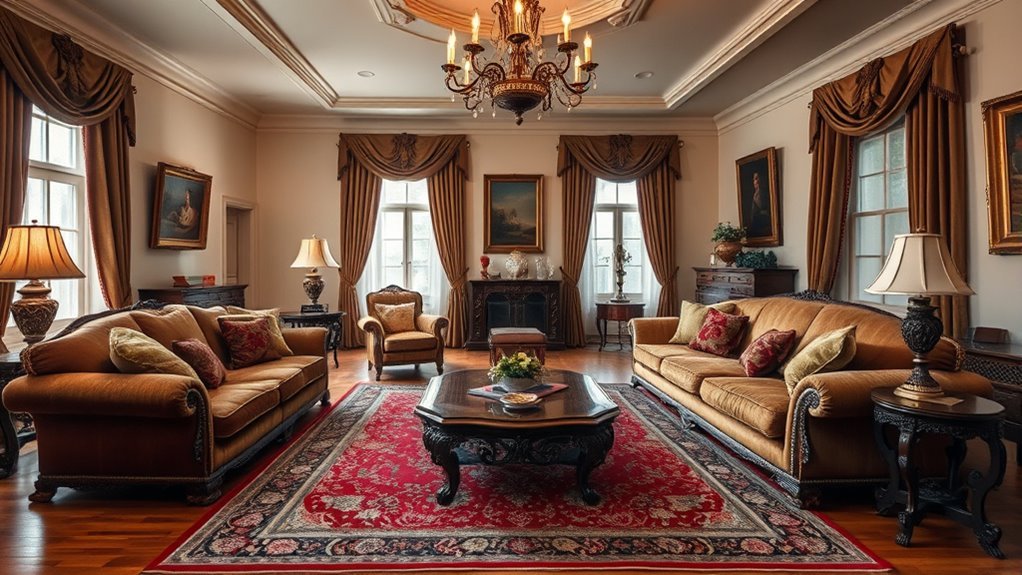
Traditional living room style is all about comfort, balance, and classic detail. Instead of chasing a trend, this look uses familiar furniture shapes, warm colors, layered fabrics, wood tones, and thoughtful symmetry to create a room that feels polished but still welcoming. Done well, it is elegant enough for guests and comfortable enough for everyday life.
Quick Answer
Traditional living room style combines classic furniture, balanced layouts, rich wood tones, soft upholstery, layered textiles, and decorative details such as molding, lamps, framed art, and patterned rugs. The goal is a cozy, refined room that feels timeless rather than trendy.
Key Takeaways
- Traditional living rooms work best when the layout feels balanced, comfortable, and easy to use.
- Warm neutrals, deep accent colors, wood tones, brass, and layered fabrics create the classic look.
- Patterns such as florals, stripes, plaids, toile, and damask should repeat in small doses so the room feels collected, not crowded.
- Modern touches can refresh the style when they are simple, warm, and in harmony with the room’s classic details.
At a Glance
| Time Required | 1 weekend for styling updates; several weeks if you are buying major furniture |
| Difficulty | Beginner to moderate |
| Tools Needed | Tape measure, floor plan sketch, paint swatches, fabric samples, picture-hanging tools, furniture anchors for tall pieces |
| Cost | Low for accessories and textiles; moderate to high for quality sofas, rugs, lighting, and wood furniture |
What Defines Traditional Living Room Style?
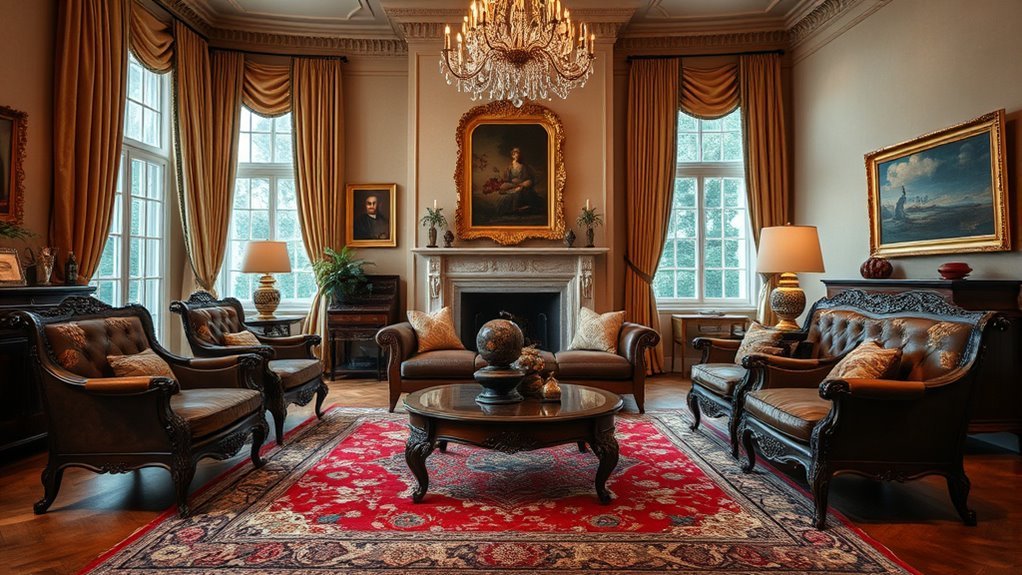
When you step into a traditional living room, the first thing you usually notice is balance. Seating is arranged for conversation, furniture has familiar shapes, and the room feels layered rather than sparse. Common features include rolled-arm sofas, wingback or club chairs, wood tables, table lamps, framed artwork, patterned rugs, and classic details such as crown molding, fireplaces, wainscoting, or built-in bookcases.
Traditional style is not the same as old-fashioned clutter. A good traditional living room feels warm, edited, and useful. It may include antiques, heirlooms, or vintage-inspired pieces, but it should still support daily life: a comfortable sofa, enough lighting for reading, surfaces for drinks and books, and clear paths through the room.
Design references often describe traditional interiors as balanced, layered, comfortable, and rooted in classic furniture shapes and decorative details. For example, Drew & Jonathan’s guide to traditional interior design highlights symmetry, rich wood tones, classic furniture shapes, layered fabrics, and warm palettes as core elements of the style.
Note: Traditional style is a broad category, not one exact period. English, French, Georgian, Victorian, Colonial, Neoclassical, and updated “modern traditional” rooms can all share classic details while looking very different.
Key Features of Traditional Living Rooms
A traditional living room is a sanctuary of comfort and elegance, but the look works best when each element has a clear role. Start with the bones of the room, then build the layers slowly.
- Symmetry and balance: Place matching or visually similar pieces across from each other, such as two chairs facing a sofa or a pair of lamps on side tables.
- A clear focal point: A fireplace, large window, built-in bookcase, armoire, or artwork can anchor the room.
- Classic furniture shapes: Look for rolled arms, skirted upholstery, tufting, turned legs, cabriole legs, pedestal tables, wingback chairs, and club chairs.
- Warm wood tones: Walnut, cherry, oak, mahogany, and other medium-to-dark wood tones add depth. Not every piece must be solid wood, but the main pieces should feel sturdy and well made.
- Layered textiles: Rugs, curtains, pillows, throws, and upholstery soften the room and give it a lived-in feeling.
- Decorative details: Framed art, mirrors, books, ceramics, candlesticks, trays, and traditional lamps make the space feel complete.
The history of Western interiors includes centuries of decorative woodwork, paneling, plasterwork, furniture, and textiles. Encyclopaedia Britannica’s overview of English interior design gives useful historical context for how domestic interiors developed through changing room layouts, decorative finishes, and furniture traditions.
Popular Color Schemes for Traditional Living Rooms
While many homeowners gravitate toward neutral palettes for traditional living rooms, there is plenty of room for color. The trick is to use color in a layered way: a calm base, one or two richer accents, and warm finishes that tie everything together.
| Color Type | Examples | Effect |
|---|---|---|
| Neutral Base | Cream, beige, ivory, taupe, warm gray | Creates a calm backdrop for furniture and art |
| Rich Colors | Burgundy, forest green, navy, oxblood, deep teal | Adds warmth, formality, and depth |
| Accent Finishes | Antique brass, bronze, dark wood, aged gold | Brings contrast and a classic, collected feel |
For a safe starting point, choose one warm neutral for the walls, one main upholstery color, one patterned rug or curtain fabric, and one metal finish. Then repeat each color at least twice. For example, navy can appear in the rug and throw pillows, while brass can appear in the lamp bases and picture frames.
Pro Tip: Traditional rooms feel more cohesive when colors repeat in small echoes. Pull one color from the rug into pillows, artwork, or lampshades instead of introducing a new accent color in every corner.
Furniture Choices for a Cozy Traditional Aesthetic
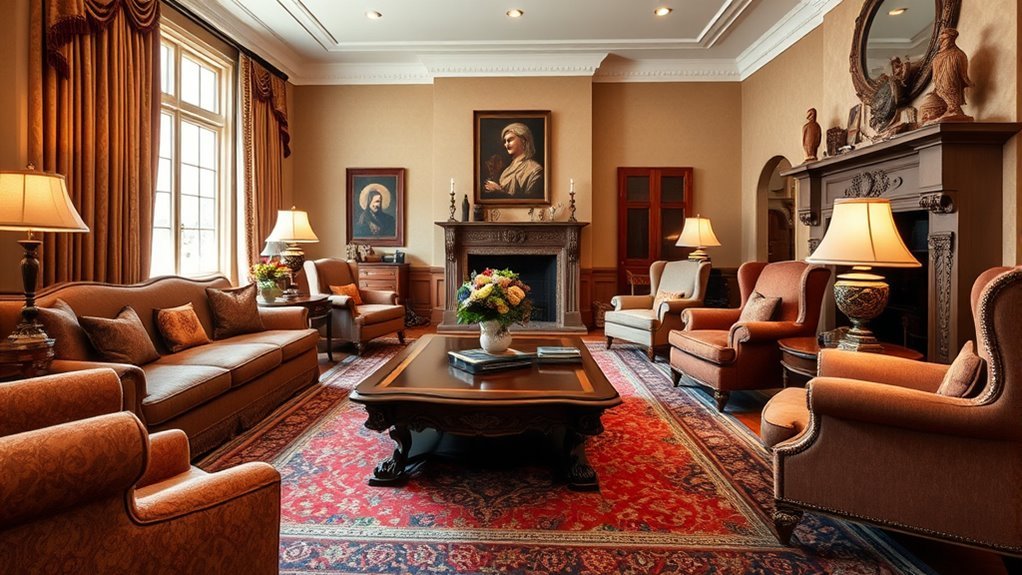
Creating a cozy traditional aesthetic starts with choosing furniture that looks gracious and feels comfortable. A plush sofa is usually the anchor. Look for a shape with rolled arms, a tight back, a skirted base, turned legs, or subtle tufting. If your room is small, choose one classic detail rather than all of them so the sofa does not feel heavy.
Accent chairs add personality and flexible seating. Wingback chairs, slipper chairs, bergère-style chairs, and club chairs all work well in traditional living rooms. If your sofa is solid, chairs are a good place to introduce a stripe, check, floral, or muted damask. If the sofa is patterned, keep the chairs quieter.
- Coffee table: Choose a wood, upholstered, or metal-and-glass table that fits the sofa length. A good rule is to keep it roughly two-thirds the length of the sofa.
- Side tables: Place a table within reach of each main seat whenever possible. Matching pairs feel formal; mixed tables feel collected.
- Storage: Bookcases, cabinets, and consoles add traditional character, especially when styled with books, framed art, ceramics, and baskets.
- Rug: Use a rug large enough for at least the front legs of the main seating pieces to sit on it. Persian-style, floral, medallion, and bordered rugs are classic choices.
Warning: Anchor tall bookcases, media cabinets, and other top-heavy furniture to the wall, especially in homes with children. The U.S. Consumer Product Safety Commission’s AnchorIt.gov guidance recommends securing TVs and furniture to help prevent tip-over injuries.
How to Create a Traditional Living Room Step by Step
If you are starting from scratch, do not buy every piece at once. Traditional rooms look best when they feel gathered over time, even when they are newly decorated.
- Choose the focal point. Decide whether the fireplace, window, TV, built-ins, or artwork will anchor the room.
- Plan the seating first. Place the sofa and chairs so people can talk comfortably. Avoid pushing every piece against the wall unless the room is very small.
- Measure traffic paths. Leave enough space to walk through the room without bumping into tables or chair arms.
- Select the rug early. A patterned rug can guide the whole palette and make furniture choices easier.
- Layer lighting. Use overhead lighting, table lamps, floor lamps, and accent lights so the room works at different times of day.
- Add textiles. Curtains, pillows, throws, and upholstery bring softness and pattern.
- Finish with personal details. Use books, art, heirlooms, ceramics, framed photos, or travel pieces to keep the room from feeling like a showroom.
In older homes, pause before removing original trim, mantels, built-ins, doors, or decorative finishes. The National Park Service guidance on rehabilitating historic interiors recommends identifying and protecting interior elements that define a building’s character before making changes.
How to Use Textures and Patterns in Traditional Living Rooms
In a traditional living room, layering textures creates a warm and inviting atmosphere. Patterns add character, but they need balance. A room with too many large, competing patterns can feel busy; a room with no pattern at all can feel flat.
Layering Textures for Warmth
A cozy traditional living room invites you to relax and unwind, and texture is one of the easiest ways to create that feeling. Combine smooth, soft, and natural surfaces so the room has depth.
- Soft fabrics: Velvet, linen, wool, chenille, cotton, and tapestry-style fabrics work well for upholstery, pillows, and throws.
- Natural materials: Wood, stone, leather, rattan, and ceramic keep the room grounded.
- Window treatments: Drapes make a traditional room feel finished, especially when hung high and wide to frame the windows.
- Rugs: A patterned rug can anchor the seating area and connect different colors in the room.
Traditional textiles often draw from long histories of weaving, printing, and embroidery. The Victoria and Albert Museum’s textile collection is a useful reference for seeing the range of woven, printed, embroidered, lace, tapestry, and carpet traditions that continue to influence classic interiors.
Bold Patterns as Accents
Bold patterns can elevate a traditional living room when they are used with restraint. Try one large-scale pattern on curtains, a rug, or a pair of chairs, then support it with smaller patterns elsewhere. Florals, damask, toile, paisley, stripes, checks, and plaids all fit the style when the colors relate to the rest of the room.
If you are nervous about pattern, start small. Add patterned pillows to a solid sofa, place a bordered rug under neutral furniture, or use a floral lampshade on a simple table lamp.
Subtle Patterns for Balance
Subtle patterns help a traditional room feel layered without overwhelming it. A tone-on-tone damask, small check, herringbone, ticking stripe, or muted floral can add movement while still reading as calm from across the room.
A simple pattern formula is: one large pattern, one medium pattern, one small pattern, and several solid textures. Keep the palette connected so the mix feels intentional.
Lighting for a Traditional Living Room
Lighting has a major effect on whether a traditional room feels cozy or stiff. Instead of relying only on one overhead fixture, use layers.
- Ambient lighting: A chandelier, flush mount, or ceiling fixture gives the room general light.
- Task lighting: Table lamps and floor lamps make reading and conversation areas comfortable.
- Accent lighting: Picture lights, sconces, or small lamps on bookcases highlight art and architectural details.
For a classic look, choose warm bulbs, fabric or pleated shades, ceramic or brass lamp bases, and dimmers where possible. Matching lamps on either side of a sofa or console can reinforce symmetry, while one sculptural lamp can make a room feel more collected.
Blending Modern Elements Into Traditional Living Rooms
Blending modern elements into traditional living rooms creates a fresh balance. The key is contrast, not conflict. Modern pieces should simplify the room without erasing its warmth.
| Modern Element | Traditional Feature to Pair It With |
|---|---|
| Clean-lined coffee table | Rolled-arm sofa or Persian-style rug |
| Modern art | Gilded frame, wood mantel, or classic console |
| Simple linen curtains | Detailed molding or antique-style hardware |
| Matte black or aged bronze accents | Warm wood, brass, leather, or velvet |
To keep the room from feeling dated, edit accessories carefully. A traditional room does not need every surface filled. Leave breathing room around books, lamps, art, and decorative objects so each piece feels chosen.
Traditional Living Room Ideas for Small Spaces
A small living room can still feel traditional. Use the same principles, but choose lighter visual weight and better scale.
- Choose a loveseat or apartment-size sofa with classic arms instead of an oversized sectional.
- Use leggy side tables, open-base chairs, or a glass-topped coffee table to keep the room from feeling packed.
- Hang curtains close to the ceiling to make the walls feel taller.
- Use one strong pattern, such as a rug, and keep the rest of the palette quieter.
- Choose wall sconces or narrow table lamps if surface space is limited.
- Add a mirror across from a window to reflect light and make the room feel larger.
Budget-Friendly Traditional Living Room Updates
You do not need to replace every piece of furniture to create a traditional living room. Small changes can move the room in a classic direction.
- Swap thin pillows for fuller pillows in velvet, linen, tapestry, plaid, or floral fabric.
- Add a large tray to the coffee table to organize books, candles, and small objects.
- Replace a bare bulb or plain shade with a pleated, linen, or patterned lampshade.
- Frame art, sketches, family photos, or vintage prints in wood, brass, or black frames.
- Use peel-and-stick picture molding or renter-friendly trim only when it is safe for your walls and lease.
- Shop secondhand for wood tables, lamps, mirrors, and framed artwork.
Common Traditional Living Room Mistakes to Avoid
Traditional style can go wrong when the room becomes too heavy, too formal, or too matching. Avoid these common mistakes:
- Buying a full matching set: A collected mix usually feels more natural than a showroom set.
- Using too many dark pieces: Balance dark wood with lighter walls, upholstery, rugs, or curtains.
- Ignoring scale: Oversized rolled arms, bulky tables, and huge lamps can crowd a small room.
- Forgetting comfort: Traditional style should still support lounging, reading, conversation, and daily life.
- Overloading patterns: Keep patterns related by color and vary their scale.
- Skipping lighting: A single ceiling light can make even a beautiful room feel flat.
Inspiring Examples of Traditional Living Room Designs
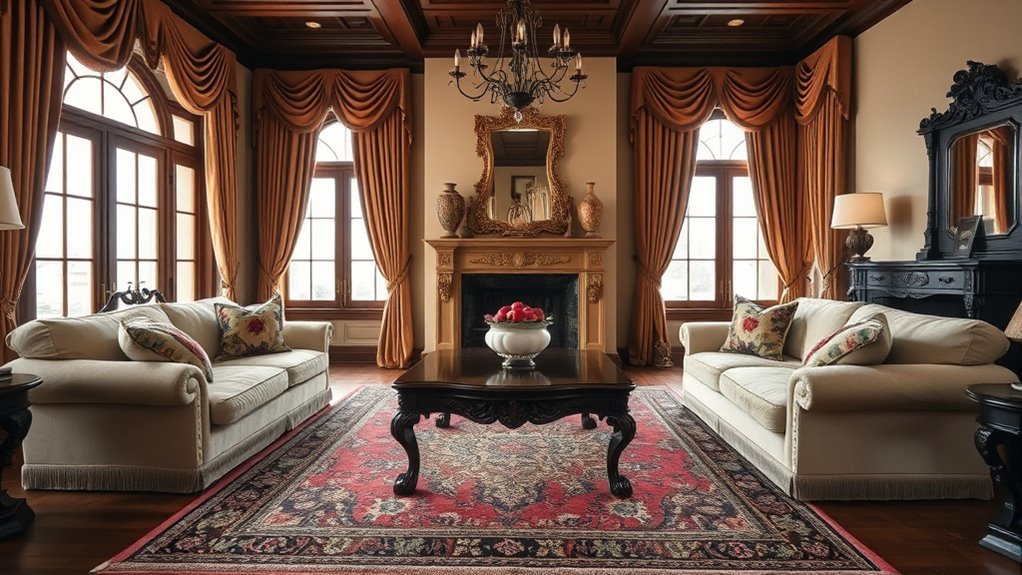
As you explore inspiring examples of traditional living room designs, look for the design choices that make the rooms work. A polished traditional space often includes a neutral base, a rich accent color, a strong rug, a comfortable seating plan, and a mix of old and new details.
- Classic fireplace room: Arrange a sofa and two chairs around the fireplace, then add matching lamps and a patterned rug.
- Library-style living room: Use built-in bookcases, leather chairs, warm wood, and shaded lamps for a cozy reading-room feel.
- Light traditional room: Pair cream upholstery with warm wood, blue-and-white ceramics, soft curtains, and framed art.
- Modern traditional room: Keep the sofa classic, then add cleaner tables, simple curtains, and one piece of modern art.
The best traditional living rooms feel personal. Vintage art pieces add a touch of history, ornate chandeliers or shaded lamps bring warm light, and traditional rugs ground the space. When these elements are chosen with restraint, the result is inviting and refined rather than stiff.
Frequently Asked Questions
What is a traditional style room?
A traditional style room uses classic furniture shapes, balanced layouts, warm colors, wood tones, layered textiles, and decorative details. It often includes pieces such as rolled-arm sofas, wingback chairs, wood tables, patterned rugs, framed art, and table lamps.
Is traditional style coming back?
Traditional style never fully disappeared, but it is being refreshed in many homes with cleaner lines, lighter finishes, fewer accessories, and more comfortable furniture. The most current version feels collected and warm, not overly formal or crowded.
What is traditional interior style?
Traditional interior style is a classic decorating approach inspired by historic European and American interiors. It emphasizes symmetry, craftsmanship, comfortable upholstery, wood furniture, warm palettes, elegant lighting, and layered fabrics such as curtains, rugs, pillows, and upholstery.
What colors work best in a traditional living room?
Warm neutrals such as cream, beige, ivory, taupe, and warm gray make a good base. Rich accent colors such as navy, burgundy, forest green, deep teal, and oxblood add depth. Antique brass, bronze, and dark wood finishes complete the classic palette.
How do you make a traditional living room feel modern?
Keep the classic foundation, then simplify the details. Use cleaner-lined tables, updated lighting, lighter wall colors, edited accessories, and one or two modern art pieces. Avoid heavy matching furniture sets and let the room breathe.
What are the different styles of living rooms?
Common living room styles include traditional, transitional, modern, contemporary, rustic, coastal, industrial, mid-century modern, farmhouse, Scandinavian, bohemian, and eclectic. Traditional style is usually warmer, more layered, and more symmetrical than minimalist or contemporary styles.
Conclusion
Traditional living room style creates a timeless sanctuary when it balances comfort, structure, and personal detail. Start with a practical seating layout, choose classic furniture shapes, add warm wood and layered textiles, then finish the room with lighting, art, books, and meaningful accessories. The result should feel elegant, but never untouchable. A traditional living room is at its best when it welcomes real conversation, quiet evenings, and cherished gatherings.
Sources
- Drew & Jonathan: What Is Traditional Interior Design? — supports the core design traits of traditional interiors, including symmetry, rich wood tones, classic furniture, layered fabrics, decorative details, and warm palettes.
- Encyclopaedia Britannica: Interior Design in England — provides historical background on Western domestic interiors, decoration, furniture, and architectural features.
- Victoria and Albert Museum: Textiles Collection — supports the discussion of woven, printed, embroidered, tapestry, carpet, and other textile traditions used in classic interiors.
- National Park Service: Preservation Brief 18, Rehabilitating Interiors in Historic Buildings — supports the guidance to identify and protect character-defining interior features in older or historic homes.
- U.S. Consumer Product Safety Commission: AnchorIt.gov — supports the furniture and TV anchoring safety note.