
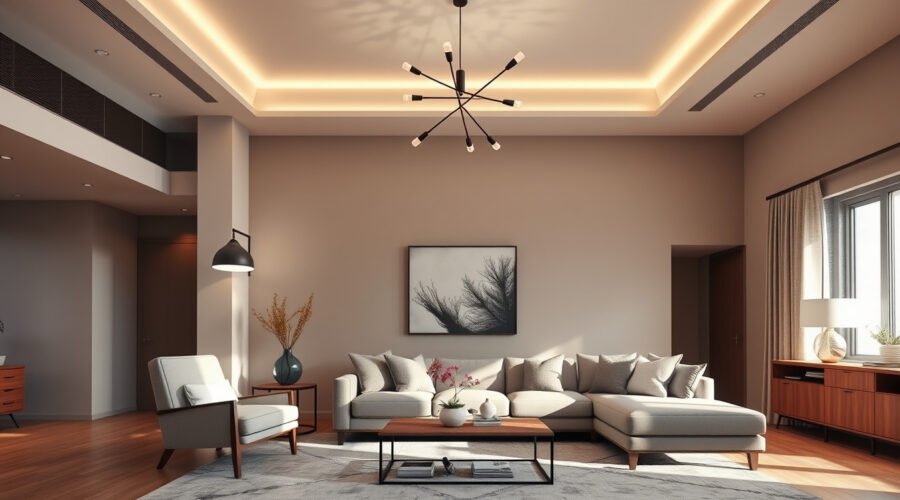
Choosing between pendant lights and chandeliers for a living room ceiling comes down to how you use the room, how tall the ceiling is, and whether you want focused light, a decorative centerpiece, or both. Pendants usually feel lighter and more flexible, while chandeliers create a stronger focal point and broader ambient glow.
Quick Answer
Choose pendant lights if your living room needs focused light over a coffee table, reading corner, or compact seating area. Choose a chandelier if you want a central statement fixture that spreads ambient light across a larger room. For the best result, match the fixture to ceiling height, room scale, bulb brightness, and installation requirements.
Key Takeaways
- Pendant lights work best when you want directional light, visual rhythm, or a smaller fixture that does not overpower the room.
- Chandeliers work best when you want a decorative focal point, broader ambient lighting, and a more formal or dramatic look.
- Ceiling height, fixture weight, light output, and dimmer compatibility matter as much as style.
- For electrical work, follow manufacturer instructions and local code, and hire a qualified electrician if you are unsure.
What Are Pendant Lights and Their Benefits?
Pendant lights are hanging ceiling fixtures suspended by a cord, chain, stem, or rod. They are often used as single fixtures, but they can also be installed in pairs, rows, or clusters to create a stronger design feature. In a living room, pendants are useful when you want light directed toward a specific zone, such as a reading chair, game table, console, or coffee table.
The biggest benefit of pendant lighting is control. A shaded pendant can direct light downward, a glass pendant can spread light more softly, and a cluster of smaller pendants can add visual interest without the mass of a large chandelier. Pendant lights also come in many styles, from slim modern cylinders to woven, glass, metal, globe, and sculptural designs.
Pendants are especially helpful in smaller living rooms because they can add height and personality without taking up floor space. They can also work well in rooms where one large chandelier would feel too heavy or formal.
Note: A pendant is not automatically “task lighting.” Its effect depends on the shade, bulb, beam spread, height, and location. For reading or detailed tasks, choose a fixture and bulb combination that sends enough light to the surface where you need it.
What Are Chandeliers and Their Unique Features?
Chandeliers are decorative hanging fixtures that usually have multiple arms, branches, rings, tiers, or light sources. Traditional chandeliers may feature crystals, candles, glass, or ornate metalwork, while modern chandeliers can be simple, linear, sculptural, or minimalist.
In a living room, a chandelier often works as the main visual anchor. It draws the eye upward, helps define the seating area, and spreads light across the room. Chandeliers are especially effective in larger living rooms, rooms with vaulted or high ceilings, and spaces where the ceiling fixture is meant to feel like part of the decor rather than just a light source.
A chandelier does not have to be formal. A simple wagon-wheel chandelier, a frosted-glass globe chandelier, or a clean linear chandelier can suit casual, transitional, farmhouse, coastal, or contemporary rooms. The key is scale: the fixture should feel intentional, not cramped, undersized, or visually heavy.
Pendant Lights vs. Chandeliers: Main Differences
Both fixtures can be beautiful in a living room, but they solve different design problems. Use this comparison as a starting point before choosing a fixture.
| Feature | Pendant Lights | Chandeliers |
|---|---|---|
| Best role | Focused lighting, accent lighting, or smaller decorative statements | Main focal point and broader ambient lighting |
| Best room size | Small to medium rooms, specific zones, or layered layouts | Medium to large rooms or rooms with a defined central seating area |
| Ceiling needs | More flexible; slim pendants can suit moderate ceilings | Often better with higher ceilings or placement over furniture |
| Style impact | Light, modern, casual, sculptural, or clustered | Grand, elegant, formal, dramatic, or architectural |
| Maintenance | Usually simpler, especially with one shade or bulb | Can require more dusting and bulb changes, especially with crystals or many arms |
| Installation | Often lighter, but still must be safely mounted and wired | Often heavier and may need stronger support or professional installation |
Recommended Products

Height Adjustable Chandelier: The hanging height of this chandelier can be adjusted by changing the number of rods, maximum hanging height is 53.8 inches. This sputnik chandeliers also suitable for sloped ceiling

【Unique Design】This crystal chandelier light fixture is crafted with 3-tier high-quality crystal and Aluminum frame, sturdy in construction. It will update your home with its luxury style and eye-catching design. And showing a kind of artistic beauty under the kithen island lighting. It is good Ideal for home decoration.

ELEGANT AND DURABLE DESIGN – Crafted with classic electroplating technology, the RUIYEY black and gold chandelier features a finish that resists rust. Its luxurious look makes it a perfect fit for dining rooms, living rooms, bedrooms, foyers, corridors, bars, offices, kitchens, cafes, and even farmhouses
How to Decide Between Pendant Lights and Chandeliers
Start with the purpose of the light. If your living room already has lamps, sconces, or recessed lights and you only need a decorative accent over one zone, pendant lights may be enough. If the room lacks a central feature and needs a fixture that visually pulls the space together, a chandelier is usually the stronger choice.
Next, look at scale. A small pendant can disappear in a large room, while a large chandelier can crowd a low ceiling. As a rough design starting point, add the room’s length and width in feet, then use that number in inches as a possible fixture diameter. For example, a 12-by-14-foot room suggests a fixture around 26 inches wide. Adjust up or down based on furniture size, ceiling height, shade openness, and the fixture’s visual weight.
Finally, think about the mood. Pendant lights tend to feel casual, clean, and flexible. Chandeliers tend to feel more finished, layered, and decorative. Neither option is automatically better; the best choice is the one that supports the room’s layout and the way you actually use the space.
Which Fixture Fits Your Living Room Best?
A chandelier usually fits best when the living room has a clear center point: a seating group, large rug, fireplace axis, or high ceiling. It can make the room feel complete because it acts like jewelry for the ceiling. If your living room feels flat or unfinished, a chandelier can add shape, sparkle, and height.
Pendant lights fit best when you want a more tailored look. One pendant can highlight a corner chair or side table. Two or three pendants can create rhythm above a long console, built-in bench, or narrow living room. A cluster pendant can give you chandelier-like impact without a traditional chandelier shape.
For low ceilings, be careful with both options. In walkways, avoid any hanging fixture that people could bump into. Over a coffee table, ottoman, or other anchored surface, a hanging fixture is easier to place because people are less likely to walk directly under it. In very low rooms, a flush mount, semi-flush mount, or low-profile chandelier may be safer and better proportioned.
How Do Pendants Provide Task Lighting Compared to Chandeliers’ Ambient Light?
Lighting works best when it is layered. The U.S. Department of Energy explains that ambient lighting provides general illumination, task lighting supports specific activities, and accent lighting highlights special features. A pendant often works well for task or accent lighting because it can bring light closer to a surface. A chandelier often works well for ambient lighting because it spreads light more broadly.
| Lighting Need | Better Fixture Choice | Why It Works |
|---|---|---|
| Reading chair or game table | Pendant light | Can direct light toward a specific activity zone |
| Large seating area | Chandelier | Spreads light more widely and anchors the room |
| Layered, cozy evening light | Either, with dimmers and lamps | Ceiling fixtures should work with floor lamps, table lamps, and sconces |
| Decorative focal point | Chandelier or pendant cluster | Both can add drama when sized correctly |
The U.S. Department of Energy also recommends matching the amount and quality of light to the function being performed and using task lights where needed instead of simply making the entire room brighter. That is why a pendant over a reading area and a softer chandelier over a seating group can work beautifully together.
When to Choose Pendant Lights vs. Chandeliers for Aesthetic Appeal
Choose pendant lights when you want a cleaner, more modern, or more relaxed look. Pendants can feel airy because they usually have less visual mass than chandeliers. They also allow more creativity: you can choose one oversized pendant, a pair of matching pendants, or a cluster of different shapes.
Choose a chandelier when you want the ceiling fixture to be the room’s centerpiece. Chandeliers are ideal when the living room needs a sense of polish, symmetry, or drama. A chandelier can soften a square room, balance a large sectional, or make a vaulted ceiling feel intentional instead of empty.
You can also combine both styles. For example, a living room could have a low-profile chandelier in the center and a small pendant over a reading nook. The key is to repeat at least one design element, such as finish, shape, glass style, or color temperature, so the fixtures feel related.
Bulbs, Lumens, Color Temperature, and Dimmers
The fixture is only half the decision. The bulb determines much of the brightness, warmth, glare, and energy use. When comparing fixtures, check the maximum wattage, compatible bulb base, LED compatibility, dimmer compatibility, and whether bulbs are exposed or shaded.
For brightness, shop by lumens instead of watts. ENERGY STAR notes that brightness is measured in lumens, not watts. The U.S. Department of Energy gives a helpful rule of thumb: about 450 lumens replaces a 40-watt incandescent bulb, about 800 lumens replaces a 60-watt incandescent bulb, and about 1,100 lumens replaces a 75-watt incandescent bulb.
For warmth, look at color temperature. The U.S. Department of Energy explains that lower Kelvin temperatures around 2700K to 3000K are considered warm, while higher Kelvin temperatures are cooler. In most living rooms, warm white bulbs around 2700K to 3000K create a comfortable, flattering glow. For reading areas, you may prefer a slightly brighter bulb or a separate task lamp.
For color quality, check CRI. A light source with a CRI of 80 or higher is generally acceptable for most indoor residential uses, according to the U.S. Department of Energy. If your living room has artwork, rich fabrics, wood tones, or colorful decor, higher CRI bulbs can help colors look more natural.
Pro Tip: Put living room pendants and chandeliers on a compatible dimmer whenever possible. Dimming lets the same fixture work for cleaning, reading, entertaining, and relaxed evening light. Always confirm that the LED bulbs, fixture, and dimmer are designed to work together.
Ease of Installation: Pendant Lights vs. Chandeliers
Pendant lights are often easier to handle because they are usually smaller and lighter. A simple pendant may use one canopy, one cord or stem, and one shade. Chandeliers can be more complex because they may have multiple arms, heavier materials, more bulbs, crystals, or larger mounting hardware.
That said, “easier” does not mean risk-free. Both pendants and chandeliers must be attached to a ceiling box and support system rated for the fixture. Heavy chandeliers may require additional blocking, a stronger box, or professional installation. Always follow the fixture manufacturer’s instructions and local electrical requirements.
Warning: Electrical work can cause shock, fire, or injury if done incorrectly. The Electrical Safety Foundation International recommends hiring a qualified, licensed electrician for home electrical work. If you do any approved DIY work, turn off power at the breaker, test wires before touching them, and never take on a project beyond your skill level.
Installation Complexity
A pendant is usually less complicated when it has one light source and a lightweight shade. It may still need careful height adjustment, wire trimming, canopy alignment, and secure mounting.
A chandelier often takes more planning. Large chandeliers may need two people to lift, assemble, and hold the fixture during installation. Multi-light chandeliers also require more careful bulb selection so the total brightness does not become harsh.
Weight Considerations
Weight matters because the ceiling must safely support the fixture. Lightweight pendants are usually easier to place, but oversized pendants can still be heavy. Chandeliers made with metal, wood, glass, or crystal can be much heavier than they look in product photos.
Before buying, check the listed fixture weight and compare it with the ceiling box, mounting hardware, and manufacturer requirements. For a heavy fixture, hire a qualified electrician or contractor to confirm the ceiling support is appropriate.
Wiring Requirements
Both pendants and chandeliers must be wired correctly. A simple one-light pendant may have fewer connections than a multi-arm chandelier, but the same safety principles apply. Turn off power, verify the circuit is off, follow the wiring diagram, and use the correct mounting hardware.
If the room does not already have an overhead junction box where you want the fixture, the project becomes more involved. Running new wiring, moving a ceiling box, or installing heavier support is usually a job for a licensed electrician.
Best Use Cases for Pendant Lights in Living Rooms
Pendant lights are a strong choice when you want style and function without the formality of a chandelier. They work especially well in these living room situations:
- Reading nooks: A downward-facing pendant can add focused light beside a chair without using floor space.
- Small living rooms: A slim pendant can add personality while keeping the ceiling visually light.
- Modern or minimalist rooms: Simple pendants suit clean lines and uncluttered furniture.
- Long or narrow spaces: Two or three pendants can create rhythm and help balance the room’s shape.
- Layered lighting plans: Pendants can support lamps, sconces, and recessed lighting instead of trying to light the whole room alone.
Best Use Cases for Chandeliers in Living Rooms
Chandeliers are best when the fixture should be noticed. They work especially well in these living room situations:
- High ceilings: A chandelier fills vertical space and prevents the ceiling from feeling empty.
- Large seating groups: A wider chandelier can visually anchor a sofa, sectional, and rug.
- Formal or traditional rooms: Crystal, brass, bronze, or candle-style chandeliers add classic elegance.
- Open-concept spaces: A chandelier can define the living area within a larger room.
- Statement interiors: Sculptural chandeliers can act like functional artwork.
Choosing the Right Pendant or Chandelier for Your Living Room
The best fixture should match your room’s scale, style, and lighting needs. Do not choose by looks alone. A beautiful fixture can still disappoint if it is too dim, too bright, too low, too small, or too hard to clean.
Recommended Products

🌈Dimmable Ceiling Light: Light memory function is easy to operate,Modern ring chandelier with stepless 5%-100% brightness, 3000-6000K color temperatures dimmable

Black Farmhouse Chandelier: Embracing a rustic and industrial style, this farmhouse chandelier features 6 elegantly simple lamp arms. The structure is solid, and the surface is finished with matte black, showcasing a classic and simple aesthetic. This black chandelier light fixture can be used in various spaces such as the kitchen island, bedroom, foyer, dining table, living room, entryway, farmhouse, and office.
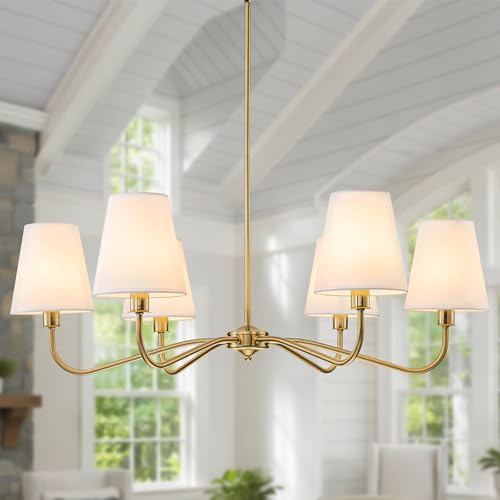
Farmhouse Dining Room Chandelier: This gold chandelier with shades features a stylish gold metal frame, paired with soft white fabric lampshades, achieving a balance between modern simplicity and classic charm. The fabric lampshade of this visual comfort lighting is made of fine and durable materials, which gently and evenly diffuse light, creating a warm and enticing glow
Style Compatibility
Match the fixture to the room’s existing finishes. A black metal pendant can connect with black window frames, cabinet pulls, or fireplace details. A brass chandelier can warm up a neutral room. A glass fixture can feel lighter in a small space, while a wood or woven fixture can soften a room with many hard surfaces.
Also consider shape. Round chandeliers soften square rooms. Linear fixtures work well with long sofas or rectangular coffee tables. Globe pendants can echo curved furniture. Angular pendants can sharpen a modern design.
Lighting Functionality Considerations
Ask what the ceiling fixture needs to do. If it must light the whole room, a chandelier or multi-light fixture may be better. If it only needs to highlight one zone, a pendant may be more practical. If the room serves many purposes, use the ceiling fixture as one layer and add table lamps, floor lamps, or sconces for comfort and flexibility.
| Choose This | When Your Priority Is |
|---|---|
| Pendant light | Focused light, smaller scale, modern style, or a specific seating zone |
| Chandelier | Ambient glow, a central focal point, larger scale, or a finished designer look |
| Both | A layered room with one main fixture and one smaller task or accent zone |
| Neither | Very low ceilings, heavy foot traffic under the fixture, or a room better suited to flush mounts and lamps |
Cost and Maintenance Differences
Pendant lights are often less expensive than chandeliers, especially when they have one shade and one bulb. However, designer pendants, oversized pendants, and pendant clusters can cost as much as a chandelier. Installation can also change the total cost if wiring or ceiling support needs to be added.
Chandeliers often cost more because they are larger, have more parts, and may require more complex installation. They can also take longer to clean. Crystal drops, exposed bulbs, and multiple arms collect dust, while a simple glass or metal pendant may only need a quick wipe.
For easier maintenance, choose fixtures with accessible bulbs, removable shades, and finishes that do not show dust or fingerprints easily. If the fixture hangs high above a stairwell or vaulted living room, factor in how you will safely clean it and replace bulbs.
Recommended Products

💡𝗕𝗥𝗜𝗟𝗟𝗜𝗔𝗡𝗧 & 𝗘𝗙𝗙𝗜𝗖𝗜𝗘𝗡𝗧: Consumes 100W to produce 12000 lm of high-output illumination, replacing 400 MH/HPS lamps. Enjoy powerful light while saving on your energy bills.

【 Walnut Wooden Pattern Pendant Light 】 ELYONA pendant light fixture classic walnut wood pattern with black metal shade, gold tone interior for a vintage look.The retro pendant lamp adds a touch of modern and industrial feeling. Ideal for kitchen island, dining room, living room, office, coffee bar, bedroom, beside nightstand. Add this industrial looking to your home now!

MODERN GOLD PENDANT LIGHT - The graceful gold pendant light with stylish spiral shape design. minimalist yet stylish look will add more modern style to your room.
Energy Efficiency and LED Choices
Energy-efficient bulbs can improve either fixture type. The U.S. Department of Energy says LEDs use up to 90% less energy and last up to 25 times longer than traditional incandescent bulbs. That makes LED bulbs a smart choice for both pendants and chandeliers, especially in living rooms where lights stay on for long periods.
For the most comfortable living room result, avoid choosing the highest-lumen bulbs automatically. More light is not always better. Instead, use enough light for the room’s function, choose a warm color temperature for comfort, and add dimming or lamps so the room can shift from bright daytime use to soft evening relaxation.
Frequently Asked Questions
What type of light fixture is best for a living room?
The best living room fixture is usually one that works with layered lighting. Choose a chandelier if you need a central focal point and ambient glow. Choose pendant lights if you need focused light over a smaller zone. In many living rooms, the best setup combines a ceiling fixture with table lamps, floor lamps, or sconces.
Should a living room have a chandelier?
A living room should have a chandelier if the room has enough ceiling height, a clear central seating area, and a style that benefits from a statement fixture. A chandelier is not required, though. In low-ceiling or casual rooms, pendants, semi-flush mounts, lamps, and sconces may work better.
Can pendant lights be used in a living room?
Yes. Pendant lights can work beautifully in a living room, especially over a reading chair, coffee table, game table, side table, or compact seating area. They are also useful in small rooms where a chandelier would feel too large or formal.
Are chandeliers brighter than pendant lights?
Not always. Brightness depends on lumens, bulb count, shade material, and fixture design. A chandelier with several bulbs can be brighter than one pendant, but a large LED pendant can produce plenty of light. Compare total lumens, not just fixture type.
How low should a pendant or chandelier hang in a living room?
The right height depends on ceiling height, furniture placement, and whether people walk underneath the fixture. Over a coffee table or other anchored surface, a hanging fixture can sit lower than it should in a walkway. Always keep comfortable head clearance and follow the manufacturer’s installation instructions.
Are pendant lights easier to clean than chandeliers?
Usually, yes. A simple pendant with one shade is often easier to clean than a chandelier with several arms, bulbs, or crystals. However, a large glass pendant or a cluster of pendants can still require regular dusting.
Can I install a pendant light or chandelier myself?
Only take on electrical work that is allowed in your area and within your skill level. Turn off power at the breaker, test wires before touching them, and follow the fixture instructions exactly. For heavy fixtures, new wiring, uncertain ceiling support, or any doubt, hire a qualified licensed electrician.
Conclusion
When comparing pendant lights vs. chandeliers for a living room ceiling, choose based on function first and style second. Pendant lights are ideal for focused zones, smaller rooms, and flexible modern layouts. Chandeliers are best for larger spaces, high ceilings, and rooms that need a central decorative anchor.
The most polished living rooms often use more than one layer of light. A chandelier or pendant can set the tone, while lamps, sconces, dimmers, and the right LED bulbs make the room comfortable day and night. Before installing either fixture, confirm the weight, mounting support, wiring, bulb compatibility, and safe clearance so your choice looks beautiful and works safely.
Sources
- U.S. Department of Energy — Lighting Principles and Terms — backs up ambient, task, accent lighting, lumens, color temperature, CRI, and glare guidance.
- U.S. Department of Energy — Lighting Design — backs up matching light quality and quantity to room function and using task lighting where needed.
- ENERGY STAR — Learn About Brightness — backs up choosing bulbs by lumens instead of watts.
- U.S. Department of Energy — Lighting Choices to Save You Money — backs up LED efficiency and lighting-control guidance.
- Electrical Safety Foundation International — DIY Electrical Safety — backs up electrical-work safety recommendations.



[…] Pendant Lights vs Chandeliers: Living Room Guide 2026 […]