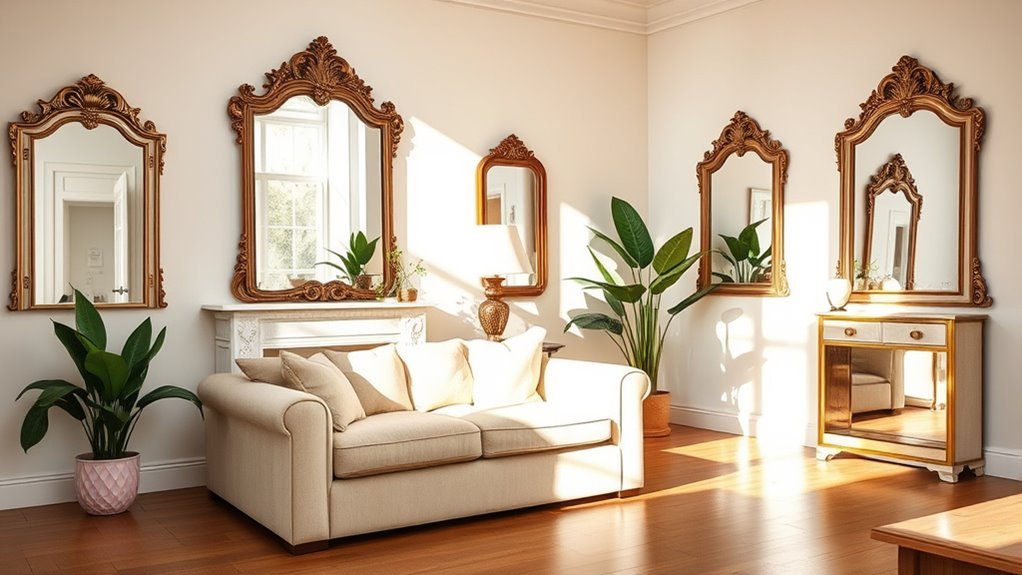
Mirrors can make a living room feel brighter, wider, and more welcoming when they reflect the right light and the right view. The key is not simply hanging the biggest mirror you can find; it is choosing the right size, testing the angle, avoiding glare, and using safe hardware for the mirror’s weight.
Quick Answer
To brighten a living room with mirrors, place a large mirror where it reflects daylight from a window, a bright wall, or a lamp—not clutter or glare. Use a simple frame, test the angle from your main seating area, and hang it with hardware rated for the mirror’s weight.
Key Takeaways
- Mirrors brighten best when they reflect daylight, pale walls, greenery, artwork, or lamps—not dark corners or visual clutter.
- A large mirror usually has more impact than several tiny mirrors, but the best size depends on the wall, furniture, and viewing angle.
- Place mirrors across from or beside windows to redirect available light, but avoid reflecting direct sun into seating areas or TV screens.
- Heavy mirrors need proper mounting hardware, wall anchors, or studs; adhesive products should only be used within the manufacturer’s stated weight limits.
At a Glance
| Time Required | 30–60 minutes to test placement; 30–90 minutes to hang, depending on mirror size and wall type. |
| Difficulty | Easy for lightweight mirrors; moderate for large, heavy, or oddly shaped mirrors. |
| Tools Needed | Tape measure, painter’s tape, pencil, level, stud finder, wall anchors or mirror hardware rated for the mirror’s weight, and a helper for large mirrors. |
| Cost | $0 if repositioning a mirror you already own; usually $20–$300+ for a new mirror, depending on size and frame. |
Why Brightening Your Living Room Is Essential
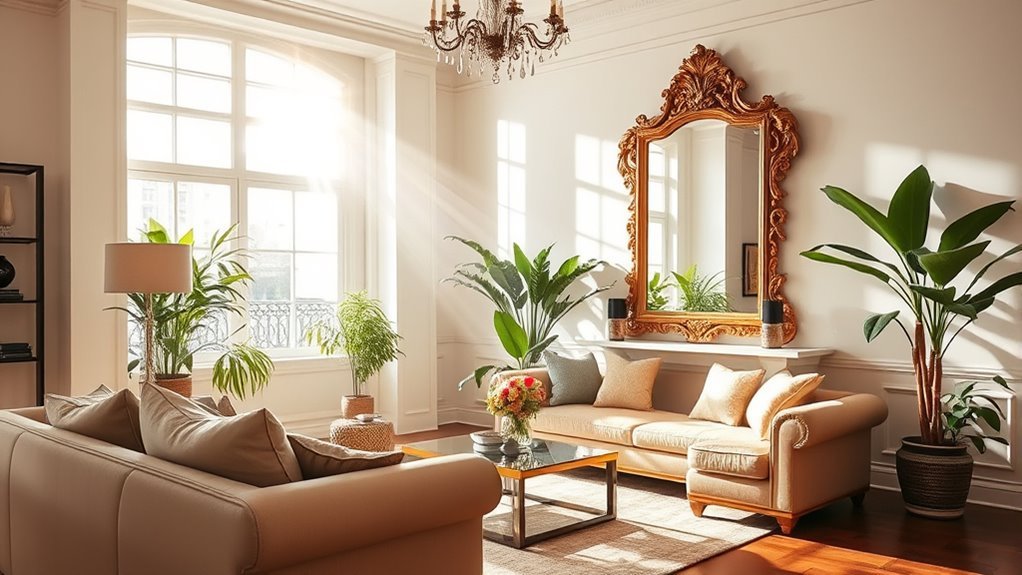
A brighter living room feels cleaner, larger, and easier to enjoy during the day. Good daylight also helps reduce the need for artificial lighting during daylight hours, which is why the U.S. Department of Energy describes daylighting as the use of windows and skylights to bring sunlight into the home.
Mirrors help because they redirect available light. A mirror does not magically double the amount of sunlight in the room, but it can reflect light at a useful angle and make a dim wall, dark corner, or narrow layout feel more open. The basic physics is simple: according to OpenStax College Physics, a mirror reflects light at a specific angle, so the position of the mirror matters as much as its size.
A mirror brightens a room best when it reflects something bright: daylight, a pale wall, a lamp, greenery, or a clean view.
Daytime light can also support a healthier-feeling daily rhythm. A large 2023 study in Nature Mental Health found that greater daytime light exposure was associated with reduced risk for several mental-health outcomes, while higher nighttime light exposure was associated with increased risk. For a decorating article, the practical takeaway is simple: make the most of comfortable daytime light, then keep evening lighting soft and controlled.
Evaluate Your Living Room’s Natural Light Sources
Before you hang anything, watch how light moves through the room. A mirror placed in the wrong spot can reflect a blank wall, a TV glare spot, or clutter. A mirror placed well can pull daylight deeper into the room and make the whole layout feel lighter.
- Count your windows. Note which walls have windows and which parts of the room stay dim.
- Check the direction. South-facing windows often bring strong winter light when shaded well; north-facing windows tend to give softer, more even light; east-facing windows brighten the morning; west-facing windows brighten late afternoon but can create glare and heat.
- Look for obstructions. Trees, neighboring buildings, deep porches, heavy curtains, and large furniture can all block daylight.
- Notice wall color. Pale walls, ceilings, and rugs help diffuse light. Dark walls can look dramatic but may make the room feel less bright.
- Test at different times. Check the room in the morning, midday, and late afternoon before choosing a final mirror location.
| What to Check | Why It Matters | Best Mirror Move |
|---|---|---|
| Bright window | Strongest source of natural light | Place a mirror across from it or slightly to the side to redirect light. |
| Dark corner | Makes the room feel smaller | Use a tall mirror, corner mirror, or lamp-plus-mirror pairing. |
| TV or glossy screen | Can create glare | Angle the mirror away from the screen and main seating. |
| Cluttered shelf or doorway | Mirrors repeat whatever they face | Reflect art, plants, windows, or a clean wall instead. |
Note: If your room has little daylight, mirrors still help, but they work best with lamps, pale surfaces, and clear window treatments. A mirror cannot replace poor lighting; it can only reflect the light already available.
Choose the Right Size and Shape of Mirrors
The right mirror size depends on the wall, the furniture below it, and what you want the mirror to reflect. In general, larger mirrors create a stronger brightening effect because they reflect a larger area of the room. Still, bigger is not always better if the mirror overwhelms the furniture or reflects a messy view.
Use large mirrors for the biggest brightness boost
A large wall mirror works well across from a window, above a console, behind a lamp, or on a long blank wall. If the mirror sits above a sofa, console, or mantel, choose a width that feels connected to the furniture rather than tiny and floating. A common design starting point is to choose a mirror that is roughly two-thirds to three-quarters the width of the furniture below it, then adjust based on the room’s proportions.
Use vertical mirrors to lift the room
A tall vertical mirror can make a low-ceiling room feel higher and can brighten narrow corners. This is especially useful near an entry into the living room, beside a bookcase, or on a slim wall that cannot fit wide artwork.
Use round mirrors to soften the space
Round mirrors work well in rooms with many straight lines, such as boxy sofas, rectangular windows, square coffee tables, and built-in shelving. They add softness while still reflecting light.
Use rectangular mirrors for structure
Rectangular mirrors feel classic and architectural. They are often the best choice above sofas, sideboards, fireplaces, and long console tables because their shape echoes the furniture below.
Pro Tip: Before buying a large mirror, outline the size on the wall with painter’s tape. Sit in your normal seat and check what the taped area would reflect. If it reflects a window, lamp, plant, or pale wall, you are on the right track.
Pick Simple Frames to Maximize Light Reflection
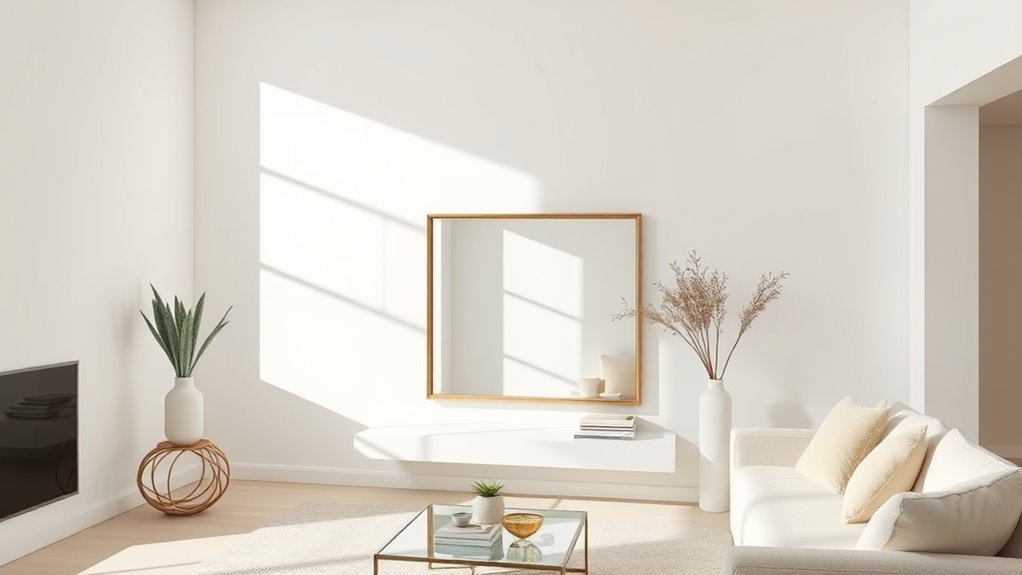
Frame style affects how bright and airy the mirror feels. A thick, dark, ornate frame can be beautiful, but it draws attention to the frame itself. A thin, pale, metallic, or frameless design lets the reflected light and view do more of the work.
- Choose thin frames for small rooms. They keep the wall from feeling crowded.
- Try metallic finishes. Brass, chrome, nickel, and silver finishes bounce small highlights around the room.
- Use pale wood for warmth. Light oak, ash, and whitewashed wood feel bright without looking cold.
- Reserve dark frames for contrast. A black or walnut frame can ground the room, but it will feel more dramatic than light-enhancing.
- Keep the glass clean. Dust, fingerprints, and streaks reduce the crisp reflected look.
If your living room already has many patterns, choose a simple mirror. If the room is very plain, a shaped mirror or subtle frame detail can add personality without making the wall feel heavy.
Experiment With Various Mirror Positions for Increased Brightness
Mirror placement is the most important part of brightening a living room. Walk around the room with a small hand mirror first, or ask someone to hold the mirror in different spots while you view it from the sofa, entry, and main walkway.
| Mirror Position | Best Effect | Watch Out For |
|---|---|---|
| Across from windows | Reflects daylight and outdoor views deeper into the room | Direct glare, especially from west-facing windows |
| Beside or perpendicular to windows | Spreads light more gently without a harsh reflection | Reflecting a blank or dark wall |
| Near light fixtures | Amplifies lamp glow in the evening | Visible bulb glare in the mirror |
| Above a console, mantel, or sofa | Creates a focal point and opens the wall visually | Hanging too high or choosing a mirror too small |
| Clustered on one wall | Adds sparkle and visual interest | Busy reflections or a dated gallery-wall effect |
| Dark corner | Softens shadows when paired with a floor lamp or plant | Reflecting only darkness unless a light source is nearby |
Warning: Do not place a mirror where it reflects direct sun into someone’s eyes, onto a TV screen, or onto heat-sensitive artwork and finishes. If the reflection feels harsh at any time of day, shift the mirror slightly sideways or angle it toward a softer surface.
Step-by-Step Plan to Brighten Your Living Room With Mirrors
- Start with the brightest view. Stand near your main seating area and identify the window, lamp, pale wall, or outdoor view you want to reflect.
- Mark the mirror zone. Use painter’s tape to outline the mirror on the wall before drilling any holes.
- Check the reflection while seated. A mirror that looks good while standing may reflect glare when you sit down.
- Adjust the height. Start around eye level, then lower it slightly above sofas or consoles so it feels connected to the furniture.
- Test morning and afternoon light. If the mirror catches harsh afternoon sun, move it beside the window instead of directly across from it.
- Layer with lamps. If daylight is weak, place a table lamp or floor lamp where the mirror can reflect a soft glow.
- Clean up the reflected view. Remove clutter, visible cords, or crowded shelves from the mirror’s reflection.
- Install safely. Use hardware rated for the mirror’s weight and wall type.
How to Hang Mirrors Safely
Mirror safety matters because even a medium-size mirror can be heavy and fragile. Before you hang one, check the mirror’s weight, the hanging hardware on the back, and the wall material. Drywall, plaster, brick, tile, and wood studs all need different fasteners.
- Weigh the mirror or check the product listing. Do not guess. Hardware should be rated for more than the mirror’s actual weight.
- Find the studs when possible. For large mirrors, mounting into studs is usually the safest option.
- Use the right anchors. If studs are not in the right place, choose wall anchors or a cleat system rated for your wall type and mirror weight.
- Do not rely on adhesive strips for heavy mirrors. Manufacturer weight limits matter. 3M’s Command weight-limit guide lists specific capacities by product, and its FAQ says not to combine multiple hooks to hang something heavier than the listed weight.
- Use a level. A slightly crooked mirror is more noticeable because it reflects straight lines in the room.
- Get help for large mirrors. One person should hold the mirror while the other checks the level and hardware.
Warning: Never exceed the weight rating on hooks, anchors, adhesive strips, or mirror hardware. If the mirror is very large, antique, unusually heavy, or going above a sofa or mantel, hire a qualified installer.
Recommended Products

BEFORE YOU BUY: Each picture hanger supports up to 100 lb per hook for mirrors, framed artwork, and wall décor on drywall, plaster, or suitable wood paneling. This picture hanging hardware is not for shelves, furniture, TVs, or structural loads.
Common Mistakes That Make a Room Look Darker
Mirrors are powerful, but they can work against you if they repeat the wrong part of the room. Avoid these common mistakes:
- Reflecting clutter. A mirror doubles the visual impact of messy shelves, cords, toy piles, and crowded surfaces.
- Using a mirror that is too small. A tiny mirror on a large wall can feel lost and may not reflect enough light to matter.
- Hanging too high. If the mirror reflects only the ceiling, it may not brighten the usable part of the room.
- Ignoring glare. Direct sun, exposed bulbs, and TV reflections can make the room uncomfortable.
- Choosing a bulky dark frame in a dim room. It may look stylish, but it will feel heavier than a thin or light-toned frame.
- Skipping the lamp layer. In rooms with limited daylight, mirrors need lamps to reflect in the evening.
Frequently Asked Questions
How do you use mirrors to make a room brighter?
Place mirrors where they reflect a bright source, such as a window, pale wall, lamp, or clean outdoor view. A large mirror across from or beside a window usually has the strongest effect, but always test the angle first so it does not reflect glare or clutter.
What are common mistakes when using mirror hooks?
The biggest mistakes are ignoring the mirror’s weight, using hooks that are not rated for the load, skipping wall anchors when studs are unavailable, and combining adhesive hooks to exceed the package rating. Always match the hardware to the mirror weight and wall type.
Where should mirrors not be placed in the living room?
Avoid placing mirrors where they reflect clutter, direct sun into your eyes, glare onto the TV, or a dark hallway with no light source. Also avoid placing a heavy mirror above seating unless it is installed with secure, weight-rated hardware.
How do I make my living room look brighter besides using mirrors?
Use light wall colors, clean windows, sheer curtains, pale rugs, layered lamps, and low-profile furniture that does not block the window path. Mirrors work best when they are part of a larger light plan, not the only brightening trick.
What size mirror is best for a living room?
For the strongest brightening effect, choose the largest mirror that fits the wall and feels balanced with nearby furniture. Above a sofa, console, or mantel, a mirror that is about two-thirds to three-quarters the width of the furniture is a good starting point.
Can mirrors replace lamps in a dark living room?
No. Mirrors reflect light that already exists; they do not create new light. If your living room has limited daylight, combine mirrors with floor lamps, table lamps, sconces, and lighter surfaces for a brighter result.
Conclusion
By thoughtfully incorporating mirrors into your living room, you can transform dark corners into brighter, more useful spaces. The best results come from a balance of light, reflection, scale, and safety: choose a mirror that fits the wall, place it where it reflects something bright and beautiful, and hang it with hardware that can safely support its weight. With the right angle and a simple frame, your living room can feel more open, polished, and inviting without a major renovation.
Sources
- U.S. Department of Energy — Daylighting — supports daylighting basics and window-orientation guidance.
- OpenStax College Physics 2e — The Law of Reflection — supports how mirrors reflect light at specific angles.
- Nature Mental Health — Day and night light exposure are associated with psychiatric disorders — supports cautious wording about daytime light exposure and well-being.
- 3M Command — Product Weight Limits Guide — supports mirror-hanging cautions about product weight ratings.
- 3M Command — Product FAQs — supports the warning not to combine hooks to hang items heavier than the listed weight.