
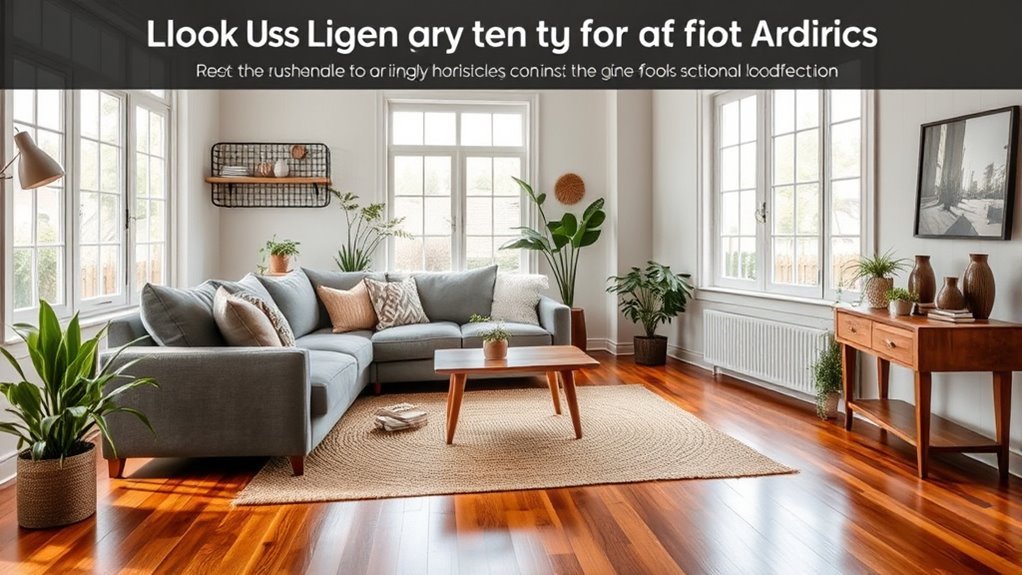
A durable living room starts with one simple question: what gets used the hardest every day? In a high-traffic space, the best design choices are not just pretty; they are washable, repairable, stable, easy to walk around, and comfortable enough for real life. The goal is to choose flooring, furniture, fabrics, rugs, lighting, and accessories that can handle kids, pets, guests, snacks, movie nights, and constant movement without making the room feel like a waiting area.
Quick Answer
To design a high-traffic living room for durability, choose hard-wearing flooring, performance upholstery, washable or stain-resistant textiles, low-pile rugs with quality pads, and furniture with sturdy frames. Keep 30 to 36 inches of main walkway space, anchor tall furniture, and create a simple cleaning routine so the room stays attractive and safe.
Key Takeaways
- Start by mapping traffic paths before buying furniture or rugs.
- Use durable flooring such as quality luxury vinyl, tile, engineered wood, or well-protected hardwood based on your household needs.
- Choose performance fabrics, leather, microfiber, or tightly woven upholstery with clear cleaning instructions.
- Use low-pile rugs, non-slip rug pads, washable covers, baskets, and rounded or sturdy tables to reduce daily wear.
- Build in maintenance: quick spill cleanup, weekly cleaning, cushion rotation, and seasonal furniture checks.
At a Glance
| Time Required | 1 to 2 hours to plan; several days to several weeks if replacing flooring or ordering furniture |
| Difficulty | Beginner for layout and fabric choices; intermediate if changing flooring |
| Tools Needed | Tape measure, painter’s tape, floor plan sketch, fabric samples, rug pad, felt furniture pads, cleaning labels |
| Cost | Low for layout and accessories; moderate to high for new upholstery, rugs, or flooring |
Map the Traffic Before You Buy Anything
Before choosing flooring or furniture, walk through the room the way your family actually uses it. Mark the path from the entry to the sofa, from the sofa to the kitchen, from the hallway to the TV, and from seating to doors or windows. These paths are where the floor, rug edges, table corners, and upholstery will take the most abuse.
Use painter’s tape to mark furniture outlines on the floor. A main walkway should ideally stay around 30 to 36 inches wide. If someone in the home uses a walker, wheelchair, stroller, or mobility aid, aim for the wider end; the U.S. Access Board’s ADA standards use 36 inches as the minimum clear width for accessible walking surfaces in covered settings.
Once you know the traffic lanes, place the most durable materials there first: hard-wearing flooring, low-profile rugs, rounded furniture corners, and tables that do not wobble when bumped.
Choosing Durable Flooring for High-Traffic Living Rooms
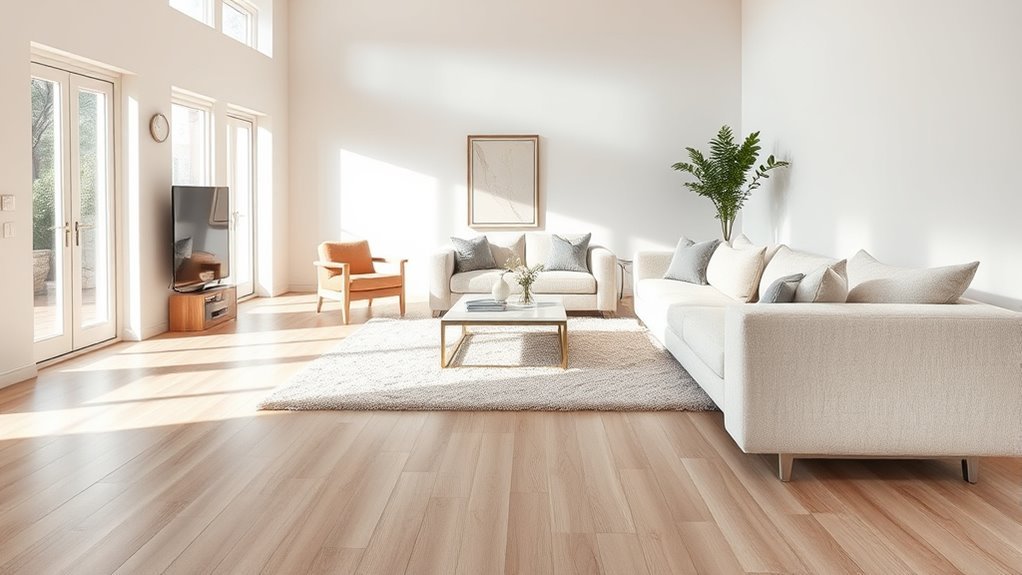
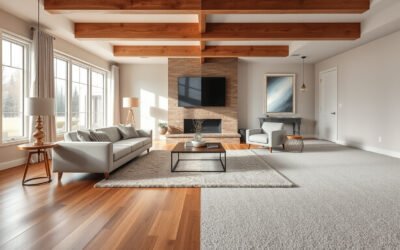
Flooring is the foundation of a durable living room. For busy homes, focus on water resistance, scratch resistance, cleanability, comfort underfoot, and how easy the surface is to repair if one area gets damaged.
Luxury vinyl plank or tile is a practical option for many high-traffic living rooms because it can offer a wood-look surface with easier maintenance than many natural materials. For example, COREtec describes its luxury vinyl planks and tiles as 100% waterproof, kidproof, and petproof, and it positions COREtec Pro as an option built for high traffic. That does not mean every vinyl floor performs the same way, so compare wear layer, warranty, core type, installation method, and manufacturer care instructions before buying.
Engineered hardwood can work well if you want a real-wood surface with more dimensional stability than solid hardwood in some conditions. Choose a durable finish, use entry mats, and protect chair and sofa legs with felt pads.
Tile or stone-look porcelain is extremely durable and easy to clean, but it can feel hard and cold in a living room. If you use it, add rugs and soft seating to balance comfort.
Carpet adds softness, but it is harder to keep spotless in a snack-heavy or pet-heavy room. If you prefer carpet, choose a dense, low-pile, stain-resistant option and keep a strict cleaning routine.
Pro Tip: Order flooring samples and test them in the room for a few days. Look at them in morning light, evening light, and under lamps. Then scratch-test a spare sample gently with a key and wipe it with the cleaner recommended by the manufacturer.
Recommended Products

LUXURY WOOD-LOOK FLOORING: Authentic natural wood grain self-adhesive vinyl planks bring classic warm vibes to quick home refreshments and match all mainstream home decor themes

Realistic Visual Effects: SULSUMIC flooring faithfully replicates authentic wood grain and natural hues, offering a look and feel that rivals solid wood. It instantly elevates your home’s aesthetics, creating a warm and comfortable living space

Timeless Charm - Stylish wood finishes offer an authentic and natural look that brings the beauty and warmth of nature into your flooring decor.
Selecting the Most Durable Furniture Materials
In a high-traffic living room, furniture durability comes from the inside out. The fabric matters, but the frame, joints, cushion fill, legs, and covers matter just as much.
For sofas and chairs, look for hardwood or quality plywood frames, reinforced corners, sturdy joinery, and legs that are either part of the frame or strongly attached. Avoid flimsy frames, thin particleboard, and pieces that creak or shift when you sit down. High-density foam cushions, spring-and-foam combinations, or down-wrapped foam can all work, but the best choice is one that keeps its shape and can be rotated.
For upholstery, strong everyday options include leather, microfiber, polyester blends, olefin, acrylic, and branded performance fabrics. Tight weaves usually resist snagging better than loose weaves. Removable cushion covers are helpful, but only if the care label allows safe cleaning.
If your living room doubles as a playroom, skip delicate legs, sharp glass corners, and tables that tip easily. Choose rounded coffee tables, storage ottomans, nesting tables, or benches with wipeable tops.
Warning: Anchor tall or top-heavy furniture, bookcases, media units, and storage pieces with drawers, doors, or shelves. The CPSC’s Anchor It campaign emphasizes anchoring these pieces to help prevent furniture and TV tip-over injuries and deaths.
Recommended Products

NOTICE :Cushion cover only, no Cushion Insert. pack of 2, 30 x 30 Inches / 75x75 cm. Hand wash recommended. Machine washable within wash bag under gentle mode. Tumble Dry Low, Do Not Iron. If any problems, please kindly contact us, we will solve it for you.

2-in-1 Convertible Sleeper Sofa for Smart Space Living: This Ball & Cast 86" convertible sectional sleeper sofa transforms from a stylish L-shaped couch into a comfortable sofa bed in seconds, maximizing seating and sleeping space in compact homes. Ideal for small apartments, living rooms, and guest-ready spaces, it is designed to optimize everyday living in limited spaces with ease and comfort. Overall size: 85.43" L × 53.54" W × 33.46" H, please measure your space before purchase.

ORDER ONLY THROW PILLOW COVERS: Including 2 or 4 pillow covers without inserts.12"x20", 16"x16", 18"x18", 20"x20" , 22"x22", 24"x24", 26"x26" inch, Please allow 1-2cm deviation because of manual cutting and measurement. Color may be different in different light or on different screen.
Designing Your Layout for Better Flow
A durable room is not only about strong materials. It also needs a layout that reduces collisions, bottlenecks, and awkward turns. Keep the main walkway clear, avoid blocking doors or windows, and leave enough space around coffee tables so people can pass without kicking table legs or rug edges.
For most high-traffic living rooms, an L-shaped or U-shaped seating arrangement works well because it supports conversation while keeping movement predictable. Pulling furniture a few inches away from the wall can make the room feel more intentional, but only do this when it does not narrow your main walkway.
- Keep main paths around 30 to 36 inches wide when possible.
- Leave about 14 to 18 inches between a sofa and coffee table for comfortable reach.
- Keep side tables close enough to set down a drink without stretching.
- Do not place low stools or baskets in the route between the sofa and doorway.
- Use furniture pads under legs to reduce scratches and dents.
Picking Stain-Resistant Fabrics for Everyday Use
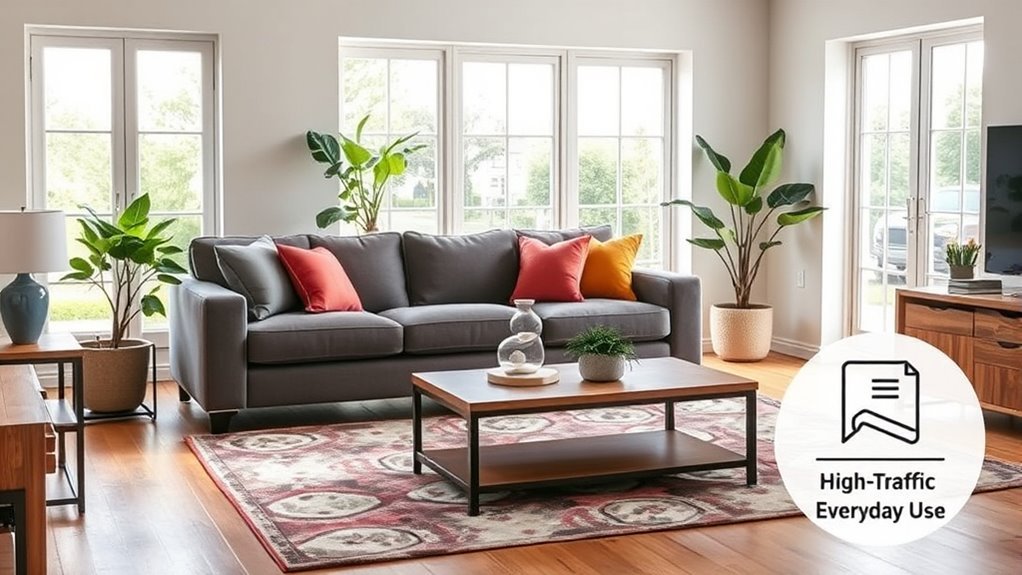
Stain-resistant fabrics are worth prioritizing in a living room that handles food, pets, shoes, or children. The best fabric is not always the thickest one; it is the one with the right fiber, weave, finish, cleaning code, and durability rating for your household.
Recommended Products

Suitable for upholstery, chairs, tablecloth, couch, pillows and seat, sofa, reupholstery
Fabric Types to Consider
Microfiber is popular for busy homes because its tight construction can resist spills and make spot cleaning easier. Polyester blends often balance durability, softness, and affordability. Olefin and acrylic can be strong options, especially in indoor-outdoor or performance fabrics. Leather can be durable and wipeable, though it may scratch and patina over time.
Rub-test ratings such as Martindale or Wyzenbeek can help you compare upholstery, but they are not a complete durability guarantee. ASTM D4966 covers Martindale abrasion testing and notes that abrasion resistance is only one factor in actual wear performance. Use rub counts as a screening tool, then also check the cleaning code, warranty, fiber content, and whether the fabric is rated for residential heavy use.
Color Choices for Durability
Color affects how long a room looks fresh. Very light solids show spills and denim transfer quickly, while very dark solids can reveal lint, pet hair, and dust. Mid-tone colors, heathered textures, tweeds, small patterns, and mixed weaves are often the most forgiving.
| Fabric or Color Choice | Why It Works in High-Traffic Rooms |
|---|---|
| Microfiber | Tight surface, easy spot cleaning, family-friendly feel |
| Performance polyester blend | Good balance of durability, softness, and stain resistance |
| Textured mid-tone fabric | Helps hide lint, crumbs, and small marks |
| Small-scale pattern | Camouflages everyday wear better than a flat solid |
Care and Maintenance Tips
Check the upholstery cleaning code before you buy. A “W” code usually means water-based cleaner is allowed, “S” means solvent-based cleaner, “W/S” means either may be acceptable, and “X” means vacuuming only. Always follow the manufacturer’s label because the wrong cleaner can leave rings, shrink fabric, or damage protective finishes.
For daily durability, blot spills instead of rubbing, vacuum upholstery seams, rotate cushions, and keep washable throws on the seats that get the most use. If pets sleep on the sofa, use a washable cover that can be removed before guests arrive.
Choose Rugs and Rug Pads That Can Handle Traffic
Area rugs make a durable living room feel warmer, but the wrong rug can curl, trap crumbs, slide, or show every footprint. In high-traffic rooms, low-pile rugs are usually easier to vacuum than shag or high-pile styles. Synthetic fibers, washable rugs, wool blends, and indoor-outdoor rugs can all work depending on comfort and cleaning needs.
A rug pad is not optional in a busy room. It helps reduce slipping, protects the floor, adds cushioning, and keeps rug edges from shifting. Choose a pad made for your exact flooring type, especially over vinyl or hardwood, because some rubber or latex backings can discolor certain floors.
- Choose low-pile or flatweave rugs for easy vacuuming.
- Use patterned or heathered rugs to hide crumbs and small stains.
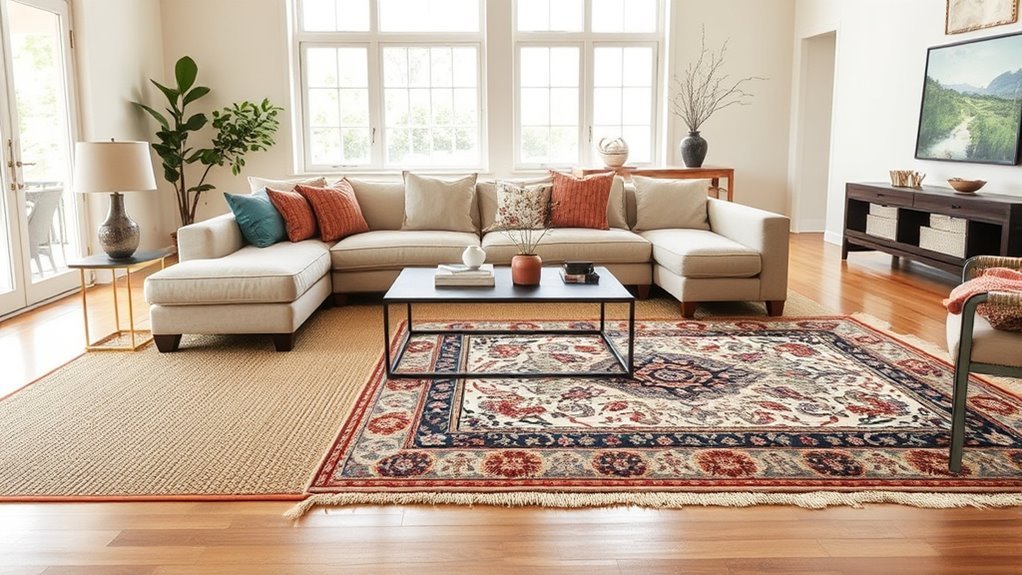
- Make sure at least the front legs of sofas and chairs sit on the rug to prevent floating, curled edges.
- Rotate rugs every few months in the highest-traffic rooms.
- Clean spills quickly and let rugs dry fully before putting furniture back.
Maximize Space and Accessibility in Your Living Room
When designing your living room, good spacing protects both the room and the people using it. Crowded furniture gets bumped, scratched, and stained faster. Open space makes the room easier to clean and more comfortable for guests.
- Maintain a clear main pathway of about 30 to 36 inches where possible.
- Use storage ottomans, lidded baskets, and media cabinets to control clutter.
- Keep toy storage near the play area so cleanup is fast.
- Choose tables with rounded corners in homes with kids or energetic pets.
- Keep cords tucked away and do not run them across walkways.
- Do not block windows, doors, heating vents, or main exit paths.
Accessibility is not only for formal ADA spaces. A wider, clearer path helps everyone: guests carrying trays, children running through, older relatives, and anyone moving through the room in low light.
Layering Lighting for Style and Function
Durable design also depends on visibility. Good lighting helps people avoid tripping, find remotes, clean spills quickly, and use each zone comfortably. Layer three types of light: ambient lighting for the whole room, task lighting for reading or games, and accent lighting for shelves, art, or architectural features.
| Lighting Type | Purpose | Good Examples |
|---|---|---|
| Ambient | General room brightness | Ceiling fixture, recessed lights, large floor lamp |
| Task | Reading, games, homework, crafts | Table lamps, swing-arm lamps, floor lamps |
| Accent | Warmth and visual focus | Sconces, picture lights, shelf lighting |
| Dimmers | Flexible brightness | Dimmable bulbs and compatible switches |
Creating Defined Zones for Multi-Functional Spaces
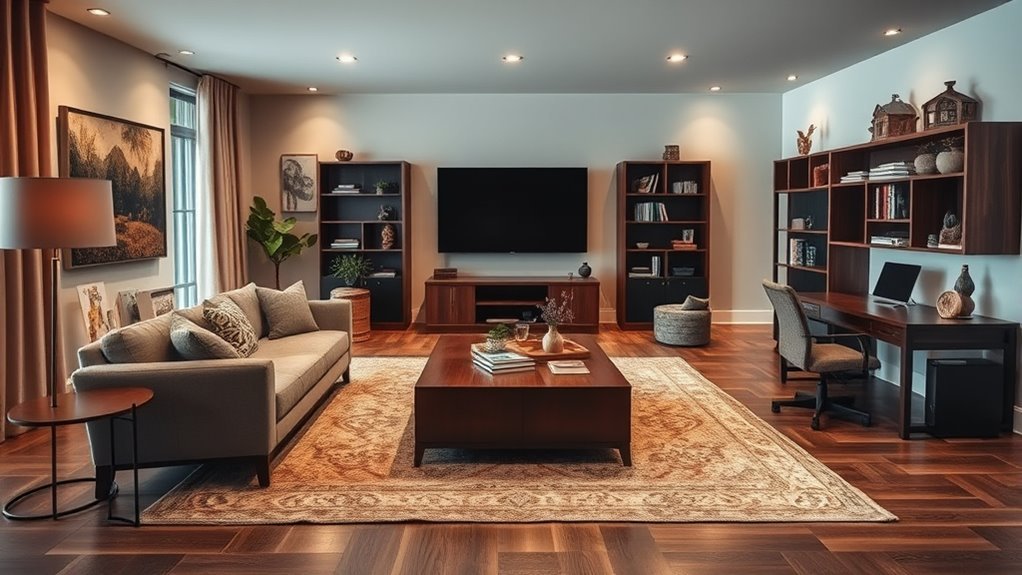
Layering lighting not only enhances the ambiance but also helps define distinct zones within your living room. A durable room often has more than one job: TV watching, reading, playing, working, entertaining, and relaxing.
The most durable living room is the one where every activity has a place, every path stays clear, and every material matches the way the room is actually used.
- Use an area rug to define the main seating zone.
- Add a floor lamp and small table to create a reading corner.
- Use baskets or closed storage for toys, blankets, games, and pet gear.
- Place a washable runner or durable rug where traffic enters the room.
- Keep the TV zone, play zone, and conversation zone visually connected with a consistent color palette.
Incorporating Everyday Functional Accessories
Accessories can either make a high-traffic living room easier to live in or harder to maintain. Choose pieces that solve real problems. Decorative baskets can hold toys and throws. Trays can protect ottomans and coffee tables from drinks. Washable pillow covers let you change the room seasonally without replacing the whole sofa.
For tables, tempered glass, sealed wood, metal, stone, and high-pressure laminate can all be practical depending on your style. Use coasters, felt pads, and trays so everyday use does not leave rings, dents, or scratches. Avoid overly delicate accessories in reach of pets, toddlers, or crowded walkways.
Note: The easiest room to maintain is the one with fewer exposed small items. If an accessory does not add storage, comfort, lighting, or personality, consider leaving more breathing room instead.
Personalizing Your Durable Living Space
Creating a durable living space does not mean giving up personal style. The trick is to make the hardest-working pieces neutral and resilient, then add personality through art, pillows, throws, lamps, books, and smaller accents.
- Choose a forgiving base palette for the sofa, rug, and flooring.
- Add personality with washable pillow covers and throws.
- Use framed art, sculptural lamps, and books instead of fragile tabletop clutter.
- Repeat two or three colors throughout the room so durable pieces feel intentional.
- Mix textures such as leather, woven fabric, wood, metal, and soft throws to keep the space warm.
Darker shades and busy patterns can hide some wear, but they are not the only durable choices. A medium-toned, textured fabric often performs better visually than a very dark solid because it hides both light lint and dark crumbs.
Caring for Your High-Traffic Living Room Furnishings
A high-traffic living room needs a maintenance rhythm. Small habits prevent the room from looking worn out too soon. For luxury vinyl, Shaw Floors recommends removing dirt and grit, wiping spills quickly, avoiding abrasive cleaners, and cleaning high-traffic areas more often.
| Frequency | What to Do |
|---|---|
| Daily or as needed | Blot spills, put away toys, shake crumbs from throws, clear pathways. |
| Weekly | Vacuum rugs and upholstery, dust hard surfaces, sweep or dust-mop hard flooring. |
| Monthly | Rotate cushions, check rug edges, clean under furniture, tighten loose table legs. |
| Seasonally | Wash removable covers according to labels, rotate rugs, inspect furniture anchors, refresh felt pads. |
For upholstery, regular vacuuming matters because grit acts like sandpaper on fabric. For rugs, always follow the care label and dry them fully after spot cleaning. For wood or vinyl flooring, use only cleaners approved by the manufacturer.
Common Mistakes That Make a Living Room Wear Out Faster
- Buying for looks only: A delicate sofa may look beautiful but fail quickly in a snack-heavy family room.
- Skipping the rug pad: Sliding rugs create trip hazards and wear unevenly.
- Choosing flat white upholstery: Light solids can show denim transfer, pet marks, and food stains quickly.
- Blocking traffic lanes: Furniture that narrows pathways gets bumped and damaged.
- Ignoring care labels: The wrong cleaner can permanently mark fabric or flooring.
- Forgetting anchors: Tall storage and media furniture should be secured, especially in homes with children.
Frequently Asked Questions
What is the 2/3 rule for living rooms?
In living rooms, the 2/3 rule is usually used as a proportion guide. A coffee table often looks balanced when it is about two-thirds the length of the sofa. A rug can also feel more proportional when it is large enough to hold at least the front legs of the main seating pieces instead of floating alone in the center.
What is the 3-5-7 rule in decorating?
The 3-5-7 rule suggests grouping decorative objects in odd numbers because odd-numbered groupings often feel more natural and visually interesting. In a high-traffic living room, use it sparingly: three items on a tray, five books on a shelf, or seven mixed pillows across a large sectional can work without creating clutter.
What is the 70-20-10 rule in decorating?
The 70-20-10 rule is a color-balance shortcut. Use about 70% of a dominant color, 20% of a secondary color, and 10% of an accent color. For a durable living room, put the most forgiving colors on large pieces like the sofa and rug, then use the boldest accent color on washable pillows, throws, and art.
What is the 4-inch rule for seating in a living room?
A practical version of the 4-inch rule is to keep your coffee table height within about four inches of your sofa seat height so it is easy to reach. For spacing, leave about 14 to 18 inches between the sofa and coffee table so people can sit, stand, and move comfortably.
What sofa fabric is best for a high-traffic living room?
The best sofa fabric is usually a performance fabric, microfiber, leather, or a tightly woven synthetic blend with a clear cleaning code. Look for heavy-use upholstery ratings, removable covers when possible, and mid-tone textures or small patterns that hide daily wear better than flat solids.
How do I make a durable living room still feel cozy?
Use durable pieces as the base, then add softness with washable throws, low-pile rugs, warm lighting, textured pillows, curtains, and personal art. A room can be tough and cozy at the same time when the soft layers are easy to clean or replace.
Conclusion
A high-traffic living room should be built for the way people really live. Start with durable flooring, choose sturdy furniture frames, use performance fabrics, keep walkways open, add practical storage, and make cleaning easy. When every material has a reason and every path stays clear, your living room can handle daily traffic while still feeling warm, personal, and inviting.
Sources
- COREtec Floors — backs up COREtec waterproof, kidproof, petproof, and high-traffic flooring claims.
- Shaw Floors Luxury Vinyl Care — backs up vinyl-floor cleaning and maintenance guidance.
- ASTM D4966 Martindale Abrasion Test Method — backs up the explanation of upholstery abrasion testing and its limits.
- U.S. Access Board ADA Chapter 4: Accessible Routes — backs up the 36-inch accessible walking-surface reference.
- CPSC Anchor It Campaign — backs up furniture and TV anchoring safety guidance.


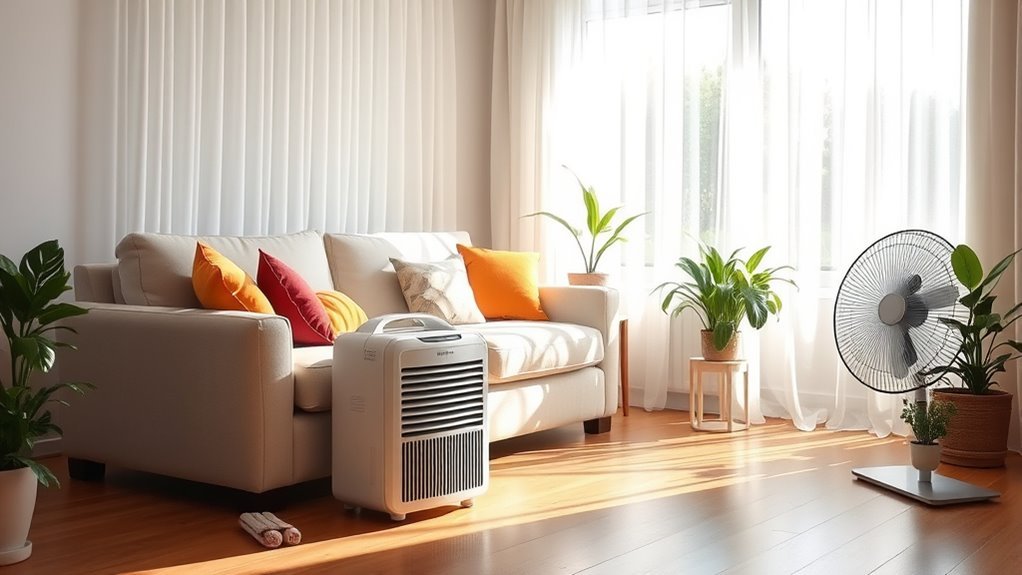
[…] How to Design a Living Room for High-Traffic Durability: Step-by-Step Guide […]