Layered window treatments can make a living room feel softer, more finished, and easier to use throughout the day. The best approach is simple: pair a functional base layer, such as roller shades or cellular shades, with a decorative fabric layer, such as sheer curtains or lined drapes. That gives you flexible control over daylight, glare, privacy, temperature, and style without making the room feel heavy.
Quick Answer
To layer window treatments in a living room, install the shade first for privacy and light control, then hang sheers or drapes on a separate rod for softness and style. Keep enough clearance between the layers so they move freely, choose cordless or inaccessible-cord products when possible, and match fabric weight to the room’s sunlight and privacy needs.
Key Takeaways
- Use the first layer for function: privacy, glare control, room darkening, or insulation.
- Use the second layer for softness, color, texture, and a more custom-looking finish.
- Sheers work best for daytime light diffusion, while lined drapes or blackout shades help more at night.
- Mount rods high and wide when you want the window to look larger and the room to feel taller.
- Choose cordless or inaccessible-cord shades and blinds, especially in homes with children or pets.
At a Glance
| Time Required | 45 minutes to 2 hours per window, depending on hardware and wall material |
| Difficulty | Beginner to moderate |
| Tools Needed | Tape measure, pencil, level, drill or screwdriver, wall anchors, brackets, shade hardware, curtain rod |
| Cost | Low to high, depending on window size, shade type, fabric quality, lining, and custom sizing |
How Layering Window Treatments Enhances Your Living Room
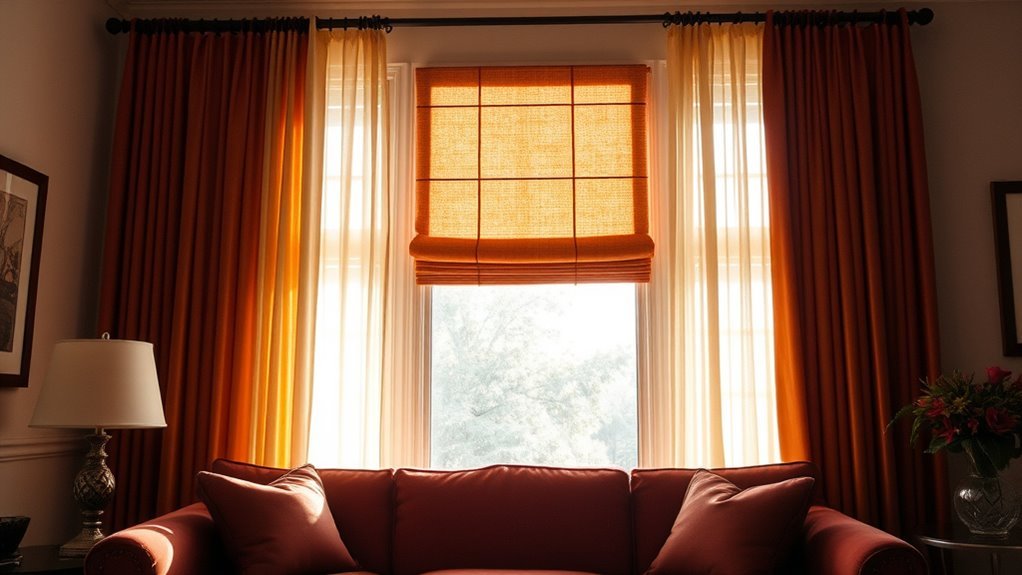
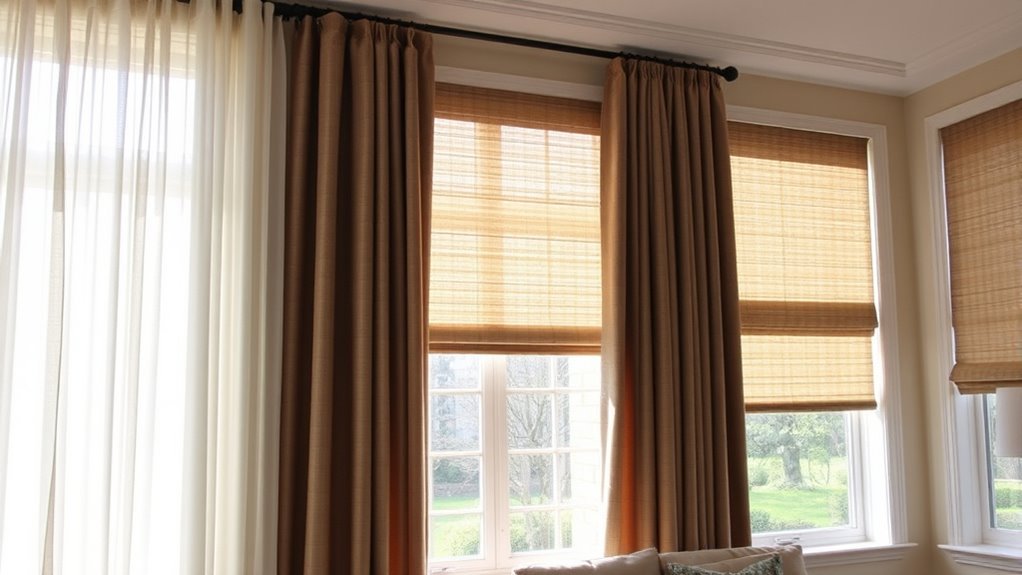
Layering window treatments works because each layer has a job. A shade, blind, or cellular shade handles the practical needs: privacy, glare, sunlight, and room-darkening. A sheer curtain, linen panel, or lined drape softens the window and helps the living room feel warmer and more intentional.
This layered approach also gives you more control throughout the day. You can keep sheers closed for gentle daylight, lower a shade when the afternoon sun is harsh, or close lined drapes at night for a cozier, more private space.
According to the U.S. Department of Energy, about 30% of a home’s heating energy is lost through windows, and in cooling seasons about 76% of sunlight falling on standard double-pane windows enters as heat.
That does not mean every curtain automatically saves energy. The benefit depends on the window, climate, fabric, fit, and how you use the treatments. For performance-focused choices, the U.S. Department of Energy’s window covering guidance is a helpful reference.
Choose Your Base Layer First
Start with the layer closest to the glass. This is the layer that does the most functional work, so choose it before you choose decorative curtains.
- Roller shades: Best for a clean, simple look. Choose sheer, light-filtering, room-darkening, solar, or blackout fabric depending on your needs.
- Cellular shades: Best when comfort and insulation matter. Their honeycomb structure traps air, and tightly fitted cellular shades can perform better than basic roller shades.
- Roman shades: Best when you want softness and fabric texture without full curtain panels.
- Blinds: Best for adjustable glare control because the slats tilt, but they do not seal as tightly as many shades.
- Solar shades: Best for glare and UV control while preserving some outside view, but they usually provide less nighttime privacy unless paired with drapes.
If your living room faces strong sun, especially from the west or south, prioritize glare and heat control. If the window faces a sidewalk, street, or close neighbor, prioritize privacy. If the room feels cold in winter, consider cellular shades or lined drapery instead of relying on sheers alone.
Note: Sheer curtains soften daylight beautifully, but they are not a full privacy solution at night. When interior lights are on, people outside may be able to see through many sheer fabrics.
Choosing Sheer Curtains for Natural Light
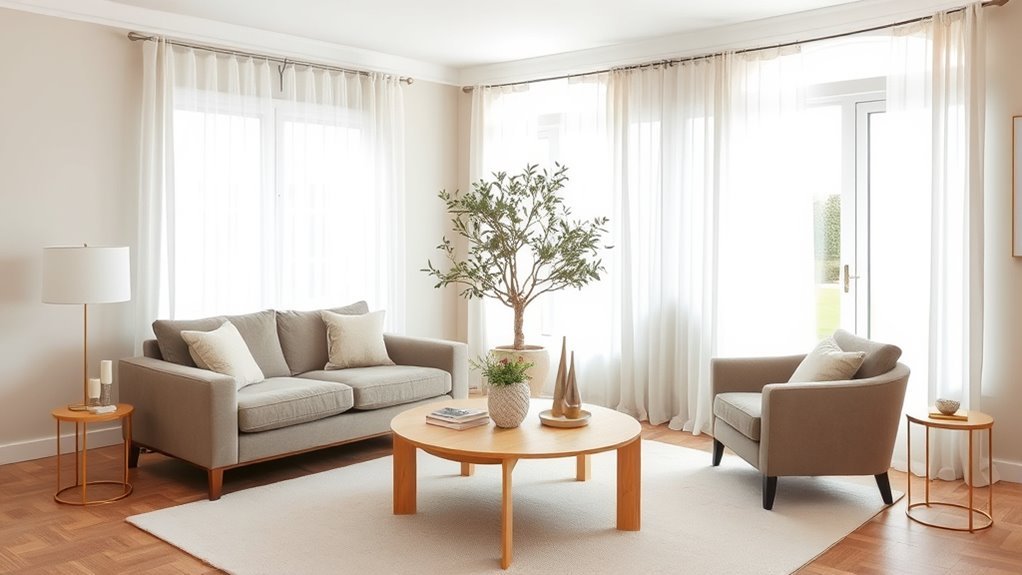
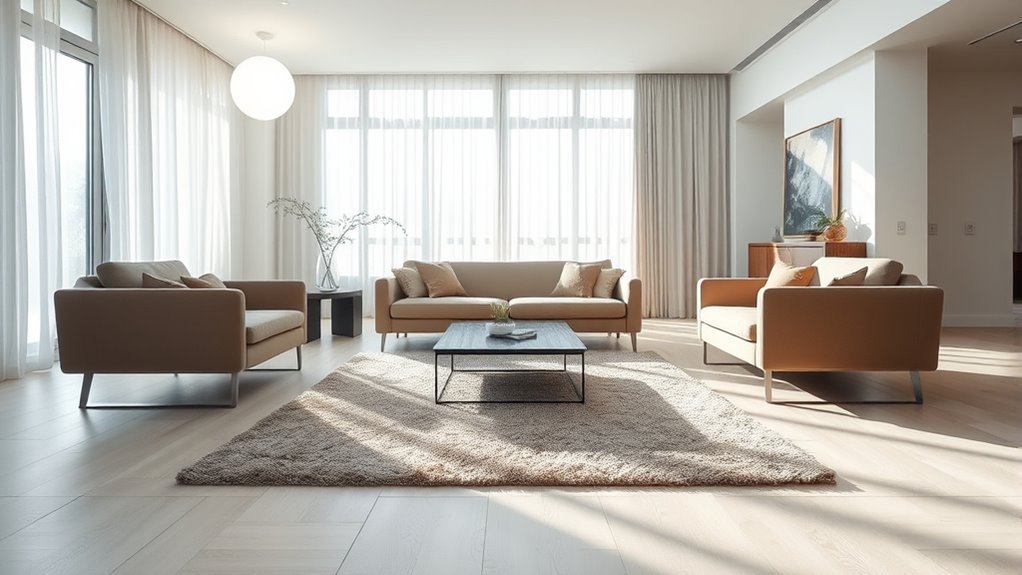
Sheer curtains are ideal when you want a living room to feel bright, airy, and relaxed. They diffuse harsh daylight, reduce the stark look of bare glass, and make a window feel softer without blocking all the light.
For a polished look, choose sheers that relate to your wall color, sofa fabric, rug, or accent pieces. White and ivory sheers feel crisp and classic. Oatmeal, greige, and warm linen tones feel softer and more organic. Pale gray can work well in cooler modern rooms.
Length matters. Floor-length sheers usually look more finished than short panels in a living room. Let them just kiss the floor for a tailored look, or allow a slight break if you prefer a relaxed style. Avoid heavy puddling in busy rooms where fabric may collect dust or get stepped on.
Recommended Products

READY MADE: 2 Linen Curtain Panels per package.Each panel measures 52 inches wide by 96 inches long. Top design of Back tab & loop pocket provide 3 hanging options. <1> hanging from the back patch to create an elegant pleated look, <2> from the 3 inch rod pocket for a classic look <3> Hanging with clip rings for easy, slide open and closed (clip rings are not included)
Selecting Roller Shades for Adjustable Light Control and Privacy
Roller shades are a smart base layer when you want clean lines and easy daily use. They roll up neatly, work with many decor styles, and pair well with sheers, linen panels, or lined drapes.
Choose the opacity carefully:
- Sheer roller shades soften light but offer limited privacy.
- Light-filtering roller shades reduce brightness while keeping the room comfortable and softly lit.
- Solar shades reduce glare and help protect furnishings, but nighttime privacy varies by fabric openness and indoor lighting.
- Room-darkening shades block more light and improve evening privacy.
- Blackout roller shades are best for TV glare, naps, media rooms, and strong nighttime privacy.
Inside-mounted roller shades look sleek because they sit within the window frame. Outside-mounted roller shades cover more of the trim and can reduce edge gaps, which helps when privacy or room-darkening is the goal.
Warning: Avoid accessible dangling cords, especially in homes where children live or visit. U.S. safety rules for custom window covering operating cords are covered in 16 CFR Part 1260. Choose cordless, motorized, wand-operated, or inaccessible-cord products whenever possible.
Coordinating Colors and Textures for a Cohesive Layered Look
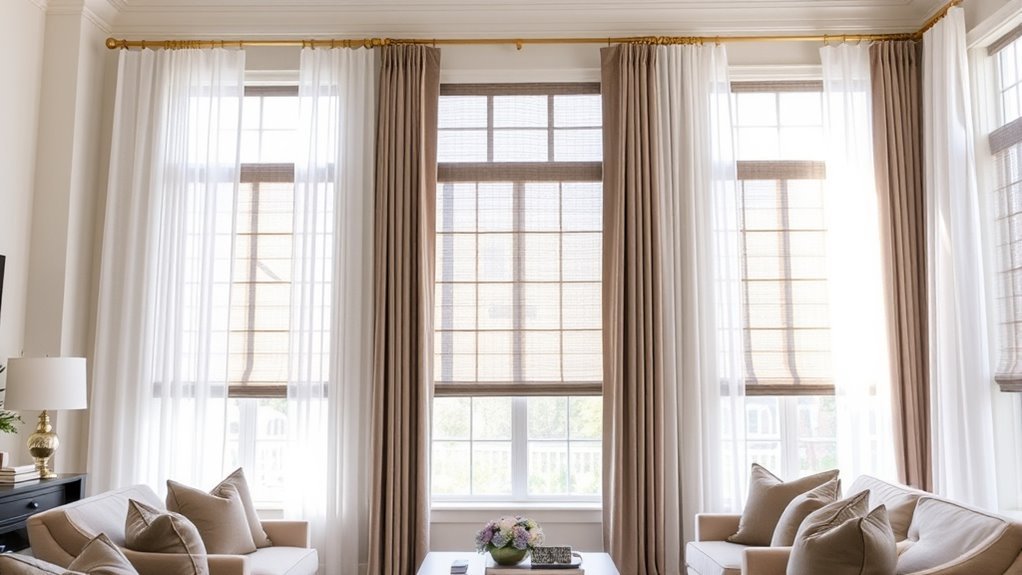
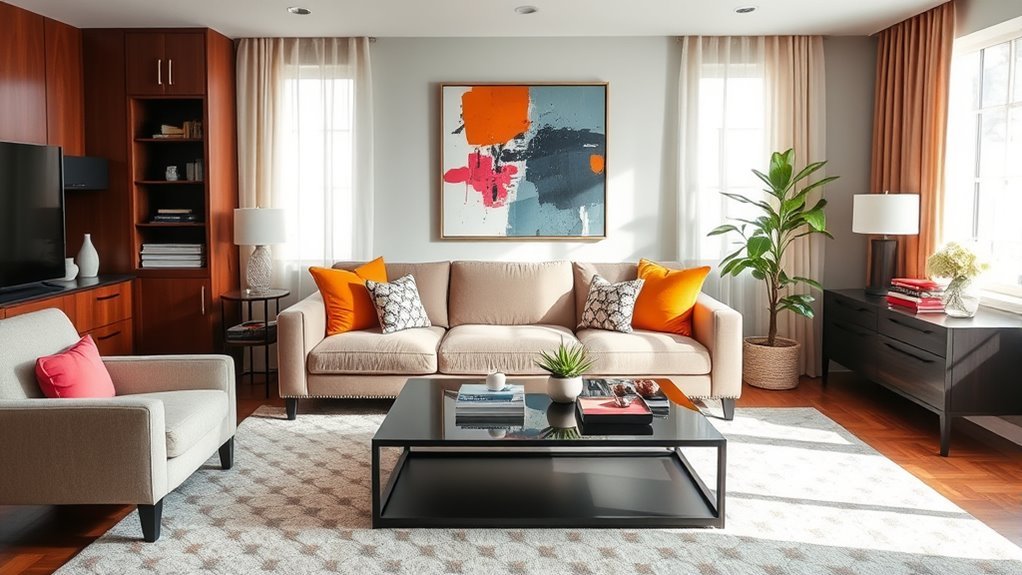
The easiest way to coordinate layered window treatments is to repeat colors already in the room. Pull one tone from the sofa, rug, wall color, wood furniture, or throw pillows. Then vary the texture so the layers do not look flat.
Try these combinations:
- Airy and casual: white roller shade with ivory linen sheers.
- Warm and organic: woven shade with natural linen drapes.
- Tailored and modern: light-filtering roller shade with crisp pinch-pleat panels.
- Cozy and classic: cellular shade with lined drapes in a warm neutral.
- Bold but balanced: plain shade with patterned curtain panels.
If you choose a patterned curtain, keep the shade simple. If the shade has texture, such as woven wood or a visible weave, choose a quieter curtain fabric. This keeps the window interesting without making the wall feel busy.
Measure Before You Buy
Accurate measuring is the difference between a layered window that looks custom and one that feels awkward. Measure each window individually, even if the windows look identical.
| For inside-mount shades | Measure the inside width at the top, middle, and bottom. Use the narrowest width. Measure height at left, center, and right. Use the longest height unless the manufacturer says otherwise. |
| For outside-mount shades | Measure the area you want covered, not just the glass. Add enough width and height to reduce side gaps and cover the trim if desired. |
| For curtain panels | Measure rod width, not window width. For fullness, choose total curtain panel width that is about 1.5 to 2 times the rod width. |
Before drilling, hold the shade and curtain brackets in place and confirm that the layers will not collide. Handles, window cranks, deep trim, crown molding, and nearby furniture can all affect placement.
Easy Installation Tips for a Polished Look
Install the functional layer first, then the decorative layer. This keeps the shade aligned with the window and makes curtain placement easier to judge.
- Mark the shade placement. Use a pencil and level so the shade sits straight.
- Install the shade brackets. Use wall anchors when you are not drilling into studs or solid trim.
- Test the shade. Raise and lower it before adding curtains.
- Mark the curtain rod height. For a taller look, place the rod several inches above the window trim when space allows.
- Extend the rod wider than the window. This lets panels stack outside the glass, bringing in more daylight when open.
- Leave clearance between layers. Keep enough space for the shade and curtains to move smoothly without rubbing.
- Steam or press the fabric. Wrinkles make even expensive panels look unfinished.
For a custom look, use matching or complementary hardware finishes. Black rods work well in modern and farmhouse rooms. Brass warms up traditional or transitional spaces. Nickel and chrome suit cooler, contemporary rooms.
Pro Tip: If your curtains look skimpy, the problem is usually width, not length. Add extra panels or choose wider panels so the fabric still has folds when closed.
Using Drapery Overlays to Elevate Your Decor
Drapery overlays add the “finished room” feeling that shades alone often lack. They frame the window, soften hard edges, and introduce movement, color, and texture.
For a relaxed living room, choose linen or linen-blend panels. For a formal room, choose lined pinch-pleat drapes. For a media-friendly living room, pair blackout shades with heavier drapery panels to reduce glare and make the room feel more cocooned at night.
If the view is beautiful, keep the drapery panels mostly decorative and let them stack outside the glass. If the window faces a street, choose panels that fully close, and pair them with a shade that handles daily privacy.
Seasonal Changes: Adjusting Your Layers for Different Atmospheres
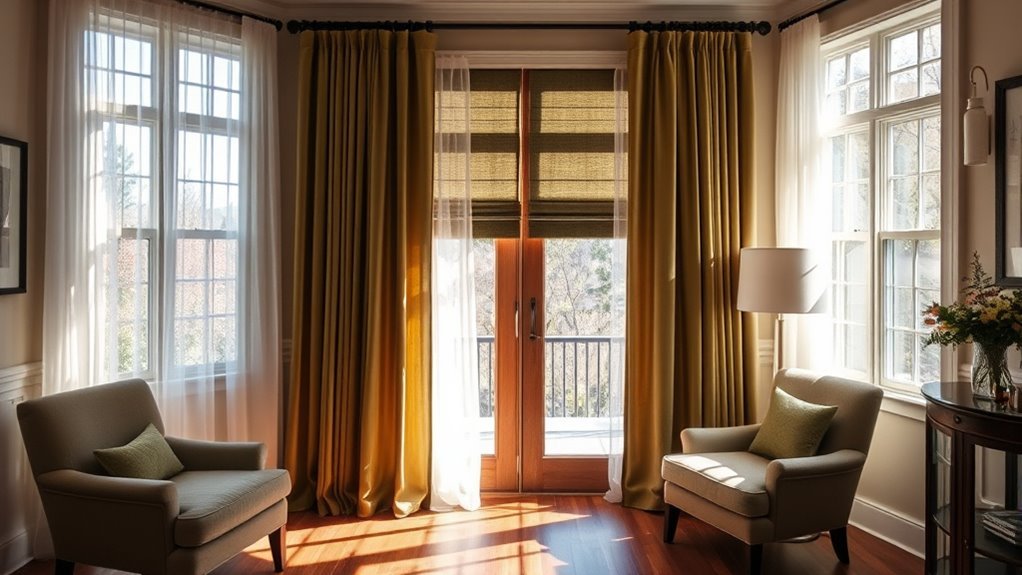
Layered window treatments are useful because you can adjust them with the seasons. In warm months, close shades or drapes on windows receiving direct sun to reduce heat gain. In cold months, open treatments on sunny windows during the day to let warmth in, then close them at night to help the room feel more comfortable.
| Season | Best Layering Move | Why It Helps |
|---|---|---|
| Spring | Use sheers with light-filtering shades | Keeps the room bright while softening glare |
| Summer | Close shades on sunny windows during peak heat | Helps reduce unwanted solar heat gain |
| Fall | Add warmer colors or heavier drapes | Creates a cozier look as daylight changes |
| Winter | Open sunny windows by day, close layers at night | Uses sunlight when helpful and improves nighttime comfort |
Common Mistakes to Avoid in Layering Window Treatments
The most common mistake is choosing the pretty layer first and forgetting the practical layer. Before you fall in love with fabric, decide how much privacy, light control, and glare reduction the room needs.
- Using sheers as the only privacy layer: Add a shade or lined drape if the window faces neighbors or a street.
- Hanging rods too low: A low rod can make the window and ceiling feel shorter.
- Buying panels that are too narrow: Curtains should still have soft folds when closed.
- Ignoring return space: Panels need room to stack beside the window when open.
- Mixing too many bold patterns: Let one layer be the focal point and keep the other quieter.
- Forgetting safety: Replace accessible cords with cordless, wand, motorized, or inaccessible-cord options when possible.
Troubleshooting Layered Window Treatments
| Problem | Likely Cause | Fix |
|---|---|---|
| Curtains catch on the shade | Not enough clearance between layers | Move the rod forward with deeper brackets or use a double rod system. |
| Light leaks around the shade | Inside mount leaves side gaps | Use outside-mount shades, add drapes, or choose side channels for stronger room darkening. |
| Panels look flat or cheap | Not enough fabric width | Use wider panels or add another panel per side. |
| The room feels dark | Too many opaque layers | Switch one layer to sheer, light-filtering, or a lighter color. |
Expert Tips for Customizing Your Window Treatments
Customizing your window treatments starts with the room’s real-life use. A formal living room may need elegant drapes more than blackout performance. A family room with a TV may need glare control first. A front-facing living room may need privacy all day.
Before ordering, bring home fabric swatches and view them in morning, afternoon, and evening light. Fabric color can shift dramatically depending on the direction of the window and the color of your walls.
- For small rooms: choose tonal layers and slim hardware so the window does not feel bulky.
- For rentals: consider tension rods, no-drill shade options, or existing bracket holes where safe and appropriate.
- For large windows: use wider rods, multiple support brackets, and enough panels to maintain fullness.
- For energy-minded upgrades: look for certified window attachment ratings through the Attachments Energy Rating Council.
Frequently Asked Questions
How do you layer sheers and curtains?
Hang sheers on the inner rod or track and heavier curtains on the outer rod. Use the sheers during the day to diffuse light, then close the heavier curtains at night for more privacy. For the cleanest look, keep both layers similar in length and make sure the outer rod projects far enough so the curtains do not drag against the sheers.
Should curtains be lighter or darker than a couch?
Curtains can be lighter or darker than a couch, but they should look intentional with the whole room. Lighter curtains make the space feel brighter and more open. Darker curtains add contrast and coziness. For an easy designer look, choose curtains that repeat a color from the sofa, rug, pillows, or wood tones.
What is the best way to layer window treatments?
The best method is to install a functional base layer first, such as a roller shade, cellular shade, blind, or Roman shade. Then add a decorative layer, such as sheers or drapes. This gives you privacy and light control from the shade, plus softness and style from the fabric layer.
How do you put sheer curtains over blinds?
Install the blinds inside the window frame or close to the trim, then hang the sheer curtains on a rod outside the frame. Make sure the rod brackets project far enough from the wall so the sheers can move without catching on the blind hardware.
Can you layer roller shades with curtains?
Yes. Roller shades and curtains are one of the easiest combinations to layer. Use the roller shade for privacy, glare control, or room darkening, then add curtains for texture and a finished look. This pairing works especially well in modern, transitional, Scandinavian, and minimalist living rooms.
Are layered window treatments good for energy efficiency?
They can help, but performance depends on the materials and fit. Cellular shades, tightly fitted shades, lined drapes, and properly closed coverings generally perform better than loose decorative sheers alone. For the best results, choose products designed for insulation or solar control and use them strategically during hot and cold parts of the day.
Conclusion
Layered window treatments can change the whole mood of a living room. Start with the practical layer, then add softness with sheers, curtains, or lined drapes. Keep the colors connected, leave enough room for each layer to move, and choose safer cordless or inaccessible-cord options whenever possible. With the right combination, your windows will look polished, feel cozy, and work better from morning to night.
Sources
- U.S. Department of Energy — Energy Efficient Window Coverings — backs up energy, heat gain, drapery, shade, and seasonal-use guidance.
- eCFR — 16 CFR Part 1260, Safety Standard for Operating Cords on Custom Window Coverings — backs up cord-safety guidance.
- Attachments Energy Rating Council — supports energy-rating guidance for window attachment products.