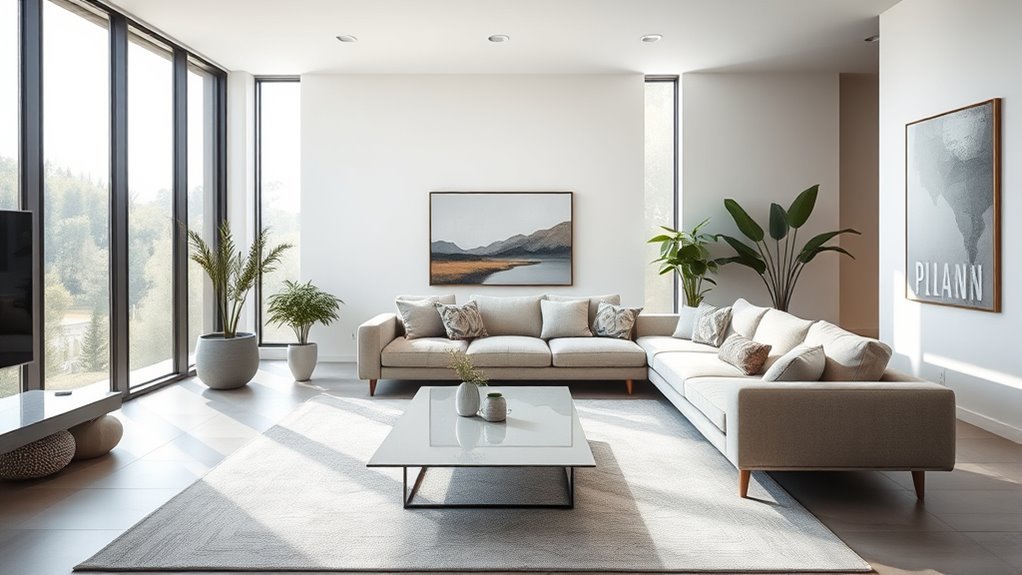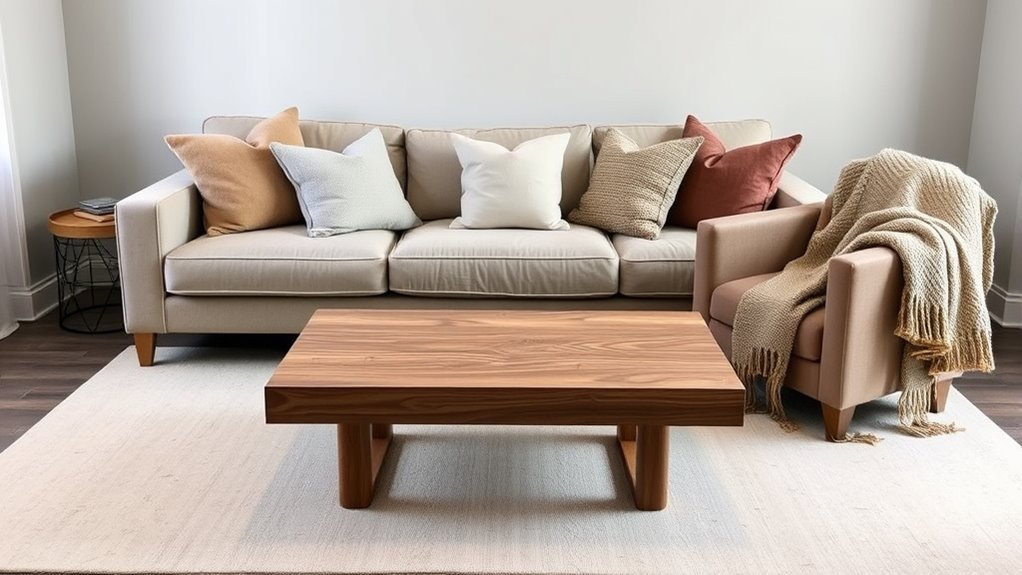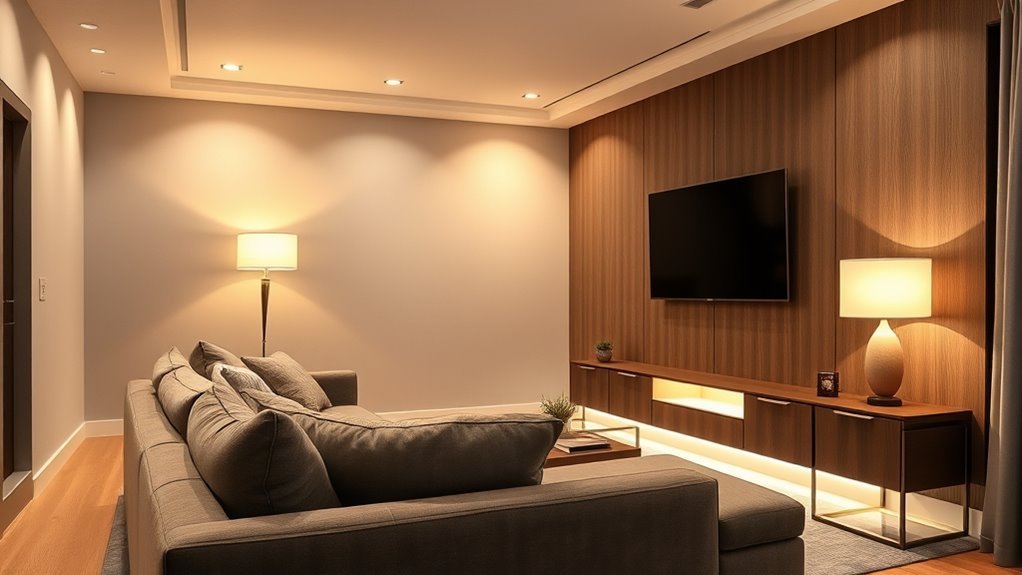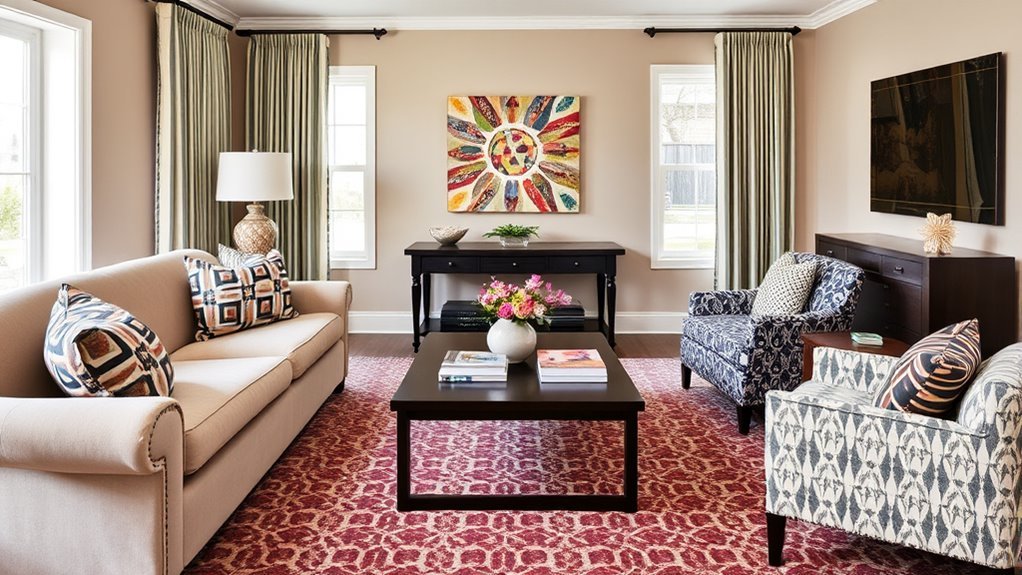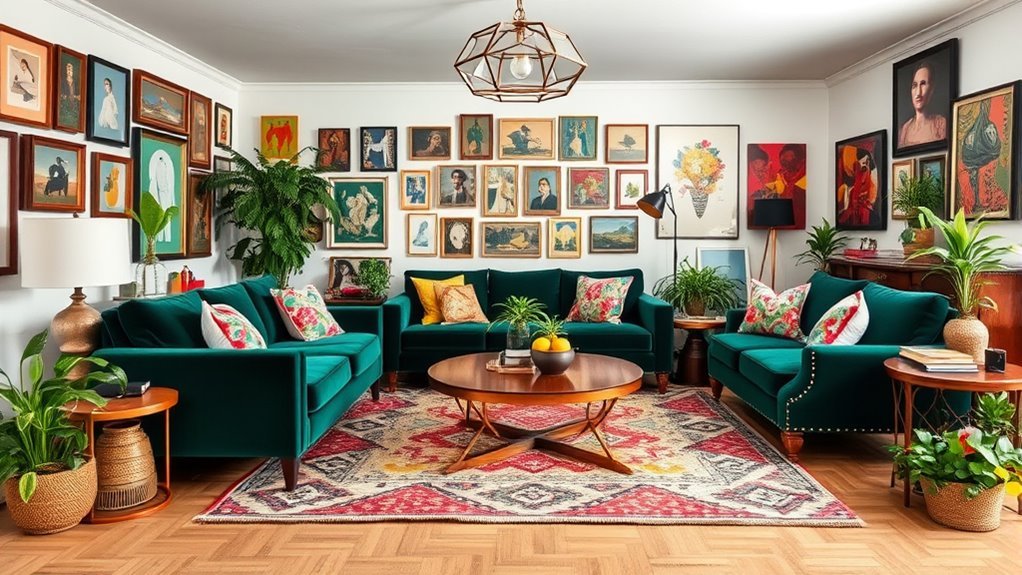
Eclectic living room style is about creating a collected, personal space without letting it feel random. The best eclectic rooms mix vintage and modern furniture, layered textiles, meaningful art, and bold accents, but they stay grounded with repeated colors, balanced scale, and a few quiet moments that let the eye rest.
Quick Answer
An eclectic living room blends different eras, colors, materials, and personal objects in a way that still feels intentional. Start with one anchor piece, repeat a small color palette, mix old and new furniture, layer textures and patterns, then edit anything that feels crowded or disconnected.
Key Takeaways
- Eclectic style works best when varied pieces are tied together with repeated colors, shapes, materials, or finishes.
- Choose one anchor piece first, such as a rug, sofa, artwork, or vintage cabinet, then build the room around it.
- Mix patterns by varying scale: pair one large pattern with one medium pattern, small accents, and plenty of solids.
- Use personal mementos, art, books, and collected objects, but leave breathing room so the room feels curated instead of cluttered.
- Anchor tall furniture and secure heavy wall decor before styling the final room.
At a Glance
| Time Required | One weekend for planning and rearranging; several weeks or months if you want a slowly collected look. |
| Difficulty | Moderate. The style is flexible, but it needs editing and repetition to avoid visual clutter. |
| Tools Needed | Tape measure, painter’s tape, level, picture-hanging hardware, furniture anchors, mood board, and paint or fabric samples. |
| Cost | Flexible. You can refresh with pillows, art, lamps, and thrifted pieces, or invest in a rug, sofa, or statement chair. |
How to Create an Eclectic Living Room
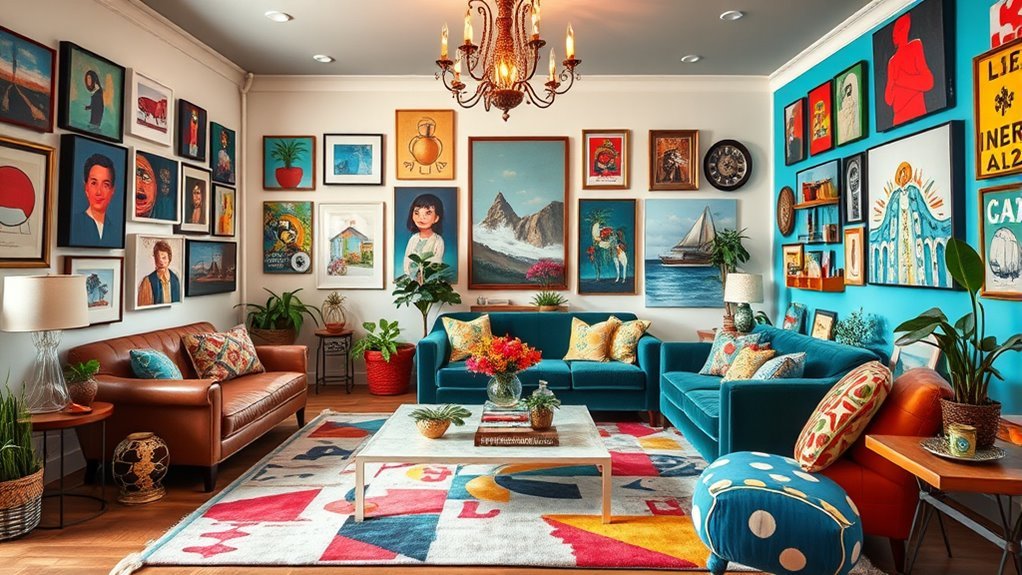
How do you transform a standard living room into a vibrant eclectic space? Begin with one strong anchor piece. This could be a patterned rug, a velvet sofa, a vintage cabinet, a large painting, or a sculptural coffee table. Let that piece set the mood, then choose supporting furniture and decor that echo its colors, shapes, or materials.
Next, build contrast on purpose. Pair a sleek modern sofa with a carved wood side table, a clean-lined media console with a vintage lamp, or a traditional armchair with abstract art. The goal is not to match everything. The goal is to create enough connection that every piece feels invited to the same room.
- Choose an anchor piece. Pick the rug, sofa, artwork, or cabinet that sets the room’s personality.
- Create a simple color palette. Use one base color, one or two supporting colors, and one bolder accent.
- Mix eras and silhouettes. Combine vintage, modern, handmade, and sculptural pieces, but vary their scale.
- Layer texture before adding more color. Wood, linen, velvet, rattan, leather, glass, ceramic, and metal create depth without making the room feel loud.
- Edit at the end. Remove anything that does not repeat a color, material, mood, or story already present in the room.
Pro Tip: Before buying anything new, photograph your living room from each corner. A photo makes clutter, awkward scale, and color gaps easier to spot than standing in the room.
Choosing a Color Palette for Your Eclectic Space
Eclectic rooms can handle bold color, but they still need a plan. A simple formula is to choose a calm base, repeat two supporting colors, and reserve one wild-card color for small accents. For example, you might use warm white walls, camel leather, olive green, rust, and a small hit of cobalt blue in artwork or pillows.
If your room already has strong colors, pull your palette from something you love: a rug, painting, patterned curtain, or heirloom textile. Choose one dominant color from that piece, then repeat it at least three times around the room. Repetition is what makes a mixed room look intentional.
| Color Role | How to Use It |
|---|---|
| Base color | Walls, large sofa, curtains, or the largest rug area. Choose a shade that gives the room breathing room. |
| Supporting colors | Repeat through pillows, art, lamps, books, pottery, and upholstery. |
| Accent color | Use sparingly in one or two bold moments, such as a side table, frame, vase, or patterned cushion. |
| Quiet neutrals | Balance bold pieces with natural wood, cream, tan, charcoal, black, or soft gray. |
Natural light can change the way colors read throughout the day, so test paint, fabric, and rug samples in morning, afternoon, and evening light. Darker rooms often benefit from warm undertones, while very bright rooms can handle deeper, moodier colors without feeling heavy.
Incorporating Textures and Patterns in Eclectic Living Rooms
Texture is the secret ingredient that keeps an eclectic living room from looking flat. Imagine velvet cushions against a leather chair, a woven jute rug under a glossy coffee table, linen curtains beside a brass floor lamp, and a ceramic vase on a weathered wood console. The mix feels rich because each surface catches light differently.
When mixing patterns, vary the scale. Use one large-scale pattern, such as a rug or curtain; one medium pattern, such as a floral or stripe; and one small pattern, such as a tiny check, embroidered pillow, or block-print lampshade. Then add solids so the room has somewhere to rest.
- Large pattern: rug, wallpaper, curtain panels, or oversized artwork.
- Medium pattern: accent chair, throw blanket, ottoman, or large pillows.
- Small pattern: trim, small pillows, lampshade, books, or ceramics.
- Solid break: sofa, walls, curtains, or a simple side chair.
Note: If a room feels busy, remove one pattern before removing color. Often the issue is too many competing scales, not too much personality.
Blending Old and New Furniture Pieces
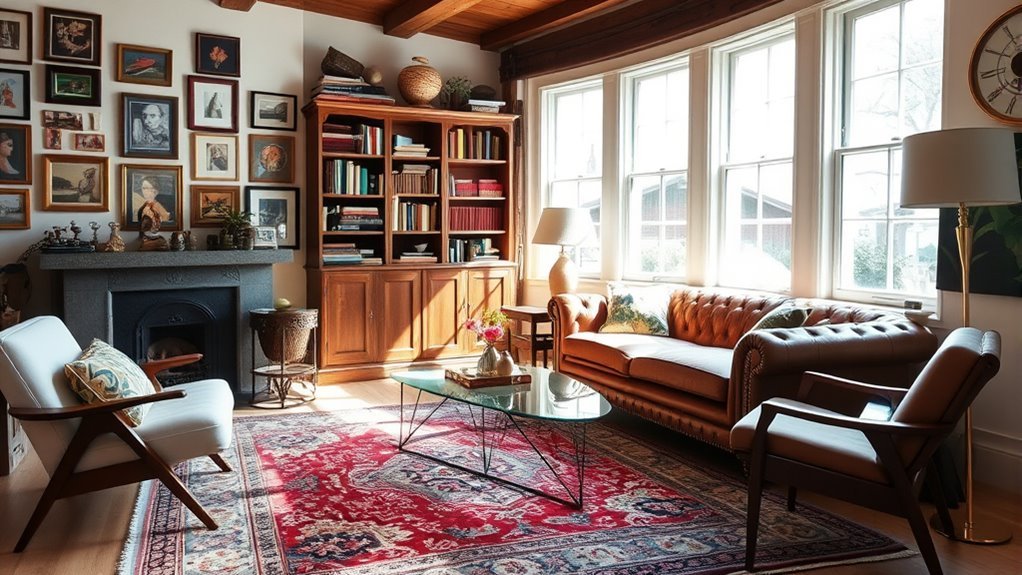
Eclectic living room style flourishes when old and new furniture pieces balance each other. A vintage wingback chair can soften a sleek modern sofa. A minimalist side table can calm an ornate antique coffee table. A contemporary sectional can feel warmer beside a vintage sideboard, handmade stool, or timeworn wood bookshelf.
| Old Furniture Pieces | New Furniture Pieces |
|---|---|
| Antique coffee table | Minimalist side table |
| Classic bookshelf | Contemporary console |
| Retro armchair | Chic sectional sofa |
| Vintage sideboard | Modern accent chair |
To keep the room cohesive, repeat at least one detail between pieces. A black metal lamp can connect to black picture frames. A walnut coffee table can echo wood picture ledges. A brass mirror can tie into a brass floor lamp. These small repetitions make mixed furniture feel collected rather than accidental.
Warning: Anchor tall bookcases, cabinets, dressers, and TV furniture to the wall, especially if children visit or live in the home. The U.S. Consumer Product Safety Commission’s Anchor It guidance recommends securing furniture with drawers, doors, and shelves to help prevent tip-over injuries.
Recommended Products

Premium Material: The Wood floor lamp is integrated with premium Nature Rubber wood tripod, which is enduring, firm and aesthetic. It’s sturdy design makes it no shaking and safe to have around children and pets

How to Accessorize Your Eclectic Living Room
To accessorize your eclectic living room, start with fewer pieces than you think you need. Choose objects with different heights, materials, and stories: a stack of design books, a sculptural bowl, a handmade vase, a travel souvenir, a framed family photo, or a vintage tray. Then arrange them in small groups so each surface feels styled but usable.
Unique Decorative Items Selection
Unique decorative items should add meaning, not just volume. A good mix might include one sculptural object, one organic material, one framed piece, one useful item, and one personal object. For example, place a ceramic vase, a wood bowl, a framed postcard, a candle, and a small travel memento together on a console.
Leave negative space around special pieces. If every shelf is packed, nothing feels important. A simple rule: style two-thirds of a shelf or tabletop and leave one-third open. This keeps the room expressive without making it hard to clean or live in.
Layered Lighting Techniques
Three layers of lighting can transform an eclectic living room. Use ambient lighting for the overall glow, task lighting for reading or hobbies, and accent lighting to highlight art, bookshelves, plants, or architectural details.
- Ambient lighting: ceiling fixtures, large floor lamps, or soft overhead light.
- Task lighting: table lamps beside reading chairs, swing-arm lamps, or focused floor lamps.
- Accent lighting: picture lights, bookshelf lights, sconces, or small lamps on shelves.
Lighting is one of the easiest places to improve comfort and efficiency. The U.S. Department of Energy notes that LEDs use up to 90% less energy and can last up to 25 times longer than traditional incandescent bulbs.
If you use dimmers, choose bulbs and controls that are designed to work together. The Department of Energy recommends selecting lighting controls that are compatible with the energy-efficient bulbs you want to use.
Personal Mementos Display
Personal mementos are what make eclectic design feel alive. Display travel souvenirs, family heirlooms, handmade ceramics, favorite books, and framed photographs in ways that feel intentional. Use trays, shadow boxes, glass jars, picture ledges, or small shelves to group smaller items without scattering them across every surface.
Be careful with delicate paper items and older photographs. The Library of Congress recommends limiting light exposure for photographs and minimizing direct or intense light for works on paper. If a piece is fragile or irreplaceable, consider displaying a copy and storing the original safely in an acid-free enclosure. You can review the Library of Congress guidance for photographs and works on paper.
Gallery Wall Ideas for Personalization
Creating a gallery wall is your chance to turn a blank wall into a visual story. The best eclectic gallery walls combine art, photographs, mirrors, textiles, small sculptural objects, and meaningful finds. The key is to vary the pieces while keeping spacing, color, or frame finish consistent enough to feel deliberate.
Frame Style Variations
A gallery wall does not need matching frames. Ornate gold frames can sit beside simple black frames, wood frames, and slim metal frames if the arrangement repeats a few colors or shapes. For example, mix frame styles but keep the mat colors similar, or vary the mats but repeat black frames in several places.
Before hanging, lay everything on the floor or map the arrangement with painter’s tape. Keep spacing consistent, usually about 2 to 4 inches between pieces, unless you want a looser salon-style wall. Hang the center of the arrangement around eye level, then build outward.
Art Selection Tips
Choose art that gives the room range. Combine one large focal piece with smaller works, family photos, sketches, vintage prints, textile fragments, and mirrors. Repeat at least one color from your room so the wall connects to the furniture below it.
If the gallery wall sits above a sofa, console, or sideboard, keep the arrangement visually connected to the furniture. A wall grouping that is too small can look like it is floating. Aim for the overall gallery wall to be about two-thirds the width of the furniture beneath it.
Maintaining Balance and Cohesion in Eclectic Design
To maintain balance in eclectic design, think in pairs: bold and quiet, old and new, smooth and rough, colorful and neutral, large and small. Every bold choice needs something calmer nearby. A bright patterned rug may need a simple sofa. A sculptural chair may need a quiet side table. A gallery wall may need plain curtains.
Cohesion comes from repetition. Repeat a wood tone, a metal finish, a color, a shape, or a fabric texture in several places. You do not need a perfect match; you just need enough visual echoes for the room to feel connected.
- Repeat color: carry one accent color from art to pillows to a vase.
- Repeat material: echo rattan, walnut, brass, black metal, or ceramic in multiple zones.
- Repeat shape: balance straight lines with round mirrors, curved chairs, or circular tables.
- Repeat mood: keep pieces relaxed, polished, rustic, playful, or refined rather than mixing every mood at once.
Practical Tips for Implementing Eclectic Design
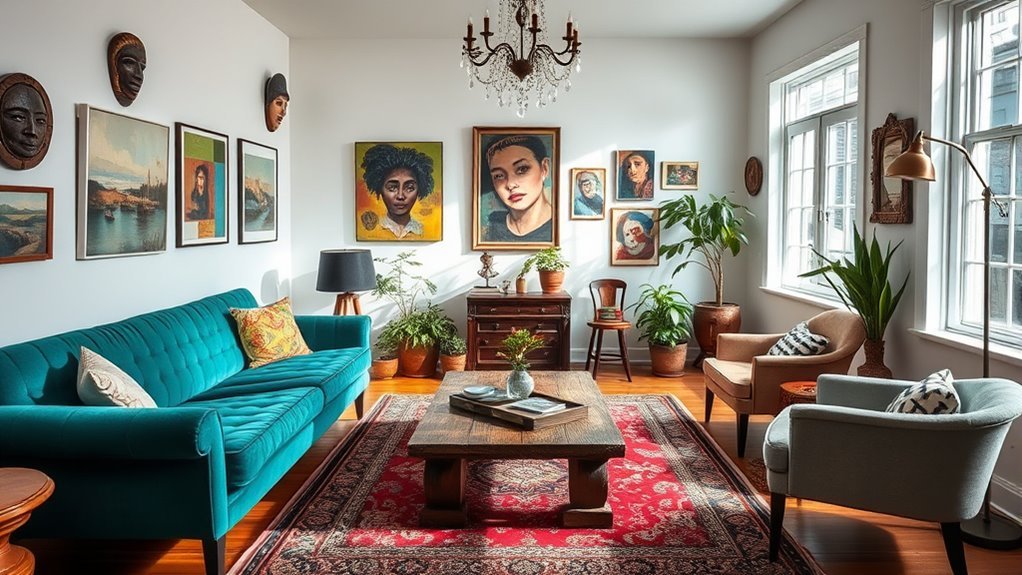
Implementing eclectic design in your living room can be an exciting way to create a space that feels layered, warm, and personal. Start with what you already own. Keep the pieces that have the strongest shape, best quality, or most meaning, then fill the gaps slowly instead of buying an entire room at once.
| Tips | Description |
|---|---|
| Start Neutral | Anchor your design with a neutral palette. |
| Mix Textures | Combine soft and natural elements for warmth. |
| Gallery Wall | Showcase art and mementos for personal flair. |
| Statement Pieces | Select furniture that reflects your taste. |
| Revitalize Regularly | Swap items to keep the space inviting. |
Small-Space Eclectic Living Room Tips
Small eclectic living rooms need stronger editing. Choose furniture with visible legs, use one larger rug instead of several tiny rugs, and add vertical interest with art, shelves, curtains, or a tall lamp. Keep the palette tighter than you would in a large room, then add personality through texture and art.
- Use nesting tables, storage ottomans, or a slim console behind the sofa.
- Choose one statement chair instead of several competing accent pieces.
- Hang curtains higher than the window frame to draw the eye upward.
- Keep walkways clear so the room feels collected, not crowded.
Budget-Friendly Eclectic Decor Ideas
Eclectic style is naturally budget-friendly because it rewards patience and mixing. Shop secondhand for solid wood tables, lamps, frames, mirrors, and side chairs. Update inexpensive finds with new shades, hardware, paint, or upholstery. A thrifted lamp with a fresh shade can feel as special as a designer piece when it repeats the room’s colors.
If you can only change a few things, start with textiles. Pillows, throws, curtains, and rugs add the most visible texture and pattern for the cost. Then add one bold lamp, one oversized artwork, or one vintage table to give the room a focal point.
Final Editing Checklist
Once your room is arranged, step back and edit. Eclectic style should feel layered, not chaotic. Use this checklist before calling the room finished:
- Does every piece repeat a color, material, shape, mood, or story?
- Is there one clear focal point?
- Are tall furniture pieces anchored?
- Can people move through the room comfortably?
- Are there quiet areas between bold patterns?
- Is each tabletop useful, or is it only decorative?
- Does the room look good in daylight and at night?
Frequently Asked Questions
What is an example of eclectic style?
An example of eclectic style is a living room with a modern linen sofa, a vintage wooden coffee table, a patterned Turkish-style rug, abstract art, brass lamps, handmade ceramics, and family photographs. The pieces come from different styles, but repeated colors and materials make them feel connected.
What are eclectic colors?
Eclectic colors can be bold, muted, earthy, jewel-toned, or neutral. The key is not the exact color family, but how the colors are repeated. A room might combine olive, rust, cream, black, and cobalt, or blush, burgundy, walnut, brass, and ivory.
How do you create an eclectic living room?
Create an eclectic living room by choosing an anchor piece, building a tight color palette, mixing furniture eras, layering textures, adding art and personal objects, and editing anything that feels disconnected. Balance bold pieces with quiet ones so the room feels expressive but still comfortable.
What is the difference between modern and eclectic?
Modern style usually emphasizes clean lines, simplicity, function, and a more restrained palette. Eclectic style is more collected and layered, combining pieces from different eras, cultures, colors, and textures. A room can be both modern and eclectic if the foundation is clean-lined but the decor is mixed and personal.
How do you keep eclectic decor from looking cluttered?
Keep eclectic decor from looking cluttered by repeating a limited color palette, varying pattern scale, leaving open space on shelves and tables, and choosing one main focal point. If two pieces compete for attention, move one to another room or simplify the surrounding decor.
Can eclectic style work in a small living room?
Yes, eclectic style can work beautifully in a small living room. Use a tighter color palette, fewer statement pieces, furniture with lighter visual weight, and wall-mounted or vertical storage. Add personality with art, lighting, pillows, and one excellent vintage or handmade piece.
Conclusion
Eclectic living room style gives you permission to mix, collect, and experiment, but the most beautiful rooms still have structure. Start with one anchor piece, repeat a thoughtful color palette, blend old and new furniture, layer texture, and display personal objects with care. When every item has a reason to be there, your living room becomes more than decorated. It becomes a space that feels lived in, expressive, balanced, and unmistakably yours.
Sources
- U.S. Department of Energy — Lighting Choices to Save You Money — supports LED lighting efficiency and dimmer compatibility guidance.
- U.S. Consumer Product Safety Commission — Anchor It — supports furniture anchoring and tip-over safety guidance.
- Library of Congress — Care, Handling, and Storage of Photographs — supports safe display and light-exposure guidance for photographs.
- Library of Congress — Care, Handling, and Storage of Works on Paper — supports safe display and storage guidance for paper mementos and art.