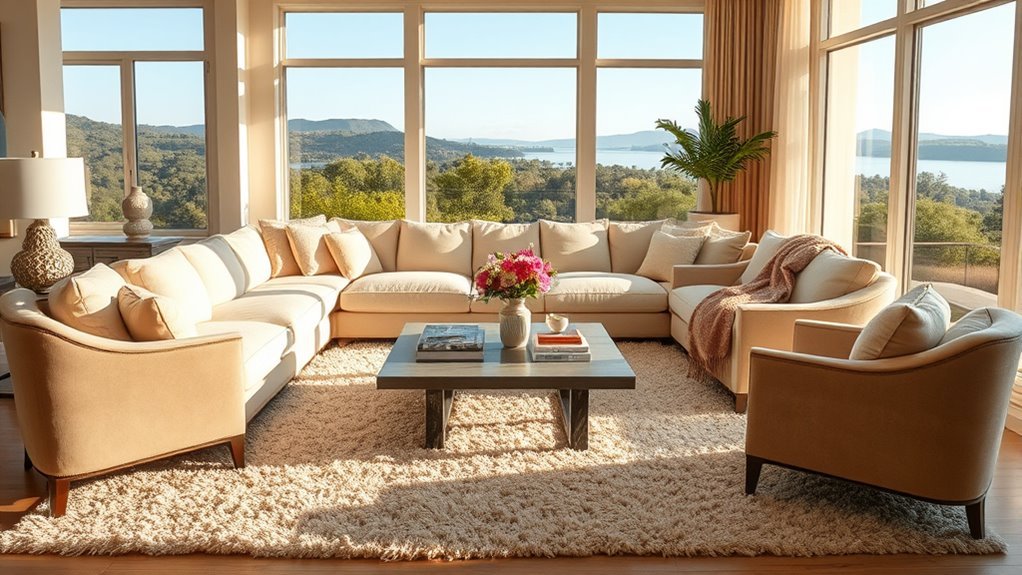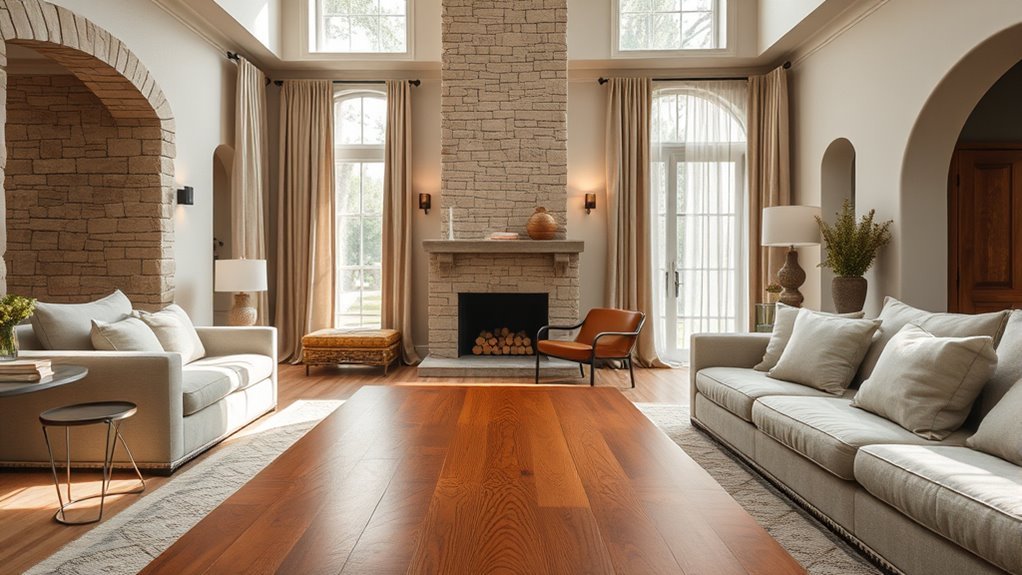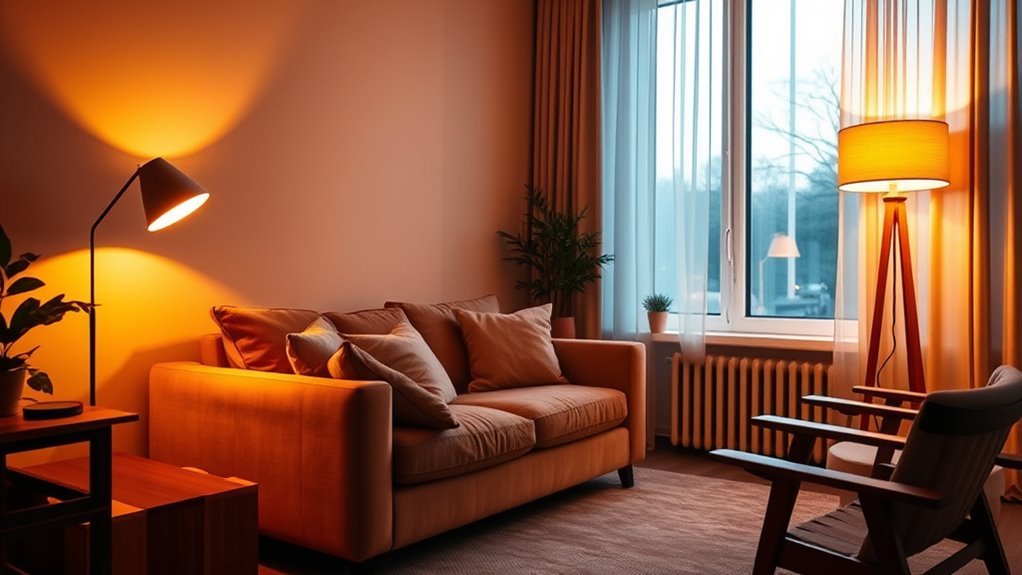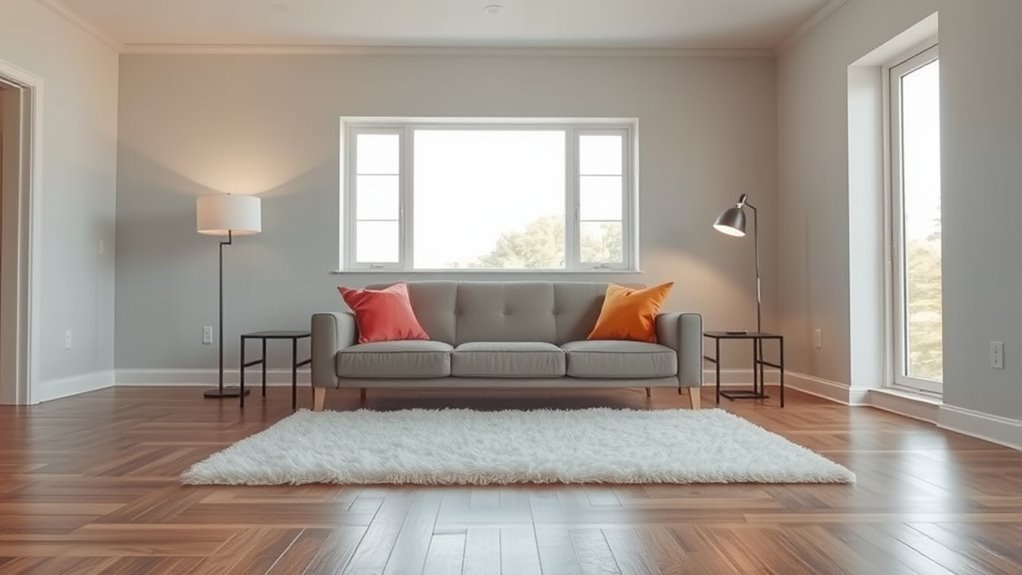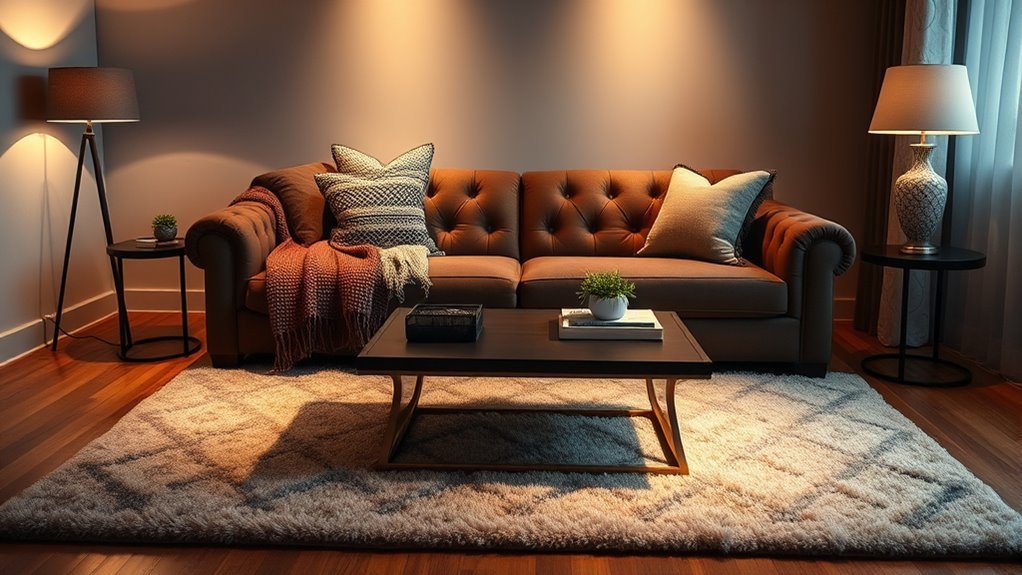
To create depth in your living room, combine layered lighting with textured textiles so the room has light, shadow, softness, and contrast. Start with general ambient light, add focused task lighting where people read or gather, then use accent lighting to highlight artwork, shelves, plants, or architectural details. Finish the look with textiles that catch, soften, or absorb light, such as linen curtains, velvet pillows, woven rugs, chunky throws, and sheer panels.
Quick Answer
Create living room depth by layering ambient, task, and accent lighting, then pairing those light sources with varied textiles. Use warm, dimmable bulbs, place lamps at different heights, highlight focal points, and choose fabrics with different textures so light creates gentle shadows, contrast, and visual warmth.
Key Takeaways
- Use three lighting layers: ambient lighting for general brightness, task lighting for activities, and accent lighting for focal points.
- Choose warm, high-quality bulbs so textiles, wood, paint colors, and artwork look flattering instead of flat.
- Mix textile finishes, such as linen, velvet, wool, cotton, woven fibers, and sheer curtains, to create texture and shadow.
- Use dimmers only with compatible bulbs and switches, especially when using LEDs.
At a Glance
| Time Required | 1–3 hours to plan and style; longer if installing hardwired fixtures |
| Difficulty | Easy for styling lamps and textiles; advanced for electrical work |
| Tools Needed | Tape measure, bulb labels, dimmer compatibility chart, lamps, curtains, pillows, throws, rug, and optional smart plugs |
| Cost | Low to moderate for lamps and textiles; higher for new recessed lights, sconces, or electrician-installed dimmers |
Why Layered Lighting Matters for Your Living Room
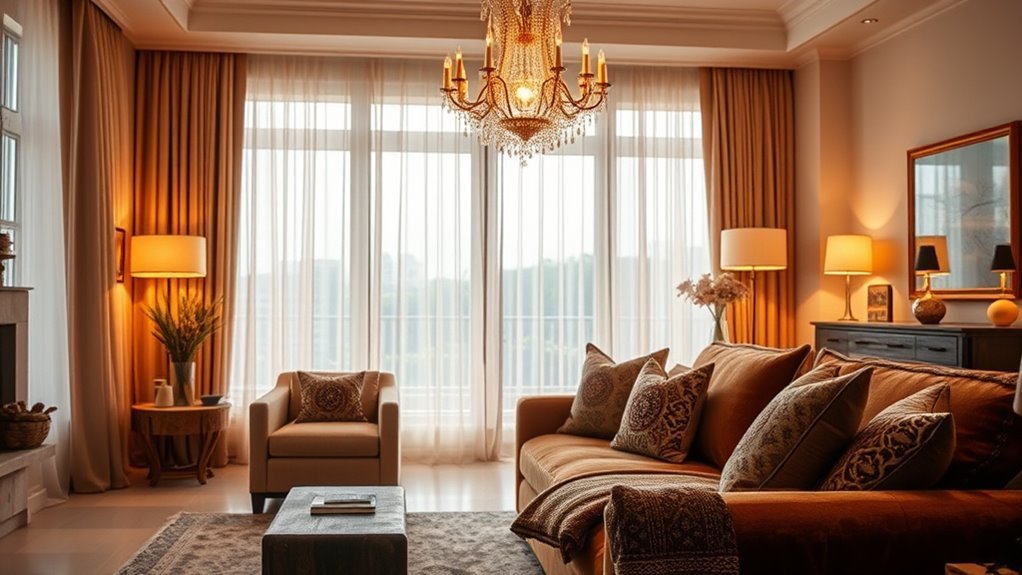
Layered lighting matters because one ceiling fixture cannot do every job well. A living room usually needs general light for moving around, focused light for reading or games, and accent light to bring out artwork, shelving, plants, stone, wood, or wall texture.
The U.S. Department of Energy explains that ambient lighting provides general illumination, task lighting supports specific activities, and accent lighting draws attention to special features or aesthetics. When you combine all three, the room feels more dimensional because light comes from different heights, angles, and intensities.
This layered approach also makes the room more flexible. Brighten the space for cleaning or entertaining, soften it for a movie night, and aim task light exactly where someone reads without flooding the whole room.
Map the Room Before Choosing Lighting
Before buying fixtures, walk through the room at different times of day. Notice where daylight enters, where shadows collect, where people sit, and which surfaces already have strong texture. This quick audit keeps the lighting plan from becoming random.
- Mark the activity zones. Include the sofa, reading chair, game table, TV area, fireplace, bookcase, and walkways.
- Find the dark corners. Corners often need a floor lamp, uplight, or wall sconce to stop the room from feeling flat.
- Choose focal points. Artwork, built-ins, plants, textured walls, and architectural details are strong candidates for accent lighting.
- Study natural light. Sheer curtains can soften harsh sunlight, while heavier drapes can add evening coziness.
The goal is not to make every inch equally bright. The goal is to create a comfortable rhythm of brightness, shadow, softness, and contrast.
Choosing Ambient, Task, and Accent Lighting for Your Space
Layered lighting starts with choosing the right job for each fixture. Use ambient light as the foundation, task light for function, and accent light for depth and drama.
| Type of Lighting | Purpose | Living Room Examples |
|---|---|---|
| Ambient Lighting | Provides overall illumination for daily use. | Chandelier, ceiling fixture, recessed lights, large floor lamp, or bounced uplight. |
| Task Lighting | Adds focused light where people read, work, play games, or do detailed activities. | Table lamp beside a sofa, swing-arm lamp near a chair, or floor lamp behind a reading nook. |
| Accent Lighting | Highlights artwork, shelves, texture, plants, or architectural details. | Picture light, wall sconce, small spotlight, LED strip in shelving, or uplight behind a plant. |
| Dimmer Switches | Adjust brightness so the same room can feel practical, relaxed, or intimate. | Compatible LED dimmers, smart bulbs, smart plugs, or lamp dimmers. |
| Balanced Scheme | Combines several light sources so the room has depth, warmth, and movement. | A ceiling fixture, two lamps, one artwork light, and one soft corner light. |
Recommended Products

Magnetic Remote & Foot Control: GOEBLESON floor lamps for living room comes with a remote and a foot switch. The magnetic remote sticks onto the pole or any metal surface for easy access. The foot switch provides a convenient backup option to turn on/off quickly without reaching for the remote. The remote control standing lamp is such convenient for setting the smart lighting from the comfort of your couch or bed

Stepless dimming floor lamp( 0-100% ): this tall lamp for the living room is updated with a step-less dimmable and rotary switch to control the brightness. Just simply twist it and then you can adjust the stand up lamp in the brightness range of 0 to 100% according to the needs of different scenes.
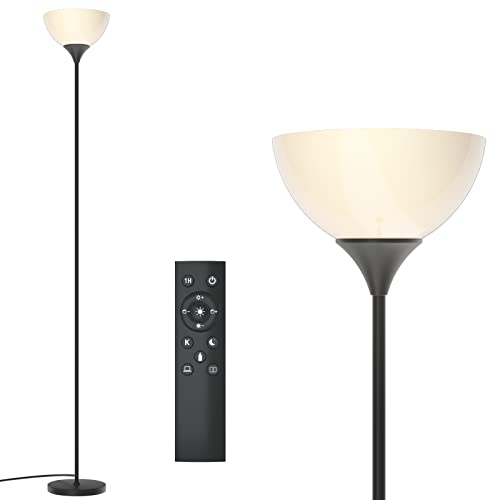
9W LED dimmable remote control bulb included; Floor lamp with 9W dimmer remote control led bulb that can be remotely controlled within 49 ft
Choose Bulbs That Make Textures Look Rich
The bulb matters as much as the fixture. A beautiful linen curtain, velvet pillow, or woven rug can look dull under the wrong light. For most living rooms, choose warm white bulbs and avoid mixing too many color temperatures in the same view.
The Department of Energy notes that warm light is preferred for living spaces and lists 2700–3600 K as a common range for most indoor general and task lighting applications. It also states that a Color Rendering Index, or CRI, of 80 or higher is acceptable for most indoor residential uses. Use those numbers as a practical starting point when choosing LEDs.
- Use warm white light. Around 2700–3000 K feels cozy for most living rooms; 3000–3600 K can work if you want a slightly cleaner look.
- Check CRI. CRI 80+ is a baseline; higher CRI bulbs can make fabric colors, wood tones, and artwork look more natural.
- Choose lumens, not watts. Lumens measure light output, while watts measure energy use.
- Buy dimmable bulbs when using dimmers. The package or instructions should clearly say the bulb is dimmable.
A room gains depth when the eye can move from soft general light to focused task light to small highlighted moments, instead of seeing one flat wash of brightness.
Recommended Products

【Dimmable & Versatile】Smoothly adjust brightness with TRIAC dimmer compatibility. Tailor your lighting from soft to bright, ideal for relaxing evenings or task-focused environments. Not compatible with smart dimmers
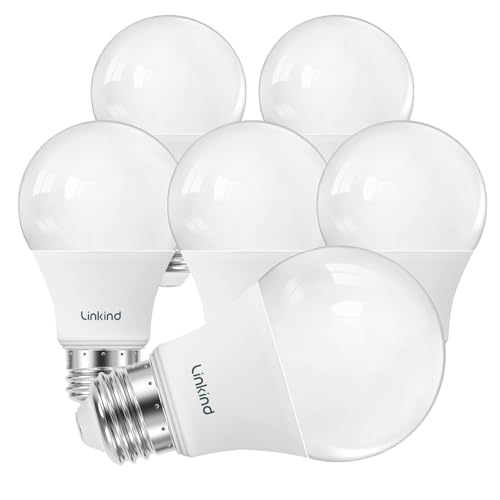
✔ 2700K WARM YELLOWISH LIGHT: The A19 dimmable LED light bulbs give off 800 lumens of 2700k cozy color light. Easy installation with the standard medium screw base E26. NOTE: Please confirm the Kelvin (K) value. This is the most accurate way to select your desired light color. This bulb is 2700K light, which produces a WARM YELLOWISH light. It is not a Bright White or Daylight White bulb. If you prefer a whiter light, please consider our 4000k Cool White or 5000K Daylight options.

【Classic Edison Bulb – Vintage Decorative】Inspired by Thomas Edison’s original incandescent bulb, this Edison bulb features a timeless vintage look that elevates any space. The warm, exposed filament design makes it both a functional light source and a striking decorative accent. Perfect for use in chandeliers, pendant lights, ceiling fans, wall sconces, outdoor wall light, lanterns, table lamps, and any fixture with an E26 medium base. An ideal choice for living rooms, bedrooms, dining areas, bathrooms, porches, entryways, cafes, bars, and other vintage industrial inspired decor.
Choosing Textiles for Layered Lighting Depth
When you choose textiles for your living room, think about how varied textures respond to light. Smooth, shiny, sheer, matte, ribbed, and plush surfaces all reflect or absorb light differently. Layering these materials adds visual interest and makes the room feel warmer and more finished.
Recommended Products

【SIZE & WHAT'S INCLUDED】 18x18 Inches / 45x45 cm. 2 Pieces. Cushion cover only, no insert

Fringed tapestry throw textured pattern woven in

Premium Chenille: Crafted from substantial, high-grade chenille, these decorative pillow covers offer a luxuriously soft, velvety touch and a beautiful drape. Features impeccable stitching with zero loose threads, delivering a premium, heavyweight feel that elevates any space.
Selecting Complementary Fabric Textures
To create a visually appealing living room, select fabrics with varied textures. Plush velvet, airy linen, durable cotton, wool, boucle, and woven fibers each react differently when light hits them. Velvet absorbs light and adds richness. Linen and cotton feel casual and breathable. Sheer curtains diffuse daylight. Chunky knits add soft shadow and tactile weight.
Pair smooth surfaces with rougher ones so the contrast feels intentional. A sleek leather sofa can feel warmer with a wool throw. A plain cotton chair can gain depth with embroidered pillows. A simple window can feel softer with layered sheer and heavier panels.
Utilizing Layered Color Palettes
A strong color palette helps light and textiles work together. Use a base color, one or two supporting tones, and a few accents. Warm tones, such as cream, caramel, clay, rust, and walnut, look especially cozy under warm lighting. Cooler tones, such as blue, gray, sage, and charcoal, can look calm and refined when balanced with warm bulbs and soft fabrics.
- Cohesive Color Palette: Blend warm and cool tones so the room feels collected, not chaotic.
- Rich Textured Fabrics: Use velvet, jacquard, wool, boucle, or woven cotton to add dimension.
- Darker Fabrics: Add darker pillows, throws, or curtains where you want coziness and visual weight.
- Window Treatments: Use sheers to soften daylight and heavier panels to add evening depth.
Incorporating Patterns and Prints
Patterns and prints can transform the atmosphere of your living room by creating movement. Patterned throw pillows, area rugs, and curtains give accent lighting more to reveal. Keep the pattern scale varied so the room does not feel busy: pair one large-scale pattern with one smaller pattern and one quiet texture.
| Textiles | Patterns | Lighting Pairing |
|---|---|---|
| Velvet pillows | Geometric or solid jewel tones | Soft lamp light that brings out richness without glare. |
| Woven rugs | Floral, striped, or natural weave | Accent or floor lighting that reveals texture across the surface. |
| Striped throws | Stripes, abstract motifs, or ribbed knits | Task lighting near seating for a cozy, layered reading spot. |
Lighting Placement Tips
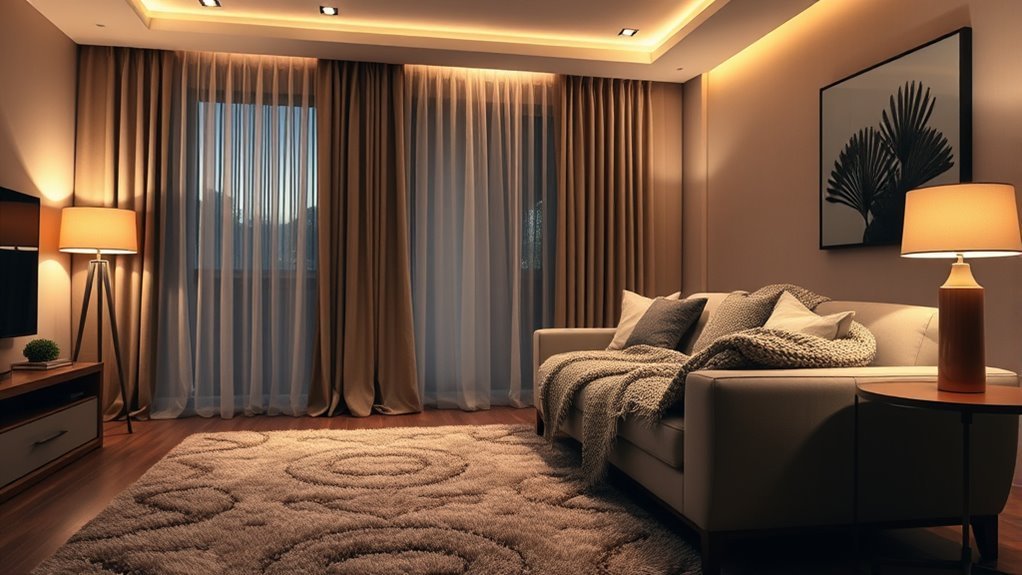
Placement decides whether layered lighting feels natural or cluttered. Use different heights and directions so light travels across the room instead of falling from one flat source.
- Start overhead, then soften. Use a ceiling fixture, recessed lights, or chandelier for general light, but balance it with lamps so the room does not feel harsh.
- Put task lighting close to the activity. Place table lamps or floor lamps near reading chairs, sofas, and game tables to reduce eye strain.
- Highlight one or two focal points. Use accent lighting for artwork, shelves, plants, textured walls, or a fireplace.
- Layer vertically. Combine overhead light, eye-level lamps, wall lights, and low accent light to create dimension.
- Protect sightlines. If a pendant or chandelier hangs above a table, make sure it does not block conversation, views, or walking paths.
Pro Tip: Turn off the main ceiling light and look at the room with only lamps and accent lights on. Any corner that disappears probably needs a small uplight, floor lamp, or reflective surface.
How to Use Dimmers for Adjustable Lighting
To transform your living room into a versatile space, use dimmers where they make sense. Dimmers let you shift from brighter functional light during the day to softer ambient light in the evening. They also help the same room support different moods, from conversation to reading to movie night.
The Department of Energy explains that lighting controls can save energy by turning lights off when they are not needed or reducing light levels when full brightness is unnecessary. It also notes that many LED bulbs can be used with dimmers, but they must be designed for dimming.
- Check the bulb label. Use bulbs that clearly say they are dimmable.
- Match the switch and bulb type. LED dimmers, CFL dimmers, and older incandescent dimmers are not always interchangeable.
- Test for flicker or buzzing. Flickering usually means the bulb, driver, or dimmer is not compatible.
- Use lamp dimmers for plug-in lamps. They are often easier than changing a wall switch.
- Consider smart bulbs or smart plugs. These can give you scheduling and dimming control without rewiring the room.
Warning: Turn power off at the breaker before any electrical work. Hire a licensed electrician for hardwired sconces, chandeliers, recessed lights, or dimmer switches if you are not trained to do the work safely.
Pairing Textiles With Each Lighting Layer
Lighting and textiles work best when they are planned together. Choose fabrics that support the job of each light source.
- Ambient lighting + curtains: Sheer curtains soften daylight, while heavier drapes make evening light feel warmer and more enclosed.
- Task lighting + upholstery: Matte fabrics near reading lamps reduce glare and feel calmer than shiny surfaces.
- Accent lighting + texture: Woven baskets, ribbed ceramics, boucle chairs, carved wood, and textured walls look more dramatic when lit from the side.
- Low lighting + soft layers: Throws, pillows, and rugs make dimmed light feel intentional instead of gloomy.
Note: Avoid mixing too many bulb temperatures in one room. If one lamp is warm yellow and another is cool blue-white, textiles and paint colors can look mismatched.
Troubleshooting Common Lighting and Textile Problems
If your living room still feels flat after adding lamps and textiles, use the problem as a clue.
| Problem | Likely Cause | Fix |
|---|---|---|
| The room feels flat. | Only one overhead light is doing most of the work. | Add lamps at different heights and one accent light for a focal point. |
| The room feels dark. | Corners and vertical surfaces are underlit. | Add a floor lamp, wall sconce, or uplight near the darkest corner. |
| The room feels harsh. | Bulbs are too cool, too bright, or exposed. | Use warmer bulbs, shades, dimmers, and softer textiles. |
| Fabrics look dull. | Low CRI bulbs or poor light placement. | Choose CRI 80+ bulbs and light textured pieces from the side. |
| Dimmed lights flicker. | Bulb and dimmer are not compatible. | Use dimmable LEDs and a compatible LED-rated dimmer. |
Finalizing Your Living Room Design With Cohesive Elements
As you finalize your living room design, make the lighting, textiles, colors, and decorative pieces feel connected. You do not need every item to match. You need every item to support the same mood.
- Color Palette: Select a mix of warm and cool tones, then repeat them through pillows, throws, rugs, curtains, and artwork.
- Layered Lighting Techniques: Use ambient, task, and accent lighting so the room works during the day and glows at night.
- Textile Selection: Choose cushions, rugs, curtains, and throws that harmonize in texture and color with the fixtures.
- Cohesive Decorative Elements: Use artwork, ceramics, books, baskets, plants, and accent furniture to build depth without clutter.
Frequently Asked Questions
How do you create depth with lighting?
Create depth with lighting by combining ambient, task, and accent light. Use overhead or bounced light for general brightness, lamps for specific activities, and accent lighting to highlight artwork, plants, shelves, or textured walls. Add dimmers so the brightness can shift throughout the day.
How do you add depth to a living room?
Add depth to a living room by layering light, texture, color, and height. Mix floor lamps, table lamps, wall lighting, rugs, curtains, pillows, throws, plants, and artwork. Use contrast carefully: smooth with rough, matte with subtle sheen, light with dark, and low furniture with taller vertical elements.
What is the 2/3 rule for living rooms?
The 2/3 rule is a general proportion idea, not a strict law. In living rooms, it is often used to keep decor balanced, such as choosing artwork that is about two-thirds the width of a sofa or using curtain height and furniture scale in a way that feels proportional to the wall and ceiling.
What is the 5–7 lighting rule?
The common 5–7 lighting rule usually means using five to seven light sources in a room to create a layered, flexible scheme. It does not mean every fixture should be mounted at 5 feet 7 inches. Fixture height should depend on ceiling height, fixture type, sightlines, and how the room is used.
What color temperature is best for living room lighting?
Warm white light is usually best for living rooms. A range around 2700–3000 K feels cozy, while 3000–3600 K can work for a cleaner look. Keep most bulbs in the same general temperature range so textiles, paint, and wood tones look consistent.
Which textiles make a living room look more layered?
Use a mix of linen, cotton, velvet, wool, boucle, woven fibers, sheer curtains, and heavier drapes. The key is contrast. Pair smooth with textured, light with dark, and matte with a subtle sheen so lighting has more surfaces to reveal.
Conclusion
Layered lighting and textured textiles can turn a flat living room into a warm, dimensional space. Begin with ambient light, add task lighting where people actually need it, and use accent lighting to bring attention to the room’s best features. Then layer curtains, rugs, pillows, throws, and upholstery so the light has texture to play with. When the bulbs, fixtures, fabrics, and colors work together, your living room feels inviting at every hour of the day.
Sources
- U.S. Department of Energy — Lighting Principles and Terms — supports lighting definitions, color temperature, CRI, glare, and light quantity guidance.
- U.S. Department of Energy — Lighting Design — supports matching light amount and quality to room function, task lighting, daylighting, and efficient lighting design.
- U.S. Department of Energy — Lighting Controls — supports dimmer, LED compatibility, CFL caution, motion sensor, occupancy sensor, photosensor, and timer guidance.
- U.S. Department of Energy — Lighting Choices to Save You Money — supports LED energy-efficiency and lighting-control recommendations.