
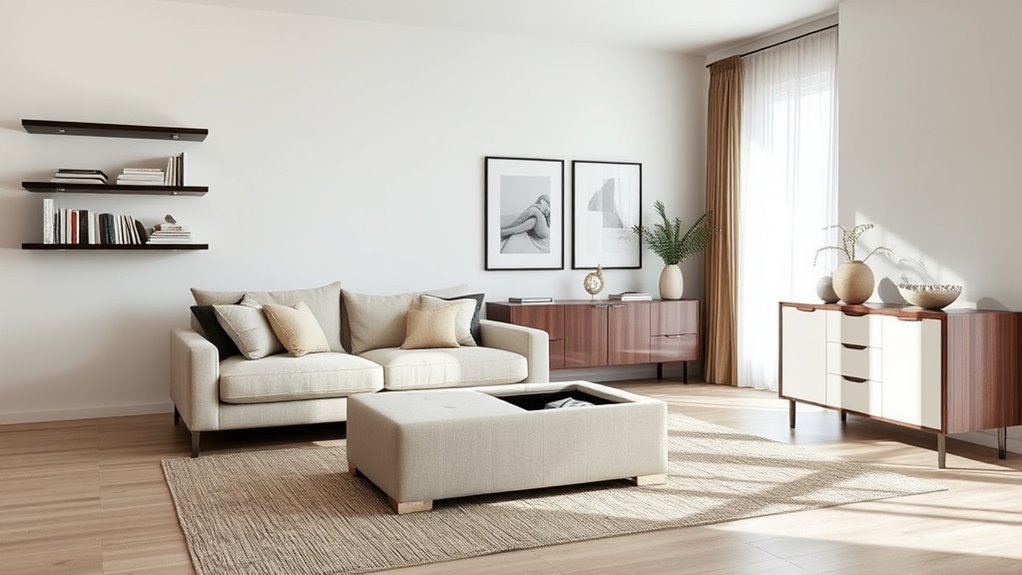
Creating a seasonal decor plan for your living room does not mean filling every shelf, table, and corner with themed figurines. The cleanest approach is to anchor the room in a year-round neutral base, decorate only two or three high-impact focal zones, rely on functional accents, and store off-season pieces in a single labeled bin. With a repeatable rotation system, your living room feels fresh for spring, summer, fall, and winter while staying calm and easy to clean.
Quick Answer
To build a clutter-free seasonal decor plan for your living room, clear everyday surface clutter first, apply the 60-30-10 color rule, and style only two or three focal zones like the sofa, mantel, and coffee table. Limit each seasonal refresh to 5–7 flat-storing swaps—such as pillow covers, throws, and stems—and pack off-season items into labeled bins.
At a Glance
| Time Required | 45–90 minutes for a full seasonal refresh |
| Difficulty | Easy |
| Tools Needed | Storage bin, labels, tray, basket, zippered pillow covers, throw blanket, vase, and microfiber cloth |
| Cost | $0-$75 if you reuse existing pieces and update only small accents |
Start With a Living Room Decor Edit
Always clear and edit your living room surfaces before bringing out a single seasonal item. Remove non-essential objects from the coffee table, mantel, side tables, bookshelves, and entry console, then sort them into three piles: keep on year-round display, store temporarily as a seasonal swap, or donate.
This step prevents visual crowding because seasonal accents need empty space—known in interior design as negative space—to stand out. A room packed with everyday knickknacks immediately feels chaotic once you layer in spring blossoms, autumn branches, candles, or winter greenery.
A clutter-free seasonal room usually comes from editing first, not buying more decor.
Follow the strict one-in, one-out rule and a three-item surface cap. If a table or shelf already holds three decorative objects, pack one everyday piece into your storage bin before setting out a seasonal replacement. Aim to leave at least 40% to 50% of every flat surface completely clear so the room stays functional.
Identify Your Seasonal Color Palette
Build your seasonal color palette around the permanent finishes already in your living room so you never have to redecorate from scratch. Keep your walls, sofa, rug, curtains, and wood tones as a fixed foundation, then introduce just one or two seasonal accent shades that complement those undertones.
Interior designers rely on the 60-30-10 color rule to keep rooms balanced:
- 60% dominant base: Year-round neutrals on large surfaces such as walls, area rugs, and upholstery (cream, warm gray, oatmeal, or taupe).
- 30% secondary tones: Mid-sized furnishings such as wood tables, curtains, accent chairs, and woven baskets (walnut, white oak, charcoal, or navy).
- 10% seasonal accents: Small, rotatable pieces such as pillow covers, throw blankets, taper candles, and foliage that shift four times a year.
Because only 10% of the visual palette changes each quarter, you can shift the mood across all four seasons in calendar order with minimal effort. Spring pairs well with sage green, blush pink, butter yellow, and crisp white. Summer feels airy with washed linen, sand, coastal blue, citrus, or terracotta. Fall warms up with rust, ochre, olive green, caramel, and espresso brown. Winter looks serene with ivory, deep evergreen, navy, pewter, and brushed brass.
Cap your total room palette at three to five colors, including neutrals. For instance, an autumn living room might combine cream, camel, walnut, rust, and olive, while a winter scheme uses ivory, charcoal, walnut, evergreen, and brass.
Pro Tip: Pull one accent shade directly from an existing rug pattern or wall painting. A velvet fall pillow that echoes a thin rust stripe in your area rug looks custom-designed rather than randomly added.
Select Key Areas for Impactful Seasonal Decor
Decorate only two or three focal zones in your living room rather than scattering small seasonal trinkets across every surface. Focus on the primary sightlines you notice first when entering the room—typically the sofa, coffee table, fireplace mantel, built-in shelves, or entry console.
In each chosen zone, pair one year-round anchor piece with one or two seasonal accents. Leave adjacent side tables and secondary corners completely untouched so your eyes have a place to rest.
| Living Room Zone | Year-Round Anchor Piece | Low-Clutter Seasonal Accent | Space-Saving Rule |
|---|---|---|---|
| Coffee table | Wood tray, ceramic bowl, or two-book stack | Bud vase with stems, candle, or pinecones | Keep 50% of the tabletop clear for drinks and remotes |
| Mantel | Framed mirror, large canvas, or stoneware jug | Foraged branches, taper candles, or flat garland | Style asymmetrically with one tall side and one low side |
| Sofa | Two neutral solid pillow inserts | Two zippered seasonal pillow covers and one throw | Cap standard three-seat sofas at 3–4 pillows total |
| Bookshelves | Horizontal book stacks, framed art, or pottery | One seasonal object per shelf column | Leave 30% of each shelf open as breathing room |
| Entry console | Table lamp and catchall bowl or tray | Swappable 5×7-inch art print or seasonal stems | Keep the center clear for keys and daily mail |
Use Natural Materials for Seasonal Decor
Natural materials bring unmistakable seasonal character into a living room without relying on plastic signs or novelty figurines. Unfinished wood, stone, washed linen, cotton, wool, rattan, dried grasses, branches, and fresh greenery add rich texture and transition effortlessly between months.
The secret is restraint and scale. One oversized ceramic pitcher holding tall branches makes a stronger, cleaner statement than five tiny themed trinkets lined up along a shelf.
Recommended Products

🌾Premium Natural Materials: This bouquet features a harmonious blend of pampas grass, soft cotton stems, bunny tails, lavender, wheat, and eucalyptus, carefully selected for their quality and beauty.

MORE THAN ONE KIND OF POMPOUS GRASS BOUQUET: carefully selected natural dried pampas grass decor, try to avoid deformation and breakage of dried pampas grass, 100 pieces of pampass grass contain 50 small pampas grass, 20 reed grass, 15 white pompas, 15 brown pompass grass branches(pampas grass vase not included) fill your vase, you can match it with different dried pompas floral bouquets according to your preference

Versatile Decoration: Golden natural wheat stalks are suitable for home decoration and outdoor decoration, dried wheat can embellish your living room, kitchen and bedroom. Wheat straw are used as decoration for vintage gift shops, restaurants and stores.Dried wheat stalks bring a unique and natural style and unexpected beautiful surprises to the house
Embrace Organic Textures
Shifting fabric and surface textures changes how warm or cool your living room feels without adding extra objects. Pair smooth matte ceramics with rough reclaimed wood, nubby bouclé or cable-knit wool with woven seagrass baskets, and hammered brass with clear glass.
Let fabric weight signal the time of year. In spring and summer, drape lightweight gauze, cotton percale, or washed linen over the sofa arm and expose bare wood surfaces. In fall and winter, swap in heavier flannel, velvet, faux fur, or chunky merino wool while keeping the exact same pillow inserts and furniture footprint.
Incorporate Seasonal Foliage
Swapping botanical stems in a single statement vase is the fastest zero-storage way to mark the changing seasons. Use tulips, pussy willow, or budding cherry branches in spring; eucalyptus, olive branches, or fern fronds in summer; dried wheat, oak branches, or preserved copper beech leaves in fall; and fresh cedar, pine boughs, or bare winterberry twigs in winter.
When decorating with live potted plants, match each species to your room’s exact window exposure and heating patterns. The University of Wisconsin Extension emphasizes that light intensity, light duration, and indoor temperature drafts are the primary factors to evaluate when placing houseplants indoors.
If you forage pinecones or woody branches from your yard, prep them first so you do not bring sap or overwintering insects inside. Shake off loose debris outdoors, soak pinecones in a 1:1 solution of warm water and white vinegar for 30 minutes, rinse them clean, and bake them on a foil-lined tray at 200°F (93°C) for 1 hour until the scales reopen.
Note: Always verify plant toxicity before bringing cuttings into homes with pets or young children. According to ASPCA holiday and plant safety guidance, true lilies can cause fatal kidney failure in cats, while mistletoe, holly berries, and autumn chrysanthemums can trigger severe gastrointestinal or cardiovascular distress in dogs and cats.
Use Recyclable and Reusable Materials
Sustainable seasonal decorating prioritizes source reduction and reuse before purchasing anything new. Because the U.S. Environmental Protection Agency’s waste management hierarchy ranks reducing and reusing materials above recycling, your first step should always be shopping your own closets and dining cupboards.
Repurpose clear glass pantry jars as hurricane candle holders, move a wooden salad bowl to the coffee table to hold seasonal fruit or pinecones, and rotate framed art between bedrooms and the living room. Biodegradable accents—such as fresh flowers, unpainted gourds, acorns, and dried orange slices—can go straight into the compost bin at the end of the season, requiring zero storage space.
Choose High-Quality, Meaningful Decor Pieces
A calm living room relies on a few well-crafted, meaningful objects rather than bags of disposable dollar- aisle decor. Selecting versatile, personal pieces reduces visual noise and eliminates the urge to buy new decorations every three months.
Recommended Products

Capture Your Memories: From the faces of your loved ones to great times with friends and family get-togethers, this collage photo frame lets you display an array of wonderful moments. It features 12 frames, each perfectly sized for 4x6 photos

Modern Minimalist Style: Our Picture frames are carefully packaged with minimalist art in mind, featuring natural colors such as black, white, and brown. Whether used as wall hangings or desk decorations,the gallery wall frame set is suitable for all seasons. We prioritize the perfect balance of aesthetics and functionality, ensuring a comfortable and natural experience for our customers.

MULTIPLE FRAMES COLLAGE: Bulk of 5 pieces picture frames set in the same sizes. Perfect for pictures 8x10 with mat or 11x14 without mat. The frame opening display size will be 0.5 in smaller than the photo to hold the photo in place
Prioritize Personal Significance
Personal heirlooms and travel items give seasonal arrangements warmth that mass-produced signs cannot match. Keep an antique brass candlestick pair, a hand-thrown pottery bowl, or a woven market basket out all year, and simply change what sits inside or beside it.
You can also rotate personal photography within existing frames. Slip a coastal family snapshot into a matted desktop frame for summer, then swap in an autumn hiking photo or vintage botanical postcard in September—storing the off-season prints flat right behind the active photo inside the frame backing.
Invest in Quality Items
Investing in durable foundations—such as zippered textile covers, solid wood trays, and warm ambient lighting—lets you refresh the room in minutes without bulky storage bins.
| Decor Type | What to Look For | Why It Prevents Clutter |
|---|---|---|
| Statement artwork | Standard frame sizes with removable mats and timeless palettes | Anchors an entire wall so you do not need small wall signs |
| Natural wood pieces | Solid walnut, oak, or acacia trays and bowls with clean lines | Bridges warm and cool seasonal palettes year-round |
| Zippered textiles | Washable linen, cotton, velvet, or wool covers with hidden zippers | Four folded covers take up less space than one stuffed pillow |
| Layered lighting | Dimmable table lamps, warm LED bulbs (2,700K–3,000K), and flameless tapers | Transforms evening atmosphere without occupying extra tabletops |
When buying throw pillows, invest in high-density feather-down or down-alternative inserts that measure 2 inches larger than your seasonal covers—such as a 20×20-inch insert inside an 18×18-inch cover, or a 22×22-inch insert inside a 20×20-inch cover. Oversized inserts fill out the corners cleanly and stay lofty across years of seasonal cover changes.
Embrace Timeless Designs
Choose classic geometric and heritage patterns—such as ticking stripes, gingham, herringbone, houndstooth, or windowpane plaid—over literal holiday graphics. A rust-and-cream plaid throw works from September through December, whereas a pillow printed with jack-o’-lanterns feels dated after October 31.
Simplify With Functional Decor
Functional decor keeps a living room tidy because every decorative piece also solves an everyday storage or comfort need. Instead of adding purely ornamental objects, upgrade the items you already touch daily.
- Woven storage baskets: Park a lidded rattan or coiled-rope basket beside the sofa to hold extra winter throws, kids’ toys, or magazines.
- Zippered pillow covers: Swap outer covers over the same permanent inserts so you never stuff closet shelves with bulky seasonal cushions.
- Hidden-storage furniture: Use a storage ottoman or lift-top coffee table to tuck away board games, coasters, and off-season candle holders.
- Corraling trays: Group loose items inside a single 16-to-20-inch wood, metal, or leather tray so the brain registers them as one organized unit.
- Dimmable lamps and lanterns: Shift the room from bright daytime task light to a cozy 2,700K warm-white evening glow with a dimmer switch.
To style a clutter-free coffee table, follow the four-part tray formula: one structured tray, one functional item (coasters or a remote box), one natural element (a bud vase of stems), and one low seasonal accent (a candle or small bowl of acorns). If the surface looks busy, remove the smallest object first.
Recommended Products

Soft Material : Made up of cotton, which is soft and never scratches the skin, yet sturdy as plastic, makes it suitable for home use, especially for storing blankets, clothes, toys or maybe pet toys

Versatile multi-purpose storage items with a coordinated look
Rotate Decor Seasonally for Freshness
A capsule rotation system limits each seasonal refresh to five to seven swap-in pieces so you can update the entire living room in under an hour. A complete capsule typically includes two pillow covers, one throw blanket, one bundle of seasonal stems, one candle or diffuser, one small bowl filler, and one framed art print.
Schedule your transitions around the start of each meteorological season—March 1 for spring, June 1 for summer, September 1 for fall, and December 1 for winter. Pack away holiday-specific items within a week after the holiday ends while letting broader seasonal textures stay out for the full three-month quarter.
| Season | Target Months | Palette Ideas | 5–7 Low-Clutter Capsule Swaps |
|---|---|---|---|
| Spring | March–May | Sage, blush, cream, butter yellow | 2 floral or sage linen pillow covers, cotton throw, budding branches, botanical print, citrus candle |
| Summer | June–August | Crisp white, sand, washed linen, sky blue | 2 striped linen pillow covers, lightweight gauze throw, eucalyptus stems in clear glass, woven tray, coastal photo |
| Fall | September–November | Rust, olive, camel, walnut, ochre | 2 rust velvet or plaid pillow covers, wool throw, dried grasses, wood bowl with pinecones, amber candle |
| Winter | December–February | Ivory, evergreen, navy, silver, charcoal | 2 bouclé or velvet pillow covers, chunky knit throw, cedar clippings, flameless taper candles, brass accent |
How you pack off-season textiles determines how long they last. Follow Smithsonian Institution textile storage guidelines by washing or vacuuming linen, cotton, and wool covers before storage so dust and body oils do not abrade fibers or attract clothes moths. Wrap fabrics in breathable white cotton pillowcases rather than sealing them in airtight plastic bags, which can trap moisture condensation, and store your labeled bin in an interior closet kept around 65°F to 70°F (18°C to 21°C) and 40% to 50% relative humidity instead of a damp basement or hot attic.
Pro Tip: Snap a quick smartphone photo of each finished seasonal vignette before packing it away. Save the photos in a “Living Room Decor” album so you can recreate the exact layout in minutes next year.
Create Permanent Vignettes for Consistency
A permanent vignette is a fixed three-piece grouping on a mantel, console, or shelf where the structural base stays in place all year and only one small detail changes each season. Using the designer Rule of Three creates an effortless visual triangle that feels balanced without looking stiff.
- Anchor with height: Place one tall vertical element at the back or side, such as a framed mirror, leaning artwork, or 12-to-16-inch ceramic vase.
- Add a sculptural midpoint: Pair the tall anchor with one medium-height piece, such as a pair of brass candlesticks or a woven box.
- Finish with a low seasonal swap: Complete the triangle with one low horizontal accent—a shallow stoneware bowl or small tray—whose filler changes every quarter.
- Echo one material across the room: Repeat a single finish from your vignette, such as matte black iron or warm brass, on a lamp base or frame nearby.
For example, a permanent mantel arrangement might feature a round brass mirror, two taper holders, and a ceramic vessel. In spring, fill the vessel with faux dogwood stems and white tapers; in fall, swap in dried bunny tails and ochre tapers; in winter, insert fresh cedar sprigs and burgundy tapers.
How to Add Scents and Sounds to Your Decor
Subtle seasonal scents and background sounds shift the sensory mood of your living room while taking up zero physical space. A gentle aroma or quiet playlist signals the time of year immediately when guests walk through the door.
| Season | Low-Clutter Scent Ideas | Ambient Sound Ideas |
|---|---|---|
| Spring | Stovetop simmer pot with sliced lemon, fresh rosemary, and vanilla | Open windows for morning birdsong or soft acoustic guitar |
| Summer | Fresh mint, basil, or light sea-salt beeswax candle | Bossa nova instrumentals, gentle tabletop fountain, or porch chimes |
| Fall | Simmered orange peels, cinnamon sticks, and whole cloves | Low-volume jazz piano or indie folk playlists |
| Winter | Fresh pine boughs, cedarwood, or warm vanilla bean | Crackling fireplace audio or classical strings |
Whenever you burn real candles, follow the U.S. Fire Administration’s candle safety guidance, which notes that an average of 20 home candle fires are reported each day in the United States. Set candles in sturdy, tip-resistant holders at least 12 inches away from anything flammable, and extinguish every flame before leaving the room or going to sleep.
Warning: Never place open-flame candles near curtains, dried grasses, evergreen garlands, books, throw blankets, or paper decor. On bookshelves, mantels with hanging greenery, and in homes with children or pets, always use battery-operated flameless LED candles.
Protect your indoor air when adding fragrance or updating containers. Because the EPA notes that volatile organic compounds can be emitted by many household products—with indoor VOC levels averaging two to five times higher than outdoor air—crack a window when using scented sprays or candles, and opt for stovetop simmer pots with whole fruit and spices if family members have asthma or scent sensitivities. If you spray-paint old frames, vases, or dried branches, work outdoors and let pieces cure completely before bringing them inside.
Troubleshoot a Room That Still Feels Cluttered
If your living room still looks busy after setting out your seasonal capsule, the problem is almost always object count, scale, color scatter, or lack of containment. Use these targeted fixes to calm the room in ten minutes:
- Too many tiny objects: Replace three or four palm-sized trinkets with one larger 10-to-12-inch ceramic bowl, vase, or framed print.
- Disconnected accent colors: Remove any seasonal color that appears only once in the room; every accent hue should echo in at least two spots.
- Competing seasonal themes: Pick one cohesive direction—such as organic woodland fall or coastal linen summer—rather than mixing rustic, modern, and novelty styles.
- Flat, one-note surfaces: Apply the Rule of Three by pairing a tall vase, a medium candle holder, and a low book stack.
- Drifting coffee table items: Consolidate loose coasters, matches, and candles onto a single tray and pack away whatever overflows its rim.
- Crowded bookshelves: Clear at least one-third of each shelf span so the wall or backing color shows through clearly.
When in doubt, take a wide-angle photo of your living room on your phone. Viewing the space on a small two-dimensional screen immediately exposes crowded corners, allowing you to edit out 20% of the accessories on the spot.
Key Takeaways
- Use the one-in, one-out edit: Pack away one everyday accessory for every seasonal accent you set out, leaving 40%–50% of surfaces bare.
- Follow the 60-30-10 color ratio: Keep 90% of the room in year-round neutrals and wood tones while shifting just 10% through seasonal accents.
- Downsize storage with flat textiles: Pair 20×20-inch or 22×22-inch inserts with zippered pillow covers 2 inches smaller so off-season covers fold flat.
- Prep and check natural foliage: Verify pet safety against the ASPCA toxic plant list and bake vinegar-rinsed pinecones at 200°F for 1 hour to remove pests.
- Prioritize fire and indoor air safety: Keep lit candles 12 inches from greenery or fabric, use LED tapers on mantels, and ventilate rooms when using fragrances.
Frequently Asked Questions
How do you decorate for the seasons without cluttering the living room?
Decorate without clutter by limiting updates to two or three focal zones, following the 60-30-10 color rule, and swapping only five to seven small accents such as zippered pillow covers, throws, stems, and candles. Corral tabletop items inside trays, and pack away one everyday object before adding a seasonal replacement.
In what order should you decorate a living room?
Decorate a living room by establishing furniture layout and traffic flow first, then grounding the space with an area rug and lighting. Next, layer in year-round curtains and neutral pillow inserts, style permanent anchor pieces on key surfaces, and finish with small seasonal textiles and botanical stems.
How many seasonal decorations should I use in a living room?
Five to seven seasonal pieces are enough for most living rooms. A balanced capsule includes two zippered pillow covers, one textured throw blanket, one vase arrangement of seasonal stems, one candle or flameless taper pair, one bowl filler, and one swappable art print.
What is the easiest seasonal decor to store?
Zippered pillow covers, lightweight throws, unframed art prints, taper candles, and dried or faux stems are the easiest seasonal items to store because they lie flat in a single bin. Biodegradable accents like fresh branches, flowers, and unpainted gourds require zero storage since you can compost them afterward.
How do I make seasonal decor look elegant instead of themed?
Make seasonal decor look elevated by using color, fabric weight, and natural botanicals rather than literal novelty figurines or word signs. For example, suggest autumn with rust velvet pillows, oak branches, and brass candlesticks instead of plastic pumpkins, and evoke winter with evergreen boughs, wool knits, and warm 2,700K lighting.
When should you switch seasonal decor in your living room?
Switch your living room decor at the beginning of each meteorological season—around March 1 for spring, June 1 for summer, September 1 for fall, and December 1 for winter. Pack away holiday-specific ornaments within one week after the holiday passes while keeping general seasonal colors and textures out for the full three months.
How do you clean pinecones and branches before bringing them indoors?
Brush loose soil off outdoors, then soak pinecones in a 1:1 bath of warm water and white vinegar for 30 minutes to remove sap and hidden insects. Rinse thoroughly with cool water and bake them on a lined baking sheet at 200°F (93°C) for 1 hour until the scales fully dry and reopen.
Conclusion
A clutter-free seasonal decor plan works best when it is simple, repeatable, and rooted in pieces you already love. Start today by clearing one focal surface—such as your coffee table or mantel—removing one everyday object, and styling a three-piece vignette with natural stems and a single seasonal textile.
Sources
- U.S. Environmental Protection Agency: Sustainable Materials Management Hierarchy: Supports prioritizing source reduction and reuse over recycling when planning home decor.
- U.S. Fire Administration: Candle Fire Safety: Supports home candle fire statistics, the 12-inch clearance rule, and flameless LED candle recommendations.
- U.S. Environmental Protection Agency: Volatile Organic Compounds’ Impact on Indoor Air Quality: Supports indoor VOC concentration data and ventilation precautions for fragrances and spray paint.
- University of Wisconsin Extension: Houseplant Care: Supports matching indoor plant placement to room light intensity, duration, and temperature drafts.
- ASPCA: Holiday Safety Tips: Supports pet toxicity warnings for lilies, mistletoe, holly, poinsettias, and seasonal floral arrangements.
- Smithsonian Institution: How Do I Store Antique Textiles at Home?: Supports cleaning natural textiles before storage, avoiding airtight plastic bags, and keeping storage areas at 65°F–70°F and 40%–50% relative humidity.
- Schema.org: FAQPage: Supports the FAQ structured data specification used in this guide.





[…] clutter tends to return with seasonal decorating, the same editing principle is used in our clutter-free seasonal living room guide: clear the room first, then add only the pieces that support the chosen focal […]
[…] Seasonal Decor Plan: 7 Clutter-Free Living Room Tips […]
[…] arithmetic comes from the 60-30-10 rule, applied across the year instead of a single room: as one seasonal decor plan on Nordic Design Blog lays out, roughly 60% of a room is dominant year-round neutrals (walls, rug, upholstery in cream, […]