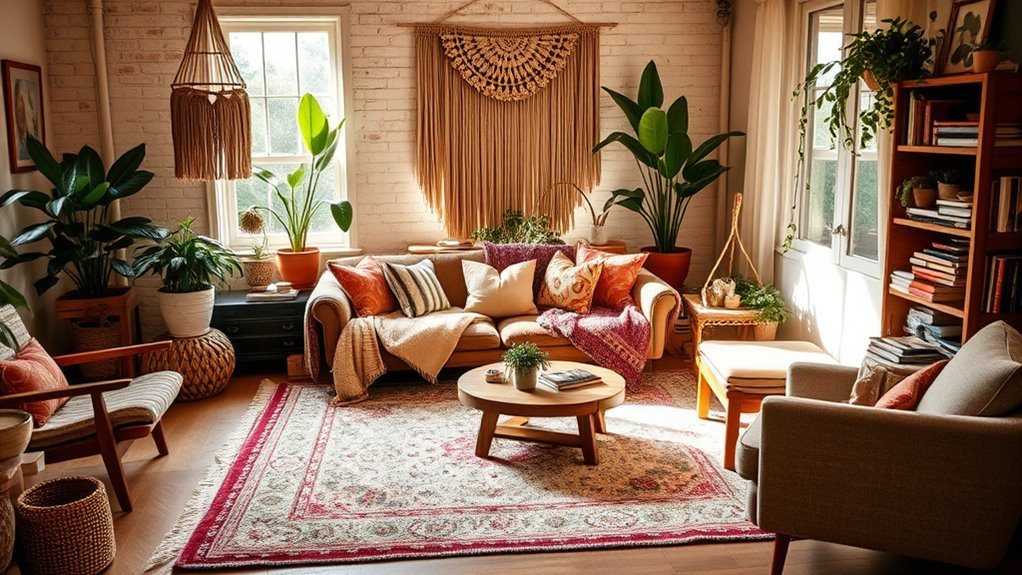
Boho living room style is a warm, relaxed mix of eclectic decor, layered textiles, natural textures, collected pieces, and expressive color. The best bohemian living rooms do not look like a showroom. They feel lived in, personal, and comfortable, with enough editing to keep the room cozy instead of cluttered.
Quick Answer
A boho living room looks layered, relaxed, and personal. Start with warm neutrals, add natural materials like wood, jute, rattan, cotton, or linen, then layer patterned rugs, pillows, plants, art, and vintage finds. The key is balance: mix colors and textures, but repeat a few tones so the room feels intentional.
Key Takeaways
- Boho living room style works best when it feels collected over time, not bought in one matching set.
- Use warm neutrals as the base, then add terracotta, ochre, rust, olive, indigo, plum, or jewel tones through textiles and art.
- Layer texture with rugs, cushions, throws, woven baskets, wood, ceramics, plants, and handmade pieces.
- Avoid clutter by repeating colors, choosing one or two hero patterns, and leaving breathing room around furniture.
- Plants add life and softness, but check pet safety before bringing home varieties such as snake plants.
At a Glance
| Time Required | 1 weekend for a refresh; 2–6 weeks if you are sourcing vintage furniture, rugs, or handmade decor slowly |
| Difficulty | Beginner-friendly, as long as you edit the room and repeat a few colors for cohesion |
| Tools Needed | Measuring tape, painter’s tape, mood board, floor plan sketch, picture-hanging hardware, and a basket or tray for editing clutter |
| Cost | $0–$100 for styling with items you own; $150–$500+ for rugs, lighting, plants, paint, or secondhand furniture |
What Is Boho Living Room Style?
A boho living room is an expressive, layered space inspired by bohemian interiors, vintage collecting, global craft traditions, nature, travel, and art. Instead of matching every finish, boho style mixes materials and eras: a linen sofa with a carved wood table, a jute rug under a patterned wool rug, a rattan chair beside a modern lamp, or handmade pottery on a thrifted bookshelf.
The look can be colorful and maximalist, soft and neutral, earthy and organic, or bold and globally inspired. Current 2026 design coverage continues to favor personal, tactile, layered interiors over sterile minimalism, and Architectural Digest’s 2026 interior design forecast points to self-expression, saturated color, craftsmanship, and texture as major design themes.
The most successful boho living room is not random. It looks free-spirited because the colors, textures, and personal pieces are layered with intention.
Essential Elements of Bohemian Design
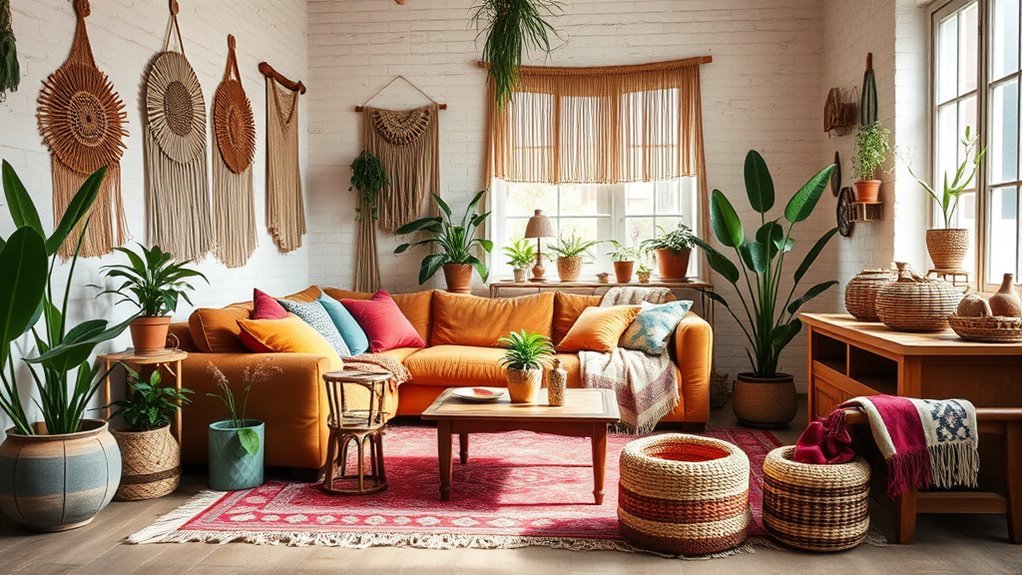
When you step into a bohemian living room, it should feel warm, relaxed, and full of life. The foundation is usually simple: comfortable seating, a grounding rug, soft lighting, and a palette that repeats throughout the room. The personality comes from the layers.
Recommended Products
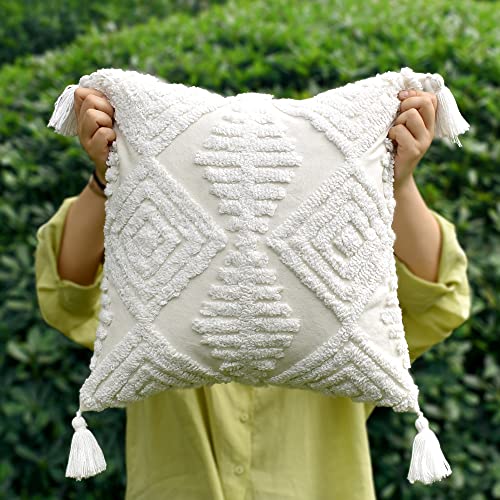
【Pillow Covers Only】You will receive the pillow covers 18x18 Inches only, the insert is not included.
Warm Grounding Colors
Start with warm neutrals such as cream, sand, beige, oatmeal, taupe, mushroom, or warm white. These shades keep the room calm and make it easier to layer bolder accents. Then bring in earthy or saturated color through pillows, rugs, curtains, art, ceramics, or a painted accent piece.
Classic boho accent colors include:
- Terracotta, clay, rust, and burnt orange
- Ochre, mustard, camel, and warm gold
- Olive, sage, moss, and deep green
- Indigo, teal, navy, and faded blue
- Plum, burgundy, berry, and jewel tones
Natural and Tactile Materials
Boho rooms often use wood, jute, rattan, cane, bamboo, cotton, linen, wool, leather, clay, stone, and ceramic. These materials add depth because they do not all reflect light the same way. A woven basket, matte pottery vase, carved side table, and nubby throw can make a plain room feel layered even before you add bold color.
Collected Personal Decor
Personal touches are what keep boho decor from feeling like a theme. Vintage finds, travel souvenirs, framed sketches, family pieces, handmade objects, flea-market lamps, and books all tell a story. The goal is not to fill every surface. The goal is to display a few meaningful pieces where they can be seen and enjoyed.
Pro Tip: Use the “three textures, two finishes, one standout color” rule when a room starts to feel messy. For example: linen, jute, and wood; matte black and brass; plus terracotta as the standout color.
Key Features of Boho Living Room Style
As you explore the key features of boho living room style, think in layers: base pieces, soft pieces, natural pieces, artistic pieces, and personal pieces. Each layer should add comfort or meaning.
Layered Textiles
Textiles are the heart of a cozy boho living room. Use plush cushions, soft throws, patterned curtains, woven wall hangings, and rugs with texture. A simple sofa can feel bohemian with a mix of pillows in cotton, linen, velvet, mudcloth-inspired prints, block prints, kilim patterns, or Moroccan-style textures.
For rugs, try one of these approaches:
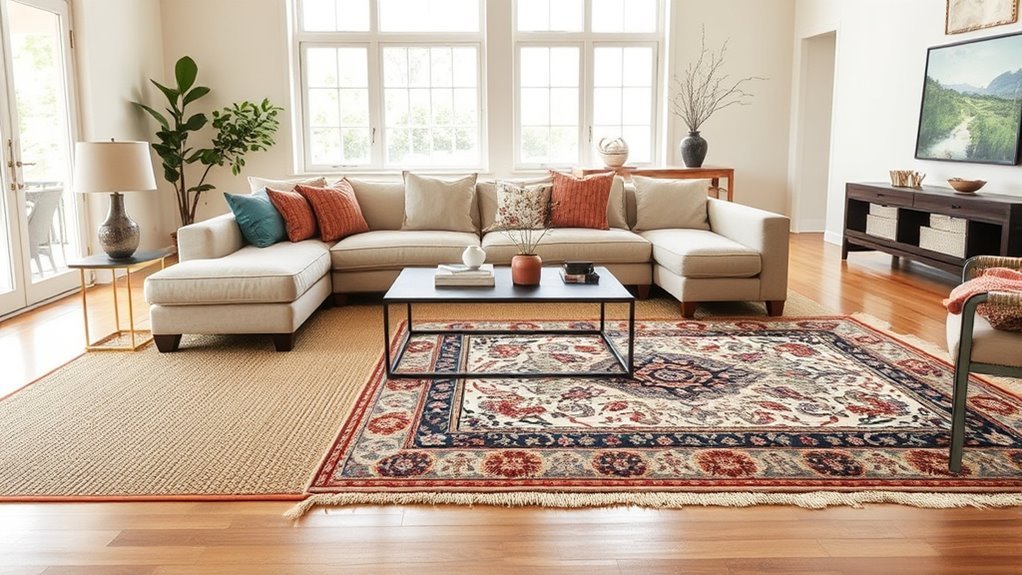
- Simple base: a large jute or sisal rug under a smaller patterned rug.
- Color anchor: one vintage-style rug that repeats the room’s main accent colors.
- Soft neutral: a thick cream or wool rug when the rest of the decor is colorful.
Patterns That Feel Curated
Boho does not mean every pattern belongs in the same room. Choose one hero pattern, then support it with smaller-scale patterns or solids. If your rug is bold, keep most pillows calmer. If your wall hanging is graphic, use quieter curtains. Repeating one color across several items helps different patterns feel connected.
Plants and Greenery
Plants bring shape, softness, and fresh color into a boho space. Try a trailing pothos on a shelf, a tall plant in a woven basket, small succulents on a coffee table, or a cluster of plants near a bright window. Choose planters in clay, ceramic, rattan, or stone to keep the natural look going.
Note: Use plants for beauty, texture, and a calmer feeling, but do not treat them as a complete indoor-air-quality solution. The U.S. EPA explains that indoor air quality depends on pollutant sources, ventilation, humidity, and other factors, and research published in the Journal of Exposure Science & Environmental Epidemiology found that ordinary potted plants are not a practical substitute for normal air exchange in typical buildings.
Ambient Lighting
Boho lighting should feel warm and layered. Instead of relying on one ceiling fixture, combine table lamps, floor lamps, sconces, lanterns, candles, and string lights. Use warm bulbs where possible, especially in the evening, so the room feels soft rather than harsh.
Warning: If you use candles or lanterns, keep flames away from curtains, dried grasses, books, throws, and hanging textiles. Use battery candles for shelves, children’s spaces, pet areas, or anywhere a flame could be knocked over.
Creating a Cozy Boho Living Room Space
A cozy boho living room should invite you to sit down, stretch out, read, talk, and linger. Use this simple process to build the room without overwhelming it.
- Choose a warm base. Start with a neutral wall color, sofa, or rug so your colorful pieces have room to shine.
- Pick a palette. Choose two or three main colors and repeat them in pillows, art, rugs, books, or ceramics.
- Anchor the seating area. Use a rug large enough for at least the front legs of the sofa and chairs to sit on it.
- Add texture before adding clutter. Bring in a throw, woven basket, wood table, ceramic lamp, or linen curtains before buying more decorative objects.
- Layer lighting. Add at least three light sources: one overhead or tall floor lamp, one table lamp, and one soft accent light.
- Style one focal point. Choose a gallery wall, bookcase, fireplace, large plant, or statement rug so the eye has somewhere to land.
- Edit the room. Remove anything that does not add comfort, function, color, or personal meaning.
Recommended Products

QUALITY MATERIAL: The pillow cover is composed of a soft and comfy corduroy which is a kind of polyester fabric, features a cute and elegant boho stripe design. Our pillow covers are of good workmanship, they are tightly sewn without loose threads.
Boho Color Formulas That Work
If you are unsure where to begin, use one of these easy color formulas:
- Soft neutral boho: warm white, beige, oatmeal, rattan, black accents, and olive plants.
- Earthy desert boho: cream, terracotta, rust, clay, camel, and dark wood.
- Colorful global boho: warm white, indigo, mustard, burgundy, emerald, and natural fibers.
- Moody boho: taupe, charcoal, plum, walnut wood, aged brass, and deep green plants.
Layout and Scale
A boho living room still needs good flow. Leave clear walkways so the room feels relaxed instead of crowded. In most spaces, avoid pushing every piece of furniture tightly against the walls. Pull chairs inward when possible to create a conversation area, and use side tables, poufs, or floor cushions where people naturally gather.
For small living rooms, choose fewer but better pieces: one comfortable sofa, one accent chair, one layered rug, one tall plant, and wall-mounted shelves or baskets for storage. For larger rooms, create zones with rugs, lamps, and seating groups so the space does not feel empty.
Tips for Personalizing Your Boho Living Room
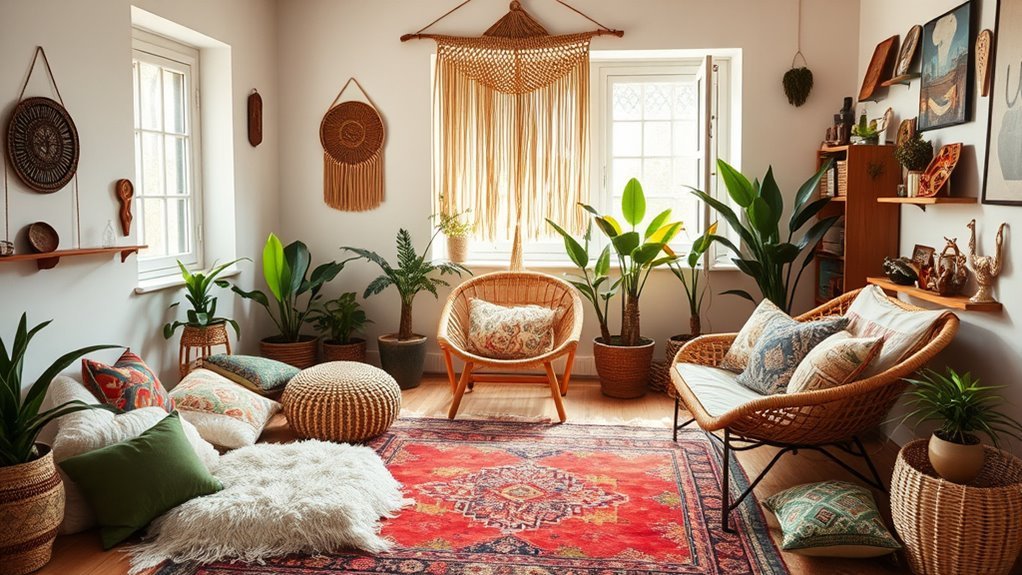
To truly make your boho living room feel like home, infuse it with pieces that tell your story and evoke cherished memories. Incorporate vintage pieces, framed art, handmade ceramics, flea-market finds, and souvenirs from your travels, but give each piece enough space to be noticed.
Budget-Friendly Boho Ideas
- Shop secondhand for wood side tables, baskets, lamps, mirrors, and frames.
- Use pillow covers instead of replacing entire pillows.
- Frame postcards, textile scraps, pressed flowers, or vintage book pages.
- Layer a smaller patterned rug over a plain rug you already own.
- Group books, candles, and ceramics on trays to make surfaces feel styled instead of cluttered.
- Refresh a plain wall with peel-and-stick wallpaper, removable hooks, or a large fabric wall hanging if you rent.
Respectful Global Influences
Boho style often draws from many craft traditions, including Moroccan rugs, African textiles, Indian block prints, Turkish kilims, Southwestern patterns, and Mediterranean ceramics. Use these influences thoughtfully. Buy from artisans, vintage sellers, fair-trade shops, or reputable makers when you can, and avoid reducing meaningful cultural pieces to generic “tribal” decor.
Pet- and Family-Friendly Choices
If you have pets or small children, choose washable pillow covers, sturdy baskets, rounded coffee tables, and stable plant stands. Some popular plants are unsafe for animals. The ASPCA lists snake plant as toxic to dogs and cats, so check plant safety before placing greenery within reach.
Inspiration From Real-Life Bohemian Living Rooms
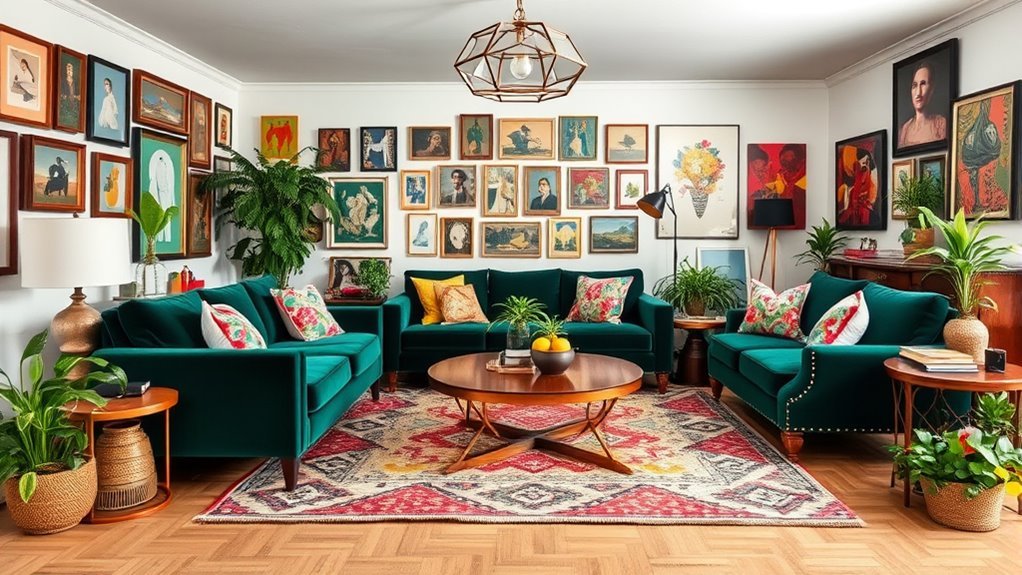
Bohemian living rooms burst with personality, inviting you to explore a tapestry of colors, textures, and stories. This is where your spirit can roam free, but the most beautiful rooms still have a sense of rhythm. Picture:
- A cozy reading nook with a low chair, floor cushion, small table, warm lamp, and a stack of books.
- A collected gallery wall with framed art, a woven hanging, a small mirror, and one personal photo rather than a crowded wall of random prints.
- A natural-material seating area with a linen sofa, rattan chair, jute rug, carved wood coffee table, and ceramic vases.
- A colorful textile moment where a patterned rug, embroidered pillow, and throw blanket repeat the same rust, blue, or green tones.
- A plant-filled corner with different leaf shapes and planter heights near the best natural light in the room.
Embrace a bohemian vibe that sings of freedom, individuality, and warmth. Let your living space become a personalized atmosphere, where every piece earns its place and every corner invites you to linger.
Common Boho Decor Mistakes to Avoid
Boho style is forgiving, but a few mistakes can make the room feel chaotic instead of cozy.
- Using too many unrelated colors: Choose a repeatable palette so the room feels layered, not random.
- Overloading on rattan or macramé: A little goes a long way. Mix woven pieces with wood, linen, ceramics, glass, and metal.
- Buying only new “boho” decor: Too many mass-produced pieces can make the room look staged. Add vintage, handmade, or personal items.
- Ignoring lighting: One overhead light can flatten the room. Add lamps and soft accent lighting.
- Choosing rugs that are too small: A tiny rug can make the seating area feel disconnected. Go larger when possible.
- Forgetting storage: Boho rooms still need places for remotes, blankets, toys, books, and everyday clutter.
- Confusing clutter with character: Character comes from meaningful objects. Clutter comes from keeping everything on display.
Frequently Asked Questions
What does a bohemian style living room look like?
A bohemian style living room usually has layered rugs, relaxed seating, warm colors, plants, natural materials, vintage or handmade decor, and a mix of patterns. It should feel collected and personal rather than perfectly matched.
Is boho decor still in style in 2026?
Yes, boho decor is still relevant in 2026, especially when it feels curated, tactile, and personal. The freshest version is less about copying a fixed “boho” formula and more about layering natural materials, meaningful objects, expressive color, and comfortable furniture in a balanced way. Current home trend coverage also highlights Afrobohemian decor, natural woven materials, and expressive interiors as part of the broader move away from sterile minimalism.
What colors are typical for boho style?
Typical boho colors include warm white, cream, beige, tan, terracotta, rust, mustard, olive, sage, indigo, teal, burgundy, and plum. For a calmer room, use mostly warm neutrals with two accent colors. For a bolder room, use jewel tones but repeat them throughout the space.
What are common mistakes in boho decor?
The biggest boho decor mistakes are using too many patterns with no shared color, overfilling surfaces, choosing rugs that are too small, relying on one overhead light, buying only mass-produced decor, and using too much of one material such as rattan or macramé. Edit the room so every piece adds comfort, function, or meaning.
How do I make boho decor look elegant instead of messy?
Use a limited palette, repeat materials, and create one clear focal point. Keep the largest furniture pieces simple, then add personality with rugs, pillows, art, lamps, and ceramics. Leave some empty space on walls, shelves, and tables so the room has breathing room.
Can boho style work in a small living room?
Yes. In a small living room, use one large rug, slim furniture, wall shelves, baskets for storage, mirrors, and a few high-impact textiles. Choose one main pattern and repeat the same accent colors so the space feels cozy rather than crowded.
Conclusion
In a world of stark minimalism, your boho living room can bloom like a wildflower amidst concrete. The magic comes from balance: earthy textures with vivid textiles, vintage finds with practical storage, plants with soft lighting, and meaningful treasures with enough open space to let them shine. Embrace the relaxed, collected spirit of bohemian design, but keep the room comfortable, intentional, and true to your life. Your bohemian retreat awaits—so let it flourish with color, comfort, and story.
Sources
- Architectural Digest: AD PRO’s 2026 Interior Design Forecast — supports the 2026 shift toward expressive, tactile, personality-driven interiors.
- Better Homes & Gardens: Pinterest Home Trends Forecast 2026 — supports current interest in Afrobohemian decor, woven materials, rattan, jute, rugs, and broad color palettes.
- Journal of Exposure Science & Environmental Epidemiology: Potted Plants Do Not Improve Indoor Air Quality — supports the note that plants are decorative and mood-enhancing, not a practical substitute for ventilation.
- U.S. EPA: Introduction to Indoor Air Quality — supports the indoor air quality note about pollutant sources, ventilation, humidity, and comfort.
- ASPCA: Snake Plant Toxicity — supports the pet-safety caution for snake plants.