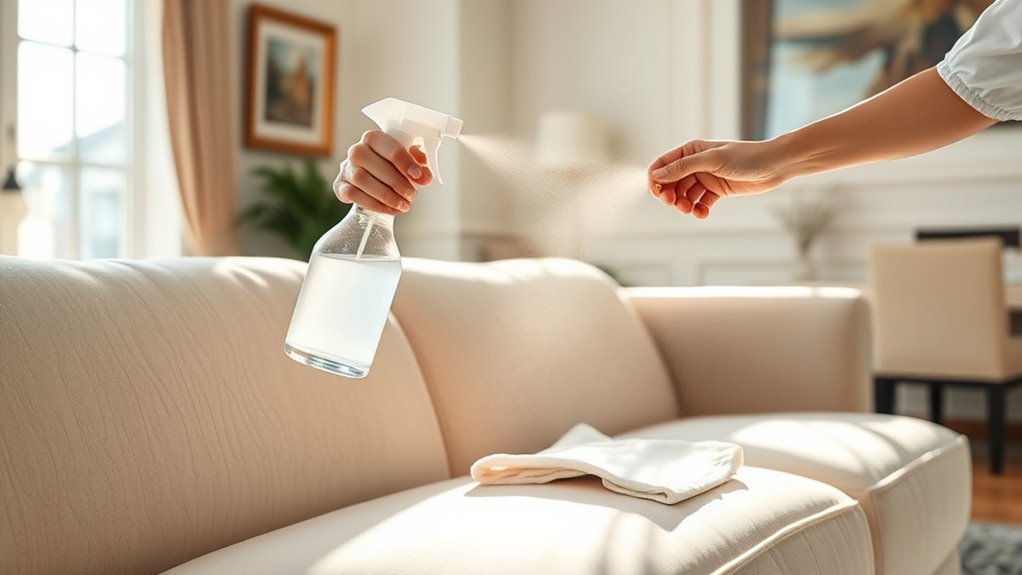
Water stains can make a microfiber couch look worse after cleaning, not better. The safest method starts with your couch’s care code, because microfiber can need water-based cleaner, solvent cleaner, or professional care only. This guide shows you how to clean your microfiber couch, treat common stains, and keep the fabric soft without leaving rings or rough patches.
Quick Answer
To clean a microfiber couch without water stains, vacuum first, check the care tag, and use the cleaner that matches the fabric code. Use rubbing alcohol for “S” codes, water-based cleaner for “W” codes, and either method for “SW” codes. Blot stains gently, let the fabric air dry, then brush it with a soft-bristled brush.
Key Takeaways
- Check the care tag before you use any liquid cleaner on microfiber.
- Vacuum the couch first so dirt does not turn into muddy streaks.
- Blot stains instead of scrubbing, which can damage the fabric’s texture.
- Let the couch dry fully before you sit on it or brush the nap.
- Call a professional if the tag says “X” or the couch has mold or deep soil.
How to Clean Your Microfiber Couch: A Step-by-Step Guide
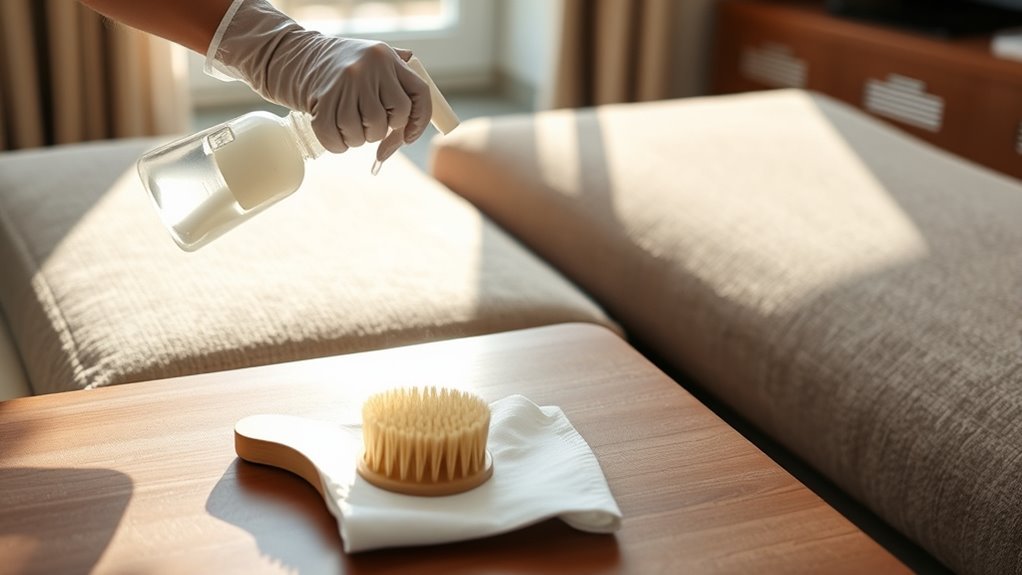
Follow the care tag before you use any cleaner. Most microfiber couches use a code that tells you which cleaning method the fabric can handle.
Start with these basic steps:
- Vacuum thoroughly: Use an upholstery attachment to remove loose dirt, pet hair, crumbs, and dust from seams.
- Check the fabric code: Look for “W,” “S,” “SW,” or “X” on the care tag.
- Spot test first: Test your cleaner on a hidden area and let it dry before you clean a visible spot.
- Blot the stain: Spray a small amount of cleaner on a cloth or the stain, then blot gently.
- Let the couch air dry: Keep the area well ventilated until the fabric feels fully dry.
- Brush the fabric: Use a soft-bristled brush to restore the nap and soften stiff spots.
If the care tag says “S,” use clear rubbing alcohol instead of water. If it says “W,” use a light water-based cleaner, but avoid soaking the fabric.
Warning: Too much liquid can leave rings, stiff patches, or trapped moisture in the cushions.
What You’ll Need Before You Clean
Gather your supplies before you start so you can treat stains quickly. Use clean tools, because dirty cloths can transfer grime back onto the couch.
- Vacuum with an upholstery attachment
- Clean microfiber cloths
- Spray bottle
- Clear rubbing alcohol for “S” or “SW” codes
- Distilled water or mild water-based cleaner for “W” or “SW” codes
- Baking soda or cornstarch for odors and greasy stains
- Soft-bristled brush
Use distilled water when you mix a water-based cleaner. It helps reduce mineral marks that can show after the fabric dries.
How to Read Your Couch’s Fabric Cleaning Codes
Your microfiber couch’s care tag tells you which cleaner to use. Read it before you treat any stain, even if you have cleaned another microfiber couch before.
- “W”: Use water-based cleaners.
- “S”: Use solvent-based cleaners, such as clear rubbing alcohol.
- “SW”: Use water-based or solvent-based cleaners.
- “X”: Vacuum only and call a professional for deep cleaning.
The right cleaning method protects the fabric and lowers the chance of water rings. If the tag is missing, spot test carefully and use the least amount of liquid possible.
How Long Does It Take to Clean a Microfiber Couch?
Most light cleaning takes about 30 to 60 minutes, not counting drying time. Drying can take several hours, depending on how much cleaner you used and how much air moves through the room.
Stain treatment may take longer if you need to repeat blotting or use baking soda for odor control. Plan to keep the couch unused until every damp area feels dry.
Stain Removal Techniques After Cleaning
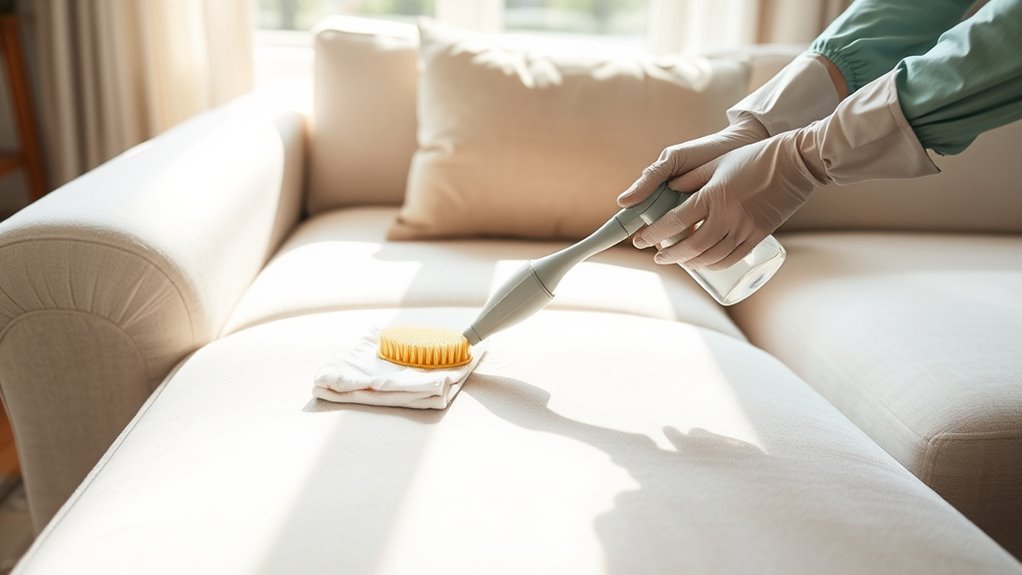
Some stains can linger after a general cleaning. Use a stain method that fits the type of mess and the couch’s fabric code.
For grease stains, sprinkle baking soda or cornstarch over the mark and let it sit before vacuuming. The powder can absorb oil and reduce odor before you blot the spot again.
For ink stains on solvent-safe microfiber, dampen a clean cloth with rubbing alcohol and blot from the outside of the stain toward the center. This helps keep the ink from spreading.
For pet stains, blot the spill right away with a dry cloth. Use a light detergent solution only if the fabric code allows water-based cleaning, then sprinkle baking soda after blotting to help control odor.
Pro tip: Work from the stain’s edge toward the center so you do not spread the mark.
Safe Ways to Deodorize and Freshen a Microfiber Couch
Freshening a microfiber couch works best when you avoid heavy moisture. Odor control should remove smells without soaking the fabric or cushion fill.
- Use baking soda: Sprinkle a light layer over the couch, let it sit for 15 to 30 minutes, then vacuum it up.
- Use vinegar carefully: Mix equal parts white vinegar and water only for water-safe fabric, then apply lightly with a cloth.
- Use enzymatic cleaner for pet odors: Follow the product label and the couch’s care code before applying it.
- Improve air flow: Open windows or use a fan to help the couch dry faster and reduce trapped smells.
Always spot test any deodorizing cleaner first. A product that works on one couch can leave marks on another.
Maintenance Strategies to Keep Your Microfiber Couch Looking New
Regular care keeps dirt from settling deep into the fabric. A simple weekly routine also helps the couch keep its soft texture.
Regular Vacuuming Schedule
Vacuum your microfiber couch at least once a week. If you have pets, children, or heavy daily use, vacuum more often.
- Vacuum weekly: Remove dirt, dust, and pet hair before they grind into the fibers.
- Use an upholstery attachment: Clean the seat, back, arms, and seams without scratching the fabric.
- Focus on high-use areas: Give extra attention to seats, armrests, and cushion gaps.
- Fluff cushions: Rotate and fluff cushions weekly to reduce uneven wear.
Prompt Stain Treatment
Quick action can stop a spill from turning into a set-in stain. Blot wet spills with a clean, dry cloth as soon as you see them.
For water-safe microfiber, use a small amount of mild cleaner and blot again with a clean cloth. For dry stains, loosen residue gently with a soft brush before you vacuum.
Protective Covers Usage
Protective covers can help if your couch gets heavy use. Choose machine-washable covers that fit well and do not trap moisture against the fabric.
- Choose quality fabric protectors: Use a product labeled safe for microfiber, and test it first.
- Use washable slipcovers: Wash covers often to keep dirt away from the couch.
- Rotate and fluff cushions: Keep wear even across the seating area.
- Limit sun exposure: Move the couch or use curtains to reduce fading.
Common Mistakes to Avoid When Cleaning Microfiber
The biggest mistake is using too much liquid. Microfiber can show rings when moisture dries unevenly, especially on couches that need solvent-based cleaners.
Avoid harsh scrubbing, bleach, colored cloths, and unknown cleaners. These can roughen the nap, transfer dye, or leave a faded patch.
Note: If the fabric feels stiff after cleaning, let it dry fully and brush it lightly to restore softness.
What to Do About Stubborn Stains on Your Microfiber Couch
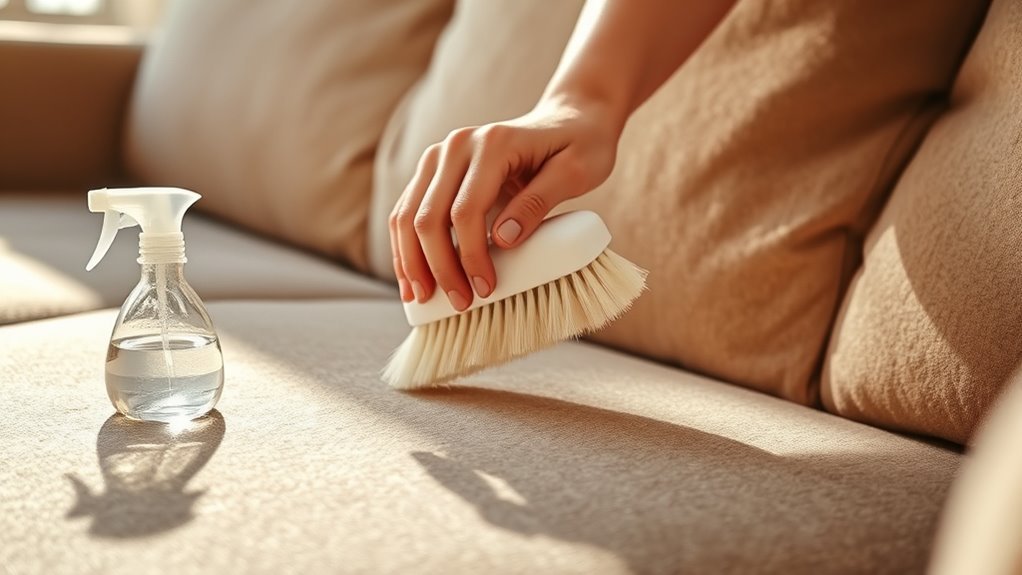
Stubborn stains need patience and the right cleaner. First, confirm the fabric code so you do not use water on a solvent-only couch.
Blot fresh wet stains with a clean cloth to absorb as much liquid as possible. For oil-based stains, use baking soda or cornstarch before you vacuum and re-treat the mark.
For ink on solvent-safe fabric, dab rubbing alcohol onto a clean cloth and blot gently. For pet stains, treat the spot quickly, then use baking soda to help reduce odor after the area dries.
Recommended Products

CHEMICAL GUYS LIGHTNING FAST STAIN EXTRACTOR (SPI_191_16) – Professional-strength stain remover formula penetrates deep into carpet, upholstery, and fabric to quickly break down and lift stains, dirt, and odors for a restored, like-new look
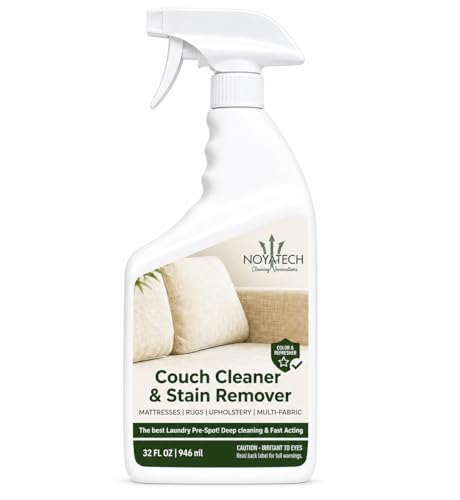
Lifts tough stains fast - spray on, let it dwell 30 to 60 seconds, then blot; make a second pass on set-in spots.
When Should You Call a Professional Cleaner?
Some microfiber couches need professional care, especially if the tag says “X.” These couches should not get liquid cleaners at home.
Call a professional if you notice any of these issues:
- Persistent stains: Home cleaning does not lift the stain after careful spot treatment.
- Cleaning code “X”: The couch needs vacuum-only care between professional cleanings.
- Mold or musty smells: Moisture may have reached the cushion fill or frame.
- Heavy soil: Dirt covers large areas or keeps returning after cleaning.
Professional cleaning can also help if the couch has delicate trim, unknown fabric content, or old set-in stains.
Frequently Asked Questions
How do you properly clean a microfiber couch?
Vacuum the couch first, check the fabric code, and use a cleaner that matches the care tag. Blot stains gently, let the couch dry fully, and brush the fabric to restore its texture.
How do you clean a couch that says no water?
Use a solvent-based cleaner, such as clear rubbing alcohol, if the care tag says “S.” Apply a small amount with a clean cloth, blot the stain, and avoid soaking the fabric.
Can you use a Little Green Machine on a microfiber couch?
You can use a Little Green Machine only if the couch’s care tag allows water-based cleaning. Avoid using it on “S” or “X” code microfiber, because water can leave stains or damage the fabric.
What cleaner is safe on microfiber?
The safest cleaner depends on the care code. Use water-based cleaner for “W,” rubbing alcohol or another solvent cleaner for “S,” and either method for “SW.”
Why does my microfiber couch feel rough after cleaning?
Microfiber can feel rough when cleaner dries in the nap or the fibers dry flat. Let the area dry completely, then brush it with a soft-bristled brush to lift the fibers.
Conclusion
The best way to clean a microfiber couch is to match your cleaner to the fabric code before you touch a stain. Vacuum first, blot gently, and use only a small amount of liquid. After the couch dries, brush the fabric so it feels soft again. With steady care and quick stain treatment, your microfiber couch can stay clean, comfortable, and ready for everyday use.