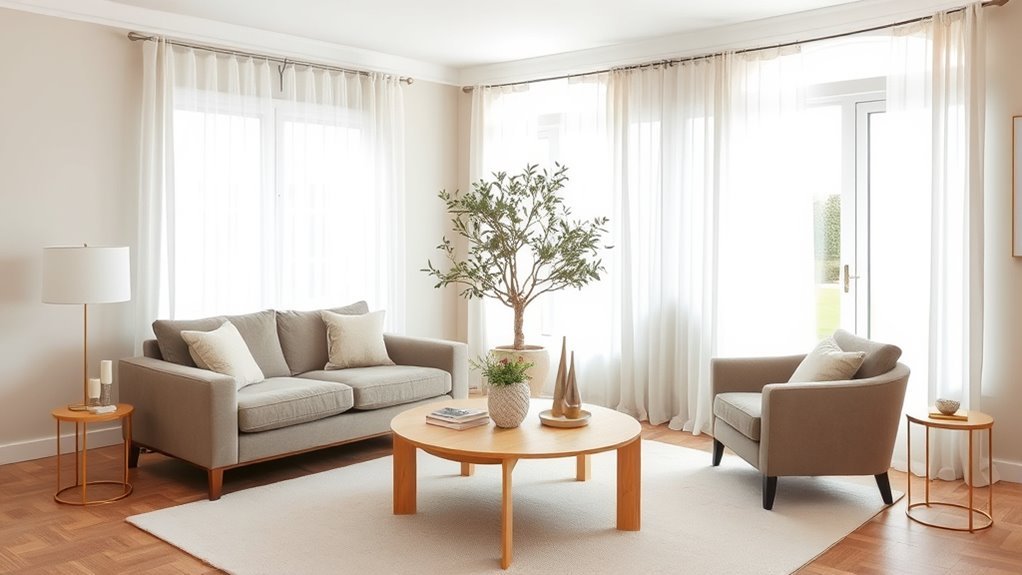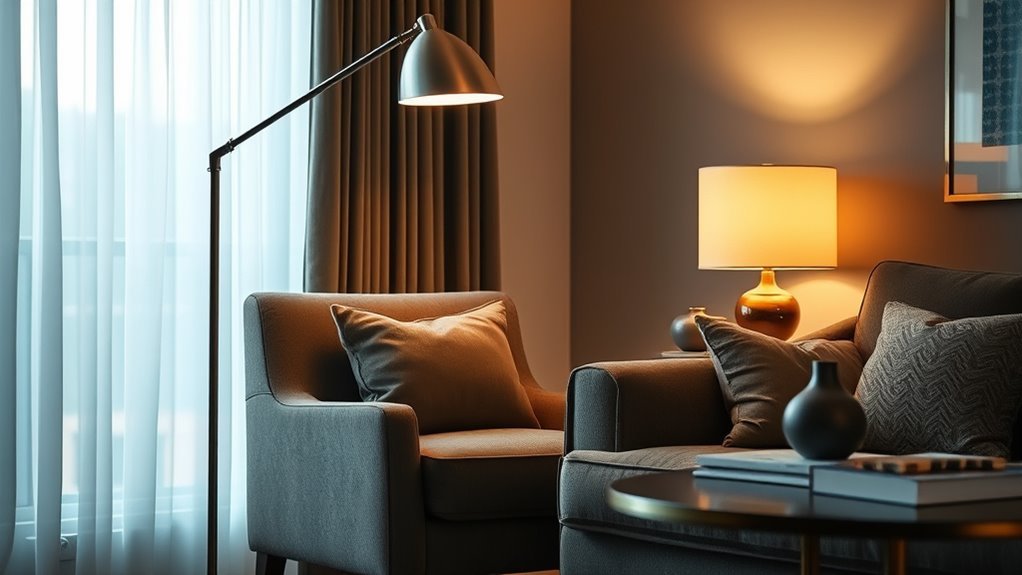
Choosing the right floor lamp height for living room seating is less about chasing one perfect number and more about matching the lamp to your sofa, chair, ceiling height, and the way you use the light. A lamp that is too tall can expose the bulb and create glare; one that is too short can leave your book, side table, or seating area in shadow.
Quick Answer
For most living rooms, choose a floor lamp about 58 to 68 inches tall, then check the shade: when seated, the bottom of the shade should sit at or just below eye level, usually about 24 to 30 inches above the seat. Reading lamps should be adjustable and focused; ambient lamps can stand taller.
Key Takeaways
- Start with the seated person, not the lamp label: the shade should hide the bulb from your normal sitting position.
- A 58- to 68-inch floor lamp works for many standard sofas and chairs, but low seating, tall ceilings, and arc lamps may need different heights.
- For reading, place the light slightly behind or beside your shoulder so it lights the page without shining into your eyes.
- Use lumens, color temperature, and dimming to fine-tune comfort after the height is right.
- Always check the fixture’s maximum wattage, keep cords out of walkways, and choose a stable base near busy seating areas.
At a Glance
| Time Required | 10 to 15 minutes to measure and test placement |
| Difficulty | Easy |
| Tools Needed | Tape measure, painter’s tape, your sofa or chair, and the bulb you plan to use |
| Cost | $0 if adjusting an existing lamp; cost varies if buying a new lamp, bulb, or dimmer |
Understanding the Ideal Floor Lamp Height for Living Room Seating
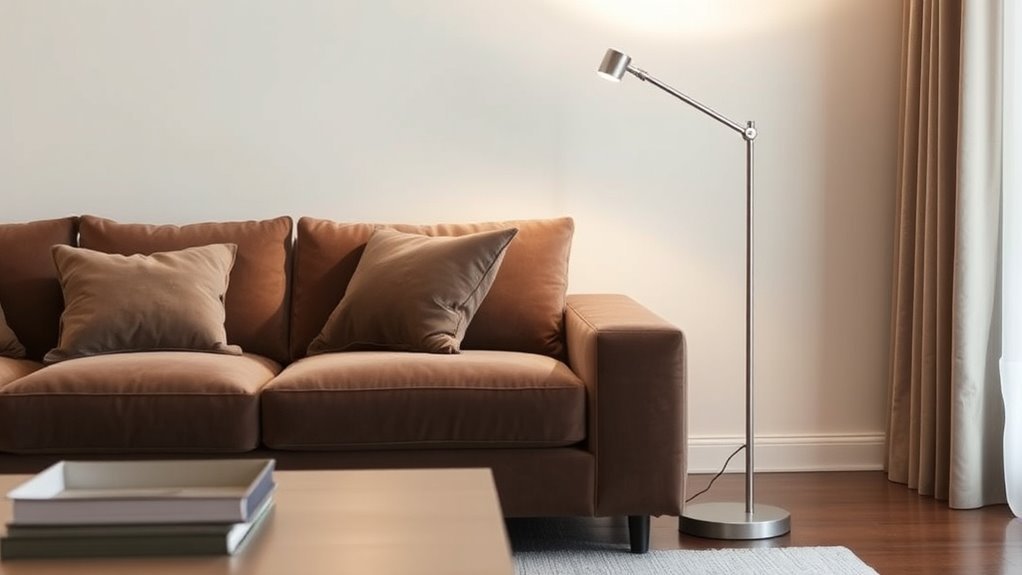
A good living room floor lamp usually falls somewhere between 58 and 68 inches tall, but the total height is only the starting point. The more important measurement is the bottom of the lampshade. When you are seated, the shade should block the bulb from direct view and place the glow around eye level, not above your face.
For a standard sofa or lounge chair, that often means the bottom of the shade sits about 24 to 30 inches above the seat cushion. If your sofa seat is about 17 to 19 inches high, the shade bottom often lands around 41 to 49 inches from the floor. The lamp itself may still be much taller because the shade, harp, finial, or arc arm extends above that point.
Note: Do not confuse total lamp height with shade height. A 64-inch lamp can be comfortable if the shade hides the bulb at seated eye level, while a shorter lamp can still glare if the bulb sits exposed.
The U.S. Department of Energy recommends matching both the amount and quality of light to the function being performed. That is why a reading lamp, an ambient corner lamp, and a sculptural arc lamp should not all be judged by the same height rule.
Choosing the Right Height for Different Lighting Tasks
The right height changes depending on what the lamp is doing. A reading lamp should put focused light on the page or tablet without shining into your eyes. An ambient lamp should create soft, even glow. A decorative lamp can be taller or more sculptural as long as it does not expose a harsh bulb from normal seating angles.
| Lighting Goal | Best Height Cue | Best Placement |
| Reading beside a chair or sofa | Shade bottom at or slightly below seated eye level; adjustable lamps are ideal | Beside or slightly behind your shoulder, aimed toward the page |
| General living room glow | Usually 58 to 68 inches tall, with the bulb hidden by the shade | Corner, beside a sofa, or near a console where light can spread softly |
| Low-profile seating | Often 48 to 58 inches tall, depending on shade position | Close to the seat, not across the room |
| High ceilings or large rooms | Taller lamps, arc lamps, or torchieres around 68 to 76 inches can feel balanced | Behind seating, in a large corner, or next to taller furniture |
| Torchiere or uplight | Tall enough to bounce light upward without shining sideways into eyes | Away from low ceilings and not used as the only reading light |
For task lighting, the Department of Energy notes that task lighting supports activities that need more light than general illumination. In practical living room terms, that means a reading corner needs a closer, better-aimed lamp than a conversation area.
Recommended Products

120 LED High Brightness: Equipped with 120 high-brightness LED beads, the PACOVY floor lamp delivers a powerful 18W / 1800-lumen output, providing brightness equivalent to a traditional 120W bulb while saving up to 85% energy. This led floor lamp effectively illuminates the entire workspace, making activities such as working, reading, crafting, sewing, beauty treatments, nail art, tattooing, and puzzles easier and more enjoyable

Remote & Touch Stepless Control: Use the magnetic remote from up to 49.2 ft away, or adjust this LED floor lamp directly through the touch panel. Both controls provide smooth 5%–100% stepless dimming and continuous color temperature adjustment from warm 3000K to cool 6000K. The remote attaches securely to the metal pole for convenient storage, making this floor lamp with remote easy to operate from a sofa, bed, desk, or worktable.

【Super Bright & Save Energy】Yikuneng bright floor lamp used advance high brightness LED, 18W LED floor lamp equivalent to traditional 200W halogen lamp, provide excellent lighting for reading, do homework, working, and breastfeeding without hurting your eyes. Save 90% energy mean save your money on electricity bill.
Coordinating Floor Lamp Height With Furniture and Decor
A floor lamp looks best when it relates to nearby furniture. Next to a standard sofa, the shade should feel visually connected to the seated area instead of floating far above it. Next to a high-backed chair, tall bookcase, or large sectional, a slightly taller lamp may look more balanced.
- Beside a sofa, keep the shade bottom near seated eye level so the bulb is not exposed.
- Next to a low lounge chair, choose a lower or adjustable lamp instead of a tall, narrow lamp that shines downward from too high above.
- Behind a sectional, consider an arc lamp only if the shade reaches over the seating area without blocking traffic.
- Near a side table, make sure the lamp height relates to the table lamp heights already in the room so the lighting layers feel intentional.
Pro Tip: Sit where you normally read or relax, then have someone hold painter’s tape on the wall at your eye level. When shopping, compare that tape mark to the bottom edge of the lampshade, not just the lamp’s overall height.
Adjusting Floor Lamp Height Based on Ceiling and Room Dimensions
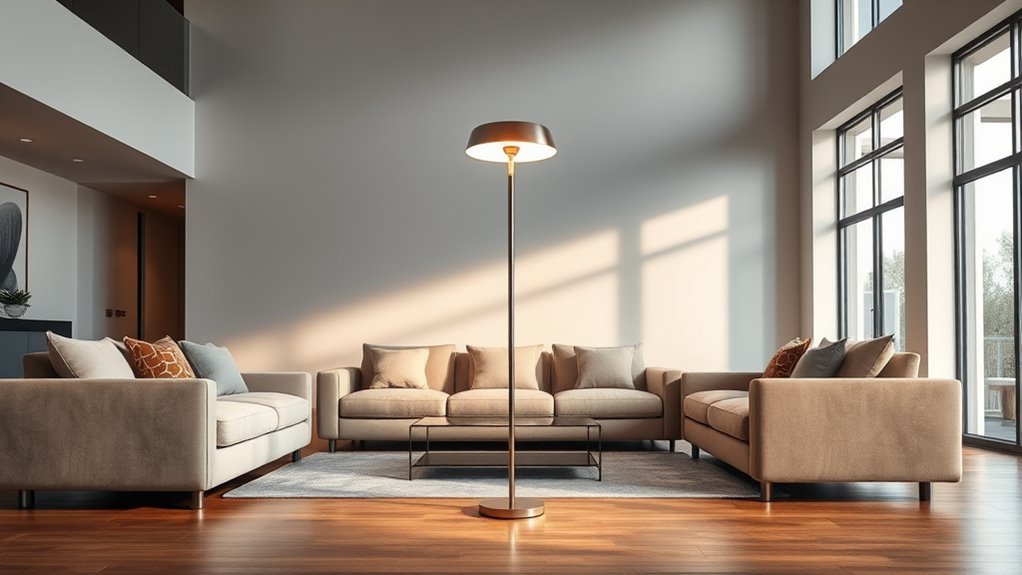
Room proportions matter, but they should guide your choice rather than dictate a rigid formula. A tall lamp can make a large living room feel layered and finished. In a low-ceiling room, the same lamp may feel top-heavy or glare-prone. The goal is to keep the room open, balanced, and comfortable from the positions where people actually sit.
Ceiling Height Considerations
For standard 8-foot ceilings, most living rooms feel balanced with floor lamps in the 58- to 68-inch range. In rooms with ceilings around 10 feet or higher, taller floor lamps, torchieres, and arc lamps can help fill vertical space. In rooms under 8 feet, shorter lamps or slimmer silhouettes usually keep the ceiling from feeling lower.
Instead of using a fixed ceiling-height formula, test the sightline. Sit down, look toward the lamp, and ask two questions: can you see the bare bulb, and does the lamp visually overpower the furniture? If the answer to either is yes, adjust the shade, bulb, dimmer, or lamp height.
Room Size Impacts
In a small living room, a floor lamp should add useful light without stealing floor space. A slim pole lamp, swing-arm lamp, or wall-adjacent arc lamp can work well when side tables are limited. In a larger living room, a taller lamp can help create a lighting zone around a sectional, reading chair, or conversation area.
The Department of Energy’s lighting design guidance is a useful reminder here: more light is not necessarily better. Good lighting depends on quality, placement, and the job the light is doing. A dimmable floor lamp placed well will usually feel better than a very bright lamp in the wrong corner.
Proportionality to Furniture
Use the scale of your furniture as a visual anchor. A narrow lamp beside a deep sectional may look undersized, while a chunky tripod lamp beside a delicate accent chair can feel heavy. If your furniture is low and modern, consider a lamp with a lower shade or adjustable arm. If your furniture is tall, substantial, or placed in a room with high ceilings, a taller floor lamp can look more natural.
Measuring the Right Floor Lamp Height for Your Needs
Use this simple method before buying or moving a floor lamp:
- Sit in the exact seat you want to light. Sit naturally, not unusually upright.
- Measure from the floor to your eye level. This gives you the ideal zone for the bottom of the shade.
- Measure from the seat cushion to your eye level. This helps you compare lamps when product listings only show total height.
- Mark the height with painter’s tape. Put the tape on the wall or a nearby surface where the lamp will sit.
- Check the bulb view. From your seat, the shade should hide the bulb or diffuse it enough that it does not glare.
- Test the actual bulb. A bright exposed bulb can feel harsh even when the lamp height is technically correct.
For bulb selection, use lumens instead of watts to judge brightness. As a rough living room guide, a floor lamp with an 800-lumen bulb can support a cozy reading corner, while 1,100 to 1,600 lumens may be better for broader light if the shade diffuses it well. A dimmer gives you the most flexibility.
For a warm living room feel, choose bulbs around 2700K to 3000K. If you want slightly crisper reading contrast, 3000K to 3500K can work, especially in a shaded task lamp. For color quality, a CRI of 80+ is acceptable for most indoor residential use, while 90+ is better if you care about accurate fabric, paint, or artwork colors.
Common Floor Lamp Height Mistakes to Avoid
The most common floor lamp mistakes come from choosing by style alone. A beautiful lamp still needs to be the right height, stable, and comfortable to use from the seat beside it.
Incorrect Shade Positioning
If the lampshade is too high, the bulb may shine directly into your eyes. If the shade is too low, the light may pool on the floor instead of reaching your book, side table, or seating area. The best position usually hides the bulb while allowing the shade to spread light softly around your seated eye level.
Ignoring Furniture Height
A floor lamp beside a sofa should relate to the sofa seat height, arm height, and back height. For example, a low-slung sofa often needs a lower shade or adjustable arm. A tall wingback chair may need a lamp that reaches higher or angles forward. Always measure the furniture that will sit next to the lamp.
Choosing Brightness Before Placement
Many people try to solve a dark corner with a brighter bulb. Sometimes that helps, but if the lamp is poorly placed, a brighter bulb can create more glare. Fix placement and shade height first, then adjust lumens, color temperature, and dimming.
Warning: Never use a bulb that exceeds the lamp’s maximum wattage rating. Keep hot bulbs away from fabric shades, place cords where they cannot trip anyone, and choose a heavy, stable base for lamps near kids, pets, or busy walkways.
How Adjustable Floor Lamps Enhance Lighting Flexibility
Adjustable floor lamps are often the easiest choice for living room seating because they let you fine-tune the light after the lamp is in place. A telescoping pole, swing arm, pivoting shade, or arc adjustment can help one lamp serve several purposes.
- For reading: angle the shade toward the page and keep the light slightly behind your shoulder.
- For conversation: raise or soften the shade so the lamp contributes to the room’s general glow.
- For shared seating: choose a lamp that can swing between two chairs or a sofa and side table.
- For changing rooms: adjustable lamps are easier to reuse if you rearrange furniture later.
Adjustability is especially helpful when household members have different heights or reading habits. Instead of forcing one fixed shade height to work for everyone, you can move the light where it feels most comfortable.
Recommended Products

Stepless Dimmable Brightness with Knob Control(0-100%): Unlike other floor lamp that only offer preset brightness, our floor lamps for living room allows smooth stepless adjustment(0–100%). You can adjust the brightness to your preference by simply turning the knob on the arc floor lamp. Set the ideal light of standing lamp for living room, bedroom, office, nursery, reading and working.

72" floor lamp is ideal for offices, co-working spaces, lounge areas and more

Floor Lamp with Remote & Dual Control: Adjust brightness and color temperature from up to 49 ft with the magnetic controller, then attach it to the metal pole for storage. The foot switch provides quick on and off when entering or leaving the room.
Best Floor Lamp Height by Lamp Style
Different floor lamp styles handle height in different ways. Use these guidelines to narrow your choice:
- Classic shaded floor lamp: Usually best around 58 to 68 inches tall, with the shade bottom near seated eye level.
- Arc floor lamp: Often taller, around 68 to 76 inches, because the shade needs to clear the sofa and reach inward.
- Tripod floor lamp: Works well in larger rooms but needs enough floor space so the legs do not interrupt walkways.
- Torchiere floor lamp: Best for ambient uplighting, not as the only reading light.
- Swing-arm or pharmacy lamp: Excellent for reading because the arm and shade can be aimed precisely.
- Low lantern-style lamp: Better for mood lighting than task lighting unless placed very close to the seating area.
The most comfortable floor lamp is the one that hides the bulb from your seated view while placing useful light exactly where you need it.
Recommended Products

Vintage Design & Decorative Appeal: This floor lamp combines vintage design with practical functionality, offering a great lighting option for living rooms, bedrooms, or reading room. With its rich finish and graceful silhouette, this rustic floor lamp adds a touch of sophistication to your home decor and provides versatile lighting for reading, relaxing, or accent lighting

【Vintage and Elegant Design】:WTLIGHTGUYS Swing floor lamp is specially designed by our brand only,it is unique and stylish desgin,it looks classical and vintage ,the art deco on the pole withe a beige lampshade will give you a warm,charming and pleasant feeling for your house.

Floor Lamp with Remote & Dual Control: Adjust brightness and color temperature from up to 49 ft with the magnetic controller, then attach it to the metal pole for storage. The foot switch provides quick on and off when entering or leaving the room.
Related Guides
Frequently Asked Questions
How tall should a living room floor lamp be?
Most living room floor lamps work well at about 58 to 68 inches tall. The better test is shade position: when you sit down, the bottom of the shade should be at or just below eye level so the bulb does not glare.
Should a floor lamp shade be above or below eye level?
For seating areas, the bottom of the shade should usually sit around eye level or slightly below it. This hides the bulb, reduces glare, and keeps the light comfortable for reading, relaxing, and conversation.
What is the 5-7 lighting rule?
The 5-7 lighting rule is a decorating guideline that suggests using five to seven light sources in a room for layered lighting. It does not mean a floor lamp must be 5 to 7 feet tall. A living room might include ceiling lighting, a floor lamp, table lamps, wall lights, and accent lighting.
Where should a floor lamp go in a living room?
Place a floor lamp beside a sofa, next to a reading chair, behind a sectional, or in a dark corner that needs soft light. Keep the base out of walkways and place the shade close enough to the seating area to be useful.
How many lumens should a living room floor lamp have?
For a cozy reading or seating area, 800 lumens is often a good starting point. For broader ambient light, 1,100 to 1,600 lumens may work better if the shade diffuses the light well. A dimmable bulb or dimmer switch gives you more control.
Are torchiere floor lamps good for reading?
Torchiere lamps are better for ambient uplighting than close reading because they send light toward the ceiling. If you read often, pair a torchiere with an adjustable task lamp or choose a floor lamp with a downward-facing shade.
Conclusion
The best floor lamp height for living room seating starts with your seated eye level. In many rooms, a 58- to 68-inch lamp is a strong starting point, but the real test is whether the shade hides the bulb, places light where you need it, and feels balanced with your sofa or chair. Measure first, test the shade height, choose the right bulb, and your floor lamp will do more than fill a corner: it will make the whole seating area warmer, more useful, and more inviting.
Sources
- U.S. Department of Energy — Lighting Principles and Terms — supports guidance on lumens, footcandles, color temperature, CRI, glare, ambient lighting, and task lighting.
- U.S. Department of Energy — Lighting Design — supports matching light quality and quantity to the room function and using task lighting where needed.
- ENERGY STAR — Learn About Brightness — supports using lumens, not watts, to compare bulb brightness.
- U.S. Department of Energy — Lighting Choices to Save You Money — supports LED efficiency, dimmers, and energy-efficient lighting choices.