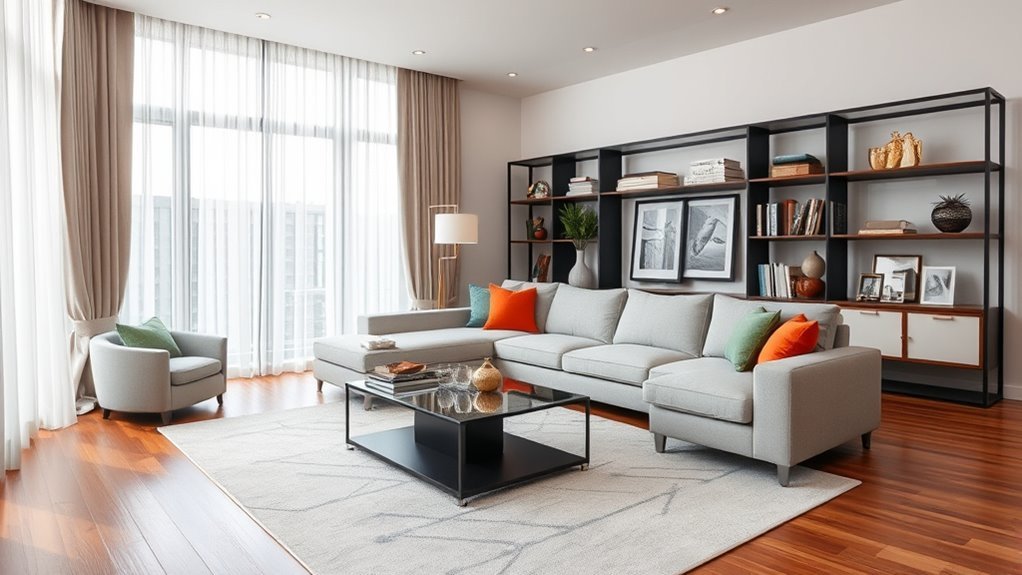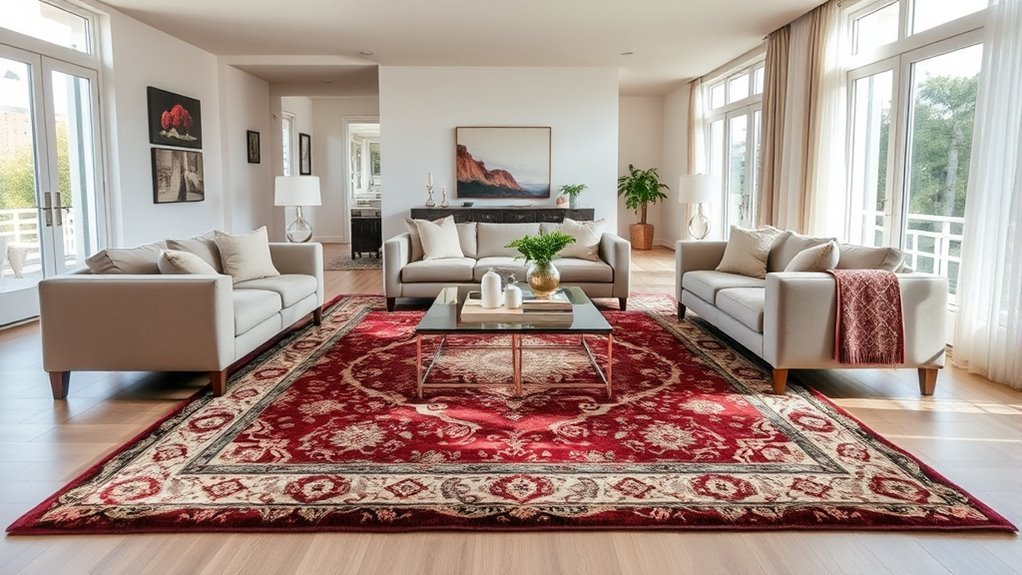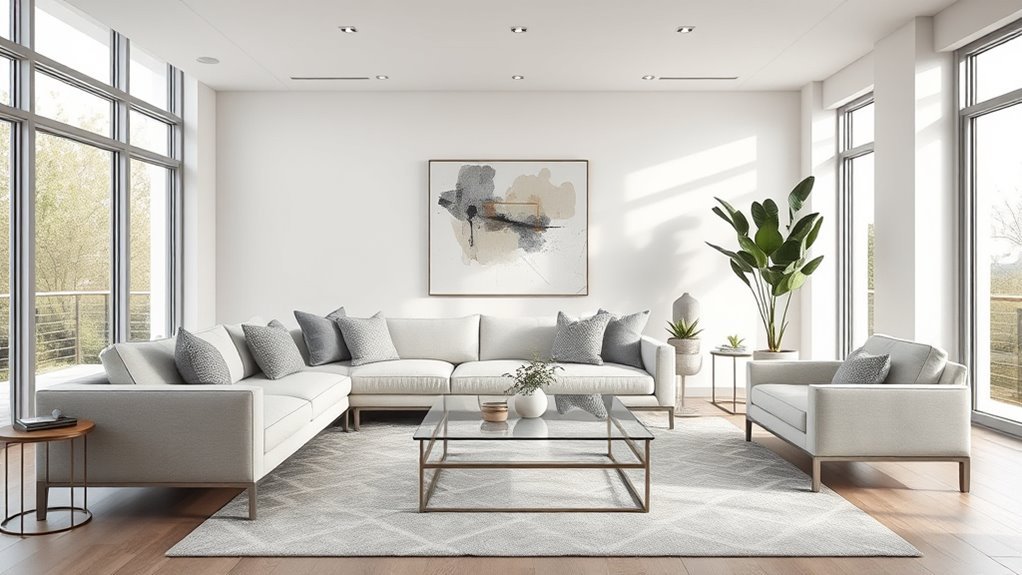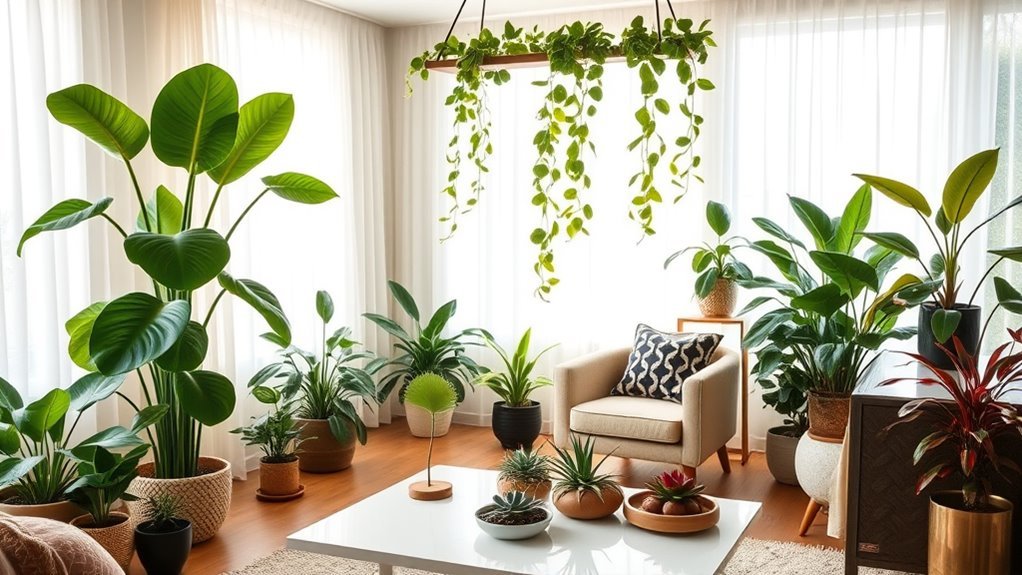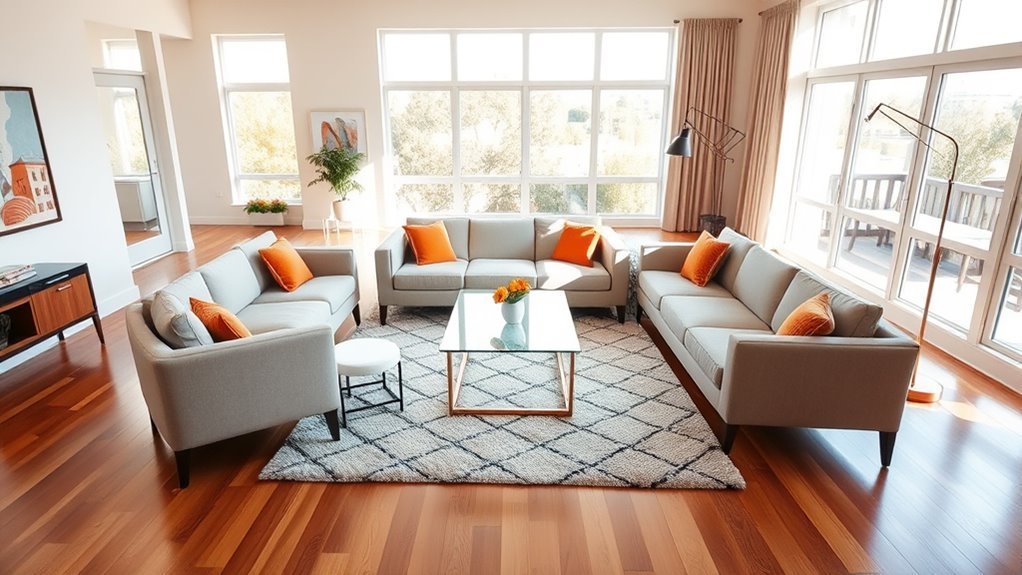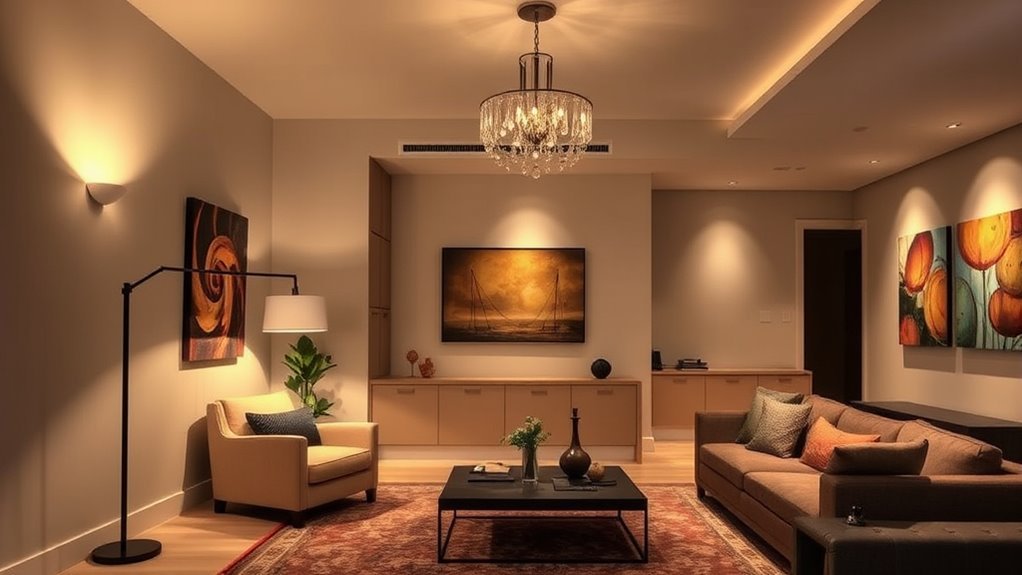
Creating effective lighting zones in your living room starts with one simple idea: every part of the room should have the right light for what happens there. A sofa used for conversation needs a softer glow than a reading chair, and a media wall needs glare control more than raw brightness. By layering ambient, task, accent, and smart lighting, you can make the room feel warm, flexible, and easy to use at any time of day.
Quick Answer
To create living room lighting zones, divide the room by activity, then layer ambient lighting for general brightness, task lighting for reading or games, and accent lighting for art, shelves, plants, or architectural details. Use dimmers, compatible LED bulbs, and smart scenes so each zone can shift from bright and functional to soft and relaxing.
Key Takeaways
- Plan lighting by activity first: conversation, reading, TV, pathways, shelves, artwork, and display areas.
- Use three layers: ambient light for overall visibility, task light for focused work, and accent light for depth and mood.
- Choose bulbs by lumens, color temperature, CRI, beam spread, and dimmer compatibility instead of relying only on wattage.
- Test the room at night before finalizing fixture placement so you can catch glare, dark corners, and screen reflections.
At a Glance
| Time Required | 30–60 minutes to map zones; longer if adding fixtures or smart controls |
| Difficulty | Easy for lamps and smart bulbs; moderate to advanced for hardwired fixtures |
| Tools Needed | Tape measure, room sketch, lamp list, bulb labels, dimmer or smart-light app, optional light meter app for rough checks |
| Cost | $0 to plan with existing lamps; about $15–$250+ for bulbs, lamps, dimmers, smart bulbs, or new fixtures |
Creating Effective Lighting Zones in Your Living Room
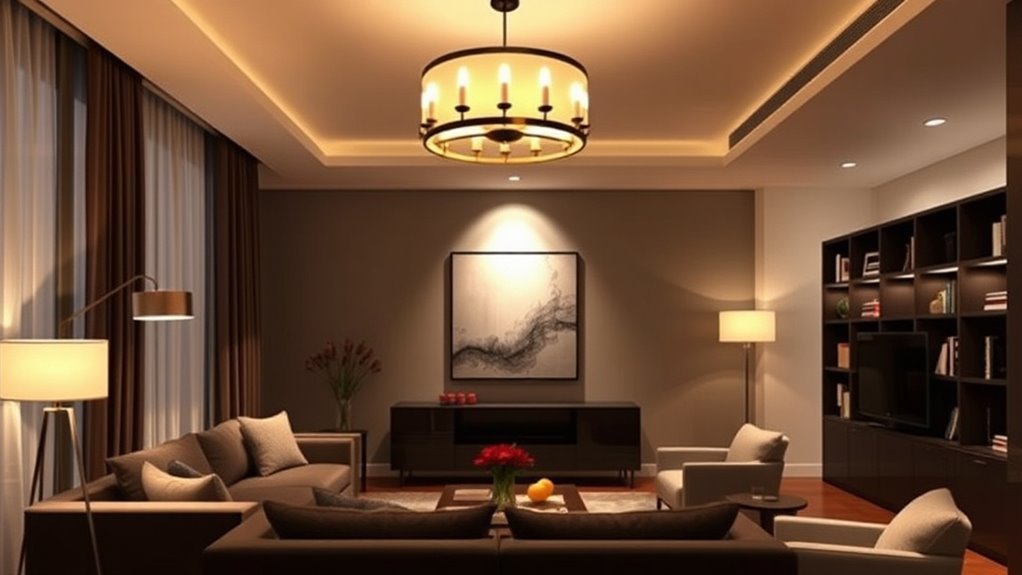
When you step into your living room, the lighting should feel comfortable before you even think about it. Good lighting zones make that happen by giving each area its own purpose. A sofa grouping may need gentle ambient light for conversation, a reading chair needs focused light on the page, and an entertainment zone needs low, indirect light that does not bounce off the TV.
The most reliable approach is layered lighting: ambient lighting for general illumination, task lighting for specific activities, and accent lighting to highlight decor, texture, artwork, shelves, or plants. The U.S. Department of Energy describes these same lighting uses as ambient, task, and accent lighting in its guide to lighting principles and terms.
Instead of relying on one bright ceiling fixture, aim for several softer sources spread around the room. This prevents harsh shadows, makes faces look more natural, and lets you change the mood without rearranging furniture. In a small living room, that might mean a ceiling fixture, one floor lamp, one table lamp, and one accent light. In a larger open-plan space, it may mean five to seven light sources across multiple zones.
Assessing Your Living Room Layout for Optimal Lighting
Start with the room itself before buying a single fixture. Measure the length, width, and ceiling height, then note anything that changes how light behaves: dark wall colors, glossy floors, mirrors, high ceilings, low ceilings, large windows, built-ins, fireplaces, and TV screens.
Next, list the main activities that happen in the room. Common living room zones include:
- Conversation zone: sofas, armchairs, and coffee table areas.
- Reading nook: a lounge chair, side table, window seat, or sectional corner.
- Media zone: TV, projector wall, speakers, console, or gaming setup.
- Display zone: artwork, shelves, plants, collectibles, stone walls, or architectural trim.
- Pathway zone: routes from entryways to seating, stairs, hallways, or patio doors.
- Work or hobby zone: puzzles, crafts, paperwork, board games, or a small desk.
Draw a quick sketch and mark each zone. Then add the existing light sources. You will usually see the problem quickly: maybe the ceiling light blasts the center of the room but leaves corners dark, or the reading chair has a lamp nearby but the bulb is too exposed and causes glare.
Note: Natural light is part of your lighting plan. Map where daylight enters in the morning, afternoon, and evening, then use artificial lighting to support the room when daylight fades instead of fighting against it.
How to Plan Lighting Zones Step by Step
A good lighting plan does not need to be complicated. Use this simple order:
- Set the base layer. Decide how the whole room will get general light: ceiling fixture, recessed lights, flush mount, chandelier, cove lighting, or a mix of lamps.
- Add task lighting where people actually do things. Put focused light beside reading chairs, game tables, desks, and hobby areas.
- Add accent lighting for depth. Highlight shelves, art, textured walls, plants, fireplace surrounds, or architectural details.
- Control each layer separately. Use dimmers, smart bulbs, smart plugs, or separate switches so the whole room is not stuck at one brightness.
- Test the room at night. Sit in every main seat, turn on the TV, read a page, walk through the room, and check for glare or dark spots.
- Adjust before you buy more. Sometimes moving a lamp two feet, changing a shade, or swapping a bulb solves the problem.
The Department of Energy recommends matching the amount and quality of light to the function being performed, installing task lights where needed, and reducing ambient light elsewhere as part of energy-efficient lighting design. That principle is exactly what makes zoning work.
Identifying Key Areas for Lighting in Your Living Room
Once your room map is ready, decide what each zone needs from the light. The goal is not to make every corner equally bright. The goal is to make each area useful and comfortable.
Reading Nooks Lighting Needs
A cozy reading nook needs light that lands on the page without shining directly into your eyes. Use a floor lamp, table lamp, wall-mounted swing-arm lamp, or adjustable sconce. Place it slightly beside or behind the reader, not directly in front of the face.
Instead of choosing by watts, choose by lumens and by how the lamp directs light. DOE’s Lumens and the Lighting Facts Label guide explains that lumens measure brightness and are a better buying guide than watts. For many reading chairs, a bulb around 450–800 lumens with a shade or diffuser is a useful starting point, but the best choice depends on lamp height, shade shape, eye comfort, and distance from the page.
For a warm living room feel, look for bulbs around 2700K to 3000K. If the nook is used for detailed hobbies, paperwork, sewing, or small print, you may prefer slightly brighter task light and a high CRI bulb so colors and details look clearer.
Pro Tip: If two people use the same sofa for reading, avoid one oversized light in the middle. Use two smaller task lights on opposite sides so each person can control brightness without flooding the whole room.
Entertainment Areas Illumination Requirements
The entertainment zone needs softer light than a reading area. Bright overhead lights can reflect on the screen, flatten the room, and make movie nights feel harsh. Use low ambient light, indirect lamps, dimmable sconces, or LED strips placed behind the TV console or along shelves.
Do not aim spotlights directly at the TV or glossy media cabinet. A better plan is to place light behind, beside, or above the viewing area so the screen is not the brightest object in a black room. This reduces eye fatigue while keeping the space comfortable for walking, snacks, and conversation.
Conversation and Seating Zone Lighting
Conversation areas look best with light coming from more than one direction. Use a combination of a ceiling fixture, floor lamp, table lamp, and wall sconce so faces are softly lit without deep shadows under the eyes. Lamps at seated eye level or slightly above often feel warmer and more flattering than a single recessed grid overhead.
Pathways and Traffic Flow
Pathways need enough light for safe movement, especially near stairs, changes in flooring, toys, pet beds, or furniture corners. Use low-glare wall sconces, step lights, plug-in night lights, or lamps that gently wash the floor. This is especially helpful for households with children, pets, older adults, or guests unfamiliar with the room.
Choosing Ambient Lighting as Your Base Layer
Ambient lighting is the base layer that lets the room feel usable and safe. It can come from chandeliers, ceiling fans with lights, flush mounts, recessed downlights, cove lighting, floor lamps, or a combination of sources. In living rooms, warm white bulbs around 2700K to 3000K usually create a relaxed mood, while 3000K to 3500K can feel a little clearer for active family rooms.
The key is evenness without flatness. A room with only one central ceiling fixture may be bright in the middle and gloomy at the edges. A room with only lamps may feel cozy but lack enough general light for cleaning, hosting, or finding things. The best base layer usually combines overhead or indirect light with lamps placed around the room’s perimeter.
Also consider surfaces. Light-colored walls and ceilings bounce light around and reduce the need for extra brightness. Dark paint, matte finishes, wood paneling, and heavy curtains absorb light, so those rooms often need more sources or brighter bulbs to feel balanced.
How to Choose Bulbs for Living Room Lighting Zones
Good fixture placement can still feel wrong if the bulbs do not match the room. Check these details on the bulb package:
| Lumens | Brightness. Use more lumens for task areas and fewer lumens for soft accent lights. |
| Kelvin / CCT | Light color. 2700K–3000K feels warm and cozy; higher Kelvin looks cooler and crisper. |
| CRI | Color accuracy. CRI 80+ is acceptable for most homes; CRI 90+ is better for art, textiles, and color-sensitive decor. |
| Beam Spread | How wide the light spreads. Narrow beams work for accents; wider beams work for general illumination. |
| Dimmability | Not all LED bulbs dim well. Check that both the bulb and dimmer are compatible before installing. |
For the most cohesive look, keep most living room bulbs in the same color temperature family. Mixing a yellow 2200K lamp with a cool 5000K daylight bulb can make the room feel patchy unless you are intentionally creating contrast.
Recommended Products
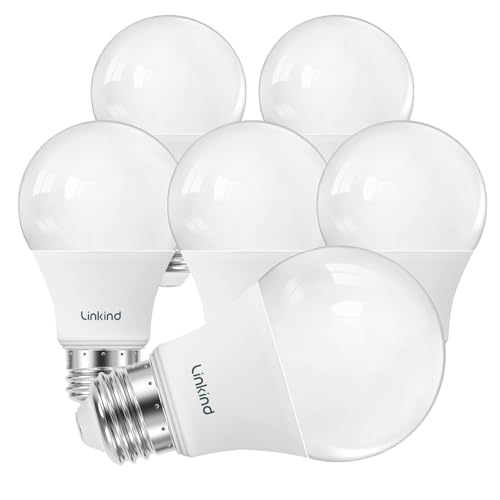
✔ 2700K WARM YELLOWISH LIGHT: The A19 dimmable LED light bulbs give off 800 lumens of 2700k cozy color light. Easy installation with the standard medium screw base E26. NOTE: Please confirm the Kelvin (K) value. This is the most accurate way to select your desired light color. This bulb is 2700K light, which produces a WARM YELLOWISH light. It is not a Bright White or Daylight White bulb. If you prefer a whiter light, please consider our 4000k Cool White or 5000K Daylight options.

[Smooth Dimmable] With stepless dimmable range from 800lm down to 10%, adjust LED light bulb brightness of your space according to preference; No buzz & No flicker, smooth and comfortable lighting experience
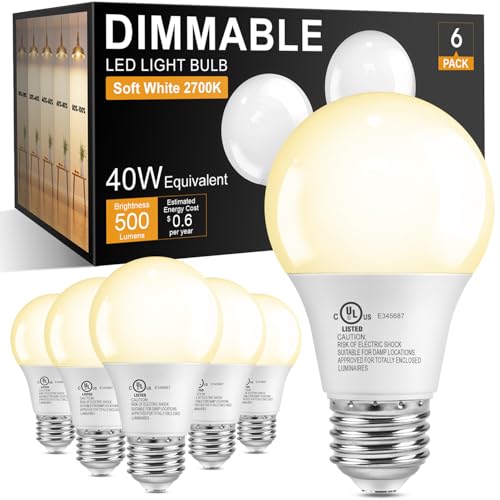
Dimming Range 10%-100%: Dimmable LED light bulbs compatible with most LED dimmers for smooth dimming. Compatibility Note: Best performance with LED dimmers. May flicker with halogen dimmers at low settings. Not for 3-way fixtures. Adjust brightness to control your space's look and feel
Adding Task Lighting for Functionality and Comfort
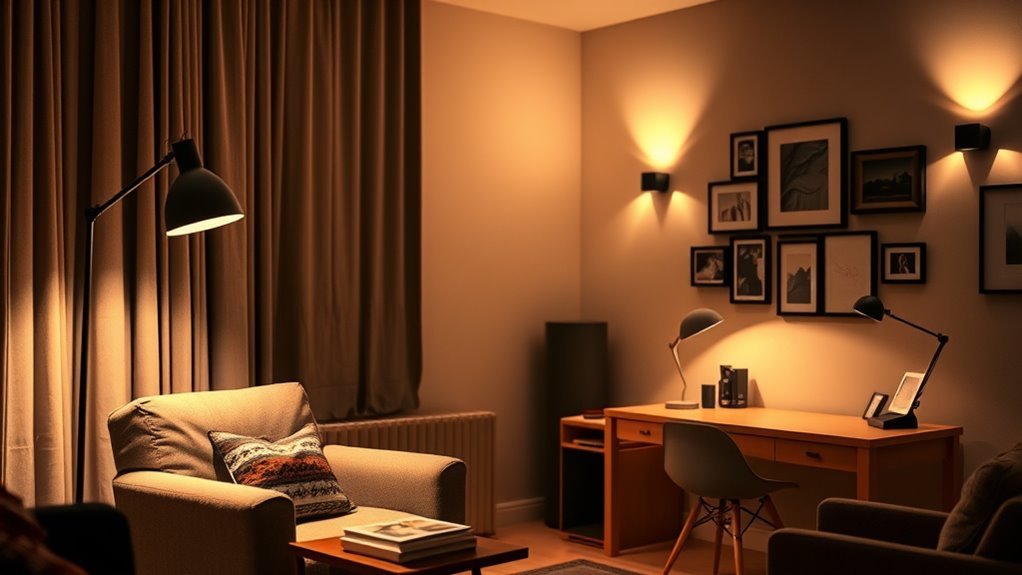
Task lighting makes your living room more useful. It provides focused light for activities that need more visibility than the room’s general glow can provide. The best task lights are close to the activity, easy to adjust, and shielded enough to avoid glare.
Consider these options:
- Table lamps: Best for side tables, console tables, and reading corners. Choose a shade that hides the bulb from direct view.
- Floor lamps: Useful beside sectionals, armchairs, and larger seating areas where table space is limited.
- Adjustable wall sconces: Great for small rooms because they save floor and table space while directing light exactly where needed.
- Picture or shelf lights: Helpful when a display area also needs practical visibility.
- Portable rechargeable lamps: Useful for flexible seating areas, renters, or rooms without enough outlets.
If the room is used by older adults, add more controllable task light and reduce glare. The Lighting Research Center at Rensselaer Polytechnic Institute explains that as people age, less light reaches the back of the eye, which can reduce contrast and sharpness. For a living room, that means a good reading lamp, clear pathways, and glare control are comfort features, not luxuries.
Accent Lighting Techniques to Enhance Aesthetics
Accent lighting is what gives a living room depth. It draws attention to the details you want people to notice: a painting, textured plaster wall, bookshelf, fireplace, tall plant, sculpture, or built-in cabinet. Accent lighting should be more focused than ambient lighting, but it should not feel like a spotlight in a theater unless that is the mood you want.
Try these techniques:
- Wall washing: Use broad, even light across a wall to make the room feel larger and softer.
- Wall grazing: Place light close to a textured surface so shadows reveal brick, stone, paneling, or plaster.
- Uplighting: Aim light upward behind plants, sculptures, or furniture to add height and drama.
- Picture lighting: Use a picture light or adjustable spotlight to highlight artwork without reflecting into the viewer’s eyes.
- Shelf lighting: Add small LED strips or puck lights inside built-ins to brighten books, ceramics, or collected objects.
Accent lights work best when they are on their own switch, dimmer, or smart scene. That way, you can use them as soft evening lights even when the main room lights are off.
Using Smart Tech to Control Your Lighting Zones
Smart lighting can make zones easier to use, especially in a room with several lamps. Instead of walking around switching each light on and off, you can group lights by function: “Reading,” “Movie Night,” “Guests,” “Cleanup,” or “Evening.”
Useful smart-lighting options include:
- Smart bulbs: Good for lamps and renters because they do not require rewiring.
- Smart plugs: Helpful for table and floor lamps with standard bulbs.
- Smart dimmers: Best for hardwired ceiling lights or sconces when installed correctly.
- Motion or occupancy sensors: Useful for pathways, entry areas, or task zones that should turn off automatically.
- Schedules and scenes: Let lights dim gradually in the evening or turn on before guests arrive.
The Department of Energy notes that lighting controls can save energy by turning lights off when they are not needed, reducing light levels when full brightness is unnecessary, or otherwise controlling lighting around the home. Smart controls are most effective when they support your real habits instead of adding steps.
Recommended Products

Works with Alexa: Use voice command or the Alexa app to control power, diming, night mode and adjustable white light

WHEN RELIABILITY MATTERS: The Lutron Smart Hub works without Wi-Fi, providing ultra-fast, reliable performance beyond a typical wifi switch for dependable smart lighting

Two Devices in One - Works with both ARGB PWM fans and iCUE LINK devices with a System Hub for seamless integration of two fan and lighting ecosystems
Customizing Your Lighting Experience With Dimmers and Scenes
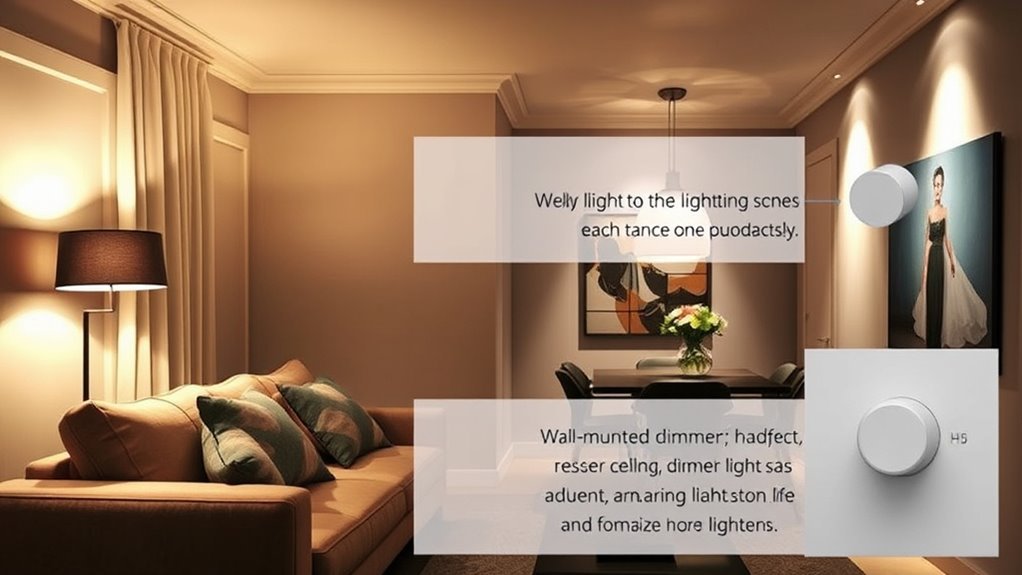
Dimmers are one of the easiest ways to make a living room feel finished. Brightness that works for cleaning rarely works for a movie, and lighting that feels perfect at 9 p.m. may be too dim for a rainy afternoon. Dimmers let the same fixtures serve more than one purpose.
Before buying a dimmer, check compatibility. Many LED bulbs can be used with dimmers, but the bulb must be designed for dimming and the dimmer must support the bulb type. If a dimmed LED flickers, buzzes, drops out, or only dims a little, the bulb and dimmer may not be a good match.
Try these living room scenes:
- Everyday: Ambient lights at medium brightness, task lamps ready, accent lights low.
- Reading: Reading lamp bright, nearby ambient light low, TV wall off.
- Movie Night: Overhead lights off or very low, indirect light behind or beside the screen, pathways softly lit.
- Entertaining: Multiple lamps at warm medium brightness, accent lights on, task lights softened.
- Cleanup: Ceiling and task lights bright enough to see floors, tables, and corners.
Recommended Products

THE GOLD STANDARD IN DIMMING: Lutron’s advanced technology provides smooth LED dimming used for everyday light bulbs to reduce flicker, buzz, and delay to enhance comfort and ensures consistent dimmer switch reliability across LED lighting

Plug-in dimmer features full range dimming with a quiet slide control and no humming noise. Dim lights from 10% to 100%

Transform— Take a one-switch light and turn it into a dimmable lighting fixture for home or office
Tips for Selecting and Placing Fixtures
When choosing fixtures, think about style and performance together. A beautiful lamp that exposes a bare bulb at eye level may look good in photos but feel uncomfortable in daily life. A recessed light in the wrong place can shine on someone’s forehead instead of the coffee table. Placement matters as much as the fixture itself.
Warning: Hire a licensed electrician for new hardwired fixtures, new circuits, recessed lighting, wall sconces, or dimmer/switch changes. Do not use extension cords as permanent wiring, run cords through walls or doorways, overload outlets, or use cords that feel hot or damaged.
Fixture Style Considerations
Choose lighting fixtures that support the room’s style without all matching perfectly. A living room often looks more collected when the fixtures share a finish, shape, material, or color temperature rather than coming from one identical set.
- Match the mood: Linen shades, frosted glass, and warm bulbs soften a room; exposed bulbs and shiny metal can feel sharper.
- Use scale wisely: A tiny lamp beside a deep sectional may look lost, while an oversized floor lamp can overwhelm a small reading nook.
- Repeat one element: Tie the scheme together with repeated brass, black metal, wood, ceramic, glass, or woven texture.
- Avoid exposed glare: Sit down before deciding. If you can see a bright bulb from your normal seat, add a shade, diffuser, or lower-lumen bulb.
Optimal Placement Strategies
Use placement to solve real problems: dark corners, screen glare, awkward shadows, and uneven brightness.
| Lighting Type | Placement Tips |
|---|---|
| Ambient | Use overhead or indirect sources to create comfortable overall visibility without relying on one harsh center light. |
| Task | Place near reading chairs, game tables, desks, or hobby areas so light lands on the task, not in the eyes. |
| Accent | Aim at artwork, shelves, plants, textured walls, or architectural features to add depth and visual interest. |
| Media | Keep direct light off the TV. Use indirect side, shelf, or backlighting for a softer viewing experience. |
| Pathways | Add low-glare light near entries, stairs, and walkways so the room stays safe when main lights are dimmed. |
Layering Light Sources
To achieve a well-balanced and inviting atmosphere, layer light at different heights. A room with light only from the ceiling can feel flat. A room with light only from table lamps can feel shadowy. Combine ceiling, wall, table, floor, and accent sources to create depth.
A simple formula for a medium living room might look like this:
- One dimmable ceiling fixture or indirect ambient source.
- Two lamps near the main seating area.
- One task lamp near a reading chair.
- One or two accent lights for art, plants, shelves, or a fireplace.
- One low-level pathway or media-zone light for evenings.
How to Layout Can Lights in a Living Room
Recessed can lights can work well in a living room, but they should not be dropped into a perfect grid without considering furniture. Start with the room’s seating, TV, pathways, and focal points. The lights should support how the room is used, not simply fill the ceiling with dots.
Use these guidelines before finalizing recessed lighting:
- Avoid placing cans directly above heads in the main seating area. This can create unflattering shadows and glare.
- Keep light off the TV screen by avoiding direct downlights in front of glossy screens.
- Use wall-wash or adjustable trims near artwork, shelves, fireplaces, or textured walls.
- Put recessed lights on a dimmer so they can support bright cleaning mode and soft evening mode.
- Check fixture ratings if lights are near insulation, unconditioned attic space, or damp areas.
If you are renovating, ask your electrician or lighting designer to place recessed lights based on beam spread, ceiling height, furniture layout, and switching zones. This gives a cleaner result than centering every light in the ceiling.
Adjusting Your Lighting Plan for Best Results
After you install or rearrange your lighting, test the room in real conditions. Turn on the TV at night. Read a book in the reading chair. Sit on every sofa seat. Walk from the entry to the seating area with the lights dimmed. Look for glare, dark corners, uneven color temperature, and fixtures that are annoying from normal eye level.
Small adjustments often make the biggest difference:
- Move a lamp closer to the activity instead of using a brighter bulb.
- Swap a clear bulb for a frosted bulb to soften glare.
- Use a lower shade or diffuser if the bulb is visible from the sofa.
- Add a dimmer instead of replacing a fixture.
- Use a smart plug to group two lamps in the same scene.
- Change one cool bulb that makes the room feel mismatched.
Troubleshooting Common Living Room Lighting Problems
If the room still feels off, use the symptom to find the fix.
| Problem | Likely Fix |
|---|---|
| The room feels flat | Add accent lighting or lamps at different heights instead of relying only on ceiling light. |
| The TV has glare | Move or dim lights facing the screen; use indirect backlighting or side lighting. |
| Reading is uncomfortable | Move the task light closer, use a better shade, increase lumens, or choose a high-CRI bulb. |
| LEDs flicker or buzz | Check that the bulb is dimmable and compatible with the dimmer or smart control. |
| The room feels too yellow or too cold | Bring bulbs into the same CCT family, usually 2700K–3000K for a warm living room. |
Frequently Asked Questions
What is the 5–7 lighting rule?
The 5–7 lighting rule is a design shortcut that suggests using about five to seven light sources in a living room or other social space. It is not an electrical code. The goal is to avoid relying on one overhead light by mixing ceiling lights, table lamps, floor lamps, sconces, accent lights, and decorative lighting at different heights.
What are the 4 C’s of lighting?
The 4 C’s of lighting are often used as a helpful design checklist: contrast, consistency, color, and control. In a living room, that means balancing bright and soft areas, keeping bulb color temperatures consistent, choosing flattering light color, and using dimmers or smart controls so the room can adapt to different activities.
How do you layout can lights in a living room?
Layout can lights around the furniture plan, not just the ceiling grid. Avoid placing recessed lights directly over people’s heads or where they reflect on the TV. Use dimmers, consider adjustable trims for art or walls, and plan separate zones for seating, pathways, and display areas.
What is the 3 lighting rule?
The 3 lighting rule refers to the three main lighting layers: ambient, task, and accent. Ambient light gives overall visibility, task light supports activities like reading, and accent light highlights art, shelves, plants, or architectural details.
What color temperature is best for a living room?
For most living rooms, 2700K to 3000K creates a warm, comfortable glow. If the room is also used for hobbies, paperwork, or detailed tasks, you can use brighter task lighting or slightly clearer bulbs in those specific zones while keeping the overall room warm.
Do I need smart lights to create lighting zones?
No. You can create lighting zones with regular lamps, separate switches, and dimmers. Smart bulbs, smart plugs, and smart dimmers simply make zones easier to control because you can group lights into scenes like Reading, Movie Night, Guests, and Cleanup.
Conclusion
Creating distinct lighting zones in your living room helps the space feel more comfortable, more useful, and more intentional. Start by mapping what happens in each area, then layer ambient, task, and accent lighting so every zone has a purpose. Add dimmers or smart controls for flexibility, choose bulbs by lumens and color temperature, and test the room at night before calling the plan finished. With the right mix, your living room can shift easily from bright family activity to soft evening calm.
Sources
- U.S. Department of Energy — Lighting Principles and Terms — definitions of ambient, task, accent lighting, lumens, color temperature, CRI, glare, and footcandles.
- U.S. Department of Energy — Lumens and the Lighting Facts Label — guidance on buying bulbs by lumens rather than watts.
- U.S. Department of Energy — Lighting Design — guidance on matching light quantity and quality to function, using task lighting, daylighting, and controls.
- U.S. Department of Energy — Lighting Controls — dimmers, timers, sensors, and LED dimmer compatibility.
- Electrical Safety Foundation International — Extension Cord Safety Tips — safety guidance for temporary cords, overloads, ratings, and permanent wiring risks.
- Lighting Research Center at Rensselaer Polytechnic Institute — Aging Eye — explanation of why older adults may need better light and glare control.