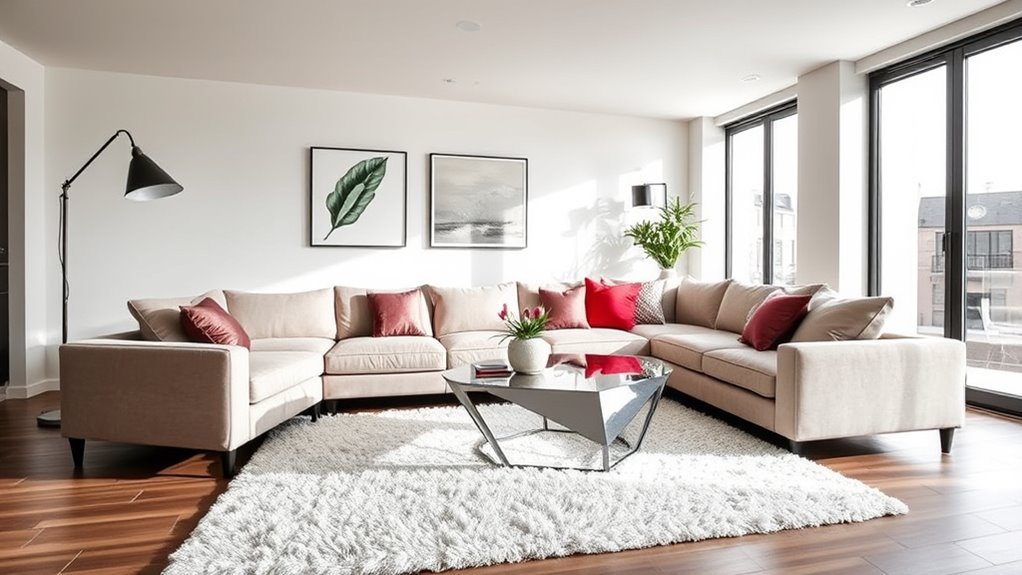
Contemporary living room style is all about creating a space that feels current, comfortable, and uncluttered without looking cold. It blends clean-lined furniture, a calm color base, tactile materials, layered lighting, statement art, and a few personal accents so the room feels polished but still livable.
Quick Answer
A contemporary living room uses today’s design language: open space, clean lines, neutral or tonal colors, strong contrast, sculptural lighting, natural textures, and functional furniture. Unlike modern style, which refers to a historic design period, contemporary style evolves with current trends while staying balanced, simple, and comfortable.
Key Takeaways
- Start with a clean layout, a strong focal point, and enough open space for easy movement.
- Use a neutral or tonal foundation, then add contrast through art, pillows, rugs, lighting, or one bold furniture piece.
- Mix materials such as wood, glass, metal, stone, bouclé, linen, leather, and wool so the room feels warm instead of flat.
- Layer ambient, task, and accent lighting to make the space useful during the day and cozy at night.
- Keep accessories edited: one large artwork, a sculptural lamp, a few books, and greenery usually look more contemporary than many small objects.
At a Glance
| Time Required | 1–2 hours to plan a layout; a weekend for simple styling updates; several weeks if ordering new furniture |
| Difficulty | Beginner to intermediate |
| Tools Needed | Tape measure, painter’s tape, floor plan app or graph paper, paint swatches, fabric samples, and bulb color-temperature samples |
| Cost | $0–$300 for rearranging and styling; $300–$2,500 for lighting, rugs, and decor; $2,500+ for major furniture upgrades |
How Do You Define Contemporary Living Room Style?
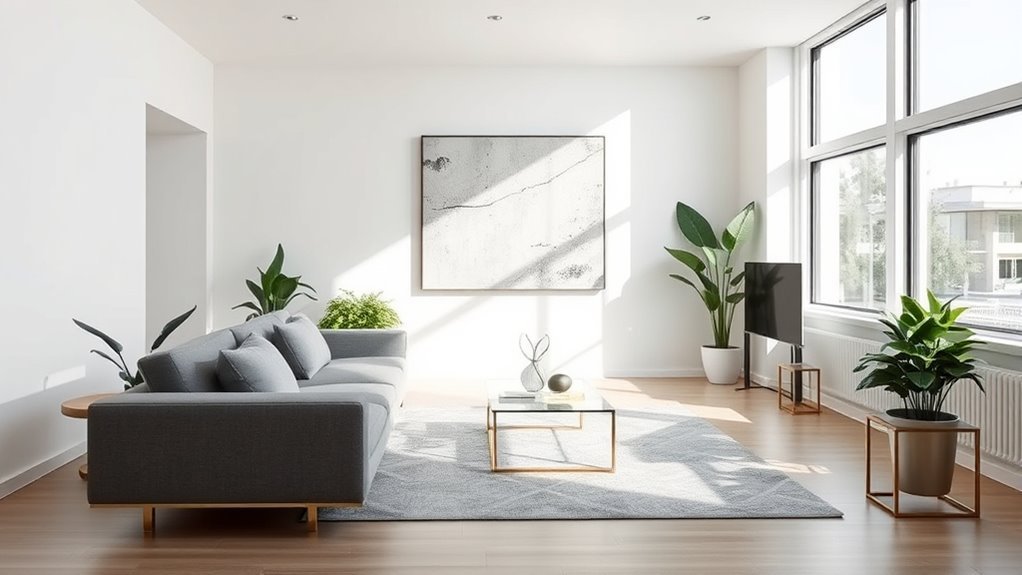
Contemporary living room style reflects what feels current now. It is not locked to one historic era. Architectural Digest describes contemporary design as fluid and ever-evolving, while Better Homes & Gardens explains that contemporary style changes with the times rather than following one fixed design period.
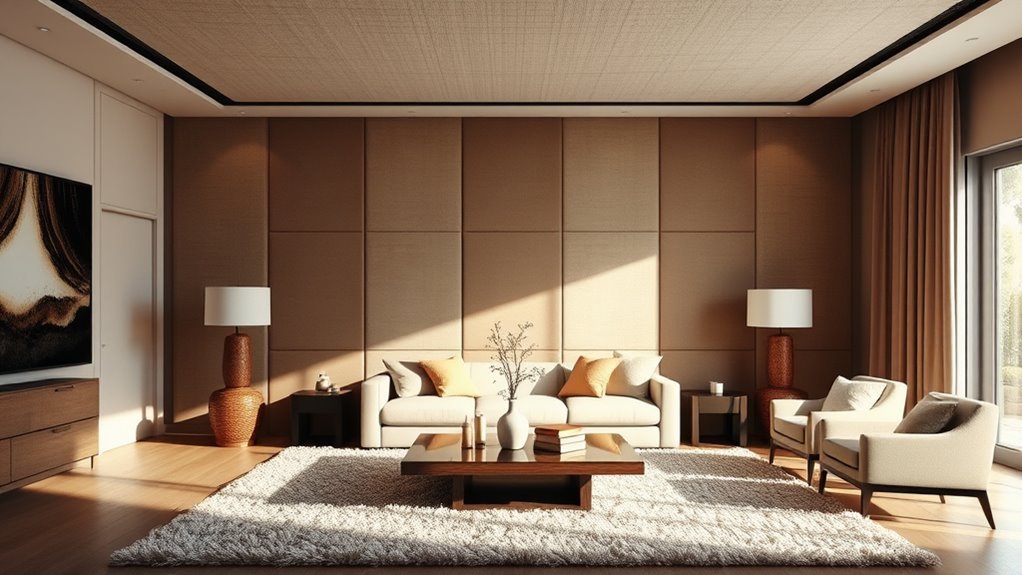
In a living room, that usually means clean lines, open sightlines, comfortable furniture, a calm color base, a mix of materials, and one or two bold focal points. The room should feel edited, but not empty. A sleek sofa can sit beside a textured wool rug, a warm wood table, a sculptural lamp, and a large piece of art. That mix keeps the space modern, warm, and personal.
Contemporary style is not about copying a showroom. It is about using current design ideas in a way that still fits your home, habits, light, and personality.
What Are the Key Characteristics of Contemporary Design?
The best contemporary living rooms balance simplicity with comfort. They are streamlined, but they still have texture, softness, and visual interest. According to The Spruce, contemporary interiors often focus on space, color, shape, and form rather than heavy ornamentation.
- Clean lines: Sofas, chairs, tables, shelving, and fireplaces often have simple silhouettes without ornate carving or heavy trim.
- Open space: Contemporary rooms need breathing room around furniture so the layout feels intentional.
- Neutral or tonal color base: White, cream, taupe, greige, charcoal, soft black, warm gray, and natural wood tones work well as foundations.
- Bold accents: A deep green chair, rust pillow, black-framed art, sculptural vase, or saturated rug can add energy without overwhelming the room.
- Mixed materials: Wood, metal, glass, stone, linen, leather, bouclé, wool, and jute create depth.
- Layered lighting: Ceiling lights, table lamps, floor lamps, sconces, and accent lights work together instead of relying on one overhead fixture.
- Edited decor: Accessories are chosen carefully. Fewer, larger pieces usually look more contemporary than many small items.
Note: Contemporary and minimal are not the same thing. A contemporary living room can be cozy, colorful, and layered as long as the layout stays clean and the details feel intentional.
Modern vs. Contemporary Living Room Style
The words “modern” and “contemporary” are often used together, but in interior design they do not mean the same thing. Modern style usually refers to a historic design movement connected to early- and mid-20th-century ideas such as Bauhaus, Scandinavian design, and midcentury modern furniture. It favors function, simplicity, warm woods, and restrained forms.
Contemporary style means the style of the current moment. It can include modern pieces, but it also allows newer shapes, warmer neutrals, sculptural lighting, curved furniture, mixed metals, sustainable materials, vintage accents, and more personal styling. A contemporary living room may have a modern shell, but it often feels more flexible and expressive.
Recommended Products

VERSATILE SET: Collection includes 4 uniquely shaped ceramic vases in complementary neutral tones - Terracotta, Cacao brown, and peachy hues for a cohesive look
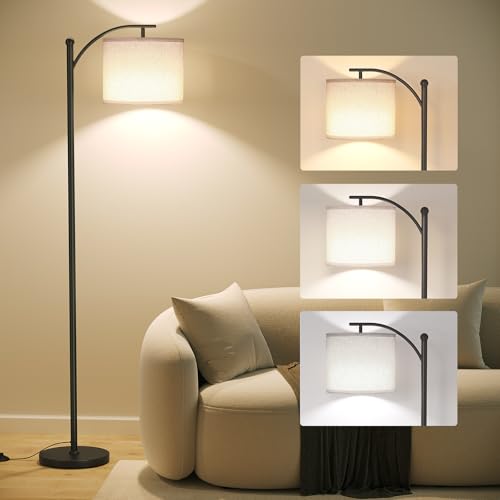
【3 Color Temperature LED Bulbs Included】SUNMORY Modern Floor Lamp includes a 9 watt,800 lumen, LED E26 bulb.This arc floor lamps bulb has 3 color temperatures that can be adjusted:3000K/4000K/5000K.You only need to press the foot switch to switch the arched floor lamp to different color temperatures, freeing your hands,black floor lamp can create different atmospheres for you.This floor lamp is perfect as a reading lamp,office lamp,or lamp for living room.

Mirror Digital Clocks for Home Decor Bedroom Accessories: Peakeep alarm clocks boast a sleek and stylish golden casing, complementing any home office decor or bedroom desk accessories. The minimalist aesthetic desktop stand makes the clock remains stable and prominently visible at all times. The modern mirror-like clock face not only adds a touch of elegance but also ensures time is legible from a variety of angles
What Essential Furniture and Decor Do You Need for a Contemporary Living Room?
Creating a contemporary living room starts with choosing pieces that are useful, comfortable, and visually light. You do not need to replace everything. Often, the biggest improvement comes from editing the layout, upgrading lighting, and adding better texture.
- Sectionals and seating: Choose a sleek sectional, low-profile sofa, curved loveseat, or pair of accent chairs. Visible legs help the room feel more open, while deep cushions keep it comfortable.
- Multifunctional pieces: Storage ottomans, nesting tables, modular shelving, and slim media consoles keep clutter under control.
- Statement coffee table: A stone, wood, glass, or metal coffee table can anchor the room without adding visual weight.
- Large area rug: Use a rug big enough for at least the front legs of the main seating pieces. This makes the room feel connected instead of scattered.
- Layered textiles: Bouclé, linen, leather, wool, velvet, and woven textures keep a neutral room from feeling plain.
- Lighting mix: Pair recessed or ceiling lighting with floor lamps, table lamps, sconces, or a sculptural pendant.
- Art and greenery: One large artwork, a sculptural object, and a few plants usually create more impact than a crowded shelf of small decor.
Pro Tip: Before buying new furniture, mark each piece on the floor with painter’s tape. Walk through the room, open doors, reach side tables, and sit in the conversation area. If the room feels tight in tape, it will feel tighter with real furniture.
Best Colors for a Contemporary Living Room
A contemporary color palette often starts with neutrals, but it should not stop there. The goal is balance. Use calm colors for large surfaces, then repeat accent colors in smaller moments so the room feels connected.
- Soft contemporary palette: warm white walls, oatmeal sofa, light oak table, black metal lighting, and olive or rust accents.
- High-contrast palette: white or cream walls, charcoal sofa, black-framed art, glass table, and brass or chrome details.
- Earthy contemporary palette: taupe walls, clay pillows, walnut wood, ivory boucle, greenery, and matte black accents.
- Moody contemporary palette: deep greige, espresso wood, textured cream rug, smoked glass, and warm metallic lighting.
The classic 60-30-10 color rule can still be useful: about 60% dominant color, 30% supporting color, and 10% accent color. Treat it as a starting point, not a law. Current contemporary rooms often feel more sophisticated when color is layered through texture, art, wood tones, and repeated accents instead of rigid percentages.
How Can You Create a Timeless Contemporary Living Room?
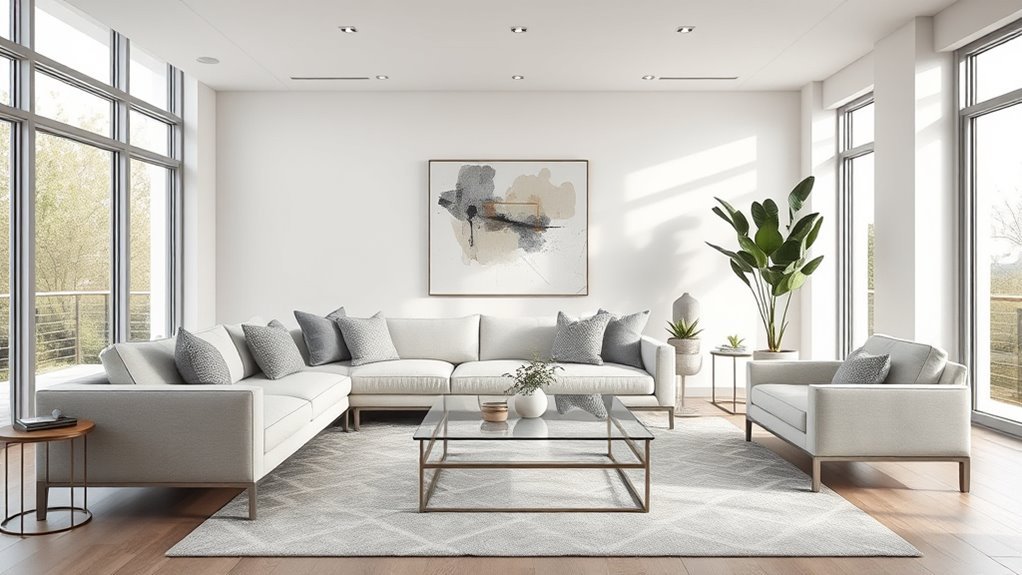
A timeless contemporary living room should feel current today but not dated next year. The key is to keep expensive pieces simple and use smaller accents for trends. Follow these steps:
- Choose the focal point. Start with the fireplace, view, media wall, art, or coffee table. Arrange seating so the focal point feels clear.
- Plan traffic flow. Keep main walkways open and avoid blocking doors, windows, or natural paths through the room. A 30–36 inch path is a practical target for many living rooms, and the U.S. Access Board uses 36 inches as an accessible-route benchmark.
- Create a conversation zone. Pull seating close enough for easy conversation. In large rooms, float furniture away from the walls and use a rug to define the zone.
- Use a neutral foundation. Let walls, sofa, rug, and large storage pieces create a calm base. Add personality through art, lamps, pillows, and sculptural objects.
- Mix straight and curved shapes. A boxy sofa can look softer with a round coffee table, curved chair, or organic ceramic vase.
- Layer lighting. Use ambient light for general brightness, task light for reading, and accent light for art or architectural details. The U.S. Department of Energy notes that residential ENERGY STAR-rated LEDs use at least 75% less energy and last up to 25 times longer than incandescent lighting.
- Add nature carefully. Plants bring color and shape into the room. A small 2015 study published in the Journal of Physiological Anthropology found that active interaction with indoor plants reduced physiological and psychological stress compared with a computer task, though results should not be overstated for every person or setting.
- Edit at the end. Remove anything that does not help the room’s function, comfort, or visual balance.
Warning: Do not sacrifice comfort for a sleek look. A contemporary living room still needs supportive seating, reachable tables, safe walkways, and lighting that works for real activities like reading, relaxing, hosting, and watching TV.
Contemporary Living Room Layout Rules
Layout matters as much as furniture style. A room with expensive pieces can still feel awkward if the scale and spacing are wrong.
- Leave breathing room: Avoid filling every corner. Empty space makes the furniture look more intentional.
- Float furniture when possible: Pulling the sofa off the wall can create a more inviting conversation area, especially in open-plan homes.
- Use rugs to zone: In an open living and dining space, a large rug helps define the lounge area without adding walls.
- Balance visual weight: If one side has a dark sofa, balance it with art, a floor lamp, or a substantial chair on the other side.
- Keep surfaces clear: A tray, a book stack, a vase, and one object are often enough for a contemporary coffee table.
Small Contemporary Living Room Ideas
Small spaces can still look contemporary. In fact, the style works especially well when you choose pieces with clean lines and avoid visual clutter.
- Choose a sofa with slim arms or raised legs so more floor is visible.
- Use a round coffee table or nesting tables to make movement easier.
- Mount the TV or use a low media console to keep the wall clean.
- Pick one large artwork instead of several small frames.
- Use mirrors carefully to bounce light, but avoid overusing reflective surfaces.
- Choose storage that closes, such as a cabinet or storage ottoman, so everyday items disappear quickly.
Recommended Products

Modern Single-Seater Armchair – This armchair adds a contemporary touch to any space. Perfect for living rooms, bedrooms, home offices, waiting areas, or reading corners. Its compact size fits easily in small spaces while providing comfortable seating.


Minimalist Elegance:This sleek leather sofa embodies modern minimalist design, featuring clean lines and a low-profile silhouette that blends seamlessly into contemporary living rooms, offices, or cafes. Perfect for small spaces and stylish interiors.
Common Contemporary Living Room Mistakes to Avoid
- Using only gray and white: Too many cool neutrals can feel sterile. Add warm wood, cream, taupe, clay, olive, or textured fabric.
- Buying every trend at once: Curved sofas, fluted wood, checkerboard rugs, chrome, and boucle can clash if they all compete.
- Ignoring scale: Oversized sectionals overwhelm small rooms, while tiny chairs look lost in large open spaces.
- Relying on one ceiling light: One overhead fixture creates flat light. Add lamps and accent lighting for depth.
- Choosing decor that is too small: Contemporary rooms usually look stronger with fewer, larger pieces.
- Forgetting comfort: A beautiful sofa still needs the right seat depth, fabric, cushion support, and table placement.
What Are Inspiring Examples of Contemporary Living Room Designs?
When exploring contemporary living room designs, look for design moves you can adapt instead of copying a room exactly. The strongest examples usually balance form and function in these ways:
- Neutral palettes with pops of color: Soft walls and large furniture create a calm base, while art, pillows, or one chair adds energy.
- Modular seating and clean lines: Low-profile sectionals, slim loveseats, and multifunctional ottomans keep the room flexible.
- Statement art and natural elements: A large artwork, sculptural branch, indoor tree, or textured planter adds personality and warmth.
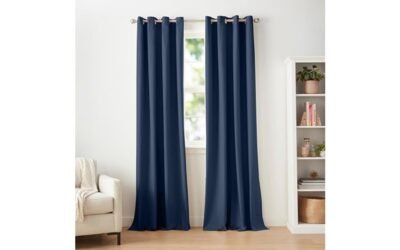
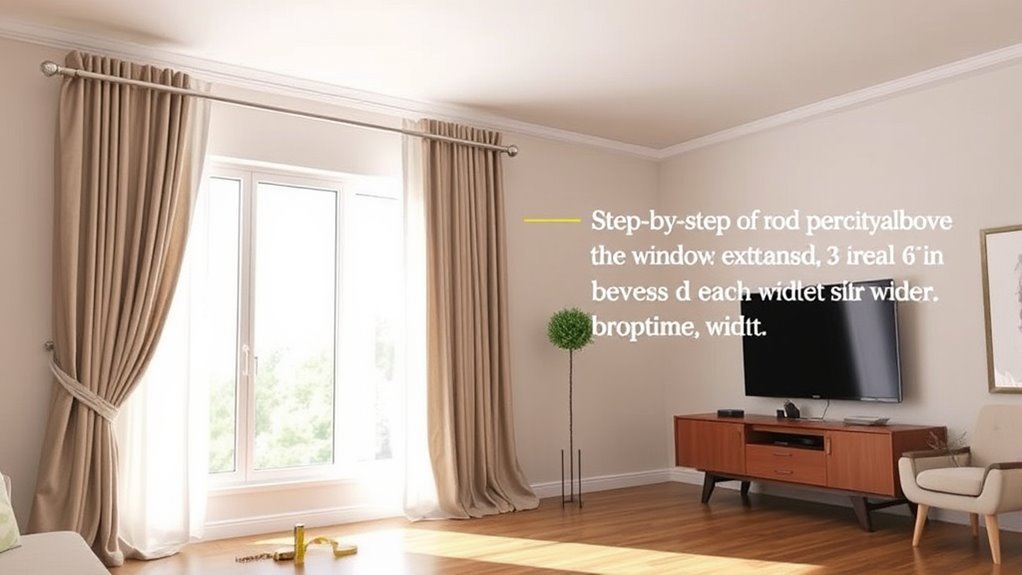
- Minimal window treatments: Simple shades or clean drapery allow natural light to support the open feel.
- Rough-luxe contrast: Smooth stone, glass, and metal feel more inviting when paired with rustic wood, nubby fabric, or handmade ceramics.
Project names such as Wellesley Residence and Rough Luxe Farm House are most useful when you study the underlying ideas: generous daylight, simple window treatments, tactile surfaces, edited furniture, and a clear focal point. Those are the transferable details that make a contemporary living room feel open, current, and inviting.
Frequently Asked Questions
What defines a contemporary living room?
A contemporary living room is defined by clean lines, open space, functional furniture, current materials, layered lighting, and a balanced mix of neutral tones, texture, contrast, and personal accents. It should feel current and uncluttered, but not cold or empty.
What does a contemporary room look like?
A contemporary room often has a streamlined sofa, a large rug, sculptural lighting, simple tables, open walkways, modern art, and a mix of smooth and textured materials. The palette may be neutral, earthy, high-contrast, or tonal, but the overall look feels edited and intentional.
What is the difference between modern and contemporary style?
Modern style refers to a more specific historic design movement connected to early- and mid-20th-century design. Contemporary style means what is current now. It can include modern furniture, but it also changes with new materials, color trends, technology, and lifestyle needs.
What colors work well in a contemporary living room?
Warm white, cream, taupe, greige, charcoal, black, clay, olive, rust, navy, and natural wood tones all work well. Use neutrals for the base, then add contrast through art, rugs, pillows, lamps, or one bold accent piece. Avoid relying only on cool gray if you want the room to feel warm.
Can a contemporary living room be cozy?
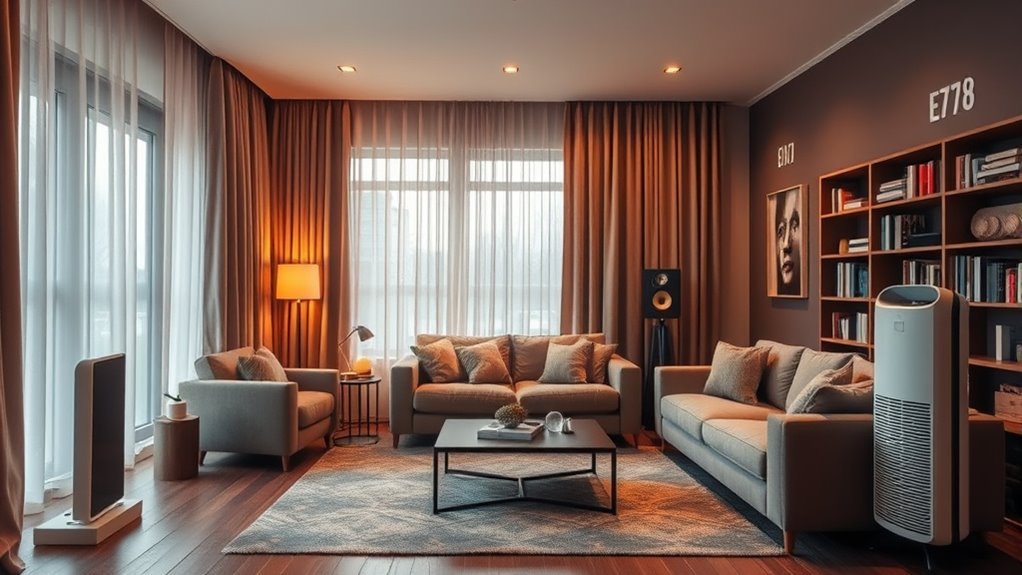
Yes. To make contemporary style cozy, add soft upholstery, warm wood, layered rugs, dimmable lamps, textured pillows, curtains, books, and greenery. The room can still have clean lines while feeling relaxed and welcoming.
How do I update my living room to look more contemporary on a budget?
Start by decluttering, rearranging furniture for better flow, changing lampshades or bulbs, adding a large modern artwork, simplifying the coffee table, swapping pillow covers, and bringing in one plant or sculptural vase. Paint and lighting usually make the biggest budget-friendly difference.
Conclusion
A strong contemporary living room style is clean, current, and personal. Start with open flow, comfortable furniture, a calm palette, and clean lines. Then add warmth through texture, lighting, art, greenery, and a few bold accents. When every piece has a purpose, your living room becomes more than a stylish space; it becomes a harmonious retreat that feels easy to use every day.
Sources
- Architectural Digest — contemporary interior design definition, characteristics, and distinction from modern style
- Better Homes & Gardens — modern vs. contemporary design differences
- The Spruce — contemporary design color, line, furniture, and lighting guidance
- U.S. Access Board — accessible-route clearance benchmark
- U.S. Department of Energy — LED lighting efficiency and residential lighting information
- Journal of Physiological Anthropology — study on indoor plants and stress response