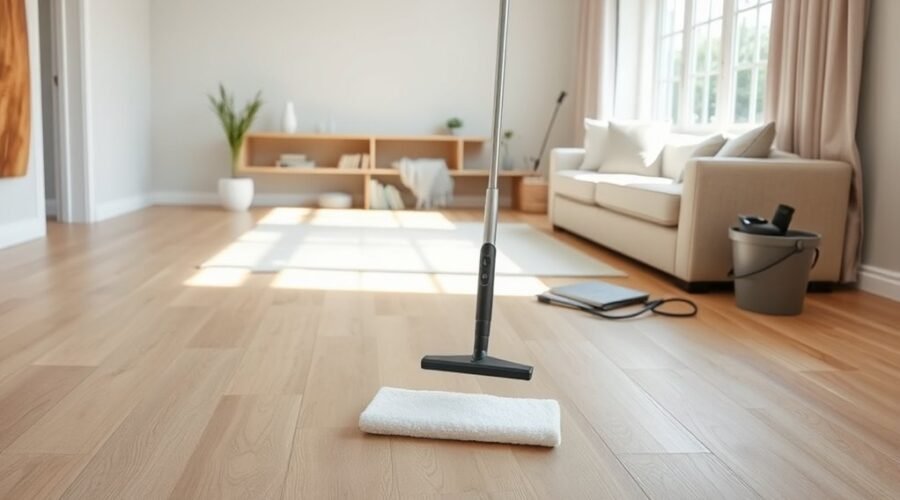
Can you use a steam mop on engineered hardwood without ruining the planks? Because engineered floors bond a real hardwood wear layer over a plywood or fiberboard core, forced heat and vapor can break down adhesives, cloud the finish, and swell the seams. While a few waterproof-rated collections allow low-output steam through a microfiber pad, most flooring makers ban steam cleaners outright.
Quick Answer
No, you should not use a steam mop on engineered hardwood unless your specific flooring warranty expressly approves it. Steam mops release vapor at 212°F (100°C), which can penetrate plank joints, delaminate the core, and cloud surface coatings. For nearly all engineered wood floors, use a dry microfiber dust mop and a lightly dampened pad with a pH-neutral wood cleaner.
Key Takeaways
- Surface coatings do not block vapor: Aluminum oxide and polyurethane finishes resist foot traffic, but pressurized steam still enters microscopic scratches and tongue-and-groove seams.
- Exceptions are collection-specific: Only waterproof-certified lines with an explicit Steam Mop Warranty allow steam—and only on the lowest setting with a microfiber pad moving with the grain.
- Thin veneers cannot be sanded out: Entry-level engineered planks with a 0.6 mm to 2 mm top veneer cannot be refinished if steam causes peeling or edge cupping.
- Cleaner chemistry must match the finish: Factory-coated polyurethane floors need a pH 7 neutral spray, whereas natural oil and hardwax-oil floors require specialized oil-refresher soaps.
- Climate control prevents seasonal movement: Keeping indoor relative humidity between 30% and 55% and room temperatures between 60°F and 80°F protects plank joints year-round.
Is a Steam Mop Safe for Engineered Hardwood?
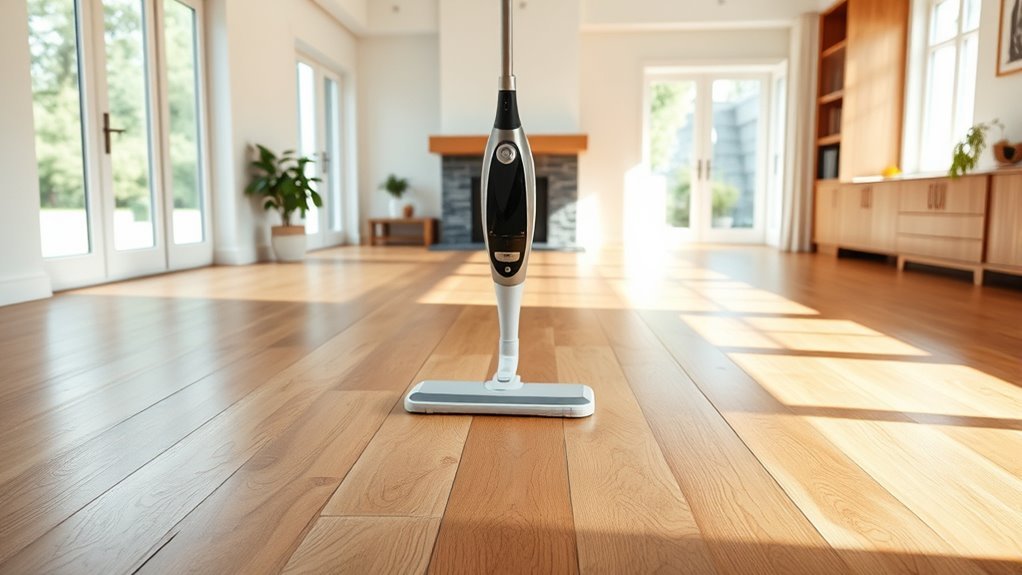
For the vast majority of engineered hardwood floors, a steam mop is not safe. Steam cleaners heat water to at least 212°F (100°C) and force pressurized water vapor directly onto the wood surface and into the tiny crevices between boards.
Because water vapor molecules are much smaller than liquid water droplets, they slip easily through micro-beveled edges, unsealed end joints, and hairline finish scratches. The National Wood Flooring Association’s maintenance guidance advises against both wet mops and steam mops because repeated heat and moisture degrade wood finishes and warp boards over time.
Major manufacturers enforce strict warranty exclusions against steam. For example, Shaw’s technical bulletin on steam cleaning prohibits steam mops on its hardwood flooring lines, noting that forced vapor can whiten finishes and swell the underlying wood structure.
A steam mop’s claim that it is “safe for sealed hardwood” never overrides your flooring manufacturer’s warranty restrictions.
If you do not know your floor’s exact brand, product line, or finish type, never test a steam cleaner on it. A dry microfiber dust mop paired with a lightly misted, manufacturer-approved cleaner removes daily dirt without risking structural damage.
Why Engineered Hardwood Can Warp
Engineered hardwood warps when heat and moisture cause its bonded layers to expand at different rates. While cross-layered construction makes engineered planks more dimensionally stable than solid wood during normal seasonal shifts, it does not make them waterproof or heatproof.
Each plank combines a genuine hardwood top layer—called the wear layer or veneer, typically 0.6 mm to 6 mm thick—glued over a core of plywood, high-density fiberboard (HDF), or stone-polymer composite (SPC). Most manufacturers specify that engineered wood surface temperatures must stay below 80°F to 85°F (27°C to 29°C), the same limit applied to radiant underfloor heating.
When 212°F steam heats the adhesive bond and forces moisture into the core or veneer, five distinct types of failure can occur:
- Cupping: Moisture absorbed through plank seams swells the bottom and edges of the board, pushing the edges higher than the center.
- Crowning and warping: The center of the plank humps upward or the board twists out of flat alignment after uneven drying.
- Delamination: High heat and dampness weaken the glue bond, causing the top hardwood veneer to peel away from the plywood or HDF core.
- Joint swelling and peaking: Click-lock or tongue-and-groove edges absorb vapor, push against neighboring boards, and ridge upward at the seams.
- Finish blushing and hazing: Moisture trapped beneath a polyurethane or aluminum oxide topcoat turns the clear finish milky, cloudy, or flaky.
Unlike solid hardwood (which can be sanded down multiple times), engineered planks with a thin 0.6 mm to 2 mm veneer cannot be mechanically sanded to fix cupping or finish failure. Once delamination or severe edge swelling sets in, the damaged boards must be replaced.
Ambient indoor climate also drives warping. According to the NWFA problem-prevention guidelines, homeowners should maintain indoor temperatures between 60°F and 80°F and relative humidity between 30% and 50% year-round. Many manufacturers, including the Shaw hardwood care guide, specify a slightly higher relative humidity window of 35% to 55% to prevent winter gapping and summer cupping.
Proper installation matters just as much. If planks were not acclimated in the room for 48 to 96 hours prior to installation when required, or if perimeter expansion gaps (typically 3/8 inch) were omitted, added moisture from mopping will quickly cause buckling.
Check Your Floor’s Finish First
Your floor’s surface finish determines which liquid cleaners are safe to use, though a tough finish alone never makes steam mopping safe. Modern engineered floors generally carry either a surface film coating (aluminum oxide, UV-cured polyurethane, or acrylic urethane) or a penetrating finish (natural oil or hardwax oil).
How to Identify Your Floor’s Finish
The fastest way to confirm your floor’s finish is to check a leftover carton label, your original purchase invoice, or the manufacturer’s online spec sheet using the collection name. Factory-prefinished North American floors most commonly use UV-cured urethane reinforced with aluminum oxide, while many European-style planks feature natural oil or matte lacquer.
If you have no paperwork, follow these three steps to identify the coating before applying any wet cleaner:
- Check leftover boards or records: Look inside closets, utility rooms, or closing binders for spare planks stamped with a brand, SKU, or finish type.
- Run the 60-second water bead test: Place two drops of plain water on a low-traffic board and wait 60 seconds. If the water forms a tight bead and leaves no dark mark when wiped dry, you have an intact surface film finish (polyurethane or aluminum oxide). If the water flattens, soaks in, or darkens the wood, the floor is either oil-finished, waxed, or has a worn seal.
- Test for surface wax in a hidden corner: Lightly scrape a spot inside a closet with the edge of a plastic card or rub it with a cloth dampened with two drops of mineral spirits. A waxy smudge indicates a paste-wax coating that must never be wet-mopped or steamed.
Even the hardest factory-applied aluminum oxide finish only seals the top face of the plank. Unless the flooring is specifically engineered with hydrophobic joint coatings, the bevels and seams remain vulnerable to liquid and vapor.
Match the Cleaner to the Finish
Using the wrong chemical formula strips protective oils, leaves a sticky haze, or ruins future recoating adhesion. Match your cleaning solution directly to your identified surface type.
| Finish | Cleaner Match |
|---|---|
| Aluminum oxide | Manufacturer-approved pH-neutral (pH 7) water-based wood floor spray cleaner; no wax or oil soaps |
| Polyurethane / UV urethane | Residue-free pH-neutral hardwood cleaner misted lightly onto a flat microfiber pad |
| Oil-finished / hardwax oil | Manufacturer-specified plant-oil floor soap and periodic maintenance oil refresher |
| Unknown or worn finish | Dry microfiber dusting and soft-bristle vacuuming only until a pro identifies the seal |
Factory-sealed polyurethane and aluminum oxide floors do best with a dedicated, non-streaking formula like Bona Hardwood Floor Cleaner, which uses a water-based, pH-neutral solution that dries rapidly without leaving dulling buildup.
Penetrating oil finishes require specialized care and different concentration levels. For example, the Kährs cleaner instructions specify diluting its concentrated cleaner (pH approximately 8) at a 1:100 ratio (100 ml per 10 liters of lukewarm water) for lacquered floors, versus a stronger 1:50 ratio (200 ml per 10 liters of water) for oiled floors to lift dirt without stripping the wood pores.
Follow Manufacturer Guidance
Your flooring maker’s care manual is the final legal authority for both daily cleaning and warranty coverage. Before plugging in any powered or heated cleaning tool, verify three details in your product documentation:
- Collection-level approval: Confirm whether your exact product line (not just the brand’s laminate or vinyl lines) carries a specific Steam Mop Warranty.
- Operating restrictions: Check the required pad material, maximum temperature or steam setting, and mopping direction.
- Warranty exclusions: Review Mohawk’s engineered wood care guidelines or your brand’s warranty booklet, which typically prohibit damp mopping unless covered by a Wet Resistance Warranty and ban steam mopping unless covered by an explicit Steam Mop Warranty.
Always inspect plank edges and high-traffic paths before cleaning. Deep pet scratches, separated end joints, or worn doorway finishes let moisture bypass surface protection entirely.
When Might a Steam Mop Be Safe?
Using a steam mop on engineered hardwood is only safe when your exact flooring product is engineered with waterproof joint technology and carries written manufacturer approval for residential steam mops. This exception applies to a narrow group of hybrid waterproof wood floors, never to standard engineered hardwood.
For instance, select waterproof-rated wood collections—such as Pergo EverCraft with WetProtect or specific Mohawk WetProtect lines—feature water-tight locking joints and sealed subfloor barriers. The manufacturer’s engineered-hardwood FAQ and product warranty guides permit residential steam mops on these designated lines only when strict operating rules are followed.
Why Steam Settings Matter
Even on steam-approved waterproof engineered wood, excessive heat or concentrated jets of vapor can overwhelm joint seals. Controlling steam output keeps surface temperatures lower and prevents condensation from pooling in the micro-bevels.
When your floor’s warranty explicitly allows steam cleaning, follow these three mandatory controls:
- Select the lowest steam setting: Dial the mop to its lowest heat and vapor output (or the dedicated wood/laminate setting) so moisture evaporates almost immediately.
- Apply steam through a microfiber pad: Never direct an bare steam nozzle or concentrator jet onto the planks; the thick microfiber pad buffers both heat and wetness.
- Mop lengthwise with the grain: Move the mop continuously along the length of the planks rather than across the seams, and never park a hot mop head on the floor.
Remember that a floor feeling dry to the touch 30 seconds after a pass does not mean zero vapor entered the joints. If your floor lacks a specific Steam Mop Warranty, turning a steam mop down to its “low” or “dust” setting still risks permanent damage.
Manufacturer Approval Is Required
Never assume an engineered floor is steam-safe just because the box says “water-resistant” or “kitchen-ready.” Many water-resistant wood floors are rated to handle topical liquid spills for 24 to 72 hours, but their warranties still forbid pressurized steam.
Before using steam on an approved floor, inspect the room carefully. Skip steam cleaning anywhere the protective topcoat is gouged, where boards have gapped during dry winter weather, or where standing water previously occurred.
Stop using steam immediately if you spot a whitish haze in the finish, slightly raised plank edges, or a rough texture along the grain. Those early warning signs mean moisture is penetrating the wear layer.
What Steam Mop Settings Are Safest?
On the rare engineered hardwood floors that carry manufacturer steam approval, the lowest mist setting (often labeled “Wood,” “Delicate,” or “Low”) paired with a clean, thick microfiber pad is the only safe setup. Higher settings meant for ceramic tile or grout inject far too much heat and water into wood seams.
Before steam mopping a full room on an approved floor, complete this five-step safety check:
- Verify written warranty coverage: Confirm in your product PDF that residential steam mops are covered for your exact collection name.
- Set output to minimum: Choose the lowest steam rate on the machine and add only clean distilled or demineralized water—never put liquid floor cleaners or vinegar into a steam tank.
- Attach a thick microfiber pad: Ensure the pad completely covers the steam plate so no direct steam nozzle contacts the wood.
- Spot-test an inconspicuous area: Clean a 2-foot section inside a closet or behind a door, then wait 24 hours.
- Check under angled light: Shine a flashlight across the test area to confirm there is no cloudy blushing, raised grain, or seam swelling before mopping the main room.
Note: Passing a single closet spot-test only confirms that the surface finish did not cloud immediately. Cumulative moisture from weekly steaming can still cause gradual cupping over several months, so reserve steam for occasional deep cleaning even on approved floors.
Recommended Products
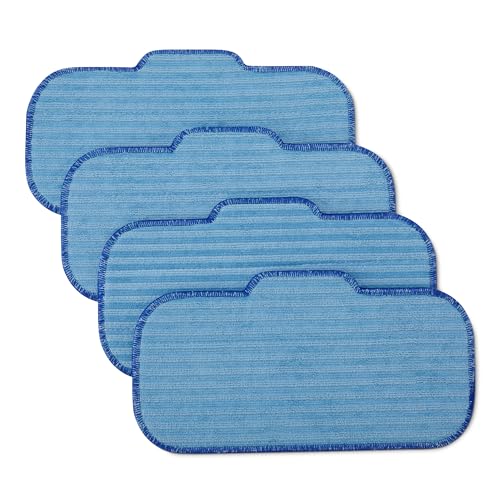
VERSATILE CLEANING: Made for cleaning any smooth, sealed hard floor, including wood, laminate, and ceramic tile

𝐂𝐨𝐦𝐩𝐚𝐭𝐢𝐛𝐢𝐥𝐢𝐭𝐲: These mop pads are perfect compatible with PurSteam ThermaPro 10-in-1 Steam Mop Cleaner, suitable for both the new version steam mop with 6 tabs and old version steam mop with 5 tabs.

1.Steam mop replacement pad size 12.4"x6.7" – Compatible with Shark Steam Mop S1000 Series (S1000/S1000A/S1000C/S1000WM/S1001C).
How to Steam Clean Engineered Hardwood Safely
If you have verified that your engineered hardwood carries an active Steam Mop Warranty, your goal during cleaning is to minimize contact time and eliminate standing moisture. If your floor does not explicitly permit steam, skip straight to the low-moisture microfiber routine in the next section.
Warning: Never steam-clean engineered hardwood when the flooring manufacturer prohibits it. Using a low steam setting on an unapproved floor voids your warranty and can cause irreversible delamination and cupping.
Understand the Steam Risks
Heat softens surface coatings and adhesives at the exact moment pressurized vapor presses against plank joints. Because wood is hygroscopic—meaning it naturally absorbs and releases water vapor—forcing hot steam into seams causes the wood fibers along board edges to swell rapidly.
High-wear zones face the greatest danger. Entryways, kitchen sink areas, and pet feeding stations often have microscopic finish wear from grit and claws, giving steam a direct path into the hardwood veneer.
Never use a steam mop to try to flatten boards that are already cupped or buckled. Applying heat and moisture to a warped floor will worsen the structural separation; contact a certified flooring inspector instead.
Control Moisture During Cleaning
When using steam on a warranty-approved floor, follow strict moisture control practices so the surface dries within seconds of each pass.
| Control point | Practice |
|---|---|
| Steam setting | Lock the unit on its lowest approved vapor output; never use burst or steam-blaster triggers |
| Contact time & direction | Keep the mop gliding continuously along the length of the planks; unplug before pausing |
| Pad management | Swap out the microfiber pad as soon as it becomes damp or soiled so you do not push dirty water into seams |
| Drying | Wipe away any visible moisture trails immediately with a dry microfiber towel |
| Post-clean inspection | Check bevels and end joints for haze, swelling, or raised edges before replacing area rugs |
Wait until the floor is 100% dry and cool to the touch—typically 15 to 30 minutes—before putting rugs, pet bowls, or furniture back in place.
Cleaning Alternatives to Steam
For 95% of engineered hardwood floors, a low-moisture microfiber cleaning method cleans just as thoroughly as steam without any thermal or structural risk. High-density microfiber pads mechanically lift grease, shoe scuffs, and bacteria using split microscopic fibers rather than high heat.
Switch to this three-step low-moisture alternative:
- Dry-collect abrasive grit: Vacuum with a bare-floor brush attachment (beater bar turned off) or sweep with a microfiber dust mop.
- Mist and wipe with a flat microfiber mop: Lightly mist a manufacturer-approved pH-neutral wood cleaner onto a flat microfiber pad—never pour liquid directly onto the planks.
- Spot-treat sticky messes: Apply a few drops of approved cleaner to a microfiber cloth, rub gently with the wood grain, and buff dry with a clean towel.
Better Ways to Clean Engineered Hardwood Floors
The safest and most effective cleaning routine pairs frequent dry dusting with periodic damp-pad mopping. Removing gritty dirt before it gets walked on prevents micro-scratches that make a floor look dull and trap grime.
Remove loose grit first, mist the microfiber pad rather than flooding the boards, and never leave standing moisture on the seams.
Follow this six-step routine to deep-clean engineered hardwood safely:
- Clear loose debris: Dust-mop or vacuum 2 to 3 times a week (daily in busy entryways or homes with pets) using a soft hard-floor attachment with the rotating brush roll switched off.
- Prep a clean microfiber pad: Attach a fresh, laundered flat microfiber wet-mopping pad to your mop head. Wash reusable pads without fabric softener or bleach so they stay absorbent.
- Mist the cleaner lightly: Use a refillable spray mop or spray bottle to mist a pH-neutral hardwood cleaner over a manageable 4-by-4-foot section, or spray the pad directly until barely damp.
- Mop with the wood grain: Glide the flat mop parallel to the planks in overlapping strokes, using gentle pressure on footprints without saturating the joints.
- Swap pads and wipe seams: Replace the microfiber pad as soon as it looks dirty, and buff away any visible moisture droplets along beveled edges with a dry towel.
- Air-dry completely: Let the room air-dry for 10 to 15 minutes before walking on the floor or laying rugs back down.
Pro Tip: If drywall dust or winter road salt leaves a stubborn chalky haze after mopping, mist a clean microfiber pad lightly with plain water and make a second pass right after using your pH-neutral cleaner, then buff dry with a towel.
Recommended Products

Microfiber Mops for Floor Cleaning: Flat floor mop with adjustable long handle, flexible lightweight but sturdy, great for housewives, the elderly, children or any home with pets

【WORK ON EASY】With it’s large 18 Inch base can cover a lot of areas in a single scan, clean in high efficiency with less effort. Industrial grade mop, Stainless steel handle which withstands friction and frequent use, the mop head is made of solid aluminum alloy, which is more durable than plastic mop head. Velcro design makes the pad easier to attach and replace.
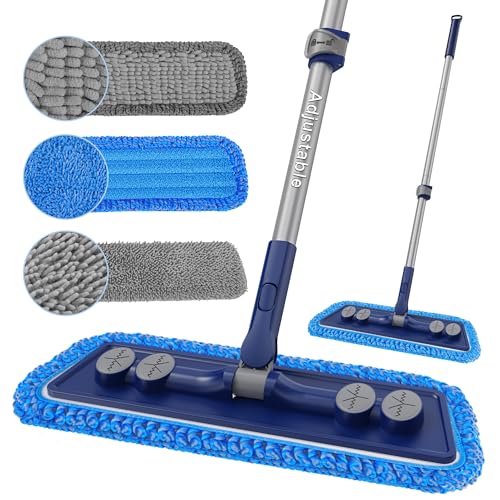
【Adjust the Length You Need】The length of the dust mop can be adjusted from 44" to 55". It's lightweight and suitable for kids, ladies and the elderly. Large 18.5” mop head make cleaning quick and easy, perfect for busy homemakers and pet owners.
Safe Cleaners for Engineered Hardwood
A pH-neutral (pH 7), water-based hardwood cleaner recommended by your flooring manufacturer is the gold standard for factory-finished engineered wood. Formulas such as Bona Hardwood Floor Cleaner, Shaw TOTALCARE Hard Surface Cleaner, and Bruce Hardwood & Laminate Floor Cleaner evaporate quickly and leave zero oily film.
Use these four rules whenever shopping for an engineered wood cleaner:
- Match the label to your exact finish: Verify that the bottle states it is safe for unwaxed polyurethane/aluminum oxide wood floors—or choose a dedicated oil-refresher soap if your floor has a natural oil finish.
- Stick to ready-to-use sprays or exact dilutions: Over-concentrating a cleaner leaves a tacky film that attracts more shoe dirt.
- Skip “shine restorers” and acrylic polishes: Products marketed to “renew luster” or “fill scratches” coat the floor in urethanes or waxes that peel unevenly and prevent future professional recoating.
- Avoid oil soaps on urethane finishes: Murphy Oil Soap, pine cleaners, and castile soaps leave a slippery residue that dulls factory coatings.
Skip DIY vinegar-and-water mixtures unless your manufacturer explicitly lists them. While a few laminate-hybrid manuals allow a weak solution of 1 cup vinegar per gallon of water for occasional spot use, the Bruce engineered-hardwood cleaning guide warns that acidic vinegar solutions gradually etch and dull modern protective topcoats, while steam cleaners and oil soaps can damage both the finish and core.
Similarly, do not use multi-surface cleaners designed for ceramic tile, vinyl, or linoleum, as their surfactants and higher alkalinity can haze wood finishes.
Recommended Products

Maintains polish without stripping protective coating

Cleaning Power: Our No Rinse Neutral pH Floor Cleaner is formulated with a naturally derived surfactant system that effectively cleans all hard floors and other surfaces without the use of potentially harmful chemicals.

Clean, Shine & Restore: Professional hardwood floor cleaner and polish bundle removes dirt, grime, and scuffs while restoring the natural beauty of finished wood floors without leaving a sticky residue.
Cleaning Mistakes That Ruin Engineered Floors
Most premature engineered floor failures trace back to excess water, high heat, harsh household chemicals, or abrasive tools. Because engineered wood has a limited top veneer, surface mistakes are much harder to sand out than on 3/4-inch solid oak.
Avoid these six common floor-care mistakes:
- Using an unapproved steam mop: Pressurized 212°F vapor penetrates seams, softens adhesives, and causes edge cupping or veneer delamination.
- Wet-mopping with a string or sponge mop: Traditional bucket mops flood tongue-and-groove joints with standing water that swells the core.
- Cleaning with ammonia, bleach, or vinegar: Harsh acids and alkalis break down polyurethane and aluminum oxide coatings and strip natural oil finishes.
- Scrubbing with abrasive pads or beater bars: Steel wool, green scouring pads, and rotating vacuum brush rolls gouge protective topcoats.
- Applying paste wax or Mop & Glo polishes: Waxes and acrylic shines create a cloudy buildup that traps dirt and voids factory finish warranties.
- Letting spills or pet accidents sit: Standing liquid seeps between bevels within minutes, staining the wood veneer and swelling the sub-layers.
A floor can suffer hidden core swelling and adhesive breakdown even when the top coat looks clean and dry right after mopping.
How to Protect Engineered Wood for Years
Keeping engineered hardwood looking new for decades comes down to controlling indoor humidity, stopping grit at the door, and keeping liquid out of the seams. Consistent preventive habits matter far more than aggressive deep cleaning.
Build these six habits into your home routine:
- Keep indoor humidity between 30% and 55%: Monitor rooms with a digital hygrometer, running a humidifier in dry winter heating months and a dehumidifier or air conditioner in humid summers while keeping temperatures between 60°F and 80°F.
- Place breathable walk-off mats at every exterior door: Trap gritty sand and rain with woven mats backed by a breathable Durogen or PVC rug pad—never use rubber- or latex-backed mats, which trap vapor and permanently discolor wood finishes.
- Fit wide felt protectors under all furniture: Attach heavy-duty felt glides to dining chairs, barstools, and tables, and replace them when grit embeds in the felt.
- Trim pet nails and wipe muddy paws: Keep dog nails clipped so they do not dent the hardwood veneer or scratch through the topcoat.
- Blot spills immediately: Keep dry microfiber towels handy in kitchens and dining areas so water, wine, or pet accidents are blotted dry within seconds.
- Follow finish-specific renewal schedules: Reapply maintenance oil to natural-oil floors on the manufacturer’s schedule, or have a professional screen-and-recoat factory urethane floors before traffic wears down to bare wood.
If you ever spot persistent cupping, peaking seams, or soft spots near dishwashers, refrigerators, or exterior doors, stop wet cleaning immediately and check for a hidden plumbing or subfloor moisture leak.
Frequently Asked Questions
What Is the Best Way to Clean Engineered Hardwood Floors?
The best way to clean engineered hardwood floors is to sweep or vacuum with a bare-floor brush 2 to 3 times a week, followed by damp-mopping every 1 to 2 weeks with a flat microfiber mop and a pH-neutral wood floor cleaner. Mist the cleaner lightly onto the microfiber pad rather than soaking the boards, wipe in the direction of the wood grain, and blot spills immediately.
What Type of Mop Is Best for Engineered Hardwood Floors?
A flat-head microfiber mop with washable, removable pads is the best mop for engineered hardwood floors. Its split microfiber strands trap fine dust when used dry and lift stuck-on grime when lightly misted with a pH-neutral cleaner, all without pushing excess water into plank seams like string or sponge mops do.
How Do You Clean an Engineered Wood Floor?
Clean an engineered wood floor by first vacuuming or dust-mopping loose grit so it cannot scratch the veneer. Next, lightly mist a flat microfiber pad with a manufacturer-approved pH-neutral wood cleaner and mop in small sections along the wood grain, wiping up any leftover moisture so the planks dry within minutes.
Can I Use Swiffer Wet on Engineered Hardwood Floors?
You can use Swiffer Sweeper Wet pads on factory-finished polyurethane or aluminum oxide engineered hardwood only if your flooring manufacturer allows pre-moistened pads. Swiffer’s official wet-pad instructions state that its wet cloths are safe for finished wood floors, but must never be used on unfinished, oiled, or waxed wood boards. Even on finished planks, wring out or blot any excess puddle and check your floor warranty first, as some brands prohibit pre-treated pads that leave residue.
Can You Fix Engineered Hardwood That Warped After Steam Mopping?
Minor edge cupping from brief steam exposure sometimes flattens out over several weeks if you stop wet cleaning immediately and run a dehumidifier and fans to hold indoor humidity between 35% and 45%. However, if the top wood veneer has delaminated (peeled from the core) or the finish has turned permanently cloudy, the damaged planks must be cut out and replaced.
Does Using a Steam Mop Void an Engineered Hardwood Warranty?
Yes, using a steam mop voids the residential warranty on almost all engineered hardwood floors, unless your exact product collection includes an explicit Steam Mop Warranty in writing. Flooring inspectors can easily spot steam damage by the characteristic pattern of seam swelling, adhesive failure, and cloudy finish blushing along board edges.
Conclusion
Leaving the steam mop in the closet is the smartest way to protect engineered hardwood from cupping, seam swelling, and finish failure. Even a single high-heat pass can force vapor into vulnerable joints on standard wood planks.
Unless you have verified in writing that your exact waterproof-rated flooring collection carries a Steam Mop Warranty, stick to regular dry dusting and a flat microfiber mop lightly misted with a finish-matched, pH-neutral wood floor cleaner.
Sources
- National Wood Flooring Association — Maintenance: Wood floor cleaning recommendations and guidance against wet and steam mops.
- Shaw — Steam Cleaning Technical Bulletin: Manufacturer restrictions on steam cleaning hardwood flooring.
- National Wood Flooring Association — Problem Prevention: Indoor temperature (60°F–80°F) and relative humidity (30%–50%) standards to prevent cupping and gapping.
- Shaw — Hardwood Care: Recommended cleaning practices, breathable rug pad rules, and 35%–55% relative humidity guidance.
- Bona — Hardwood Floor Cleaner: Water-based, pH-neutral, residue-free cleaner specifications for unwaxed finished wood floors.
- Kährs — Cleaner Instructions: Dilution ratios (1:100 for lacquered, 1:50 for oiled) and care guidance for wood floors.
- Mohawk — Engineered Wood Care and Maintenance: Warranty requirements for damp mopping and steam mop exclusions.
- Pergo — Hardwood Installation and FAQ: Product-specific steam-cleaning exceptions, microfiber pad rules, and care conditions.
- Bruce — How to Clean Engineered Hardwood Floors: Cleaning methods, moisture control, steam restrictions, and vinegar precautions.
- Swiffer — Wet Mopping Pad Instructions: Finished-floor compatibility and exclusions for unfinished, oiled, and waxed wood.