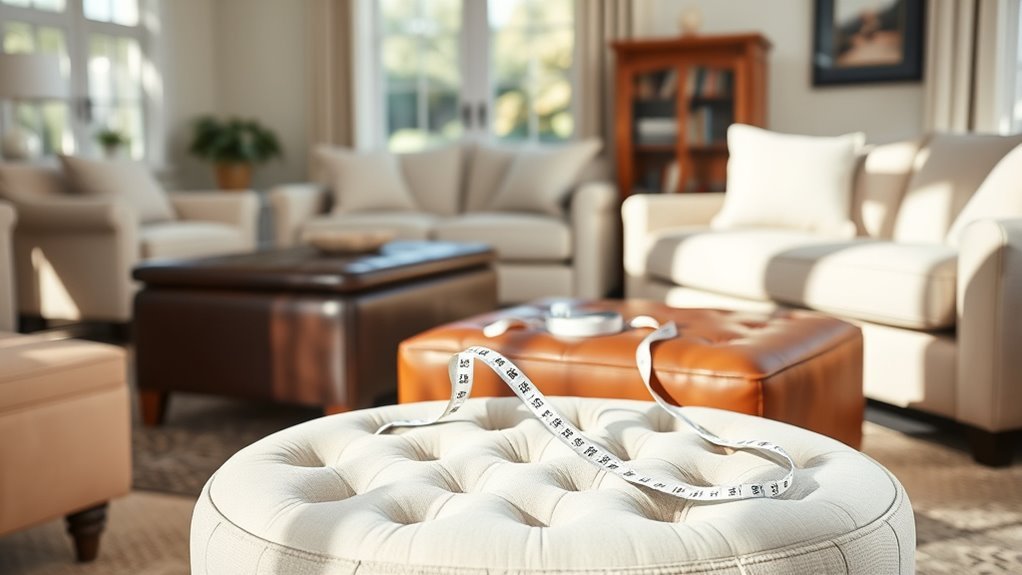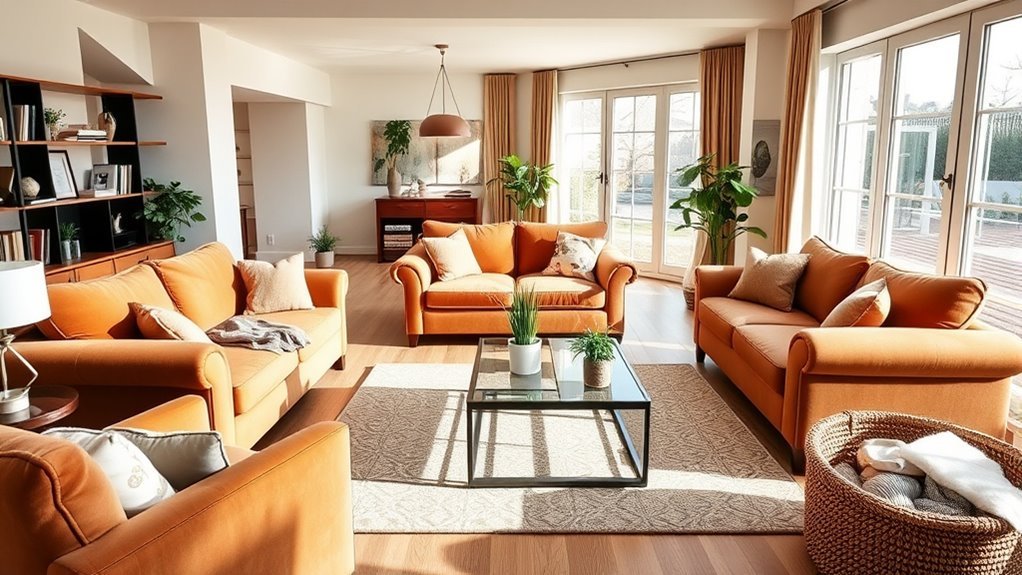
A pet-friendly living room should feel comfortable for your dog or cat, effortless for you to clean, and pulled together enough to look like a thoughtfully designed space. Instead of covering every cushion in mismatched blankets, the smartest approach combines scratch-resistant flooring, tightly woven upholstery, washable layers, concealed toy storage, and pet-safe decor that handles claws, shedding, and muddy paws in stride.
Quick Answer
To create a pet-friendly living room, pair waterproof or scratch-resistant flooring (like 20-mil luxury vinyl plank or tile) with low-pile washable rugs, choose tightly woven W- or WS-coded performance upholstery, build a dedicated pet nook, store toys in lidded baskets, swap toxic houseplants for pet-safe greenery, and clean accidents with enzyme sprays.
At a Glance
| Time Required | 30 minutes for a quick storage and throw refresh; 1 weekend for a full layout, rug, and slipcover update |
| Difficulty | Easy to moderate, depending on whether you are rearranging furniture or upgrading flooring |
| Tools Needed | Tape measure, washable slipcovers or throws, lidded baskets, pet bed, non-slip rug pad, lint roller, vacuum, enzyme cleaner, cord covers |
| Cost | $25–$100 for storage and washable layers; $150–$800+ for washable rugs, pet furniture, or upholstery upgrades; more for new flooring |
Choosing the Right Flooring for Pet-Friendly Spaces
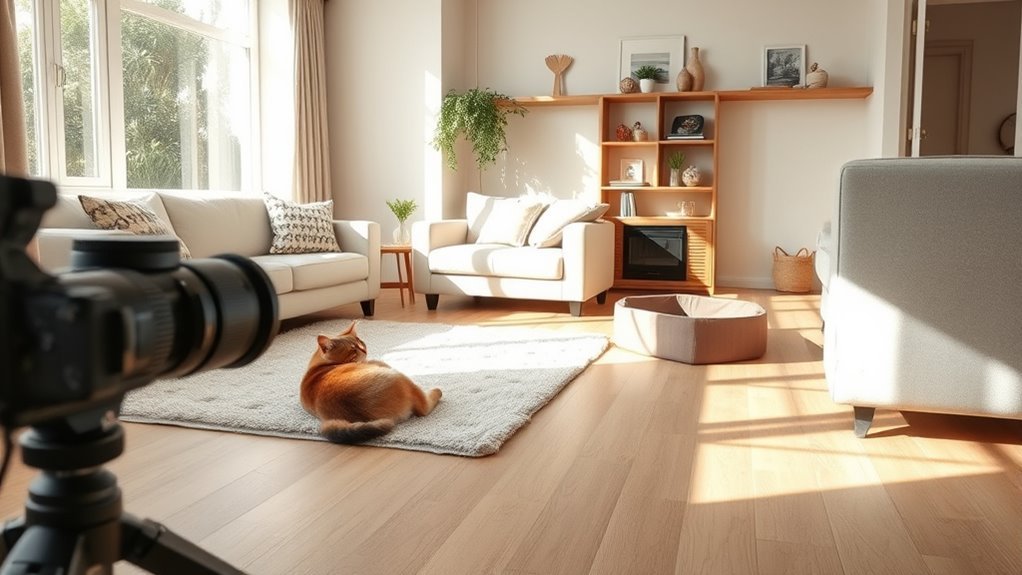
The best flooring for a pet-friendly living room is waterproof luxury vinyl plank (LVP) with at least a 20-mil wear layer, porcelain tile, or sealed concrete, paired with low-pile washable rugs. Because no floor is completely immune to wear, aim for a surface that shrugs off claws, wet paws, tracked-in grit, and occasional accidents while still giving your pet secure footing.
Luxury vinyl plank (LVP) is the most practical all-around choice because it mimics hardwood without absorbing moisture. Check the product specs before buying: look for a rigid stone plastic composite (SPC) core that is 100% waterproof through the plank rather than merely water-resistant at the surface. Choose a 20-mil or thicker wear layer with an embossed texture for paw traction; thinner 6-mil to 8-mil planks show claw scratches much faster in homes with active dogs.
Porcelain or ceramic tile excels in living rooms with direct backyard access or accident-prone pets. Claws cannot scratch porcelain tile, and liquid messes wipe up cleanly. However, unsealed cement grout absorbs urine odors, so choose stain-resistant epoxy grout or reseal standard grout lines every 2 to 3 years. Because smooth tile feels cold and slippery underfoot, anchor washable runners or low-pile area rugs over a non-slip rug pad along main walkways.
Sealed concrete suits modern spaces and large breeds, provided you maintain the protective topcoat. Acidic spills and pet accidents can etch bare or worn concrete, so reapply a quality sealer every few years and soften resting areas with cushioned mats or washable rugs.
Hardwood can still work if you love natural timber, but species hardness and finish sheen make all the difference. On the Janka hardness scale, choose dense domestic woods such as hickory (1,820 lbf), hard maple (1,450 lbf), white oak (1,360 lbf), or red oak (1,290 lbf) over softer species like American walnut (1,010 lbf) or cherry (950 lbf) that dent easily under large paws. Stick to a matte, satin, or wire-brushed finish rather than high-gloss polyurethane, which highlights every scratch, paw print, and dust bunny. Also avoid slick rugs with curled corners on hard floors, as sudden slips can strain the hips and joints of senior pets.
| Flooring Option | Target Spec | Best For | Pet-Friendly Caution |
|---|---|---|---|
| Luxury vinyl plank (LVP) | 20-mil+ wear layer, waterproof SPC core, textured finish | Busy homes, wet paws, wood-look style | Verify waterproof (not just water-resistant) plank ratings and tight seam locks. |
| Porcelain or ceramic tile | Matte or textured glaze with epoxy or sealed grout | Entryways, feeding zones, accident-prone pets | Add washable rugs with non-slip pads for traction and joint comfort. |
| Sealed concrete | Penetrating or topical sealer refreshed every 2–3 years | Modern spaces, large dogs, low-maintenance rooms | Keep sealer intact to prevent staining and add padded beds for older pets. |
| Solid or engineered hardwood | Janka rating of 1,290+ lbf (oak, maple, hickory), matte finish | Warm, classic living rooms | Trim nails regularly, use felt furniture pads, and wipe liquid spills immediately. |
| Low-pile washable rugs | Flatweave or pile under 0.25 in. (no looped hook weaves) | Renters, softening hard floors, trapping less dander | Skip high-pile shag rugs that trap fur and looped wool that snags claws. |
Recommended Products

Stylish - Authentic wood looking and grain texture, adding timeless features to your home

Realistic Visual Effects: SULSUMIC flooring faithfully replicates authentic wood grain and natural hues, offering a look and feel that rivals solid wood. It instantly elevates your home’s aesthetics, creating a warm and comfortable living space

Coverage, Dimensions & Loss Factor Guide - Includes 36 precision-cut planks per box, each measuring 36" x 6" with a 0.08" solid thickness, covering 54 sq. ft. total. Engineering Recommendation: Due to perimeter cuts and pattern matching, calculate room square footage with a standard 10% cutting loss (Effective net coverage: ~48 sq. ft./box). To prevent batch-to-batch color variance, order all required boxes in a single shipment.
Selecting Durable and Stylish Furniture Fabrics
The best furniture fabrics for a pet-friendly living room are solution-dyed performance weaves, tightly woven microfiber, and top-grain leather rated for at least 15,000 to 30,000 Wyzenbeek double rubs. Selecting upholstery that resists claw snags, releases hair during vacuuming, and tolerates water-based spot cleaners keeps your sofa looking tailored without hiding it under heavy tarps.
Recommended Products

Easy Setup & 5-Box Delivery: This power reclining sofa comes with clearly labeled parts, tools, and step-by-step instructions for a simple assembly experience. The modular 5-box design (may arrive separately) makes delivery easier through doorways, hallways, and tight spaces while helping protect the sofa during shipping. Important: For safety, ensure complete and correct installation before use.

Sculpted comfort, built for life: Capri brings a balanced, refined feel to your space with clean lines, square arms, and an inviting depth that encourages you to sink in. It’s a modern essential that fits in without fading out, relaxed enough for everyday lounging, styled enough for hosting. The proportions are generous but not overwhelming, making it a smart choice for homes that want form to follow comfort.

STAIN RESISTANT FABRIC - Cleaning spills is a breeze with the 100% Polyester Next-Gen Nuvella performance fabric featuring easy-to-remove zippered covers for machine washing
Best Fabric Options Available
Performance fabrics such as Crypton, indoor Sunbrella (solution-dyed acrylic), and high-density performance velvet or polyester are engineered to block moisture from soaking into cushion foam. When comparing upholstery swatches, check the abrasion rating: the Association for Contract Textiles (ACT) defines 15,000 Wyzenbeek double rubs as heavy-duty residential wear and 30,000+ double rubs as commercial-grade durability, which is ideal for dogs and cats that jump onto the couch daily.
Microfiber and microsuede feature an ultra-tight synthetic weave with no open loops for cat claws to catch. Pet hair sits on top of the surface rather than weaving into the backing, so you can sweep it off in seconds with a vacuum attachment or a slightly damp rubber glove.
Top-grain or full-grain leather is another standout option because fur and dander cannot cling to smooth hides, and muddy paw prints wipe off with a damp microfiber cloth. While claws can leave light surface marks on aniline leather, those marks blend into a rich patina over time; avoid thin bonded or faux leather, which peels once punctured.
If you live with cats, steer clear of boucle, tweed, chenille, raw linen, and silk on primary seating. Even when a cat is simply kneading or stretching, loose loops pull out easily. Place a sturdy sisal scratching post right beside the sofa arm so an appealing vertical scratch surface is always closer than your upholstery.
Choosing Stain-Resistant Materials
Before purchasing a sofa or accent chair, check the manufacturer’s upholstery cleaning code printed on the care tag under the cushion:
- Code W (Water-based): Safe to spot-clean with water-based cleaning agents and enzyme pet sprays.
- Code WS or SW (Water or Solvent): Accepts both water-based cleaners and mild dry-cleaning solvents—the most versatile choice for pet owners.
- Code S (Solvent only): Requires water-free dry-cleaning solvents; applying water or wet pet stain removers can leave permanent water rings.
- Code X (Vacuum only): Cannot tolerate water or liquid cleaners of any kind; avoid Code X upholstery in pet-accessible seating areas.
Machine-washable slipcovers offer an extra layer of insurance for households with puppies, senior pets, or muddy backyards. Look for pre-shrunk, tailored slipcovers with zippered cushion casings so the sofa still looks custom-fitted between washes.
Matching Colors With Decor
Upholstery color affects how often you reach for the lint roller. Stark white sofas highlight muddy paw prints and body oils, while jet-black or dark navy fabrics showcase every pale hair and speck of dander. Mid-tone neutrals and subtle heathered weaves hide daily shedding far better.
- For light-coated pets (yellow labs, white cats, cream doodles): Choose warm oatmeal, camel, sand, greige, or light sage upholstery.
- For dark-coated pets (black labs, tuxedos, brindle dogs): Opt for charcoal, slate blue, olive green, espresso brown, or walnut leather.
- For multi-pet or multicolored coats: Pick a melange, crosshatch, or tweed-look performance weave that blends light and dark threads without raised loops.
Pro Tip: Order fabric swatches before buying a sofa and press a pinch of your pet’s shed fur onto each sample, then swipe it once with a dry hand. If the hairs needle through the weave and resist brushing off, skip that fabric.
Designing a Cozy Pet Zone in Your Living Room
A dedicated pet zone gives your dog or cat an inviting spot to lounge so they are less tempted to claim every cushion in the room. By matching the pet bed, crate, or cat tree to your room’s wood tones and textiles, your pet’s corner reads as an intentional design feature rather than visual clutter.
For dogs, position an orthopedic foam bed (at least 3 to 4 inches thick for large or senior breeds) in a draft-free corner where they can see the family without lying across main walkways. If your dog rests in a crate, choose a furniture-style wood and wire enclosure that doubles as a side table beside the sofa or beneath a console window. Anxious dogs settle faster when their crate sits near family seating rather than isolated in a back hallway, but away from booming TV subwoofers and heavy front-door traffic.
For cats, build upward. Feline behavior specialists recommend providing elevated perches—such as a 5- to 7-foot solid wood cat tree, a cushioned window perch, or staggered wall shelves anchored into wall studs—so cats can survey the room safely. In multi-cat homes, make sure elevated shelves or trees have at least two entry and exit paths so one cat cannot trap another at a dead end.
| Pet Zone Feature | Ideal Placement | How to Make It Stylish and Practical |
|---|---|---|
| Cozy Sleeping Nook | Beside the sofa or in a quiet, draft-free corner with a view of the room | Choose a bolster bed with a zippered, machine-washable cover in your room’s accent color. |
| Hydration or Feeding Station | Low-traffic hard floor corner away from sofa legs and swinging doors | Set heavy ceramic or stainless bowls on a raised-lip silicone mat and store dry food in airtight bins. |
| Entry Storage Bench | Inside the main entry door leading into the living room | Tuck leashes, harnesses, paw wipes, microfiber towels, and waste bags inside cubbies or drawers. |
| Cat Perch or Scratcher | Next to a sunny window or directly beside a favorite sofa arm | Pick bentwood, natural sisal, and neutral cushion pads instead of neon carpet-covered towers. |
Recommended Products

Sturdy Dog Crate: Made from thick iron pipes and high-quality particleboard, this dog cage furniture ensures robust durability. The dog kennel furniture is separated from the upper level by a partition, creating a stable and comfortable resting space for your pet

🐾【Dog Crate Furniture – Dual Functionality】It’s practical dog crate furniture that doubles as a sleek dog crate table or corner table. It gives small to medium dogs a safe, cozy haven while serving as usable home furniture.

Sturdy Dog Crate: Made from thick iron pipes and high-quality particleboard, this dog crate ensures robust durability. The pet area is separated from the upper level by a partition, creating a stable and comfortable resting space for your pet
Smart Ways to Store Pet Supplies
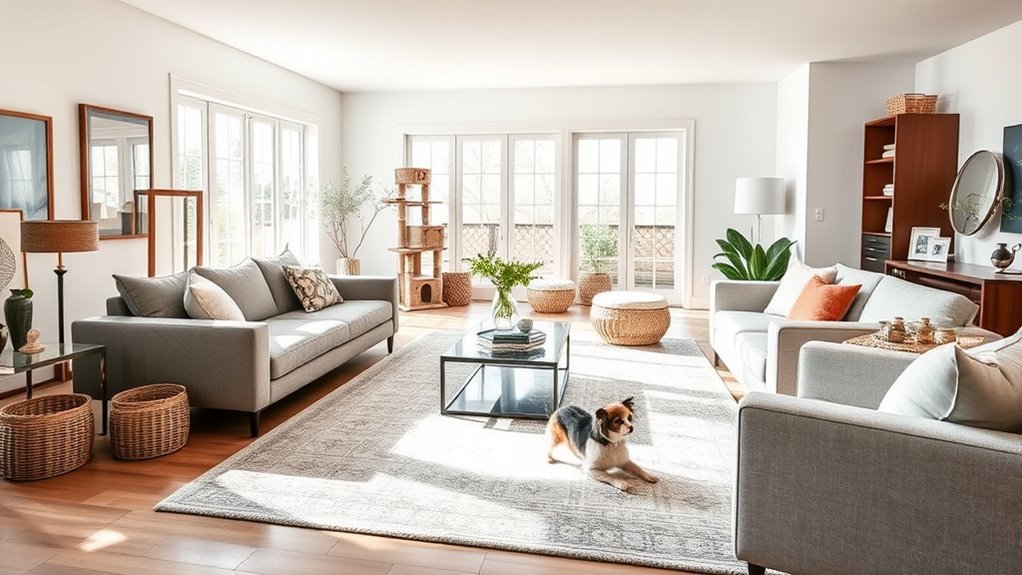
The easiest way to keep pet gear from taking over your living room is to assign a closed container to every category of clutter—toys, walk gear, grooming tools, and spare blankets. When everything has a dedicated bin within arm’s reach of where you use it, a five-minute evening tidy resets the entire room.
Stylish Storage Solutions
Pair an open low-sided basket (8 to 12 inches tall so your dog can nose through and pick a toy) with a lidded storage ottoman or woven trunk for backup items. If your dog chews wicker or rattan, opt for heavy-duty coiled cotton rope, thick felt bins, or a wooden storage bench.
- Toy rotation bins: Keep 4 to 5 active toys in an open floor basket and store the rest in a closed closet or ottoman to swap weekly, which keeps pets interested and cuts floor clutter in half.
- Couch-side drawer: Dedicate one end-table drawer to a slicker brush, nail clippers, and lint rollers if you groom your pet while relaxing on the sofa.
- Storage ottoman: Stash clean, folded pet throws inside a hinged ottoman so you can cover cushions in seconds before a muddy dog jumps up.
Organizing Pet Accessories
Organize supplies by daily habit rather than dumping everything into one bin. Hang leashes and harnesses on wall hooks or inside a shallow entry cabinet right by the door. In multi-pet households, use labeled drawer dividers or color-coded bins so puppy chew toys, catnip mice, seasonal coats, and grooming brushes stay separated.
Note: Always store pet treats, joint supplements, human or veterinary medications, and cleaning sprays inside latched upper cabinets or childproof containers that curious dogs and climbing cats cannot pry open.
Arranging Furniture for Easy Movement and Access
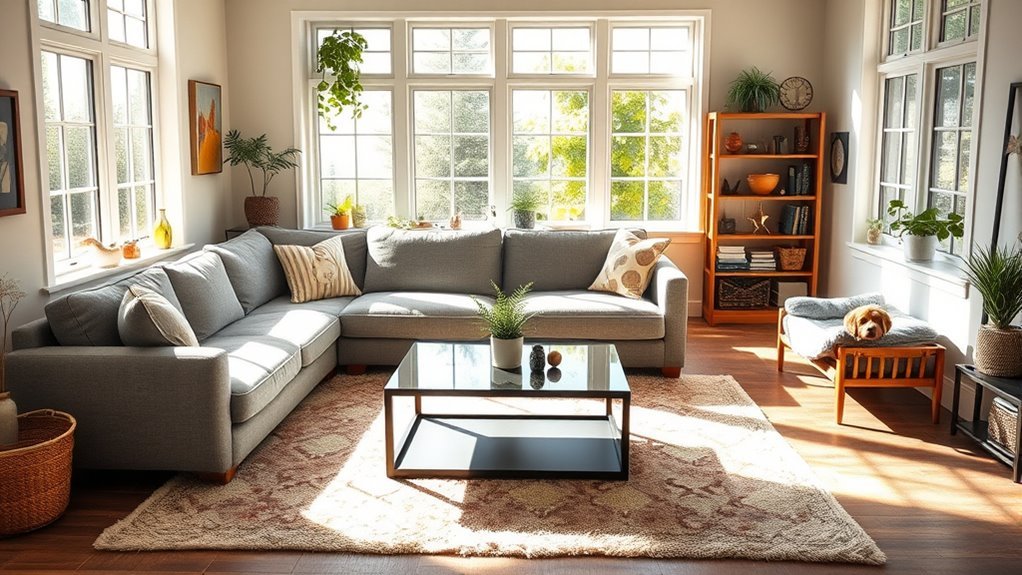
A pet-friendly living room layout leaves 30 to 36 inches of clear walkway along main traffic paths and 14 to 18 inches between the sofa and coffee table. Generous spacing stops excited pets from bumping into sharp table corners, knocking over water bowls, or feeling trapped in tight gaps.
- Float seating for flow: Pull the sofa a few inches off the wall or float accent chairs to create a clear perimeter path toward patio doors and hallways.
- Soften central corners: Choose a round or oval coffee table, or an upholstered storage ottoman, so playing pets cannot collide with 90-degree glass or metal corners.
- Protect sightlines: Use low-profile armchairs and open-leg consoles so dogs can see family members from their bed without barking or pacing.
- Keep bowls out of traffic lanes: Never place water bowls behind a sofa walkway or next to a swinging door where feet and wagging tails will spill them.
Interior designers often use the 2/3 rule to keep living rooms balanced: aim for your sofa to span roughly two-thirds the length of the area rug or wall behind it, and avoid covering more than two-thirds of the total floor area with furniture. Leaving at least one-third of the room open gives dogs space to turn around comfortably and makes vacuuming around furniture legs much faster.
Layout Ideas for Dogs, Cats, and Multiple Pets
Tailor your floor plan to how your animals move through the room:
- For dogs: Anchor the primary dog bed near the main seating group with an unobstructed path to the backyard or entry door. For senior or arthritic dogs, add pet stairs or a low-incline carpeted ramp beside the sofa so they do not jump down onto hard flooring.
- For cats: Leave at least one windowsill clear of heavy planters and create a “vertical highway” by placing a sturdy bookshelf or cat tree next to the sofa arm, letting cats cross the room above floor level.
- For multi-pet homes: Prevent resource guarding by setting up at least one more resting spot than the number of pets in the home (for example, three beds or perches for two pets), spaced across opposite sides of the room so each animal has a private retreat.
Selecting Safe and Stylish Decor for Pets
Pet-safe living room decor eliminates strangulation, tipping, and poisoning hazards at nose, paw, and tail height while preserving your personal style. Before placing any accessory below 36 inches, ask whether your pet could chew it, knock it off a ledge, get tangled in its cord, or swallow a loose piece.
Choose Durable Soft Decor and Window Treatments
Window treatments and decorative pillows take heavy daily abuse from pets watching the street or nesting on the couch. Replace long puddles of drapery and dangling blind cords—which pose a serious entanglement risk for cats and puppies—with cordless cellular shades, roller blinds, or curtain panels hemmed to sit an inch above the floor.
- Pick throw pillow covers with hidden zippers rather than buttons, beads, pom-poms, or fringe tassels that dogs can chew off and swallow.
- Choose flatweave or printed cotton-canvas and performance-linen pillow covers that can go straight into the washing machine.
- Secure electrical cords behind TV consoles and floor lamps using rigid plastic cord raceways or spiral cord wraps.
Style Low Tables and Shelves Around Pet Zones
Style the lower 24 inches of your living room—the “tail-sweep zone”—with unbreakable textures rather than glass or delicate ceramics. Place heavy coffee table books, wooden bowls, or woven trays on low tables, and save fragile vases, framed photos, and taper candleholders for mantels or upper shelves out of jumping range.
If your cat climbs bookcases, anchor tall shelving units directly to wall studs with anti-tip straps and secure decorative objects on upper ledges using clear museum putty so a curious paw cannot push them onto the floor.
Use Closed Decorative Containers for Daily Essentials
Small countertop items—like TV remotes, coasters, earbuds, and spare batteries—are common foreign-body ingestion hazards for dogs. Corral remotes and small tech inside a lidded leather or wooden box on the coffee table, and use heavy ceramic jars with silicone-gasket lids if you keep training treats on a console table.
Check Plants, Fragrance, and Small Decor
Many popular indoor plants are dangerously toxic to pets. Always cross-check greenery in the ASPCA toxic and non-toxic plant database before bringing a pot home:
- Common toxic plants to avoid: True lilies (Lilium and Hemerocallis species—even a few grains of pollen or sips of vase water can cause fatal acute kidney failure in cats), sago palm (Cycas revoluta, which causes severe liver failure in dogs), pothos, philodendron, monstera, peace lily, dieffenbachia, and aloe vera.
- Pet-safe living room plants: Spider plant (Chlorophytum comosum), Boston fern (Nephrolepis exaltata), parlor palm (Chamaedorea elegans), areca palm (Dypsis lutescens), prayer plant (Calathea species), and cast-iron plant (Aspidistra elatior).
Use extreme caution with candles, reed diffusers, potpourri, and essential oils. According to the Merck Veterinary Manual guide to essential oil toxicosis, active ultrasonic diffusers emit microdroplets that land on a pet’s coat and are ingested during normal grooming. Oils such as tea tree (melaleuca), pennyroyal, eucalyptus, cinnamon, pine, and wintergreen can cause drooling, breathing trouble, tremors, or liver damage, especially in cats. Skip open flames and active oil diffusers in pet rooms, or use Flameless LED candles instead.
Warning: If your pet chews or swallows a toxic plant, essential oil, battery, medication, or cleaner, call your veterinarian, the ASPCA Animal Poison Control Center at (888) 426-4435, or the Pet Poison Helpline at (855) 764-7661 immediately (consultation fees may apply). Never induce vomiting unless directed by a veterinary professional.
How to Keep Your Space Clean With Pets
Keeping a pet-friendly living room clean takes a consistent 5-minute daily reset, a 20-minute weekly vacuum and laundry pass, and immediate enzymatic treatment for accidents. Washable textiles and the right cleaning chemistry stop pet odors from bonding to fibers in the first place.
Daily, Weekly, and Monthly Cleaning Routine
- Daily (5–10 minutes): Toss floor toys into their basket, shake out sofa throws, wipe muddy paws at the door, and run a rubber squeegee, chom-chom roller, or handheld vacuum over your pet’s favorite cushion.
- Weekly (20–30 minutes): Vacuum floors, area rugs, sofa crevices, and underneath furniture using a vacuum with a sealed HEPA filter and motorized brush roll. Launder pet blankets and bowl mats in warm or hot water with an unscented detergent.
- Monthly (45 minutes): Unzip and wash pet bed covers, vacuum both sides of rug pads, wipe baseboards and lower walls where dogs rub against paint, and deodorize upholstery by sprinkling baking soda over dry fabric for 20 minutes before vacuuming thoroughly.
When an accident happens on a rug or cushion, blot up as much liquid as possible with dry white paper towels—press firmly with your shoe rather than scrubbing, which frays fibers and drives urine deeper into the pad. Next, saturate the spot with an enzymatic pet cleaner and let it dwell for 10 to 15 minutes so the bio-enzymatic cultures break down uric acid crystals before blotting dry. Never use a steam cleaner, hot water, or ammonia-based cleaners on urine: heat permanently sets protein stains, and ammonia smells like urine to dogs and cats, encouraging repeat marking.
For hard floors and coffee tables, look for products carrying the EPA Safer Choice label, which verifies that every chemical ingredient has been screened by EPA scientists for human, pet, and environmental safety.
Pro Tip: Tuck a grab-and-go “spot kit” inside a living room cabinet containing a white microfiber towel, an enzymatic spray bottle, a rubber upholstery brush, and a roll of waste bags. Treating a spill within the first two minutes prevents it from soaking into cushion foam or subfloors.
Setting Boundaries: Training Your Dogs in Shared Spaces
Clear household rules and positive reinforcement protect your living room furniture better than any spray or cover. Decide up front whether pets are allowed on the sofa, on a specific blanket-covered cushion, or only on their floor bed, and get every family member to enforce the exact same boundary.
- Teach a “place” or “settle” cue: Lure your dog onto their living room bed with a treat, say “place,” and reward them once they lie down. Gradually extend the time they stay on the mat while you watch TV or greet guests at the door.
- Use a blanket invitation on the couch: If you welcome dogs on the sofa, train them to lie only on a designated washable throw. Gently guide them onto the blanket and reward calm lounging so they associate that specific texture with sofa privileges.
- Redirect chewing immediately: Puppies and bored dogs target wooden coffee table legs and throw pillows when they lack legal outlets. Trade any stolen shoe or pillow for a stuffed rubber toy or chew bone, and praise them the moment they chew their own item.
- Manage unsupervised hours: Use freestanding wood or metal pet gates to block access to the living room while puppies are still house-training or going through adolescent chewing phases.
For cats, punishment such as water squirt bottles only creates stress without stopping scratching. Instead, cover targeted sofa corners temporarily with double-sided sticky tape while placing a tall, sturdy sisal post right next to that corner, dusted with catnip or silvervine to reward use.
Enhancing Air Quality in Your Pet-Friendly Home
The most effective way to keep a pet-friendly living room smelling fresh and low in allergens is to combine source control (regular grooming and laundry), clean outdoor ventilation, and high-efficiency air filtration. According to the EPA guide to air cleaners in the home, removing dander at the source and ventilating come first, with portable or central filtration acting as a vital backup.
When shopping for a portable air purifier for the living room, select a true HEPA unit with a Clean Air Delivery Rate (CADR) matched to your room’s square footage—as a rule of thumb, choose a dust and smoke CADR equal to at least two-thirds of the room’s area (for example, a CADR of at least 200 CFM for a 300-square-foot living room). Pick a model that also includes a washable pre-filter to catch coarse pet hair and a substantial activated carbon filter to absorb pet odors and volatile organic compounds (VOCs).
For homes with central forced-air heating and cooling, the EPA recommends upgrading your furnace filter to at least MERV 13, or the highest MERV rating your HVAC blower is rated to handle without restricting airflow. Replace central HVAC filters every 60 to 90 days—or every 30 to 60 days if you have multiple shedding pets—and keep windows shut during wildfire smoke or peak pollen days.
Warning: Never use ozone generators or ionizers that intentionally emit ozone to mask pet smells. The U.S. EPA warns that ozone is a potent lung irritant that can trigger coughing, airway inflammation, and asthma symptoms in both people and pets.
Maintaining a Chic and Practical Living Room for Pets
Long-term maintenance keeps a pet-friendly living room looking polished year after year without expensive replacements. A quick monthly inspection of your furniture hardware, pet nails, and floor finishes catches minor wear before it turns into permanent damage.
- Flip and rotate sofa cushions every 2 to 4 weeks: Pets almost always nap in the exact same spot, which compresses foam cores unevenly if cushions stay fixed in one position.
- Trim claws every 2 to 4 weeks: Keeping dog nails short enough that they do not click loudly on hard floors dramatically reduces dents in hardwood and snags in woven rugs.
- Inspect wall mounts and cat trees quarterly: Tighten loose bolts on sisal posts and check drywall anchors on wall shelves so climbing structures stay rock-solid.
- Swap washable textiles by season: Use lighter cotton or linen-blend throws during warm summer shedding months and heavier machine-washable microsuede or fleece layers during wet winter weather.
The most pet-friendly living rooms are not the ones filled with the most pet products—they are the ones where every surface, storage piece, and lounging spot is built for real daily life.
Budget-Friendly and Renter-Friendly Pet Upgrades
You can make a living room dramatically more pet-friendly on any budget or lease agreement without replacing your existing sofa or pulling up rental flooring. Focus your budget first on washable barriers that shield your landlord’s floors and your largest upholstered pieces.
- Under $50: Add a reusable roller brush, a waterproof silicone tray under water bowls, split-loom cord protectors ($10–$15), and two machine-washable sofa throws matched to your couch color.
- $50–$150: Upgrade to an orthopedic dog bed with a removable zippered cover, a tall sisal scratching post, a lidded rope toy basket, or a washable hallway runner with a non-slip pad.
- $150–$500: Invest in a large machine-washable area rug (such as a 5×7 or 8×10 flatweave), a tailored sofa slipcover, an end-table dog crate, or a HEPA air purifier with an activated carbon filter.
- Renter-friendly deposit savers: Lay large low-pile rugs over wall-to-wall rental carpet in traffic lanes, apply removable clear scratch-guard film to door frames and sofa corners, and use damage-free adhesive cord clips along baseboards.
Common Pet-Friendly Living Room Mistakes to Avoid
Avoiding six common decorating missteps will save you hours of cleaning and prevent costly damage to your living room furniture and floors:
- Buying high-pile shag or looped wool rugs: Shag pile traps dander, kibble crumbs, and moisture deep at the backing, while looped wool hooks onto claws and unravels quickly.
- Choosing Code S or Code X upholstery: Sofas that cannot be cleaned with water-based enzymatic sprays turn minor muddy paw prints or puppy accidents into professional dry-cleaning bills.
- Skipping non-slip rug pads: Unanchored rugs slide across hard floors when pets sprint or jump off the couch, risking ACL and hip injuries.
- Masking odors with heavy fragrances: Scented sprays, plug-ins, and essential oil diffusers irritate sensitive pet airways without breaking down the bacteria or uric acid causing the smell.
- Pushing all furniture tight against the walls: Leaving a narrow path solely through the center of the room forces pets to brush past coffee table corners and dangling lamp cords.
- Ignoring the bottom 24 inches of the room: Placing glass candleholders, toxic plants, or bowls of small decorative stones on low shelves invites accidental breakage and veterinary emergencies.
Key Takeaways
- Check material specs before buying: look for 20-mil+ wear layers on luxury vinyl plank, Janka hardness above 1,290 lbf on hardwood, and 15,000+ Wyzenbeek double rubs with a W or WS cleaning code on sofa fabrics.
- Give dogs an orthopedic bed with a clear view of the room and cats 5- to 7-foot vertical perches and sisal posts so your pets have an appealing alternative to your best upholstery.
- Leave 30 to 36 inches of open walkway around seating, keep the bottom 24 inches of shelves free of breakables, secure cords in plastic raceways, and verify every houseplant in the ASPCA database.
- Pair a 5-minute daily reset and enzyme spot cleaner with a MERV 13 HVAC filter or a HEPA + carbon air purifier sized to your room’s square footage to eliminate odors instead of masking them.
Frequently Asked Questions
What is the 2/3 rule for living rooms?
The 2/3 rule is a proportion guideline stating that your main sofa should equal roughly two-thirds the length of the area rug or wall behind it, and furniture should fill no more than two-thirds of the room’s total floor space. In a pet-friendly living room, leaving at least one-third of the floor open ensures 30- to 36-inch walkways so pets and people can move without bumping into furniture.
How do you create a pet-friendly living space?
Start with scratch-resistant flooring like 20-mil luxury vinyl plank or tile topped with a low-pile washable rug and non-slip pad. Choose tightly woven W- or WS-coded performance upholstery, set up a dedicated pet bed or vertical cat perch, organize toys in lidded baskets, swap toxic plants like lilies and pothos for spider plants or parlor palms, and keep enzymatic cleaner on hand.
What is the 3-5-7 rule of decorating?
The 3-5-7 rule is an interior styling principle that groups decorative items in odd numbers—such as three throw pillows, five objects on a mantel, or seven repeated color accents—to create natural visual balance. In homes with pets, apply the rule using sturdy, unbreakable accents like woven trays, wood bowls, and zippered pillows placed above tail height.
Is there a free app that can help me rearrange my room?
Yes, free and freemium browser and mobile tools such as Planner 5D, Sweet Home 3D, Roomstyler 3D, and Arcadium 3D let you input room dimensions, drop in scaled furniture, and preview 2D and 3D layouts before lifting heavy pieces. Use them to verify 30- to 36-inch walkways and test where a dog crate or cat tree fits best.
What couch material is best for pets?
Solution-dyed performance fabrics (such as Crypton or indoor Sunbrella), tightly woven microfiber, and top-grain leather are the most durable sofa materials for pets. Look for an abrasion rating of at least 15,000 to 30,000 Wyzenbeek double rubs and a W or WS cleaning code, and avoid loose weaves like boucle, tweed, and linen that snag on claws.
How can I keep my living room from smelling like pets?
Wash pet bedding and sofa throws weekly, vacuum rugs and upholstery crevices with a HEPA vacuum, and treat urine or vomit immediately with an enzymatic cleaner rather than steam or ammonia. Running a portable HEPA air purifier with an activated carbon filter and upgrading your HVAC filter to MERV 13 also traps airborne dander and odors at the source.
Conclusion
Designing a pet-friendly living room comes down to pairing resilient materials with thoughtful layout and safety habits. Start this weekend by checking your living room from your pet’s eye level: secure loose cords, swap fragile low-shelf decor for lidded storage baskets, and add a washable throw or low-pile rug where your dog or cat lounges most.
Sources
- ASPCA: Toxic and Non-Toxic Plants List: Supports identifying toxic houseplants (such as lilies, sago palm, and pothos) and pet-safe alternatives.
- Merck Veterinary Manual: Toxicoses From Essential Oils in Animals: Supports essential oil and active diffuser inhalation and grooming ingestion risks for cats and dogs.
- ASPCA Animal Poison Control Center: Supports 24/7 emergency veterinary toxicology hotline guidance at (888) 426-4435.
- Pet Poison Helpline: Supports 24/7 emergency poison control guidance at (855) 764-7661 for suspected toxic ingestion.
- U.S. EPA: Learn About the Safer Choice Label: Supports selecting household surface cleaners screened for safer chemical ingredients around pets and families.
- U.S. EPA: Guide to Air Cleaners in the Home: Supports source control, ventilation, portable HEPA/CADR sizing, MERV 13 HVAC filtration, and avoiding ozone-generating air cleaners.