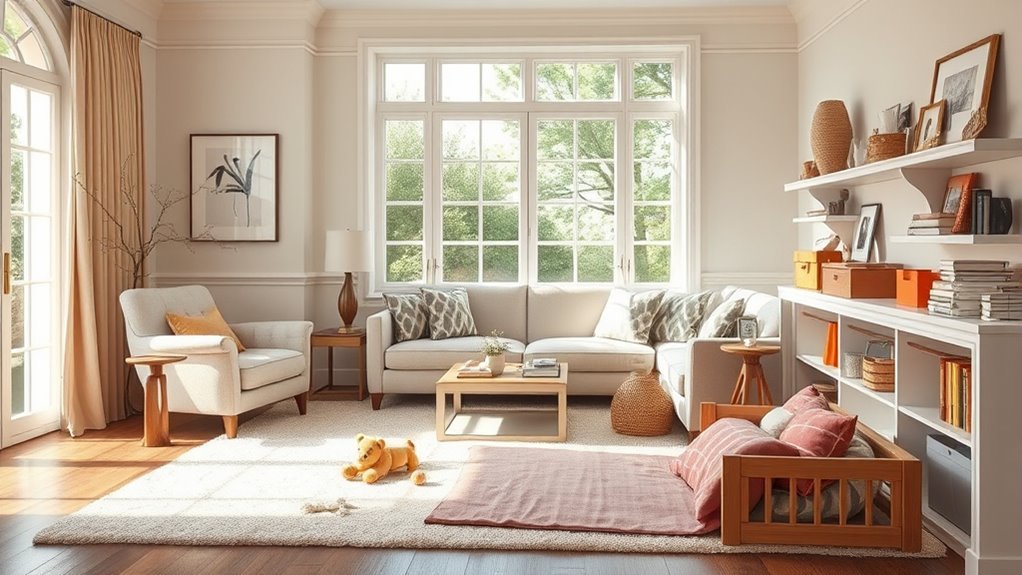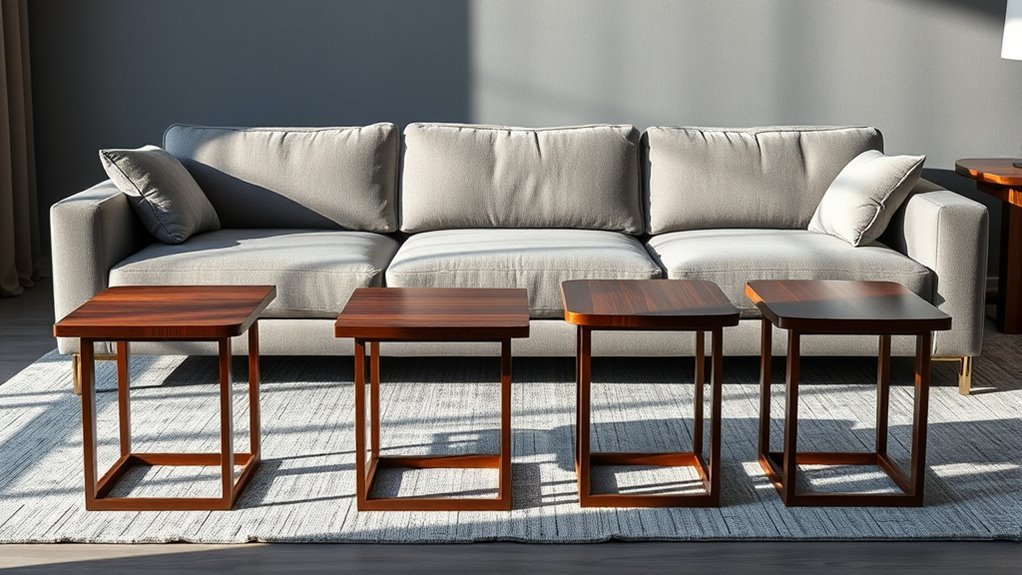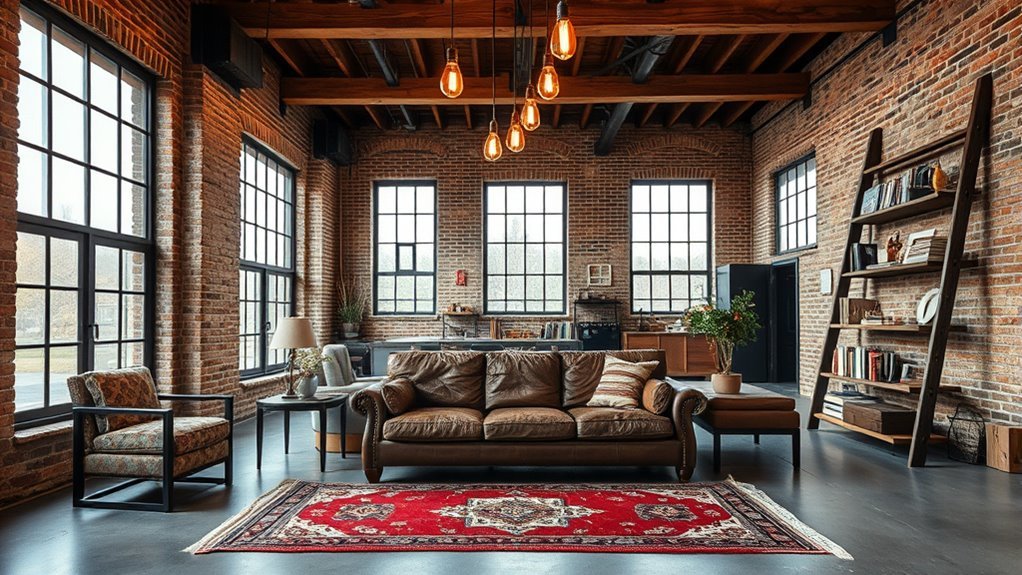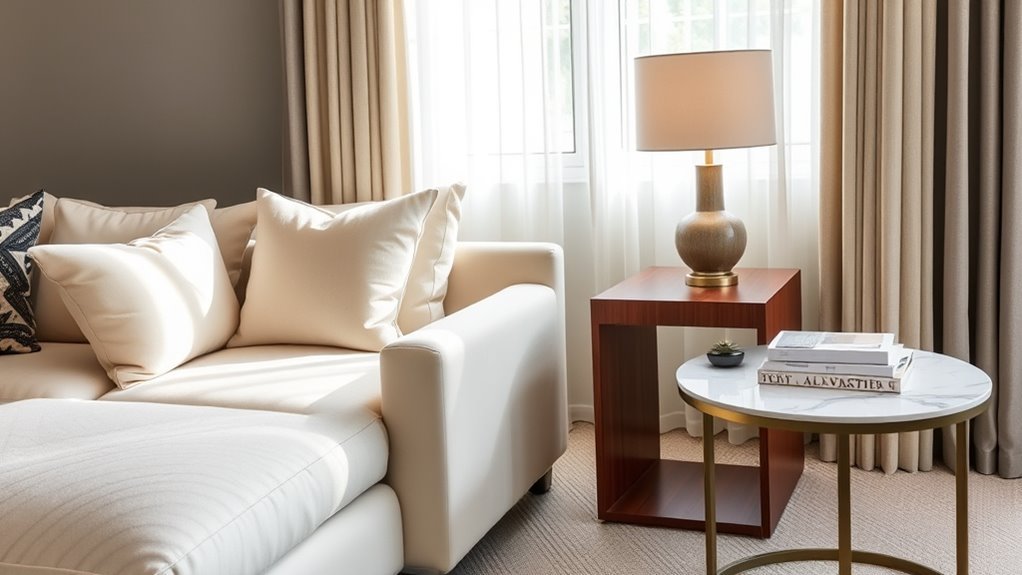
Choosing and placing side tables in your living room is easier when you treat them as part of the seating plan, not as random accent pieces. The right table should be close enough to reach from the sofa or chair, tall enough to use comfortably, and scaled so it does not crowd walkways or overpower your furniture. Start with the height of your sofa arm, measure the floor space beside each seat, then choose a shape, material, and storage style that supports how you actually use the room.
Quick Answer
Choose a side table that sits level with or slightly below your sofa or chair arm, fits the available floor space, and stays within easy seated reach. Leave clear walking paths around the furniture, use storage if clutter builds up, and style the top with only a few useful, balanced pieces.
Key Takeaways
- The best side table height is usually level with or 1–2 inches below the sofa or chair arm.
- Place side tables where you can set down a drink without leaning, twisting, or standing up.
- Keep main walkways open; avoid placing tables where people naturally pass through the room.
- Round, nesting, or C-shaped tables work well in tight spaces; wider rectangular tables suit large sofas.
- Style the tabletop with useful items first, then add texture, height, and one personal accent.
At a Glance
| Time Required | 20–45 minutes to measure, plan, and test placement |
| Difficulty | Easy |
| Tools Needed | Tape measure, painter’s tape, notebook or phone notes, optional cardboard template |
| Cost | $0 to plan; side table prices vary widely by size, material, brand, and storage features |
Why Side Tables Are Essential for Your Living Room’s Functionality and Aesthetic
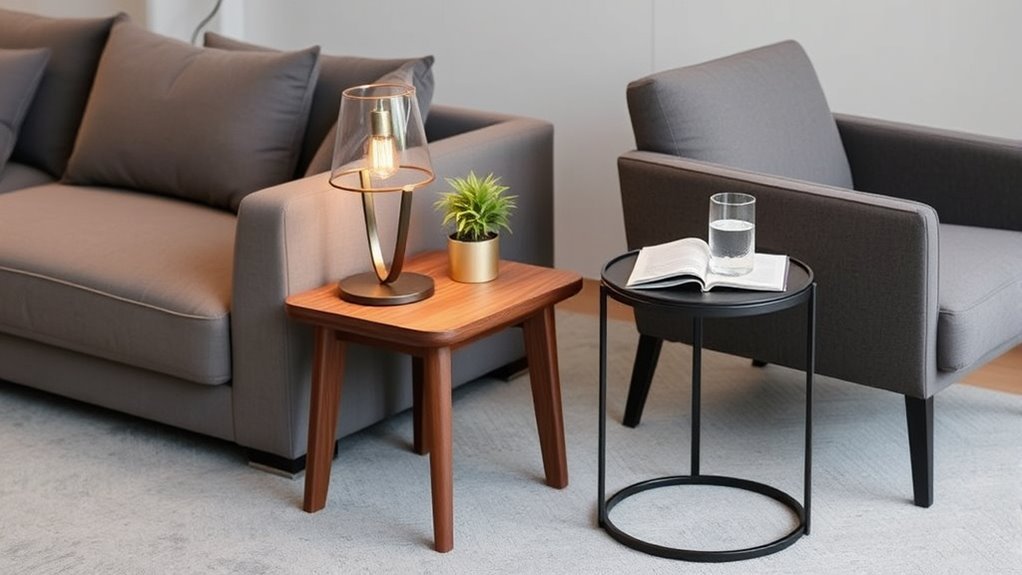
Side tables make a living room easier to use. They give you a landing spot for a drink, book, remote, phone, lamp, candle, coaster, or small decorative object. A seating area can look beautiful and still feel awkward if there is nowhere to set something down within reach.
They also help finish the room visually. A sofa without a side table can feel unfinished, especially if one end of the seating area looks empty. A well-chosen table adds height, color, texture, and balance without needing a large footprint.
Think of side tables as small support pieces with a big job: they connect comfort, storage, lighting, and style. The best choice depends on your sofa height, room size, traffic flow, and daily habits.
How to Measure Before Buying a Side Table
Before you shop, measure the room and the furniture around the table. This prevents the most common mistake: buying a table that looks good online or in a showroom but feels too tall, too low, too wide, or too bulky once it is beside your sofa.
Recommended Products

Floor Lamp with 3-Tier Side Table: More than just a floor lamp, this space-saving lamp and table combo provides 3 open shelves for books, drinks, décor, electronics and everyday essentials. Each shelf easily supports up to 60 lbs, providing sturdy and reliable storage for your daily items. Measuring 18.9"D x 13.39"W x 59.45"H, it fits naturally beside a sofa, bed or reading chair while adding useful storage without requiring a separate end table.

Modern Form, Lasting Appeal: Clean lines and balanced simplicity define this end table, combining a steel frame with rustic panels to create visual depth and pair effortlessly with matching storage units for a cohesive, modern interior

👍𝗦𝗧𝗬𝗟𝗜𝗦𝗛 & 𝗦𝗔𝗙𝗘 𝗥𝗢𝗨𝗡𝗗𝗘𝗗 𝗗𝗘𝗦𝗜𝗚𝗡 — Prioritizing safety and style, this small round end table features smooth, rounded edges to prevent injuries, particularly in homes with children or elderly family members. Its contemporary aesthetic complements any living space while offering peace of mind.
Measure the Sofa or Chair Arm Height
Measure from the floor to the top of the sofa or chair arm. Your side table should usually be level with the armrest or slightly lower. A table that is much higher can feel awkward and visually heavy. A table that is too low forces you to lean down every time you reach for a drink.
For most living rooms, the sweet spot is the height where your hand naturally lands when you are seated. Sit down, bend your elbow comfortably, and imagine setting a glass on the table. That simple test is often more useful than a rigid rule.
Measure the Available Floor Space
Measure the width and depth of the area beside the sofa, chair, or sectional. Mark the table footprint with painter’s tape or a piece of cardboard. Then walk through the room as you normally would. If the template catches your foot, blocks a door swing, or narrows the path too much, choose a smaller shape.
Note: For homes where accessibility matters, wider clear routes are better. The U.S. Access Board’s accessible-route guidance uses 36 inches minimum clear width for accessible walking surfaces. Your private living room may not be required to meet that standard, but it is a helpful benchmark when planning comfortable movement.
Check Reach, Not Just Spacing
Side tables work best when they are close enough to use from the seat. Unlike a coffee table, which often needs a larger gap for knees and legroom, a side table usually sits beside the arm of the sofa or chair with only a small amount of breathing room.
Use this test: sit in the seat, relax your shoulders, and reach toward the table location. If you have to lean forward, twist, or stretch, the table is too far away or the wrong height.
Finding the Right Style and Height for Side Tables
Choosing the right style and height for side tables can improve both comfort and visual balance. Start with function, then refine the look. A beautiful table that is too low, too narrow, or too unstable will become frustrating quickly.
Recommended Products

Modern Form, Lasting Appeal: Clean lines and balanced simplicity define this end table, combining a steel frame with rustic panels to create visual depth and pair effortlessly with matching storage units for a cohesive, modern interior

𝐀𝐥𝐰𝐚𝐲𝐬 𝐛𝐲 𝐘𝐨𝐮𝐫 𝐒𝐢𝐝𝐞. 𝐎𝐯𝐞𝐫𝐚𝐥𝐥 𝐃𝐢𝐦𝐞𝐧𝐬𝐢𝐨𝐧𝐬: 𝟐𝟑.𝟔"𝐋 𝐱 𝟏𝟏.𝟖"𝐖 𝐱 𝟐𝟑.𝟖"𝐇

Hassle-Free Storage: With 2 non-woven drawers and 2 open shelves, this side table measures 11.8"L x 18.9"W x 23.6"H and offers sufficient space for you to store different life supplies and household gadgets tidily, keeping home neat and organized
Side Table Height Guide
Use the sofa or chair arm as your anchor. In most cases, the tabletop should sit at roughly the same height as the armrest or up to 2 inches lower. If the table will hold a lamp, also check the lamp height while seated so the bulb and shade do not shine directly into your eyes.
- Best height: level with or slightly below the sofa or chair arm.
- Avoid: tables more than a few inches above the armrest unless the design is intentionally tall and narrow.
- Avoid: very low tables beside deep sofas, because reaching down becomes uncomfortable.
Choose the Right Width and Depth
A side table should have enough surface area for what you use daily. A tiny drink table may be perfect for a reading chair, but it may not hold a lamp, book, coaster, and remote beside a family sofa.
- Small accent chair: compact round table, drink table, or C-table.
- Standard sofa: medium side table with room for a lamp and a coaster.
- Large sectional: wider table, nesting tables, or a table with storage.
- Recliner: narrow side table placed where it will not block the footrest.
Match the Material to the Room
The material changes the mood of the room. Wood adds warmth, metal adds structure, glass feels light, stone feels substantial, and woven pieces bring texture. You do not need your side tables to match your coffee table exactly, but they should feel connected through color, finish, shape, or style.
- Wood: warm, timeless, and easy to blend with most décor.
- Metal: sleek, sturdy, and useful in modern or industrial rooms.
- Glass or acrylic: visually light, especially in small spaces.
- Stone or marble: elegant and weighty, but often heavier and less forgiving.
- Rattan or woven materials: relaxed, coastal, organic, and textural.
Measuring Space for Optimal Side Table Placement
To create a harmonious living room, place each side table where it supports the seating without blocking movement. The right placement depends on the seat, the path through the room, and what the table needs to hold.
Identify Available Space Dimensions
Measure the length and width of the intended table area. Then check the surrounding furniture, door swings, rug edges, and walking paths. A table that technically “fits” can still feel wrong if it interrupts the natural flow of the room.
- Measure the floor area beside the seating.
- Measure the sofa or chair arm height.
- Mark the table footprint with painter’s tape.
- Walk through the room to test traffic flow.
- Confirm the tabletop can hold your essentials without feeling crowded.
Consider Table Height Preferences
Most side tables fall somewhere around common sofa-arm height, but your exact choice should come from your own furniture. A low-profile sofa needs a lower side table. A high-arm sofa or tall accent chair may need a taller one. Adjustable or nesting tables are useful if your seating heights vary.
If you share the room with children, older adults, pets, or anyone with mobility needs, prioritize stable tables, rounded corners, easy reach, and clear paths. For accessible planning, the U.S. Access Board’s reach-range guidance is a useful reference for thinking about unobstructed reach and clear floor space.
Positioning Side Tables for Maximum Functionality and Accessibility
When you position side tables thoughtfully, you enhance accessibility, comfort, and the overall aesthetic of the space. Place tables according to how the room is used, not just where they look symmetrical.
Beside a Sofa
Place a side table at one or both ends of the sofa. The tabletop should be close enough for someone seated at the end cushion to reach. If the sofa sits against a wall, make sure the table does not crowd the wall outlet or pinch the walkway beside the sofa.
Between Two Chairs
A single table can serve two chairs if both people can reach it. Round tables are especially useful here because they soften angles and make conversation areas feel more relaxed.
Next to a Sectional
Sectionals often need more than one surface. Add a table at the open end, use a C-table near the chaise, or place a narrow console behind the sectional if the back is exposed. Make sure any table near a chaise does not block legroom.
In Small Living Rooms
Choose compact pieces with visual lightness. Round tables, nesting tables, glass tops, acrylic tables, wall-mounted shelves, or slim C-tables can provide a surface without making the room feel crowded.
Pro Tip: If a full side table feels too large, try a nesting pair. Keep the smaller table tucked underneath most days, then pull it out when guests need another place for a drink.
Choosing Side Table Shapes for Your Layout
The shape of your side table affects both style and movement. Choose a shape that works with your room’s traffic patterns and the shapes already in the space.
- Round tables: best for tight walkways, small rooms, and areas with children because there are no sharp corners.
- Square tables: clean and balanced beside structured sofas or between matching chairs.
- Rectangular tables: useful beside long sofas or where you need space for a lamp and storage.
- C-tables: great for apartments, sectionals, and laptop use because they slide partly over a seat or under a sofa base.
- Drum tables: sculptural and sturdy, but they can feel visually heavy in very small rooms.
- Nesting tables: flexible for entertaining and small spaces.
Use Decorative Elements to Enhance Your Side Tables’ Appeal
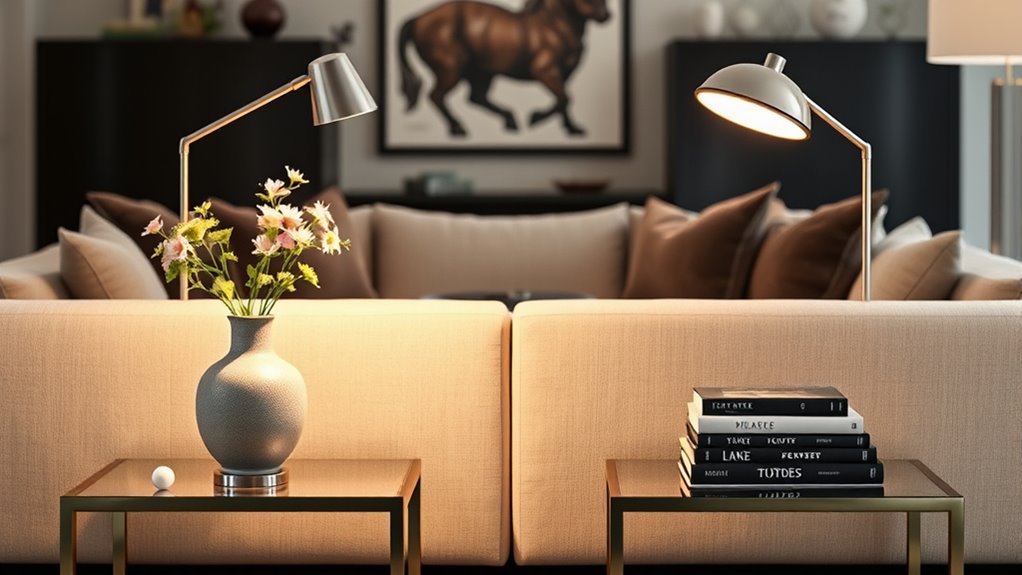
Decorating a side table should make the room feel finished, not cluttered. Start with the items you actually use, then add one or two pieces for height, color, or texture.
Choose Complementary Colors
Look at your sofa, rug, curtains, wall color, and artwork. Choose a side table or accessories that repeat one or two of those tones. This keeps the table connected to the room, even if it does not match the coffee table.
- Echo your palette: repeat a wood tone, metal finish, or accent color already in the room.
- Add contrast: pair a dark table with lighter accessories or a pale table with a rich ceramic vase.
- Balance finishes: mix matte, shiny, rough, and smooth textures so the table does not look flat.
- Keep it edited: leave some empty surface area for daily use.
Incorporate Textured Accessories
Incorporating textured accessories can transform a plain tabletop into a small focal point. Try a ceramic vase, woven tray, linen-covered book, wooden bowl, metal lamp, or glass candleholder. A mix of materials gives the table depth without requiring many objects.
A simple styling formula works well:
- One useful anchor: a lamp, tray, or coaster set.
- One vertical piece: a vase, branch, candle, or small sculpture.
- One low piece: a book, bowl, dish, or lidded box.
- One personal touch: a framed photo, travel object, or handmade piece.
Warning: Avoid unstable pedestal tables, sharp glass corners, dangling lamp cords, and overloaded tabletops in busy family rooms. If children or pets use the room, choose heavier bases, rounded edges, cordless lighting, or cord clips to reduce tipping and tripping hazards.
Side Table Lighting, Storage, and Everyday Use
A side table often has to do more than look pretty. It may hold the main reading lamp, hide remotes, charge a phone, or keep a small living room organized.
Recommended Products

3-Drawer Farmhouse Nightstand: Storage your daily essentials neatly organized with 3 spacious drawers while adding a rustic warm brown charm to your bedroom or living room space

[Night Stand with Charger Station]: 1 USB port, 2 outlets and 1 Type-C port are on the nightstand for bedrooms. Imagine plugging in your lamp, phone or watch before sleep, power is just within your reach, then be happy to greet the morning with fully charged devices. Plus: Contain patent pending drawer slide

Nightstand with Charging Station: This white night stand comes with built-in 2 outlets and 2 USB ports, as well as a 4.9 foot power cord. Provide a convenient charging place for your mobile phone, Bluetooth earphones, watches, lamp and laptop, everything is within your arm's reach.
Using Side Tables With Lamps
If the table will hold a lamp, check the table and lamp together. A lamp that is too tall may glare at eye level, while a tiny lamp may not provide enough light for reading. As a simple test, sit beside the lamp location and make sure the bottom of the shade is near seated eye level or slightly below it.
Choosing Storage Side Tables
Choose storage if the table regularly collects clutter. A drawer can hide remotes, chargers, pens, and reading glasses. A lower shelf can hold books or a basket. A cabinet-style table can hide bulkier items, but it may look heavier than an open-leg design.
Planning for Outlets and Cords
Before final placement, check nearby outlets. If you need a lamp or charger, route cords behind the table and away from walkways. Cord covers or clips can keep the setup clean and safer.
Are Your Side Tables Doing Their Job?
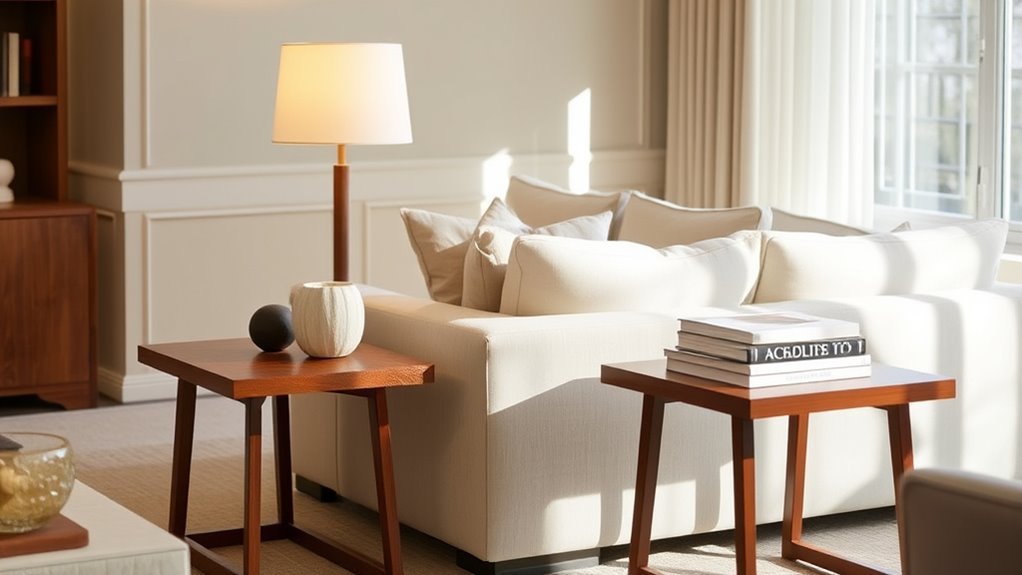
Are your side tables truly supporting your living space? Review them from the seat, not just from the doorway. A table can look stylish in a photo and still fail in daily use.
- Reach: Can you set down a drink without stretching?
- Height: Is the tabletop level with or slightly below the sofa or chair arm?
- Surface area: Is there room for a lamp, coaster, book, or remote without crowding?
- Traffic flow: Can people walk through the room without bumping the table?
- Stability: Does the table wobble when you place something on it?
- Style: Does it relate to the room’s color, material, or shape palette?
- Clutter control: Would a drawer, shelf, basket, or tray make it easier to maintain?
Common Side Table Mistakes and How to Fix Them
If something feels off, the problem is usually height, scale, distance, or clutter. Use these quick fixes before replacing the table.
The Table Is Too Low
If you have to lean down to reach the surface, the table is too low. Add a thicker tray only as a temporary styling fix. Long term, choose a taller table that better matches the sofa or chair arm.
The Table Is Too Tall
If the table rises above the armrest and feels visually awkward, move it to a taller chair, use it as a plant stand, or replace it with a lower option. Tall tables work best when they are narrow and intentional, not bulky.
The Table Crowds the Room
Switch to a round table, nesting tables, a C-table, or a wall-mounted shelf. Avoid heavy cube tables in narrow walkways unless they provide essential storage.
The Top Is Always Cluttered
Add a tray, drawer, lidded box, or lower basket. Keep only what you use daily on the surface and move the rest to closed storage.
Frequently Asked Questions
How tall should a living room side table be?
A living room side table should usually be level with or slightly below the sofa or chair arm. The best test is seated reach: sit down, relax your arm, and make sure you can set down a drink without leaning or stretching.
How far should a side table be from a sofa?
Place the side table close enough to reach from the seat, usually beside the sofa arm with a small amount of breathing room. Do not use coffee-table spacing as a strict rule for side tables; side tables are meant to be reached from the side.
Do side tables need to match each other?
No. Matching side tables create symmetry, which works well beside a formal sofa. Mismatched tables can also look intentional if they share something in common, such as color, wood tone, metal finish, shape, or visual weight.
What type of side table is best for a small living room?
Round tables, nesting tables, C-tables, glass tables, acrylic tables, and slim open-leg designs are usually best for small living rooms. They provide function without adding too much visual weight.
Can I use only one side table in a living room?
Yes. One side table is enough if it serves the seat that needs it most and the room still feels balanced. You can balance the other side with a floor lamp, plant, basket, pouf, or smaller accent piece.
What should I put on a side table?
Start with useful items: a lamp, coaster, tray, remote, book, or small dish. Then add one decorative object for height or texture, such as a vase, candle, framed photo, or sculptural piece. Leave empty space so the table remains usable.
Conclusion
Choosing and placing side tables in your living room does not have to be overwhelming. Measure your sofa arm height, test your seated reach, protect the room’s walking paths, and choose a shape that fits the way you move through the space. Then style the surface with a few useful, personal pieces instead of clutter. When the height, scale, placement, and décor all work together, a side table becomes more than a filler piece—it makes the whole seating area feel comfortable, balanced, and complete.
Sources
- Better Homes & Gardens: End Table Styling Tips — supports end-table height, scale, styling, lamps, and negative space.
- Better Homes & Gardens: Furniture Arrangement Guidelines — supports general furniture spacing, measuring, and traffic-flow planning.
- U.S. Access Board: Chapter 4 Accessible Routes — supports clear-route planning and accessibility benchmarks.
- U.S. Access Board: Chapter 3 Building Blocks — supports reach-range and clear-floor-space accessibility considerations.