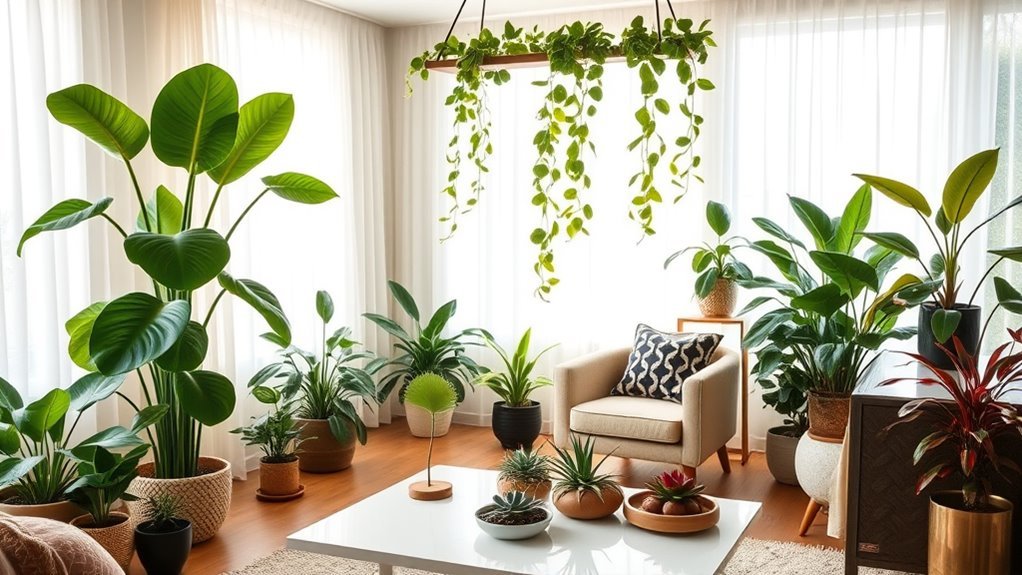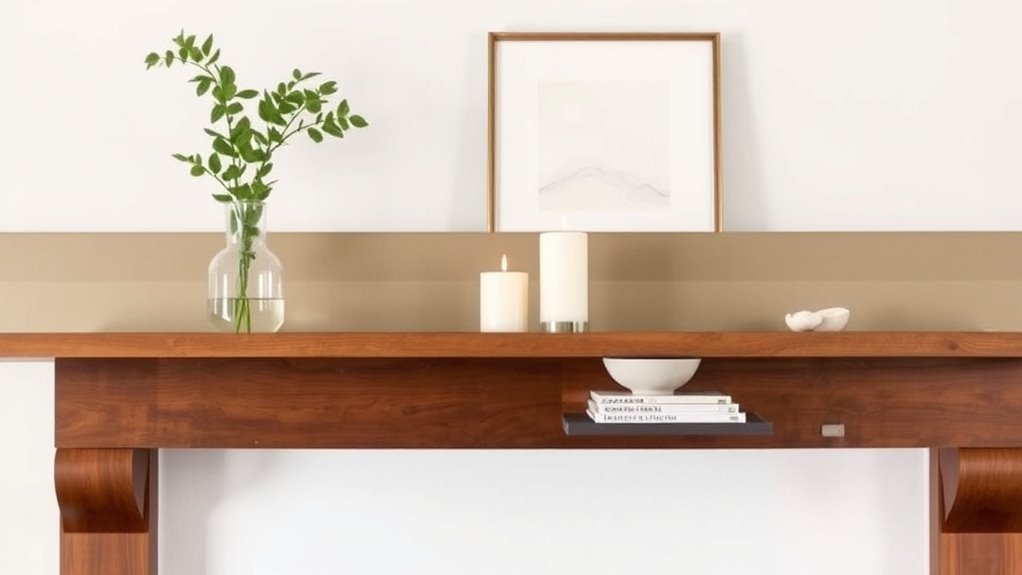
Learning how to style a fireplace mantel without clutter comes down to scale, breathing room, and restraint rather than a strict object count. Most mantels look busy because small keepsakes get lined up like soldiers across a narrow ledge with no focal point or height contrast. By anchoring the wall with one properly sized piece, grouping two to four varied accents, and respecting heat clearances, you can turn your hearth into a calm visual centerpiece.
Quick Answer
To style a fireplace mantel without clutter, clear the shelf completely and place one anchor—such as a mirror or artwork spanning two-thirds to three-quarters of the mantel width—4 to 7 inches above the surface. Flank or overlap it with 2 to 4 accents of varied heights, stick to 3 colors, and leave 30% to 40% of the mantel empty.
Last checked: October 16, 2026. Dates and figures were verified against official sources.
At a Glance
| Time Required | 30 to 45 minutes (plus 15 minutes if hanging a mirror or artwork) |
| Difficulty | Easy |
| Useful Items | Microfiber cloth, tape measure, painter’s tape, 1 anchor mirror or framed art piece, and 2 to 4 accents (sculptural vase, flameless candles, greenery, or a small box) |
| Cost | $0 when reusing decor you already own; $50 to $250 if purchasing a new anchor or vessels |
How to Style a Fireplace Mantel Without Clutter in 5 Steps
A clutter-free mantel works from the largest visual weight down to the smallest detail. Instead of pushing existing knickknacks around the ledge, strip the shelf bare and rebuild the composition in five deliberate stages so every piece earns its spot.
- Clear and clean: Remove every object, wipe away dust or soot, and sort items into keep, store, and relocate piles.
- Set one anchor: Center or offset a single mirror, framed print, or large sculptural object sized to about two-thirds of the mantel width.
- Build height variation: Add two to four supporting shapes in tall, medium, and low profiles while keeping 30% to 40% of the shelf bare.
- Layer contrasting textures: Pair one organic element, such as fresh branches, with matte ceramic, warm wood, or brushed metal rather than adding extra trinkets.
- Edit and rotate seasonally: Remove one piece that does not serve the focal point, and swap existing accents for the seasons instead of piling new decor on top.
Before You Start: Check Safety, Scale, and Function
Your fireplace type dictates what materials can safely sit on or above the mantel. An active wood-burning or high-output gas fireplace radiates intense upward heat that requires strict clearances, whereas a non-working hearth or cool-touch electric unit gives you much greater freedom with leaning frames, textiles, and greenery.
Verify Fire Clearances and Ventilation
According to the National Fire Protection Association (NFPA), nearly half of all U.S. home heating fires (46%) occur between December and February, and poorly maintained fireplaces and chimneys account for three out of every ten heating fires. Both the NFPA home-heating safety guidance and the U.S. Fire Administration heating safety guidelines advise keeping anything that can burn at least 3 feet (1 meter) from the firebox and having chimneys inspected and cleaned annually by a qualified professional.
For structural mantels above conventional masonry fireplaces, the 2024 International Residential Code (IRC Section R1001.11) requires exposed combustible mantels and trim to sit at least 6 inches from the fireplace opening. Any combustible material within 12 inches of the firebox opening cannot project more than 1/8 inch for each 1 inch of distance—meaning a 6-inch-deep wood mantel shelf typically needs at least 12 inches of vertical clearance above the opening unless listed otherwise in the appliance manual.
Warning: Never treat combustible mantel decor as permanent on a working fireplace. Remove trailing garlands, dried botanicals, paper prints, loose fabric, and stockings before lighting a fire. Real wax candles introduce an extra open flame and can melt from rising hearth heat; always follow your fireplace manufacturer’s clearance manual and local fire codes.
If you burn wood, indoor air quality also affects your mantel and room. The U.S. Environmental Protection Agency’s wood-smoke guidance notes that wood smoke releases fine particulate matter (PM2.5) and toxic gases including benzene, formaldehyde, and acrolein. To minimize soot staining on your mantel and protect indoor air, the EPA wood-burning best-practices guidance recommends burning only dry hardwood seasoned for at least 6 months with a moisture content below 20%. Because the EPA now maintains Burn Wise pages as a historical archive, always treat your appliance manual and local building code as the final authority.
Measure Mantel Width, Depth, and Wall Height
Most standard fireplace mantels sit 54 to 60 inches above the floor, span 48 to 72 inches wide, and measure 6 to 8 inches deep. Grab a tape measure and record three numbers before shopping your home for decor:
- Shelf depth: A shallow mantel (4 to 5 inches deep) fits only a single row of slim objects with footprints under 3.5 inches. A standard shelf (6 to 8 inches deep) supports two overlapping layers, while a deep mantel (9 to 12 inches) handles three-layer arrangements safely.
- Shelf width: Multiply your mantel width by 0.65 and 0.75 to find the ideal width range for your central mirror or artwork. On a standard 60-inch mantel, an anchor between 39 and 45 inches wide looks proportional without crowding the edges.
- Vertical wall height: Measure from the top of the mantel shelf to the ceiling or crown molding. Leave 4 to 7 inches (10 to 18 cm) of breathing room between the shelf and the bottom of a hung frame, and at least 6 inches below the ceiling line.
Before drilling into brick, stone, or drywall, outline your planned mirror or art dimensions on the wall with painter’s tape and step back to the main sofa or doorway. If you are mounting a heavy mirror weighing 20 to 50 pounds into drywall without a centered stud, use rated toggle bolts; for mirrors over 50 pounds or masonry chimneys, secure a French cleat into wall studs or use masonry anchors rated above the mirror’s weight.
Step 1: How Do You Start a Clutter-Free Mantel?
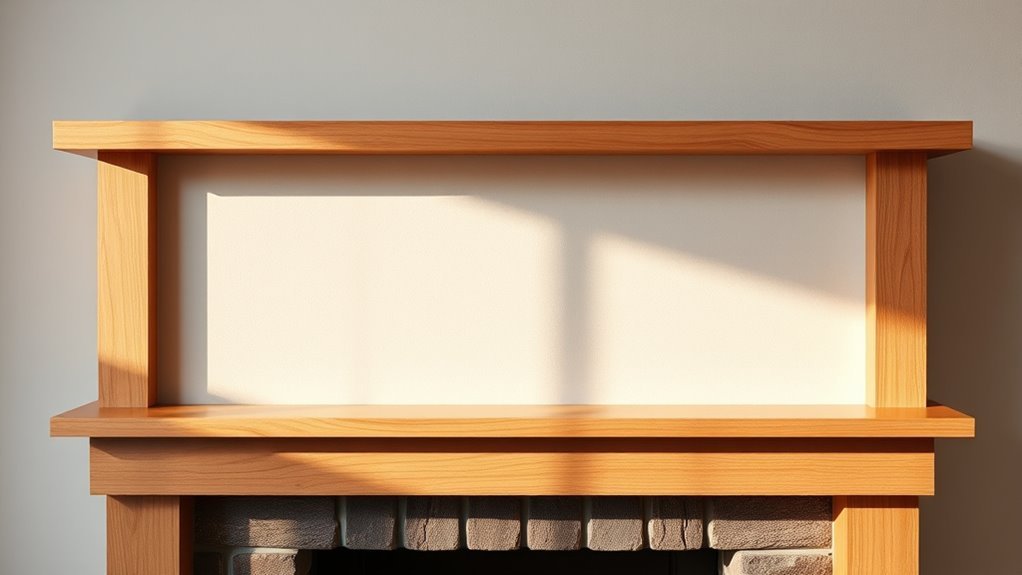
Start by removing every single object from the mantel shelf and surrounding hearth so your eyes adjust to the bare architecture. Styling around pieces that are already sitting on the ledge makes it almost impossible to spot scale mismatches or visual clutter.
Wipe the shelf with a dry microfiber cloth to remove dust, then check for candle wax drips, water rings, or dark soot buildup. On painted wood or sealed stone, a damp cloth with mild dish soap lifts light residue; for stubborn soot on unpainted brick or masonry, scrub gently with a stiff bristle brush and a paste of dish soap, table salt, and warm water, then rinse clean.
Next, sort everything you removed into three piles:
- Keep for styling: Substantial vessels, framed art, mirrors, and candlesticks that match your room’s palette and fit comfortably within your mantel’s depth.
- Store seasonally: Holiday garlands, themed figurines, and seasonal taper holders that belong in a labeled storage bin until their season arrives.
- Relocate elsewhere: Small photo frames under 5 inches tall, keys, mail, remotes, and sentimental knickknacks that look lost on a wide fireplace wall but shine on a bedside table or bookshelf.
Note: On a narrow mantel under 5 inches deep, skip small figurines and mini frames entirely. Hang your anchor piece securely on the wall and limit the shelf to two or three slim, heavy-bottomed objects so nothing overhangs the front edge.
Step 2: What Should You Put on a Fireplace Mantel?
Choose three to five substantial pieces that echo finishes already present in your living room—such as warm oak flooring, matte black hardware, aged brass lighting, or cream upholstery. Repeating existing materials ties the fireplace into the room so the mantel looks curated without needing extra filler.
Use the 60/30/10 color rule to keep a minimalist palette cohesive: let 60% of the visual weight come from your dominant neutral (the wall, surround, or primary frame), 30% from a secondary material (such as stoneware, natural wood, or woven rattan), and 10% from a single accent tone (such as olive greenery, amber glass, or brass). Select pieces from two or three of the categories below rather than trying to squeeze all six onto one shelf:
| Decorative Item | Purpose | Target Size & Minimalist Use |
|---|---|---|
| Mirror | Reflects light and anchors the fireplace wall | 65% to 75% of mantel width; pick one round or arched frame to soften angular brick or stone |
| Framed art | Adds personality, color, and vertical height | Hang 4 to 7 inches above the shelf, or lean one large frame (plus one smaller overlapping print on deep shelves) |
| Candlesticks | Provides slender vertical rhythm and warmth | Group 2 or 3 holders staggered by 2 to 4 inches in height; use LED tapers within manufacturer heat limits |
| Sculptural vase | Grounds one end of the mantel with mass | 10 to 18 inches tall with a stable base; replaces multiple tiny bud vases |
| Low box, bowl, or books | Adds a low horizontal plane and hides small items | 2 to 4 inches high; stack 2 hardcover books horizontally or use one lidded box for remotes when the fire is off |
| Greenery or branches | Softens hard edges and introduces organic movement | 3 to 5 stems in one vessel; remove dry or combustible foliage before lighting an active fireplace |
Recommended Products


Regal Baroque Elegance: Immerse your home in timeless sophistication with this vintage arched wall mirror , adorned with intricate scrollwork and delicate floral motifs. Its ornate design captures the grandeur of the Baroque era, making it the perfect centerpiece for bathrooms, living rooms, bedrooms, fireplace/mantel entryway or hallways. This statement piece transforms any space with its luxurious vintage charm.
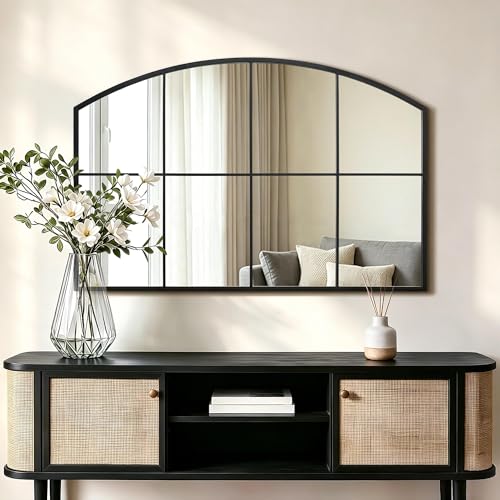
Wide Arched Window Mirror: Featuring a wide arched shape, this design combines with a window pane motif and classic black color, creating a stylish, timeless look. At 42"W x 28"L, it fits beautifully above mantels, console tables, and sideboards 56–63 inches wide (with 60 inches being the ideal match).
Step 3: How Do You Arrange Mantel Decor Without Clutter?
Arrange your mantel by placing the central anchor first, then building a visual triangle on the shelf using tall, medium, and low profiles while leaving 30% to 40% of the surface completely bare. Varying both height and depth guides the eye smoothly across the fireplace instead of stopping at a flat row of objects.
Four Foolproof Mantel Layout Formulas
Pick one layout formula that matches your room’s architecture and mantel depth:
- The Asymmetrical Triangle (most versatile): Center or slightly offset your mirror or artwork. On the left side, place one tall ceramic vase with branches reaching 50% to 70% of the anchor’s height. On the right side, group a medium candlestick pair with a low horizontal box or stack of two books so the tops of all pieces form a scalene triangle.
- Classic Symmetry (formal and traditional): Hang one statement mirror or painting dead-center above the mantel, then flank it with identical or visually matched objects on each end—such as a pair of brass sconces or matching hurricanes—leaving the middle expanse open.
- Layered Center (for mantels 8+ inches deep): Lean a large framed print against the wall, overlap a smaller framed sketch roughly one-third across its bottom corner, and place one low ceramic bowl or bead strand in the foreground to create three distinct depth planes.
- Single Statement (ultra-minimalist): Mount one oversized artwork or sculptural mirror spanning three-quarters of the mantel width and leave the shelf entirely bare, or add a single low architectural bowl off-center.
Pro Tip: Step back 8 to 10 feet and snap a quick phone photo of your arrangement, then view it in black-and-white mode. Stripping away color immediately reveals whether your shapes are clumped at the same height or lacking negative space.
Designers often mention the “Rule of Threes” because odd-numbered groupings (three or five items) naturally prevent rigid, boxy arrangements. However, treat odd counts as a starting guideline rather than a law: four objects look completely balanced when two of them overlap tightly enough to read as a single visual unit. Once your pieces are in place, run through the five-point check below before calling the display finished.
The 5-Question Mantel Edit Test
- Anchor: Can you identify the single dominant focal point within two seconds of entering the room?
- Scale: Does the anchor cover roughly two-thirds to three-quarters of the mantel width without overhanging the ends?
- Rhythm: Do the supporting pieces step clearly from tall to medium to low instead of forming a flat horizontal line?
- Air: Is at least 30% to 40% of the mantel shelf visibly empty between object groupings?
- Safety: On a working fireplace, can every heat-sensitive or combustible accent be lifted off in under a minute before lighting a fire?
If any object fails to strengthen the anchor, scale, rhythm, or negative space, take it off the shelf. Removing one extra piece almost always sharpens a mantel more than buying a new accessory.
Step 4: How Do You Add Texture Without Adding Clutter?
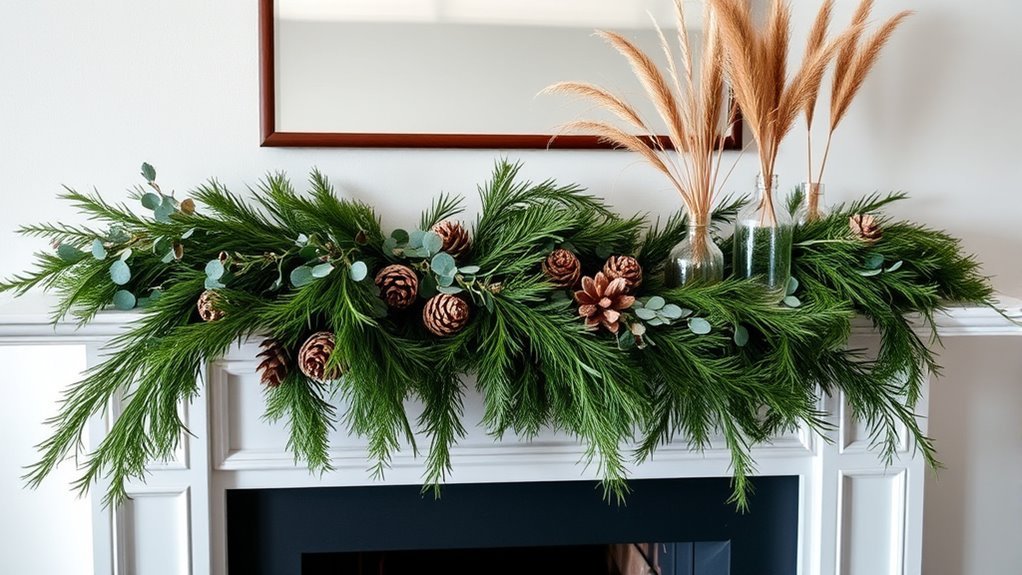
Add texture by choosing fewer objects made from contrasting materials—such as rough travertine, fluted stoneware, warm walnut, woven seagrass, and fresh foliage—rather than increasing the number of items on the shelf. When every piece brings a distinct surface finish, a three-piece arrangement feels rich and layered instead of sparse.
One restrained botanical arrangement is enough to soften hard masonry, brick, or drywall. Clip three to five stems of olive branches, silver-dollar eucalyptus, magnolia leaves, or seasonal blooming branches so the tallest stem rises about one-third higher than its vase. Let the stems arch naturally toward the center of the mantel to bridge the gap between your side vessel and your central anchor.
If your fireplace is active, monitor how heat affects organic materials. Radiant warmth rapidly dries out fresh clippings, turning them into tinder, while preserved pampas grass, dried eucalyptus, and pine garlands are highly flammable. Keep organic arrangements inside heavy ceramic or glass vessels on the outer edges of the shelf while the fireplace is off, and move them away from the hearth before lighting a fire.
A mantel does not need more decor to feel finished. It needs a clear focal point, deliberate variation in scale, one or two strong texture moments, and enough empty space for the eye to rest.
Recommended Products

14-inch Artificial Greenery Arrangement: The package includes a set of 1 Artificial Eucalyptus Greenery Arrangement Potted Plant. This lush greenery arrangement features faux eucalyptus plants in a rustic rectangular wooden planter box with tiny pebbles. It is lightweight and requires no assembly—simply fluff the eucalyptus leaves and place them anywhere in your home or office to add a natural touch.

Realistic Norfolk Pine Look: bring natural-looking Christmas greenery into your holiday decor with 12 artificial Norfolk pine stems featuring layered green tones, varied needle lengths, and soft, naturally drooping foliage. The realistic texture creates the look of fresh-cut branches without the upkeep

Quantity: Artificial Pre-Made Succulent Arrangement is a blend of 14 pcs faux succulent plants and greenery arranged in a rustic rectangle wooden planter box. This arrangement includes String of Pearls, Echeveria, Burro's Tail, Sansevieria, Sedum, Flocked Hops, Aloe, Agave, Eucalyptus Sprigs, Snake plant and Flocked Dusty Miller Sprigs.
Step 5: How Do You Refresh a Mantel for the Seasons?
Refresh your mantel each season by follows a strict “one-in, one-out” swap rule while keeping your primary mirror or artwork in place year-round. Changing just the botanical stems and one accent vessel shifts the mood of the room in ten minutes without letting seasonal decorations pile up into permanent clutter.
- Spring (March to May): Keep the shelf airy by swapping heavy winter metals for a matte cream or pale celadon stoneware pitcher filled with forsythia, pussy willow, or cherry blossom branches, paired with a light travertine bowl.
- Summer (June to August): Pare the arrangement down to its lightest form to suit warm weather—use clear or recycled green glass, clipped fern fronds or olive stems, and one coastal linen-wrapped book stack or bleached wood accent.
- Fall (September to November): Introduce warmth through material swaps rather than novelty figurines: trade clear glass for amber or smoked glass, add brushed brass taper holders, and display three stems of copper beech leaves or burgundy oak branches.
- Winter (December to February): Layer fresh cedar or noble fir greenery, velvet ribbon, and flameless LED tapers while the fireplace is unlit; before operating a wood or gas fire, strip all greenery, ribbons, and hanging stockings off the mantel to maintain safe clearances.
Dedicate one medium storage bin (roughly 40 to 60 quarts) to off-season mantel accents. Once that bin is full, donate or repurpose an older item before buying anything new.
Recommended Products

Fall Tiered Tray Decors Set: elevate your autumn and Thanksgiving ambiance with our fall tiered tray decors set; The package includes 21 fall tiered tray decorations that are enough to satisfy your layering needs for your family party or reunion; Its vibrant colors and exquisite design are very suitable for creating a seasonal atmosphere, which can be shared with your loved ones and give them happiness in autumn

1. Unique Halloween Character Design Featuring a playful duo of witch-inspired gnomes with spooky bats, pumpkins, and skeleton details, adding a fun and whimsical touch to your Halloween display.

FESTIVE THANKSGIVING DECOR – Add seasonal charm to your home with this 2-pack resin Thanksgiving gnome figurine set, perfect for fall harvest and autumn celebrations.
How to Style a Mantel With a TV Above It
When a television is mounted above the fireplace, treat the black screen as your primary anchor and keep mantel decor low, sparse, and pushed to the outer edges. Adding frames, tall vases, or busy garlands directly beneath a TV creates visual competition and blocks the screen or infrared remote sensor.
Check Heat Limits and Viewing Ergonomics First
Most flat-panel LED and OLED televisions are rated by manufacturers for maximum ambient operating temperatures between 95°F and 104°F (35°C to 40°C), whereas an active wood-burning or high-output gas fireplace without a deep heat-deflecting mantel can push wall temperatures past 120°F. Before mounting a TV or placing electronics on the shelf, follow Samsung’s wall-mounting temperature check guide: tape a thermometer to the wall above the mantel, run your fireplace at normal heat for 45 to 60 minutes, and verify that the temperature stays well within your TV manual’s operating limit.
To keep the setup comfortable and clutter-free:
- Size the TV to the mantel: Choose a television at least 20% to 30% narrower than the mantel shelf (for example, a 55-inch TV—about 48 inches wide—over a 64-to-72-inch mantel) so the woodwork frames the screen.
- Minimize neck strain: Seated eye level on a standard sofa is 42 to 48 inches off the floor, while most mantels sit 54 to 60 inches high. Mount the TV 4 to 6 inches above the shelf (if allowed by fireplace clearance specs) and use a tilting or pull-down mount angled 10 to 15 degrees downward.
- Keep shelf decor under 4 to 6 inches high: Skip center decor below the screen (unless a soundbar sits there) and place only one low grouping—such as a shallow wooden bowl or two short votives—at the far left and right ends of the mantel.
Common Mantel Styling Mistakes to Avoid
Even high-end decor looks messy when proportions, spacing, or fireplace clearances are off. Avoid these six frequent styling traps:
- Lining up tiny items in a row: Scattering five or six small 4-inch frames and trinkets evenly across the shelf creates visual static. Replace them with two or three larger pieces (at least 8 to 16 inches tall) grouped tightly together.
- Hanging an undersized or floating anchor: A mirror narrower than half the mantel width looks lost, and hanging art more than 8 inches above the shelf disconnects it from the hearth. Keep the anchor between 65% and 75% of the shelf width and 4 to 7 inches above the ledge.
- Matching every height and finish: Flanking a rectangular mirror with two identical rectangular frames and matching jars makes the mantel look like a store display. Repeat one finish (like black metal), then contrast round, vertical, and horizontal shapes.
- Crowding the bottom of a mounted TV: Placing foliage or candlesticks across the middle of the shelf below a television distracts the eye during viewing. Leave the center strip beneath the screen completely clear.
- Leaving flammable items near an active fire: Paper prints, dried grasses, real wax candles, and hanging stockings can scorch, melt, or ignite from radiant heat and stray sparks.
- Filling every inch of the ledge: Without 30% to 40% bare shelf space, even attractive vessels blur into a single crowded mass.
Troubleshooting: If Your Mantel Still Feels Cluttered
If your arrangement still looks off after styling, resist the urge to buy another filler object. Use this diagnostic table to pinpoint and fix the exact balance issue in under five minutes.
| Problem | Why It Happens | Quick Fix |
|---|---|---|
| The mantel feels busy and chaotic. | Too many small objects or less than 30% empty space. | Remove the two smallest items immediately and pull remaining side pieces 1 to 2 inches closer to their grouping partner. |
| Everything looks like a flat lineup. | Objects share the same 8-to-10-inch height plane. | Elevate one object on a stack of 2 hardcover books or swap one mid-sized jar for a 14-to-18-inch tall branch arrangement. |
| The display feels flat and two-dimensional. | All items sit in a single straight line along the back wall. | Pull one low object 2 inches toward the front of the shelf so it slightly overlaps the corner of the frame or taller vase behind it. |
| The colors look disconnected from the room. | More than 3 competing colors or unrepeated finishes. | Apply the 60/30/10 rule: stick to your room’s main neutral, one natural texture (wood or ceramic), and one metallic or green accent. |
| Seasonal decor overwhelms the shelf. | Holiday pieces were added on top of everyday decor. | Pack everyday vessels into your seasonal bin first so holiday greenery and candlesticks replace them one-for-one. |
Key Takeaways
- Size your central mirror or artwork to cover 65% to 75% of the mantel width and hang it 4 to 7 inches above the shelf.
- Leave 30% to 40% of the mantel surface completely empty so your groupings have visual breathing room.
- Stagger supporting pieces into a tall, medium, and low triangle rather than lining up small objects of equal height.
- Follow the 60/30/10 palette rule by repeating materials already in your living room, such as warm wood, matte ceramic, brass, and greenery.
- Keep combustible materials at least 3 feet from an active fire (with a 6-inch minimum code clearance for wood mantels) and verify wall temperatures stay below 95°F to 104°F before mounting a TV above a hearth.
Frequently Asked Questions
How do I arrange items on my fireplace mantel?
Start by centering or slightly offsetting one large anchor, such as a mirror or framed artwork spanning two-thirds of the mantel width. Flank it with a tall vessel on one side and a medium-to-low grouping on the other to form a visual triangle, leaving 30% to 40% of the shelf bare.
What decorations should I put on a fireplace mantel?
The best minimalist mantel decorations are one substantial mirror or art print, a 10-to-18-inch ceramic vase with fresh branches, two staggered candlesticks, and a low box or stack of two books. Pick only two or three of these categories that repeat finishes already in your room.
How do I decorate a fireplace mantel simply?
To decorate a mantel simply, use a three-piece formula: one framed artwork or mirror as the backdrop, one textured vase with greenery on one end, and one low sculptural bowl on the opposite side. Sticking to a three-color palette and leaving the center ledge open keeps the display calm.
How high should art or a mirror be above a fireplace mantel?
Hang art or a mirror 4 to 7 inches (10 to 18 cm) above the top of the mantel shelf so it looks visually connected to the fireplace while leaving room for overlapping accents. Test the placement with a painter’s-tape outline first, and always obey your fireplace manual’s heat clearances.
How many items should be on a mantel?
Most minimalist mantels look best with 3 to 5 total pieces: one large anchor and two to four supporting accents of varied heights. However, a single oversized statement mirror can stand alone on a narrow shelf, because proper scale and negative space matter far more than an exact count.
Can I use candles or garland on a working fireplace mantel?
You can display candles or garland when the fireplace is off, but you must remove trailing greenery, dried stems, paper, stockings, and wax candles before lighting a fire. NFPA guidelines call for a 3-foot clearance for combustibles, and even LED candles must stay within manufacturer heat limits.
Is it mantel or mantle?
“Mantel” (ending in -el) is the correct spelling for the shelf or decorative surround framing a fireplace. “Mantle” (ending in -le) refers to a sleeveless cloak, a figurative role of responsibility, or the layer of the Earth’s interior between the crust and core.
How do I style a mantel with a TV above it?
Treat the TV as your focal anchor, keep the center of the shelf clear, and place only low accents under 4 to 6 inches tall at the outer edges. Verify that wall temperatures above a lit fire stay below your TV’s 95°F to 104°F maximum operating limit before mounting.
Conclusion
A calm, cohesive fireplace mantel relies on proportion and negative space rather than a crowded shelf of accessories. Clear the ledge completely, position one anchor spanning two-thirds of the mantel width, build a simple triangle of tall, medium, and low textures, and leave at least one-third of the surface bare. Grab a tape measure to check your mantel depth and anchor width today, then snap a quick phone photo to edit away any piece that does not earn its place.
Sources
- National Fire Protection Association — U.S. home heating fires peak during winter months: winter heating fire statistics and 3-foot clearance guidance for combustible items.
- U.S. Fire Administration (FEMA) — Heating Fire Safety: 3-foot heat-source clearance rule and annual professional chimney inspection guidance.
- International Code Council — 2024 International Residential Code Section R1001.11: minimum 6-inch clearance and projection rules for combustible mantels and trim around masonry fireplaces.
- U.S. Environmental Protection Agency — Wood Smoke and Your Health: health impacts of fine particulate matter (PM2.5) and toxic pollutants in residential wood smoke.
- U.S. Environmental Protection Agency — Best Wood-Burning Practices: seasoning firewood for at least 6 months to under 20% moisture content and keeping flammables clear.
- Samsung Support — Things to Consider Before Mounting Your TV to a Wall: thermometer temperature testing procedure before mounting a television above an active fireplace.
- Vogue — How to Decorate a Mantel in 5 Easy Steps: designer perspectives on mantel composition, symmetry, and asymmetry.
- Better Homes & Gardens — Mantel Decor Ideas: examples of layering, focal pieces, varied heights, and repeated room colors and materials.