
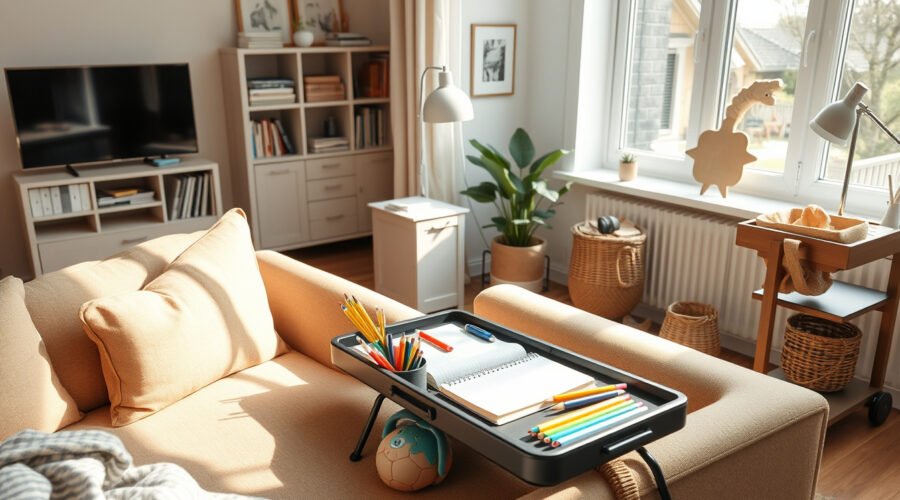
Creating a living room homework zone without a desk is less about buying one piece of school furniture and more about giving your child a predictable, comfortable place to focus. With a firm portable surface, supportive seating, a grab-and-go supply kit, and a two-minute cleanup habit, any corner of your living room can switch into study mode after school and back to family space by dinner.
Quick Answer
To create a living room homework zone without a desk, pick a bright, low-traffic corner away from the TV and pair a supportive chair or floor cushion with a sturdy portable surface like a lap desk, folding tray table, or sofa console. Store daily supplies in a labeled rolling cart or caddy that packs away in two minutes.
At a Glance
| Time Required | 30 to 60 minutes for initial setup; 2 minutes daily and 10 minutes weekly to reset supplies |
| Difficulty | Easy (no permanent remodeling required) |
| Tools Needed | Lap desk or folding tray, storage bins or rolling cart, labels, pencil cup, task lamp, optional furniture wall anchors |
| Cost | $0 to $75 when repurpose living room furniture and buying basic organizers or a task lamp |
How to Choose the Best Spot for a Homework Zone in Your Living Room
Choose a quiet perimeter spot that gives adults a clear line of sight without placing your child in the room’s main walkway. A bright corner, the wall beside a bookcase, the space behind the sofa, or a nook near a window all work well. The goal is to carve out an intentional boundary without turning your living room into a permanent classroom.
Before settling on a location, check four practical details:
- Sightlines: Position the seat so your child faces a calm wall, bookcase, or window rather than the television or hallway door.
- Power access: Pick a spot within 3 to 6 feet of a wall outlet so laptop or tablet chargers never stretch across a walkway.
- Foot traffic: Avoid the path between the kitchen and living room where family members carry snacks, laundry, or pets during late afternoon hours.
- Storage parking: Leave at least 18 inches of floor or shelf space nearby to park a rolling cart, lidded basket, or supply caddy.
Note: A good homework spot does not need complete silence. Many elementary and middle school students focus better within earshot of a parent, provided visual distractions and background screens are turned off.
Clear Clutter and Minimize Distractions in Your Homework Zone
A living room study spot works only when it looks and feels different from leisure time. Before bringing out schoolwork, clear throw blankets, toys, remote controls, mail piles, and decorative trays off the work surface so only the current assignment sits in front of your child.
Organize Supplies Efficiently
Group supplies into a compact, clearly labeled kit rather than a single deep bin where small items get buried. Stock the kit for your child’s grade level: pencils, a handheld sharpener, erasers, crayons or colored pencils, child-safe scissors, glue sticks, sticky notes, index cards, a 12-inch ruler, lined paper, and a two-pocket folder for elementary students, plus highlighters, graph paper, and a scientific calculator for older kids.
| Category | Storage Solution | Best Use |
|---|---|---|
| Daily writing tools | Divided desktop caddy or weighted pencil cup | Grabbing pencils, erasers, highlighters, and scissors in seconds |
| Art and project supplies | 3-tier rolling utility cart | Wheeling markers, glue, rulers, and craft paper out of a closet when needed |
| Loose worksheets | Color-coded two-pocket folders | Separating “To Do,” “Finished,” and “Parent Signature Needed” papers |
| Textbooks and binders | Sturdy floor basket or bottom bookcase shelf | Keeping heavy books stable at floor level so they cannot tip or fall |
| Schedules and checklists | Clipboard or small corkboard | Posting weekly spelling lists, project due dates, and daily assignment steps |
Declutter the Work Surface Regularly
Shared living room furniture collects clutter fast unless you reset the surface after every study session. Keep the workspace clear during and after homework with five simple habits:
- Follow the one-task rule: Keep only one subject’s notebook or worksheet on the tray or table at a time; stack waiting assignments inside the backpack or folder.
- Use a two-minute cleanup timer: When the last assignment is checked, set a two-minute timer to cap markers, file papers, and wipe eraser shavings.
- Maintain a signature pocket: Place permission slips, reading logs, and graded tests directly into a dedicated parent folder so papers never pile up on the coffee table.
- Purge broken items weekly: Every Friday or Sunday, toss dried-out markers, snapped crayons, and scrap paper.
- Return the caddy to its parking spot: Put the supply container back on the exact same shelf or closet floor so tomorrow’s setup takes under 30 seconds.
Limit Visual Distractions Nearby
Visual and digital movement pulls a child’s working memory away from schoolwork faster than quiet household sounds. Turn the television off completely during study hours, store toys in opaque lidded bins, and place a small “device parking basket” outside the homework zone for phones, handheld games, and TV remotes. To establish clear household rules for school laptops and tablets, build a customized schedule using the AAP Family Media Plan.
Best No-Desk Work Surfaces for a Living Room Homework Zone
You do not need a traditional desk to give your child a solid writing plane. Any flat, non-wobbly surface that fits an open 8.5-by-11-inch notebook plus a pencil rest—roughly 17 inches wide by 13 inches deep at minimum—can serve as a reliable homework station when matched to your child’s height.
| No-Desk Surface | Typical Dimensions | Best For | Setup Tip |
|---|---|---|---|
| Hard-top lap desk | 17–21 in. wide × 13–15 in. deep | Worksheets, reading, and tablet tasks on a firm sofa or floor cushion | Pick a flat wood or rigid plastic top with a bolster cushion underneath and a pencil ledge |
| Folding tray table or C-table | 24–28 in. high; 19–26 in. wide | Daily writing and laptop work from an armchair or dining chair | Choose a C-table whose base slides under the sofa, or fold the tray flat behind a door after use |
| Standard or lift-top coffee table | 16–18 in. high (22–24 in. when lifted) | Younger kids (grades K–3), poster projects, and supervised worksheets | Pair a standard coffee table with a 3-to-4-inch floor pouf so your child does not hunch from the couch |
| Behind-the-sofa console table | 28–30 in. high; 12–16 in. deep | Older elementary to high school students needing standard desk height | Use an 18-inch backless stool that tucks completely under the console when homework ends |
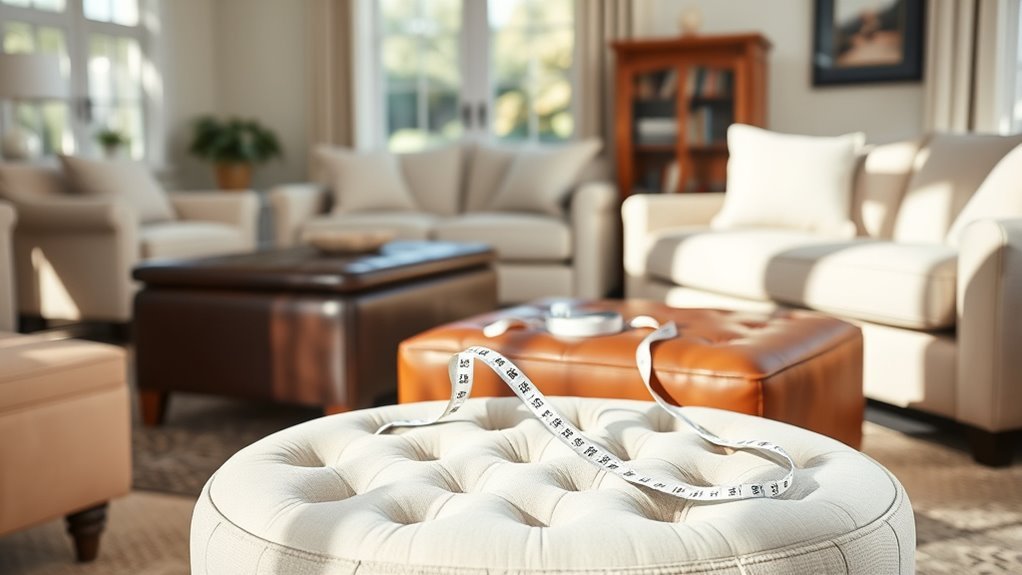
| Storage ottoman with rigid tray | 16–19 in. high | Compact apartments needing hidden storage and quick reading or flashcard review | Top the upholstered lid with a heavy wooden serving tray or flip-top lid so pencil points never poke through paper |
| Wall-mounted drop-leaf table | Mounted at 26–29 in. high; folds to 3–4 in. deep | Tight living rooms with zero floor space for extra tables | Anchor brackets directly into wall studs and fold the leaf flat against the wall after study time |
Pro Tip: Prepare one grab-and-go “homework tray” (a sturdy 16-by-20-inch serving tray with side handles) holding a pencil cup, sticky notes, and the daily folder. You can place it on a coffee table, ottoman, or dining bench in seconds and carry the entire setup away in one trip.
Recommended Products

PERFECT FOLDABLE DESIGN: 23.43"(L)x15.75"(W)x9.25"(H).This laptop bed desk is designed to be foldable, allowing you to easily open the table legs for use without any assembly. When not in use, simply fold it in half for compact storage, saving space in your room.
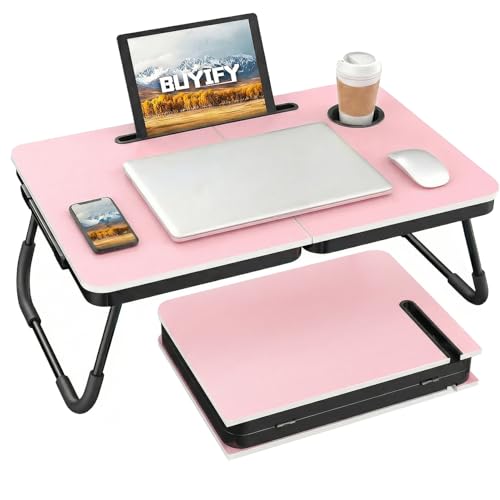
PRE-ASSEMBLED and COLLAPSIBLE: Zero installation needed—unfold and go. Engineered for compact living, this lap table folds flat instantly, offering a hideaway storage solution behind doors or under furniture.

【Adjustable & Ergonomic】:The laptop holder elevates your notebook from 4.34” to 6.59” height (6 level height) for a perfect eye level, letting you fix posture and reduce your neck fatigue, back pain and eye strain. Very comfortable for working in home, office and outdoor.(Please Note: The two support bars must be inserted into the slots at the same level to ensure balance on both sides)
Essential Supplies and Smart Storage Solutions for Your Homework Zone
Smart storage keeps school materials from taking over your living room sofa and end tables. Choose one primary container that fits your floor plan and hides visual clutter as soon as your child closes their notebook.
- Three-tier rolling cart: Ideal if your child moves between the living room and dining room; look for locking caster wheels so the cart stays put while your child reaches for supplies.
- Clear latching bins: Best for early readers (ages 5 to 7) who identify supplies by sight; add picture-and-word labels on the front.
- Woven lidded baskets: Blend in with living room decor while concealing bulky spiral notebooks, library books, and over-ear headphones.
- Over-the-door or wall-mounted pockets: Keep scissors, rulers, calculators, and flashcards off the floor when hung inside a nearby hall closet or anchored to a corner wall.
- Hinged storage ottoman: Doubles as guest seating while hiding a lap desk, folders, and supply caddy inside the base.
Warning: Always anchor bookcases, cube organizers, and tall storage units directly to wall studs, and store heavy textbooks on bottom shelves. The U.S. Consumer Product Safety Commission’s Anchor It! campaign notes that children often climb shelves or pull on drawers to reach high items, creating a serious tip-over hazard in shared family rooms.
Recommended Products

Reinforced All-Metal Construction, Ultra-Sturdy: Our patent-pending frame geometry combines optimized weight distribution with premium materials to ensure the rolling metal cart moves easily without wobbling when loaded up to 110 lbs

Reinforced All-Metal Construction, Ultra-Sturdy: Our patent-pending frame geometry combines optimized weight distribution with premium materials to ensure the rolling metal cart moves easily without wobbling when loaded up to 110 lbs
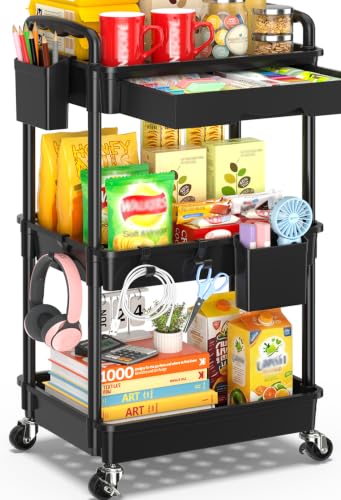
Removable Drawers for Convenient Storage: This rolling cart is easily organize small items with removable drawers that allow you to access your belongings quickly and efficiently. Suitable for cosmetics, office supplies, or craft tools.
Make Your Homework Zone Comfortable and Functional
A cozy living room seat is not always an ergonomic work seat. Slouching over a low table or curling into a deep sofa cushion strains your child’s neck, wrists, and lower back within 15 minutes. Match the seating and surface height to the type of assignment.
Recommended Products

Perfectly Sized Surface: 17" x 13.2" workspace fits laptops up to 15.6"—plenty of room for work or play, without hogging the sofa.

Surface: The top of the Lap Pets Lap Desk is sturdy plastic. It measures 14.5 inches wide and 11.3 inches deep. A laptop computer up to 11.6 inches fits comfortably. It provides good airflow for computers and a smooth writing surface for homework.

Two Sizes Available: Choose 14″ Laptop (Compact) for portability or 17″ Laptop (The Original) for extra workspace. Select the size that fits your laptop and surface needs.
Comfortable Seating Options
Use soft seating like bean bags, plush armchairs, or floor pillows only for reading, audio assignments, or flashcard practice. When your child needs to write neatly or type on a laptop, switch to firmer support that follows computer workstation posture guidance from the Occupational Safety and Health Administration (OSHA):
- Follow the 90-90-90 rule: Adjust the seat and surface so your child’s elbows, hips, and knees bend at roughly 90 to 120 degrees with shoulders relaxed rather than hunched toward the ears.
- Support dangling feet: If your child sits on a standard 18-inch chair or sofa and their feet do not touch the floor, place a sturdy footstool, storage bin, or stack of thick books underneath so their thighs stay parallel to the floor.
- Shorten deep sofa seats: Adult sofas are typically 20 to 24 inches deep, which forces kids to slump backward. Place a firm throw pillow or rolled towel behind your child’s lower back, leaving a 2-to-3-finger gap between the front edge of the cushion and the back of their knees.
- Change positions between subjects: OSHA emphasizes that holding any single posture for too long causes fatigue. Let your child sit at a tray table for math, stand at a sofa console for spelling, and stretch out on a floor cushion for reading.
Flexible Work Surfaces
Before finalizing your setup, test the work surface with a real 15-minute assignment. When your child sits upright with their arms at their sides and bends their elbows at 90 degrees, the writing surface should sit right at or up to 1 inch above elbow height.
If your child uses a school laptop or tablet on a tray table or console, prop the device on a foldable laptop stand or a stable stack of books and plug in a compact wireless keyboard and mouse. According to the American Optometric Association’s 20-20-20 rule and screen distance guidance, the center of the screen should sit 15 to 20 degrees (about 4 to 5 inches) below horizontal eye level and 20 to 28 inches away from the eyes so your child does not crane their neck downward.
Organized Storage Solutions
Arrange your storage containers by reach frequency so your child does not have to stand up and wander across the living room mid-problem—a common trigger for lost focus:
- Primary reach zone (on or beside the surface): Daily caddy holding sharpened pencils, erasers, active homework folder, and a timer.
- Secondary reach zone (bottom cart shelf or floor basket): Extra lined paper, graph paper, notebooks, dictionary, and reference textbooks.
- Tech and charging zone (near the wall outlet): Surge protector with cord clips, laptop charger, headphones, and calculator.
- Adult-supervised zone (high closet shelf): Permanent markers, liquid paint, craft blades, or hot glue guns used only for special projects.
Lighting and Glare Control for Homework
Good study lighting balances soft room light with focused task light so your child’s eyes do not strain against dark shadows or bright screen reflections. Relying solely on a dim living room ceiling fixture forces children to lean close to the page, while sitting directly in front of an unshaded window causes squinting.
OSHA’s workstation environment guidance explains that high contrast between a bright screen or window and a dark surrounding room causes eye fatigue and headaches. Use these five lighting adjustments to protect your child’s eyes:
- Sit at a 90-degree angle to windows: Position the homework seat side-on (perpendicular) to windows rather than facing the glass or placing the window directly behind the screen.
- Place the task lamp opposite the writing hand: For a right-handed child, set the desk or floor lamp on their left side; for a left-handed child, set it on their right side so their hand never casts a shadow across the paper as they write.
- Adjust brightness for paper vs. screens: Paper worksheets need bright, diffused task lighting, while computer work needs softer ambient room light—roughly half as bright as paper-task lighting, according to AAP screen-time eye break guidelines.
- Follow the 20-20-20 and hourly break rules: During digital homework, have your child look at an object at least 20 feet away for 20 seconds every 20 minutes, and step away from the screen for 10 minutes every hour.
- Eliminate screen flicker: Keep the living room TV off and wipe dust or fingerprints off tablet and laptop screens so overhead lights do not scatter glare.
Personalize Your Homework Zone for Motivation
Giving your child ownership over two or three small details makes a portable homework kit feel inviting rather than clinical. The key is choosing functional items that support executive skills without cluttering the living room.
Include a quiet visual timer in the caddy so your child can see time passing without checking a phone. Many educators and the National Education Association reference the 10-minute homework rule per grade level—roughly 10 minutes of nightly homework per grade (such as 20 minutes for second grade or 40 minutes for fourth grade). Setting a timer for 15-to-20-minute focus blocks makes starting much easier.
- Custom clipboard: Let your child decorate one wooden or acrylic clipboard to hold their daily checklist and spelling words.
- Color-coded bin labels: Have your child pick a calm two-color palette for folder and bin labels that still complements your living room.
- Single rotating frame: Use one clip frame or magnetic strip on the rolling cart to display a proud test score or drawing, swapping it out weekly.
- Sensory focus tool: Keep one quiet fidget (such as a textured stress ball or silicone band on a chair leg) in the caddy if movement helps your child concentrate.
Small Living Room Layout Ideas
When square footage is tight, build a homework zone around furniture footprints you already own. Each of the four layouts below takes less than 4 square feet of extra space and packs away before evening relaxation time.
Corner Homework Zone
Tuck a supportive accent chair or a 4-inch firm floor cushion into an unused corner measuring at least 3 by 3 feet. Pair it with a rigid lap desk or a C-table, a narrow 3-tier rolling cart (typically 12 by 17 inches), and a rechargeable clip-on or floor lamp. This layout works best for elementary students who benefit from sitting near a parent while facing away from the room.
Behind-the-Sofa Zone
If your sofa floats in the room or can be pulled 14 to 18 inches forward from the wall, slide a narrow console table (12 to 15 inches deep and 28 to 30 inches tall) directly behind the sofa back. Place two woven baskets on the lower stretcher shelf for supplies and tuck an 18-inch backless stool underneath. Your child gets a full-height work surface without adding desk bulk to the room’s main seating area.
Coffee Table Zone
Turn a standard 16-to-18-inch-high coffee table into an after-school workstation by pairing it with a firm floor pouf or kneeling cushion rather than the sofa seat, which puts the table too low for comfortable writing. If you have a lift-top coffee table that rises to 22–24 inches, your child can sit upright on the sofa with a lumbar pillow behind their back and store their supply caddy inside the hidden compartment.
Pack-Away Homework Zone
For studio apartments or multipurpose family rooms, store a folding tray table (which folds to 2 inches flat) behind the sofa or inside a coat closet alongside a lidded homework tote. At study time, set the tray table in front of your most supportive dining or accent chair, bring out the tote, and pack both items completely out of sight as soon as assignments are signed.
How to Maintain an Organized Homework Zone
A no-desk homework zone stays functional only when setup and breakdown follow the same sequence every day. Use a predictable four-part routine so your child knows exactly how to open and close their workspace without nagging.
| Routine Stage | What to Do (and Time Needed) | Why It Helps |
|---|---|---|
| 1. Before homework | Clear the surface, turn off the TV, park phones, and bring out the supply caddy (1 minute) | Signals the brain that the living room has switched into focus mode |
| 2. During homework | Keep only one assignment out, run a 15–20 minute focus timer, and take 20-second eye breaks | Prevents visual overwhelm, posture slumping, and digital eye fatigue |
| 3. After homework | Pack finished folders into the backpack, return pencils to the caddy, and stow the tray (2 minutes) | Prevents lost homework in the morning and restores the family living space |
| 4. Weekly reset | Sharpen pencils, restock lined paper, empty old graded papers, and check charging cables (10 minutes) | Stops mid-week hunts for missing supplies and keeps bins neat |
Troubleshooting Common Homework Zone Problems
If your child resists using the new space or homework drags on all evening, observe one session before buying new gear. Most bottlenecks trace back to an awkward table height, glare, or a missing boundary.
| Problem | Likely Cause | Quick Fix |
|---|---|---|
| Child avoids the zone or fidgets constantly | Surface wobbles, seat is too deep, or feet dangle unsupported | Switch to a firmer chair, add a back cushion and footstool, and check that elbows rest near 90 degrees |
| Pencils, erasers, and chargers keep vanishing | Supplies mix with general household items or lack labeled homes | Keep a homework-only caddy off-limits for household mail and run a two-minute end-of-session timer |
| 20-minute assignments take over an hour | Seat faces foot traffic, TV is on, or too many worksheets sit out at once | Turn the chair toward a calm wall, place only one worksheet on the tray, and use noise-dampening headphones |
| Child rubs eyes or complains of headaches | Window glare reflects off the screen, or the child’s hand shades the paper | Move the lamp to the side opposite the writing hand, angle screens 90 degrees to windows, and use the 20-20-20 rule |
| Living room still looks cluttered at night | Open bins leave brightly colored school gear visible after study hours | Swap open bins for a lidded woven basket, a storage ottoman, or a rolling cart that wheels into a closet |
Key Takeaways
- Match the no-desk surface to your child’s height and task: use a 28-to-30-inch sofa console or 25-inch folding tray for writing, and save floor cushions for reading.
- Face the study seat toward a calm wall or bookcase away from the TV, and keep a device parking basket outside the zone.
- Support neutral 90-90-90 posture with a lumbar pillow and a footstool so dangling feet or deep sofa cushions do not cause slouching.
- Place a shaded task lamp opposite your child’s writing hand, angle screens perpendicular to windows, and follow the 20-20-20 rule to prevent eye strain.
- Anchor tall shelving to wall studs with CPSC-recommended brackets and use a two-minute cleanup timer to pack the entire zone away after homework.
Frequently Asked Questions
How do you create a homework space without a desk?
You can create a homework space without a desk by pairing a supportive chair or floor cushion with a sturdy portable surface like a hard-top lap desk, folding tray table, or behind-the-sofa console. Add a shaded task lamp, keep daily supplies in a labeled caddy or rolling cart, and pack the kit away after each session.
What can my child use instead of a desk for homework?
The best desk alternatives are a rigid lap desk (at least 17 by 13 inches), a folding tray or C-table, a standard or lift-top coffee table, a narrow sofa console table, a wall-mounted drop-leaf table, or a storage ottoman topped with a flat wooden tray. Choose a surface that does not wobble and sits near your child’s elbow height.
Is it okay for kids to do homework on the floor?
Yes, floor homework works well for reading, flashcards, and short worksheets lasting 15 to 20 minutes, especially when your child sits against a wall or sofa base with a firm cushion and a lap desk or coffee table. For longer writing or laptop assignments, move to a chair and tray table so their neck and back stay supported.
How do I make a living room homework zone less distracting?
Turn the television off completely, angle your child’s seat toward a calm wall rather than the main walkway, and keep only one assignment on the work surface at a time. Park phones, gaming devices, and remotes in a separate basket outside the study area, and provide noise-dampening headphones if siblings are playing nearby.
How can I keep homework supplies organized in a small living room?
To keep supplies tidy in a small living room, consolidate everything into one portable container such as a divided tote caddy, a 3-tier rolling cart, or a hinged storage ottoman. Label separate compartments for pencils, paper, and folders, and wheel or carry the container into a closet as soon as homework is done.
How do I make the homework zone safe?
Anchor bookcases and tall storage units directly to wall studs, store heavy textbooks on bottom shelves, and route lamp and laptop cords along the wall so they never cross walkways. Keep folding tray tables fully locked when open, and store sharp scissors or craft tools in an adult-supervised bin.
How do you set up a living room homework space for two kids?
Give each child their own separate work surface—such as opposite ends of a behind-the-sofa console table or two individual folding tray tables spaced at least 3 feet apart—to prevent elbow bumping and distraction. Use one shared rolling cart in the middle, but assign color-coded folders and timers to each child.
Conclusion
Building a living room homework zone without a desk takes less than an hour and works with furniture you already have. Pick a low-distraction corner today, assemble a single portable caddy with your child’s daily supplies, and test your setup with one 15-minute assignment and a two-minute cleanup timer this afternoon.
Sources
- HealthyChildren.org — AAP Family Media Plan: Family media boundaries and screen-free homework rules.
- U.S. Consumer Product Safety Commission — Anchor It!: Furniture and bookcase anchoring and tip-over prevention guidance.
- OSHA Computer Workstations — Good Working Positions: Neutral 90-to-120-degree body positioning, footrests, and posture variation.
- American Optometric Association — Computer Vision Syndrome: The 20-20-20 eye break rule, 20-to-28-inch viewing distance, and 15-to-20-degree downward screen angle.
- OSHA Computer Workstations — Workstation Environment: Task lighting, glare reduction, and perpendicular window orientation.
- HealthyChildren.org — Give Your Child’s Eyes a Screen-Time Break: AAP hourly 10-minute screen breaks and room lighting adjustments for digital schoolwork.
- National Education Association — The Great Homework Debate: The 10-minute-per-grade-level nightly homework guideline.


[…] Living Room Homework Zone: 9 No-Desk Setup Ideas […]