
Last updated: July 7, 2026
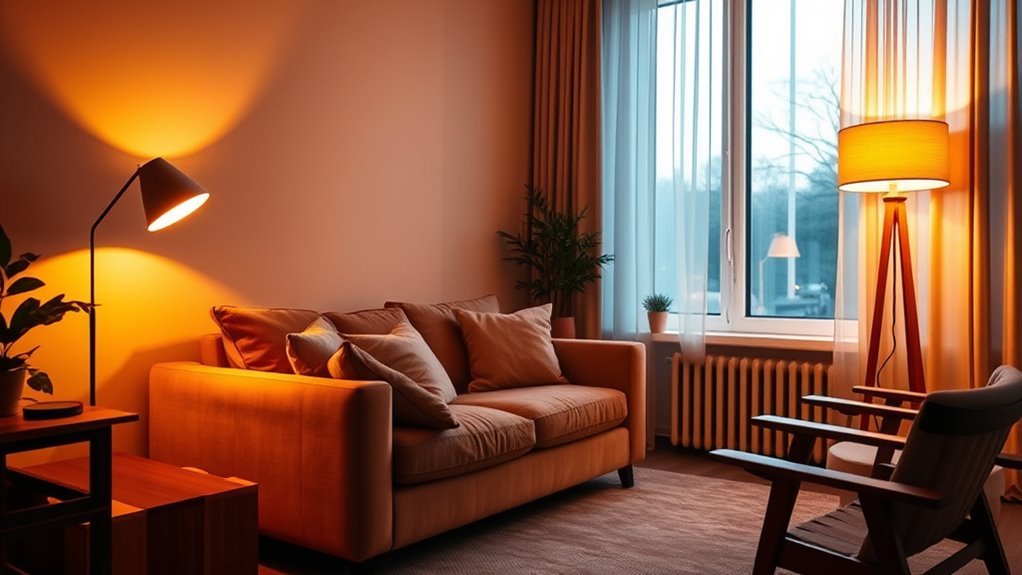
For most living rooms, choose 2700K to 3000K warm white lighting. Use 2700K for table lamps, movie nights, and evening relaxation. Use 3000K for ceiling fixtures, recessed lights, and modern rooms that need a cleaner warm look. If you need brighter reading or hobby light, raise the lumens or add a task lamp before moving the whole room to 4000K or 5000K.
This guide explains how Kelvin, lumens, CRI, dimmers, and layered lighting work together so your living room feels comfortable at night and still has enough light for reading, hosting, and everyday use.
Quick Answer
The best color temperature for a living room is usually 2700K to 3000K. Choose 2700K for a soft, cozy evening glow, 3000K for a slightly cleaner warm white, and around 3500K only if the room needs brighter task-friendly light.
Key Takeaways
- 2700K is the coziest choice for lamps, movie nights, and relaxing evenings.
- 3000K still feels warm but looks a little brighter and cleaner in modern rooms.
- 3500K can work in open-plan spaces or reading areas, but it is less cozy.
- 4000K and above often feels too crisp or cool for a main living-room glow.
- Kelvin controls color appearance; lumens control brightness.
Best Color Temperature by Living Room Situation
Use this quick map before buying bulbs. It gives you a practical starting point, then you can fine-tune brightness with lumens, dimmers, shades, and fixture placement.
| Movie nights and evening lamps | 2700K, or dim-to-warm bulbs that shift warmer as you lower the brightness. |
| Main ceiling or recessed lights | 2700K-3000K on a dimmer. Choose 3000K if 2700K looks too yellow overhead. |
| Reading chair or hobby corner | 2700K-3000K with more lumens from a focused task lamp, not a colder bulb by default. |
| Open-plan living and dining | 3000K for one clean baseline, then add warmer 2700K lamps or accent lights for evenings. |
| White, gray, or modern interiors | 3000K often keeps the room warm without making white walls look too cream-colored. |
| Wood, beige, leather, and warm textiles | 2700K usually looks richer, but use moderate brightness so the room does not turn overly yellow. |
Recommended Products
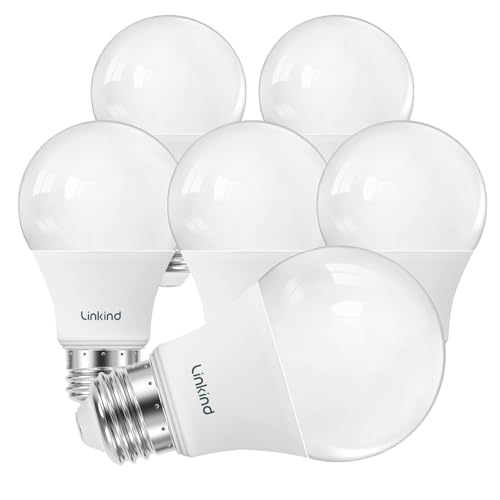
✔ 2700K WARM YELLOWISH LIGHT: The A19 dimmable LED light bulbs give off 800 lumens of 2700k cozy color light. Easy installation with the standard medium screw base E26. NOTE: Please confirm the Kelvin (K) value. This is the most accurate way to select your desired light color. This bulb is 2700K light, which produces a WARM YELLOWISH light. It is not a Bright White or Daylight White bulb. If you prefer a whiter light, please consider our 4000k Cool White or 5000K Daylight options.
ENERGY EFFICIENT: These 9W LED light bulbs provide the brightness of 60 watt light bulbs, saving $55.87 in energy costs over their lifetime compared to the incandescent equivalent

【Classic Vintage Design & Wide Application】Designed based on Thomas Edison's original filament bulb, the vintage retro style making this led bulb also a beautiful decorative lights. Those led bulbs are suitable with chandeliers, ceiling fans, pendant lighting, sconces, lamp post, lanterns or any home lighting fixture with an E26 medium standard base socket. Widely used in bedroom,living room,dinning room, bathroom, laundry room, porch or entryway.
Understanding Color Temperature: Why It Matters for Your Living Room
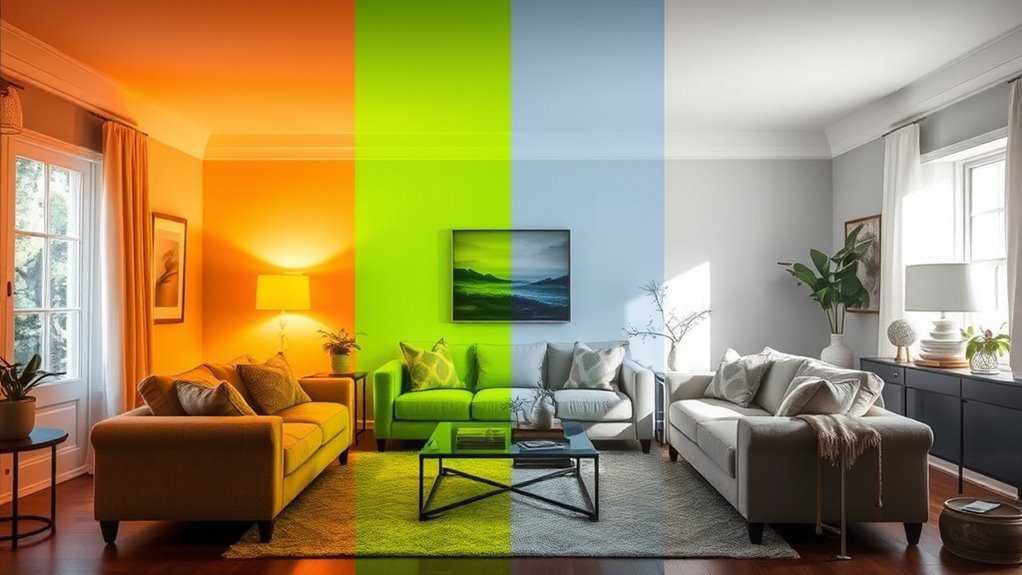
Color temperature describes how warm, neutral, or cool a light looks. It is measured in Kelvin (K). Lower Kelvin numbers look more amber or yellow, while higher Kelvin numbers look whiter or bluer. The Lighting Facts label lists this as “light appearance,” measured by correlated color temperature on the Kelvin scale.
In a living room, color temperature matters because this room usually has more than one job. You may watch TV, read, host guests, relax after work, or use the space as part of an open-plan kitchen and dining area. A warm white bulb helps the room feel softer and more inviting, while a cooler bulb can make the same space feel sharper, brighter, and more task-focused.
Note: Kelvin does not tell you how bright a bulb is. For brightness, compare lumens. A high-Kelvin bulb can still be dim, and a warm 2700K bulb can still be very bright if it has enough lumens.
The Ideal Color Temperature Range for Cozy Living Spaces
For a cozy living room, start with 2700K to 3000K warm white lighting. This range gives the room a soft, comfortable glow without making the walls, furniture, or faces look overly blue or clinical.
Warm White Lighting Benefits
Warm white lighting works well in living rooms because it feels close to the familiar glow of traditional incandescent bulbs. It is especially useful for evening lamps, sconces, and accent lights because it softens shadows and makes the room feel more relaxed.
- 2700K creates the warmest everyday living-room glow.
- 3000K keeps the warmth but looks a little cleaner and less amber.
- Dim-to-warm bulbs can shift warmer as you dim them, which is useful for movie nights and late evenings.
- Warm lamps plus dimmers give you more control than one bright overhead fixture.
Recommended Kelvin Ranges
Use this simple guide when choosing bulbs for lamps, ceiling fixtures, recessed lights, and smart bulbs:
| 2200K-2400K | Extra warm, amber, and very cozy. Best for accent lamps, candlescape effects, and late-night mood lighting. |
| 2700K | Best all-around cozy living-room choice, especially for lamps and evening use. |
| 3000K | Warm but clearer. Good for modern living rooms, overhead fixtures, and open-plan spaces. |
| 3500K | Neutral warm-white. Useful for reading corners or rooms that need a brighter, less yellow look. |
| 4000K+ | Cooler and more task-like. Usually better for offices, garages, utility rooms, and kitchens than for cozy living rooms. |
How to Use Color Temperature to Enhance Your Living Room Ambiance
The easiest way to improve living-room ambiance is to avoid relying on one bright ceiling light. Instead, use layers: overhead or recessed lights for general illumination, table lamps for soft eye-level glow, floor lamps for reading, and accent lights for shelves, art, or architectural details.
For most living rooms, use 2700K bulbs in lamps and 2700K to 3000K bulbs in overhead fixtures. If the room has white walls, lots of daylight, or a modern design, 3000K may look cleaner. If the room has wood tones, warm paint, soft textiles, or a traditional style, 2700K often feels better.
Pro Tip: Test one bulb before replacing every light in the room. Put a 2700K bulb and a 3000K bulb in two lamps, view them at night, and compare how your wall color, sofa fabric, wood tones, and artwork look.
Lumens vs. Kelvin: The Missing Piece in Living Room Lighting
Kelvin tells you the color of the light. Lumens tell you how much light the bulb gives off. This matters because a room can have the right color temperature and still feel too dark or too glaring.
When shopping, compare the lumens on the bulb package, not just the wattage. The U.S. Department of Energy explains that lumens measure how much brightness you get from a bulb, while the Federal Trade Commission’s Lighting Facts label was designed to help shoppers compare brightness, energy cost, life expectancy, light appearance, wattage, and other bulb details.
As a simple starting point, a living room often works best with several lower- to medium-brightness light sources instead of one very bright bulb. For example, two table lamps, one floor lamp, and a dimmable ceiling fixture usually feel more comfortable than a single harsh overhead light.
Color Rendering, CRI, and TM-30: Why Bulb Quality Still Matters
Color temperature is only one part of light quality. A 2700K bulb can still make wood, fabric, artwork, food, and skin tones look dull if its color rendering is weak. The U.S. Department of Energy explains that color rendition describes how colors appear under a light source, and it notes that CRI is a 1-100 scale used to compare that ability.
For a basic living room bulb, 80+ CRI is usually acceptable. For lamps near faces, artwork, wood furniture, bookshelves, or textured fabrics, choose 90+ CRI when possible. On specification-grade lighting, TM-30 data can give a fuller picture of color rendering than CRI alone.
Warm vs. Cool White Lighting: Which Should You Choose?
Warm and cool lighting both have a place in the home, but they create very different effects in a living room.
Characteristics of Warm Lighting
Warm lighting usually sits between 2200K and 3000K. It has a soft yellow, golden, or amber cast. In a living room, warm lighting helps wood furniture, beige fabrics, warm paint colors, and natural textures feel richer.
- Best for relaxing, watching TV, and hosting guests.
- Works well in table lamps, sconces, and floor lamps.
- Pairs beautifully with wood, leather, linen, rattan, and warm neutrals.
- Can look too yellow if the room is already very beige or if the bulb is below 2400K.
Benefits of Cool Lighting
Cooler lighting usually starts around 4000K and becomes bluer as the Kelvin number rises. It can be useful for detailed tasks because it creates a crisp look, but it may feel too sharp for a relaxing living room.
If you like a cleaner look, try 3000K or 3500K before jumping to 4000K. This gives you more clarity without making the room feel like an office, garage, or retail space.
How Different Kelvin Ratings Affect Lighting Choices in Living Rooms
Here is the practical difference between the most common choices:
- 2700K vs. 3000K: Choose 2700K for a softer, cozier glow. Choose 3000K if you want warm light that feels a bit brighter and cleaner.
- 3000K vs. 3500K: Choose 3000K for general living-room comfort. Choose 3500K if the room doubles as a reading, hobby, or work area.
- 3000K vs. 4000K: Choose 3000K for a living room. Choose 4000K only if you prefer a crisp, task-focused look and do not mind a cooler feel.
- 3000K vs. 5000K: Choose 3000K for nearly all living rooms. 5000K is much closer to daylight-style task lighting and usually feels too cool for evening comfort.
For a living room that feels comfortable at night, start with 2700K or 3000K, then adjust brightness with lumens and dimmers.
Selecting the Right Light Fixtures for Your Space
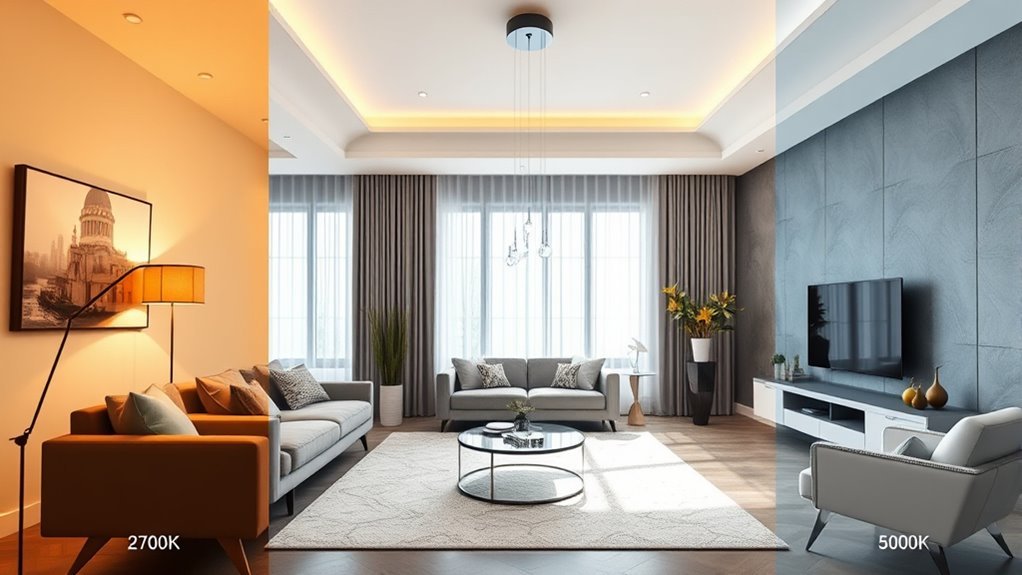
The fixture matters almost as much as the bulb. A bare bulb, exposed downlight, or bright overhead fixture can feel harsh even at 2700K. A shaded lamp, frosted globe, or indirect wall light can make the same color temperature feel softer.
| Table lamps | 2700K for cozy evening glow; use warm fabric or paper shades for softer light. |
| Floor lamps | 2700K-3000K; choose more lumens for reading, not a cooler Kelvin by default. |
| Ceiling fixtures | 2700K-3000K on a dimmer so the room can shift from bright to relaxed. |
| Recessed lights | 3000K often works well; choose wide beam angles and dimmers to reduce glare. |
| Smart or tunable bulbs | Use 3000K during active hours and dimmer 2200K-2700K scenes in the evening. |
Recommended Products

LED Floor Lamp for Living Rooms: This standing lamp is equipped with high - quality LED lamp beads that reach a brightness level of 1050 lumens. The light power is 14.5W while the light is strong enough for reading and illuminating the entire room.

【Sleek Design for Modern Spaces】This modern floor lamp features a matte metal base and linen fabric shade, making it stable and long-lasting. Its understated elegance complements modern, Nordic, or industrial decor styles, while the compact footprint fits effortlessly into corners, bedrooms, or living rooms.

Bright RGB+IC Ambient Lighting – No Dark Corners:This tall lamp fills your room with rich, dynamic color using advanced RGB+IC technology. 16 million colors create a sunset lamp glow or cinema-like immersion, delivering vibrant floor-to-ceiling radiance without a single dull spot.
What to Check Before Buying Living Room Bulbs
Before you buy a full set of bulbs, check these details on the package:
- Color temperature: Start with 2700K or 3000K for living rooms.
- Lumens: Choose brightness based on the room size and fixture purpose.
- CRI: Look for at least 80 CRI for basic residential use; choose 90+ CRI if you care about accurate-looking art, wood tones, textiles, and skin tones.
- Dimmable rating: If the fixture is on a dimmer, make sure the LED bulb is labeled dimmable.
- Fixture compatibility: Check whether the bulb is approved for enclosed fixtures, damp locations, or recessed cans if needed.
- Beam angle: Narrow beams spotlight a small area; wider beams spread light more evenly.
Warning: Do not put a non-dimmable LED bulb on a dimmer switch. It may flicker, buzz, dim poorly, or fail early. Use bulbs and dimmers that are marked as compatible.
Recommended Products

DIMMABLE LIGHTING: Adjust brightness to suit your space with dimmable A19 LED light bulbs. Each bulb provides 800 lm of illumination and is a 60 W incandescent replacement.
Busting Myths About Color Temperature in Home Lighting
Color temperature is useful, but it is easy to misunderstand. Here are the most common myths to avoid:
- Myth: Higher Kelvin means brighter light. Brightness is measured in lumens, not Kelvin.
- Myth: All LEDs look cold. Many LED bulbs are available in 2200K, 2700K, 3000K, and dim-to-warm options.
- Myth: Warm bulbs are bad for reading. A warm bulb can be fine for reading if it has enough lumens and is placed well.
- Myth: Every 2700K bulb looks the same. Bulb quality, shade material, CRI, beam angle, and fixture design all affect the final look.
- Myth: 5000K is best because it is closest to daylight. Daylight-style bulbs can be useful for tasks, but they often feel too cool for a relaxing living room.
Troubleshooting Common Living Room Lighting Problems
If your living room lighting still feels wrong, the problem may not be Kelvin alone. Use these fixes:
- The room feels too yellow: Move from 2700K to 3000K, or use whiter lampshades.
- The room feels too blue or harsh: Move from 4000K or 5000K down to 2700K or 3000K.
- The room feels dim: Increase lumens or add another lamp instead of choosing a cooler bulb.
- The room has glare: Use shaded lamps, frosted bulbs, diffusers, or dimmers.
- Bulbs look mismatched: Use the same Kelvin range and similar CRI across fixtures in the same seating area.
- Reading corners feel weak: Add a dedicated floor lamp or task lamp at 2700K-3000K with enough lumens.
Frequently Asked Questions
Is 3000K or 4000K better for a living room?
3000K is better for most living rooms because it still feels warm and comfortable. 4000K is cooler and crisper, so it usually works better in kitchens, offices, garages, and task-heavy spaces than in a cozy seating area.
What Kelvin light is best for a living room?
The best Kelvin light for a living room is usually 2700K to 3000K. Choose 2700K for a soft, cozy glow and 3000K for a warm but slightly cleaner look.
Should living room lights be soft white or daylight?
Soft white is better for most living rooms because it usually falls near the warm 2700K to 3000K range. Daylight-style bulbs often look much cooler, so they are usually better for garages, utility spaces, workshops, or specific task lights.
Is 3000K or 5000K better for a living room?
3000K is better for most living rooms. It feels warm, balanced, and comfortable for daily use. 5000K is much cooler and is usually better for utility rooms, workshops, garages, or detailed task lighting.
Is 2700K or 3000K better for a living room?
2700K is better if you want the coziest, most traditional living-room glow. 3000K is better if you want warm light that looks a little brighter, cleaner, and more modern.
Can I mix 2700K and 3000K bulbs in the same living room?
Yes, but keep the mix intentional. For example, use 2700K in table lamps and 3000K in ceiling lights. Avoid mixing many different Kelvin ratings in one small seating area because the room can start to look uneven.
Does warm white lighting save more energy than cool white lighting?
Not automatically. Energy use depends on the bulb’s watts, lumens, and efficiency, not the Kelvin number alone. To compare efficiency, read the Lighting Facts label and choose the brightness you need with lower energy use.
Conclusion
For most living rooms, the best color temperature is 2700K to 3000K. Use 2700K when you want a soft, cozy evening feel, and choose 3000K when you want warmth with a cleaner, brighter look. If the room doubles as a work, reading, or hobby area, add task lighting instead of making every bulb cooler.
The best living-room lighting comes from the full setup: warm color temperature, the right lumens, good color rendering, dimmer compatibility, and layered fixtures. Start with one or two test bulbs, compare them at night, and build a flexible lighting plan that works for relaxing, reading, hosting, and everyday life.
Sources
- U.S. Department of Energy: Lumens and the Lighting Facts Label — supports lumens-first bulb comparison and Kelvin/light appearance guidance.
- Federal Trade Commission: Lighting Facts label — supports package-label details such as lumens, energy cost, bulb life, light appearance, and wattage.
- U.S. Department of Energy: Lighting Choices to Save You Money — supports LED shopping, dimmer compatibility, and energy-saving context.
- U.S. Department of Energy: Lighting Principles and Terms — supports color temperature, warm light, CRI, glare, ambient lighting, task lighting, and accent lighting.
- U.S. Department of Energy: TM-30 Frequently Asked Questions — supports advanced color-rendering guidance beyond basic CRI.






[…] Nordic Design Blog — Lighting Color Temperature Guide For Living Rooms (Kelvin)consulté le 03/09/2026 […]
[…] Nordic Design Blog — Lighting Color Temperature Guide For Living Roomsconsulté le 03/09/2026 […]