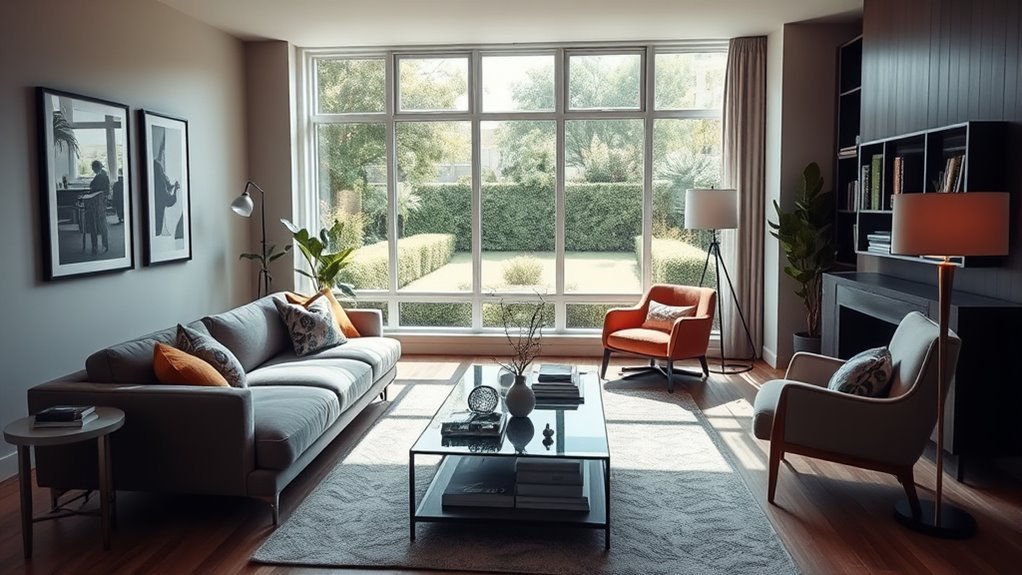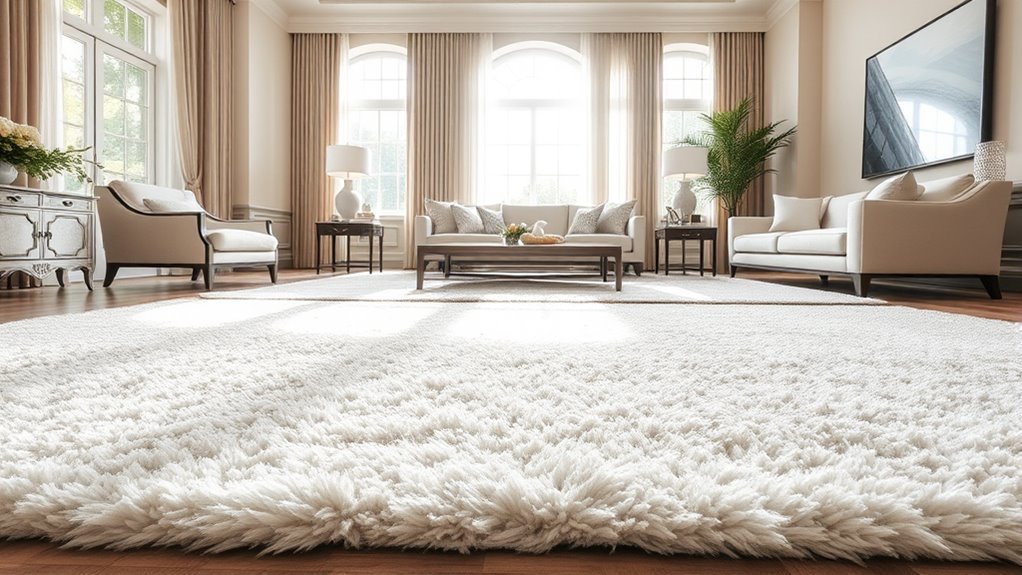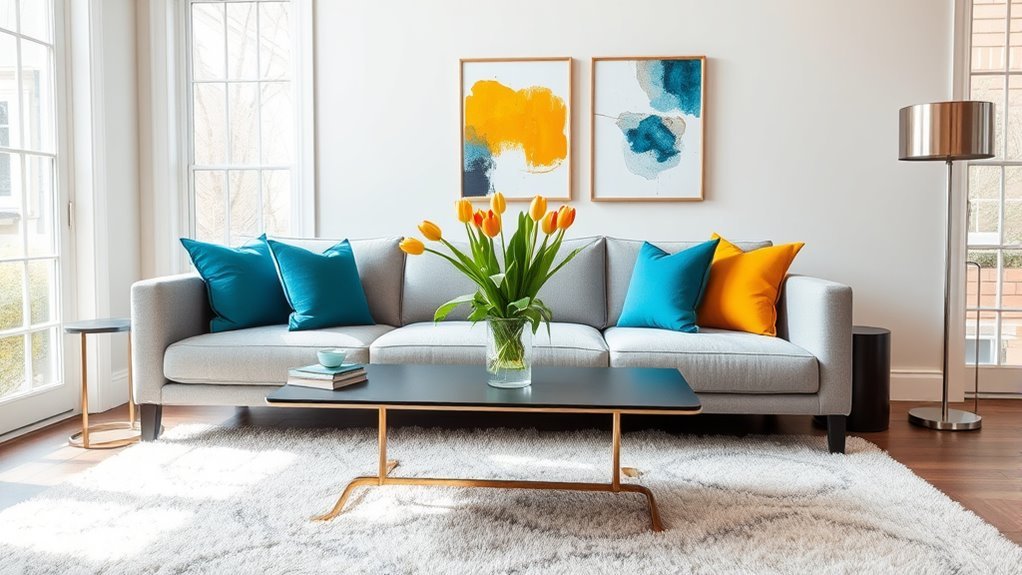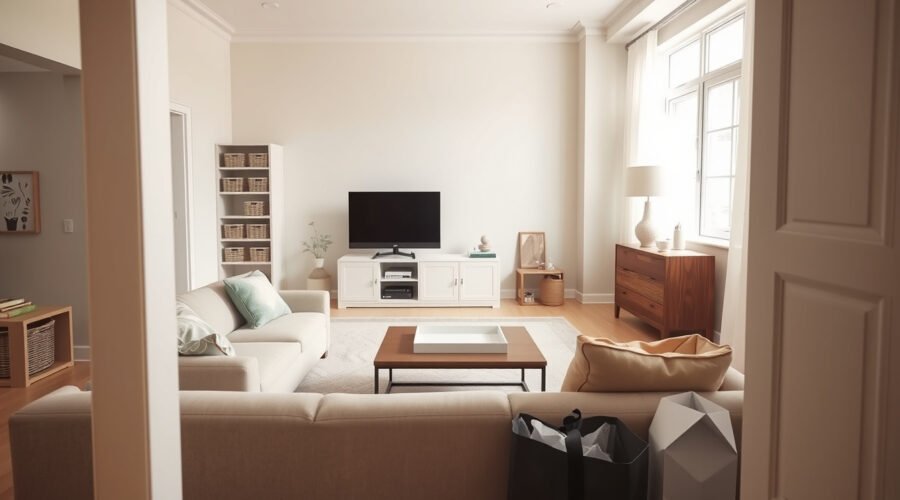
Your living room can look clean and still feel cluttered when the room has too much visual noise. The usual causes are furniture that is too large for the layout, busy surfaces, clashing colors, poor lighting, visible cords, weak storage, and no clear focal point. The fix is not always “own less.” Often, it is giving the eye fewer competing things to process and giving everyday items a better home.
Quick Answer
Your living room feels cluttered because the eye is reading too many competing signals at once: oversized furniture, crowded tabletops, busy colors, exposed storage, visible cords, poor lighting, and unclear traffic paths. Start by clearing surfaces, measuring furniture flow, choosing one focal point, and moving daily-use items into closed or contained storage.
Key Takeaways
- A room can feel messy even after cleaning if furniture scale, color contrast, lighting, and surface styling create visual clutter.
- Before buying storage, audit the room from the doorway and in a photo; clutter is often easier to see on a screen.
- Keep one strong focal point, leave some empty space, and use closed storage for items you need but do not want to see.
- Plants, decor, books, and collections can stay; the goal is intentional placement, not a bare or personality-free room.
At a Glance
| Time Required | 30 minutes for a quick reset; 2–4 hours for a deeper layout and storage refresh |
| Difficulty | Easy to moderate |
| Tools Needed | Tape measure, phone camera, painter’s tape, donation bag, small bins or trays, cord clips |
| Cost | $0 if you rearrange and edit; about $20–$100 if you add baskets, cord control, lamps, or closed storage |
Start With a Five-Minute Visual Clutter Audit
Before you buy new baskets, shelves, or decor, pause and look at the room the way a guest sees it. Stand in the doorway, take one photo, then look at that photo in black and white if your phone allows it. This makes busy shapes, dark blocks, and crowded surfaces easier to notice.
Ask these questions:
- What catches your eye first? If the answer is mail, cords, toys, or random decor instead of the sofa, fireplace, art, window, or TV wall, the room needs a clearer focal point.
- Can you walk through the room easily? If you turn sideways, step around furniture, or bump a table, the layout is creating physical clutter.
- Which surfaces collect things? Coffee tables, console tables, side tables, TV stands, and open shelves are usually the biggest visual clutter zones.
- What is out because it has no home? Remotes, chargers, blankets, pet toys, books, and game controllers need assigned storage near the place where you use them.
Pro Tip: If you feel stuck, remove only the items sitting on flat surfaces first. Do not start with closets or cabinets. A clear coffee table, media console, and side table can make the whole room feel calmer in minutes.
The Impact of Furniture Size on Clutter
Furniture scale is one of the biggest reasons a living room feels cluttered even when it is technically tidy. An oversized sofa, deep sectional, bulky recliner, or too-large coffee table can swallow floor space and block natural movement. On the other hand, undersized furniture can make a room feel scattered because there is no clear anchor.
Start with the largest piece, usually the sofa. Measure the room, then map the sofa, coffee table, and chairs on the floor with painter’s tape. Leave enough room to walk through main paths without squeezing. If the coffee table is too close to the sofa, the room feels tight. If side tables crowd the walls or block doorways, the layout feels busy before you even add decor.
Good scale also depends on visual weight. A sofa with exposed legs usually feels lighter than a skirted sofa that goes to the floor. A glass, oval, or slim wood coffee table may feel airier than a heavy block-style table. You do not always need smaller furniture; you need furniture that fits the room’s traffic, sightlines, and proportions.
- If the sofa overwhelms the room: remove one accent chair, swap a bulky coffee table for a narrower one, or float the sofa slightly away from the wall if space allows.
- If the room feels empty but still cluttered: anchor the seating area with a properly sized rug and one clear focal point instead of adding more small decor.
- If walkways feel tight: move occasional tables, baskets, plant stands, and floor lamps out of the main path first.
Recommended Products

Sturdy & Stable Coffee Table:HOMERECOMMEND wood storage tables are composed of durable steel metal tube frames and premium P2 Level MDF board, The round coffee table will be enough durable and stable to support stuff on the table.

FLUTED DESIGN: The fluted pattern on the surface of the coffee table is a perfect interpretation of modern craftsmanship, adding some three-dimensional and flowing feeling to our home space. Choosing our product can elevate your taste to a new level and make your friends amazed!
How Color Choices Affect Your Space’s Vibe
Color can influence how a room feels, but it works best when you treat it as part of the whole design instead of a magic fix. Research on color psychology shows that color can affect mood, cognition, and behavior, but the effect depends on context, lighting, culture, and the person using the space.
In a living room, clutter often comes from too many unrelated colors competing at once. A navy sofa is not automatically a problem. A navy sofa, bright patterned rug, high-contrast pillows, mixed wood tones, colorful toys, open bookshelves, and bold wall art may create too many focal points.
To calm the room, choose a simple color plan:
- Pick one base color: usually the wall color, sofa color, or rug color.
- Repeat two supporting colors: use them in pillows, throws, art, books, or pottery so the room feels connected.
- Limit high-contrast accents: one bold piece looks intentional; many small bold pieces can look scattered.
- Test paint and fabric in real light: morning, afternoon, and evening light can change undertones dramatically.
Softer hues can help a room feel more open, but the bigger goal is cohesion. Even maximalist rooms feel calm when the palette repeats and the eye understands the pattern.
Why Focal Points Matter for a Calm Living Room
A living room without a clear focal point often feels cluttered because everything competes for attention. The eye jumps from the TV to the shelves, from the shelves to the coffee table, from the coffee table to the wall art, and the room never feels settled.
Choose one main visual anchor. It might be a fireplace, a large piece of art, a window view, a media wall, a beautiful sofa, or a built-in bookcase. Then arrange the rest of the room to support that anchor instead of fighting it.
- Draws the eye: A single focal point gives the room a place to land.
- Improves hierarchy: Important items stand out while smaller decor supports the overall design.
- Reduces visual noise: When every wall is not trying to be the star, the room feels calmer.
If your TV is the natural focal point, that is fine. Make it feel intentional by containing cords, simplifying the media console, and balancing the wall with art, sconces, shelves, or closed storage.
How Surface Clutter Affects Your Space
Surface clutter is often the fastest thing to fix because it sits directly in your sightline. Coffee tables, side tables, mantels, TV consoles, and open shelves can look messy even when the items are neatly arranged. Too many small objects make the eye work harder.
A study published in Personality and Social Psychology Bulletin found that stressful home descriptions, including clutter and unfinished-home language, were associated with mood and cortisol patterns among participants. That does not mean every decorative object causes stress, but it does support what many people feel: visible unfinished tasks can make a home feel less restful.
A living room feels calmer when everyday items have visible limits: one tray, one basket, one shelf zone, or one drawer instead of a spread of loose objects.
Use a simple four-part surface rule:
- Daily-use items: remotes, coasters, glasses, chargers, and reading glasses go in a tray, drawer, or lidded box.
- Display items: keep fewer, larger pieces instead of many tiny pieces.
- Relocate items: dishes, mail, shoes, laundry, and tools leave the living room daily.
- Donate or discard: broken decor, old magazines, duplicate throws, and unused baskets should not keep claiming space.
How Built-In Storage Can Solve Clutter Problems
Built-in storage can transform a living room because it uses the wall instead of stealing floor space. It also makes storage look like part of the architecture, not an afterthought. Built-ins work especially well around fireplaces, TVs, awkward alcoves, and long blank walls.
The best built-ins combine open and closed storage. Use open shelves for books, art, pottery, framed photos, and a few meaningful objects. Use closed cabinets for gaming systems, cords, blankets, toys, paperwork, pet supplies, and extra candles.
- Custom shelves make awkward spaces useful and help the room look intentional.
- Concealed cabinets hide bulky AV equipment and reduce cord clutter.
- Integrated storage around a focal point creates balance and keeps the eye from scattering.
If built-ins are not in the budget, use renter-friendly alternatives: a wall of matching bookcases, a low media cabinet with doors, storage ottomans, lidded baskets, floating shelves with concealed brackets, or a sofa table with drawers.
Note: Open shelves look best when they are not packed edge to edge. Leave a little empty space around books, bowls, and frames so each group looks styled rather than stored.
Recommended Products

ELEVATE YOUR SPACE – Finished in Soft White, this elegant storage cabinet enhances your home decor while providing ample storage solutions for kitchen supplies and office essentials

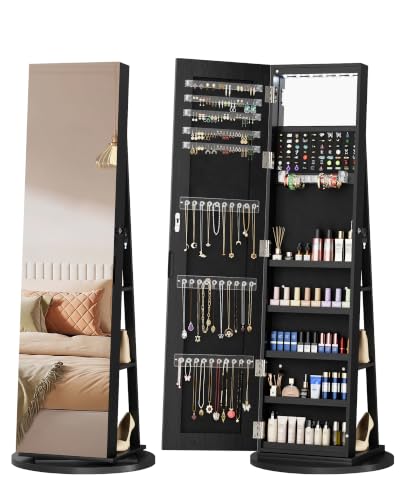
VELVET INTERIOR WITH LED LIGHTS: Experience premium protection with the scratch-proof, tarnish-resistant black velvet lining inside this jewelry cabinet with lights. The built-in LED vanity lights provide bright, natural illumination for flawless makeup application day or night. This elegant jewelry armoire with LED lights seamlessly combines sophisticated storage with practical beauty features, elevating any bedroom or dressing room decor while keeping your treasures safe and organized.
Using Plants to Enhance Space Without Adding Clutter
Plants can soften a living room, add height, and make empty corners feel alive. The trick is to use them as intentional decor, not as another collection that spreads across every surface. One tall plant in a corner often looks calmer than five small pots scattered across tables.
Choose plant placement based on shape and space:
- Use tall upright plants to fill empty vertical corners without crowding the floor.
- Use hanging planters when tabletop space is limited.
- Group small plants on one tray or shelf instead of scattering them around the room.
- Match pots to your palette so the greenery adds life without adding color chaos.
Do not rely on houseplants as your main indoor-air-quality strategy. A review in the Journal of Exposure Science & Environmental Epidemiology found that typical potted plants would require unrealistic quantities to match the VOC-removal effect of normal outdoor-to-indoor air exchange in buildings. Enjoy plants for beauty, texture, and biophilic comfort, not as a replacement for ventilation, cleaning, or filtration.
Warning: If you have pets, check plant safety before buying. The ASPCA lists pothos and snake plant as toxic to dogs and cats.
Choosing Between Minimalism and Maximalism to Combat Clutter
Minimalism and maximalism can both work in a living room. The difference between style and clutter is intention. Minimalism feels calm when each piece has a purpose. Maximalism feels rich and personal when collections are grouped, colors repeat, and the room still has clear places for the eye to rest.
Choose the approach that fits your real habits:
- Choose minimalism if you feel drained by visible items, dislike dusting, or want the fastest reset at the end of the day.
- Choose maximalism if you love books, art, layered textiles, collections, and personal storytelling.
- Choose a middle path if you want cozy texture but still need clear surfaces and closed storage.
The best test is not whether the room has many items. It is whether each item has a role. A shelf of collected ceramics can look beautiful if it is grouped by color and scale. The same shelf can look cluttered if random objects are squeezed into every gap.
Tips for Creating Open Spaces and Negative Space
Negative space is the empty space around furniture, art, and decor. It is not wasted space. It is what lets the room breathe. Without it, even expensive furniture and beautiful decor can feel crowded.
Try these simple changes:
- Face seating toward the best feature: a window, fireplace, art wall, or conversation area.
- Pull furniture away from blocked paths: even a few inches can make movement feel easier.
- Use one larger rug instead of several small rugs: a proper rug can visually unify the seating area.
- Lift the eye upward: curtains hung higher, vertical shelves, tall plants, and slim floor lamps can make the room feel more open.
- Keep some walls quiet: not every wall needs a gallery, mirror, shelf, or sign.
Lighting matters here, too. A single overhead light can create harsh shadows that make corners feel heavy. Add a mix of table lamps, floor lamps, sconces, or picture lights so the room feels layered instead of flat.
Common Living Room Clutter Mistakes and Quick Fixes
If your living room still feels cluttered, look for these common problems:
- Too many small pillows: keep fewer pillows in larger sizes and repeat colors from the rug or art.
- Visible cords: use cord clips, cable sleeves, a cord box, or a media cabinet with back cutouts.
- Open baskets overflowing: baskets are only calm when the contents stay below the rim.
- Too many tabletop frames: move some photos to a gallery wall or album and keep one or two favorites out.
- Random blankets: fold one throw on the sofa and store extras in an ottoman or lidded basket.
- Decor spread evenly everywhere: group decor in intentional clusters and leave empty spots between them.
- Furniture pushed against every wall: create a conversation zone when space allows, even if it means floating one chair or side table.
Recommended Products

Passing the UL94 V-0 Rating test, a plastics flammability standard released by Underwriters Laboratories of the United States, UL94 V-0 Rating is defined as Burning stops within 10 seconds on a vertical part allowing for drops of plastic that are not inflames, which means it's safer than ordinary materials because of the higher flame retardancy and brings greater security to your daily use
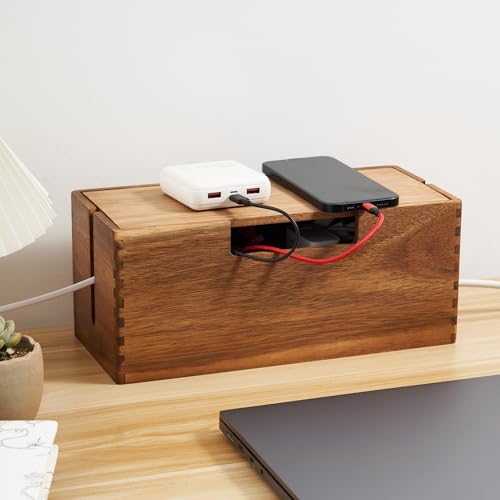
High-Quality Acacia Wood This cable management box is crafted from durable acacia wood with a smooth natural finish, featuring mortise-and-tenon joint construction for robust durability.

Reusable cable ties are made from premium nylon adhesive materials can be environmentally used multiple times
A Simple Weekend Reset Plan
Use this plan when the room feels overwhelming and you want a clear order of attack.
- Clear the flat surfaces. Remove everything from the coffee table, side tables, mantel, and media console.
- Sort items into four groups. Keep, relocate, donate, and trash.
- Put back only the best pieces. Use one tray, one plant or vase, one book stack, or one decorative object per surface.
- Fix the floor plan. Move furniture that blocks walkways, door swings, vents, windows, or outlets.
- Assign homes for daily-use items. Remotes, chargers, pet toys, blankets, and game controllers need storage within arm’s reach.
- Reduce color noise. Pull out decor that clashes with your main palette and store it for another room or season.
- Improve lighting. Add or reposition lamps so corners are not dark and the room feels warm at night.
- Do a 10-minute maintenance reset each evening. Return loose items to their homes before they become visual clutter again.
Frequently Asked Questions
Why does my living room feel cluttered?
Your living room may feel cluttered because the room has too many competing visual signals. Common causes include oversized furniture, crowded surfaces, mismatched colors, visible cords, open storage, poor lighting, blocked walkways, and decor spread across every wall or tabletop.
What is house dysmorphia?
“House dysmorphia” is an informal phrase people use when they feel their home looks worse than it really does, often after comparing it with highly styled homes online. It is not the same as body dysmorphic disorder, which is a recognized mental health condition involving distress about perceived flaws in personal appearance. If anxiety about your home becomes persistent, upsetting, or disruptive, consider speaking with a mental health professional.
How can I make my living room look less cluttered without throwing everything away?
Start by containing items rather than removing everything. Use trays for remotes, lidded baskets for blankets, closed cabinets for media gear, and one display zone for decor. Group similar items together, repeat colors, hide cords, and leave some empty space on tables and shelves.
Does minimalism always make a living room feel calmer?
Not always. Minimalism can help if you feel overwhelmed by visible items, but a room can also feel cold or unfinished if it is too bare. A calm living room needs balance: useful furniture, a clear focal point, controlled surfaces, comfortable lighting, and enough personal detail to feel lived in.
What should I declutter first in a living room?
Start with the surfaces you see from the doorway: coffee table, TV console, side tables, mantel, and open shelves. These areas have the biggest visual impact. After that, clear the floor, remove blocked pathways, and assign homes for daily-use items.
Conclusion
To transform your living room from cluttered to calm, do more than tidy up. Check the furniture scale, open the traffic paths, simplify surfaces, repeat a cohesive color palette, choose one focal point, and move everyday items into storage that matches your routines. Add plants, books, art, and personal pieces with intention, but give them breathing room. When every item has a purpose and a place, your living room feels easier to use, easier to maintain, and much more relaxing to come home to.
Sources
- Personality and Social Psychology Bulletin: “No Place Like Home” — supports the connection between stressful home descriptions, clutter/unfinished language, mood, and cortisol patterns.
- Annual Review of Psychology: Color Psychology — supports careful, context-based wording about how color can affect mood, cognition, and behavior.
- Journal of Exposure Science & Environmental Epidemiology: Potted Plants and Indoor Air Quality — supports the note that houseplants should not be relied on as a primary air-cleaning method in normal homes.
- ASPCA: Devil’s Ivy / Pothos — supports the pet-safety warning for pothos.
- ASPCA: Mother-in-Law’s Tongue / Snake Plant — supports the pet-safety warning for snake plants.
- NHS: Body Dysmorphic Disorder — supports the distinction between informal “house dysmorphia” language and recognized body dysmorphic disorder.