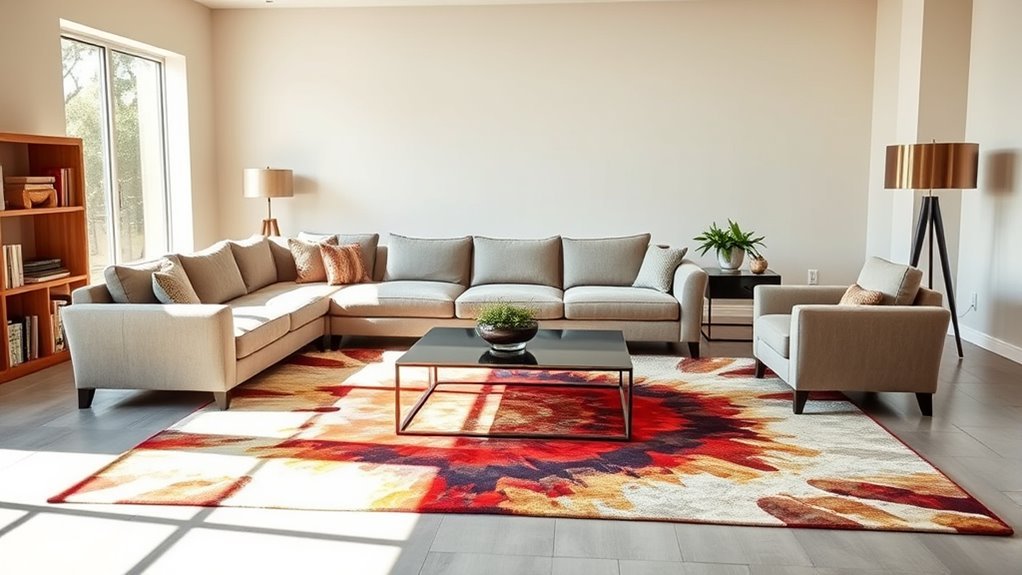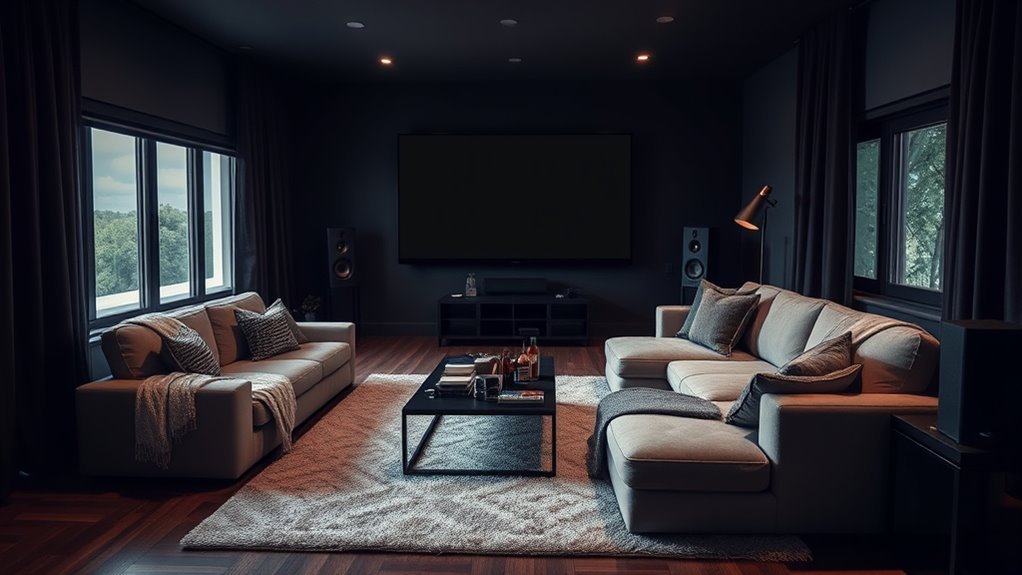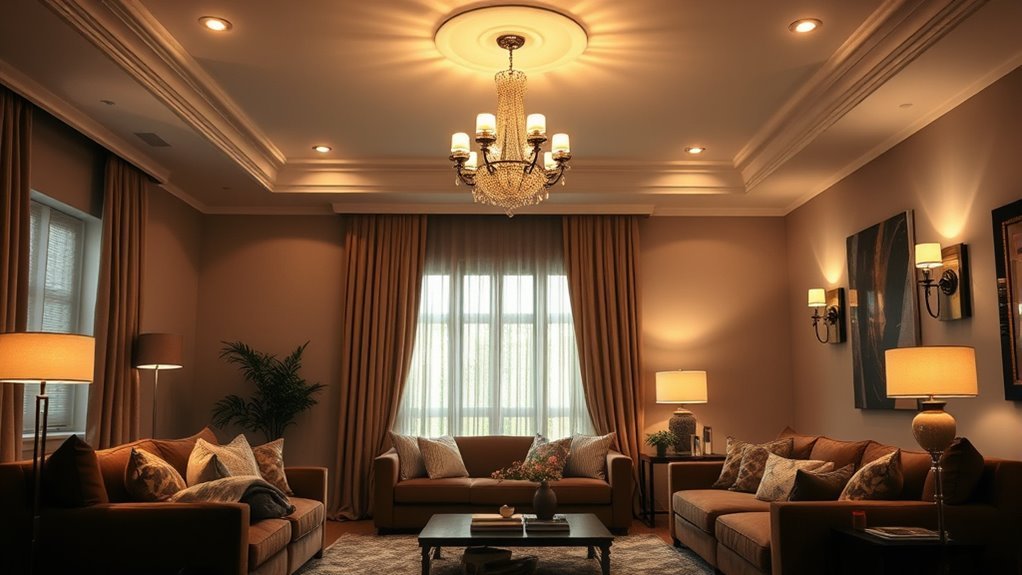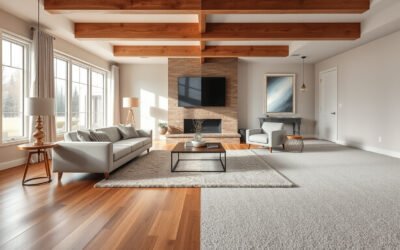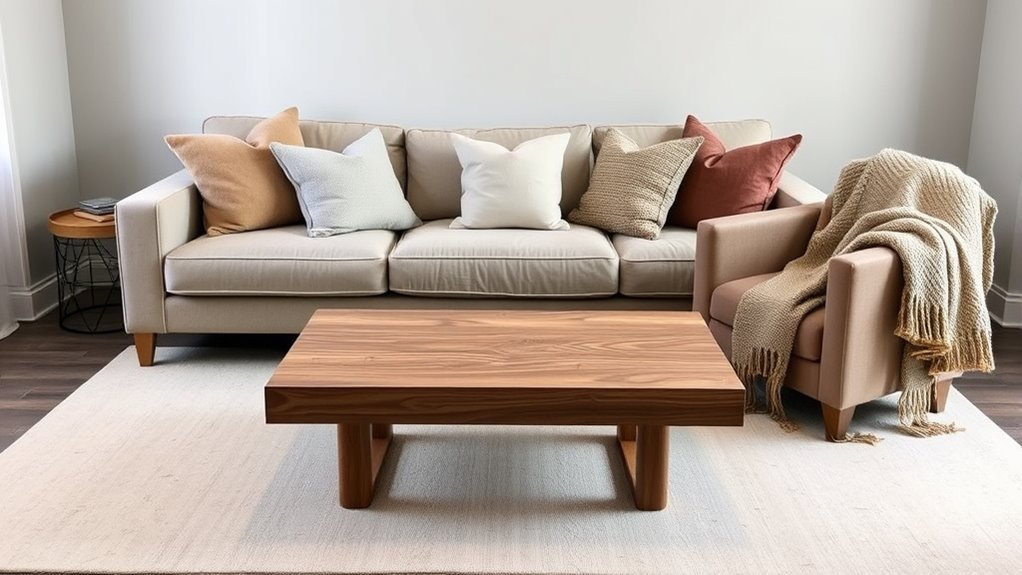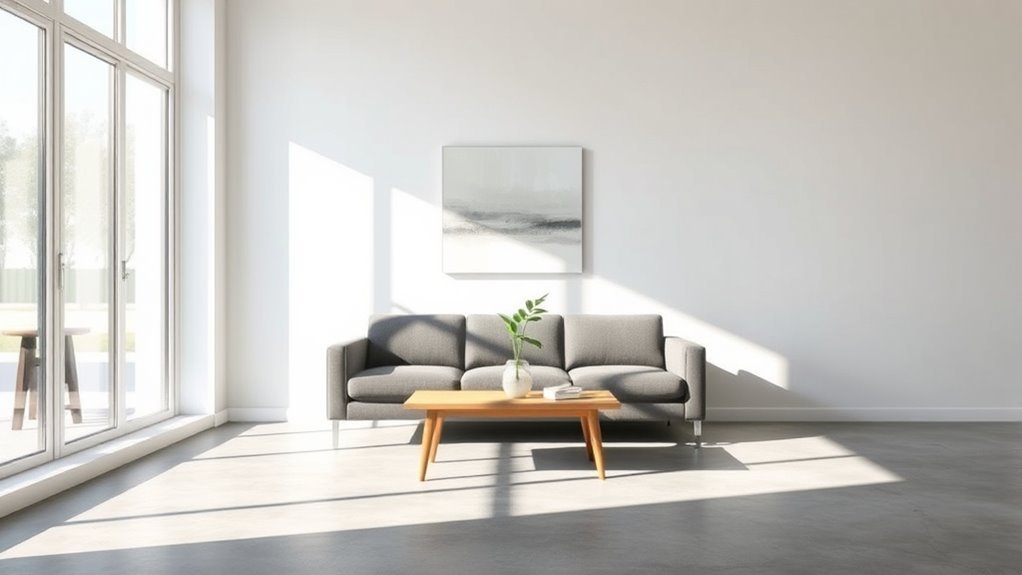
Minimalist living room style is about creating a calm, useful space where every piece has a clear purpose. Instead of filling the room with extra furniture and décor, the design relies on clean lines, open space, thoughtful storage, natural light, tactile materials, and a restrained color palette. The result should feel peaceful and lived-in—not empty, cold, or unfinished.
Quick Answer
A minimalist living room uses fewer, better-chosen pieces to create a functional and uncluttered space. The style typically includes clean-lined furniture, a neutral or limited color palette, hidden storage, natural materials, open pathways, and balanced lighting so the room feels calm, comfortable, and easy to use.
Key Takeaways
- Minimalist living rooms are not about owning nothing; they are about choosing pieces that support comfort, function, and visual calm.
- The strongest minimalist rooms balance open space with warmth through wood, linen, wool, stone, plants, and soft lighting.
- Storage is essential. Closed cabinets, baskets, media consoles, and built-ins help keep visual clutter out of sight.
- A neutral palette works best when it includes texture, contrast, and one or two subtle accent tones.
- The biggest mistakes are buying furniture that is too large, using too many small decorations, ignoring lighting, and making the room feel sterile.
At a Glance
| Time Required | 30–60 minutes to plan; one weekend to declutter and rearrange; longer if you are replacing furniture. |
| Difficulty | Easy to moderate, depending on how much furniture and storage you need to edit. |
| Tools Needed | Tape measure, painter’s tape, floor plan app or graph paper, storage boxes, donation bags, and a simple lighting plan. |
| Cost | $0–$300 for decluttering, rearranging, baskets, curtains, or lighting updates; more if buying a sofa, rug, or storage furniture. |
What Is Minimalist Living Room Style?
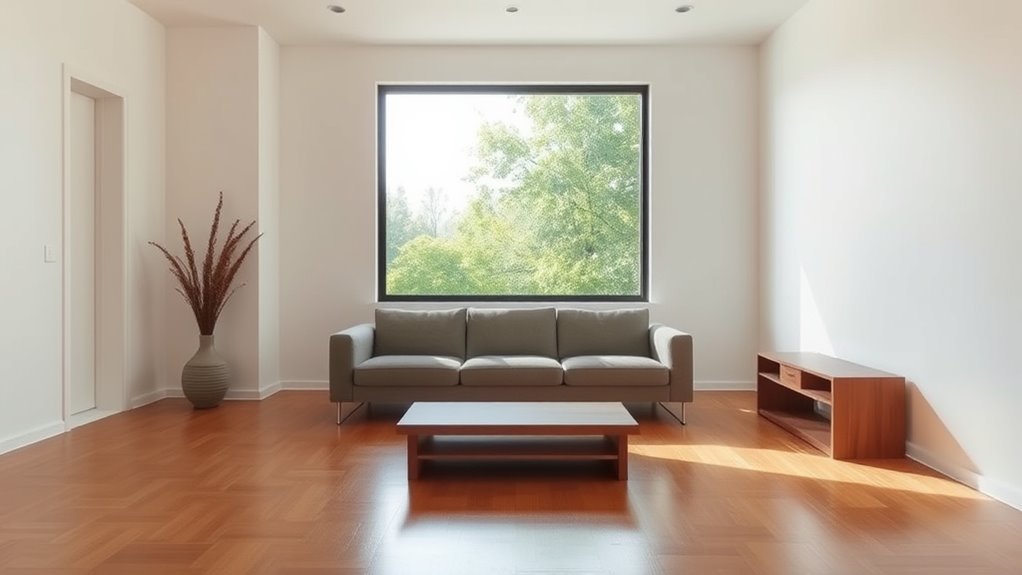
Minimalist living room style focuses on simplicity, function, and visual breathing room. It is influenced by the broader idea of Minimalism, a movement associated with extreme simplicity of form, but in interior design it becomes more practical: fewer distractions, better flow, and furnishings that earn their place.
In a living room, this usually means clean-lined seating, a limited palette of white, cream, beige, gray, black, warm brown, or muted earth tones, and materials such as wood, stone, linen, wool, leather, metal, ceramic, and glass. The goal is not to strip the room of personality. The goal is to remove what does not support comfort, function, or beauty.
A successful minimalist living room should still feel inviting. It can include art, books, plants, soft throws, lamps, and personal objects. The difference is that each item is chosen carefully, displayed with space around it, and balanced against the room’s larger purpose.
Key Characteristics of a Minimalist Living Room
The best minimalist living rooms share a few core traits: open space, a controlled color palette, functional furniture, simple silhouettes, natural light, hidden storage, and warmth through texture. These elements work together so the room feels calm rather than bare.
Open Space Layout
An open space layout helps a minimalist living room feel easy to move through. Instead of packing furniture into every corner, leave clear pathways between seating, tables, doorways, and windows. Negative space—the empty area around furniture—is part of the design because it lets each piece stand out.
| Key Feature | Why It Matters | How to Apply It |
|---|---|---|
| Clear pathways | Keeps the room easy to use | Avoid blocking doorways, windows, and main walking routes |
| Negative space | Reduces visual clutter | Leave breathing room around sofas, tables, and artwork |
| Defined seating zone | Makes the room feel intentional | Use a rug, sofa, or low table to anchor the conversation area |
Neutral Color Palette
A minimalist color palette usually starts with neutral tones such as warm white, ivory, oatmeal, taupe, beige, stone gray, charcoal, soft black, or natural wood. These colors help reduce visual noise and create a calm backdrop for furniture and texture.
Neutral does not have to mean flat. A room with cream walls, a linen sofa, a pale oak coffee table, black metal accents, and a textured wool rug can feel layered and rich without relying on bold color. If you want an accent, choose one muted tone—such as sage, rust, clay, navy, or olive—and repeat it sparingly.
Functional Furniture Choices
Functional furniture is essential in minimalist design. Choose pieces that solve real problems: a sofa that fits the room, a coffee table with storage, a media console that hides cords, nesting tables for flexibility, or an ottoman that works as seating and storage.
Look for clean lines, simple shapes, and durable materials. Avoid furniture with excessive ornamentation, oversized silhouettes, or pieces bought only to “fill space.” A minimalist living room works best when each item supports how you actually live.
Why Minimalism Works for Your Living Room
Minimalism works especially well in living rooms because these spaces often have to do many jobs: relaxing, hosting, watching TV, reading, working, playing with kids, or gathering as a family. A minimalist approach helps the room stay flexible without feeling chaotic.
Enhanced Space Perception
Because minimalist rooms use fewer visual interruptions, they often feel larger and brighter than heavily decorated rooms of the same size. Low-profile furniture, raised legs, simple window treatments, and a restrained palette can all help the eye move through the space more easily.
| Design Choice | Effect | Best Use |
|---|---|---|
| Raised-leg furniture | Shows more floor area | Small living rooms and apartments |
| Large, simple rug | Unifies the seating zone | Open-plan living rooms |
| Light wall color | Reflects more light | Dark or narrow rooms |
| Hidden storage | Reduces visible clutter | Family rooms and TV rooms |
Streamlined Aesthetic Appeal
A streamlined living room feels intentional because there are fewer competing shapes, colors, and objects. Clean-lined furniture, simple artwork, balanced lighting, and consistent materials give the space a polished look without making it feel overly decorated.
The key is restraint. Instead of five small decorations on a coffee table, use one ceramic bowl, one book stack, or one sculptural vase. Instead of a busy gallery wall, try one oversized artwork or two framed prints with plenty of space around them.
Minimalist Living Room Examples
Minimalist living room examples can look very different depending on the home. The style is flexible enough for apartments, family houses, open-plan spaces, and small rooms.
- Small apartment minimalist living room: Choose a compact sofa, a round coffee table, a wall-mounted shelf, and one large rug to make the space feel open.
- Warm minimalist living room: Pair cream walls with oak furniture, linen curtains, a wool rug, and soft brass or black accents.
- Family-friendly minimalist living room: Use closed storage, washable slipcovers, baskets for toys, and fewer breakable decorative objects.
- TV-focused minimalist living room: Choose a low media console, hide cords, keep the wall around the TV simple, and balance the screen with texture or art nearby.
- Japandi-inspired minimalist living room: Combine Scandinavian simplicity with Japanese-inspired natural materials, low furniture, soft neutrals, and handcrafted details.
Note: A minimalist room does not have to be white. Warm neutrals, natural wood, black accents, stone, clay, and muted greens can all fit the style when the overall palette stays controlled.
Must-Have Elements for a Minimalist Living Room
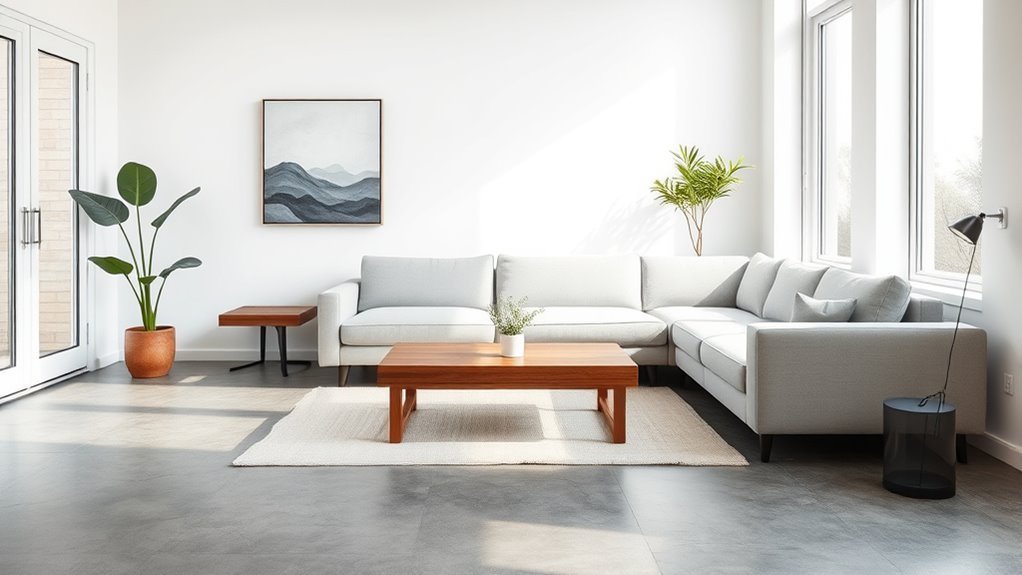
To create a truly inviting minimalist living room, focus on elements that combine simplicity with comfort. These are the pieces that usually matter most:
- A well-scaled sofa: Choose a sofa that fits the room without overwhelming it. Simple arms, low profiles, and solid upholstery work well.
- A grounding rug: Use a rug large enough to connect the seating area. Choose subtle texture over loud pattern.
- Closed storage: Cabinets, media consoles, lidded baskets, and built-ins keep everyday items out of sight.
- Layered lighting: Combine ceiling lighting, floor lamps, table lamps, and natural light so the room works day and night.
- Natural materials: Wood, linen, wool, stone, ceramic, rattan, and leather add warmth without clutter.
- One clear focal point: This could be a fireplace, window, artwork, sculptural lamp, or simple media wall.
- Intentional décor: Keep only the objects that add meaning, function, texture, or balance.
Recommended Products

Multiple Package: Multiple packages may arrive separately. If you have any questions about your cloud couch sectional or need assistance, please reach out to us as soon as possible
How to Design a Minimalist Living Room Step by Step
If your living room feels cluttered or unfinished, use a simple process instead of buying more décor. Minimalism is easier when you start with function first.
1. Define How the Room Is Used
Write down the main activities that happen in the room: relaxing, watching TV, entertaining, reading, working, playing, or hosting overnight guests. Keep furniture and storage that support those activities. Remove or relocate items that belong to another room.
2. Remove Visual Clutter
Clear surfaces first: coffee table, side tables, media console, shelves, and window ledges. Sort items into keep, relocate, donate, recycle, and store. If everything on display is “special,” nothing gets attention. Choose fewer pieces and give them space.
3. Choose an Anchor Piece
Most minimalist living rooms begin with one anchor: a sofa, rug, fireplace, large window, or media wall. Arrange the rest of the room around that anchor. This keeps the design from feeling scattered.
4. Plan the Layout Before Buying
Measure the room before replacing furniture. Use painter’s tape on the floor to test sofa, chair, coffee table, and rug sizes. This prevents the most common minimalist mistake: buying large “simple” furniture that still makes the room feel cramped.
5. Add Storage Before Décor
If clutter keeps returning, the room does not need more styling—it needs better storage. Use a media cabinet with doors, baskets for blankets, a storage ottoman, floating shelves with boxes, or built-ins that hide everyday items.
6. Layer Texture
Once the layout is calm, add texture so the room feels warm. Try linen curtains, a wool rug, a wood coffee table, a ceramic lamp, a woven basket, a soft throw, or a plant. Texture is what keeps minimalism from feeling cold.
Choosing the Right Color Palette
Choosing the right color palette is one of the easiest ways to establish a minimalist living room. Start with one base color, one supporting neutral, and one accent. This keeps the room cohesive while still leaving room for personality.
| Palette Type | Best Colors | Room Effect |
|---|---|---|
| Warm minimalist | Cream, beige, oak, camel, soft black | Calm, cozy, and timeless |
| Cool minimalist | White, light gray, charcoal, chrome, pale blue-gray | Crisp, clean, and modern |
| Earthy minimalist | Stone, clay, olive, tan, walnut | Grounded, natural, and relaxed |
| High-contrast minimalist | White, black, warm wood, linen | Graphic, structured, and bold |
To keep the palette from looking flat, vary the texture within the same color family. For example, a cream sofa, boucle chair, oak table, linen curtains, and ivory wool rug can all be neutral while still feeling layered.
Tips for Functional Furniture in Minimalist Design
Furniture should make the room easier to live in. Before buying anything, ask: Does this piece solve a problem? Does it fit the scale of the room? Does it work with the existing palette? Can it serve more than one purpose?
| Tip | What to Choose | What to Avoid |
|---|---|---|
| Prioritize scale | Sofa and chairs that leave clear pathways | Oversized sectionals in small rooms |
| Use multi-functional pieces | Storage ottomans, nesting tables, sleeper sofas | Single-use pieces that crowd the layout |
| Choose simple silhouettes | Clean arms, raised legs, plain upholstery | Heavy ornamentation and bulky profiles |
| Hide everyday clutter | Closed media units, baskets, cabinets | Too many open shelves with small objects |
Pro Tip: If the room feels too empty after decluttering, do not add random décor. Add one layer of texture first: a larger rug, softer curtains, a warmer lamp, or a wood accent table.
Recommended Products

【Perfect Set Design】This round storage ottoman comes in a set of two, with the larger size measuring 15.4" x 15.4" x 17.7" and the smaller size 12.6" x 12.6" x 14.6". These two round storage ottomans can be neatly stacked together, offering a convenient space-saving solution.
The Role of Natural Light in Your Living Room
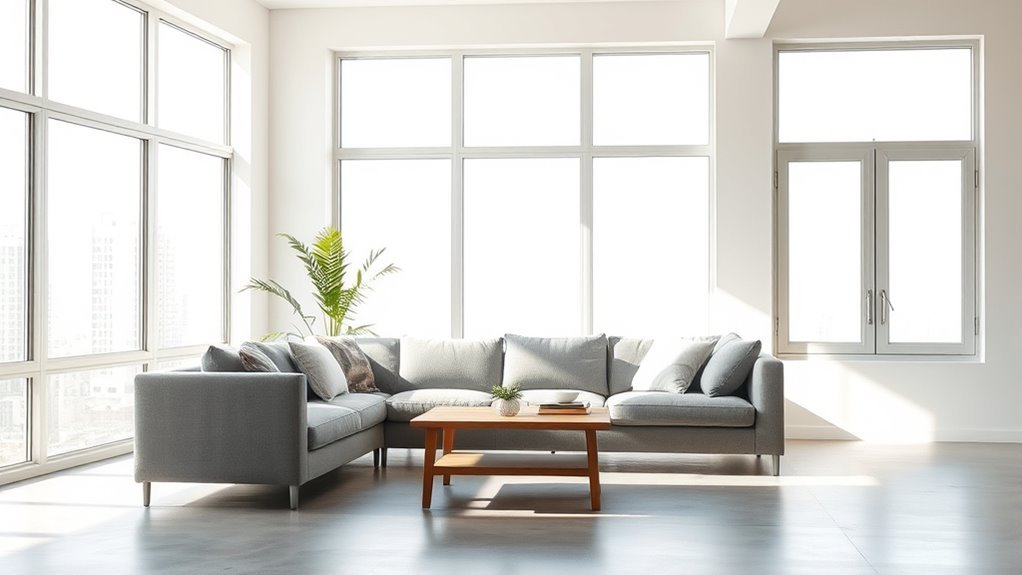
Natural light is a major part of minimalist living room design because it makes open space, clean lines, and natural materials feel more alive. Use light window treatments, mirrors, pale walls, and low-profile furniture to help daylight move through the room.
At the same time, do not ignore glare, heat, or privacy. The U.S. Department of Energy notes that window attachments can help control daylight and glare, provide privacy, improve comfort, and reduce unwanted heat gain or heat loss. In a minimalist room, simple roller shades, woven shades, linen curtains, or solar shades often work better than heavy drapes.
Light also affects daily rhythms. The National Institute of General Medical Sciences explains that light and dark have a major influence on circadian rhythms. That does not mean décor alone can fix sleep or health issues, but it is a good reason to make daytime light pleasant and evening lighting softer.
Texture, Warmth, and Personal Style
The most common criticism of minimalist interiors is that they can feel cold. The fix is not clutter—it is texture. A warm minimalist living room may still use a restrained palette, but it layers surfaces that feel good to look at and touch.
- Soft texture: linen curtains, wool rugs, cotton throws, boucle chairs, and velvet cushions in restrained colors.
- Natural texture: wood grain, stone, ceramic, rattan, leather, jute, and plants.
- Visual contrast: black picture frames, dark lamp bases, charcoal pillows, or a walnut table against pale walls.
- Personal details: one meaningful artwork, a small book stack, a family object, or a handmade vessel.
Personal style matters because a minimalist living room should still feel like your home. The difference is editing. Display fewer meaningful objects instead of many disconnected ones.
Minimalist Storage Ideas That Hide Clutter
Minimalist rooms only stay calm when they have a home for everyday items. Remote controls, chargers, toys, books, blankets, mail, pet supplies, and gaming accessories all need storage.
- Media console with doors: hides cords, routers, gaming systems, and remotes.
- Storage ottoman: stores blankets, toys, or extra pillows while doubling as a footrest.
- Lidded baskets: useful for family rooms, rental spaces, and quick cleanups.
- Floating shelves with boxes: keeps vertical storage tidy instead of visually busy.
- Built-in cabinets: ideal for open-plan living rooms that need long-term storage.
- Drawer organizers: prevent small clutter from moving from surfaces into messy drawers.
When adding new furniture, consider materials and finishes too. New paints, solvents, building materials, and furnishings can contribute to indoor VOCs, according to the U.S. Environmental Protection Agency. Choose low-VOC finishes where possible, ventilate during painting or assembly, and favor durable pieces you can repair or keep for years.
Recommended Products

Generous Hidden Storage: Measuring 16.9"D x 16.9"W x 18.1"H (43 x 43 x 46 cm), this square ottoman offers a 12-gallon (45.3 L) of storage space—perfect for tucking away books, clothes, and blankets to keep your home neat and organized

【QUICK ASSEMBLY, EASY FOLDAWAY】This storage ottoman from the SONGMICS MAZIE Collection has a foldable design that allows quick setup in seconds by simply inserting the bottom panel. Easily fold and store it under the bed or in a closet when not in use
Common Pitfalls in Minimalist Living Room Design
While aiming for a minimalist living room, it is easy to remove too much, buy the wrong pieces, or create a room that looks calm but does not work well. Avoid these common mistakes:
- Over-accumulating decorative items: Too many vases, candles, trays, and small objects quickly undo the calm feeling.
- Choosing furniture that is too large: A simple sofa can still overwhelm the room if the scale is wrong.
- Ignoring storage: Minimalism fails when everyday clutter has nowhere to go.
- Using only flat neutrals: A room with white walls, white furniture, and no texture can feel unfinished.
- Blocking natural light: Tall furniture, heavy drapes, and cluttered window ledges can make the room feel darker.
- Skipping personal details: A minimalist room should feel edited, not anonymous.
- Buying everything new at once: Minimalism works best when you slowly choose pieces that fit your actual life.
Warning: Do not turn minimalism into a shopping theme. If the room already has good bones, the most effective first step is often removing, rearranging, repairing, or storing—not buying a full set of new furniture.
Frequently Asked Questions
What is a minimalist living room?
A minimalist living room is a calm, functional space that uses fewer pieces with more intention. It usually includes clean-lined furniture, open pathways, hidden storage, a simple color palette, natural materials, and limited décor. The goal is comfort and clarity, not emptiness.
What are common minimalist living room mistakes?
Common mistakes include using furniture that is too large, displaying too many small decorations, choosing a palette with no warmth, forgetting storage, blocking windows, relying on one harsh overhead light, and removing so much personality that the room feels staged instead of lived in.
What is the most popular color choice for a modern minimalist living room?
Warm neutrals are the safest and most flexible choice for a modern minimalist living room. Try white, cream, beige, taupe, oatmeal, stone, soft gray, black, and natural wood. Add depth with texture and one muted accent color such as sage, clay, olive, rust, or navy.
Why are interior designers softening minimalism?
Many designers are moving away from stark, cold minimalism and toward warmer minimalism. That means fewer hard white rooms and more natural wood, soft textiles, handmade details, earthy colors, and personal objects. The minimalist foundation remains, but the result feels more comfortable and human.
How do you make a minimalist living room cozy?
Use texture, warm lighting, and natural materials. A cozy minimalist living room might include a wool rug, linen curtains, wood furniture, a soft throw, one sculptural lamp, a plant, and warm white bulbs. Keep the palette simple, but avoid making every surface smooth and white.
What furniture do you need for a minimalist living room?
Most minimalist living rooms need a sofa, a coffee table or ottoman, one or two side tables, a rug, lighting, and storage. Depending on the room, you may also add lounge chairs, a media console, shelves, or a small bench. Choose fewer pieces in the right scale rather than many small fillers.
Conclusion
Minimalist living room style works because it gives the room space to breathe. By choosing functional furniture, a calm color palette, hidden storage, natural light, and warm texture, you can create a living room that feels simple without feeling empty. The best minimalist spaces are not stripped of life; they are edited with purpose, so the pieces that remain can be seen, used, and enjoyed.
Sources
- Encyclopaedia Britannica: Minimalism — supports the broader design idea of simplicity and reduction.
- U.S. Department of Energy: Energy Efficient Window Coverings — supports guidance on daylight, glare, comfort, privacy, heat gain, and window treatments.
- National Institute of General Medical Sciences: Circadian Rhythms — supports the note that light and dark influence circadian rhythms.
- U.S. Environmental Protection Agency: VOCs’ Impact on Indoor Air Quality — supports the note on paints, solvents, building materials, furnishings, ventilation, and VOC awareness.