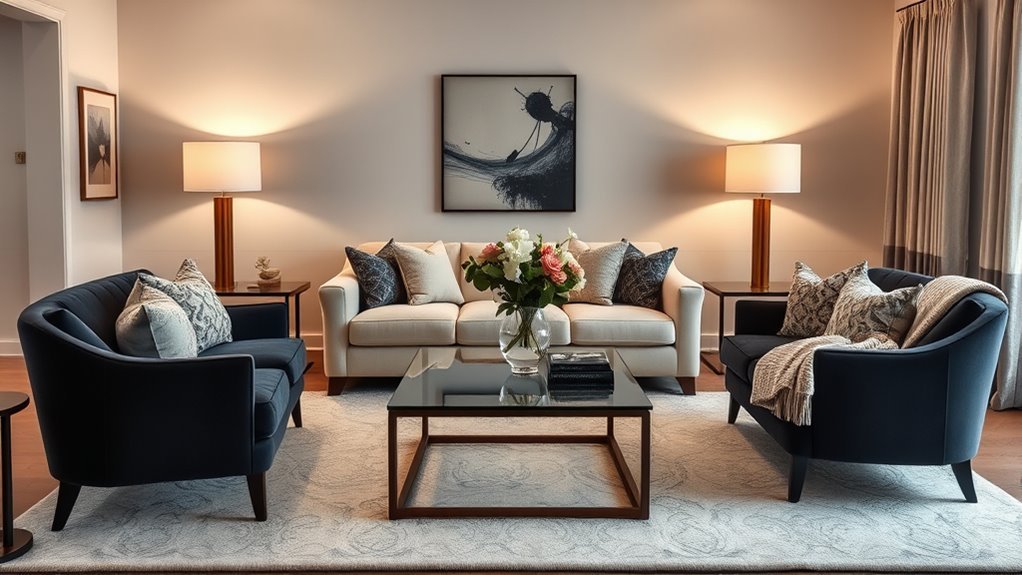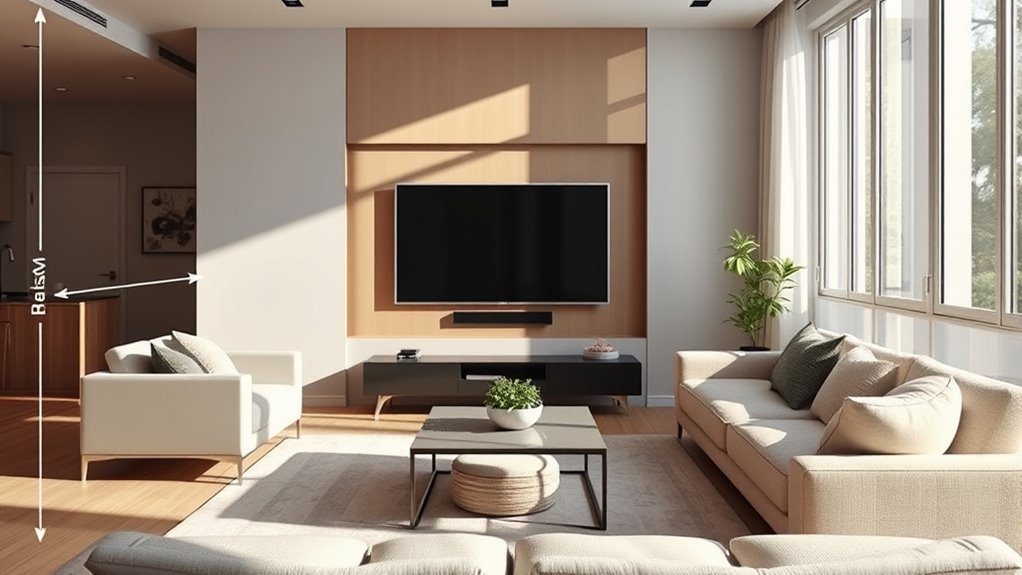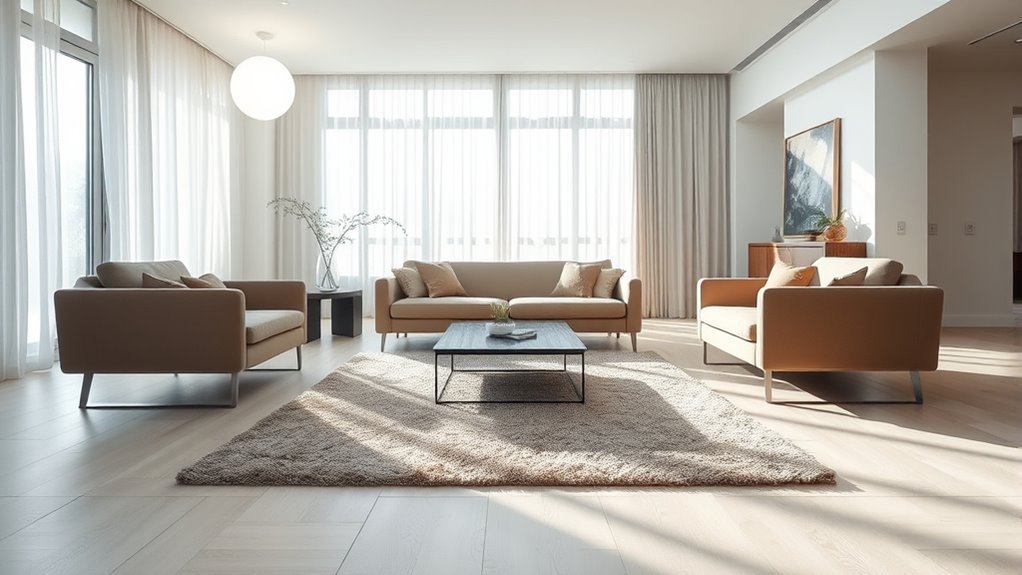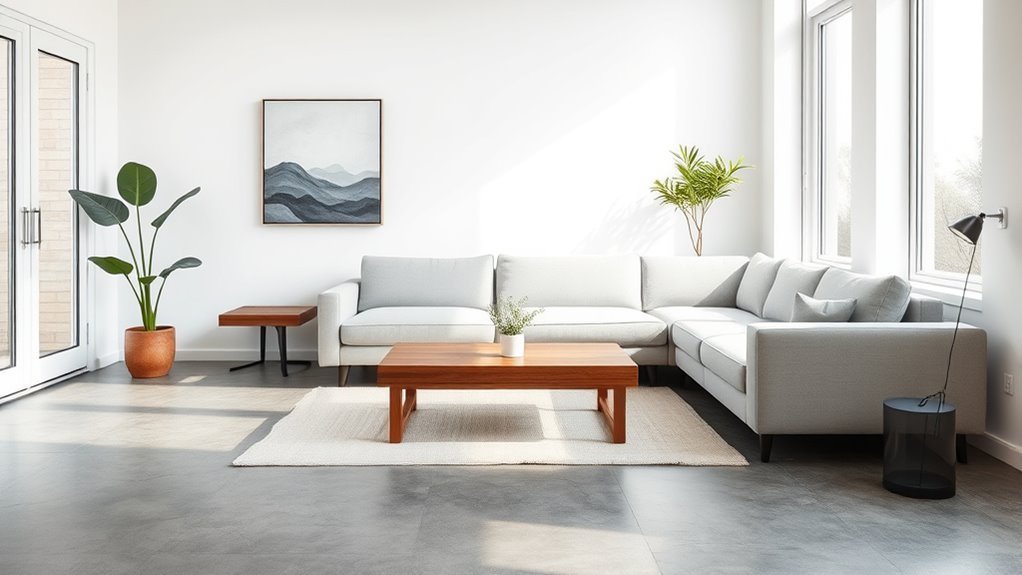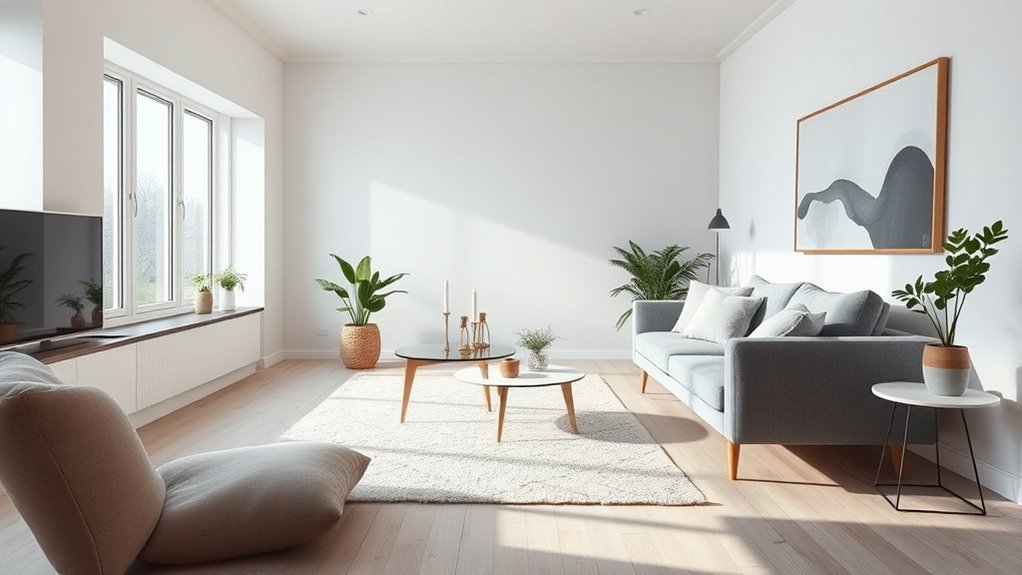
Scandinavian living room style is about creating a calm, bright, useful space without making the room feel empty or cold. The look blends clean lines, light colors, natural materials, practical furniture, and cozy layers so the room feels simple, warm, and easy to live in every day.
Quick Answer
A Scandinavian living room uses a light neutral palette, clean-lined furniture, natural wood, soft textiles, smart storage, and layered lighting. The goal is not bare minimalism. It is a warm, functional room where every piece has a purpose and the space still feels relaxed, cozy, and welcoming.
Key Takeaways
- Start with warm whites, soft grays, oatmeal, beige, pale wood, and a few muted accent colors.
- Choose furniture with simple shapes, visible function, and enough comfort for daily use.
- Use natural materials like wood, wool, cotton, linen, rattan, stone, and ceramic to keep the room from feeling flat.
- Keep clutter hidden with baskets, closed cabinets, nesting tables, and storage ottomans.
- Layer lighting with daylight, warm lamps, task lights, and soft evening lighting instead of relying on one overhead fixture.
At a Glance
| Time Required | A weekend for styling updates; 2–6 weeks if you are buying major furniture |
| Difficulty | Easy to moderate |
| Tools Needed | Tape measure, floor plan sketch, storage baskets, lamps, textiles, and paint or fabric swatches |
| Cost | Low for decluttering, lighting, and textiles; higher for quality sofas, wood furniture, and custom storage |
What Is Scandinavian Living Room Style?
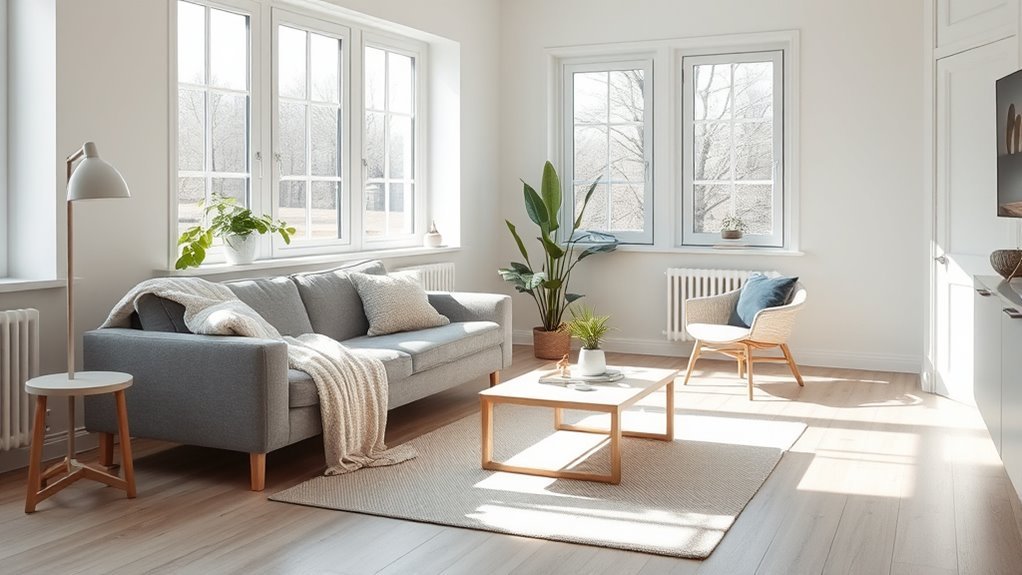
Scandinavian living room style is a practical, light-filled approach to decorating that grew from Nordic ideas of simplicity, usefulness, craftsmanship, and comfort. It favors uncluttered layouts, pale walls, natural textures, and furniture that looks good because it works well.
This style is often described as minimalist, but it should not feel bare. A good Scandinavian living room still has softness: a wool throw on the sofa, linen curtains at the window, a hand-thrown ceramic vase, a textured rug, or a warm wood coffee table. The key is restraint. You choose fewer pieces, but each one earns its place.
The Danish idea of hygge also helps explain why Scandinavian rooms feel so inviting. Hygge is less about buying a certain object and more about creating a relaxed atmosphere where you can slow down, enjoy simple pleasures, and feel at ease.
Key Characteristics of Scandinavian Living Rooms
When you step into a Scandinavian living room, the first impression should be calm. The room feels open, useful, and warm without looking overly decorated. These are the main traits to focus on.
Clean Lines and Minimalism
Scandinavian interiors use clean lines because they make a room feel peaceful and easy to navigate. Sofas usually have simple arms, tables have clear shapes, and cabinets avoid heavy carving or ornate trim.
- Choose low-profile sofas, slim-leg chairs, and simple wood tables.
- Keep surfaces mostly clear, with only a few useful or meaningful objects on display.
- Avoid heavy matching furniture sets; mix wood, textiles, and simple shapes instead.
Minimalism in this style does not mean removing personality. It means removing visual noise so your favorite pieces stand out.
Natural Light Integration
Natural light is one of the strongest parts of a Scandinavian living room. Pale walls, light flooring, sheer curtains, and mirrors help bounce daylight around the room. If your home has large windows, avoid blocking them with bulky furniture. If your room is darker, use warm white paint, lighter upholstery, reflective accents, and layered lamps to create a similar airy effect.
Pro Tip: Hang curtains close to the ceiling and wider than the window frame. This makes windows look larger, lets in more light when the curtains are open, and gives the room a taller, cleaner look.
Neutral Colors With Warmth
The best Scandinavian living room colors are light but not sterile. Start with warm white, ivory, pale gray, oatmeal, greige, mushroom, sand, or soft beige. Then add muted accents such as sage, dusty blue, charcoal, clay, rust, forest green, or pale blush.
A simple palette might look like this: warm white walls, pale oak furniture, a beige wool rug, a soft gray sofa, black metal lamp details, and one muted green accent through pillows or art.
Natural Materials and Texture
Wood, wool, cotton, linen, rattan, leather, stone, and ceramic keep a Scandinavian room from feeling flat. Because the color palette is quiet, texture does a lot of the design work. A smooth wood table, nubby wool rug, woven basket, and linen curtain can all be neutral, but together they make the room feel layered and lived in.
Benefits of Scandinavian Design for Contemporary Homes
Scandinavian design works well in contemporary homes because it balances beauty and daily function. It is especially useful for busy households, apartments, small homes, and open-plan spaces where clutter can quickly take over.
- It makes rooms feel brighter. Light colors, open windows, pale woods, and simple layouts help a room feel larger.
- It supports everyday comfort. Soft textiles, warm lighting, and practical seating make the room easy to use.
- It reduces visual clutter. Smart storage keeps cords, toys, remotes, blankets, and magazines from taking over.
- It ages well. Simple furniture and natural materials are less trend-dependent than bold novelty pieces.
- It can be budget-friendly. You can start with decluttering, rearranging furniture, changing lamps, and adding textiles before buying new furniture.
How to Create a Light and Airy Scandinavian Living Room Atmosphere
To create a light and airy Scandinavian living room, work from the biggest visual choices to the smallest details. This keeps the room cohesive and prevents random decor from collecting over time.
- Clear the room visually first. Remove extra side tables, unused decor, tangled cords, and anything that blocks walkways or windows.
- Choose a soft neutral base. Use warm white, pale gray, cream, greige, or oatmeal on walls, large rugs, and major upholstery.
- Pick one main wood tone. Pale oak, ash, birch, beech, or light pine are classic choices. You can mix wood tones, but keep them close in temperature.
- Use furniture with visible function. Look for storage benches, nesting tables, open shelving, media consoles, or coffee tables with drawers.
- Layer cozy textiles. Add a soft rug, a throw blanket, two or three pillows, and simple curtains in cotton, linen, or wool.
- Add warm lighting. Use a floor lamp, table lamp, and task light so the room still feels cozy after sunset.
- Finish with a few personal pieces. Choose art, books, ceramics, plants, or family objects rather than filling every surface.
Note: Scandinavian style is not about copying a showroom. A few older pieces, handmade ceramics, framed prints, or family objects can make the room feel more authentic.
Why Do Natural Materials Matter in Your Living Room?
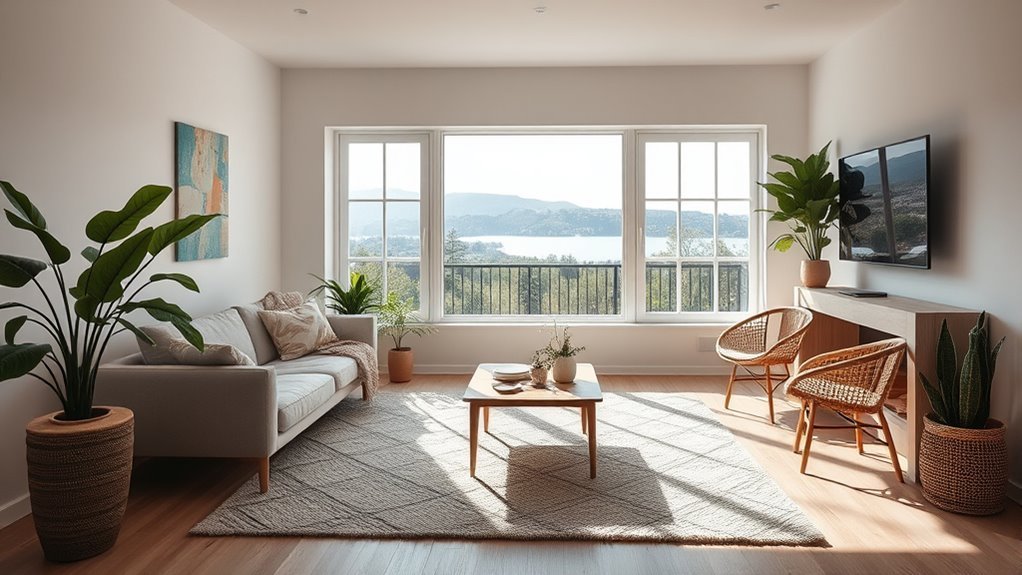
Natural materials matter because they add warmth, texture, and durability to a simple room. In Scandinavian living room design, they help balance clean lines so the space feels calm instead of cold.
Enhancing Aesthetic Appeal
Light wood floors, oak tables, linen curtains, wool rugs, woven baskets, and ceramic accents all bring subtle variation into a neutral room. They also age more gracefully than many shiny, synthetic finishes.
- Wood adds warmth and works well for floors, tables, shelving, frames, and media consoles.
- Wool is ideal for rugs, throws, and pillows because it brings softness and texture.
- Linen and cotton keep curtains and cushion covers casual, breathable, and relaxed.
- Stone and ceramic add weight and contrast in small doses through lamps, vases, trays, or side tables.
- Rattan and woven fibers add texture through baskets, pendant shades, and accent chairs.
Promoting Sustainability Practices
Natural does not automatically mean sustainable. A more responsible approach is to choose durable, repairable, responsibly sourced pieces that you will keep for years. For wood furniture, look for transparent sourcing or recognized certification from organizations such as the Forest Stewardship Council. For upholstered furniture, rugs, paint, and finishes, check labels and product information before buying.
Warning: Some paints, finishes, adhesives, furnishings, and cleaning products can emit VOCs. Follow label directions, ventilate well when using new products, and consider low-emission options when possible. The U.S. Environmental Protection Agency recommends increasing ventilation when using products that emit VOCs.
Choosing Functional and Stylish Furniture
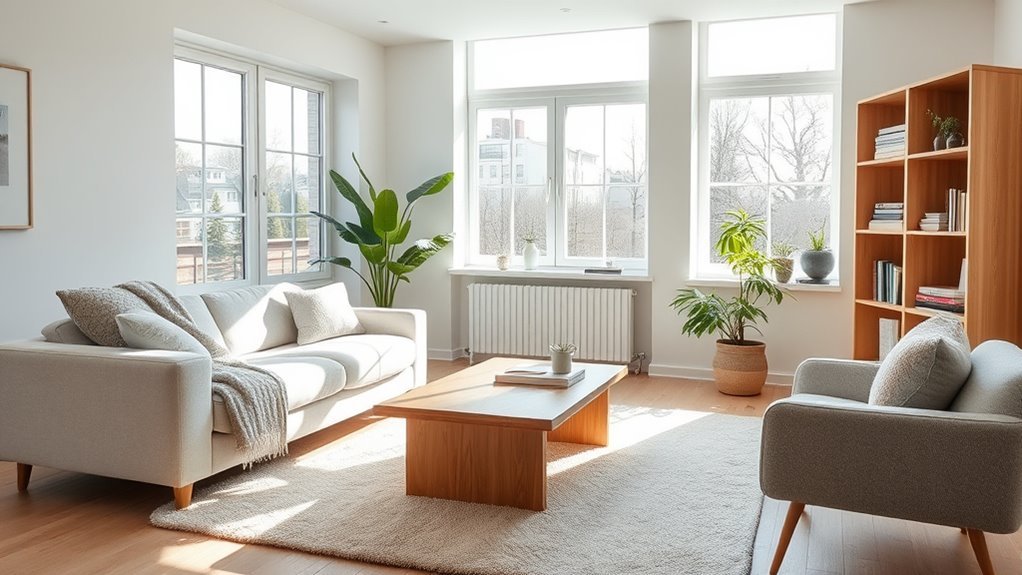
Furniture is the backbone of a Scandinavian living room. Each piece should be comfortable, useful, and visually light. Instead of buying a full matching set, choose pieces that share simple lines, natural materials, and a quiet color palette.
Sofas and Seating
Choose a sofa in beige, gray, cream, oatmeal, soft brown, or muted green. A tight-back sofa looks cleaner, while a loose-cushion sofa feels more relaxed. Both can work if the shape is simple and the scale fits the room.
- For small spaces, choose raised legs so the floor remains visible.
- For family rooms, choose durable fabric and removable cushion covers if possible.
- For conversation areas, pair a sofa with one or two accent chairs instead of pushing every seat against a wall.
Tables and Storage Pieces
Look for coffee tables, side tables, and media consoles that offer function without bulk. Nesting tables, lift-top tables, storage ottomans, and slim consoles are especially useful in apartments and smaller living rooms.
The Designmuseum Denmark is a useful reference point for understanding how Danish and Nordic furniture traditions connect craftsmanship, function, and everyday living.
What to Avoid When Buying Furniture
- Oversized sectionals that block windows, doors, or natural walking paths
- Glossy black or chrome-heavy pieces that feel too cold for the style
- Too many open shelves if you do not want to maintain them
- Furniture that looks minimal but has no real storage or comfort
- Cheap pieces you will need to replace quickly
How to Arrange Furniture in a Scandinavian Living Room
Arranging furniture in a Scandinavian living room starts with movement. The room should feel easy to enter, easy to sit in, and easy to tidy. Leave clear walkways, keep windows open to light, and group seating around a simple focal point.
- Keep 30–36 inches for main walkways. This helps the room feel open and comfortable.
- Leave about 16–18 inches between the sofa and coffee table. This keeps drinks and books within reach without crowding knees.
- Pull furniture slightly away from walls when possible. Even a few inches can make the layout feel more intentional.
- Use a rug to define the seating zone. At minimum, the front legs of the sofa and chairs should sit on the rug.
- Keep windows clear. Avoid tall furniture directly in front of natural light unless privacy or storage makes it necessary.
If your living room has no fireplace, create a quiet focal point with a low media console, a large piece of art, a wall-mounted shelf, or a simple reading corner.
Incorporating Cozy Textiles for Comfort
Cozy textiles are what keep Scandinavian minimalism from feeling stark. Think of them as quiet layers rather than decoration for its own sake. A soft rug, linen curtains, wool blanket, and a few pillows can change the whole mood of the room.
- Layer a knitted throw over the sofa for warmth and texture.
- Choose a wool, jute, cotton, or flatweave rug in a soft neutral shade.
- Use linen or cotton curtains to soften windows without blocking too much light.
- Mix pillow textures instead of using many bold patterns.
- Keep the palette calm: cream, oatmeal, gray, taupe, muted blue, sage, or charcoal.
Patterns can work, but use them lightly. Simple stripes, small checks, subtle geometrics, and Nordic-inspired motifs are easier to blend than loud, high-contrast prints.
Storage Solutions for a Clutter-Free Scandinavian Space
Scandinavian living rooms look calm because everyday clutter has a place to go. Storage should be practical, easy to use, and integrated into the design.
Recommended Products

【ottoman】Our ottoman has the better size and Relaxed color,Length 17 x width 13 x height 13 inches and Grey,It is also a comfortable footstool,Proper size and thickened sponge pad can make him a good footrest,Sitting on the sofa and putting your feet on the ottoman can relax your legs, relax your whole body and enjoy the pleasant time
Functional Furniture Design Choices
Choose furniture that does more than one job. A storage ottoman can hold blankets. A media console can hide cords and games. A bench can provide seating and shoe or toy storage. A coffee table with drawers can keep remotes and chargers out of sight.
- Coffee tables with hidden storage compartments
- Sleek media consoles with cord management
- Storage benches near windows or entry points
- Side tables with drawers or shelves
- Ottomans that work as seating, footrests, and blanket storage
Minimalist Shelving Solutions
Minimalist shelving works best when it is edited. Floating shelves, modular shelving, and low bookcases can all fit the Scandinavian look, but they should not become catch-all clutter zones.
A simple rule is to leave some empty space. Mix books, ceramics, framed art, plants, and baskets, but do not fill every inch. If you need to store many practical items, choose closed cabinets for the less attractive pieces and open shelves for the objects you enjoy seeing.
Decorative Storage Ideas
Decorative storage should still be useful. Woven baskets, lidded boxes, canvas bins, and wood trays can organize toys, magazines, remotes, throws, chargers, and pet items while adding texture to the room.
- Use one large basket for throws beside the sofa.
- Place a shallow tray on the coffee table to group small items.
- Use lidded boxes on shelves for cords, batteries, and remotes.
- Choose matching baskets inside open shelving for a cleaner look.
Scandinavian Living Room Color Palette and Finishes
The easiest way to build a Scandinavian palette is to work in layers: base color, wood tone, textile tone, accent color, and contrast.
- Base color: warm white, ivory, pale gray, cream, greige, or soft beige
- Wood tone: pale oak, ash, birch, beech, pine, or light walnut
- Textile tone: oatmeal, taupe, stone, fog gray, camel, or warm charcoal
- Accent color: sage, dusty blue, muted terracotta, rust, soft black, or forest green
- Contrast: small black metal details, darker picture frames, or a charcoal lamp shade
For finishes, choose matte or satin instead of glossy. Matte paint, natural wood grain, brushed metal, stoneware, and woven fibers look more relaxed and timeless than highly polished surfaces.
Scandinavian Lighting Ideas for Living Rooms
Lighting is essential because Scandinavian interiors are designed to feel good during both bright days and long evenings. Do not rely on one overhead light. Use layers.
- Ambient lighting: ceiling light, pendant, or flush mount for general brightness
- Task lighting: reading floor lamp beside a chair or sofa
- Accent lighting: small table lamp on a console, shelf, or side table
- Soft evening lighting: dimmable lamps, shaded bulbs, or LED candles
Warm white bulbs usually feel best in a living room. Avoid cool, blue-toned bulbs unless you need bright task lighting for a specific activity.
Warning: If you use real candles for atmosphere, keep them away from curtains, books, dried greenery, children, and pets. LED candles are a safer choice for shelves, baskets, bedrooms, and busy family spaces.
Small Scandinavian Living Room Ideas
Scandinavian style is especially helpful in small living rooms because it favors light, function, and fewer pieces. The trick is to avoid furniture that is visually heavy.
- Choose a sofa with raised legs so you can see more floor.
- Use nesting tables instead of one large coffee table.
- Mount shelves or lighting on the wall to save floor space.
- Choose one large rug instead of several small rugs.
- Use closed storage for clutter and open shelves only for attractive pieces.
- Pick one strong accent color and repeat it in two or three places.
- Use mirrors across from or near windows to reflect light.
In a small room, restraint matters even more. One good lamp, one good rug, one tidy shelf, and one comfortable sofa will do more than a crowded mix of small decor pieces.
Budget-Friendly Ways to Get the Scandinavian Look
You do not need to replace everything to create a Scandinavian living room. Start with the changes that make the biggest visual difference.
- Declutter surfaces. Clear the coffee table, media console, and shelves.
- Rearrange for light. Move tall or bulky furniture away from windows.
- Swap pillow covers. Choose linen, cotton, wool, or textured neutrals.
- Add one warm lamp. A simple floor or table lamp can change the mood at night.
- Use baskets. Hide blankets, toys, cords, and magazines in woven or canvas storage.
- Bring in wood. A secondhand oak side table, frame, tray, or stool can add warmth.
- Edit wall art. Choose fewer, larger pieces instead of many small items.
The fastest Scandinavian-style update is not buying something new. It is removing clutter, letting in more light, and making the pieces you already use feel intentional.
Common Scandinavian Living Room Mistakes to Avoid
A Scandinavian living room should feel calm, but it should not feel unfinished. Avoid these common mistakes when decorating.
- Using only white. Add wood, wool, linen, plants, or muted color so the room feels warm.
- Buying furniture that is too small. Minimal does not mean tiny. Choose properly scaled pieces.
- Skipping storage. A room cannot stay serene if everyday items have nowhere to go.
- Using cold lighting. Blue-white bulbs can make a neutral room feel harsh.
- Adding too many trends. Keep the base timeless and use small accents for seasonal changes.
- Ignoring comfort. A beautiful chair that no one wants to sit in is not Scandinavian in spirit.
- Overdecorating shelves. Leave breathing room around objects so the display feels intentional.
Why Does Scandinavian Design Work for Modern Living?
Scandinavian design works for modern living because it solves common home problems: too much clutter, not enough light, awkward layouts, and furniture that looks good but does not function well. Its focus on simplicity and usefulness makes a room easier to clean, easier to rearrange, and easier to enjoy.
The style also adapts well. You can make it more rustic with pine, sheepskin, and handmade pottery. You can make it more modern with black accents and sculptural lighting. You can make it softer with linen, curves, and warm neutrals. As long as the room stays bright, useful, uncluttered, and comfortable, it can still feel Scandinavian.
Frequently Asked Questions
What is the difference between boho style and Scandinavian style?
Boho style is usually more layered, colorful, collected, and pattern-heavy. Scandinavian style is lighter, simpler, and more functional, with neutral colors, clean lines, natural materials, and fewer decorative objects. Boho celebrates eclectic abundance, while Scandinavian design favors calm restraint.
What is not a common feature of Scandinavian interior design?
Heavy ornament, glossy finishes, oversized dark furniture, ornate carvings, and loud color schemes are not common features of Scandinavian interior design. The style usually favors simple shapes, practical furniture, light colors, natural textures, and open breathing room.
What are Scandi colors for a living room?
Scandi living room colors include warm white, ivory, cream, pale gray, greige, beige, oatmeal, taupe, and light wood tones. Good accent colors include sage green, dusty blue, muted terracotta, charcoal, soft black, clay, and forest green.
What are the characteristics of Scandinavian interior design?
Scandinavian interior design is known for simplicity, functionality, clean lines, light colors, natural materials, cozy textiles, and smart storage. It avoids visual clutter but still feels warm through wood, wool, linen, plants, soft lighting, and personal details.
Can a Scandinavian living room have color?
Yes. Scandinavian rooms often use color, but the colors are usually muted and nature-inspired. Try sage, dusty blue, rust, clay, moss, ochre, or charcoal instead of bright primary colors. Use color in pillows, art, throws, books, or one accent chair.
How do I make a Scandinavian living room feel cozy?
Use soft textiles, warm bulbs, layered lamps, natural wood, a properly sized rug, comfortable seating, and a few personal objects. Cozy Scandinavian design is about warmth and ease, not clutter. A throw blanket, soft rug, and warm lamp can make a big difference.
Is Scandinavian style good for small living rooms?
Yes. Scandinavian style works very well in small living rooms because it uses light colors, raised-leg furniture, simple layouts, and smart storage. Choose fewer pieces, keep windows clear, use one large rug, and add wall-mounted storage or lighting where floor space is tight.
Conclusion
Embracing Scandinavian living room style can transform your space into a calm, functional retreat that still feels warm and personal. Start with light colors, natural materials, clean-lined furniture, cozy textiles, and practical storage. Then add soft lighting and a few meaningful details. The result is a room that looks simple, works hard, and invites you to slow down.
Sources
- Denmark.dk — What do we mean by “hygge”? — backs up the cultural explanation of hygge and its connection to quieter pleasures and togetherness.
- U.S. Environmental Protection Agency — Volatile Organic Compounds’ Impact on Indoor Air Quality — backs up the VOC and ventilation caution for paints, finishes, furnishings, and household products.
- Designmuseum Denmark — supports the design-history context for Danish and Nordic furniture, craft, and functional design traditions.
- Rousi, “The Scandinavian Style: Nordic values in HCI” — supports the historical association of Scandinavian design with simplicity, functionalism, and 1950s international attention.
- Forest Stewardship Council — supports the recommendation to look for responsible sourcing when buying wood and forest-based products.