
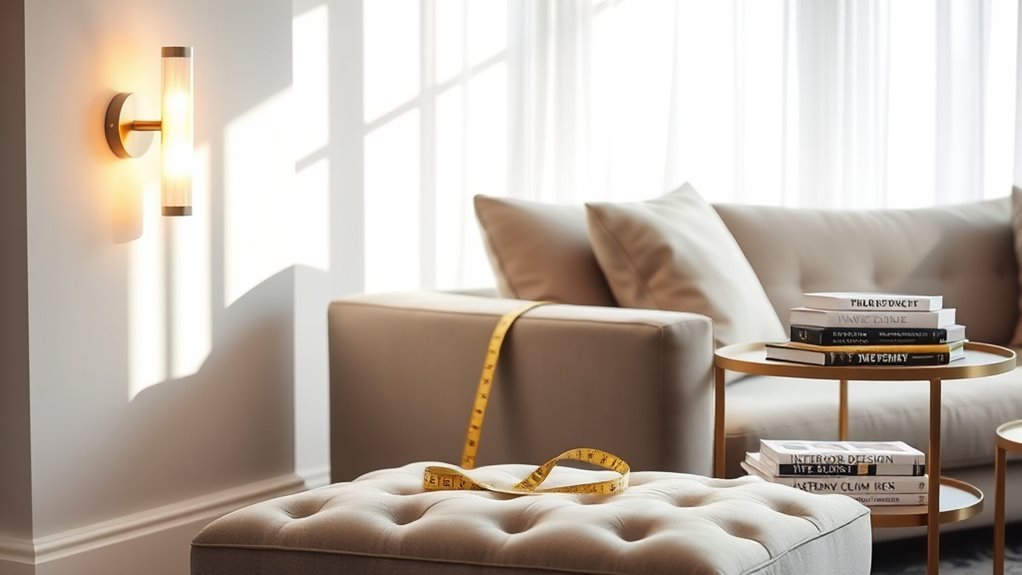
Choosing the right wall sconce height in a living room is about more than picking a number on the wall. A good placement should soften the room, avoid glare, fit the furniture layout, and keep the fixture safely out of the way. For most living rooms, start with the center of the sconce or junction box between 60 and 66 inches from the finished floor, then adjust up or down for ceiling height, fixture size, seating height, and how the light will be used.
Quick Answer
In a living room, mount most wall sconces so the center of the fixture or junction box sits about 60–66 inches from the floor. Use 66–72 inches for taller ceilings, larger sconces, or uplighting fixtures. The bulb should not shine directly into your eyes when standing or sitting.
Key Takeaways
- Use 60–66 inches to the fixture center as the best starting height for most 8-foot living rooms.
- Raise sconces to 66–72 inches for tall ceilings, vaulted rooms, large shades, or dramatic uplighting.
- Keep bulbs, glass shades, and reflective finishes out of direct eye line to reduce glare.
- Do not use “6 inches apart” as a universal rule. Use it as clearance from trim, artwork, or frames, then space multiple sconces by wall length and light spread.
- Choose bulbs by lumens and color temperature, not just watts, and use dimmer-compatible bulbs when the sconce is on a dimmer.
At a Glance
| Time Required | 15–30 minutes to plan and mark placement; longer if wiring is needed |
| Difficulty | Easy for planning; moderate to advanced for hardwired installation |
| Tools Needed | Measuring tape, pencil, level, painter’s tape, cardboard template, stud finder, and the fixture’s installation manual |
| Cost | Planning is free; fixture, bulb, dimmer, electrical box, and electrician costs vary by project |
Why Sconce Height Matters in Your Living Room
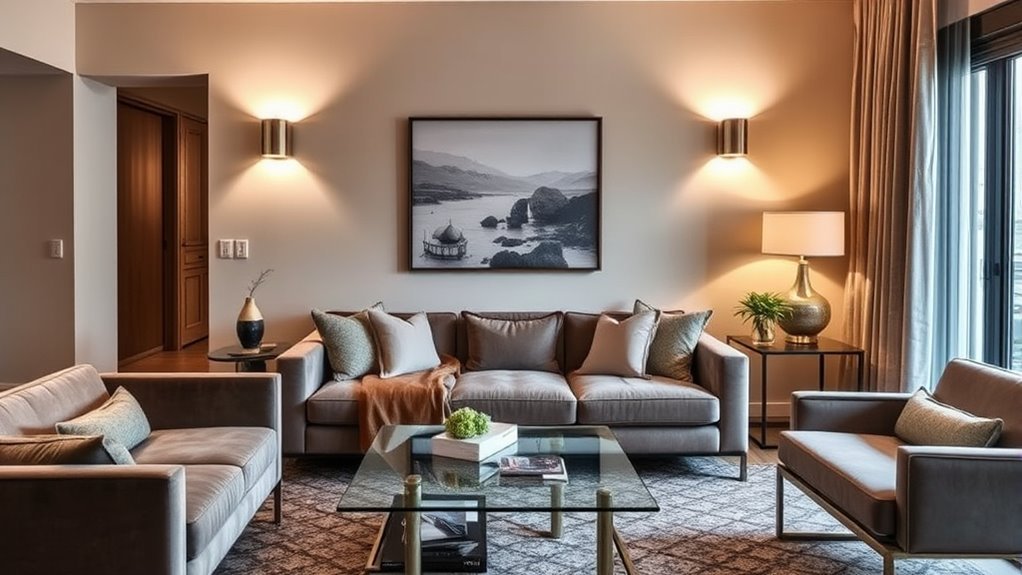
The height of your sconces shapes how the whole living room feels. Mounted too low, a sconce can feel awkward, crowd furniture, or shine into your eyes. Mounted too high, it may look disconnected from the sofa, mantel, art, or console table below it. The best placement creates a soft layer of light on the wall while keeping the fixture visually connected to the room.
A helpful starting point is 60–66 inches from the finished floor to the center of the sconce. This usually places the light slightly above average standing eye level in a standard room, which helps soften direct glare. In taller rooms, or when the sconce is large, shaded, or designed to throw light upward and downward, the center can often move closer to 66–72 inches.
Think about the purpose of the light before marking the wall. The U.S. Department of Energy explains that good lighting design should match the amount and quality of light to the function being performed, whether the light is ambient, task, or accent lighting. That principle is especially useful with living room sconces because a decorative accent beside artwork needs a different placement than a reading light beside a chair.
Note: There is no single perfect wall sconce height for every living room. Use 60–66 inches as your first mark, then test the actual fixture shape, shade direction, furniture height, and glare before drilling or wiring.
Step-By-Step Guide to Measuring Sconce Height
Before installation, decide what part of the fixture you are measuring. For most hardwired sconces, the cleanest reference point is the center of the electrical box or fixture backplate. For plug-in sconces, use the center of the shade, arm pivot, or backplate, depending on the style.
- Choose the purpose. Decide whether the sconce is for general glow, reading, artwork, a fireplace wall, or symmetry beside a sofa or console.
- Mark the starting height. Measure 60–66 inches up from the finished floor and make a light pencil mark at the fixture center.
- Check the fixture size. Hold up the actual sconce or trace it on cardboard. Mark the top, bottom, and widest projection so you can see the full scale.
- Test eye level. Stand and sit in the room. The bulb should not be directly visible from normal seating positions unless it is shielded by frosted glass, fabric, or an opaque shade.
- Use painter’s tape. Tape the outline to the wall for at least a few minutes. View it from the entry, sofa, TV area, and any nearby hallway.
- Level paired sconces. If installing a pair, measure from the floor to each center point and use a level so both fixtures align exactly.
- Confirm wiring and clearance. Check studs, electrical box location, furniture swing, door swing, and the fixture’s projection from the wall.
Pro Tip: Do a nighttime test before final installation. Tape a small battery light or phone flashlight near the planned location, then check for glare on the TV, mirror, glass picture frames, and glossy paint.
Ideal Sconce Height and Placement for Living Rooms
For most living rooms, the ideal wall sconce height depends on ceiling height, the fixture’s shape, and what sits below it. The goal is to place the light high enough to feel elegant and practical, but low enough to relate to the furniture and decor.
Recommended Products

Two Installation Options: No need for hard wiring, saving the expensive cost of hiring an electrician. 1. No-Drill Hook Installation – Ideal for renters or anyone who wants to avoid wall damage. 2. Drill Installation – For a more permanent setup, ensuring a secure mount.

【Wireless & Easy to Install】NIORSUN wall sconces set of two battery operated comes with two 300 lumen, 10400 mAh E26 rechargeable bulbs. It can work 25H for highest brightness, 72H for low brightness fully charged. Our rechargeable wall sconce redefine convenience with their easy installation, no wiring required. They are not simply stuck on the wall but mounted securely with minimal effort—just drill two small holes for installation. With a sleek and contemporary design, these sconces effortlessly blend into any indoor space, providing both functionality and style.

【6000mAh Rechargeable Battery Per Bulb — 12,000mAh Total for the Set】Each bulb is powered by a true 6000mAh rechargeable battery — not a combined figure. That’s 12,000mAh across both bulbs, giving you up to 13 hours on max brightness and up to 60 hours on low brightness per full charge. USB-C charging included — no disposable batteries needed. Reliable lighting that lasts. Note: Fully charge before first use. Charge in a dry environment, keep away from moisture.
Standard Height Guidelines
| Room or Fixture Situation | Best Starting Height | Why It Works |
| Standard 8-foot ceiling | 60–66 inches to fixture center | Keeps the light near comfortable eye level without making the wall feel top-heavy. |
| 9–10-foot ceiling | 64–70 inches to fixture center | Raises the fixture enough to feel proportional to taller walls. |
| Vaulted or very tall ceiling | 66–72 inches to fixture center | Helps the sconce relate to the architecture without floating too low on the wall. |
| Beside a reading chair | Shade near seated shoulder to eye height | Directs useful light toward a book without shining into the sitter’s eyes. |
| Large or exposed-bulb sconce | 66–72 inches, or high enough to hide glare | Larger fixtures need more breathing room and direct bulbs need careful sightline control. |
Spacing Between Sconces
Spacing depends on whether the sconces are a pair, a row, or a single accent. A pair should feel symmetrical around the object it frames. A row should feel evenly distributed across the wall, not squeezed together.
- Beside artwork or a mirror: keep the sconce edges roughly 4–10 inches from the frame, depending on fixture width and shade spread.
- Beside door or window trim: leave at least 6 inches of breathing room when possible so the fixture does not look cramped.
- On a long living room wall: space repeated sconces by the length of the wall and the light spread of the fixture. Do not treat 6 inches as the distance between separate sconces.
- Above or beside a sofa: align sconces with the sofa arms, side tables, artwork, or architectural centerline instead of placing them randomly.
- Near a TV: avoid placing bright or exposed bulbs where they reflect on the screen.
The U.S. Department of Energy defines glare as excessive brightness from a direct or reflected light source, and notes that glare is primarily caused by the relationship between the light source and what you are viewing. That is why sconce spacing should always be tested from the sofa, not just measured from the wall. DOE lighting terminology is a useful reference when choosing between ambient, task, and accent placement.
Key Factors for Determining Sconce Height
Room Ceiling Height
Ceiling height changes the visual balance of a wall. In an 8-foot room, sconces centered at 60–66 inches usually feel natural. In a room with 10-foot or vaulted ceilings, the same height can look too low, especially if there is tall artwork, built-ins, or a fireplace surround. Raise the center point gradually, but keep the fixture connected to the furniture or feature below it.
A simple check is to divide the wall visually into lower, middle, and upper zones. Living room sconces usually look best in the middle zone, not near the ceiling and not crowded against the furniture.
User Height Consideration
The people who use the room matter. Taller users may prefer the light source slightly higher so the bulb is not in their direct line of sight. Shorter users, or rooms centered around seated activities, may need a lower placement. If the sconce is near a favorite reading chair, sit in the chair and check whether the light falls on the page without hitting your eyes.
For family rooms and media rooms, test the placement while seated. A sconce that looks perfect while standing can still create glare across a TV or glossy coffee table once everyone sits down.
Sconce Size and Style
The bigger the sconce, the more important proportion becomes. A slim shaded sconce can sit closer to eye level because the shade softens the bulb. A wide globe, swing arm, or exposed-bulb fixture may need to be higher or farther from the seating area. Uplight and downlight sconces can often sit in the 66–72 inch range because they wash the wall instead of pointing directly outward.
- Small shaded sconces: start around 60–64 inches to the center.
- Medium decorative sconces: start around 62–66 inches to the center.
- Large, tall, or sculptural sconces: start around 66–72 inches to the center.
- Swing-arm sconces: position for the task first, then confirm the arm does not block walking paths or artwork.
Bulb Brightness, Color, and Dimmers
Height is only half of the comfort equation. The wrong bulb can make a well-placed sconce feel harsh. When choosing bulbs, compare lumens for brightness instead of relying only on watts. The Department of Energy explains that lumens measure how much light you get from a bulb, and the Lighting Facts label helps compare brightness, light appearance, life, and yearly cost. DOE’s lumen guide is a helpful reference.
- Ambient living room glow: try lower-lumen bulbs or dimmable LEDs so the sconces add warmth without overpowering lamps and ceiling lights.
- Reading or task lighting: use a brighter bulb, but choose a shade or adjustable arm that directs light where it is needed.
- Color temperature: 2700K–3000K feels warm and cozy; 3000K–3500K can feel cleaner for task lighting.
- Color rendering: a CRI of 80+ is acceptable for most residential interiors, while 90+ is helpful near artwork, fabrics, or decor where color accuracy matters.
- Dimmers: make sure the bulb, fixture, and dimmer switch are compatible, especially with LED bulbs.
The Department of Energy notes that warm light is generally preferred in living spaces because it flatters skin tones and clothing, and that 2700K–3600K is generally recommended for most indoor general and task lighting applications. It also notes that a CRI of 80 or higher is acceptable for most indoor residential uses. Those lighting-quality basics make bulb choice just as important as wall height.
Common Mistakes to Avoid in Sconce Installation
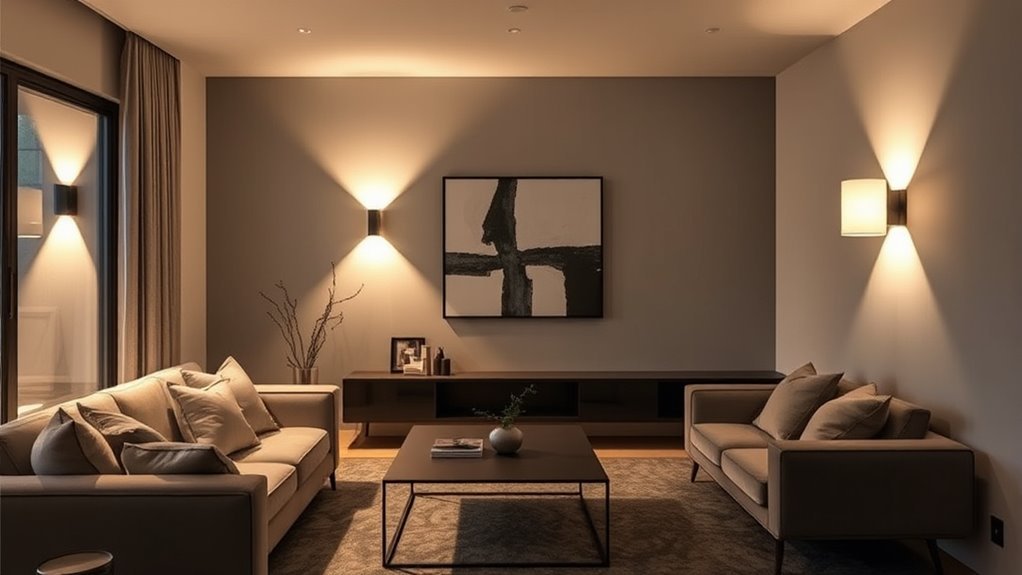
The most common mistake is installing sconces before seeing them at full scale. A small backplate may look fine on paper, while the shade, arm, or globe feels too large once it is actually on the wall. Always mock up the entire fixture outline before drilling.
Warning: If your sconces are hardwired, turn off power at the breaker and follow the fixture manual. Hire a licensed electrician if you need a new electrical box, new wiring, a dimmer, or any change to the circuit. Never exceed the fixture’s rated bulb wattage.
Avoid these common installation problems:
- Measuring to the wrong point. Decide whether you are measuring to the junction box, backplate center, shade center, or bulb center. For most hardwired sconces, use the fixture or electrical-box center.
- Ignoring the shade. The bulb may sit higher or lower than the backplate. Check the actual light source, not just the decorative plate.
- Placing fixtures too close to trim. Give sconces enough breathing room from window casing, door trim, shelves, and artwork frames.
- Creating TV glare. A sconce beside or across from a television can reflect on the screen, especially with clear glass or exposed bulbs.
- Using the wrong bulb color. Cool, high-Kelvin bulbs can feel stark in a cozy living room. Warm white is usually more flattering.
- Skipping dimmer compatibility. Not all LED bulbs work with all dimmers, so check the bulb and dimmer labels before buying.
- Blocking a circulation path. In narrow walkways, choose a low-profile sconce that does not stick far into the path.
Note: In public and accessibility-sensitive circulation paths, the U.S. Access Board explains that many wall-mounted objects with leading edges above 27 inches and below 80 inches are limited to a 4-inch maximum projection. In a home living room, this is still a useful safety reminder for narrow paths, entries, and rooms used by people with low vision.
Popular Sconce Styles for Living Rooms
The best sconce style depends on the mood and function you want. A living room usually benefits from layered lighting, so sconces should work with table lamps, floor lamps, ceiling fixtures, and natural light rather than trying to do everything alone.
- Shaded sconces: Great for soft ambient light. Fabric, metal, or opaque shades help reduce glare and make placement more forgiving.
- Up-and-down sconces: Ideal for washing the wall with light. These often look best slightly higher, around 66–72 inches to the center.
- Swing-arm sconces: Best beside reading chairs, sofas, or built-ins. Place them based on seated use, not only standing eye level.
- Globe sconces: Stylish and sculptural, but clear globes can glare. Choose frosted glass or a lower-lumen bulb for comfort.
- Picture-light style sconces: Useful above artwork, shelves, or a fireplace wall. Align them with the art or architectural feature they highlight.
- Candle-style sconces: Decorative and traditional. They often look best in pairs flanking a mantel, mirror, doorway, or large artwork.
The right sconce height is the point where the fixture looks connected to the room and the light feels comfortable from both standing and seated positions.
Where to Place Wall Sconces in a Living Room
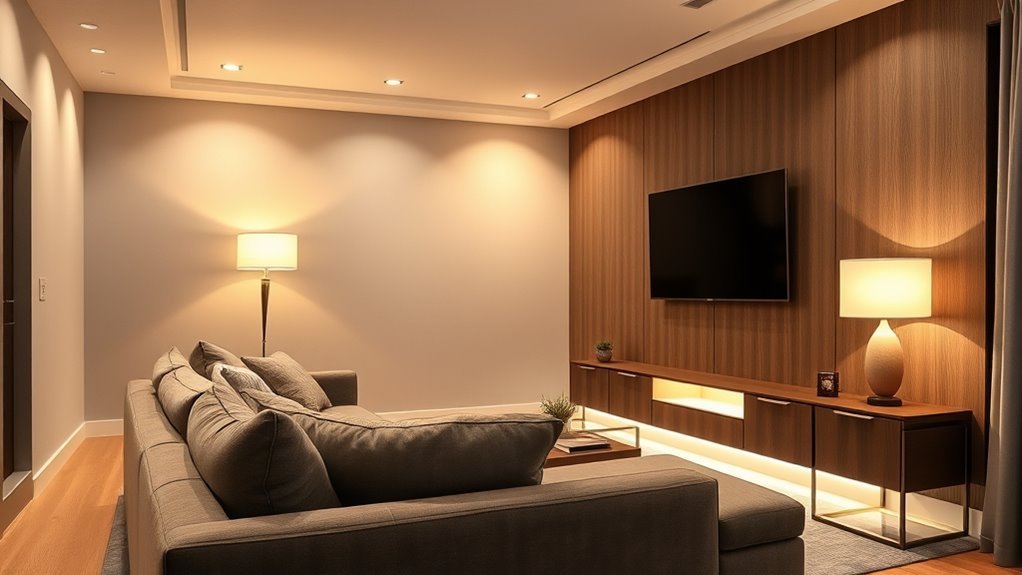
Placement should follow the room’s focal points. Instead of installing sconces on an empty wall just because there is space, connect them to something: a sofa, art grouping, fireplace, console table, window bay, reading nook, or built-in shelving.
Recommended Products

【Wireless Sconces & Easy Installation】 NO Wiring Required! Our battery operated wall sconce set of 2 are home-friendly and incredibly easy to install: fix the scones lighting on the wall with included screws(Tips: If the wall lights cannot be light up, please rotate the lamp tube slightly)
Beside a Sofa
Place sconces near the sofa arms or side tables so they feel intentional. If the sconces flank artwork above the sofa, align them with the artwork rather than the sofa alone. Keep the bottom of the fixture high enough that nobody bumps it while sitting or standing.
Beside a Reading Chair
Use the seated person’s shoulder and eye level as the guide. A swing-arm sconce should cast light onto the book, table, or lap without throwing a bright bulb into the reader’s eyes. If two people use the chair, test both seated heights.
Around a Fireplace or Mantel
Pairs of sconces can make a fireplace wall feel balanced. Keep both centers level, leave enough space from the mantel or surround, and avoid placing the fixtures so close to the fireplace that heat, smoke, or visual clutter becomes an issue.
Beside Artwork or a Mirror
When sconces frame art or a mirror, symmetry matters. Keep the centers level and leave a consistent gap between each fixture and the frame. For mirrors, check reflections from several angles so the bulbs do not double in brightness.
Near a TV or Media Wall
Be careful with sconces near a screen. Indirect sconces, shaded sconces, and dimmable bulbs are usually better than exposed bulbs. Test the screen at night before committing to the placement.
Troubleshooting Wall Sconce Placement
If something feels off, the problem is usually height, glare, scale, or spacing. Use these quick fixes before moving wiring or patching drywall.
- The sconce looks too low: raise the center point 2–4 inches, especially in rooms with tall ceilings or large furniture.
- The sconce looks too high: lower it until it relates to the sofa, console, art, or mantel below it.
- The bulb is glaring: use a lower-lumen bulb, frosted bulb, opaque shade, dimmer, or a fixture that directs light up/down instead of outward.
- The wall feels crowded: increase distance from art, trim, shelves, or other fixtures. A larger wall often needs fewer, better-spaced sconces.
- The room still feels dark: add table lamps or floor lamps. Sconces are strongest as one layer of lighting, not the only layer.
- The fixture sticks out too far: switch to a low-profile sconce in narrow paths or busy family rooms.
Frequently Asked Questions
What height should sconces be in a living room?
Most living room sconces should start around 60–66 inches from the floor to the center of the fixture or junction box. Raise them to 66–72 inches for taller ceilings, larger sconces, or fixtures that cast light upward and downward.
What is the rule for wall sconces?
Use eye level as the comfort rule and proportion as the design rule. The fixture should look connected to the furniture or wall feature below it, while the bulb should not shine directly into your eyes from normal standing or seated positions.
How do you choose wall sconces for a living room?
Choose sconces by purpose first. Use shaded or frosted sconces for soft ambient light, swing-arm sconces for reading, up-and-down sconces for wall washing, and picture-light styles for art or built-ins. Then match the finish, scale, and bulb warmth to the rest of the room.
Where should wall lights go in a living room?
Place wall lights where they support a focal point or activity: beside a sofa, near a reading chair, flanking a fireplace, framing art, beside a console, or along a long wall that needs depth. Avoid placing bright sconces where they reflect on a TV or mirror.
How far apart should living room sconces be?
There is no single spacing rule. For pairs, make the spacing symmetrical around the sofa, art, mirror, or fireplace. For repeated sconces on a long wall, space them according to wall length and light spread. Keep at least several inches of clearance from trim, frames, shelves, and curtains.
Should living room sconces point up or down?
Uplight sconces create a soft ambient glow and can make walls feel taller. Downlight or adjustable sconces work better for reading and task lighting. Up-and-down sconces are a good choice when you want wall texture, symmetry, and indirect light without a visible bulb.
Conclusion
The best wall sconce height for a living room is usually 60–66 inches from the floor to the fixture center, with 66–72 inches working better for taller ceilings, larger sconces, and uplight/downlight designs. Use that range as your starting point, then adjust for eye level, furniture height, shade shape, bulb brightness, and glare. When the height, spacing, and bulb choice all work together, your sconces will do more than fill a wall: they will add warmth, rhythm, and comfort to the room.
Sources
- U.S. Department of Energy — Lighting Design — supports matching light quantity and quality to the room’s function.
- U.S. Department of Energy — Lumens and the Lighting Facts Label — supports choosing bulbs by lumens, brightness, light appearance, life, and cost.
- U.S. Department of Energy — Lighting Principles and Terms — supports guidance on color temperature, CRI, glare, ambient lighting, task lighting, and accent lighting.
- U.S. Department of Energy — Lighting Choices to Save You Money — supports LED efficiency and lifespan guidance.
- U.S. Access Board — Chapter 3: Protruding Objects — supports caution about sconces and other wall-mounted objects projecting into circulation paths.



[…] How to Choose Wall Sconce Height in a Living Room: Step-by-Step Guide […]