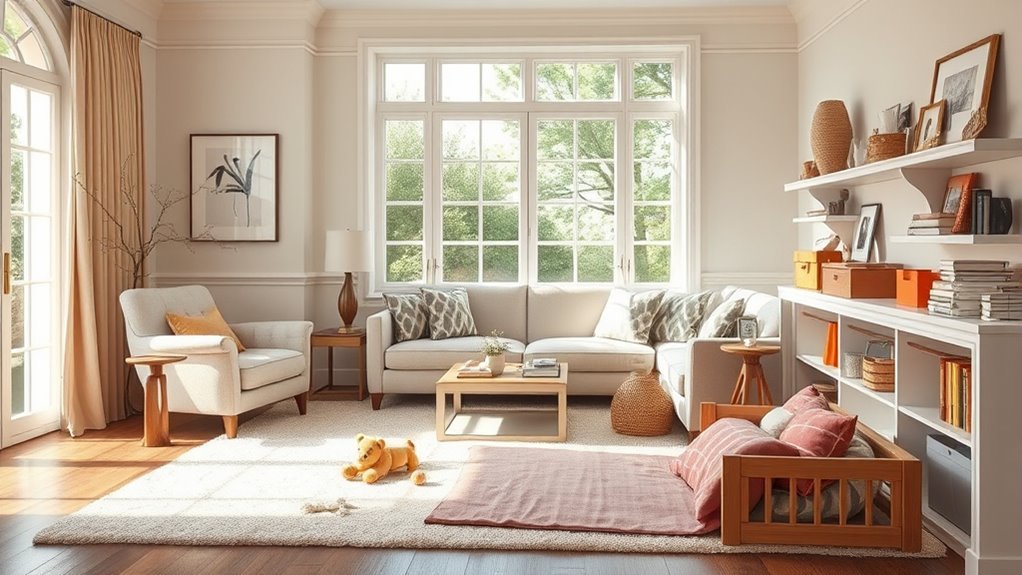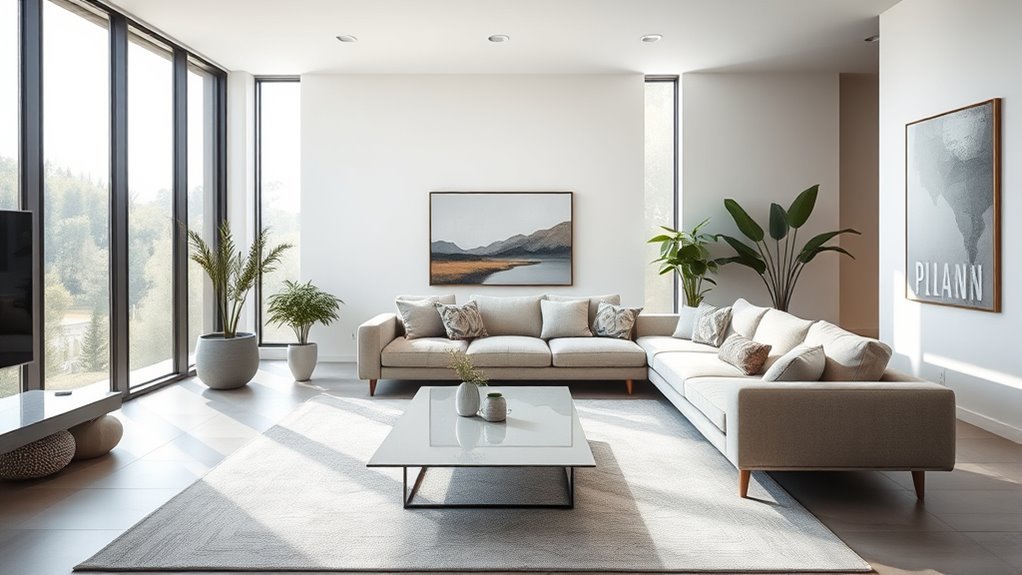
Choosing between floor lamps and table lamps for your living room comes down to three things: where you need light, how much space you have, and what kind of mood you want to create. Floor lamps are best when you need light from an empty corner, beside a chair, or across a larger zone. Table lamps work best when you already have a side table, console, or cabinet and want softer, closer light for reading, relaxing, or conversation.
Quick Answer
Choose a floor lamp if you need wider light coverage, want to brighten a corner, or do not have table space. Choose a table lamp if you want cozy, focused light beside a sofa, chair, or console. In most living rooms, the best result is a layered mix of both.
Key Takeaways
- Floor lamps are ideal for corners, reading chairs, open layouts, and rooms without enough side tables.
- Table lamps are better for cozy seating areas, side tables, consoles, and close-range task lighting.
- Brightness depends more on lumens, shade design, and bulb type than on whether the lamp sits on the floor or a table.
- Warm bulbs around 2700K to 3000K usually create the most comfortable living room glow.
- A layered lighting plan with both lamp types often looks better and works better than choosing only one.
Understanding Floor and Table Lamps: Key Differences
Floor lamps are freestanding fixtures that usually sit beside a sofa, reading chair, bookcase, or empty corner. Because the light source is higher, a floor lamp can spread light across a wider area or wash light upward toward a wall or ceiling. That makes it useful for ambient lighting, especially in living rooms where one overhead fixture feels too harsh.
Table lamps sit on furniture, such as side tables, end tables, media consoles, desks, or cabinets. They usually create a lower, more intimate pool of light. That makes them useful for reading, conversation areas, evening ambiance, and adding decorative balance to a room.
| Feature | Floor Lamp | Table Lamp |
| Best for | Corners, reading chairs, open spaces, rooms with limited surfaces | Side tables, consoles, cozy seating zones, bedside-style living room lighting |
| Space needed | Floor space and a stable base | A sturdy tabletop or shelf |
| Light effect | Can spread light higher and wider | Creates lower, softer, more localized light |
| Design impact | Can act as a tall sculptural accent | Adds symmetry, texture, and detail to furniture |
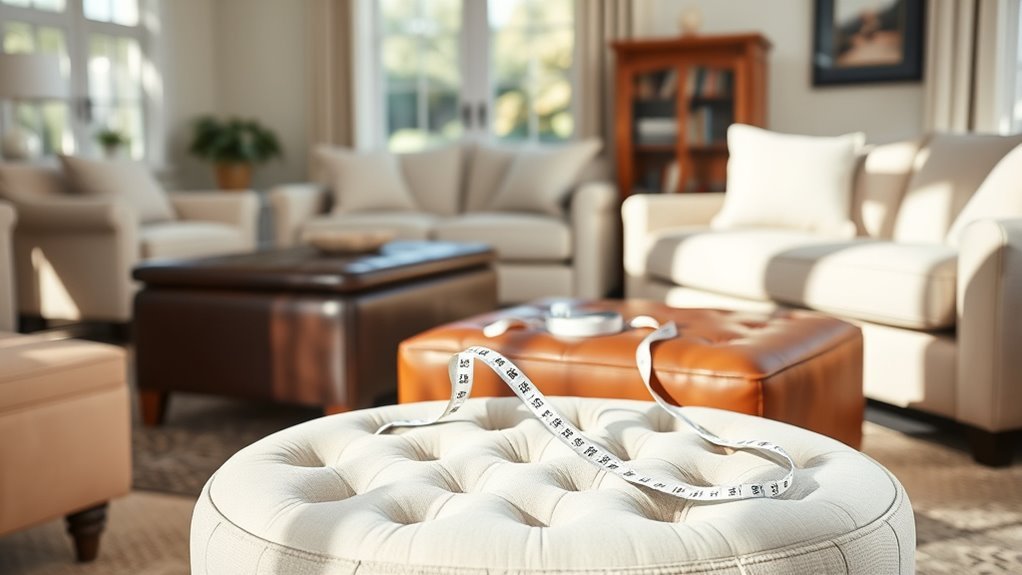
Space Considerations: Floor vs. Surface Area
The first practical question is simple: do you have more open floor space or more usable surface space?
Floor Space Requirements
A floor lamp is often the better choice when your living room has an empty corner, a reading chair without a side table, or a sofa area where you do not want to crowd the tabletop. Slim floor lamps can take up very little room, but you still need enough clearance for the base, cord, and walking path.
Arc floor lamps need extra planning. They can reach beautifully over a sofa or chair, but their long arm and heavy base require more space than a straight pole lamp. Tripod floor lamps also need more floor clearance than they appear to at first glance.
Surface Area Limitations
Table lamps are perfect when you already have a stable side table, console, or cabinet in the right place. They add warmth without creating another object on the floor. In a smaller living room, a table lamp can be a smart choice because it uses furniture you already own.
The tradeoff is clutter. If your side table already holds drinks, remotes, books, plants, and décor, a table lamp may make the space feel crowded. In that case, a floor lamp can give you the light you need while keeping the tabletop clear.
Choosing Between Floor and Table Lamps: Key Considerations
Use your room layout and daily habits to decide. A lamp should solve a real lighting problem, not just fill an empty spot.
- Choose a floor lamp if the room has dark corners, limited tabletops, high ceilings, or a seating area that needs light from above or behind.
- Choose a table lamp if you want a softer glow beside a sofa, a balanced pair on matching end tables, or easy reach from a seated position.
- Use both if your living room hosts different activities, such as watching TV, reading, entertaining, and relaxing at night.
Note: The lamp type matters, but the bulb, shade, height, and placement matter just as much. A dim table lamp can create ambient light, and an adjustable floor lamp can work as a focused reading light.
Recommended Products

120 LED High Brightness: Equipped with 120 high-brightness LED beads, the PACOVY floor lamp delivers a powerful 18W / 1800-lumen output, providing brightness equivalent to a traditional 120W bulb while saving up to 85% energy. This led floor lamp effectively illuminates the entire workspace, making activities such as working, reading, crafting, sewing, beauty treatments, nail art, tattooing, and puzzles easier and more enjoyable

Remote & Touch Stepless Control: Use the magnetic remote from up to 49.2 ft away, or adjust this LED floor lamp directly through the touch panel. Both controls provide smooth 5%–100% stepless dimming and continuous color temperature adjustment from warm 3000K to cool 6000K. The remote attaches securely to the metal pole for convenient storage, making this floor lamp with remote easy to operate from a sofa, bed, desk, or worktable.

【Super Bright & Save Energy】Yikuneng bright floor lamp used advance high brightness LED, 18W LED floor lamp equivalent to traditional 200W halogen lamp, provide excellent lighting for reading, do homework, working, and breastfeeding without hurting your eyes. Save 90% energy mean save your money on electricity bill.
Lighting Needs: Ambiance vs. Task Illumination
A well-lit living room usually needs three types of light: ambient, task, and accent. The U.S. Department of Energy explains that ambient lighting provides general illumination, task lighting supports specific activities, and accent lighting highlights features or adds visual interest.
Floor lamps often handle ambient lighting well because they can send light upward, outward, or across a wider zone. Torchiere lamps, shaded floor lamps, and globe lamps can soften a dark room without relying only on a ceiling fixture.
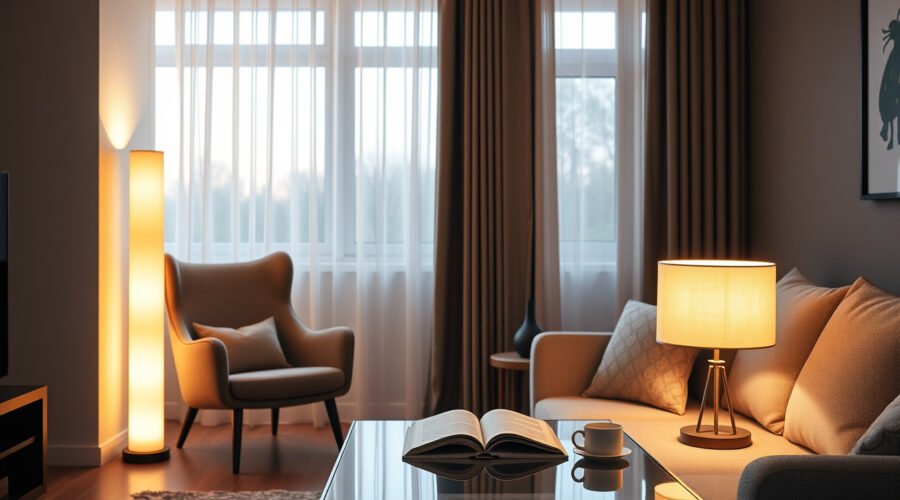
Table lamps often handle task and mood lighting well. A table lamp next to a chair or sofa can make reading easier, reduce the contrast between a bright screen and a dark room, and create a warmer evening atmosphere.
Brightness: Lumens Matter More Than Lamp Type
Do not judge brightness by the lamp style alone. A floor lamp is not automatically brighter than a table lamp. The better way to compare brightness is by lumens. The Department of Energy recommends buying bulbs based on how much light they provide, not just how many watts they use.
As a simple guide, many living rooms work best with several softer light sources instead of one extremely bright lamp. A shaded table lamp with an 800-lumen LED bulb may feel comfortable beside a sofa. A taller floor lamp may need a similar or higher lumen output depending on the room size, shade material, and whether the light points up, down, or sideways.
For living rooms, think in layers: one lamp for general glow, one for the seating area, and one accent source for depth. The room will feel more comfortable than it would with a single harsh overhead light.
Color Temperature and Glare Control
For most living rooms, warm white light is the safest choice. Bulbs around 2700K to 3000K usually create a soft, relaxed feel. Cooler bulbs can look crisp, but they may feel too stark in a room meant for relaxing.
Also check the shade. A lamp with an exposed bulb can create glare, especially when the bulb sits at eye level. A fabric, paper, frosted glass, or opaque shade diffuses the light and makes the room feel calmer. For reading, position the lamp so the light lands on the page without shining directly into your eyes.
If color accuracy matters for artwork, upholstery, or décor, look for bulbs with a CRI of 80 or higher. The Department of Energy notes that a CRI of 80+ is generally acceptable for most indoor residential uses.
Design Aesthetics: Matching Lamps to Your Style
Your lamp should look intentional with the rest of the room. Start with scale, then choose the finish and shade.
Complementing Existing Decor
Match the lamp’s visual weight to nearby furniture. A large sectional can handle a taller floor lamp or a bold arc lamp. A slim loveseat or small apartment sofa usually looks better with a narrow floor lamp, compact table lamp, or wall-mounted sconce.
For finishes, repeat something already in the room. A black metal floor lamp can echo black picture frames. A brass table lamp can connect to cabinet hardware. A ceramic lamp can soften a room with many hard surfaces.
Enhancing Room Functionality
Floor lamps can define a zone in an open-plan room. Put one beside a reading chair, behind a sectional, or near a bookcase to make that area feel separate from the rest of the space.
Table lamps are useful for balance. A pair on matching side tables can frame a sofa. One lamp on a console can brighten a hallway-facing wall or create a welcoming glow near the entrance to the living room.
Expressing Personal Style
Use lamps as decorative accents, but avoid choosing style over function. A sculptural lamp still needs to put light where you need it. A beautiful table lamp is less useful if the shade is too dark, the bulb is too exposed, or the switch is hard to reach.
Choosing the Right Lamp for Your Lifestyle
If you read often, choose an adjustable floor lamp or a table lamp with the bottom of the shade near seated eye level. If you mostly watch TV, use dimmable lamps placed to the side of the screen rather than directly behind or in front of it. If you entertain, layer several soft lamps around the room so guests are not sitting under one bright overhead fixture.
Families with pets or young children should also think about stability. A heavy, wide lamp base is safer than a narrow, lightweight base in high-traffic areas. Keep cords tucked away from walkways, but do not hide cords under rugs.
Recommended Products

UPGRADED FLOOR LAMP 90% BRIGHTER THAN OTHERS: Our strong R&D team has upgraded the brightness and performance based on the same product on the market. Compared with other old model lamp 12W/1000lm, our new lamp 18W/1800lm is the first one to adopt LED technology with a light guide plate, which increases its brightness to 90% brighter than others. A best bright Lamp for living room bedroom, Also for LED lash light, nail light, tattoo lamp,sewing light, craft lamp and puzzle light.

Smart Remote Control Arched Floor Lamp: Enjoy easy lighting control from anywhere in the room with our remote-controlled curved floor lamp. You can conveniently adjust the brightness and color temperature to suit your needs for a customized lighting experience. (Set the foot switch to ON first.) The magnetic remote sticks to the lamp stand, ensuring it's always within reach

Modern Floor Lamp with 0-100% Fully Dimmable Brightness :Compared to traditional non-dimmable living room floor lamps, our unique floor lamp offers a full stepless dimming function(0 - 100%), making it adaptable to various room styles and lighting requirements you need. This gold floor lamp has a convenient knob switch – simply twist it to customize your favorable lights of floor lamps for living room and bedrooms
Layering Light: Benefits of Combining Floor and Table Lamps
In many living rooms, the best answer is not floor lamp or table lamp. It is both. Layering gives you flexibility throughout the day and evening.
Enhanced Ambient Lighting
Use a floor lamp to lift light higher in the room and soften dark corners. Then use one or two table lamps to bring warmth down to seating level. This creates a more natural glow than relying on a single ceiling fixture.
Flexible Task Lighting
For reading, puzzles, crafts, or laptop work, place a lamp close to the task. A table lamp works well beside a sofa or chair. A swing-arm or adjustable floor lamp works well when there is no table nearby.
Pro Tip: Put living room lamps on dimmers or use dimmable LED bulbs only when the lamp and bulb are compatible. This lets the same lamp support reading, TV watching, and relaxed evening lighting.
How Lamp Height Affects Your Room’s Atmosphere
Lamp height affects comfort because it changes where the bulb and shade sit in relation to your eyes. For a table lamp next to a sofa, the bottom of the shade should usually sit around seated eye level. This helps hide the bulb and spread light across the seating area.
For floor lamps, consider both total height and shade position. A tall uplight can make a room feel larger by bouncing light off the ceiling. A reading floor lamp should place light lower and closer to the chair. An arc lamp should clear the sofa or chair without shining directly into someone’s face.
Safety and Power Considerations
Before buying any lamp, check the outlet location, cord path, bulb rating, and fixture label. The safest lamp is one that reaches an outlet cleanly without creating a trip hazard or relying on a permanent extension-cord setup.
Warning: Do not use extension cords as permanent wiring, do not run cords under rugs, and do not use a bulb that exceeds the lamp’s maximum wattage rating. ESFI advises matching cords to the products plugged into them and replacing any cord that feels hot or is damaged.
For energy efficiency, choose LED bulbs when the fixture allows them. The Department of Energy notes that LEDs use far less energy than traditional incandescent bulbs and are available in many shapes, colors, and dimmable options.
Avoid These Mistakes When Choosing Your Living Room Lighting
- Relying only on overhead lighting: It can make a living room feel flat or harsh.
- Ignoring lumens: A stylish lamp can still be too dim or too bright for the space.
- Choosing the wrong shade: A very dark shade limits light output; a clear shade can create glare.
- Blocking walkways: Floor lamps need stable placement where people will not bump the base or cord.
- Crowding side tables: A table lamp should leave room for everyday use.
- Forgetting switch access: A beautiful lamp becomes annoying if you have to reach behind furniture every night.
What Makes a Good Lamp Choice?
A good living room lamp fits the room, supports your habits, and improves the mood. Use this checklist before you buy:
- Purpose: Decide whether you need ambient light, task light, accent light, or a combination.
- Placement: Choose a lamp that works with your furniture, outlet locations, and walking paths.
- Brightness: Compare lumens instead of guessing based on wattage.
- Bulb warmth: Choose warm white for cozy living rooms and neutral white for sharper task areas.
- Shade design: Use shades that diffuse light and hide glare.
- Scale: Match the lamp’s height and visual weight to nearby furniture.
- Safety: Follow the fixture’s maximum bulb rating and keep cords visible, undamaged, and out of traffic paths.
Best Choice by Living Room Type
| Living Room Situation | Best Lamp Choice | Why It Works |
| Small room with limited side tables | Slim floor lamp | Adds light without taking tabletop space. |
| Large open-plan space | Floor lamp plus table lamps | Creates zones and prevents dark corners. |
| Sofa with matching end tables | Pair of table lamps | Adds symmetry and soft light at seated height. |
| Reading chair without a table | Adjustable floor lamp | Directs light onto the page without needing furniture. |
| Console, cabinet, or media unit | Table lamp | Adds height, warmth, and decorative detail. |
Recommended Products

Five adjustable Arms: This tall floor lamp comes with flexible arms that allow for great flexibility in lighting area. The 5 arms are 360° bendable and you can freely adjust the lamp heads up and down or point it in different directions to add tons of light. The 5-light tree floor lamp is perfect for any task, work or sewing when you need night light or reading light.

Modern Fully Dimmable(0-100%) Floor Lamp & Convenient Rotary Switch: Compared with traditional Non-dimmable floor lamps for living room, our floor lamp is fully Stepless Dimmable, which suitable for all the room style and using situation ,find the perfect light for your needs. This standing lamp is very easy to turn on and off. Just simply twist it and then you can adjust the arc floor lamps brightness what you want. 4.1FT rotary switch, which is very convenient for you to adjust it.
Frequently Asked Questions
Should I get a table lamp or floor lamp?
Get a floor lamp if you need light in a corner, beside a chair, or in a spot without a table. Get a table lamp if you already have a stable surface and want soft, close-range light. For the most flexible living room lighting, combine both.
Are floor lamps brighter than table lamps?
Not always. Brightness depends on lumens, shade design, bulb direction, and fixture type. A table lamp with a high-lumen bulb can be brighter than a shaded floor lamp, while a tall uplight floor lamp can spread light across a larger area.
Can I use only floor lamps in a living room?
Yes, but the room may feel more balanced if you vary the height and direction of light. Use one floor lamp for ambient light and another adjustable floor lamp for reading, or add a table lamp if you have a side table available.
Where should a table lamp sit in a living room?
Place a table lamp on a sturdy side table, console, or cabinet where it supports a real activity. Beside a sofa or chair, the bottom of the shade should usually sit near seated eye level to reduce glare.
What bulb color is best for living room lamps?
Warm white bulbs around 2700K to 3000K are usually best for relaxed living rooms. If you use the lamp for detailed tasks, a slightly brighter or more neutral bulb can help, but avoid harsh glare.
Conclusion
Floor lamps and table lamps solve different lighting problems. A floor lamp is the stronger choice for empty corners, open layouts, reading chairs, and rooms short on tabletop space. A table lamp is the stronger choice for cozy seating areas, consoles, and close-range lighting. Instead of treating one as better than the other, build a layered plan: use floor lamps for height and coverage, table lamps for warmth and focus, and dimmable LED bulbs to adjust the mood as your living room changes throughout the day.
Sources
- U.S. Department of Energy — Lumens and the Lighting Facts Label — supports lumens vs. watts and bulb brightness guidance.
- U.S. Department of Energy — Lighting Principles and Terms — supports ambient, task, accent lighting, Kelvin, CRI, and glare guidance.
- U.S. Department of Energy — Lighting Design — supports layered lighting, task lighting, and matching light to room function.
- U.S. Department of Energy — Lighting Choices to Save You Money — supports LED efficiency and bulb choice guidance.
- Electrical Safety Foundation International — Extension Cord Safety Tips — supports cord, outlet, and electrical safety guidance.