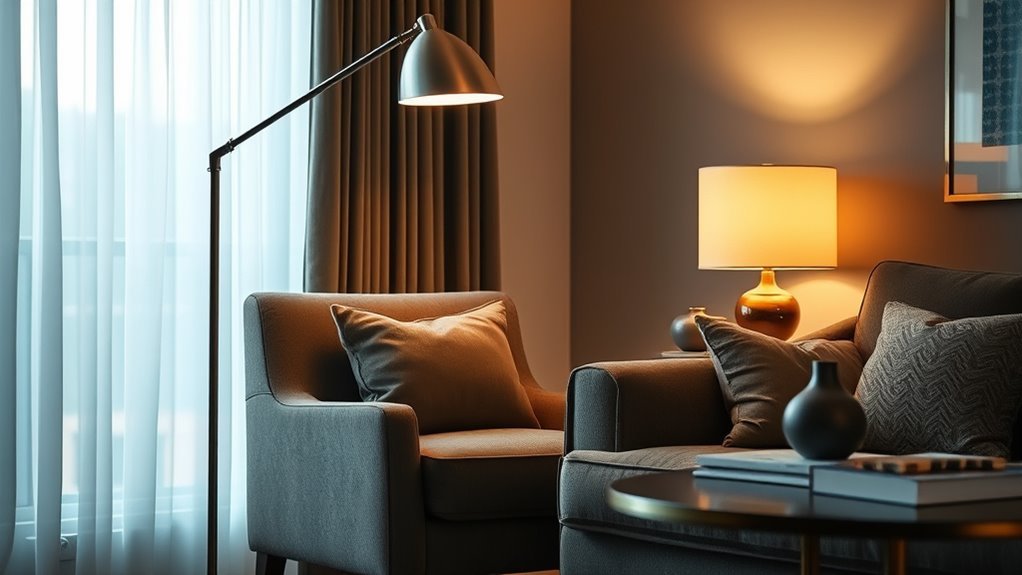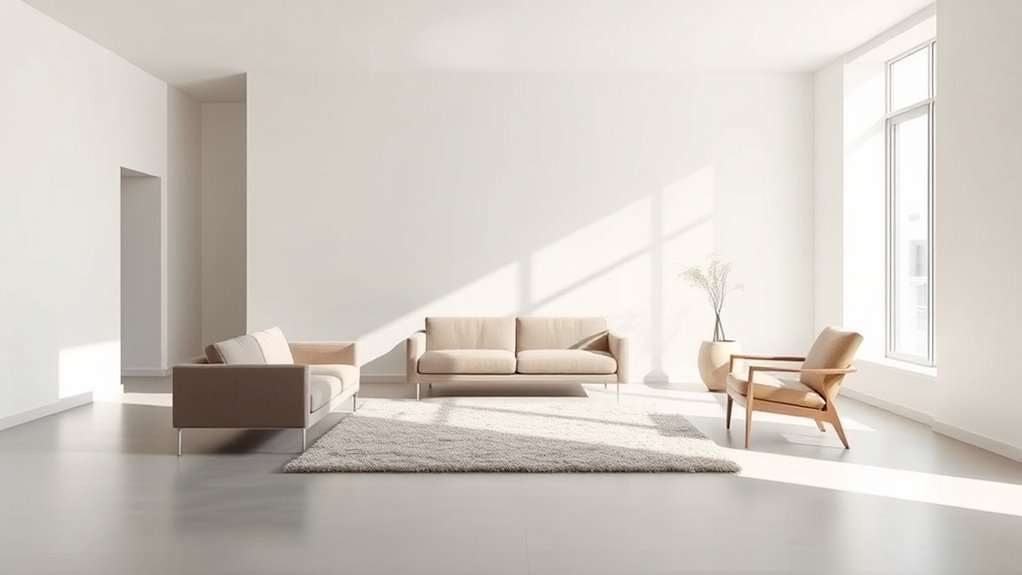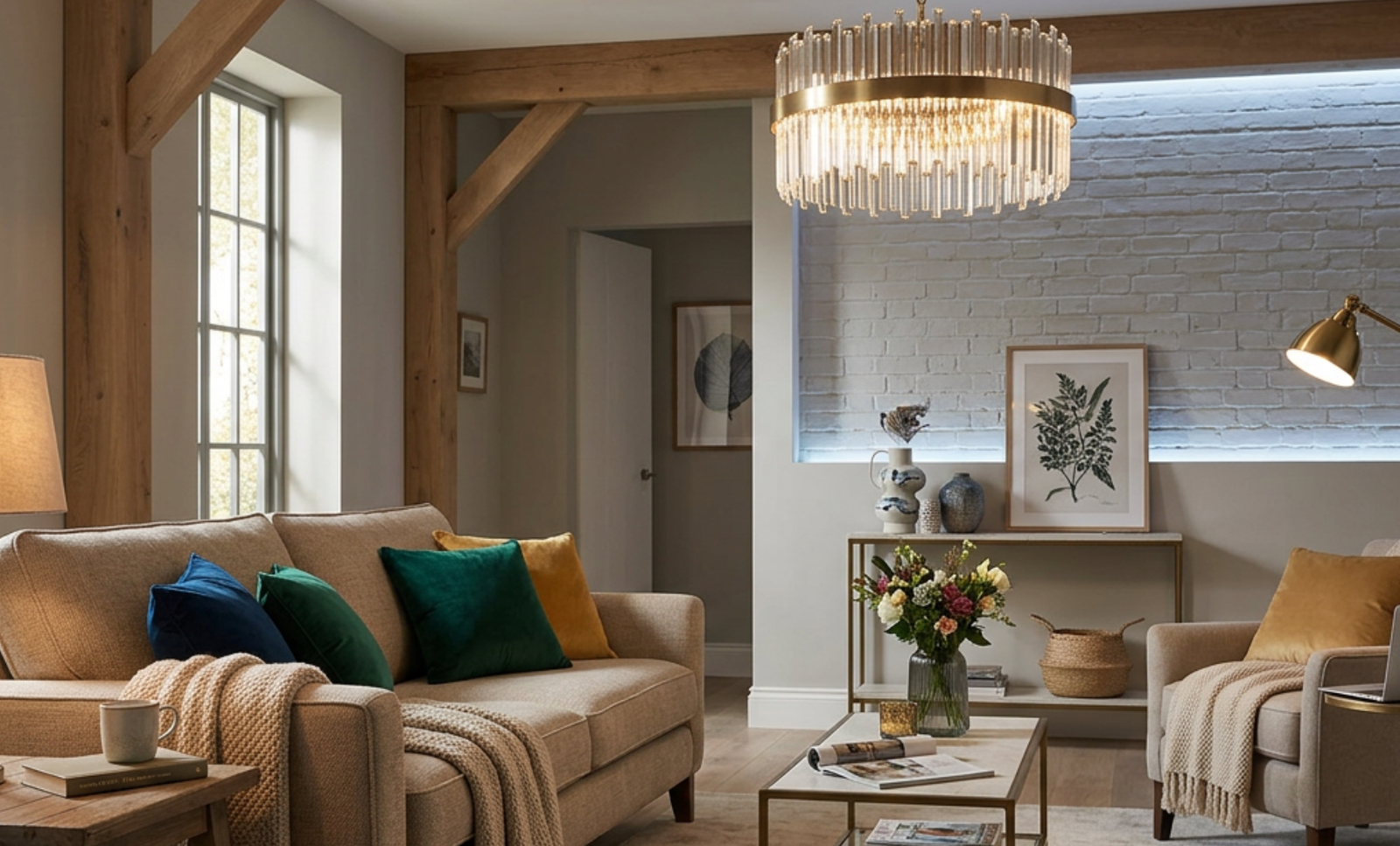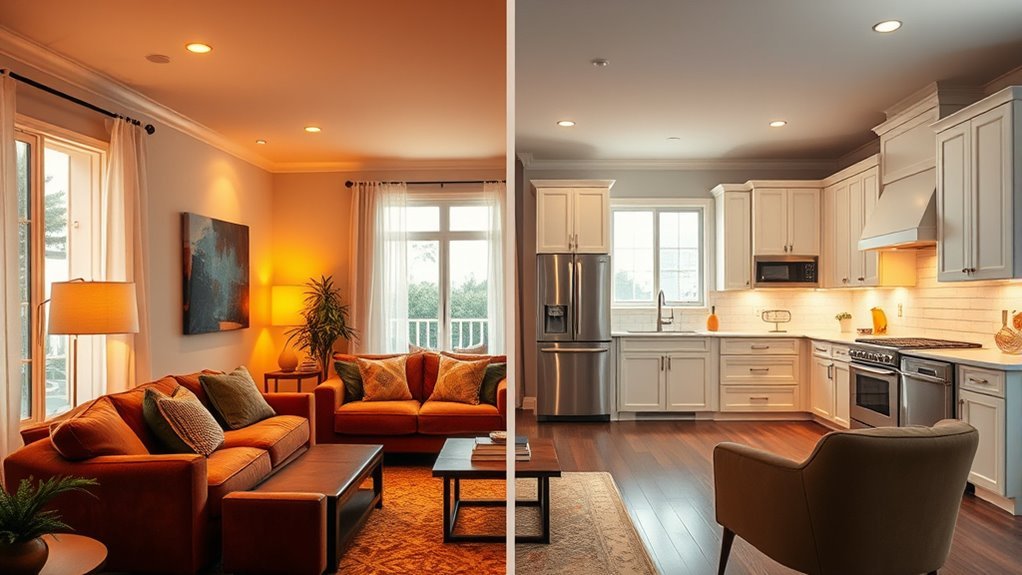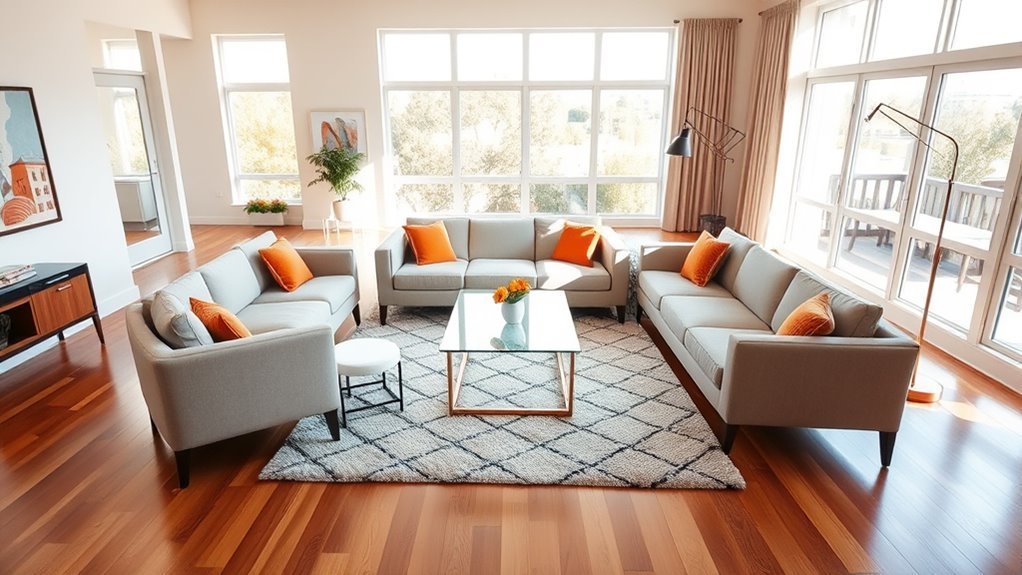
A good living room layout with a sectional and chairs starts with one simple goal: make the room easy to move through, easy to talk in, and comfortable from every seat. Before you buy or move anything heavy, measure the room, choose the focal point, tape the furniture footprint on the floor, and check that people can walk around the seating area without squeezing past corners or coffee tables.
Quick Answer
For the best living room layout with a sectional and chairs, place the sectional facing the room’s main focal point, angle the chairs toward the sectional for conversation, leave about 36 inches for main walkways when possible, and use a large area rug to connect the entire seating group.
Key Takeaways
- Start with measurements, door swings, outlets, windows, vents, and the room’s natural traffic path before choosing a sectional size.
- Aim for about 36 inches on main walkways when space allows; keep smaller gaps for reach zones, not primary paths.
- Angle chairs toward the sectional so guests can see each other without shouting or twisting.
- Choose a rug large enough to hold at least the front legs of the sectional and chairs.
- Use side tables, ottomans, and storage pieces carefully so the layout stays useful instead of crowded.
At a Glance
| Time Required | 1–3 hours for measuring, taping the layout, and moving furniture |
| Difficulty | Easy to moderate, depending on room size and furniture weight |
| Tools Needed | Tape measure, painter’s tape, pencil, paper or room-planning app, and furniture sliders |
| Cost | $0 if rearranging existing furniture; optional costs for rug pad, side tables, ottoman, or anchoring hardware |
Measuring Your Space: Essential Steps for Planning Your Layout
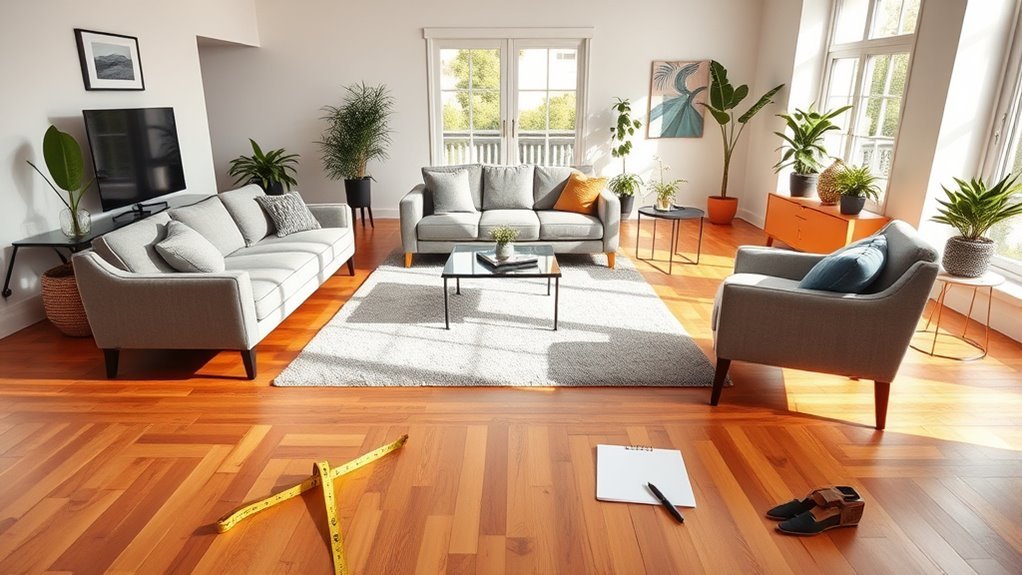
Creating a well-planned living room layout starts with precise measurements. Measure the full length and width of the room, then mark fixed features such as windows, doors, built-ins, outlets, floor vents, radiators, fireplace hearths, and TV connections. These details decide where your sectional can sit comfortably and where chairs will feel natural instead of squeezed in.
Next, measure the sectional, chairs, coffee table, side tables, ottoman, console table, and any media cabinet you want to use. Sketch the room on paper or use a digital planner. Scale-accurate room planners can help you test furniture size, windows, storage, and sofa combinations before moving heavy pieces.
For walkways, aim for about 36 inches on main paths when the room allows. That measurement is also the continuous clear-width benchmark used in the U.S. Access Board’s accessible route guidance. In a compact private living room, you may need to work with slightly less, but avoid making the main route so tight that people brush the sectional, chair arms, or coffee table every time they pass.
Note: Use 36 inches as the best target for main walkways, about 30 inches as a practical minimum in tight rooms, and 18–24 inches for reach zones between seating and a coffee table.
Choosing the Right Sectional: Size, Shape, and Style Considerations
The right sectional should support the way you actually use the room. A movie-night room may need a chaise and deeper seats, while a conversation-focused room may work better with a lower-profile L-shaped sectional and two chairs across from it.
- L-shaped sectional: Best for corners, medium living rooms, and layouts where one side can face a TV or fireplace while the other side opens toward chairs.
- U-shaped sectional: Best for large rooms and families who need lots of seating, but it requires more open floor space so the room does not feel boxed in.
- Chaise sectional: Great for lounging, but place the chaise on the side that does not block the main entry path.
- Modular sectional: Useful if you entertain often, move frequently, or want the freedom to change the layout later.
- Apartment-scale sectional: Best for smaller rooms where a standard sectional would overwhelm windows, walkways, or accent chairs.
Check the sectional’s total width, depth, chaise length, and arm height. The piece should feel generous when seated, but it should not cover heating vents, block a doorway, or leave no room for chairs. If you already own chairs you love, measure them before choosing the sectional so the seating group feels balanced.
Recommended Products

Cloud-Like Comfort: Featuring 3D cutting technology, the memory foam sofa is filled with 30D elastic foam, providing excellent support and resilience for a more comfortable seating experience. Experience cloud-like comfort the moment you sit down
Creating a Focal Point: Positioning Your Sectional for Maximum Impact
A strong layout begins with a clear focal point. In many living rooms, that focal point is a fireplace, television, picture window, built-in bookcase, or large artwork. Place the sectional so the longest side faces that feature, then use chairs to complete the conversation area.
If the room has both a fireplace and a television, decide which one matters most day to day. You can place the TV above or beside the fireplace, float the sectional so it faces both at a slight angle, or use swivel chairs that can turn between the two.
Identify the Focal Point
Stand at the main entrance to the room and notice where your eye naturally lands. That feature should guide the sectional placement. A sectional pushed into a corner can still feel intentional if the open side points toward the focal point and leaves room for chairs, a rug, and a table.
- Face the sectional toward the fireplace, TV, window view, or main artwork.
- Keep the back of the sectional from blocking the room’s strongest entry point when possible.
- Use a console table, lamp, or plant behind a floating sectional so the back looks finished.
- Keep sightlines clear so guests can see both the focal point and each other.
Arrange Seating Around It
After placing the sectional, add chairs where they support conversation instead of simply filling empty corners. Two matching chairs across from the sectional create balance. One larger chair placed diagonally near the open end of the sectional can soften a square room. Swivel chairs work especially well in rooms with more than one focal point.
Use Complementary Decor Elements
Decor should make the layout feel connected. Choose a coffee table that is easy to reach, side tables that sit close to chair arms, and lighting that serves every seat. Pillows, throws, and artwork can repeat colors from the sectional and chairs so the arrangement feels planned rather than pieced together.
Enhancing Conversation: Arranging Chairs for Flow

Chairs should feel connected to the sectional, not stranded across the room. Angle them slightly toward the sectional so people can talk naturally. A 30- to 45-degree angle often feels more relaxed than lining every piece up squarely.
For a classic layout, place two chairs opposite the long side of the sectional with a coffee table between them. For a smaller room, use one accent chair near the open end of the sectional and a small drink table beside it. For a larger room, create two conversation zones: the sectional and chairs in one zone, and a reading chair or game table in another.
Pro Tip: Sit in every seat before finalizing the layout. If you have to twist your neck to see the TV, reach too far for a drink, or shout across the rug, the chairs need to move closer or angle inward.
Using Area Rugs to Define Spaces
An area rug visually connects the sectional and chairs, especially in an open floor plan. The safest rule is to choose a rug large enough for at least the front legs of the sectional and chairs to sit on it. In a larger room, all legs on the rug creates a more finished, designer-style look.
- Small room: Place the front legs of the sectional and chair on the rug to connect the seating without crowding the floor.
- Medium room: Use a rug that fits under the front half of every main seating piece.
- Large room: Choose a rug large enough for all seating legs, plus a coffee table or ottoman in the center.
- Open-concept room: Use the rug as the boundary between the living area and nearby dining or kitchen zones.
Use a rug pad to reduce slipping and curling, especially if children, pets, or older adults use the room. Avoid a rug so small that it floats under only the coffee table; that can make the sectional and chairs look disconnected.
Recommended Products

Elegant Floral Rug: This 8x10 area rugs vintage-inspired botanical rug blends rich dark greens, vibrant and delicate floral complements any decor style, from vintage and bohemian to farmhouse and modern. Perfect rugs for living room, bedrooms, dining room rugs for under table, entryways, kids' playrooms, or home offices, it adds warmth and charm to any space. Both durable and stylish, it withstands high-traffic areas while maintaining a cozy, inviting appeal

Soft & Durable: This 8x10 area rug low-pile combines soft faux wool fibers with a 0.25-inch height for comfort. Tight weaving reduces shedding and edge fraying, making it perfect for high-traffic areas like living rooms, bedrooms, and entryways

Safety And Non-Slip Rugs: Our area rug is made of the highest quality polyester fiber, and the non-slip TPR backing helps the carpet stay in place and hold the floor firmly, protecting your children and elderly from slipping and falling.
Zoning Your Living Room: Creating Distinct Areas With Sectionals
A sectional can act like a soft room divider. In an open-concept living room, place the back of the sectional toward the dining area, kitchen, or entry so it defines the seating zone without needing a wall. Add chairs on the open side to make the space feel welcoming instead of closed off.
Defining Functional Areas
Use the sectional to separate activities. One side might face the TV, while the chairs create a reading or conversation corner. A console table behind the sectional can hold lamps, books, baskets, or a narrow tray for keys if the living room opens near the entry.
- Place the sectional back toward the area you want to separate.
- Use a rug to mark the living zone.
- Add a console table, plant, or floor lamp behind the sectional for a finished edge.
- Keep pathways open between zones so the room still feels connected.
Enhancing Visual Flow
Good zoning should not make the room feel chopped up. Repeat materials, colors, or shapes between zones so the sectional, chairs, dining furniture, and storage pieces feel related.
| Area | Functionality | Best Visual Anchor |
|---|---|---|
| Seating | Conversation and TV viewing | Sectional and area rug |
| Entertainment | Media, games, and storage | Media console or built-ins |
| Reading | Quiet focused activity | Accent chair and floor lamp |
| Dining | Meals and gatherings | Dining table, pendant light, or rug |
Choosing Functional Furniture: Side Tables and Ottomans for Your Layout
Functional furniture keeps the layout comfortable after the big pieces are in place. Every seat should have a place nearby for a drink, book, remote, or phone. That does not mean every seat needs a full-size table; small drink tables, nesting tables, C-tables, and storage ottomans can work well.
- Coffee table: Leave enough room to walk around it, and choose rounded corners if the room is tight.
- Side tables: Keep them close to chair arms or sectional ends so guests do not need to lean forward awkwardly.
- Ottoman: Use one as a footrest, coffee table, or extra seat, but avoid blocking the main path through the room.
- Console table: Place it behind a floating sectional to add lamps, storage, and a finished look.
- Storage pieces: Choose closed storage if the living room collects toys, blankets, remotes, or games.
Warning: Anchor tall bookcases, media units, and storage furniture with drawers, doors, or shelves. The U.S. Consumer Product Safety Commission’s Anchor It! campaign recommends securing these pieces to help prevent furniture and TV tip-overs.
Recommended Products

【Soft and Comfortable Material】 The surface of stool made of high-quality teddy fabric that is super soft to the touch, bring you a warm feeling and compliments any decor style.

【2-in-1 Nesting Ottoman】The set features two ottomans – a large one and a compact storage ottoman – and the smaller piece tucks effortlessly into the larger, adapting easily to any living room, bedroom, or entryway. When placed under the console table, it instantly makes the room look more refined

【Perfect Set Design】This round storage ottoman comes in a set of two, with the larger size measuring 15.4" x 15.4" x 17.7" and the smaller size 12.6" x 12.6" x 14.6". These two round storage ottomans can be neatly stacked together, offering a convenient space-saving solution.
Making the Most of Your Space With Multi-Use Furniture
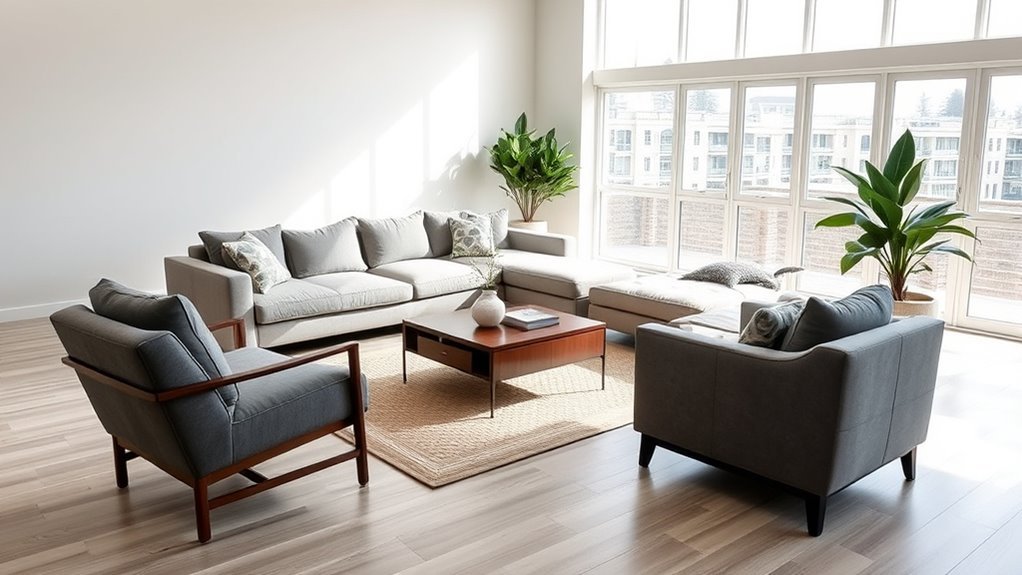
When space is limited, multi-use furniture helps your living room work harder without adding clutter. A storage ottoman can hold blankets and double as a coffee table. A nesting table can expand during gatherings and tuck away afterward. A slim console behind the sectional can replace a bulky sideboard.
For small living rooms, choose chairs with lighter visual weight, such as open legs, slim arms, or swivel bases. Avoid oversized recliners beside a deep sectional unless the room is large enough for both. In a narrow room, try placing the sectional along the longest wall and using one compact chair instead of two large chairs.
In an awkward room, work with the architecture instead of fighting it. A chaise can tuck under a window, two chairs can balance a fireplace, and a round coffee table can soften sharp traffic corners.
Common Layout Mistakes to Avoid
Most sectional-and-chair layouts fail for one of five reasons: the sectional is too large, the rug is too small, the chairs are too far away, the walkway is blocked, or the room has no clear focal point.
- Pushing everything against the walls: This can make conversation feel distant. Float pieces inward when the room allows.
- Buying the sectional first: Always measure before choosing the sectional, especially if you want to add chairs.
- Using a tiny rug: A small rug makes the furniture look disconnected.
- Blocking door swings: Check that doors, cabinets, and storage drawers can open fully.
- Forgetting lighting: Add lamps near chairs and sectional ends so every seat feels usable at night.
- Ignoring cords: Keep cords out of walkways and avoid stretching lamp or charger cords across the rug.
Final Touches: Styling Your Sectional and Chairs for a Cozy Atmosphere
Once the layout works, style the seating area in layers. Start with the rug, then add tables, lamps, pillows, throws, and a few personal pieces. The goal is comfort, not clutter.
The best living room layout is the one that lets people enter easily, sit comfortably, talk naturally, and use every surface without rearranging the room first.
- Use pillows in two or three coordinated colors instead of every color in the room.
- Drape one soft throw over the sectional or a chair to add texture.
- Place a tray on an ottoman so drinks and remotes have a stable surface.
- Add a floor lamp near the darkest seat.
- Keep the coffee table styled but usable, with room for everyday items.
Frequently Asked Questions
What is the 2/3 rule for living rooms?
The 2/3 rule is a flexible proportion guideline, not a strict law. In living rooms, it often means choosing a sofa or sectional that is about two-thirds the length of the wall or focal area it faces. This helps the furniture feel balanced without overwhelming the room.
What is the 2-2-1 rule for sofas?
The 2-2-1 rule is a simple seating formula: two main seating pieces, two accent chairs, and one focal point. With a sectional, you can adapt it by using the sectional as the main seating piece, adding two chairs, and arranging everything around one clear focal point such as a fireplace, TV, or window.
How far should chairs be from a sectional?
Place chairs close enough for easy conversation, usually within the same rug-defined seating area. Leave enough room to walk between pieces, but avoid large gaps that make guests feel separated. If a coffee table sits between the sectional and chairs, keep it close enough to reach comfortably while preserving a clear route around it.
What is the 2/3 rule for couches?
For couches and sectionals, the 2/3 rule usually means the seating should take up roughly two-thirds of the wall, rug edge, or focal-point width it relates to. It is useful for scale, but it should not override walkway clearance, door swings, or how your family uses the room.
Is there an app that helps you rearrange furniture?
Yes. Room-planning apps and retailer planners can help you test furniture before moving it. IKEA, for example, offers planning tools for realistic, scale-accurate spaces, living room layouts, and modular sofa combinations. You can also use painter’s tape on the floor to test the layout in real life.
Should all chairs face the sectional?
Not always. Chairs should relate to the sectional, but they do not need to face it perfectly straight. Angling chairs inward often feels more natural. Swivel chairs are a smart choice if the room has both a TV and a fireplace because they can turn as needed.
What size rug works best with a sectional and chairs?
Choose a rug large enough for at least the front legs of the sectional and chairs to rest on it. In a large living room, a rug that fits all furniture legs creates the most polished look. Avoid rugs that sit only under the coffee table.
Sources
- U.S. Access Board — Chapter 4: Accessible Routes — backs the 36-inch clear-route benchmark and firm, stable, slip-resistant surface guidance.
- CPSC Anchor It! — backs the safety note about anchoring furniture and TVs to help prevent tip-over injuries and deaths.
- IKEA Design and Planning Tools — backs the recommendation to use scale-accurate room planners and modular sofa planning tools.
Conclusion
A sectional and chairs can make a living room feel relaxed, social, and polished when the layout is planned around real measurements. Start with the focal point, protect the main walkway, angle chairs for conversation, and use a rug to connect the full seating area. Then add tables, lighting, storage, and cozy details only where they support the way you live. With the right balance of spacing, comfort, and function, your living room becomes both an inviting retreat and a practical everyday gathering spot.