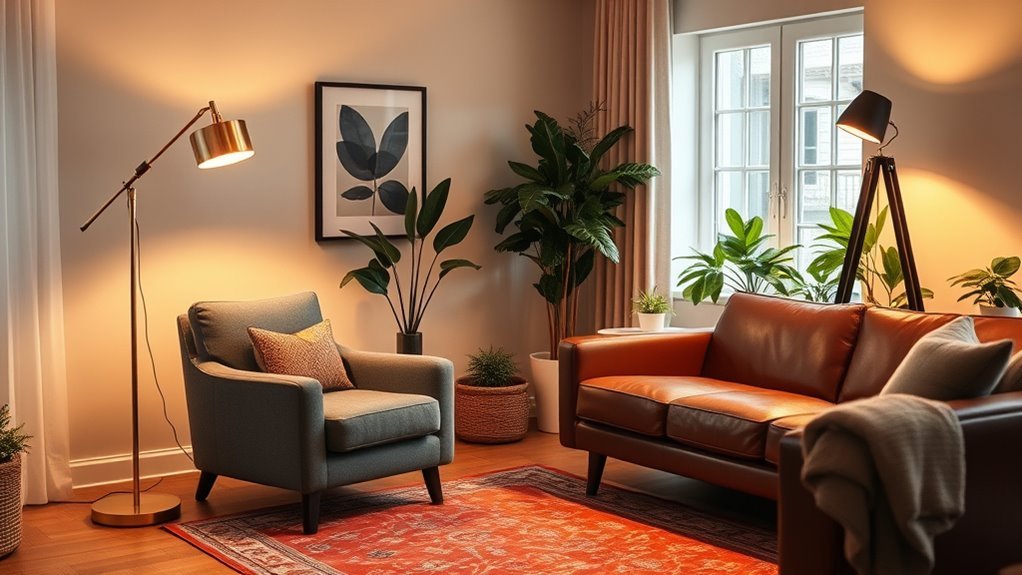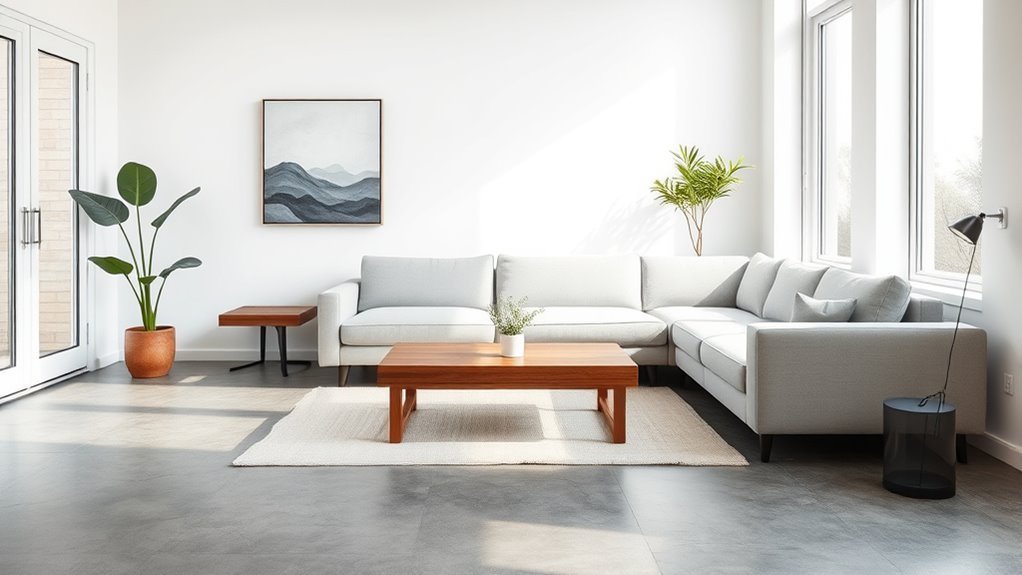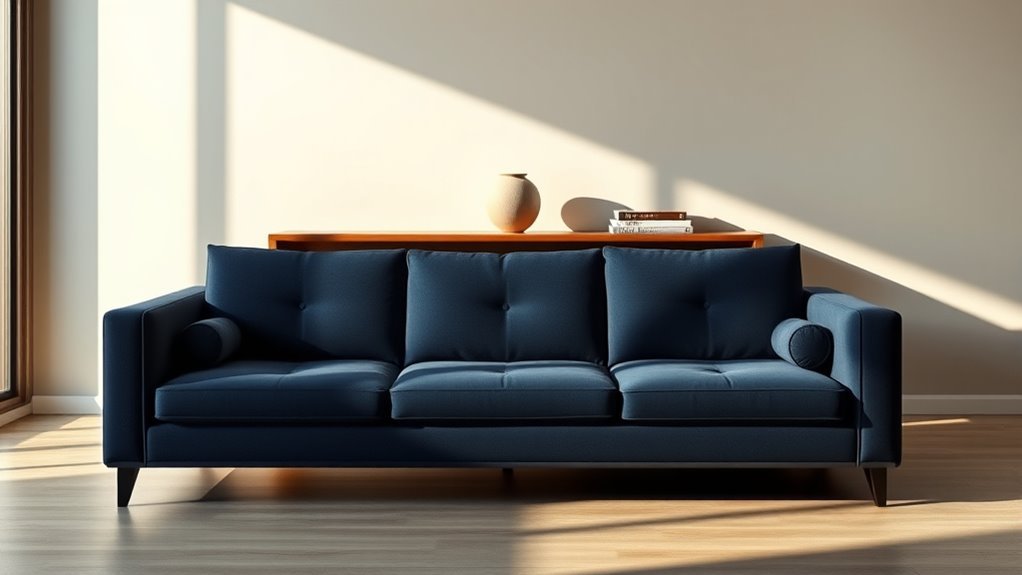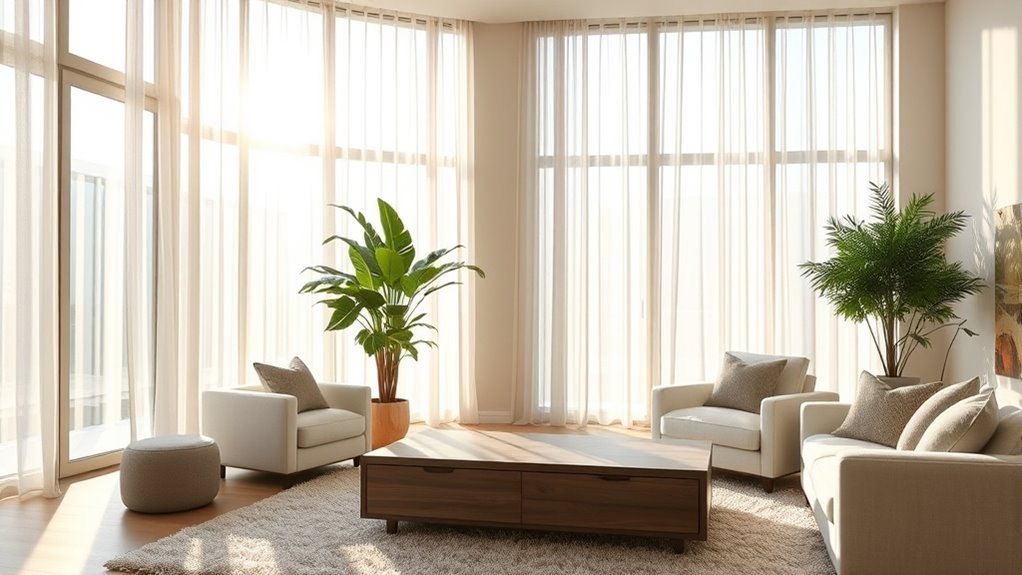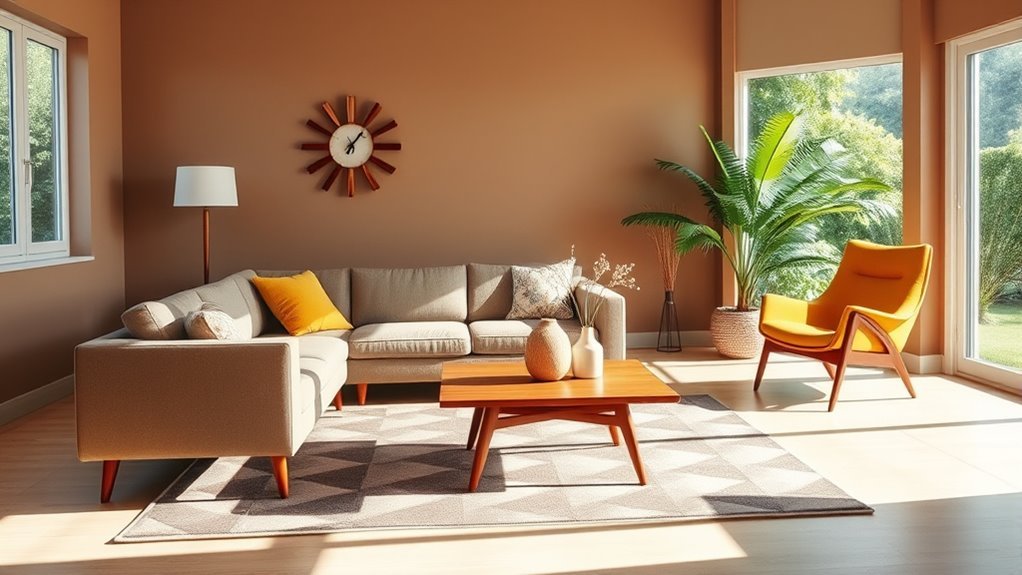
Mid-century modern living room style is all about warmth, function, and unfussy design. The best rooms in this style use clean-lined furniture, low profiles, warm wood, natural light, and a few confident color choices instead of heavy decoration. Done well, the look feels relaxed, practical, and timeless rather than like a themed retro set.
Quick Answer
A mid-century modern living room is defined by clean lines, low-profile furniture, tapered legs, warm woods, simple shapes, natural light, and a balanced mix of neutral tones with bold accents. The style works because every piece feels useful, comfortable, and visually light.
Key Takeaways
- Choose furniture with clean silhouettes, low seats, tapered legs, and visible breathing room underneath.
- Start with warm neutrals and wood tones, then add one or two bold accents like olive green, mustard, teal, rust, or burnt orange.
- Mix vintage and modern pieces carefully so the room feels collected, not costume-like.
- Use lighting, plants, art, and textured textiles to soften the room without adding clutter.
At a Glance
| Time Required | A weekend for styling updates; 2–8 weeks if sourcing vintage or custom furniture |
| Difficulty | Beginner to moderate, depending on layout and furniture sourcing |
| Tools Needed | Tape measure, floor plan or painter’s tape, fabric swatches, wood samples, lighting plan |
| Cost | Budget refresh: $150–$800; partial makeover: $1,000–$5,000; designer or collectible pieces can cost much more |
What Defines Mid-Century Modern Living Room Style?
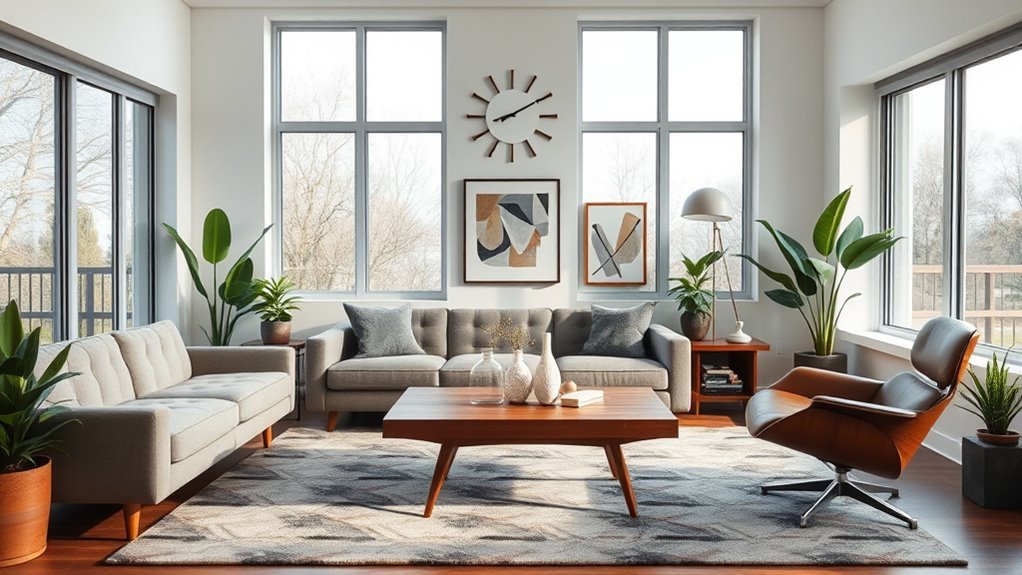
Mid-century modern living room style blends form and function. The look grew from mid-20th-century modern design principles: practical furniture, simple silhouettes, honest materials, and homes that feel connected to light and nature. In a living room, that usually means low-profile seating, slim legs, warm wood, open space, and decor that has a reason to be there.
Instead of ornate trim, heavy furniture, and crowded surfaces, this style favors clarity. A walnut media console, a sofa with straight arms, a sculptural lounge chair, a simple coffee table, and one strong piece of art can do more than a room full of decorative extras.
Iconic examples help explain the look. The Eames Lounge Chair and Ottoman, listed by MoMA as a 1956 design by Charles and Ray Eames, shows how comfort, molded wood, leather, and modern form can work together. Herman Miller also describes the Eames Lounge Chair and Ottoman as an enduring design introduced in 1956.
Note: Mid-century modern does not mean every piece must be from the 1940s, 1950s, or 1960s. A modern sofa, a vintage sideboard, and contemporary lighting can still feel mid-century if the shapes, scale, and materials are right.
Defining Characteristics of Mid-Century Modern Design
When you walk into a strong mid-century modern living room, you usually notice the same design signals right away: clean lines, open space, low furniture, warm natural materials, and a calm but confident color palette.
- Clean silhouettes: Sofas, chairs, tables, and consoles usually have simple outlines with little ornamentation.
- Low profiles: Seating often sits lower to the ground, which makes the room feel relaxed and horizontal.
- Tapered or slim legs: Raised furniture keeps the room visually light and makes small spaces feel less crowded.
- Warm woods: Walnut, teak, oak, and rosewood-style finishes bring depth and warmth.
- Organic and geometric shapes: Curved chairs, round tables, globe lights, and geometric textiles keep the look lively.
- Indoor-outdoor feeling: Natural light, plants, large windows, and earthy materials help connect the room to nature.
- Purposeful decor: Accessories are edited. A lamp, tray, vase, or sculpture should add shape, color, texture, or function.
The goal is not emptiness. It is balance. Mid-century rooms can be cozy, colorful, and layered, but the best ones still leave enough negative space for the furniture shapes to stand out.
Iconic Furniture Pieces That Define the Aesthetic
The living room comes alive with furniture that feels sculptural but useful. You do not need a museum-worthy original, but it helps to understand the pieces that shaped the look.
- Eames Lounge Chair and Ottoman: A classic example of molded wood, leather, comfort, and modern craftsmanship.
- Nelson-style benches and platform benches: Great for entry points, window walls, or flexible extra seating.
- Danish modern lounge chairs: Streamlined wood frames, woven seats, and gentle curves make these easy to blend with modern sofas.
- Low-profile sofas: Straight arms, simple cushions, and exposed legs keep the seating grounded without looking bulky.
- Walnut or teak sideboards: These work beautifully as media consoles, storage pieces, or visual anchors.
- Round or kidney-shaped coffee tables: Soft curves break up boxy layouts and echo the organic side of the style.
The Togo sofa by Michel Ducaroy is often used in retro-inspired rooms, but it is more accurately a 1970s design than a classic mid-century piece. If you love it, use it as a low-slung, relaxed complement rather than the historical foundation of the room.
Pro Tip: If you can buy only one statement piece, choose the item that affects the room’s silhouette most: the sofa, lounge chair, coffee table, or media console. Smaller accessories can come later.
Recommended Products

Adjustable Backrest: The accent chair is equipped with an adjustable backrest that adapts to your different seating positions, allowing you to find the perfect angle for reading, reclining, or napping

Minimalist Accent Chair: The tufted craft adds to the artistic style, which can meet the needs of most home décor styles. This accent chair has opted for a minimalist design in its appearance. The soft colours give a feeling of peace and relaxation.

Mid-Century Charm - This lounge chair has a mid-century charm with its extra pillows, widened arms, and flared legs. The green color of the fabric complements the walnut color of the frame, which will fit in with any of your home decor styles.
Incorporating Bold Colors and Textures in Your Mid-Century Space
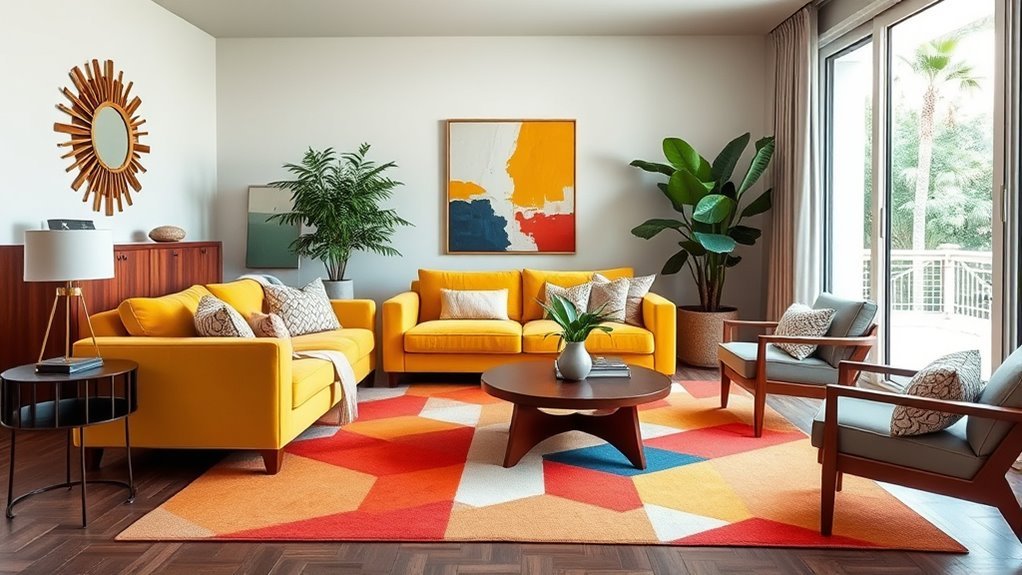
Mid-century modern color works best when it feels controlled. Start with a warm neutral base, add wood, then choose one or two accent colors. This keeps the room from becoming too busy.
A simple formula is:
- 60% base: warm white, cream, camel, tan, greige, or soft gray
- 25% wood and texture: walnut, teak, leather, boucle, wool, jute, cane, or linen
- 15% accent color: mustard yellow, olive green, teal, rust, burnt orange, ochre, or deep blue
Texture is what keeps the room from feeling flat. Pair a smooth wood coffee table with a wool rug, a leather chair with linen pillows, or a velvet sofa with a woven wall hanging. The contrast makes the room feel layered without adding clutter.
Creating a Seamless Connection to Nature in Mid-Century Modern Design
Mid-century modern interiors often feel connected to the outdoors. If your living room has large windows, sliding glass doors, or a view, make that the star. Keep window treatments simple, avoid blocking natural light with tall furniture, and use seating arrangements that face both the room and the view.
If your home does not have dramatic architecture, you can still create the feeling with natural materials. Use wood, stone, leather, wool, ceramic, jute, and plants. A tall indoor tree, a low planter, or a few sculptural branches can soften the clean lines and make the room feel more alive.
Earthy palettes also help. Olive, rust, ochre, clay, moss, walnut, cream, and charcoal all echo natural landscapes without making the room feel rustic.
Planning the Layout of a Mid-Century Modern Living Room
The furniture layout matters as much as the furniture style. Mid-century modern rooms need open space, but they should not feel empty. The goal is easy movement, comfortable conversation, and a clear focal point.
- Leave walkways open: Aim for clear paths between seating, doors, and major traffic areas.
- Float furniture when possible: A sofa pulled slightly away from the wall often feels more intentional than one pushed into the corner.
- Use the rug to define the zone: At least the front legs of the sofa and chairs should sit on the rug when possible.
- Balance low and tall pieces: Pair low seating with a tall plant, arc lamp, or vertical artwork so the room has height.
- Keep the focal point simple: A fireplace, window, media console, or large artwork should anchor the layout.
Warning: Do not buy low-profile furniture without measuring seat height, depth, and arm height. Some mid-century pieces look beautiful but can feel too low or too firm for everyday lounging.
Practical Tips for Embracing Minimalism in Mid-Century Design
Mid-century minimalism is not about stripping the room bare. It is about choosing fewer, better pieces and giving each one room to breathe.
Simplify Your Color Palette
Use a calm base color on the walls and larger upholstery, then repeat accent colors in small doses. For example, a cream sofa, walnut table, olive chair, rust pillow, and brass lamp can feel colorful without overwhelming the room.
Try to limit the main palette to three or four dominant tones. Too many competing woods, metals, and accent colors can make the room look accidental.
Choose Functional Furniture
Look for furniture that earns its place. A storage coffee table, a sideboard used as a media console, nesting tables, or a slim bookcase can keep the room clean without sacrificing everyday function.
Low-profile sofas, accent chairs with exposed legs, and modular seating all support the mid-century modern living room look. If you need extra comfort, choose updated pieces with mid-century lines rather than forcing yourself into vintage furniture that does not fit your lifestyle.
Embrace Open Spaces
Open space is part of the design. Leave some surfaces clear, avoid filling every corner, and let statement pieces stand on their own. A single sculptural lamp or a large piece of art often looks stronger than several small accessories scattered around the room.
Must-Have Accessories for Your Mid-Century Modern Space
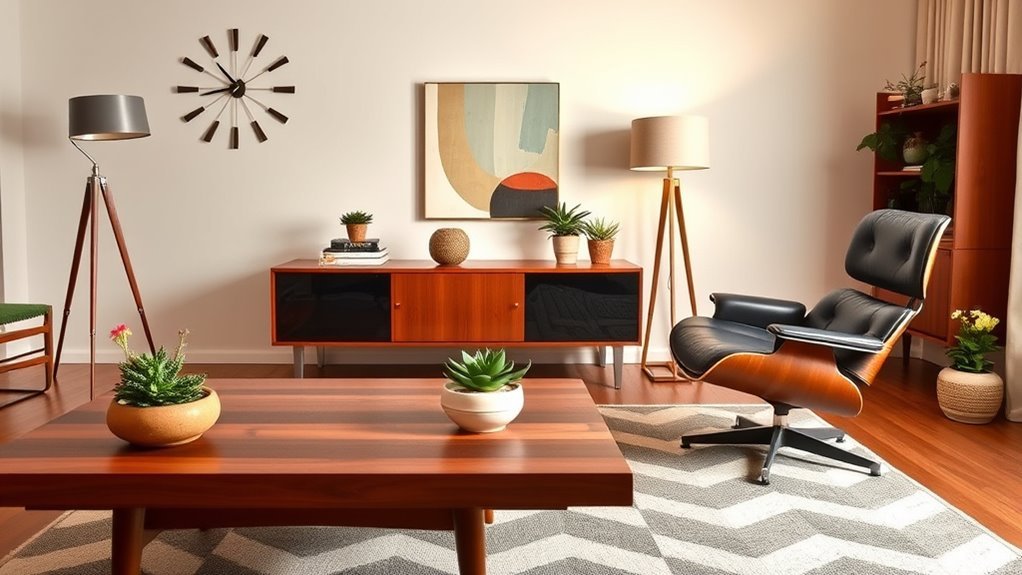
Accessories should support the furniture instead of competing with it. Choose pieces with strong shape, useful function, or meaningful texture.
Recommended Products

【Mid Century Modern Wall Art】 Experience the charm of our abstract geometric wall art, with soft background colors evoking retro aesthetics. Each colored polygon contrasts sharply with the subtle shapes, making it a perfect complement to any space. This wall art infuses your home with mid century design and brings a sense of tranquility and elegance to your decoration.

Dimensions 19.5 x 25 x 4.5cm / 7.5 x 10 x 2in.
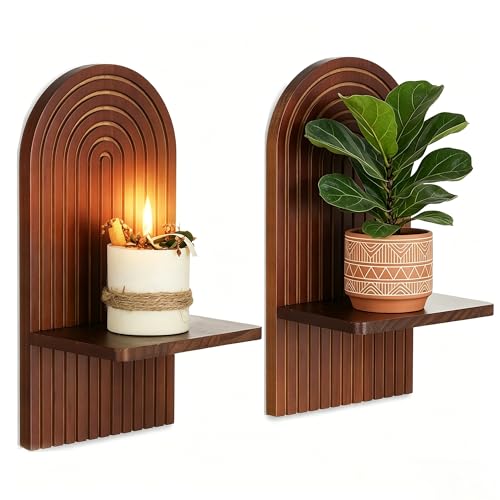
3D Arch Design: This 3D arched wall candle holder combines walnut wood colors, blending vintage charm with modern minimalism. Its design evokes a sense of nature and tranquility, adding rustic warmth to any space;
Essential Decorative Accents
- Geometric pillows or throws: Use them to bring in pattern without committing to bold upholstery.
- Abstract or graphic wall art: One large piece usually feels more modern than a cluttered gallery wall.
- Ceramic vases: Organic shapes work well on sideboards, shelves, and coffee tables.
- Plants: A rubber tree, fiddle-leaf fig, snake plant, or pothos adds height and softness.
- Vintage barware or trays: These add character while keeping surfaces organized.
Functional Storage Solutions
Storage is one of the easiest ways to make a mid-century modern living room feel polished. Use a walnut sideboard for media equipment, a low bookcase for display, or a coffee table with drawers for remotes and coasters. The best storage pieces look like furniture first and organization second.
Built-ins also work well if they have simple slab fronts, open shelving, or warm wood finishes. Keep shelves edited: books, ceramics, framed art, and a few sculptural objects are enough.
How Lighting Shapes Mid-Century Spaces
Lighting is one of the strongest style signals in a mid-century modern living room. Look for shapes that feel sculptural: globe pendants, tripod floor lamps, arc lamps, cone sconces, saucer pendants, and brass or black metal fixtures.
Use three layers of light:
- Ambient lighting: Ceiling fixtures, pendants, or flush mounts for general brightness.
- Task lighting: Floor lamps and table lamps near reading chairs or sofas.
- Accent lighting: Picture lights, shelf lights, or small lamps that highlight art, plants, or textured walls.
Warm bulbs usually suit this style best because they flatter wood, leather, and earthy colors. Avoid relying on one harsh overhead fixture; it can flatten the room and make even beautiful furniture feel cold.
Recommended Products

Dual-Adjustable 72-Inch Arc Floor Lamp: This tall lamp features a 350° rotating lamp head and 90° adjustable upper arm work together to create multiple configurations and lighting angles. Position the light over a sofa, desk or bedside area for reading, working or relaxing.
Buying Vintage, Modern, and Budget-Friendly Pieces
You can build a mid-century modern living room at many price points. The key is knowing what you are buying.
- Licensed originals and reissues: These are usually the highest-quality choice for iconic designs, but they can be expensive.
- Vintage pieces: Sideboards, chairs, coffee tables, and lamps can add character, but inspect them carefully for veneer damage, wobbly joints, odors, missing hardware, or poor repairs.
- Modern mid-century-inspired furniture: This is often the most practical route for sofas and sectionals because you get updated comfort and durable upholstery.
- Reproductions: Some are useful budget options, but avoid anything marketed in a misleading way as an original or licensed design.
If you are shopping secondhand, prioritize case goods first. A vintage wood credenza or coffee table often has more visual impact and longevity than an old upholstered sofa that needs expensive restoration.
Small Living Room Tips for Mid-Century Modern Style
Mid-century modern style is especially good for small living rooms because raised legs and simple shapes create visual space. Choose furniture that looks light from the floor up.
- Pick a sofa with exposed legs instead of a skirted base.
- Use a round or oval coffee table to improve movement.
- Choose one storage piece that does multiple jobs, such as a media console with drawers.
- Mount shelves instead of adding bulky freestanding cabinets.
- Use mirrors carefully to reflect light, not clutter.
- Keep the palette tight: one wood tone, one neutral base, and one accent color.
In a small room, avoid using too many tiny accent pieces. A few medium-scale pieces usually look calmer and more intentional.
The Timeless Appeal of Mid-Century Modern Style
Mid-century modern style has lasted because it solves real living-room problems. It gives you comfortable seating, practical storage, natural materials, and a clean backdrop for everyday life. It also adapts well: you can make it warm and earthy, colorful and playful, minimal and quiet, or layered with vintage finds.
The best version is not a copy of a 1950s showroom. It is a room that uses mid-century principles to support how you live now: conversation, reading, relaxing, entertaining, watching TV, and enjoying the space without visual clutter.
Good mid-century modern style is not about owning famous furniture. It is about choosing pieces with purpose, proportion, warmth, and breathing room.
Tips for Integrating Vintage and Modern Elements in Mid-Century Spaces
Blending vintage and modern elements keeps the room from feeling frozen in time. Start with one or two vintage anchors, then use contemporary pieces for comfort, durability, and scale.
- Choose one hero piece: A lounge chair, credenza, coffee table, or lamp can set the tone without overwhelming the room.
- Repeat materials: If your vintage piece is walnut, repeat walnut or a similar warm wood elsewhere so it feels connected.
- Mix eras with restraint: Pair a vintage sideboard with a modern sofa, or a contemporary sectional with a classic wood lounge chair.
- Use textiles to bridge the gap: Pillows, rugs, and throws can connect old and new colors.
- Avoid a showroom effect: Too many famous silhouettes in one room can look staged rather than personal.
Modern technology can fit the style too. Hide cords, choose a low media console, keep speakers simple, and balance the TV wall with art, books, plants, or warm wood.
Common Mid-Century Modern Decorating Mistakes
- Using too much wood: Wood is central to the style, but too many competing tones can feel heavy. Balance wood with fabric, glass, metal, ceramic, and plants.
- Buying furniture that is too low: Low profiles look great, but the room still needs to be comfortable for real people.
- Overdoing orange and mustard: Bold colors work best as accents, not on every surface.
- Ignoring storage: A cluttered room fights against the clean-lined style.
- Choosing only angular pieces: Add curves through lighting, chairs, tables, art, or ceramics.
- Making it too themed: Mix in contemporary pieces so the room feels current.
Frequently Asked Questions
What makes a living room mid-century modern?
A living room feels mid-century modern when it uses clean-lined furniture, low profiles, tapered legs, warm wood, simple forms, natural light, and edited decor. The room should feel functional, open, and comfortable rather than ornate or crowded.
What color is most mid-century modern furniture?
Natural wood tones are the most common foundation, especially walnut, teak, oak, and rosewood-style finishes. Upholstery often works well in neutrals, leather browns, olive green, mustard, rust, teal, charcoal, or warm cream.
Is mid-century modern still in style?
Yes. Mid-century modern remains popular because its core ideas are practical: comfortable furniture, clean lines, useful storage, natural materials, and flexible layouts. To keep it current, mix vintage pieces with modern upholstery, updated lighting, and personal decor.
What is the difference between modern and mid-century modern?
Modern design is a broader category that can include many clean, minimal, and contemporary styles. Mid-century modern refers more specifically to the mid-20th-century look known for warm woods, organic shapes, tapered legs, low profiles, and a strong connection between indoors and outdoors.
Can I create a mid-century modern living room on a budget?
Yes. Start with affordable mid-century-inspired shapes, then add one vintage wood piece, a warm rug, sculptural lighting, and a focused color palette. You do not need original designer furniture to create the look.
Conclusion
Embracing mid-century modern living room style is about more than buying retro furniture. It is about creating a room that feels useful, warm, open, and thoughtfully edited. Start with clean-lined seating, warm wood, a simple palette, good lighting, and a few pieces with personality. Then leave enough space for the shapes to breathe. The result is a living room that honors mid-century design while still feeling comfortable for everyday modern life.
Sources
- MoMA — Charles Eames, Ray Eames. Lounge Chair and Ottoman. 1956 — backs up the Eames Lounge Chair date, designer, and materials.
- Herman Miller — Eames Lounge Chair and Ottoman — backs up the chair’s introduction in 1956 and enduring design status.
- Vogue — Why Mid-Century Modern Interior Design Continues to Reign Supreme — supports the style’s focus on function, clean forms, and continued relevance.
- Architectural Digest — Midcentury-Modern Architecture — supports the indoor-outdoor connection, open plans, and material palette.
- Le Monde — Le canapé Sandra réédité — supports the Togo sofa’s 1973 Michel Ducaroy timeline.