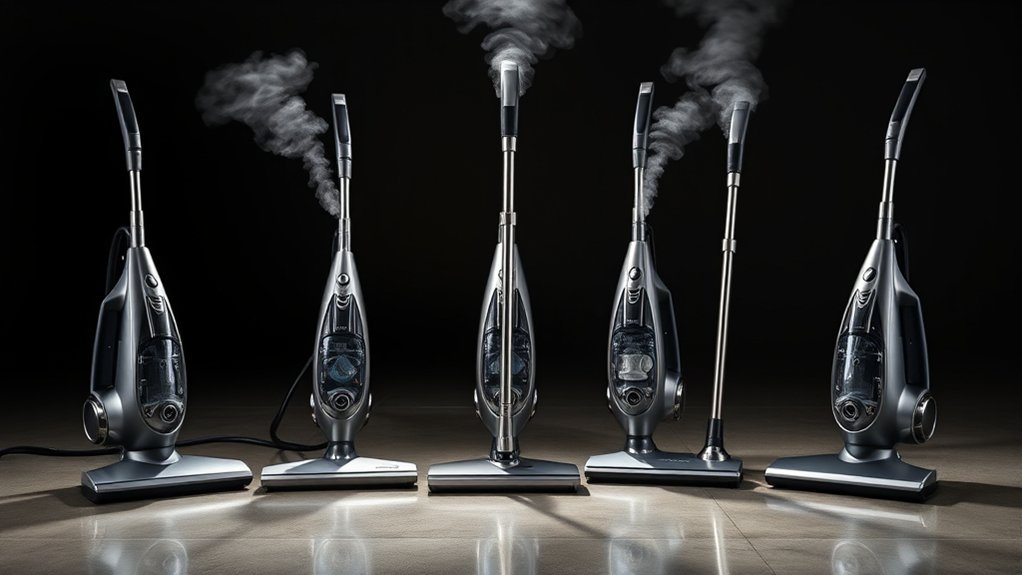
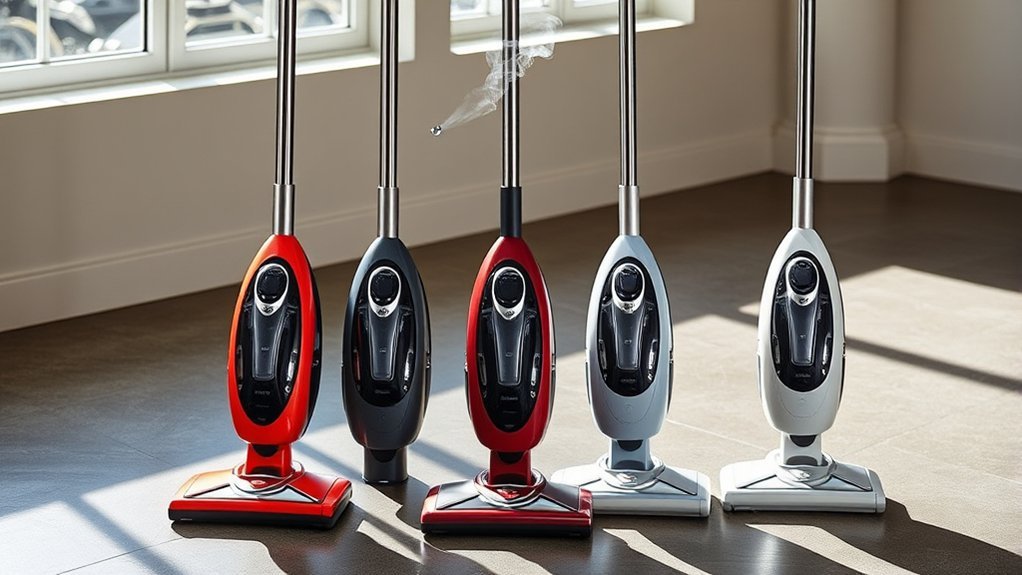
The best steam mop for engineered hardwood floors is not the model with the highest heat or strongest steam blast—it is a low-moisture machine with precise output control used only on flooring that carries explicit manufacturer approval for steam. Most engineered-hardwood warranties and the National Wood Flooring Association (NWFA) advise against steam cleaning because pressurized heat and moisture can penetrate plank seams, weaken core adhesives, cause veneer delamination, or dull factory finishes. If your specific flooring collection expressly permits steam in writing, the four verified models below offer reliable brand support, sealed-floor designs, and practical differences in steam regulation, scrubbing power, weight, and whole-home versatility.
Last updated: October 19, 2026 — product models, manufacturer-stated specifications, flooring warranty cautions, and affiliate links were reviewed.
Important floor-safety warning: Seeing “sealed hardwood” on a steam-mop box does not mean your engineered hardwood is approved for steam. Shaw and Bruce prohibit steam mops on their hardwood floors, while Mohawk allows steam mops only on specific wood-floor collections that carry explicit steam-mop warranty coverage (such as designated waterproof wood lines). Always check your exact flooring model’s care guide and warranty before buying or using any steam cleaner below.
Official care references: Shaw hardwood care, Bruce engineered-hardwood care, and Mohawk wood-floor care.
Affiliate disclosure: As an Amazon Associate I earn from qualifying purchases. This article contains Amazon affiliate links, meaning we may earn a commission at no extra cost to you. Product specifications, included accessories, and availability can change, so confirm the current listing and manufacturer manual before ordering.
Quick Verdict
- Best overall: BISSELL SpinWave SmartSteam 3897A for its powered rotating pads, two adjustable steam levels, and dedicated no-steam mode.
- Best budget pick: Shark S1000 for its sub-5-pound frame, removable water tank, and simple pump-activated steam for quick touch-ups.
- Best one-pass cleaner: Shark Steam Pickup SD201 for sweeping up wet or dry debris, scrubbing, and steaming in a single pass.
- Best for whole-home versatility: Shark Lift-Away S3972BRN for its detachable handheld steamer pod and detail attachments for above-floor surfaces.
Bottom line: Do not use steam on engineered hardwood unless your flooring manufacturer expressly permits it in writing. When in doubt, use a no-steam setting or a lightly damp microfiber spray mop.
Quick Comparison
| Product | Best For | Steam Control & Specs | Key Advantage | Main Limitation | Check Details |
|---|---|---|---|---|---|
| BISSELL SpinWave SmartSteam 3897A | Controlled scrubbing & no-steam option | 2 steam levels + no-steam mode | 25-ft cord | ~8.6 lbs | Dual rotating pads (230 RPM) can clean with or without steam | Heavier frame; floor-only design | Check Price on Amazon |
| Shark S1000 | Lightweight daily cleaning | Manual pump steam | 18-ft cord | 4.94 lbs | Ultralight frame under 5 pounds with removable tank | No electronic low-steam or no-steam button | Check Price on Amazon |
| Shark Steam Pickup SD201 | Busy homes with mixed debris | Single automatic mode | 25-ft cord | 7.01 lbs | Captures wet, dry, and stuck-on debris while scrubbing | Requires tray and brushroll cleaning after use | Check Price on Amazon |
| Shark Lift-Away S3972BRN | Floors plus above-floor detail work | 2-in-1 floor & handheld pod | ~7 lbs | Detachable handheld steamer with grout, crevice, and flat tools | More attachments to organize and store | Check Price on Amazon |
Product verification note: Core model specifications were checked against the official manufacturer pages for the BISSELL 3897A, Shark S1000, Shark SD201, and Shark S3972BRN. Amazon availability and bundle contents can change.
BISSELL SpinWave SmartSteam Electric Hard Floor Steam Mop (3897A)

The BISSELL SpinWave SmartSteam 3897A is the safest and most adaptable choice for engineered-hardwood owners because it does not force you to use heat on every pass. Its dual counter-rotating microfiber pads spin up to 230 RPM, lifting dried spills and footprints with mechanical scrubbing rather than relying solely on high-temperature steam.
What sets the 3897A apart for delicate floors is its three-mode digital control: two steam levels plus a dedicated no-steam rotating-pad mode. If your engineered hardwood allows low-moisture steam in high-traffic zones—or if you decide to avoid steam on your wood planks altogether and reserve steam strictly for bathroom tile—you can switch steam off completely and still use the motorized spinning pads with lightly dampened microfiber. A 25-foot cord, removable 18.2 oz (538 mL) water tank, swivel head, and built-in LED headlights make it well equipped for larger floor plans.
Key Specifications:
- Steam Settings: 2 electronic steam levels + 1 no-steam SpinWave mode
- Scrubbing Mechanism: Dual motorized rotating microfiber pads (up to 230 RPM)
- Water Tank Capacity: 18.2 oz (538 mL), removable
- Heat-Up Time: Approximately 20 to 30 seconds
- Cord Length & Weight: 25-foot cord | Approx. 8.6 lbs
Why You’ll Like It: Powered pad rotation reduces manual scrubbing effort while the no-steam setting gives you a safe fallback for everyday engineered-wood maintenance.
Who Should Buy This: Homeowners with a mix of tile and manufacturer-approved sealed hardwood who want motorized scrubbing and strict control over whether steam is applied.
Who Should Avoid This: Anyone seeking an ultralight mop for multiple flights of stairs, or shoppers who want a detachable handheld steamer for countertops and shower glass.
Pros:
- Dual rotating pads scrub up to 230 RPM and glide smoothly across planks
- Two steam levels plus a no-steam mode let you customize moisture and heat output
- 25-foot power cord, removable tank, LED headlights, and machine-washable pads support large rooms
Cons:
- At roughly 8.6 pounds, it is heavier to carry upstairs than a basic stick steam mop
- Floor-only design cannot convert into a handheld steamer for counters or grout
- Still requires explicit written approval from your flooring manufacturer before using the steam modes
Bottom Line: Because it pairs gentle rotating microfiber pads with a low-steam setting and a true no-steam mode, the BISSELL SpinWave SmartSteam 3897A is the smartest all-around investment for homes with engineered hardwood.
Shark Steam Mop for Hard Floors (S1000)

The Shark S1000 is a straightforward, budget-friendly option when low weight, compact storage, and simple operation matter more than motorized pads or multi-tool attachments. Designed for sealed hard floors, it pairs a removable 12.6 oz (375 mL) water tank with swivel steering and machine-washable Dirt Grip microfiber pads that warm up in roughly 30 seconds.
Unlike electronic models with push-button settings, the S1000 uses a manual pump-action handle to generate on-demand steam as you push and pull. For approved engineered hardwood, this requires mindful technique: use light, steady strokes and avoid rapid pumping in one spot so you do not oversaturate plank seams. Weighing 4.94 pounds with an 18-foot cord, it is easiest to maneuver in apartments, kitchens, or smaller rooms.
Key Specifications:
- Steam Settings: Manual pump-activated on-demand steam (no electronic presets)
- Scrubbing Mechanism: Flat mop head with washable Dirt Grip microfiber pad
- Water Tank Capacity: 12.6 oz (375 mL), removable
- Heat-Up Time: Approximately 30 seconds
- Cord Length & Weight: 18-foot cord | 4.94 lbs
Why You’ll Like It: It keeps setup, storage, and maintenance minimal while weighing less than five pounds.
Who Should Buy This: Budget-conscious shoppers with smaller areas of explicitly steam-approved sealed flooring who want a light, grab-and-go appliance.
Who Should Avoid This: Buyers who want electronic low-steam presets, a no-steam scrubbing mode, a 25-foot cord, or handheld accessories.
Pros:
- Ultralight 4.94-pound frame is effortless to carry up stairs and maneuver around furniture
- Removable water tank and machine-washable Dirt Grip pads simplify cleanup
- Reaches operating temperature in about 30 seconds for fast spill touch-ups
Cons:
- Manual pump mechanism lacks a locked low-steam electronic setting, requiring careful user control
- 18-foot cord requires more frequent outlet switches in open-concept homes
- No motorized scrubbing pads or built-in debris pickup
Bottom Line: If your flooring warranty allows steam and you simply want an affordable, featherweight mop for quick cleanups, the Shark S1000 delivers reliable basics without bulk.
Shark Steam Pickup 3-in-1 Steam Mop Cleaner (SD201)

Standard steam mops require you to vacuum or sweep thoroughly first so loose crumbs do not scratch your floor or smear into wet streaks. The Shark Steam Pickup SD201 eliminates that extra step for everyday messes by combining a motorized soft brushroll, debris pickup, and steam cleaning in a single pass. As you push forward, it sweeps up dry crumbs, pet kibble, and wet spills while scrubbing the surface.
Shark rates the SD201 for sealed hardwood, laminate, tile, stone, marble, and vinyl, and outfits it with a 25-foot cord and a two-chamber removable tray that separates solid debris from dirty liquid. On approved engineered hardwood, inspect the brushroll before each session to ensure no sharp gravel or grit is embedded in the bristles, and keep the head moving steadily. Expect a few minutes of post-cleaning maintenance to empty the debris tray and rinse the brushroll assembly.
Key Specifications:
- Steam Settings: Single automatic steam + motorized brushroll mode
- Scrubbing Mechanism: Self-cleaning antimicrobial soft brushroll with wet/dry debris pickup
- Water Tank Capacity: 14.2 oz (420 mL) clean tank + dual-chamber debris/liquid collection tray
- Heat-Up Time: Approximately 30 seconds
- Cord Length & Weight: 25-foot cord | 7.01 lbs
Why You’ll Like It: It consolidates sweeping, scrubbing, and steaming into one pass—a major time-saver under dining tables, high chairs, and pet feeding stations.
Who Should Buy This: Busy households with kids or pets that constantly deal with mixed wet and dry kitchen messes on manufacturer-approved hard floors.
Who Should Avoid This: Buyers who dislike emptying dirty collection trays after mopping, or anyone whose engineered hardwood requires a non-steam or adjustable low-steam mode.
Pros:
- Captures wet spills, dry crumbs, and stuck-on grime without requiring a separate pre-sweep
- Continuous self-cleaning brushroll keeps fresh microfiber against the floor
- 25-foot power cord provides wide reach across open kitchens and living areas
Cons:
- Collection tray and nozzle require emptying and rinsing after every session to prevent odors
- Lacks a steam-off mode or multi-level steam adjustment for extra-delicate wood veneers
- Designed strictly for sealed hard floors, with no above-floor handheld conversion
Bottom Line: For steam-approved floors that constantly collect food crumbs and pet tracks, the Shark Steam Pickup SD201 cuts cleaning time in half by sweeping and steaming simultaneously.
Shark Lift-Away 5-in-1 Steam Mop (S3972BRN)

The Shark Lift-Away S3972BRN is the strongest value when you want a single appliance for approved sealed floors and detail steaming throughout your kitchen, bathroom, and laundry room. Even if your engineered-hardwood manufacturer restricts floor steaming, the detachable handheld steamer pod earns its closet space by tackling tile grout, oven exteriors, range hoods, window tracks, and bathroom fixtures.
Weighing approximately 7 pounds in full mop configuration, the S3972BRN comes with a washable Dirt Grip floor pad, an extension hose, a flat surface tool, grout and copper detail brushes, a precision scraper, and a filling flask. When transitioning from bathroom tile to approved sealed wood, allow the floor pad to avoid excess condensation buildup and test an inconspicuous corner first.
Key Specifications:
- Design Type: 5-in-1 upright steam mop with Lift-Away detachable handheld steamer
- Scrubbing Mechanism: Flat mop head with washable Dirt Grip pad + specialized detail brushes
- Included Tools: Extension hose, flat pad tool, grout brush, copper brush, scraper, filling flask
- Weight: Approx. 7 lbs (lighter when detached in handheld mode)
Why You’ll Like It: The lift-away steam pod and detail attachments replace a standalone handheld steamer for counters, grout lines, and appliances.
Who Should Buy This: Homeowners who want maximum whole-home utility from one machine and prefer not to store separate floor and handheld steamers.
Who Should Avoid This: Shoppers who only want a dedicated floor mop with powered rotating pads, or anyone who does not want to organize multiple brush attachments.
Pros:
- Detachable handheld unit handles both sealed floors and above-floor grime
- Comprehensive accessory kit targets tile grout, tight crevices, flat counters, and baked-on grease
- Washable microfiber floor pad avoids recurring disposable refill expenses
Cons:
- Multiple hoses, brushes, and nozzles require dedicated closet organization
- Bulkier in the hand than the minimalist Shark S1000 when used purely as a stick mop
- Copper and stiff bristle attachments are strictly for durable non-wood surfaces—never use them on wood
Bottom Line: The Shark Lift-Away S3972BRN is ideal if you want one versatile steam system that cleans approved hard floors and detaches for deep-cleaning bathroom grout and kitchen appliances.
Factors to Consider When Choosing a Steam Mop for Engineered Hardwood Floors

When shopping for engineered hardwood, structural compatibility matters far more than maximum steam temperature or attachment count. Review the technical factors below before using any heated appliance on your floors.
Why Engineered Hardwood Is More Vulnerable to Steam Than Solid Wood
Unlike solid hardwood milled from a single piece of timber, engineered hardwood is built in layers: a thin real-wood top wear layer (typically 0.6 mm to 4 mm thick) bonded under heat and pressure to a core made of plywood, high-density fiberboard (HDF), or softwood. Because steam mops release pressurized vapor at 200°F (93°C) or higher, that vapor can force its way into micro-gaps between planks. Once inside, heat and moisture can break down the laminating adhesives (causing the top wood veneer to peel or blister), swell the HDF or plywood core, and trigger permanent edge cupping or crowning—which is why the National Wood Flooring Association (NWFA) advises against steam cleaning wood floors.
Written Floor-Manufacturer Approval
Locate the official care guide and warranty PDF for your exact flooring brand and collection. Appliance brands routinely print “safe for sealed hardwood” on their packaging, but flooring manufacturers write the warranty rules for your floor. While brands like Shaw and Bruce prohibit steam mops across their hardwood lines, other manufacturers only permit steam on specialized waterproof hybrid wood collections. Always let your flooring warranty govern your decision.
Finish Types and Plank Edge Profiles
Even if your floor feels smooth, not all surface finishes react the same way to heat:
- Factory-cured polyurethane or aluminum oxide with tight, square edges: Offers the highest surface resistance, though plank joints and end seams remain vulnerable to moisture intrusion unless waterproof-sealed.
- Penetrating oil, hardwax oil, or shellac finishes: Never use a steam mop on oiled or waxed engineered wood. Heat emulsifies and strips oil and wax immediately, leaving dull, unprotected gray patches.
- Micro-beveled, scraped, wire-brushed, or distressed planks: Grooves and beveled edges collect pooling moisture and expose thinner areas of finish, increasing the risk of edge swelling and white cloudy haze.
Steam Output Control and No-Steam Modes
If your flooring warranty expressly allows steam, select a machine with a dedicated low-steam setting and never leave the hot mop head stationary. Better yet, prioritize a model like the BISSELL SpinWave SmartSteam 3897A that includes a no-steam mode, allowing you to use motorized microfiber pads for routine weekly cleaning and reserve heat only for approved, heavily soiled areas.
Pad and Brush Design
Thick, plush microfiber pads absorb excess condensation and trap fine grit so it does not scratch your finish. If you choose a model with rotating pads or a motorized brushroll, inspect the head before every use to remove trapped sand, pet kibble, or small pebbles. Wash pads after every session without fabric softener (which coats fibers and causes streaking).
Water Tank and Cord Length
A removable water tank is much safer and easier to fill at the sink than a fixed reservoir requiring a pouring cup. Match cord length and machine weight to your home layout: a sub-5-pound stick mop with an 18-foot cord suits compact apartments, while a 25-foot cord prevents constant outlet swapping in open-plan homes.
Brand Support and Replacement Parts
Stick to established appliance manufacturers that publish complete user manuals and stock replacement microfiber pads, brushrolls, and water filters. Worn-out pads lose their cushioning and leave more water behind on the floor.
Before You Buy Checklist
- Download the exact care guide and warranty document for your engineered-hardwood collection.
- Verify that steam cleaning is explicitly permitted in writing—not merely that the top coat is sealed.
- Confirm your floor has a modern cured urethane finish rather than penetrating oil, hardwax oil, or wax.
- Prioritize a mop with electronic low-steam regulation or a no-steam scrubbing mode.
- Check that genuine replacement microfiber pads or brushrolls are readily available.
- Read the appliance manual’s water requirements before plugging the machine in.
How to Use a Steam Mop More Safely on Approved Engineered Hardwood
- Vacuum or dry-dust thoroughly first: Remove all sand, pet hair, and grit using a hard-floor vacuum attachment (without a beater bar) or a dry microfiber dust mop so particles do not scratch the veneer.
- Attach a fresh, clean microfiber pad: Never start with a damp, soiled, or worn-thin pad.
- Fill the tank with distilled or demineralized water: Unless the manual specifies otherwise, distilled water prevents white mineral spots on dark wood and protects internal heaters from scale buildup. Never add vinegar, essential oils, or soap unless explicitly approved by the mop maker.
- Select the lowest steam setting: Start on the minimum vapor output (or no-steam mode for light dust).
- Spot-test a hidden corner: Steam a small closet or under-sofa area first, wait 30 minutes for it to cool and dry completely, and inspect at an angle under light for hazing or raised grain.
- Move smoothly along the plank direction: Keep the mop gliding continuously at a steady walking pace. Never pause, answer your phone, or park the unit directly on the wood while hot.
- Verify rapid drying: The floor should look only faintly misted and dry completely within 30 to 60 seconds. Stop immediately if water beads in bevels or if you notice cloudy white haze or edge swelling.
- Detach the hot pad immediately after finishing: Remove the damp pad over a tiled area or sink as soon as you unplug the machine so residual moisture never sits against your wood floor.
Safer Alternatives When Your Warranty Prohibits Steam
If you check your flooring documentation and discover that steam will void your warranty, skip heated appliances on your wood floors and use one of these manufacturer-approved methods instead:
- Atomized microfiber spray mops: A non-heated spray mop (such as a Bona-style flat spray mop) dispenses a fine, controlled mist of pH-neutral hardwood cleaner that evaporates in seconds without heating seams or adhesives.
- Motorized spin mops in no-steam mode: Dedicated electric spin mops—or the BISSELL SpinWave SmartSteam 3897A switched to its no-steam setting—give you dual rotating microfiber scrubbing power using only a light spritz of approved wood-floor cleaner.
- Two-pad flat microfiber routine: Mist a clean microfiber pad lightly with a pH-balanced engineered-wood cleaner until barely damp (never dripping), wipe with the grain, and follow immediately with a dry microfiber buffing pad if any moisture remains.
Frequently Asked Questions
Can You Use a Steam Mop on Engineered Hardwood Floors?
Only when the manufacturer of your exact flooring collection expressly permits steam cleaning in writing. The vast majority of engineered-hardwood brands and the National Wood Flooring Association (NWFA) advise against steam mops because high heat and pressurized vapor can penetrate plank joints, degrade core adhesives, and cause cupping or peeling—even when a steam mop’s box claims it is safe for “sealed hardwood.”
Can Steam Mops Void My Floor Warranty?
Yes. Most engineered-hardwood warranties specifically exclude damage caused by steam mops or excessive moisture. If plank edges swell, cup, or delaminate after steaming, a flooring inspector can easily identify heat-and-moisture intrusion, leaving the homeowner responsible for repair or replacement costs.
Is Sealed Engineered Hardwood Safe for Steam?
Not automatically. A factory polyurethane top coat seals the flat face of each plank, but the tongue-and-groove seams, micro-beveled edges, plywood or HDF core, and bonding glues underneath remain sensitive to pressurized vapor. Only treat a floor as steam-compatible if its specific product warranty states so.
How Can I Tell If My Floor Is Engineered Hardwood vs. Solid Wood or Laminate?
Pull up a floor HVAC register vent or inspect an exposed edge inside a closet to look at the plank’s side profile. Solid hardwood is a single piece of timber all the way through; engineered hardwood shows a thin top slice of real wood (1 to 4 mm) glued over stacked plywood layers or a fiberboard core; laminate and luxury vinyl plank (LVP) have a photographic print layer with no real wood grain in the cross-section.
Is Distilled Water Required for All Models?
Always check your appliance manual, but distilled or demineralized water is strongly recommended for every steam mop. Tap water contains dissolved minerals that calcify inside the internal heater and leave chalky white spots across dark hardwood finishes.
Can I Add Essential Oils, Vinegar, or Floor Cleaner to the Tank?
No. Never pour vinegar, essential oils, dish soap, or hardwood cleaner into a steam mop’s water tank unless the manufacturer explicitly instructs you to use a proprietary formula. Vinegar corrodes internal rubber seals and dulls polyurethane floor finishes, while oils and detergents clog steam vents and leave sticky film on wood planks.
Why Does My Floor Look Streaky or Cloudy After Steaming?
Light surface streaks usually come from a dirty microfiber pad, fabric-softener residue on the pad, hard-water minerals, or old wax/polish buildup reacting with heat. However, a milky white haze trapped inside the finish (“blushing”) indicates that heat and moisture have penetrated the protective top coat. Stop using steam immediately if you see cloudiness or raised edges.
What Is the Safer Alternative to Steam for Engineered Hardwood?
For daily and weekly care, vacuum using a soft bare-floor nozzle or sweep with a dry microfiber dust mop, then clean with a lightly misted flat microfiber spray mop using a manufacturer-approved, pH-neutral hardwood floor cleaner.
Conclusion
Final Recommendation: Always start with your flooring warranty, not the appliance box. When your flooring collection expressly permits steam, choose the BISSELL SpinWave SmartSteam 3897A for the safest combination of motorized rotating pads, two steam settings, and a dedicated no-steam mode. Pick the Shark S1000 for lightweight budget touch-ups, the Shark Steam Pickup SD201 for one-pass wet/dry debris cleanup, or the Shark Lift-Away S3972BRN for floor plus above-floor versatility.
If your flooring manufacturer prohibits steam—or if you cannot find written documentation—skip the steam mop on your wood planks and use a lightly damp microfiber spray mop with a pH-neutral engineered-hardwood cleaner instead.