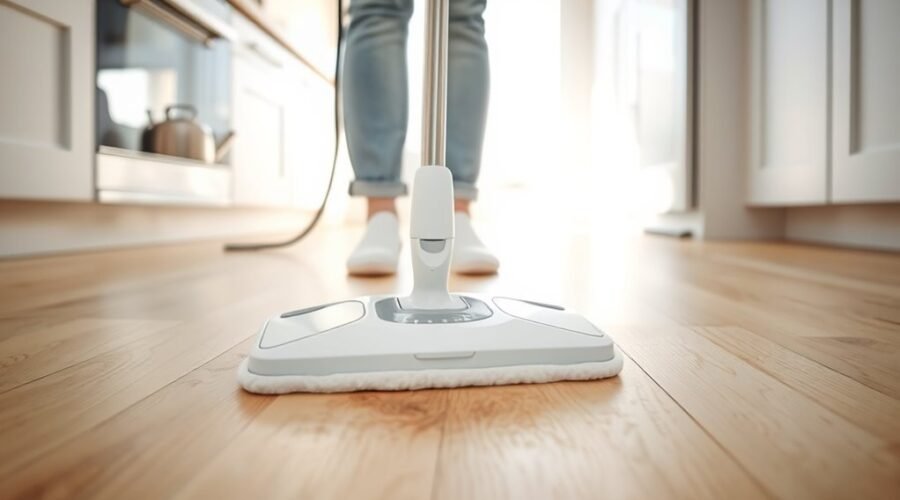
Learning how to use a steam mop correctly can make hard-floor cleaning easier without relying on traditional cleaning chemicals. However, heat and moisture can damage some flooring materials, even when they appear sealed. The key is to check floor compatibility, prepare the surface, choose the right steam setting, and keep the mop moving.
Quick Answer
To use a steam mop, first confirm that your flooring allows steam cleaning. Sweep or vacuum, attach a clean microfiber pad, and fill the tank with approved water. Let the machine heat up, then clean with slow, continuous passes. Keep the mop moving, replace dirty pads, and allow the floor to dry before walking on it.
At a Glance
| Difficulty | Easy, once floor compatibility is confirmed |
| Tools Needed | Steam mop, compatible microfiber pad, approved water, and broom or vacuum |
What Is a Steam Mop?
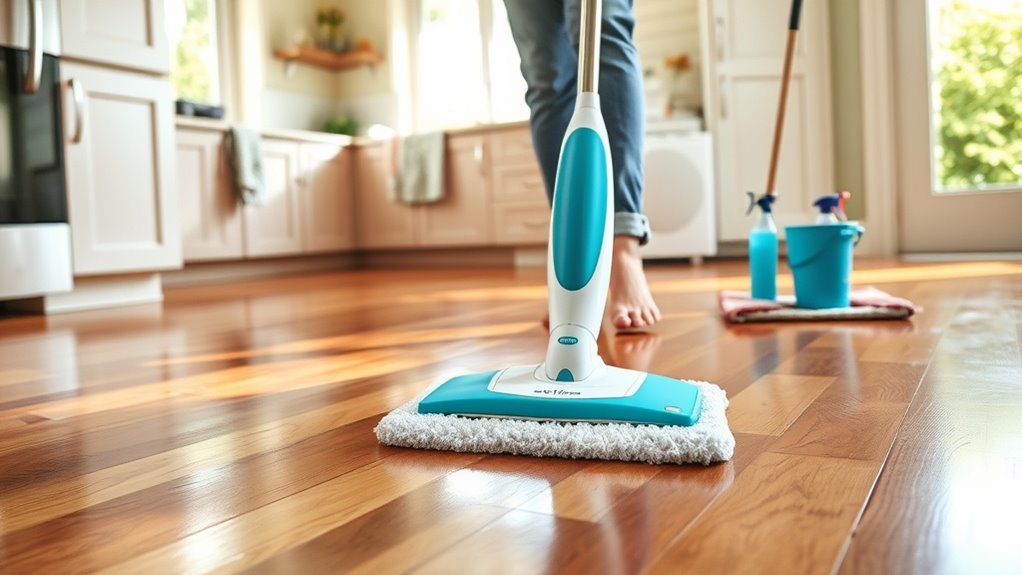
A steam mop is an electric cleaning appliance that heats water and releases steam through a cleaning head. The heat helps loosen dirt and dried residue, while an attached microfiber pad collects the loosened grime.
Unlike a traditional mop, it does not require a bucket of cleaning solution. Most models use water as their main cleaning agent.
Steam mops work best on suitable hard surfaces, particularly compatible ceramic and porcelain tile. Some models include adjustable steam output, different cleaning pads, or attachments for specific jobs.
They can also reduce the need for added cleaning chemicals during routine floor care. However, a steam mop is not a substitute for every cleaning tool or disinfecting method.
Which Floors Can You Steam Mop?
Steam mops are suitable for certain hard floors, but compatibility depends on the flooring material, finish, installation, and appliance instructions. A floor being sealed or waterproof does not automatically mean it can withstand steam.
For the safest approach, both the floor manufacturer and steam mop manufacturer should permit the method.
Sealed Floor Types
The following materials have different levels of tolerance for heat and moisture.
- Ceramic and porcelain tile: Generally suitable when the tile, grout, and installation are in good condition. Steam can help loosen grime on tile surfaces and in grout lines.
- Sealed hardwood: Some steam mop manufacturers advertise compatibility, but the National Wood Flooring Association advises against steam mopping wood floors because moisture can damage the finish and wood over time. A slightly damp microfiber mop is the safer routine choice. See the NWFA wood floor maintenance recommendations.
- Laminate: Use steam only when the specific flooring product expressly permits it. Shaw warns that steam can damage and warp laminate flooring in its laminate flooring guidance.
- Vinyl and luxury vinyl plank: Approval varies by product. Armstrong discourages steam mopping because heat and moisture may cause damage, as explained in its vinyl flooring care guidance.
If your flooring manufacturer permits steam cleaning, follow any stated limits for steam output and cleaning method.
Floors to Avoid
Some surfaces are especially vulnerable to heat, moisture, or changes to their protective finish.
- Unsealed hardwood: Moisture can enter the wood and cause swelling, warping, or staining.
- Waxed floors: Heat can soften or damage the protective wax coating.
- Damaged laminate: Moisture can enter open seams, chipped edges, or damaged joints.
- Unapproved vinyl flooring: Heat can affect certain adhesives, seams, or flooring layers.
- Natural stone: Use only cleaning methods approved for the specific stone and its finish. Marble, limestone, and other materials need particular care.
- Carpet and rugs: A standard steam mop is not a carpet cleaner. Use only a compatible carpet attachment on materials approved for that treatment.
The Natural Stone Institute’s care guidance also warns against acidic cleaners on vulnerable stone surfaces, including marble and limestone.
Warning: Do not assume that a sealed, waterproof, or water-resistant floor is steam-safe. Heat and moisture can enter joints or affect adhesives and finishes. Check the specific flooring instructions before cleaning.
Prep Floors and the Mop Before Use
Good preparation prevents loose debris from being dragged across the floor and helps the mop clean evenly. Gather the necessary supplies before plugging in the appliance.
- Sweep or vacuum the floor to remove dust, hair, crumbs, and grit.
- Check the floor for loose tiles, open seams, damaged finishes, or standing water.
- Attach a clean microfiber pad designed for your steam mop.
- Inspect the water tank, cap, cord, and mop head for damage.
- Fill the tank with the water recommended in the appliance manual.
Distilled or demineralized water is often recommended because it reduces mineral buildup. Some models also allow tap water, so follow the instructions for your machine.
Do not add vinegar, bleach, dish soap, essential oils, or other cleaning products to the tank unless the manufacturer explicitly approves them.
For example, BISSELL’s SteamReady instructions specify water only and warn that vinegar or other solutions can damage the tank.
How to Use a Steam Mop: Step by Step
Once the floor and appliance are ready, work in controlled passes rather than concentrating steam in one spot. The goal is to loosen grime while limiting excess moisture.
The following method works for routine cleaning on floors approved for steam mopping.
- Attach the mop pad. Secure the clean microfiber pad according to the appliance instructions. Check that it lies flat against the cleaning head.
- Fill the water tank. Add the recommended water without exceeding the marked fill level, then close the tank securely.
- Connect the appliance. Plug it into a suitable outlet and wait until the ready indicator shows that the mop is heated.
- Select the steam setting. Choose the setting recommended for your floor. A lower setting can help limit unnecessary moisture where the manufacturer permits steam use.
- Start at the far side of the room. Work toward the exit so you do not need to walk over freshly cleaned sections.
- Move the mop in steady passes. Keep the pad flat and use slow, overlapping back-and-forth movements. Do not leave the heated mop stationary on the floor.
- Inspect the pad. Replace or clean it when it becomes heavily soiled instead of spreading dirt across the next section.
- Allow the floor to dry. Keep people and pets off the surface until it is dry and no longer hot.
- Finish safely. Turn off and unplug the appliance. Let it cool before removing the pad, emptying the tank, or storing the machine.
For a model-specific example, BISSELL’s PowerEdge steam mop instructions cover pad attachment, tank filling, the ready light, and controlled steam application.
A successful cleaning session should leave the surface visibly cleaner without puddles or prolonged dampness.
How to Treat Stubborn Stains
Dried food, grease, and tracked-in grime may need more attention than ordinary dust. Start with a suitable spot treatment and a clean pad instead of applying excessive steam.
Always match the treatment to the floor material.
Use Controlled Passes on Stubborn Stains
Steam can soften some stuck-on residue, making it easier for the microfiber pad to collect. However, holding a hot mop motionless can create excessive moisture and damage certain surfaces.
Make another controlled pass over the stain while keeping the mop moving. If the residue remains, let the area cool before trying an approved cleaning method.
A clean pad is essential because a saturated pad may simply move the loosened dirt around.
Pre-Treat Tough Spots
Some stains respond better to gentle treatment before steam mopping. Dried food can often be softened with a little water, while grease or pet stains may need a floor-safe cleaner.
| Action | Purpose |
|---|---|
| Inspect stains | Identify the residue and floor condition |
| Pre-treat | Soften residue with an approved cleaning method |
| Brush gently | Lift suitable surface grime without scratching |
| Steam mop | Remove remaining dirt from an approved surface |
Test the treatment in a hidden area first. Apply only the amount needed, then use a soft cloth or suitable brush to loosen the residue.
Remove any cleaning product as directed before steam mopping. Never combine chemicals or use vinegar on a floor unless its manufacturer allows it.
If a stain remains after repeated gentle cleaning, stop rather than increasing heat or pressure. Some marks require a different floor-specific treatment.
Steam Mop Mistakes to Avoid
Most steam mopping problems come from unsuitable flooring, excess moisture, or poor pad maintenance. Avoiding these mistakes protects both the floor and the appliance.
- Skipping sweeping or vacuuming: Loose dirt can collect under the pad and scratch the surface.
- Using an unsuitable floor: Heat and moisture may damage wood, laminate, vinyl, or vulnerable finishes.
- Leaving the mop stationary: Steam can build up beneath the cleaning head.
- Using too much steam: Excess output can leave the floor wetter than necessary.
- Adding household cleaners to the tank: Unapproved solutions may damage seals or internal parts.
- Using a dirty pad: A saturated pad loses cleaning efficiency and may leave streaks.
- Ignoring cooling instructions: The pad and steam outlet can remain hot after use.
If the floor becomes unusually wet, stop cleaning and investigate. BISSELL’s excess-water troubleshooting guidance identifies high steam settings, stationary operation, and tank problems as possible causes.
Steam Mop Safety Basics
Steam mops produce hot vapor that can burn skin and damage unsuitable surfaces. Use the appliance only as directed, and keep children and pets away from the cleaning area.
Warning: Never direct steam toward people, pets, electrical outlets, or exposed wiring. Do not touch the steam outlet or remove a hot cleaning pad. Unplug the appliance and allow it to cool before maintenance.
Inspect the power cord before use. Do not operate a damaged appliance or handle its plug with wet hands.
Keep the cord clear of the heated mop head, and avoid pulling the machine by its cord.
Do not use the steam mop to absorb large liquid spills. Remove standing water separately before cleaning.
If you need to disinfect a floor because someone is ill, ordinary steam mopping should not automatically be treated as proven disinfection.
The CDC’s household cleaning guidance explains the difference between cleaning, sanitizing, and disinfecting. When disinfection is necessary, use an appropriate method and follow the required instructions.
How to Clean and Maintain a Steam Mop
Regular maintenance helps prevent odors, residue buildup, and reduced steam output. The most useful routine is to clean the pad, empty the tank, and inspect the appliance after each session.
- Wash the pad: Follow its care label. Wash reusable microfiber pads separately from heavily lint-producing fabrics.
- Empty the tank: Remove unused water according to the appliance instructions.
- Inspect the mop head: Look for trapped dirt or visible buildup around the steam openings.
- Check for blockages: Use only the cleaning method recommended for your model.
- Allow everything to dry: Store the appliance and clean pads in a dry location.
Mineral deposits can reduce steam output over time, particularly when hard water is used.
However, descaling methods differ between appliances. Do not assume that vinegar is suitable for the tank or heating system. Follow the manufacturer’s approved cleaning procedure and maintenance schedule.
Replace damaged pads and accessories rather than continuing to use them.
How Steam Mops Compare With Vacuums
Steam mops and vacuums perform different cleaning tasks. A vacuum removes loose material, while a steam mop uses heat and a cleaning pad to loosen and collect dirt from compatible hard floors.
For most cleaning sessions, vacuuming or sweeping comes first.
| Tool | Primary role |
|---|---|
| Steam mops | Loosen and remove surface grime using steam and a pad |
| Vacuums | Remove loose dirt, dust, hair, and debris |
| Steam mops | Clean approved hard floors without adding ordinary detergent to the tank |
| Vacuums | Clean carpets, rugs, upholstery, and suitable hard floors using appropriate attachments |
A vacuum does not normally sanitize or disinfect floors, but it removes debris that can interfere with later cleaning.
A steam mop can help with dried residue that vacuuming alone cannot remove. It may also leave less water behind than a traditional wet mop when used correctly.
Neither tool replaces every other cleaning method. Use a conventional floor-safe cleaner when the surface or type of soil requires it.
Frequently Asked Questions
What Can I Spray on the Floor Before Steam Mopping?
Use only a cleaner approved for your flooring if pre-treatment is necessary. Plain water can help soften some dried residue. Avoid spraying vinegar on wood, natural stone, or other surfaces that prohibit acidic cleaners. Remove cleaning products as directed before using the steam mop.
How Do You Properly Clean Floors With a Steam Mop?
Start by confirming floor compatibility and removing loose debris. Fill the tank with approved water, attach a clean microfiber pad, and allow the appliance to heat up. Clean in slow, overlapping passes without leaving the mop stationary. Let the floor dry before walking on it.
Which Floors Should You Never Steam Mop?
Avoid unsealed wood, waxed floors, damaged laminate, and any surface whose manufacturer prohibits steam cleaning. Hardwood, vinyl, and natural stone also require special care. Do not assume that waterproof flooring is heat-resistant. Use steam only when the specific floor and appliance instructions permit it.
Should You Steam Mop Before or After Regular Mopping?
Steam mopping usually replaces regular wet mopping on approved floors. Sweep or vacuum first, then use the steam mop to remove remaining grime. If a separate cleaner is needed for heavy soil, follow its directions and remove any residue before steaming. There is no need to wet-mop every floor twice.
Conclusion
A steam mop can make routine cleaning easier when the floor is compatible and the machine is used correctly. Start with a debris-free surface, use a clean pad, and keep the mop moving to limit excess moisture. After cleaning, wash the pad and maintain the appliance according to its instructions. These habits help protect your floors while keeping the steam mop ready for its next use.
Sources
- National Wood Flooring Association: Hardwood cleaning and steam mop precautions.
- Shaw Floors: Laminate flooring compatibility and moisture damage.
- Armstrong Flooring: Vinyl flooring maintenance and steam cleaning restrictions.
- Natural Stone Institute: Stone cleaning methods and acidic cleaner precautions.
- BISSELL PowerEdge Support: Steam mop setup and operating steps.
- BISSELL SteamReady Support: Water tank and cleaning solution restrictions.
- BISSELL PowerFresh Support: Excess moisture troubleshooting.
- Centers for Disease Control and Prevention: Household cleaning, sanitizing, and disinfection guidance.