Affiliate disclosure: As an Amazon Associate I earn from qualifying purchases. This article contains affiliate links to Amazon, so we may earn a commission if you buy through them, at no extra cost to you.
The five best first aid kits for 2026 are the EVERLIT 250 Pcs Survival First Aid Kit, Surviveware Extensive Premium Survival First Aid Kit, First Aid Only 298 Piece Emergency First Aid Kit, Protect Life 100-Piece Waterproof First Aid Kit, and Be Smart Get Prepared 110 pc First Aid Kit. These picks balance essential medical supplies, durable storage, and portable designs for home, travel, and outdoor use. More details on choosing the right kit follow below.
EVERLIT 250 Pcs Survival First Aid Kit
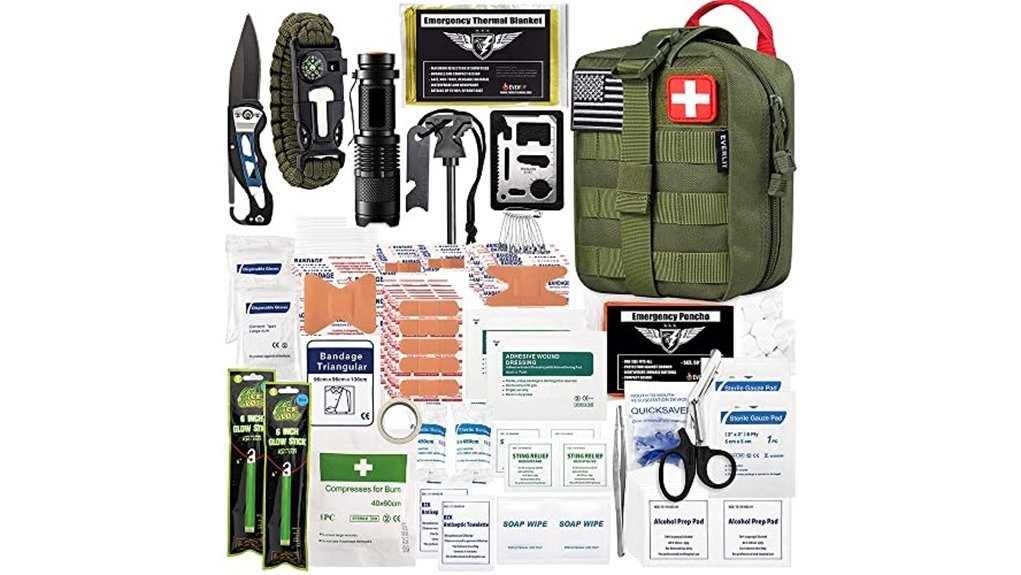
The EVERLIT 250 Pcs Survival First Aid Kit is a strong choice for outdoor enthusiasts and prepared families who want a compact, rugged medical kit with added survival tools. Built by army veterans and survivalists, it uses 1000D water-resistant nylon and a MOLLE EMT pouch with three compartments for orderly storage. At 2 pounds, it remains portable. The 250-piece supply set exceeds OSHA guidelines and covers family emergencies. Extras include a mylar blanket, tactical flashlight, paracord bracelet, flintstone, knife, saber card, glow sticks, and poncho. It suits camping, hiking, hunting, home, office, and vehicle readiness needs.
Best For: Outdoor enthusiasts, preppers, and families who want a compact, rugged first aid kit with useful survival tools for camping, hiking, travel, and emergency preparedness.
Pros:
- 250-piece kit exceeds OSHA guidelines and covers a wide range of first aid needs.
- Durable 1000D water-resistant nylon MOLLE pouch with organized compartments.
- Includes valuable survival extras like a flashlight, blanket, poncho, glow sticks, and paracord bracelet.
Cons:
- At 2 lbs, it may be a bit heavy for those seeking an ultra-light kit.
- The large number of items may include some low-use or redundant supplies.
- Designed for general preparedness, so it may not replace specialized medical or expedition gear.
Surviveware Comprehensive Premium Survival First Aid Kit
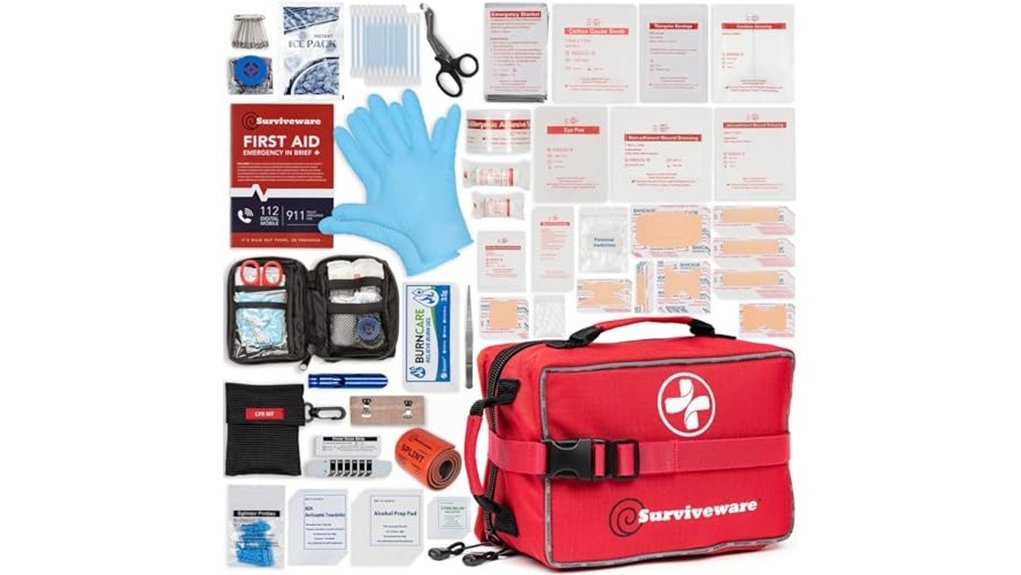
Built for serious emergencies, the Surviveware Extensive Premium Survival First Aid Kit suits campers, hikers, and preparedness-minded travelers. It includes high-quality first aid supplies designed for outdoor medical needs and severe conditions such as hurricanes, tropical storms, earthquakes, and tornadoes. Labelled inner compartments improve speed and reduce confusion when seconds matter. The large red kit uses 600D polyester for water resistance and rip resistance, while laminate pouches protect contents. MOLLE compatibility, a removable Velcro system, and D-rings support attachment to backpacks, vehicles, ATVs, or trucks for secure, vertical transport.
Best For: Campers, hikers, preparedness-minded travelers, and emergency preppers who need a durable, well-organized survival first aid kit for outdoor and disaster situations.
Pros:
- Labelled inner compartments make supplies easy to find quickly in emergencies.
- 600D polyester construction offers water-resistant and rip-resistant durability.
- MOLLE compatibility, Velcro attachment, and D-rings provide versatile mounting options.
Cons:
- Large size may be less convenient for minimalist carry.
- Designed for serious emergencies, so it may include more supplies than casual users need.
- Red color and tactical style may not suit all preferences or environments.
First Aid Only 298 Piece Emergency First Aid Kit
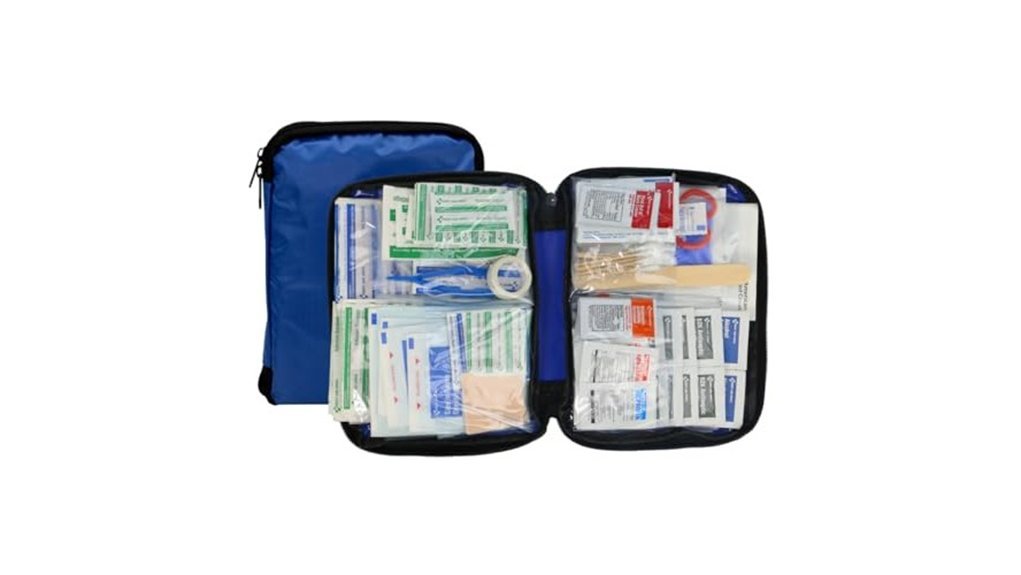
With 298 pieces and organized compartments, the First Aid Only FAO-442 suits busy households and travelers. This multicolored, soft-sided kit uses a zippered case with two layers and clear pockets, making supplies easy to locate in stressful moments. It includes adhesive fabric and plastic bandages, antibiotic ointments, BZK antiseptic towelettes, burn cream packets, gauze, wound closures, and a cold pack for cuts, scrapes, and burns. Its compact design fits glove boxes, backpacks, and desk drawers. HSA and FSA eligibility adds practical value for home, office, car, dorm, camping, and travel preparedness.
Best For: Households, commuters, travelers, and students who want a compact, well-organized first aid kit for handling minor cuts, scrapes, and burns.
Pros:
- 298-piece kit offers a broad range of supplies for common minor injuries.
- Soft-sided zippered case with two layers and clear pockets makes items easy to find quickly.
- Compact and versatile for home, office, car, dorm, camping, and travel; HSA/FSA eligible.
Cons:
- Best suited for minor first aid needs, not more serious medical emergencies.
- The soft case may be less protective than a hard-shell kit in rough conditions.
- Large piece count can still require restocking after repeated use.
Protect Life 100-Piece Waterproof First Aid Kit
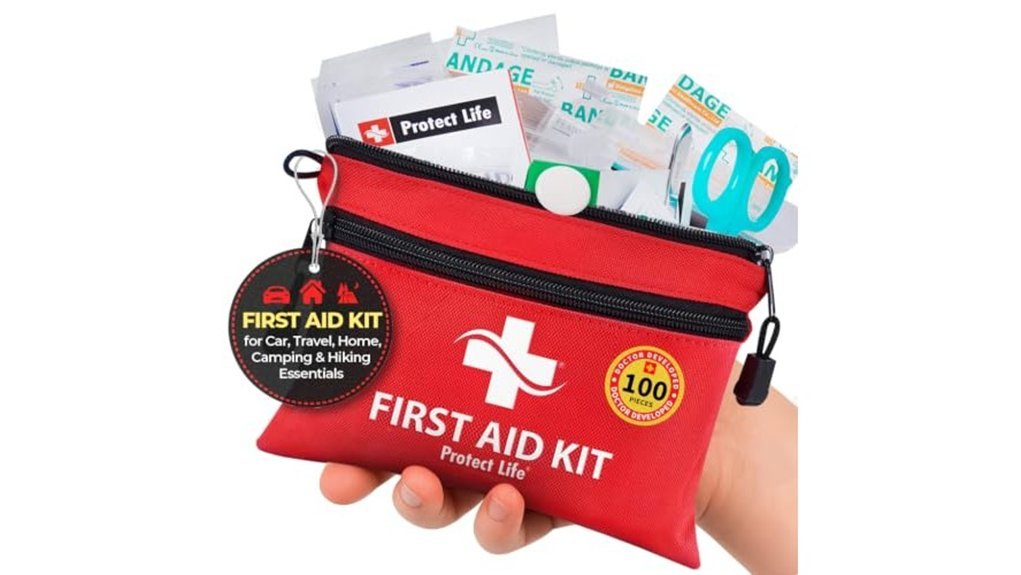
Protect Life’s 100-piece waterproof first aid kit suits travelers and outdoor adventurers who need compact protection. The Travel First Aid Kit includes bandages, gauze, antiseptic wipes, gloves, scissors, and a thermal emergency blanket, covering common minor injuries and urgent needs. A doctor-written first aid guide supports quick responses to accidents. Its rugged waterproof hard case helps shield supplies from moisture and dirt, while the lightweight design fits easily in backpacks, cars, RVs, and boats. It is practical for home use, camping, hiking, fishing, road trips, and boating, offering dependable portability in a small package.
Best For: Travelers, campers, hikers, boaters, and anyone wanting a compact, waterproof first aid kit for home or outdoor emergencies.
Pros:
- Includes a useful 100-piece assortment with bandages, gauze, antiseptic wipes, gloves, scissors, and a thermal emergency blanket.
- Rugged waterproof hard case helps protect supplies from moisture and dirt.
- Lightweight and portable, making it easy to store in backpacks, cars, RVs, and boats.
Cons:
- Small kit size may not be enough for more serious injuries or group use.
- Primarily designed for minor injuries and basic emergency response.
- Hard case improves protection, but may take up more space than a soft pouch.
Be Smart Get Prepared 110 pc First Aid Kit
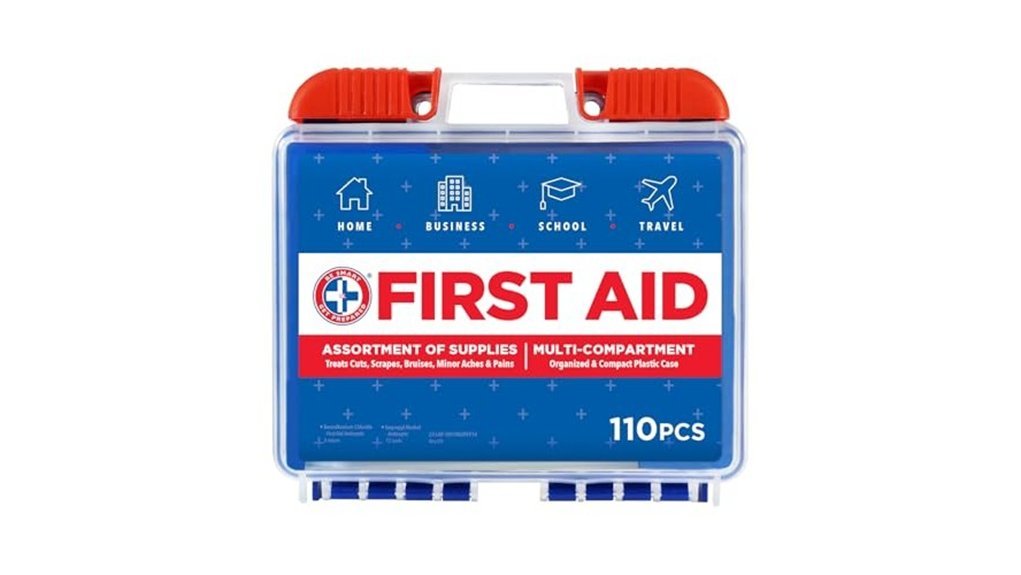
The Be Smart Get Prepared 110 pc First Aid Kit suits families, small businesses, and travelers needing compact readiness. Made by Total Resources International, the dark blue case meets United States FDA regulatory standards as a medical device. Its 110-piece set includes 100 extensive first aid treatment items, arranged in organized interior compartments for fast access. The rugged high-density plastic shell is impact resistant, while Easy Slide Latches keep the case securely closed. Measuring 7.5 by 2.5 by 6.8 inches, it fits in homes, offices, cars, schools, camps, and sports gear.
Best For: Families, small businesses, and travelers who want a compact, organized, and durable first aid kit for home, office, car, school, camping, or emergency use.
Pros:
- Compact 110-piece kit fits easily in vehicles, bags, and small spaces.
- Organized interior compartments make supplies quick to find in an emergency.
- Rugged, impact-resistant case with secure Easy Slide Latches for portability.
Cons:
- Smaller case size may limit how many larger medical items it can hold.
- Not intended for advanced medical care or serious emergencies.
- Basic kit contents may need to be supplemented for extended trips or specific needs.
Factors to Consider When Choosing First Aid Kits 2026: Top Picks and Buying Guide
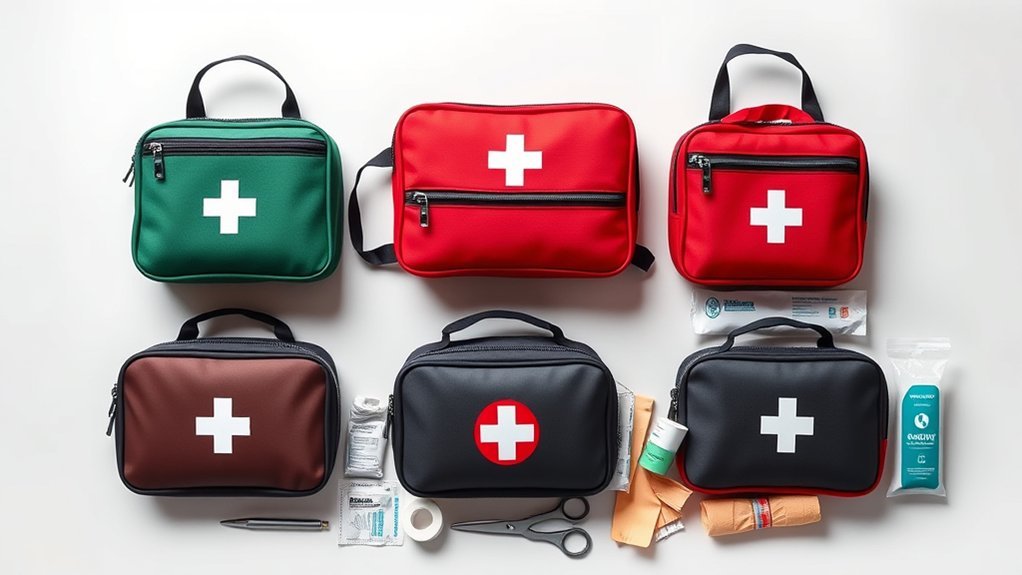
Choosing the right first aid kit in 2026 depends on how well its size and capacity match the intended use. Its contents, coverage, durability, portability, and storage design also shape how useful it will be in an emergency. Clear organization and quick access to supplies further determine whether the kit performs reliably when needed.
Kit Size And Capacity
Capacity matters most when a first aid kit is chosen for a specific setting, because its size should match the number of people it is meant to serve. Larger kits are generally better suited to families, teams, or workplaces, while smaller versions may be enough for one person or short trips. Planned activities also shape the ideal size; outdoor use may call for a kit with added space for survival items or environment-specific supplies. Portability remains important, since a compact design is easier to carry and store. Piece count can help signal how thorough a kit may be, and organized compartments improve access when seconds matter. A well-sized kit balances capacity, convenience, and readiness for the expected setting.
Contents And Coverage
A well-rounded first aid kit should cover the most common injuries with bandages, antiseptics, gauze, and ointments, so cuts, scrapes, and minor burns can be treated quickly. Stronger kits go beyond basics by including enough supplies to treat several people, ideally exceeding OSHA minimums for emergency readiness. Coverage should also match the setting: outdoor-focused kits may add space blankets, flashlights, and emergency ponchos, while camping or hiking kits may need extra protective items for weather exposure. Organized compartments improve response time by keeping essentials easy to find when seconds matter. A practical kit balances everyday treatment items with environment-specific extras, creating broader preparedness without unnecessary clutter. The right contents make the kit more useful across routine incidents and unexpected situations alike.
Durability And Materials
Durability often comes down to the materials used, with 1000D water-resistant nylon and 600D polyester offering strong resistance to wear and moisture. These fabrics help a kit withstand frequent handling, abrasion, and damp conditions without quickly degrading. Waterproof cases add another layer of protection, keeping medical supplies usable when rain, splashes, or humidity are present. Impact-resistant plastic shells are especially valuable for outdoor or rugged settings, where drops and pressure can damage fragile items. Inside the kit, durable pouches and organized compartments support fast access by keeping supplies separated and easier to find. MOLLE compatibility also improves secure attachment to tactical gear, helping the kit stay firmly in place during demanding use while preserving readiness in emergencies.
Portability And Storage
Portability plays a major role when selecting a first aid kit, since a compact, lightweight design is easier to carry in a vehicle, backpack, or emergency bag. For outdoor use or travel, smaller kits are simpler to pack and transport, while lighter options reduce strain during long hikes or camping trips. Attachment systems also improve convenience; MOLLE compatibility or similar mounting features let the kit secure to backpacks or vehicles for dependable transport. Storage format matters as well. Hard cases offer added protection against moisture and impact, making them suitable for rough conditions. Soft pouches provide flexibility and lower weight for users who prioritize ease of carrying. Overall, a practical kit balances portability, protection, and storage style to match the intended environment and travel demands.
Organization And Access
Organization and access can make the difference between a useful first aid kit and one that wastes precious time in an emergency. A strong kit uses labeled, organized compartments so supplies are easy to find without delay. Clear plastic pockets improve visibility, letting users spot bandages, antiseptics, and other essentials at a glance. Soft-sided zippered cases often add separate layers and sections, which helps keep items categorized and prevents unnecessary rummaging. A well-structured layout with distinct areas for different types of medical supplies supports faster retrieval during high-stress situations and routine checks alike. MOLLE-compatible designs can further improve accessibility by letting the kit attach to backpacks or vehicles, keeping it ready when needed. Smart organization is not cosmetic; it directly supports speed, order, and confidence.
Intended Use Scenarios
Intended use should guide every first aid kit purchase, because the right contents depend on where and how the kit will be used. A kit for camping or hiking should include supplies suited to remote injuries, where help may be delayed and self-treatment matters more. Emergency preparedness kits benefit from broader coverage, with items for cuts, scrapes, burns, and other common accidents that may occur at home or during travel. Portability also matters: compact, lightweight designs are better when space and weight are limited. Some kits are built for vehicles, offices, or family outings, while others suit rugged outdoor conditions. Organized compartments and clear labels further improve access, helping users find the correct item quickly in stressful moments.
Compliance And Safety
Compliance and safety should be treated as nonnegotiable when comparing first aid kits, since the best options are designed to meet OSHA guidelines for workplace preparedness and FDA standards that indicate recognized medical-device status. A compliant kit should also contain the basics needed for cuts, scrapes, burns, and other routine injuries, so it can support practical emergency response without delay. A clear first aid guide written by medical professionals adds value by explaining how to act in urgent situations. Material quality matters as well: durable, water-resistant cases help shield supplies from moisture, dust, and impact. Kits that combine regulatory alignment, complete contents, and sturdy construction offer stronger protection and more dependable performance in homes, offices, vehicles, and worksite environments.
Frequently Asked Questions
Are These Kits Compliant With Current Workplace Safety Regulations?
Compliance depends on the kit contents, workplace hazards, and local regulations. He or she would verify standards, expiration dates, and required supplies against applicable safety rules, since not all kits automatically meet current workplace requirements.
How Often Should First Aid Kit Supplies Be Replaced?
Supplies should be checked monthly and replaced immediately after use, damage, or expiration. High-use settings may require more frequent restocking, while sealed kits can be inspected quarterly to confirm completeness and readiness.
Can These Kits Be Customized for Specific Activities?
Yes, they can be customized for specific activities, because apparently one kit must not bravely survive both hiking and chess club. Heavier bandages suit sports; blister care suits trekking; allergy supplies suit outdoor adventures.
Are These Kits Suitable for Pediatric Emergencies?
They are partially suitable, but pediatric emergencies often need child-specific supplies, dosing guidance, and smaller dressings. A fully appropriate kit should include age-appropriate medications and clear instructions for caregivers until professional help arrives.
Do These Kits Include Prescription-Free Allergy Treatment?
A hurricane of uncertainty surrounds it: most kits include antihistamine tablets or topical hydrocortisone, both prescription-free allergy aids. Some omit them, so he should verify contents carefully before relying on any kit.
Conclusion
In the end, the right first aid kit stands like a small lighthouse in a storm, quietly ready when trouble arrives. Whether it is the rugged Everlit, the thorough Surviveware, or the compact Be Smart Get Prepared kit, each offers a different kind of shelter. Choosing well means carrying peace of mind in a backpack, glove box, or home shelf. Preparation, like a steady flame, turns uncertainty into confidence.