Hand-pumping a sprayer for forty minutes to treat a weedy back lawn is the kind of job that makes people give up on liquid treatments entirely. The right sprayer turns that into a ten-minute walk-around. For 2026, four lawn and garden sprayers cover nearly every yard size and budget: the Chapin 61900 4-Gallon Tree & Turf Pro Backpack Sprayer for large properties, the Chapin 20002 2-Gallon Pump Sprayer for everyday home and garden use, the Scotts 190567 2-Gallon Lithium-Ion Sprayer if you never want to pump again, and the SOLO 418-2L One-Hand Pressure Sprayer for quick spot treatments. Below you’ll find what each one actually includes, who it suits, and where each falls short.
How We Picked
These picks were selected by comparing published manufacturer specifications: tank capacity, wand and hose length, seal material and chemical compatibility, filtration, nozzle options, and warranty length. Every specification listed below comes from the manufacturer or the product listing. We have not personally tested these sprayers, and prices and availability change often — check the current listing before buying.
Quick Comparison: Lawn and Garden Sprayers 2026
| Sprayer | Best For | Capacity | Power | Warranty | Check It |
|---|---|---|---|---|---|
| Chapin 61900 Tree & Turf Pro | Large properties | 4 gallons | Manual piston pump | 5-year limited | Check Price |
| Chapin 20002 Pump Sprayer | Most homeowners | 2 gallons | Manual pump | 1-year limited | Check Price |
| Scotts 190567 Lithium-Ion | No pumping | 2 gallons | Rechargeable battery | 3-year limited | Check Price |
| SOLO 418-2L One-Hand | Spot treatments | 2 liters (~0.53 gal) | Manual pump | Parts replaceable | Check Price |
Chapin 61900 4-Gallon Tree & Turf Pro Commercial Backpack Sprayer
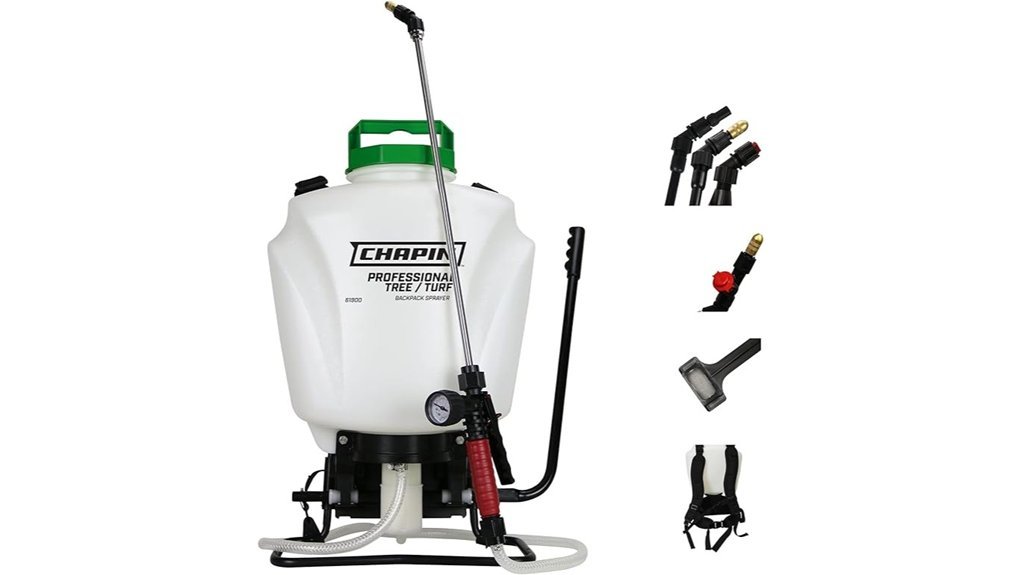
If you’re treating a half-acre or more, a 2-gallon handheld means constant walking back to the mixing bucket. The Chapin 61900 Tree & Turf Pro solves that with a 4-gallon translucent poly tank you can carry hands-free and monitor at a glance. Its 3-stage filtration system places filters at the shut-off, inside the tank near the pump, and in the cap basket, which helps prevent clogs from debris in your mix. Adjustable padded shoulder straps and lumbar support distribute the load, and the 20-inch stainless steel wand paired with a 48-inch reinforced hose gives real reach under shrubs and along fence lines. Three nozzles are included — adjustable brass, adjustable poly cone, and poly fan tip — so you can move between herbicide spot work and broad fertilizer passes. It’s made in the USA with global materials and backed by Chapin’s 5-year limited warranty, the longest in this roundup.
Why You’ll Like It: Four gallons on your back means most yards get done in a single fill, and the stainless wand plus 5-year warranty put it well ahead of budget backpacks on longevity.
Key Specs:
- Capacity: 4 gallons, translucent poly tank with 5-inch filtered opening
- Wand: 20-inch stainless steel | Hose: 48-inch reinforced
- Filtration: 3-stage (shut-off, in-tank, cap basket), all removable and cleanable
- Nozzles: adjustable brass, adjustable poly cone, poly fan tip
- Pump: positionable handle for left- or right-hand use
- Warranty: 5-year limited
Best For: Landscapers, acreage owners, and homeowners with large lawns, long driveways, or extensive beds to treat in one session.
Who Should Avoid This: Anyone with a small yard or courtyard garden, and anyone who would struggle to carry weight on their back — a full tank is over 33 pounds of liquid alone, before the sprayer’s own weight.
Pros:
- Largest capacity here — fewer refills on big jobs.
- Stainless steel wand resists corrosion better than the poly wands on cheaper backpack models.
- Three-point filtration and cleanable filters reduce clog-related downtime.
- Five-year limited warranty and US-based technical support.
Cons:
- Heavy once filled — well over 40 pounds total with liquid and sprayer combined.
- Manual piston pumping is still required throughout the job.
- More sprayer than most small-yard owners need, at a higher price point.
- Assembly and strap adjustment take some setup time on first use.
CHAPIN 20002 2-Gallon Pump Sprayer for Home and Garden
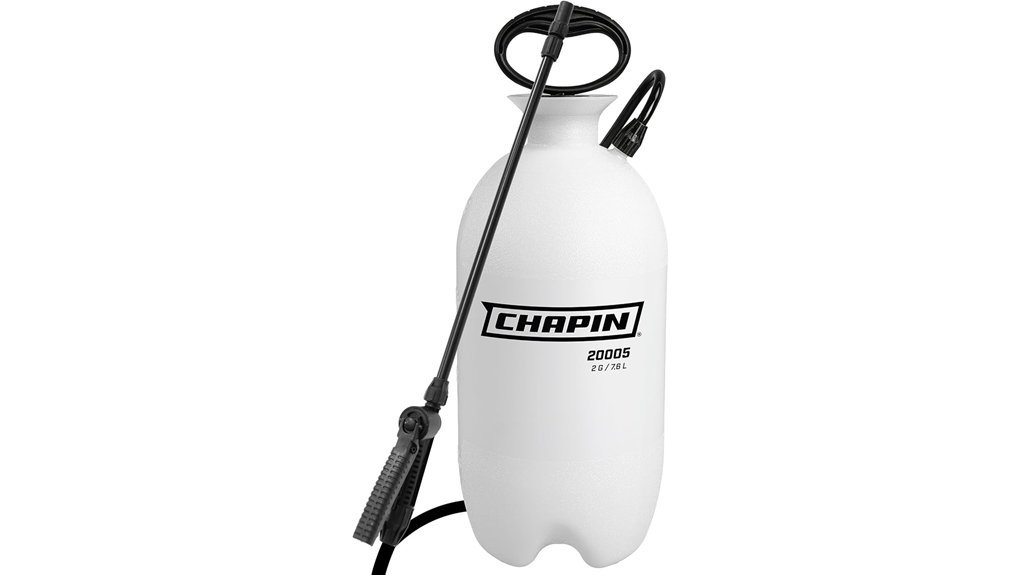
Most people don’t need a commercial backpack — they need one dependable sprayer that handles weeds in the driveway cracks, feeds the tomatoes, and washes down the patio furniture. The Chapin 20002 2-Gallon Pump Sprayer is built for exactly that. Its 2-gallon translucent funnel-top tank makes filling and fluid checks easy, and the SureSpray in-tank anti-clog filter is designed to keep spray steady even when dirt or grass ends up in the mix — the most common cause of mid-job frustration with budget sprayers. The ergonomic D-shaped pump handle includes wand clips so the 12-inch poly wand stores upright, and an EZ Twist pressure-relief valve lets you safely release tank pressure before opening it. The adjustable poly cone nozzle dials from a stream to a shower, and a 34-inch hose gives comfortable working reach. Made in the USA with global materials, backed by Chapin’s 1-year limited warranty.
Why You’ll Like It: It’s the sprayer that just works for the jobs you actually do — weeds, feeding, cleaning — without the weight, the battery, or the price of the alternatives.
Key Specs:
- Capacity: 2 gallons, funnel-top translucent poly tank
- Wand: 12-inch poly | Hose: 34-inch PVC
- Filter: SureSpray in-tank anti-clog filter
- Nozzle: adjustable poly cone (stream to shower)
- Seals: nitrile, rated for standard lawn and garden chemicals
- Extras: EZ Twist pressure-relief valve, wand storage clips
- Warranty: 1-year limited
Best For: Homeowners and gardeners handling typical suburban-yard tasks — weed control, plant feeding, pest treatment, and general cleaning.
Who Should Avoid This: Anyone treating large acreage, and anyone spraying harsh solvents or industrial chemicals — the nitrile seals are rated for standard lawn and garden products, not aggressive solvents.
Pros:
- Anti-clog in-tank filter keeps spray steady even with debris in the mix.
- Light enough to carry one-handed around the yard for long stretches.
- Funnel top and translucent tank make filling, checking, and rinsing straightforward.
- Pressure-relief valve is a genuine safety feature many budget sprayers omit.
Cons:
- Two gallons means refills on larger lawns.
- Short 12-inch wand limits reach into tall or dense plantings compared to the backpack model.
- Manual pumping gets tiring on longer sessions.
- Shortest warranty in this roundup at one year.
Scotts 190567 2 Gallon Lithium-Ion Battery Powered Sprayer
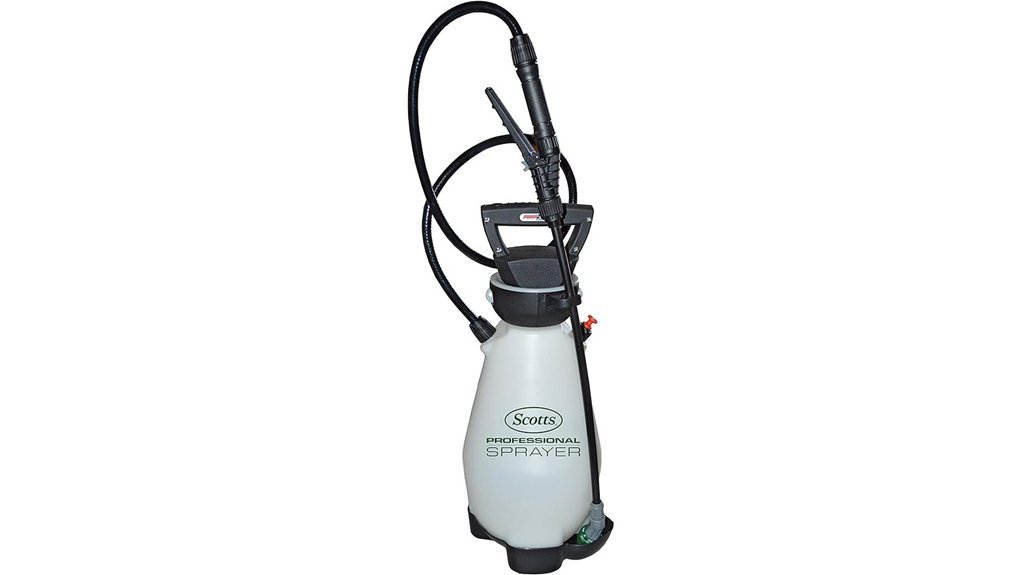
Repetitive pumping is the part of spraying that people with wrist, shoulder, or grip problems dread most. The Scotts 2 Gallon Lithium-Ion Battery Powered Sprayer removes it entirely. An internal rechargeable battery drives an electric compressor that pressurizes the tank for you, and Scotts rates it at up to 12 full tanks per charge. Because the pump maintains pressure automatically, spray output stays consistent instead of fading as a hand-pumped tank drops — which also means more even chemical coverage. The teardrop tank shape lowers the centre of gravity for stability, and the 21-inch poly wand uses Viton seals in the shut-off for chemical resistance. The premium shut-off has a cushioned grip and lock-on feature, the 3-in-1 nozzle switches between fan, stream, and cone, and an in-line filter keeps cleaning simple. A pressure release valve lets you safely depressurize before opening. Made in the USA and backed by a limited 3-year warranty.
Why You’ll Like It: Consistent pressure with zero pumping — noticeably easier on your hands and shoulders, and it lays down more even coverage than a manual tank that loses pressure as you work.
Key Specs:
- Capacity: 2 gallons, teardrop tank with built-in nozzle storage
- Power: internal rechargeable lithium-ion, AC charger included
- Runtime: manufacturer-rated up to 12 full tanks per charge
- Wand: 21-inch poly, Viton seals in shut-off
- Nozzle: 3-in-1 (fan, stream, cone)
- Extras: lock-on shut-off, in-line filter, pressure release valve
- Warranty: limited 3-year
Best For: Anyone with hand, wrist, or shoulder strain, and anyone who sprays often enough that manual pumping has become the reason they put the job off.
Who Should Avoid This: Occasional users who spray a few times a season, and anyone who wants a tool they can keep running indefinitely with spare parts — the battery is internal and not user-replaceable, so when it eventually fails, the practical fix is a new sprayer.
Pros:
- No manual pumping at all, and pressure stays consistent throughout the tank.
- 3-in-1 nozzle covers spot work and broad coverage without swapping parts.
- Viton seals in the shut-off handle common lawn and garden chemicals well.
- Three-year limited warranty and in-line filter that’s easy to clean.
Cons:
- The lithium-ion battery is built in and not user-replaceable — this is the component most likely to end the sprayer’s life.
- Needs charging before use, so it isn’t a grab-and-go tool if you forgot to plug it in.
- Costs more up front than an equivalent-capacity manual sprayer.
- Two gallons still means refills on larger properties.
SOLO, 418-2L, 2 Liter One-Hand Pressure Sprayer, Red and White
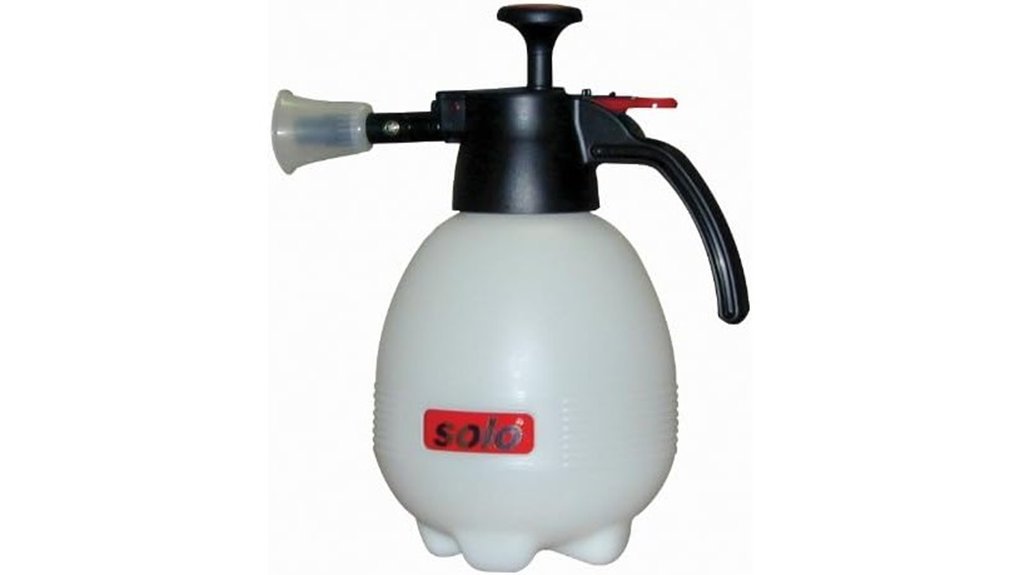
Hauling out a 2-gallon tank to kill six dandelions in the walkway is overkill, and mixing 2 gallons for a job that needs a cup wastes chemical. The SOLO 418-2L One-Hand Pressure Sprayer is the tool for that job. At 2 liters — roughly half a gallon — it’s the smallest option here by a wide margin, and that’s the point. Its drift and drip guard keeps spray where you aim it, which matters when you’re treating weeds inches away from plants you want to keep. The multi-directional nozzle pivots to spray from almost any angle, including up under leaves where pests actually live. A lock-on trigger means you’re not squeezing continuously, and Viton gaskets and O-rings handle harsher chemicals than most sprayers this size. Operation is simple: fill, stroke about 30 times to pressurize, unlock the trigger, and spray. A pressure relief valve vents excess pressure, and SOLO stocks replacement parts rather than treating the unit as disposable.
Why You’ll Like It: Precision without waste — you mix exactly what you need, hit the target and nothing beside it, and the whole thing lives on a shelf instead of taking up floor space.
Key Specs:
- Capacity: 2 liters (approximately 0.53 US gallon)
- Nozzle: fully adjustable, multi-directional wand assembly
- Seals: Viton gaskets and O-rings for harsher chemical compatibility
- Trigger: lock-on for continuous spraying
- Extras: drift/drip guard, pressure relief valve
- Pressurizing: approximately 30 pump strokes
- Serviceability: replacement parts available from SOLO
Best For: Spot-treating weeds, targeted pest and fungus applications, indoor plants, and small cleaning or detailing jobs where control matters more than volume.
Who Should Avoid This: Anyone treating a whole lawn or large beds — at roughly half a gallon, you’d be refilling constantly. This is a companion to a larger sprayer, not a replacement for one.
Pros:
- Drift and drip guard gives genuine precision near desirable plants.
- Multi-directional nozzle reaches under foliage where sprays usually miss.
- Viton seals handle stronger chemicals than typical handheld sprayers.
- Replacement parts are available, so a worn seal doesn’t mean a new sprayer.
- Small enough to keep mixed-free and ready for quick jobs.
Cons:
- Roughly half a gallon — far too small for lawn-wide or bed-wide coverage.
- Requires re-pumping frequently as pressure drops during use.
- Not suited to high-pressure or long-reach applications.
- Nozzle adjustment range is narrow, so dialling in a fine mist takes a light touch.
⚠️ Safety Note: Read Before You Spray
- The chemical label is the instruction manual — follow its mixing ratios, protective equipment requirements, and re-entry times, not general advice.
- Wear eye protection, gloves, long sleeves, and closed shoes whenever you spray.
- Don’t spray in windy conditions. Drift carries herbicide onto plants you didn’t intend to treat and onto neighbouring property.
- Never store mixed chemicals in the tank between uses. It degrades seals, causes leaks, and voids most manufacturer warranties.
- Rinse thoroughly after every use, and release tank pressure before opening the sprayer.
- Keep children and pets off treated areas until surfaces are fully dry, or longer if the product label says so.
✅ Before You Buy: Quick Checklist
- Measure or estimate the area you treat most often — that determines capacity more than anything else.
- Be honest about carrying weight. A filled 4-gallon backpack is over 40 pounds with the sprayer.
- Check which chemicals you’ll use. Viton seals handle harsher products; nitrile suits standard lawn and garden chemicals.
- Match wand length to your plantings — short wands mean bending and reaching into dense beds.
- Decide whether you’ll dedicate one sprayer to herbicide and another to fertilizer. Most gardeners eventually should.
- Compare warranty terms: they range from one to five years across these four models.
How to Choose a Lawn and Garden Sprayer: 2026 Buying Guide
When selecting a lawn and garden sprayer, several key factors warrant consideration. These include tank capacity, the type of sprayer, and the importance of nozzle versatility. Additionally, ergonomic design, seal material, and maintenance durability play essential roles in effective and comfortable use.
Tank Capacity Considerations
Choosing the appropriate tank capacity is the decision that affects your experience most, because it sets how many times you stop and refill. Capacities in this roundup run from 2 liters up to 4 gallons. A 4-gallon backpack tank suits large lawns, long borders, and professional work, letting you finish most properties in one or two fills — but a full tank carries over 33 pounds of liquid alone, so factor in what you can comfortably shoulder. A 2-gallon tank is the practical middle ground for typical suburban yards: enough for a full treatment session, light enough to carry one-handed. A 2-liter handheld is a spot-treatment tool, ideal for targeted weeds or a few affected plants where mixing a larger batch would waste chemical. Translucent tanks across all sizes let you monitor fluid levels without opening the sprayer, and funnel-top designs reduce spillage while filling.
Sprayer Type Selection
Selecting the right type of sprayer comes down to how you’ll use it. Backpack sprayers distribute weight across your shoulders and lumbar region, keeping both hands free — the right choice when you’re covering ground for extended periods. Handheld tank sprayers are lighter, simpler, and easier to store, which fits most homeowners. One-hand handheld sprayers trade capacity for precision and convenience on small jobs. The power source matters just as much: manual pump models are cheaper, repairable, and never need charging, but pressure fades as you spray, meaning coverage varies unless you keep pumping. Battery-powered models hold pressure automatically for more even application and no hand strain, at the cost of a higher price and dependence on a battery that is usually not replaceable. Sprayers with multi-stage filtration help prevent the clogging that ends most spraying sessions early.
Nozzle Versatility Importance
Understanding nozzle versatility matters because different jobs need different spray patterns. A fan pattern lays down even coverage across a lawn area, a stream reaches distant or elevated targets, and a cone or shower handles general plant application. Adjustable nozzles let you fine-tune droplet size, which directly affects drift — finer mists travel further in wind, coarser droplets stay put. This adaptability helps with the efficient application of fertilizers, pesticides, and herbicides, and it reduces chemical waste and over-application. Multi-nozzle kits, like the three-nozzle set included with the Chapin backpack, save you from swapping equipment mid-job. A multi-directional nozzle, as on the SOLO handheld, lets you spray upward under foliage where many pests and fungal issues actually start.
Ergonomic Design Features
When evaluating lawn and garden sprayers, ergonomic design features significantly affect how long you can work comfortably. Ergonomic pump handles are shaped to reduce fatigue during extended sessions. For backpack sprayers, adjustable padded shoulder straps combined with lumbar support distribute weight evenly, reducing strain and improving mobility. Lightweight tank materials such as polyethylene make sprayers easier to carry and manoeuvre. Lock-on trigger mechanisms allow continuous spraying without constant grip pressure, a meaningful difference for anyone with hand or wrist issues. Built-in drift and drip guards improve application precision, helping prevent overspray onto plants you want to protect. And on backpack models, a positionable pump handle that switches between left- and right-hand operation lets you alternate arms to avoid one-sided fatigue.
Seal Material and Chemical Compatibility
One of the most overlooked specifications is seal and gasket material, and it determines which chemicals your sprayer can safely handle. Viton seals resist a wider range of harsh chemicals and hold up longer under repeated exposure, which is why they appear on professional-grade and premium handheld models. Nitrile seals are well suited to standard lawn and garden products — fertilizers, common herbicides, and pest control chemicals — but are not intended for aggressive solvents or industrial cleaners. Before buying, check what you actually plan to spray against the manufacturer’s stated chemical compatibility. Using an incompatible product can degrade seals within a single season, causing leaks and, in most cases, voiding the warranty.
Maintenance and Durability
Maintenance habits and build quality determine how long a sprayer lasts. Models with easy-to-clean features, such as in-line filters and removable in-tank filters, are far more likely to survive multiple seasons because clogs get cleared rather than ignored. Materials like durable poly or stainless steel improve resistance to chemical corrosion and wear. Regular maintenance — rinsing after every use, checking seals and filters, and releasing pressure before storage — prevents the clogs and leaks that account for most sprayer failures. Warranty length is a useful signal of manufacturer confidence and ranges from one to five years across these models. Finally, consider parts availability: a sprayer with replaceable seals, nozzles, and hoses can be repaired for a few dollars, while a sealed unit with an integrated battery has a fixed lifespan.
Frequently Asked Questions
How Do I Maintain My Lawn and Garden Sprayer?
Rinse the tank, hose, wand, and nozzle with clean water after every use, and run clean water through the system until it sprays clear. Remove and rinse the filters, check seals and O-rings for cracking or swelling, release all tank pressure, and store the sprayer empty in a cool, dry place out of direct sunlight. Never leave mixed chemical sitting in the tank between jobs.
Can I Use These Sprayers for Fertilizers?
Yes, all four are rated for water-soluble fertilizers alongside herbicides and pesticides. Follow the fertilizer label’s dilution ratio precisely — over-concentrated liquid feed can burn foliage — and confirm the product is compatible with your sprayer’s seal material before mixing.
Should I Use Separate Sprayers for Weed Killer and Fertilizer?
Ideally, yes. Herbicide residue can persist in hoses, seals, and filters even after rinsing, and trace amounts are enough to damage or kill plants you later treat with fertilizer. Many experienced gardeners keep one sprayer permanently labelled for herbicide and a second for everything else. If you only own one, rinse thoroughly several times with clean water, and consider a dedicated small handheld for herbicide spot work.
Are Battery-Powered Sprayers Better Than Manual Ones?
They’re better for some people, not universally. Battery models eliminate pumping, hold steady pressure for more even coverage, and are far easier on hands, wrists, and shoulders. Manual models cost less, work regardless of charge state, and can usually be repaired with inexpensive replacement parts. The deciding factors are how often you spray, whether pumping causes you discomfort, and whether you’re comfortable with a tool whose built-in battery isn’t replaceable.
Why Does My Sprayer Lose Pressure While I’m Spraying?
On manual sprayers this is normal — each spray releases compressed air from the tank, so pressure drops and the spray pattern coarsens until you pump again. Pump periodically rather than waiting for output to fade, which keeps application more consistent. If pressure drops unusually fast, check for a worn pump seal, a loose tank cap, or a damaged O-ring.
What Safety Gear Should I Wear While Spraying?
Wear safety goggles, chemical-resistant gloves, long sleeves, long trousers, and closed shoes at minimum. Some product labels also require a respirator or mask — always follow the specific chemical label, since it takes precedence over general guidance. Wash exposed skin and change clothing after spraying.
How Often Should I Clean My Sprayer?
After every single use. Residue left in the tank and lines dries into deposits that clog nozzles and filters, and it degrades seals over time. A five-minute rinse after each job is the single biggest factor in how many seasons your sprayer lasts.
How Do I Store a Sprayer Over Winter?
Empty and rinse the sprayer completely, then drain all water from the tank, hose, and wand — trapped water can freeze and crack components. Leave the tank cap loose so pressure can’t build, and store it indoors or in a sheltered space above freezing. For battery-powered models, charge the battery before storage and follow the manufacturer’s storage instructions, since deeply discharged lithium-ion cells can fail permanently.
🏆 Final Recommendation
For most homeowners: the Chapin 20002 2-Gallon Pump Sprayer. It handles weeds, feeding, pest control, and cleaning at a sensible price and weight, with an anti-clog filter that keeps it working.
For large properties: the Chapin 61900 Tree & Turf Pro. Four gallons, a stainless wand, and a 5-year warranty — if you can carry it.
If pumping is the problem: the Scotts 190567 Lithium-Ion. Consistent pressure with zero effort, accepting that the built-in battery sets its lifespan.
As a second sprayer: the SOLO 418-2L, kept loaded for spot treatments so your main tank stays clean.
Conclusion
The right lawn and garden sprayer is the one matched to the area you actually treat and the effort you’re willing to put in. Large property owners get the most from a 4-gallon backpack like the Chapin 61900; most suburban gardeners are best served by a straightforward 2-gallon pump sprayer; anyone with hand or shoulder strain should look hard at a battery-powered model; and a small one-hand sprayer earns its shelf space for precise spot work. Weigh capacity against carrying weight, check that the seal material suits the chemicals you use, and commit to rinsing after every job — that combination will get you far more seasons out of whichever sprayer you choose.