This article contains affiliate links. If you buy through these links, we may earn a commission at no extra cost to you.
For 2026, top picks for the best lawn dethatchers include the Brinly 48″ Tow Behind model for large lawns, the WORX 12 Amp Corded Electric Dethatcher for user-friendly operation, the Sun Joe Electric Dethatcher & Scarifier (AJ801E) for customizable settings, and the Agri-Fab 40in Tow Behind model for durability. Each offers unique features to optimize lawn care. Understanding these options will help make an informed choice for maintaining a healthy lawn. More insights await to guide your decision.
Quick Comparison: Top Lawn Dethatchers for 2026
| Model | Type | Working Width | Power | Best For |
|---|---|---|---|---|
| Brinly 48″ Tow Behind | Tow-behind | 48 in | Towed (needs tractor/mower) | Large lawns |
| WORX WG850 | Walk-behind electric | 14 in | 12 Amp corded | Small-to-medium lawns, easy DIY use |
| Sun Joe AJ801E | Walk-behind electric, 2-in-1 | 12.6 in | 12 Amp corded | Dethatching + scarifying in one pass |
| Agri-Fab 40in Tow Behind | Tow-behind | 40 in | Towed (needs tractor/mower) | Mid-size lawns wanting tow-behind convenience |
Brinly 48″ Tow Behind Grass Dethatcher
Best For: Large Lawns
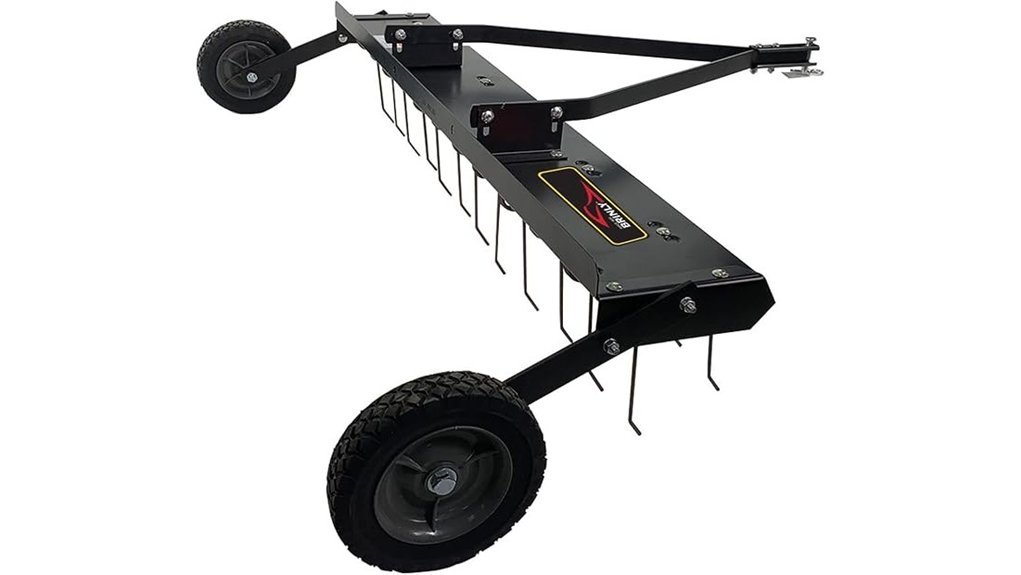
The Brinly 48″ Tow Behind Grass Dethatcher stands out as an exceptional choice for homeowners with expansive lawns. Its 48-inch working width features two rows of 12 independently flexing spring steel tines, effectively removing thatch from large areas. Designed for compatibility with larger mowers, it guarantees quick and efficient coverage. Constructed from durable steel, the dethatcher includes a safety rod to prevent accidents in case of tine breakage. Its transport wheels are made from never-flat rubber, promoting easy maneuverability and minimizing footprint width, while the 24 triple-coil strength tines maintain flexibility for peak performance in lawn care.
Best For: Homeowners with large lawns who need an efficient solution for thatch removal.
Pros:
- Wide Coverage: 48-inch working width allows for quick and effective dethatching.
- Durable Construction: All steel design and long-lasting spring steel tines ensure longevity.
- Safety Features: Includes a safety rod to prevent accidents from broken tines.
Cons:
- Requires a Tow Vehicle: Needs a compatible mower for operation, limiting its use.
- Initial Setup: Assembly may require time and effort before first use.
- Weight: Heavier than some handheld dethatchers, which may affect maneuverability.
WORX 12 Amp Corded Electric Lawn Dethatcher
Best For: Small-to-Medium Lawns & Easy Use
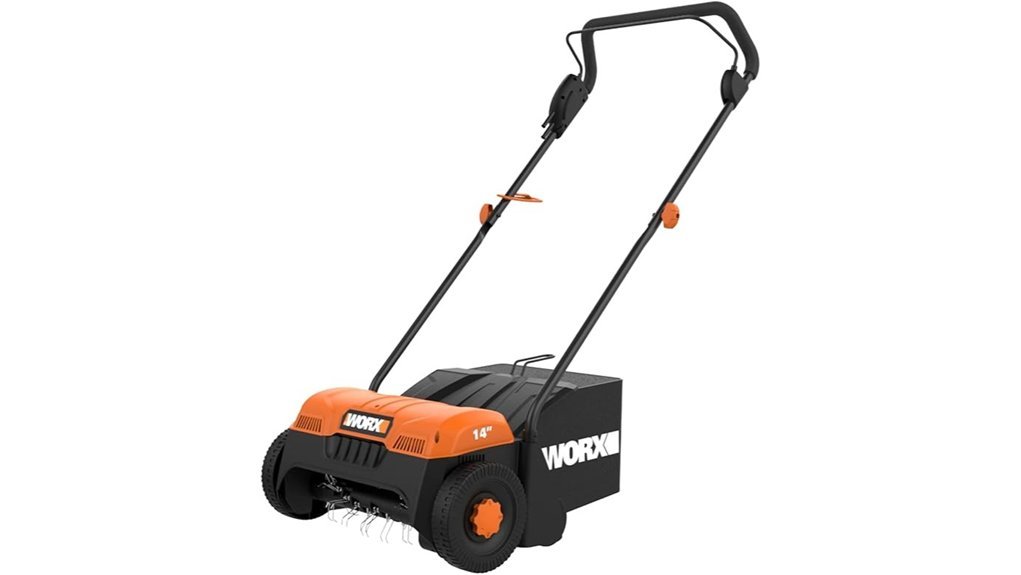
With its 12 Amp power, the WORX 12 Amp Corded Electric Lawn Dethatcher is ideal for homeowners seeking efficient lawn care. This model, the WG850, features a 14-inch cutting width and operates at a no-load speed of 3500 RPM, making it effective for tackling thatch buildup. It offers three depth adjustments, allowing users to customize their dethatching experience. Safety is enhanced with a lock-off switch for quick stops. The 0.9 bushel collection bag prevents debris from scattering, while its foldable handle design guarantees easy storage. Engineered for efficiency, it supports a DIY approach to maintaining a healthy lawn.
Best For: Homeowners looking for an efficient and user-friendly solution to manage thatch buildup in their lawns.
Pros:
- Powerful Performance: 12 Amp motor with a no-load speed of 3500 RPM effectively tackles tough thatch.
- Customizable Depth Settings: Three adjustable depth options cater to various lawn needs.
- Convenient Storage: Foldable handle design allows for easy storage in limited spaces.
Cons:
- Corded Design: Limited mobility due to the need for a power outlet.
- Weight: At an estimated 18.6 lbs, it may be heavier for some users to maneuver.
- Collection Bag Size: 0.9 bushel capacity may require frequent emptying for larger lawns.
Sun Joe Electric Dethatcher & Scarifier (AJ801E)
Best For: 2-in-1 Dethatching & Scarifying
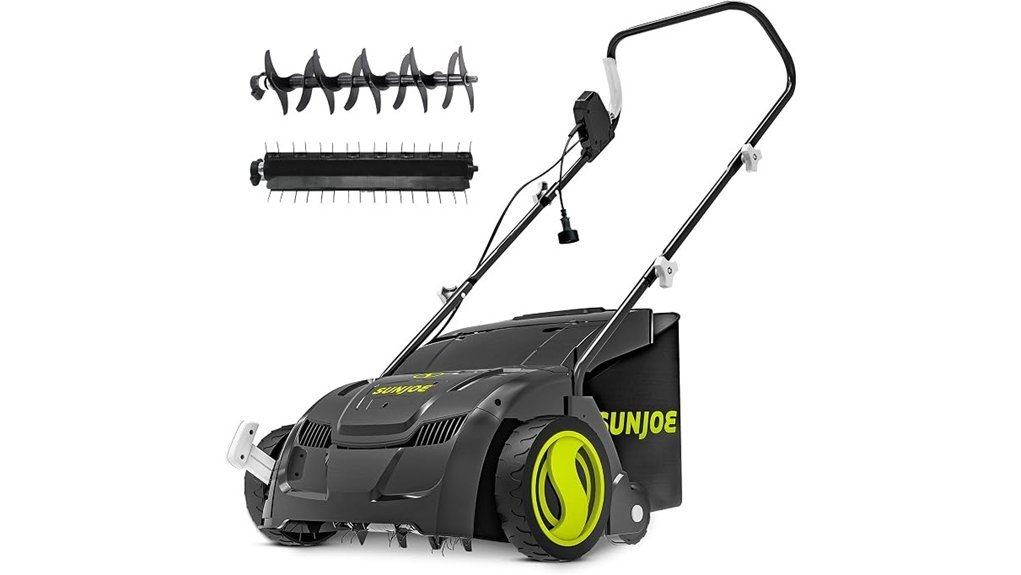
For homeowners seeking an efficient lawn care solution, the Sun Joe Electric Dethatcher & Scarifier (AJ801E) stands out. This corded device features a powerful 12-amp motor and a cutting width of 12.6 inches, ensuring effective lawn maintenance. Equipped with Airboost Technology, its durable spring steel tines efficiently lift and remove thatch and debris. The 5-position depth control allows for customizable dethatching, promoting enhanced aeration and healthier grass growth. Additionally, the 8-gallon detachable collection bag simplifies cleanup, making it easy to dispose of gathered thatch. Overall, the Sun Joe AJ801E is a robust choice for any lawn care enthusiast.
Best For: Homeowners looking for an efficient and customizable solution for lawn dethatching and scarifying.
Pros:
- High-powered 12-amp motor delivers efficient lawn care and debris removal.
- Customizable depth control with 5 settings allows for tailored lawn maintenance.
- 8-gallon detachable collection bag makes cleanup quick and mess-free.
Cons:
- Corded design may limit mobility and range during use.
- Requires regular maintenance of tines and motor for optimal performance.
- May struggle with very thick thatch compared to more powerful gas models.
Agri-Fab 40in Tow Behind Lawn Dethatcher
Best For: Value-Priced Tow-Behind
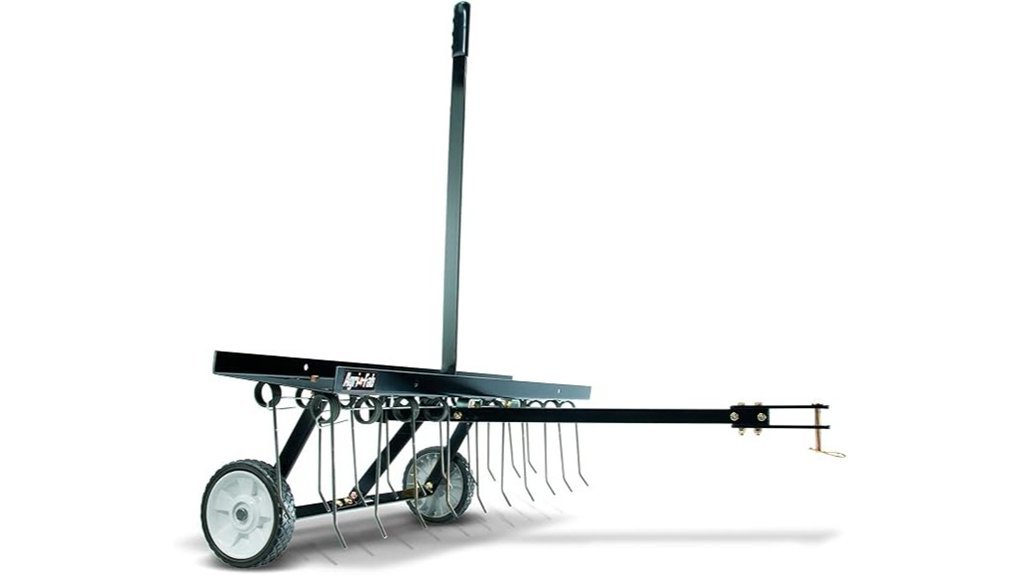
Ideal for homeowners seeking efficient lawn care, the Agri-Fab 40in Tow Behind Lawn Dethatcher features a robust 40-inch width. Constructed with a heavy gauge steel deck, it guarantees durability while tackling lawn thatch. The unit is equipped with 20 durable spring steel tines, effectively aerating the soil for healthier grass growth. Mobility is enhanced with 7 x 1 3/8 semi-pneumatic tires, allowing smooth maneuvering across various terrains. Although some assembly is required, a helpful video guide is available for assistance. Additionally, it comes with a manufacturer’s limited warranty — check the current listing for exact coverage terms, as warranty length can vary by retailer.
Best For: Homeowners seeking an efficient and durable solution for lawn thatch removal and soil aeration.
Pros:
- Durable Construction: Heavy gauge steel deck ensures long-lasting use.
- Effective Aeration: 20 spring steel tines provide thorough thatch removal for healthier grass.
- Smooth Mobility: Semi-pneumatic tires enhance maneuverability across various terrains.
Cons:
- Assembly Required: Some assembly is necessary, which may require additional time and effort.
- Tow-Behind Only: Requires a compatible vehicle for towing, limiting its use for some users.
- Weight Considerations: Heavier design may be challenging for some to handle during setup or transport.
Lawn Dethatcher Buying Guide: What to Look for in 2026
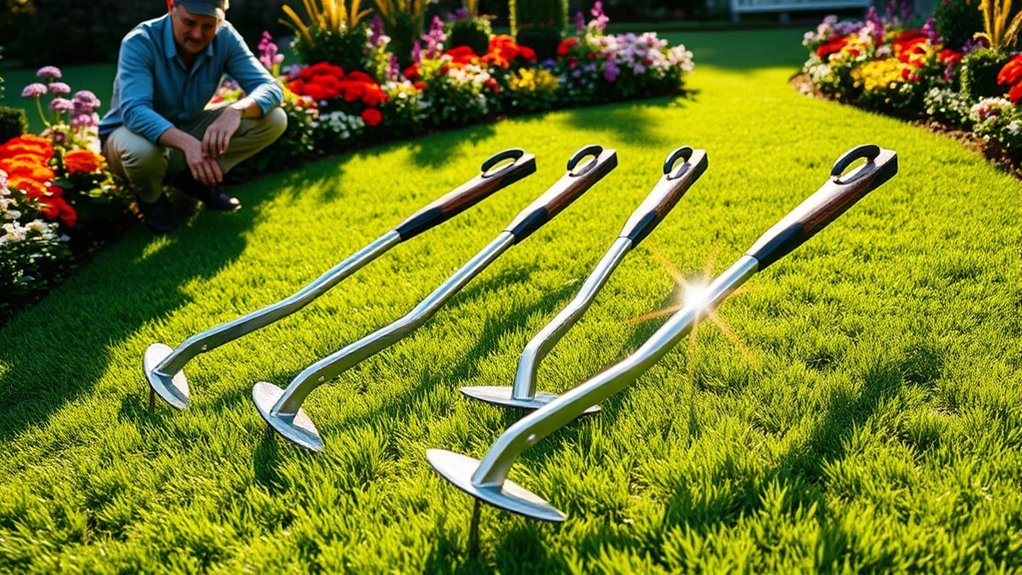
When selecting a lawn dethatcher, several critical factors come into play, including the type of dethatcher, size and coverage area, and power source options. Additionally, the quality and design of the tines, alongside depth adjustment features, greatly influence performance and effectiveness. Understanding these elements will guide consumers in making informed choices for their lawn care needs in 2026.
Dethatcher Type Selection
How does one choose the right lawn dethatcher among the various options available? Dethatchers can be classified into tow-behind models for larger areas and electric or manual options for smaller lawns, each offering different benefits regarding portability. The cutting width is also a significant factor; wider models cover more ground quickly, while narrower ones allow for better maneuverability in confined spaces. Additionally, the type of tines impacts effectiveness; spring steel tines are preferred for their durability and performance. Depth adjustment settings enable users to customize the dethatching process based on grass types and growth conditions. Finally, weight and mobility features, such as transport wheels and folding handles, enhance ease of use and storage.
Size and Coverage
Selecting the appropriate size and coverage for a lawn dethatcher can greatly impact lawn care efficiency. Larger models, such as those with a 48-inch working width, are ideal for expansive lawns, allowing users to cover more ground in a single pass. Conversely, smaller dethatchers, typically measuring 12 to 14 inches, excel in intricate areas where precision is essential. The number of tines also matters; models with up to 24 tines enhance thatch removal effectiveness. Additionally, adjustability is vital, as dethatchers with multiple depth settings can be tailored to meet specific lawn needs. Finally, the overall weight and mobility of a dethatcher influence ease of use, with lighter models being more maneuverable in tight spaces.
Power Source Options
Power source options play an essential role in the effectiveness and convenience of lawn dethatchers. Dethatchers can be powered by gas, electric, or manual sources, each suited for different yard sizes and user preferences. Electric dethatchers, especially corded models, offer consistent power without fuel, making them quieter and easier to maintain. In contrast, gas-powered dethatchers provide more power, ideal for larger areas, allowing users to work without being tethered to an outlet. Manual dethatchers, while requiring physical effort, are typically more affordable and environmentally friendly, making them suitable for small lawns and DIY enthusiasts. Many dethatchers also feature adjustable depth settings, enabling users to customize dethatching based on their lawn’s health and specific needs.
Tine Quality and Design
The effectiveness of lawn dethatchers is not only determined by their power source but also greatly influenced by tine quality and design. Spring steel tines are favored for their durability and flexibility, ensuring ideal contact with the lawn surface. Tine diameter plays a vital role as well; tines around 3/16″ in diameter strike a balance between strength and flexibility, effectively penetrating thatch without harming grass. The number of tines directly affects coverage; more tines typically enhance efficiency in thatch removal. Independently flexing tines adapt well to uneven terrain, providing consistent performance. In addition, a multi-row tine arrangement can greatly improve dethatching effectiveness by increasing the area covered in a single pass, making it essential to evaluate these factors when selecting a dethatcher.
Depth Adjustment Features
Depth adjustment features play an essential role in enhancing the lawn dethatching process, allowing users to tailor their approach based on specific lawn conditions. Many dethatchers come equipped with multiple depth settings, often ranging from three to five options, enabling effective targeting of varying thatch levels and soil conditions. By customizing the depth, users can prevent damage to healthy grass while efficiently removing excessive thatch, thereby promoting overall lawn health. This adjustability also enhances aeration and nutrient absorption, allowing tines to reach the root zone without scalping the grass. Proper depth settings greatly improve dethatching efficiency, with deeper settings suitable for tougher thatch layers and shallower settings ideal for lighter thatch, ensuring peak performance.
Portability and Storage
Selecting the right lawn dethatcher often hinges on portability and storage capabilities. Buyers should prioritize models with foldable handles, as these enhance storage convenience and save valuable space in garages or sheds. Lightweight designs are also essential, allowing for easy maneuverability across various areas of the yard. Dethatchers equipped with transport wheels facilitate smooth movement, minimizing effort during setup and storage. It’s important to take into account the overall dimensions of the dethatcher to guarantee it fits comfortably within available storage spaces. For users with limited storage options or smaller vehicles, opting for compact designs can greatly ease transportation and storage challenges, making maintenance tasks more manageable and efficient.
Warranty and Support
When considering a lawn dethatcher, warranty and support play an essential role in safeguarding the investment. A warranty typically covers defects in materials and workmanship, providing peace of mind to the buyer. Most lawn dethatchers offer limited warranties ranging from one to three years, reflecting the manufacturer’s confidence in the product’s durability. It is vital to examine the warranty details for specific coverage limitations and conditions applicable to the dethatcher’s use. Additionally, support options, such as online resources, customer service hotlines, and video guides, can assist with assembly and maintenance. A robust warranty and support system not only enhances the overall customer experience but also guarantees that assistance is readily available should any issues arise.
Frequently Asked Questions
How Often Should I Dethatch My Lawn?
A lawn should be dethatched once a year for most grass types. However, if thatch buildup is excessive or the lawn shows signs of distress, more frequent dethatching may be necessary to maintain its health.
Can Dethatching Damage My Grass?
Could dethatching harm grass? While proper dethatching promotes healthy growth, excessive or poorly timed dethatching can indeed damage lawns. Careful consideration of the grass type and timing is essential for ideal results and grass health.
What’s the Ideal Season for Dethatching?
The ideal season for dethatching is early spring or early fall. During these times, grass is actively growing, allowing it to recover quickly from the stress of dethatching, promoting healthier and thicker turf.
Are Manual Dethatchers Effective Compared to Electric Ones?
Manual dethatchers can be effective for small areas, offering control and exercise. However, electric dethatchers are generally more efficient for larger lawns, providing quicker results with less physical effort, making them preferable for extensive yard maintenance.
Do I Need a Riding Mower or Tractor for a Tow-Behind Dethatcher?
Yes. Tow-behind dethatchers like the Brinly 48″ and Agri-Fab 40in models attach via a universal hitch pin and must be pulled by a riding mower, lawn tractor, or ATV — they cannot be used as standalone or walk-behind tools. If you don’t own a compatible tow vehicle, a corded electric model like the WORX WG850 or Sun Joe AJ801E is a better fit.
How Do I Maintain My Dethatcher?
Maintaining a dethatcher involves regular cleaning and proper blade sharpening, contrasting with neglect that leads to inefficiency. Routine inspections guarantee peak performance, while seasonal storage protects against rust, enhancing longevity and effectiveness for future use.
Conclusion
To sum up, selecting the right lawn dethatcher can greatly impact your lawn’s health and appearance. While some may believe that more expensive models guarantee better results, the truth lies in understanding your specific needs and lawn conditions. The top picks for 2026 offer a range of features suited for various yard sizes and types. By considering these options and following the buying guide, homeowners can effectively rejuvenate their lawns without breaking the bank.