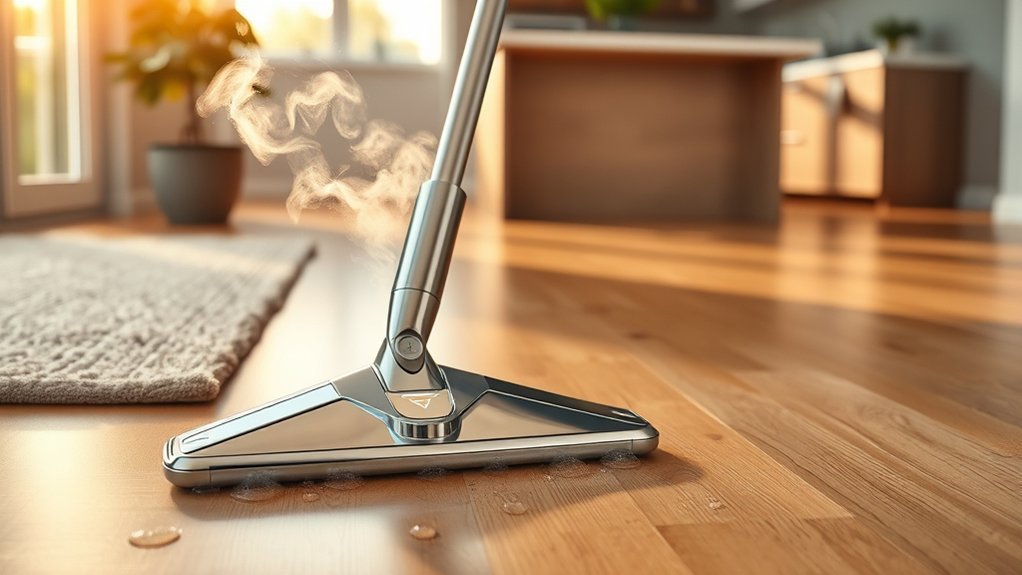
Using a steam mop on Amtico flooring is one of the fastest ways to ruin luxury vinyl tiles (LVT). Amtico explicitly warns that pressurized steam generates concentrated heat and moisture that can warp vinyl planks, soften subfloor adhesives, and void your warranty. Instead of relying on a low-steam setting, sweep away loose grit with a soft brush and clean the surface with a well-wrung damp mop and a pH-neutral Amtico floor cleaner.
Quick Answer
Do not use a steam mop on Amtico flooring. Pressurized steam exceeds Amtico’s 27°C (80.6°F) surface temperature limit, which can warp luxury vinyl tiles, weaken adhesives, and void your warranty—even on the lowest setting. Instead, sweep away loose grit daily and damp-mop weekly using a well-wrung mop and diluted Amtico Floorcare Maintainer.
Guidance reviewed: October 2026. This article follows Amtico’s current cleaning and maintenance guidance and floorcare recommendations.
Why Steam Mops Are Not Recommended for Amtico
Amtico luxury vinyl tile is engineered to handle normal household spills and foot traffic, but it is heat-sensitive. While steam mops release vapor near 100°C (212°F), the official Amtico Wear and Care Guide states that the floor’s surface temperature must never exceed 27°C (80.6°F), even with underfloor heating.
Forcing pressurized steam onto glue-down collections (such as Amtico Signature, Spacia, Form, and Décor) or floating click floors (such as Amtico Click Smart) creates five major risks:
- Thermal warping and expansion: Temperatures well above 27°C soften thermoplastic PVC layers, causing planks and tiles to expand, buckle, or cup along their edges.
- Adhesive breakdown: Heat and forced vapor penetrate fine seams and bevels, softening the acrylic or high-temperature adhesive that bonds glue-down tiles to the subfloor.
- Lifting and click-joint gapping: On glued floors, softened adhesive leads to raised edges and shifting tiles. On Click Smart floating floors, thermal stress can distort the tongue-and-groove locking mechanism and create gaps wider than 0.7 mm (the thickness of a standard credit card).
- Wear-layer and dressing damage: Repeated steaming strips protective floor dressing and can leave cloudy, dull patches across the polyurethane finish.
- Voided warranty coverage: Amtico’s residential warranties—which run from 20 to 30 years for Click Smart, Spacia, and Form up to a lifetime warranty for Signature—exclude damage caused by unapproved steam cleaning.
Important Safety Note
Never assume a steam mop is safe just because its box says “suitable for sealed hard floors, vinyl, or LVT.” Appliance manufacturers test for general water resistance, not specific vinyl adhesives. Always follow Amtico’s instructions, which strictly prohibit steam cleaners on all collections.
The Safe Way to Clean Amtico Flooring
Cleaning Amtico safely takes four simple steps: dry sweeping, wringing out a clean mop, applying a properly diluted pH-neutral cleaner, and letting the floor air-dry. If your floor is newly installed with adhesive, wait at least 24 hours before washing it for the first time so the glue cures completely.
1. Remove Loose Dirt and Grit
Sweep the floor daily using a soft-bristled broom, a dry dust mop, or a dry disposable sweeper cloth (such as a dry Flash Speedmop pad). Removing grit before wet cleaning prevents tiny stones and sand from acting like sandpaper under your mop head.
You can use a handheld vacuum or hose attachment along skirting boards and corners if the nozzle is clean and smooth. Avoid heavy upright vacuums with rotating beater bars, as grit easily gets trapped beneath the baseplate and scratches the wear layer.
2. Prepare a Damp Mop
Select a traditional string mop or a soft, flat microfiber mop paired with a wringer bucket. Wring the mop head thoroughly so it feels damp rather than dripping wet. Standing water serves no cleaning purpose and can seep into tile joints, bevels, and perimeter expansion gaps.
Check that your mop head is clean and free of rough scrubbing strips. Only use non-abrasive white or red nylon pads if you are spot-cleaning scuffs or stripping old dressing according to Amtico’s instructions.
3. Use an Appropriate Floor Cleaner
For weekly washing, dilute Amtico Floorcare Maintainer in warm water according to the bottle label (typically around 1:100, or 50 ml per 5 liters of water). Never pour extra concentrate into the bucket; an overly strong solution leaves a tacky film that attracts fresh dirt.
Start at the far corner of the room and work backward toward the exit using gentle, overlapping S-shaped strokes. Rinse and wring the mop frequently, and replace the bucket water as soon as it looks cloudy.
4. Allow the Floor to Dry
Let the floor air-dry completely before walking on it or putting breathable mats back down, which normally takes 10 to 15 minutes with a well-wrung mop. Open a window or turn on an extractor fan to speed up evaporation—never use portable heaters or hair dryers on the vinyl.
Amtico Cleaning Methods: Recommended vs. Avoid
Choosing the right tool and cleaning solution protects both the polyurethane wear layer and the subfloor bond. The table below compares Amtico-approved cleaning methods against common household products that damage luxury vinyl tiles.
| Cleaning Method or Product | Recommendation | Why It Helps or Hurts Amtico LVT |
|---|---|---|
| Soft brush or dry dust mop | Recommended | Lifts abrasive grit and pet hair daily without scratching the wear layer. |
| Well-wrung string or microfiber mop | Recommended | Removes surface marks safely without excessive water or heat. |
| Amtico Floorcare Maintainer | Recommended | pH-neutral concentrate formulated for routine weekly cleaning without residue. |
| Diluted bleach (1:10 with water) | Approved with care | Amtico permits 1 part bleach to at least 10 parts water for occasional sanitizing. |
| Steam mop or steam cleaner | Avoid | Vapor above 27°C (80.6°F) softens adhesives, warps tiles, and voids warranties. |
| Soaking-wet mop | Avoid | Pools of water seep into joints, bevelled edges, and subfloors. |
| White or apple cider vinegar | Avoid | Acetic acid gradually etches and dulls the protective surface finish. |
| Dish soap or washing-up liquid | Avoid | Leaves a soapy, slippery film that traps dirt and dulls the floor. |
| Abrasive powders or scouring pads | Avoid | Leaves permanent micro-scratches across the polyurethane topcoat. |
How to Handle Spills, Stains, and Scuffs
Targeted spot cleaning removes stubborn marks, grease, and ingrained grime without exposing your floor to heat. Keep a bottle of ready-to-use Amtico Spillage Remover (500 ml spray) on hand for kitchen accidents and hallway scuffs, and reserve Amtico Floorcare Stripper for annual deep cleaning.
Fresh Spills
Blot liquid spills immediately with a clean paper towel or soft absorbent cloth rather than rubbing them outward. Spray the area with Amtico Spillage Remover or wipe it with diluted Maintainer—especially after spills of cooking oil, meat fat, or grease, which make vinyl dangerously slippery. Wipe up hair dye, shoe polish, wine, and curry splashes right away to prevent permanent pigmentation staining.
Stubborn Marks
For black shoe scuffs or rubber heel marks, spray Amtico Spillage Remover directly onto the spot and rub gently using an Amtico non-abrasive cleaning pad. If food, candle wax, or paint has dried hard onto the surface, gently lift the deposit with a blunt plastic spatula—never use metal razor blades, wire wool, or a steam nozzle. Always keep furniture polish, glass cleaner, and air freshener sprays away from the floor, as silicone overspray creates an invisible slip hazard.
Ingrained Dirt or Worn Dressing
Every 12 months, refresh tired floors using Amtico’s two-stage stripping and dressing routine instead of a steam cleaner:
- Strip old buildup: Dilute Amtico Floorcare Stripper (1 liter covers roughly 50 m²) in warm water according to the label. Mop it liberally onto a manageable section and leave it for 10 to 15 minutes, agitating occasionally with your mop or a soft brush so the slurry does not dry out.
- Rinse thoroughly: Mop up the dirty solution and rinse the floor twice with fresh, clean water. Let the floor dry completely.
- Apply fresh dressing: Using a flat-head applicator mop, apply a thin border of Amtico Floorcare Dressing (1 liter covers roughly 25 m²) around the edges, then coat the main floor working toward the exit. Wait 30 minutes for the first coat to dry, then apply a second thin coat at a 90-degree angle to the first and let it dry for another 30 minutes.
Pro Tip: Never apply Amtico Floorcare Dressing to slip-resistant collections such as Amtico Signature 36+ or Spacia 36+ Safety Flooring. Floor dressings fill in the microscopic slip-resistant texture and reduce traction.
How Often Should Amtico Flooring Be Cleaned?
A consistent dry-and-damp cleaning schedule keeps grit from wearing down the polyurethane topcoat. Adjust your routine based on household foot traffic, pets, and doorway access:
- Daily (or as needed): Sweep or dust-mop kitchens, hallways, and living areas with a soft brush to clear crumbs, pet hair, and tracked-in grit.
- Weekly: Damp-mop with diluted Amtico Floorcare Maintainer using a well-wrung string or microfiber mop.
- Immediately: Blot spills, muddy paw prints, grease, and staining liquids using Amtico Spillage Remover.
- Every 3 to 6 months: Inspect felt pads on chair and table legs, check castor cups under heavy appliances, and shake out entrance mats.
- Annually: Strip ingrained dirt with Amtico Floorcare Stripper and apply two fresh coats of Amtico Floorcare Dressing (except on Safety 36+ floors).
Place breathable, non-rubber mats—such as Amtico Indoor Cotton Mats—inside exterior doorways to trap up to 80% of outdoor grit before it reaches the vinyl. Never use rubber-backed or latex-backed mats, as chemicals in rubber react with vinyl and cause permanent yellow or brown discoloration.
Before You Clean: Quick Checklist
Run through these 10 quick checks before mopping to protect your floor’s finish and warranty:
- Confirm which Amtico collection you have (glue-down Signature/Spacia/Form, floating Click Smart, or Safety 36+).
- Verify that newly glued floors have cured for at least 24 hours before their first wet wash.
- Sweep or dust-mop loose grit before touching the floor with a damp mop.
- Check that your mop head is clean, soft, and free of abrasive scrub strips.
- Wring the mop out thoroughly so no puddles form on the surface.
- Dilute Amtico Floorcare Maintainer strictly according to the bottle instructions.
- Keep steam mops, vinegar, dish soap, and silicone sprays away from the floor.
- Fit protective felt pads to movable furniture feet and use woven cotton doormats instead of rubber-backed mats.
- Blot spills immediately and treat scuffs with Amtico Spillage Remover and a non-abrasive pad.
- Contact your installer or Amtico Technical Support if you spot lifting edges or unexplained gaps.
What If You Already Used a Steam Mop?
Using a steam mop once or twice does not automatically ruin an Amtico floor, as damage usually builds up from repeated heat exposure or lingering along seams. Stop using the steam cleaner immediately, let the floor cool and dry at room temperature, and inspect the tiles under bright light.
Check the steamed area for six warning signs:
- Curling or raised edges: Tile corners or plank ends sitting slightly higher than neighboring pieces.
- New seams or gaps: Spaces opening between tiles—especially gaps exceeding 0.7 mm (credit-card thickness) on Click Smart floors.
- Hollow movement underfoot: Tiles shifting, clicking, or flexing when you step on them.
- Hazy or dull patches: White clouding or uneven gloss where heat stripped the floor dressing or affected the wear layer.
- Seepage at joints: Moisture beads or dark damp lines trapped along bevelled edges.
- Sticky adhesive bleed: Tacky glue residue squeezing up between glue-down planks.
Never try to flatten a curled vinyl tile with a hair dryer, clothes iron, or more steam, and do not squirt household superglue under lifted edges. If the surface only looks slightly dull or hazy, stripping the old finish with Amtico Floorcare Stripper and applying fresh Dressing often restores an even sheen. If a tile has lifted or warped, individual Amtico planks can usually be replaced by an Amtico-endorsed fitter without ripping up the whole room.
Frequently Asked Questions
Can I Use a Steam Mop on Its Lowest Setting?
No, Amtico does not approve any steam mop setting. Even on the lowest setting with a thick microfiber pad, steam exits the nozzle well above Amtico’s 27°C (80.6°F) maximum surface temperature limit. Use a well-wrung damp mop with warm water and Amtico Floorcare Maintainer instead.
Can Steam Cleaning Affect an Amtico Warranty?
Yes, using a steam cleaner can void your warranty coverage. For example, Amtico Click Smart warranty terms explicitly state that coverage is conditional on no inappropriate maintenance being used, including steam cleaners. Because residential warranties last 20 years to a lifetime depending on the collection, always stick to approved damp mopping.
Is Distilled Water Needed for Cleaning Amtico?
No, ordinary tap water is fine for diluting Amtico Floorcare Maintainer during routine damp mopping. Distilled water does not make a steam mop safe for vinyl flooring, because heat and vapor pressure are what damage the tiles and adhesive. In very hard-water areas, simply wring your mop well so mineral-heavy puddles do not dry on the floor.
Can I Clean Amtico With Plain Water?
Yes, a well-wrung mop dampened with plain warm water is safe for light dust between washes, provided the floor has cured for at least 24 hours after installation. However, plain water will not cut through kitchen grease or oily footprints, which can leave the surface slippery. Use diluted Amtico Floorcare Maintainer once a week for a thorough clean.
Can I Use Vinegar or Bleach on Amtico Flooring?
Never use vinegar on Amtico flooring, as its acid dulls the protective polyurethane finish over time. If you need to disinfect the floor, Amtico confirms you can use a household bleach solution diluted to 1 part bleach with at least 10 parts water, though Amtico Floorcare Maintainer or antibacterial Spillage Remover is preferred for regular care.
Will Steam Damage Amtico Seams?
Yes, tile seams and bevelled edges are the most vulnerable spots on an LVT floor. Pressurized steam forces heat and moisture directly into the joints, softening the subfloor adhesive under glue-down planks or warping the locking edges on floating Click Smart floors. Moving the steam mop quickly across the room does not prevent seam penetration.
Can a Steam Mop Remove Amtico Floor Dressing?
Steam heat will partially melt and cloud Amtico Floorcare Dressing, leaving patchy white marks instead of a clean strip. When your protective finish wears thin, remove it safely by applying diluted Amtico Floorcare Stripper for 10 to 15 minutes and rinsing twice with clean water before applying two fresh coats of Dressing.
What Is the Best Mop for Amtico Flooring?
The best mop for Amtico flooring is a standard string mop or a flat, non-abrasive microfiber mop paired with a wringer bucket. Amtico also approves dry sweeper cloths, such as a Flash Speedmop with dry pads, for daily dust removal. Technique matters more than hardware: sweep grit first, wring the mop until barely damp, and avoid steam.
Final Recommendation
Best Cleaning Approach for Amtico
Leave the steam mop in the cupboard. Sweep away loose grit daily with a soft brush, damp-mop weekly with a well-wrung mop and diluted Amtico Floorcare Maintainer, and refresh the finish once a year with Amtico Stripper and Dressing. Following this simple routine protects your tiles, adhesive, and long-term warranty.
A steam mop may look like a shortcut, but no time saved is worth lifted edges, failed adhesive, or voiding a 20-year to lifetime warranty detailed in the Amtico commercial and residential warranty guide. Stick to cool or warm damp mopping with pH-neutral Amtico cleaners to keep your floor spotless for decades.
Sources
- Amtico Cleaning and Maintenance FAQs: Official prohibition on steam cleaners, upright vacuum cautions, 1:10 bleach dilution guidance, and individual tile repair advice.
- Amtico Cleaning and Accessories: Four-step floorcare routine, Starter Kit contents, vinegar prohibition, Flash Speedmop guidance, and Indoor Cotton Doormat recommendations.
- Amtico Wear and Care Guide (Official Leaflet PDF): 27°C maximum surface temperature limit, 24-hour post-installation curing period, S-shape mopping technique, and 10–15 minute stripping and dressing instructions.
- Amtico Click Smart Warranty Document (PDF): Explicit warranty condition prohibiting steam cleaners, rubber-backed mat warning, and 0.7 mm click-joint gapping threshold.
- Amtico LVT Peace of Mind for Your Home: Residential warranty durations across Form, Spacia, Click Smart, and Signature collections and 27°C underfloor heating compatibility.