Disclosure: As an Amazon Associate, we earn from qualifying purchases. If you click a link on this page and make a purchase, we may receive a small commission at no extra cost to you.
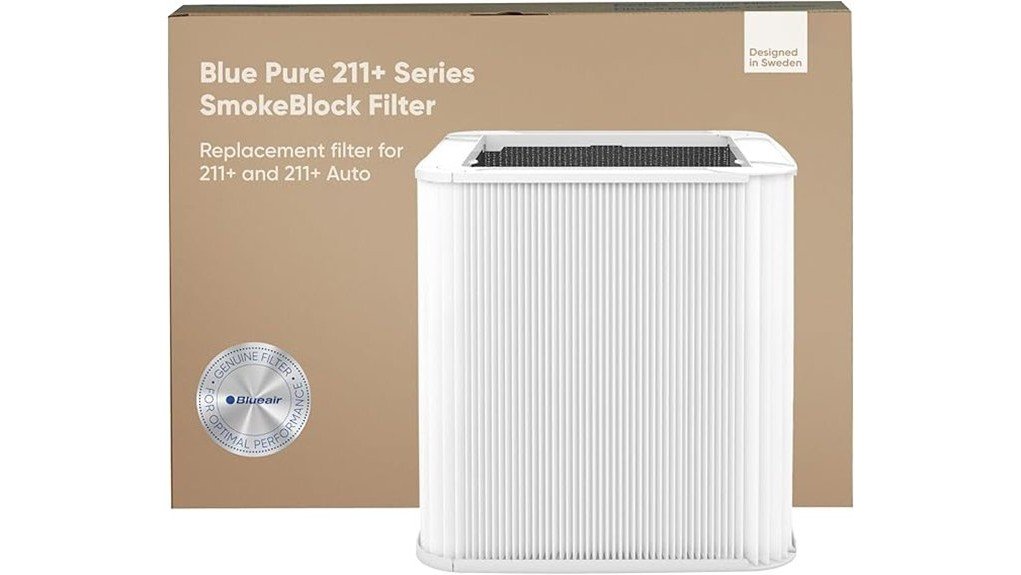
Smoke, cooking odors, and fine airborne particles can push a standard air-purifier filter harder than everyday dust alone. The BLUEAIR Blue Pure 211+ Series SmokeBlock Filter is the smoke-focused replacement option for compatible Blueair purifiers, combining particle media with extra activated carbon. Its strongest advantage is added smoke and odor control, while the main buying concern is making sure you have the correct Blue Pure 211-series purifier before ordering. This review explains the verified filtration claims, replacement schedule, compatibility, maintenance, and situations where the SmokeBlock version makes more sense than Blueair’s standard filter.
Quick Verdict
Rating: 8/10, Recommended with caveats
Best For: Blue Pure 211-series owners who deal with wildfire smoke, strong cooking odors, or other recurring smoke exposure.
Bottom Line: SmokeBlock gives you more activated carbon than Blueair’s standard filter and is designed specifically for tougher smoke and odor conditions. The tradeoff is that it is a replaceable main filter rather than a washable component, and you must verify compatibility with your exact purifier model.
Key Takeaways
- The Blueair Blue Pure 211+ Series SmokeBlock is a genuine replacement main filter designed for compatible Blue Pure 211-series air purifiers.
- SmokeBlock uses extra activated carbon, with Blueair describing it as having 2X more activated carbon than its standard filter option.
- Amazon states 99.99% wildfire-smoke removal under specific laboratory conditions involving 0.4-0.7 micron particles, a 60-minute test, and a 30 m³ room.
- Amazon also states that the polypropylene filter media removes particle pollutants down to 0.1 micron, including dust, pollen, and pet dander.
- Blueair generally recommends replacing the main filter around every six months, although actual service life depends on air quality and use.
- The main filter is not intended to be washed and reused. The separate fabric pre-filter is the washable component.
- Check the model label on your purifier before ordering because Blueair sells several similarly named 211-series filters.
Key Specifications
| Specification | Detail |
|---|---|
| Brand | Blueair |
| Product | Blue Pure 211+ Series SmokeBlock Filter |
| Product type | Genuine replacement main filter |
| Filter media | Particle-filter media plus activated carbon |
| Smoke-focused design | 2X more activated carbon than Blueair’s standard filter option |
| Wildfire-smoke claim | Up to 99.99% removal under specified manufacturer/Amazon test conditions |
| Particle media claim | Captures particle pollutants down to 0.1 micron according to the Amazon listing |
| Odor control | Activated carbon targets smoke, household odors, gases, and VOC-related pollutants |
| Package | 1 replacement filter |
| Replacement guidance | About every 6 months, depending on use and air quality |
| Care | Main filter is not washable or reusable |
| Best use | Homes dealing with wildfire smoke, indoor smoke, strong cooking odors, and everyday airborne particles |
What Is the BLUEAIR Blue Pure 211+ Series SmokeBlock Filter?
The SmokeBlock is a replacement main filter for compatible Blueair Blue Pure 211-series air purifiers. It is not a complete air purifier and does not add a new fan, sensor, or motor to your existing unit. Instead, it replaces the used main filter inside the purifier.
The difference between SmokeBlock and Blueair’s standard Particle + Carbon option is its stronger focus on smoke and gaseous pollutants. Blueair describes SmokeBlock as using 2X more activated carbon than the standard filter. That makes it the more relevant version when smoke and persistent odors are a bigger concern than ordinary dust alone.
Amazon also describes polypropylene particle media that removes airborne particle pollutants down to 0.1 micron. You therefore get both particle capture and an activated-carbon layer in the same replacement filter.
Before You Buy: Check the model name on the label inside or on your Blueair purifier. Blueair has several similarly named 211-series models and filter options, so matching the replacement filter to the exact purifier is safer than ordering by appearance alone.
Who Should Buy It?
Best For
- You already own a compatible Blue Pure 211-series purifier and need a genuine replacement filter.
- Your home regularly deals with wildfire smoke, cooking smoke, or noticeable household odors.
- You want Blueair’s smoke-focused filter rather than its basic Particle + Carbon option.
Skip If
- Your purifier model is not listed as compatible with this filter.
- You only need a washable pre-filter rather than a replacement main filter.
- Smoke and strong odors are not major concerns and Blueair’s standard filter already meets your needs.
SmokeBlock Performance for Wildfire Smoke
The headline feature is the additional activated carbon. Blueair positions SmokeBlock as its stronger option for wildfire and indoor smoke, while Amazon states that it can remove 99.99% of wildfire smoke under specified test conditions.
That percentage needs context. The Amazon listing says the smoke result is based on removal testing of particles measuring 0.4 to 0.7 microns for 60 minutes in a 30 m³ room. Real homes differ in room volume, purifier placement, fan speed, ventilation, pollution level, and how quickly new smoke enters the space, so you should not read the laboratory percentage as a guarantee for every room.
The filter media also targets more ordinary airborne pollutants. Amazon states that its polypropylene media removes particle pollutants down to 0.1 micron, with examples including pollen, dust, and pet dander.
Activated Carbon and Odor Control
Particle filtration and odor filtration solve different problems. Smoke particles can be captured by filter media, while many smells and gaseous pollutants require adsorbent material such as activated carbon. That is why SmokeBlock’s extra carbon matters if your main complaint is not just visible dust.
Blueair markets the SmokeBlock option for smoke, toxic gases, smog, and stronger odors. Amazon’s listing also references testing involving gaseous pollutants such as benzene, toluene, nitrogen oxide, and sulfur dioxide.
You should still keep expectations realistic. An air purifier filter does not stop pollutants from being generated, so source control and ventilation remain important when appropriate. The extra carbon simply makes this filter more purpose-built for odor and smoke exposure than Blueair’s basic filter option.
Pro Tip: Keep the purifier’s washable fabric pre-filter clean. Removing larger dust and hair before it reaches the main filter helps maintain airflow and keeps debris from loading the main filter unnecessarily.
Particle Filtration and Airflow
Amazon describes the SmokeBlock filter as using advanced polypropylene filter media for fine airborne particles. When installed in the matching purifier, air passes through the purifier’s 360-degree intake design and then through the filter media.
This distinction matters because the 360-degree intake belongs to the purifier system, not to a motor or fan built into the replacement filter. The filter itself makes no noise and uses no electricity. Any operating noise comes from the air purifier’s fan.
A loaded filter can restrict airflow over time, which is one reason regular replacement matters. If airflow has declined and the filter indicator is showing that replacement is due, continuing to use an exhausted main filter is not a useful way to extend its life.
Filter Life and Replacement Schedule
Blueair commonly recommends changing the main filter at about six months, although actual service life depends on air quality, operating time, fan speed, and how much pollution the filter handles. A home exposed to frequent smoke or heavy dust may load the filter differently from a cleaner environment.
The purifier’s filter indicator gives you a practical reminder rather than requiring you to guess from appearance alone. After fitting a new filter, follow the instructions for your specific model to reset that indicator.
Do not confuse the washable outer fabric pre-filter with the main SmokeBlock filter. Blueair’s main filter is not designed to be washed and reused. Washing it can damage the filtration media and should not be used as a substitute for replacement.
Setup and Replacement Tips
Replacing a Blueair main filter is designed to be straightforward, but you should always follow the instructions for your exact purifier model. Disconnect the purifier from power before opening it or performing maintenance.
- Confirm the model first. Check the purifier’s model label before removing packaging from the replacement filter.
- Unplug the purifier. Do this before opening the unit for maintenance.
- Remove the used main filter. Avoid shaking accumulated dust back into the room.
- Install the new filter securely. Make sure it is seated as intended so air does not bypass the filter.
- Reassemble the purifier. Confirm the housing is properly closed before reconnecting power.
- Reset the replacement indicator. Follow the control-button procedure specified for your purifier model.
How It Performs in Real Use
During Wildfire Season
This is the situation where the SmokeBlock version makes the most sense. Its extra activated carbon is specifically intended to handle more smoke and odor than Blueair’s standard filter. You still need the purifier to be appropriately placed and operated, and the published laboratory result should not be treated as a guarantee for every home.
For Cooking Smoke and Strong Odors
Extra carbon can be useful in homes where frying, searing, smoke, or other recurring odors are common. The benefit is not just particle capture. The carbon component is designed to adsorb gaseous pollutants and odors that a particle-only layer cannot address as effectively.
For Everyday Dust, Pollen, and Pet Dander
SmokeBlock is not limited to smoke. The particle media also handles common airborne pollutants such as dust, pollen, and pet dander. However, if these are your only concerns and odor control is minor, Blueair’s standard Particle + Carbon filter may be sufficient.
For Long-Term Ownership
The main ongoing cost is replacement. Because the filter is disposable rather than washable, you should plan for periodic filter purchases. Keeping the washable pre-filter clean can help prevent larger debris from reaching the main filter.
Compatibility and Safe Maintenance
The most important safety step with a replacement filter is using it in the correct purifier and following Blueair’s maintenance instructions. Disconnect the purifier from power before opening the unit, and do not wash the main filter.
The original version of this review referenced CARB and AHAM performance standards as if they were certifications of the replacement filter itself. Those programs are more appropriately associated with air-purifier performance or emissions rather than being a reason to claim that this individual replacement filter has independent purifier certification. For this filter, compatibility, correct installation, and proper maintenance are the more useful buyer checks.
Pros and Cons
Pros
- Genuine Blueair replacement filter for supported Blue Pure 211-series purifiers.
- Uses 2X more activated carbon than Blueair’s standard filter option.
- Designed specifically for wildfire smoke, indoor smoke, and stronger odors.
- Particle media also targets everyday dust, pollen, and pet dander.
- About a six-month replacement cycle makes maintenance easy to plan.
Cons
- The main filter is not washable or reusable.
- Similar Blueair model names make compatibility worth checking carefully.
- It may provide more smoke-focused filtration than you need if ordinary dust is your only concern.
Is It Worth the Price?
The SmokeBlock sits above a basic replacement filter in purpose because you are paying for additional activated carbon and stronger smoke-focused filtration. It offers the most value when smoke, smog, or stubborn household odors are genuine problems in your home.
If your air-quality concerns are mostly routine dust and pollen, paying for the smoke-focused version may be unnecessary. In that case, Blueair’s standard Particle + Carbon filter deserves consideration. The SmokeBlock is better for buyers who specifically want the extra carbon and smoke-focused performance.
How It Compares to Alternatives
Within Blueair’s own 211-series filter range, the Particle + Carbon filter is the everyday option for particles and lighter household odors. AllergenBlock places more emphasis on allergens such as pollen, dust, and pet dander.
SmokeBlock makes the most sense when your priority is smoke and heavier odor control. Keeping the comparison within Blueair’s genuine filter range also reduces the uncertainty that can come with third-party filter dimensions, sealing, or fit.
Frequently Asked Questions
How often should I replace the Blueair Blue Pure 211+ SmokeBlock filter?
Blueair generally recommends replacing the main filter at about six months. Actual life can vary with pollution levels, operating time, fan speed, smoke exposure, and other household conditions.
Can I wash and reuse the SmokeBlock main filter?
No. Blueair’s main filter is not designed to be washed or reused. The separate fabric pre-filter is the washable part, so do not use pre-filter cleaning instructions on the SmokeBlock main filter.
Does the 99.99% smoke claim apply in every home?
No laboratory percentage should be treated as a universal home guarantee. Amazon states that the 99.99% wildfire-smoke result was measured using 0.4-0.7 micron particles over 60 minutes in a 30 m³ test room, and performance can vary in real spaces.
Will it help with cooking and smoke odors?
That is one of the main reasons to choose SmokeBlock. Its extra activated carbon is intended to adsorb smoke-related gases and stronger odors in addition to the particle filtration provided by the main media.
Does the replacement filter itself make noise?
No. The filter has no motor or fan. Operating noise comes from the air purifier moving air through the filter, so noise level depends on the purifier model and fan setting rather than the replacement filter itself.
How do I know if this filter fits my Blueair purifier?
Check the exact model name on your purifier’s label and compare it with Blueair’s current compatibility information before ordering. This is especially useful because several Blue Pure 211-series names and filter variants are similar.
Is SmokeBlock better than the regular Blueair Particle + Carbon filter?
It is better suited to smoke-heavy conditions because Blueair gives SmokeBlock extra activated carbon. If you mainly need routine particle filtration and lighter odor control, the standard filter may already cover your needs.
What is the most common mistake when buying this filter?
The biggest mistake is assuming that every Blue Pure 211-series filter fits every similarly named purifier. Check your model label first, then confirm that the SmokeBlock replacement is listed for that model.
The Bottom Line
The BLUEAIR Blue Pure 211+ Series SmokeBlock Filter is worth considering when you already own a compatible purifier and want stronger smoke and odor control than Blueair’s standard filter provides. Its extra activated carbon and smoke-focused design are the main strengths, while the non-washable main filter and need to verify exact model compatibility are the main tradeoffs. If smoke is a recurring concern in your home, this is the Blueair 211-series filter option that makes the strongest case.
Ready to Buy?
Check the latest price, compatibility, and product details before you decide.