
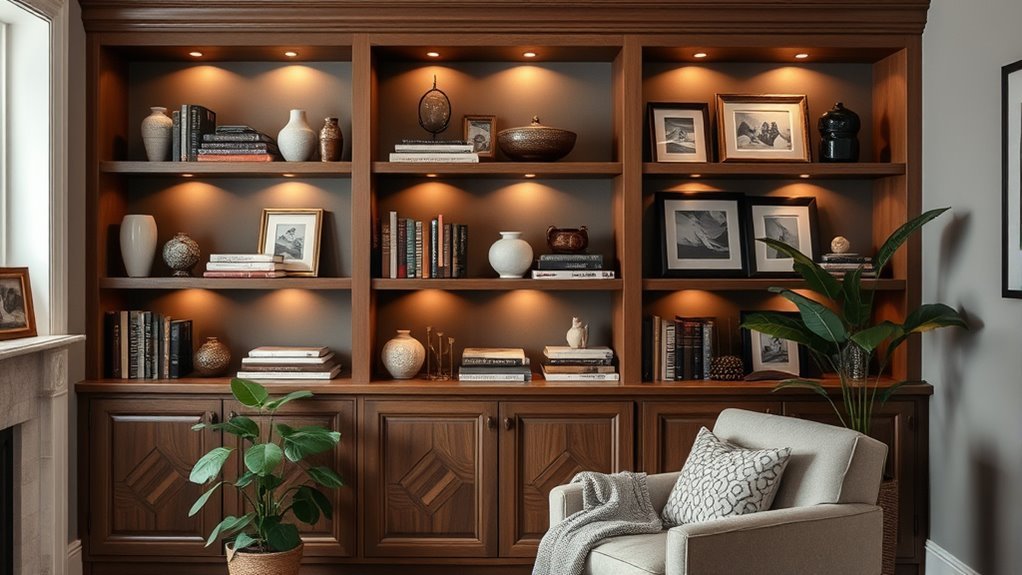
Deciding on built-in shelves vs. freestanding bookcases comes down to how long you plan to stay in your home, what your walls look like, and how much you want to spend upfront. Built-in shelving turns awkward alcoves and blank fireplace walls into permanent architectural storage, typically costing $2,000 to $7,500+ installed. Freestanding bookcases cost far less—often $50 to $1,200 per unit—and move with you whenever you rearrange your living room or change homes.
Quick Answer
Choose built-in shelves if you own your home, plan to stay at least 3 to 5 years, and need custom storage fitted to a fireplace wall, alcove, or sloped ceiling. Choose freestanding bookcases if you rent, prefer upfront costs under $1,000, or rearrange furniture often. Always anchor freestanding units to wall studs.
Last checked: October 18, 2026. Dates and figures were verified against official sources.
Key Takeaways
- Upfront cost gap: Custom built-ins average about $2,900 ($300 to $1,200 per linear foot installed), whereas most freestanding bookcases cost $50 to $500 for flat-pack units or $500 to $1,200+ for solid wood furniture.
- Weight and sag limits: Books weigh 20 to 40 pounds per linear foot; over a 36-inch span, a 3/4-inch solid oak shelf holds up to 313 pounds before sagging 1/4 inch, compared with 129 pounds for plywood and 87 pounds for MDF.
- Tip-over safety: The U.S. Consumer Product Safety Commission (CPSC) urges anchoring all shelving to wall studs with anti-tip kits (usually under $20), as nearly 80% of furniture tip-over fatalities involve children age 5 and younger.
- Lead time and permanence: Custom millwork takes 8 to 12 weeks from measurement to installation and stays with the property, while freestanding units set up in hours and travel with you.
- Budget middle ground: Trimming and painting stock bookcases (such as $79 IKEA BILLY units) creates a flush, semi-custom wall for $500 to $2,000 total.
Built-In Shelves vs. Freestanding Bookcases: Quick Comparison
Built-in shelves and freestanding bookcases solve different living room problems. Built-ins maximize every inch of vertical and recessed wall space as a permanent fixture, while freestanding bookcases prioritize budget control, quick setup, and portable design.
| Feature | Built-In Shelves | Freestanding Bookcases |
|---|---|---|
| Best for | Homeowners staying 3–5+ years, fireplace alcoves, awkward walls, floor-to-ceiling libraries | Renters, evolving room layouts, quick weekend upgrades, upfront budgets under $1,000 |
| Typical cost | $300–$1,200 per linear foot installed ($2,000–$7,500+ total; ~$2,900 average) | $50–$250 (flat-pack/engineered wood) to $500–$1,200+ (solid hardwood or designer units) |
| Timeline & installation | 8–12 weeks lead time for custom cabinetmakers (3–5 days on-site carpentry, trim, painting, and electrical) | Same-day setup (1–3 hours for assembly and anchoring to wall studs) |
| Layout flexibility | Low; permanently scribed and fastened to one wall or niche | High; easy to move between rooms, swap out, or take when moving |
| Visual style | Flush, tailored, architectural millwork matched to existing trim | Collected, layered, standalone furniture look with varied finishes |
| Resale impact | Stays with the house; boosts buyer appeal when neutral and well-proportioned | Considered personal property; moves with you and does not affect home sale |
| Main risk | Overly specific TV cutouts or bulky proportions can lock in one room layout | Tip-over hazard if unanchored; particleboard spans sag under heavy hardcovers |
How to Decide in 60 Seconds
Start with your timeline and your wall shape. If the wall itself creates a layout problem—such as a narrow chimney alcove or sloped attic ceiling—built-ins solve what standard furniture cannot. If your walls are flat and your layout may change within a few years, freestanding bookcases are the smarter financial and practical choice.
- Choose custom built-ins if you own your home, plan to stay at least 3 to 5 years, and want floor-to-ceiling storage that eliminates dust-collecting gaps around fireplaces, windows, or baseboards.
- Choose freestanding bookcases if you rent, need storage this week, want to keep spending under $1,000, or like rotating your sofa and media console between walls.
- Choose a semi-custom hybrid if you want a flush, wall-to-wall library look for $500 to $2,000 by anchoring stock bookcases side by side and wrapping them with baseboard and crown molding.
When to Opt for Built-In Shelves in Your Living Room
Built-in shelves are the stronger choice when you want storage that reads as part of the home’s original architecture. They excel in recessed niches, flanking a fireplace mantel, framing a window seat, or spanning a long blank wall where standard 30-to-36-inch-wide bookcases would leave awkward dead space.
Because a carpenter or cabinetmaker builds the units to your exact ceiling height and wall width, built-ins reclaim vertical space right up to the crown molding. You can combine 10-to-12-inch-deep upper bookcases with 18-to-24-inch-deep lower base cabinets to hide routers, gaming consoles, board games, and cords. Custom millwork can also integrate hardwired picture sconces, recessed LED strip channels, or vented covers over existing radiators.
Built-ins require patience and permanence. Custom cabinetmakers typically take 8 to 12 weeks from initial measurement to installation, plus 3 to 5 days of on-site carpentry and painting. A 2026 Good Housekeeping designer round-up found mixed views among interior designers: while well-proportioned millwork feels timeless and functional, unnecessary built-ins can make a living room feel cramped or overly utilitarian. Poorly planned built-ins—especially those with fixed cutouts sized to a single television—reduce flexibility and are costly to rip out. Keep the design simple, proportional to your ceiling height, and adaptable.
Why Freestanding Bookcases Work Well
Freestanding bookcases give you immediate storage without construction dust, contractor schedules, or permanent wall alterations. You can buy them off the floor, assemble or position them in an afternoon, move them to a home office later, and take them with you when you sell or end a lease.
They are especially practical for apartments, rentals, and multipurpose living rooms. A matching pair of 30-to-36-inch-wide bookcases creates balanced symmetry on either side of a sofa, window, or media console. A single tall etagere fills an empty corner without visually closing off the room, while a low 30-to-42-inch-tall horizontal bookcase works neatly under a window or behind a floating sofa as a room divider.
Freestanding pieces also let you mix textures and eras. Rather than matching your trim paint, you can bring in warm walnut, white oak, powder-coated steel, rattan doors, or arched silhouettes that contrast with your walls. If your storage needs shift from children’s picture books to vinyl records or framed art, you can swap or sell a freestanding piece in a weekend.
Warning: Every freestanding bookcase must be anchored to the wall. According to the U.S. Consumer Product Safety Commission’s Anchor It safety campaign, 459 children age 17 and under died in reported tip-over incidents between 2000 and 2018, with nearly 80% of fatalities involving children age 5 and younger. Always secure shelving directly into wall studs using metal brackets and heavy nylon or braided steel straps.
How Much Do Built-Ins and Freestanding Options Cost?
Freestanding bookcases cost $50 to $1,200+ per unit, whereas custom built-in shelves typically run $2,000 to $7,500+ per project ($300 to $1,200 per linear foot installed). The price gap comes down to skilled carpentry labor, cabinet-grade materials, custom finishing, and electrical work.
Published Better Homes & Gardens bookcase cost guidance places custom built-in bookshelves at an average of about $2,900, or roughly $300 to $1,200 per linear foot depending on wood species, base cabinetry, crown molding, and site complexity. Paint-grade MDF and birch plywood sit at the lower end ($300 to $600 per linear foot), while stain-grade solid hardwoods like white oak, walnut, or cherry with custom doors, drawers, and hardwired lighting push costs to $800 to $1,200+ per linear foot.
| Cost Factor | Built-In Shelves | Freestanding Bookcases |
|---|---|---|
| Upfront price | $2,000–$7,500+ total ($300–$1,200 per linear foot; ~$2,900 average) | $50–$250 (budget flat-pack), $250–$500 (mid-range veneer/metal), $500–$1,200+ (solid wood) |
| Labor costs | $1,200–$6,000 for carpenter, finish painter, and licensed electrician | $0 for DIY assembly and anchoring (or $75–$200 for professional handyman setup) |
| Hidden & extra costs | Baseboard removal, drywall repair, outlet relocation, cabinet hardware, primer and enamel paint | White-glove shipping ($50–$200), heavy-duty anti-tip kits ($10–$20), furniture shims |
| Removal or change cost | High; demolition requires patching drywall, replacing baseboards, and matching flooring | Minimal; unscrew wall anchor brackets and spackle two small screw holes |
Recommended Products

【Sturdy Metal Frame & Durable Industrial Bookshelf】This 5 tier industrial bookshelf features a strong metal frame and durable boards for excellent stability. Each shelf supports up to 30 lbs, perfect for books, decor, collectibles, plants, and everyday essentials.

Stable & Reinforced Structure: This solid bookshelf is built with tough metal support brackets and high-quality MDF panels to deliver stable long-term performance. Triangular reinforced corner joints plus H-style mortise and tenon joints cut down wobbling significantly, and the included anti-tip wall anchor kit adds an extra layer of safety when you place the unit around your home
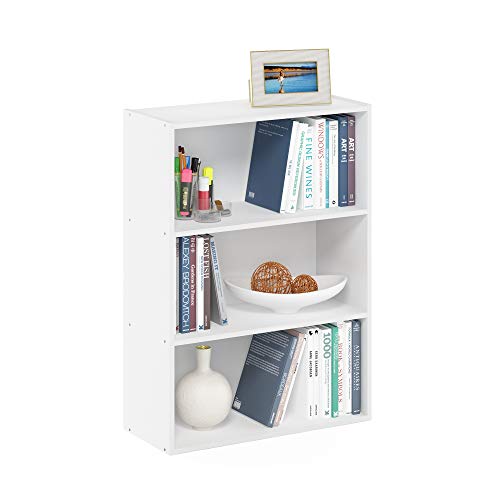
WIDE & FUNCTIONAL DESIGN: This book shelf features a wide, open design rectangular shape shelves, making it ideal for living rooms, home offices, or bedrooms seeking accessible horizontal storage
Design Flexibility: How Each Option Fits Your Style
Built-ins create a unified, architectural backdrop by matching your room’s existing millwork, while freestanding bookcases introduce contrasting furniture textures and movable silhouettes. Your choice determines whether the shelving blends into the walls or stands out as a focal piece.
When painted the same shade as the walls and trim—a technique known as color drenching—built-in shelves make a small living room feel taller and less cluttered. As shown in the Architectural Digest built-in bookshelf gallery, custom millwork can wrap over doorways, frame library ladders, or tuck into under-stair alcoves across traditional, coastal, modern, and cottage interiors.
Freestanding bookcases create a relaxed, collected aesthetic. You can pair a mid-century teak bookcase with a contemporary sofa, use open metal-and-wood ladder shelves to keep sightlines airy, or use cube units to divide an open-concept living and dining area. The biggest visual mistake with either option is misjudging scale: a lone 60-inch-tall bookcase looks lost on a 14-foot wall with 9-foot ceilings, whereas 24-inch-deep floor-to-ceiling built-ins can overwhelm a narrow 11-foot-wide room.
Measure Before You Buy or Build
Accurate measurements prevent sagging shelves, blocked vents, and cramped walkways. Before ordering furniture or calling a carpenter, measure your wall width at the floor, middle, and ceiling (walls are rarely perfectly plumb), along with your tallest books and deepest media gear.
According to the This Old House built-in shelving guide and Better Homes & Gardens planning standards, standard bookshelf depth ranges from 10 to 12 inches, with vertical spacing tailored to what you store:
| Item Type | Recommended Shelf Spacing (Height) | Recommended Shelf Depth | Planning Notes |
|---|---|---|---|
| Mass-market paperbacks | 8 inches | 5 to 8 inches | Ideal for shallow hallway niches or upper shelves |
| Standard hardcovers | 10.5 to 12 inches | 8 to 12 inches | 8 to 12 inches is the standard benchmark for mixed book rows |
| Coffee-table & art books / vinyl | 15 inches | 11 to 14 inches | Requires heavy-duty support (up to 30–40 lbs per linear foot) |
| Media gear & lower cabinets | 12 to 18 inches | 18 to 20+ inches | Leave 2 inches behind receivers and consoles for cords and airflow |
- Account for baseboards and crown molding: Standard baseboards add 1/2 to 3/4 inch of thickness at the bottom of a wall, which prevents a freestanding bookcase from sitting flush unless it has a rear cutout or sits on a raised plinth.
- Keep traffic paths clear: Leave at least 30 to 36 inches of open walkway between the front edge of your shelving and nearby sofa arms, coffee tables, or doorways.
- Map wall obstacles: Measure the exact distance from corners to light switches, thermostats, HVAC supply/return registers, and electrical outlets before finalizing your layout.
Recommended Products

MAXIMIZE STORAGE IN ANY ROOM: Tall 5-tier bookshelf designed to optimize vertical space—perfect for small apartments, home offices, and living rooms. Use it as a bookcase, display shelf, or storage organizer for books, decor, plants, and more. Size:31.5”W x 16”D x 72.5”H

MAXIMIZE STORAGE IN ANY ROOM: Tall 5-tier bookshelf designed to optimize vertical space—perfect for small apartments, home offices, and living rooms. Use it as a bookcase, display shelf, or storage organizer for books, decor, plants, and more. 31.5”W x 16”D x 72.5”H

Two adjustable shelves
Maximizing Space With Shelving in Your Living Room
Well-designed shelving solves both storage and structural load challenges. Whether you choose built-ins or freestanding units, matching shelf material and span width to the weight of your collection prevents permanent bowing over time.
According to engineering notes from the WoodBin Sagulator shelf deflection calculator (based on USDA Forest Products Laboratory wood stiffness data), a fully loaded bookshelf weighs 20 to 40 pounds per running foot—or 60 to 120 pounds across a standard 3-foot-wide shelf. The human eye notices shelf sag as small as 1/32 inch (0.03 inches) per foot, and wood shelves creep an extra 50% over time under continuous load.
Material choice dramatically changes how far a 3/4-inch-thick, 12-inch-deep shelf can span before sagging 1/4 inch over a 36-inch width: solid oak supports up to 313 pounds, cabinet-grade 3/4-inch plywood supports 129 pounds, and 3/4-inch MDF supports just 87 pounds. As Better Homes & Gardens shelf-planning guidance emphasizes, 3/4-inch solid hardwood spans significantly farther under load than particleboard or MDF, which require shorter spans (typically 24 to 30 inches) or continuous rear cleats and front edging.
- Use built-ins for dead zones: Turn 12-to-18-inch-deep chimney alcoves, sloped attic knee walls, or window surrounds into high-capacity storage without eating into the center of the room.
- Combine open and closed zones: Use lower cabinet doors (the bottom 24 to 30 inches) to conceal routers, cords, kids’ toys, and board games, keeping open upper shelves visually calm.
- Choose metal pin tracks for adjustable shelves: Drill 1/4-inch pin holes spaced 1 to 2 inches apart and use metal L-shaped or spoon pins rather than plastic clips, which shear under heavy book loads.
Pro Tip: Reducing a shelf’s unsupported span by just 20% (for example, from 36 inches down to 29 inches) roughly doubles its stiffness and cuts sag in half. You can also glue and nail a 1×2 solid hardwood face-frame strip onto the front edge of 3/4-inch plywood shelves to stop deflection under heavy hardcovers.
Safety and Installation Checks You Should Not Skip
Safe shelving installation requires anchoring into structural framing, maintaining proper electrical access, and keeping vents unobstructed. Neither a freestanding bookcase nor a custom built-in should ever rely on drywall alone or decorative trim to stay upright.
- Anchor into wood wall studs: In modern U.S. homes, wall studs sit 16 or 24 inches apart on center. Use a stud finder to locate the center of the stud, attach two metal brackets per bookcase into the solid wood frame of the furniture (never into thin stapled fiberboard backs), and secure the unit with heavy nylon or braided steel straps.
- Never bury live electrical outlets or junction boxes: Under National Electrical Code accessibility rules (NEC 314.29), electrical junction boxes and active receptacles cannot be permanently sealed behind fixed cabinet backs where wiring is inaccessible. Cut a neat access opening in the back panel for existing outlets, or hire a licensed electrician to move the receptacle into the cabinet face or baseboard.
- Keep HVAC vents and radiators clear: Never block supply registers, cold-air returns, or baseboard heaters with solid cabinetry. Trapped heat damages wood finishes and warps shelves, while blocked returns starve your HVAC system of airflow.
- Load shelves bottom-heavy: Store encyclopedias, art books, vinyl records, and filled storage bins on the lowest shelves to lower the unit’s center of gravity, and keep toys or remote controls off upper shelves where children might climb to reach them.
- Check rental lease rules before drilling: Renters have a strong safety reason to anchor tall bookcases; confirm with your landlord before drilling into studs or masonry, and save a small tub of spackle and touch-up paint to fill the screw holes when moving out.
Maintenance and Longevity of Your Shelving Solutions
Well-constructed solid wood or plywood built-ins can last for decades as part of your home’s structure, whereas freestanding bookcases vary from 3-to-5-year flat-pack units to heirloom hardwood pieces. How each option ages depends on joinery, back-panel rigidity, and finish quality.
Cleaning Built-Ins Easily
Because built-ins are scribed flush to the wall and ceiling, they eliminate the dark, dusty crevices behind and on top of standalone furniture. However, painted millwork requires a durable waterborne alkyd or cabinet-grade urethane enamel (typically in a satin or semi-gloss sheen) rather than standard flat wall latex, which sticks to book covers until fully cured.
Dust shelves weekly with a dry microfiber cloth, inspect caulk lines along the wall and ceiling each spring and fall as indoor humidity shifts, and touch up dings on high-traffic lower cabinet doors. If you install integrated LED strip lighting or sconces, ensure the low-voltage driver or transformer sits inside an accessible lower cabinet rather than behind fixed drywall.
Freestanding Units’ Durability
Freestanding bookcases are simple to refinish, repurpose in another room, or replace, but moving them tests their structural joints. Budget flat-pack bookcases rely on cam locks, wooden dowels, and a thin 1/8-inch folded fiberboard back panel. If that back panel loosens, the bookcase loses diagonal bracing and starts to rack (tilt sideways).
As Better Homes & Gardens notes, 3/4-inch solid hardwood resists sagging far better than particleboard of the same thickness. When shopping for long-term freestanding units, look for solid kiln-dried wood or furniture-grade plywood, dadoed fixed center shelves, thick back panels screwed rather than stapled into rabbeted grooves, and adjustable leveling feet at the base. Always unload every shelf before sliding or lifting a bookcase, and retighten all fasteners and wall anchors after moving it.
How Do Shelving Options Affect Your Home’s Value?
Thoughtful built-in shelves can make a home sell faster and feel more upscale, though they do not guarantee a fixed dollar-for-dollar return at resale. Freestanding bookcases are classified as personal property (chattel), meaning you take them with you and they do not factor into a home appraisal.
A June 2025 Realtor.com expert round-up featuring real estate agents and interior designers found that buyers value built-ins most in home offices, mudrooms, and around living room fireplaces, where custom millwork adds architectural character and practical organization. However, real estate pros also warned that overly personalized built-ins—such as narrow media cutouts sized to a 55-inch television when buyers want to mount a 75-to-85-inch screen, or bulky dark cabinetry in a small room—can actually deter buyers who factor demolition costs into their offer.
For U.S. homeowners, permanent custom millwork may also affect your home’s adjusted cost basis when calculating capital gains tax upon a sale. IRS Publication 523 (Selling Your Home) states that capital improvements that add value to your home, prolong its useful life, or adapt it to new uses can be added to your tax basis, whereas routine repairs and personal furniture cannot. While the IRS table explicitly lists built-in appliances, kitchen modernization, flooring, and fireplaces, whether permanent built-in cabinetry qualifies depends on your specific installation and documentation.
Note: This section provides general home-improvement context, not legal, tax, or real estate appraisal advice. Save all contractor invoices and material receipts, and consult a local real estate agent, certified appraiser, or CPA before undertaking a major built-in project for resale value or tax basis adjustments.
Best Choice by Lifestyle and Needs
Match your shelving choice to how your household actually uses the living room today and over the next five years. Use the decision matrix below to pair your living situation with the most cost-effective setup.
| Your Situation | Better Choice | Why It Works Best |
|---|---|---|
| You rent or plan to move within 1–3 years | Freestanding bookcases | You keep the furniture when you move and only need to patch small wall-anchor holes. |
| You own your home and plan to stay 5+ years | Built-in shelves | You enjoy daily custom storage and spread the higher upfront cost over many years. |
| You have recessed fireplace alcoves or sloped ceilings | Built-in shelves | Custom scribing eliminates awkward 3-to-8-inch side gaps where standard units never fit. |
| You like rearranging your living room layout | Freestanding bookcases | Modular or standalone pieces can shift to another wall or room as your seating changes. |
| You want a floor-to-ceiling library under $2,000 | Semi-custom hybrid | Stock bookcases anchored together and wrapped with MDF/pine trim mimic custom millwork for a fraction of the price. |
| You have young children or climbing pets | Either (stud-anchored with lower doors) | Both are safe when fastened directly to wall studs, loaded bottom-heavy, and fitted with child-latched lower doors. |
Hybrid Option: Get the Built-In Look for Less
You do not have to choose between a $5,000 carpentry bill and a lone flat-pack bookcase. A semi-custom hybrid project uses inexpensive stock bookcases as the structural boxes, then bridges the gaps to your ceiling and walls with standard lumber and trim for $500 to $2,000 total.
The most popular foundation is the IKEA BILLY bookcase series, where a standard white unit (31 1/2 inches wide by 11 inches deep by 79 1/2 inches tall) costs $79, a narrow 15 3/4-inch-wide unit costs $59, and a 14-inch-tall height extension unit costs $30 (bringing the total height to 93 1/4 inches for rooms with 8-to-9-foot ceilings). To build a sturdy, custom-looking wall:
- Build a level 2×4 base platform: Construct a level wood plinth the exact height of your room’s baseboards so the bookcases sit above the baseboard molding and flush against the drywall.
- Bolt the cases together and to wall studs: Clamp adjacent bookcases flush at the front edges, screw the side panels together, and anchor the top of every unit into wall studs with metal L-brackets.
- Replace or reinforce thin backs if needed: Swapping the folded hardboard back for 1/4-inch plywood (or applying beadboard wallpaper) prevents racking and upgrades the look.
- Add face frames, crown molding, and baseboard: Nail 1×2 or 1×3 poplar or pine face frames across the vertical seams between units to hide the double side walls, then wrap the bottom with continuous baseboard and the top with crown molding.
Pro Tip: Paper-foil and laminate bookcases will peel if painted with standard latex primer. Lightly scuff-sand the surfaces with 180-grit sandpaper, apply a shellac-based or high-adhesion bonding primer first, caulk all trim seams, and finish the units, trim, and wall in the same cabinet-grade enamel color.
Making the Right Choice for Your Lifestyle and Needs
Before you order freestanding bookcases or sign a carpentry contract, walk through a quick pre-project checklist to avoid the most common living room shelving mistakes. Taking 15 minutes to verify clearances and storage loads will save you hundreds of dollars in returns or carpentry revisions.
- Avoid fixed-size TV niches: If your shelving surrounds a television, leave an open central wall span wide enough for future screen upgrades (at least 65 to 80 inches wide) rather than framing a tight box around your current set.
- Audit your heaviest items first: Measure the linear feet of hardcover books, vinyl records, or art books you own and keep unsupported particleboard or MDF spans under 28 to 30 inches—or upgrade to 3/4-inch plywood or solid hardwood for 32-to-36-inch spans.
- Check door swings and natural light: Confirm that a 12-to-20-inch-deep unit near a window or doorway will not block natural daylight or stop a door from opening a full 90 degrees.
- Get three itemized quotes for custom work: When hiring a carpenter or cabinet shop, ask each bidder to specify exact materials (MDF vs. birch plywood vs. solid hardwood), shelf thickness, paint type, and whether electrical work is included.
Frequently Asked Questions
Are built-in bookshelves better than floating shelves?
Built-in bookshelves are better for heavy book collections, media equipment, concealed lower storage, and full-wall architectural framing because the vertical side panels transfer weight directly to the floor. Floating shelves work better for small walls, minimalist layouts, and light decor, as internal wall brackets hold far less weight than framed cabinetry.
What are the disadvantages of built-ins?
Built-ins cost significantly more upfront ($2,000 to $7,500+ installed), require 8 to 12 weeks for custom fabrication, and permanently lock your room into one furniture layout. If they are poorly proportioned or built around an outdated television cutout, removing them requires drywall, baseboard, and flooring repairs.
Do built-in shelves add value to a home?
Well-crafted built-in shelves increase buyer appeal and perceived home quality—especially around living room fireplaces and in home offices—but they do not guarantee a fixed resale-value percentage. Neutral finishes, adjustable shelves, and classic proportions attract the widest pool of future buyers.
Are freestanding bookcases safe in a living room?
Freestanding bookcases are safe when leveled, loaded with the heaviest items on the bottom shelves, and anchored directly into wall studs. The U.S. Consumer Product Safety Commission’s Anchor It campaign recommends securing all shelving to the wall with anti-tip brackets and straps to prevent tip-over injuries and fatalities.
What is the cheapest way to get the built-in look?
The most affordable method is a semi-custom stock bookcase hack costing $500 to $2,000 total. Place stock units (such as $79 IKEA BILLY bookcases) on a level 2×4 base platform, anchor them to wall studs, cover the seams with 1×2 pine face frames and crown molding, and paint everything to match the wall.
Are bookcases cheaper than built-ins?
Yes, freestanding bookcases are much cheaper upfront, typically costing $50 to $500 for flat-pack units or $500 to $1,200 for solid wood pieces, compared with an average of $2,900 ($300 to $1,200 per linear foot) for custom built-ins. Built-ins cost more because they include custom carpentry, trim, finishing, and installation labor.
Can renters use tall bookcases safely?
Yes, renters can use tall bookcases safely by leveling the base, placing heavy books on lower shelves, and anchoring the top frame into wall studs. Check your lease or notify your landlord before drilling, and patch the small screw holes with spackle when you move out.
How far apart should built-in shelves be?
Standard vertical spacing is 8 to 12 inches between shelves for most paperbacks and hardcovers, according to Better Homes & Gardens and This Old House. Plan for 15 inches of height (and 11 to 14 inches of depth) for oversized art books or vinyl records, or drill adjustable pin holes spaced 1 to 2 inches apart.
Conclusion
Built-in shelves and freestanding bookcases both upgrade living room storage, but they reward different priorities. Custom built-ins turn awkward walls and fireplace alcoves into tailored, high-capacity architectural storage for long-term homeowners, while freestanding bookcases give renters and layout-changers immediate storage at a fraction of the cost.
Before spending a dollar, grab a tape measure and record your wall width, ceiling height, baseboard thickness, and the height and depth of your largest books or media gear. From there, compare two or three local carpentry quotes against freestanding or semi-custom stock units—and include stud-mounted wall anchors in your installation plan.
Sources
- Anchor It — U.S. Consumer Product Safety Commission: Furniture tip-over fatality data, anti-tip kit costs, and wall-stud anchoring safety guidance.
- IRS Publication 523, Selling Your Home: Rules for capital improvements and adjusted cost basis when selling a primary residence.
- Better Homes & Gardens: Bookshelf Decor and Cost Guidance: Average custom built-in bookshelf costs ($2,900 total; $300–$1,200 per linear foot) and standard dimensions.
- Better Homes & Gardens: Bookshelf Dimensions and Planning: Shelf spacing standards and span comparisons between 3/4-inch solid hardwood and particleboard.
- Good Housekeeping: Designers on Whether Built-Ins Are Worth It: Interior designer perspectives on when permanent built-ins help or overwhelm a room.
- Architectural Digest: Bookshelf and Built-In Ideas: Architectural millwork and floor-to-ceiling shelving layout examples.
- Realtor.com: Are Custom Built-Ins Worth It?: Real estate agent and designer insights on 8-to-12-week lead times, costs, and resale appeal.
- This Old House: Bookcase Basics — A Guide to Built-In Shelving: Book dimensions and 3-foot 1×12 shelf load limits for solid oak (313 lbs), plywood (129 lbs), and MDF (87 lbs).
- WoodBin: The Sagulator Shelf Deflection Calculator: Book weight loads per running foot (20–40 lbs) and allowable shelf sag engineering thresholds (0.02 inches per foot).
- IKEA US: BILLY Series Bookcases & Parts: Current dimensions and pricing for stock bookcases ($59–$79) and height extension units ($30) used in semi-custom built-in hacks.


[…] Built-In Shelves vs Bookcases: 7 Key Differences Guide […]