Disclosure: As an Amazon Associate, we earn from qualifying purchases. If you click a link on this page and make a purchase, we may receive a small commission at no extra cost to you.
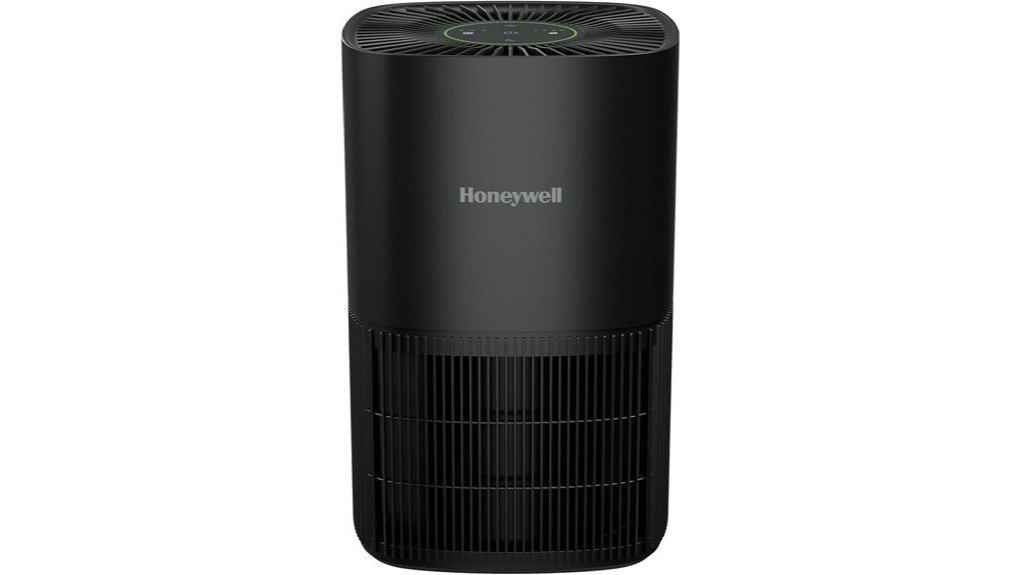
Small bedrooms and offices can collect dust, pollen, pet dander, and odors even when the room looks clean. The Honeywell Allergen Plus AQSense HEPA Air Purifier HPA125B is designed to address that problem without taking up much floor or table space. Its strongest features are a three-stage filter, automatic air-quality adjustment, and quiet Sleep Mode. However, its advertised 530-square-foot coverage represents slower, once-per-hour air circulation, so buyers who want frequent filtration should use it in a much smaller room.
Quick Verdict
Rating: 8/10, recommended with caveats
Best For: Bedrooms, nurseries, home offices, dorm rooms, and other small spaces where quiet operation matters.
Bottom Line: The HPA125B gives you HEPA particle filtration, odor reduction, an air-quality sensor, and a compact 7-inch footprint. It is most effective in rooms around 110 square feet when you want frequent air circulation, rather than across the full advertised 530 square feet.
| Specification | Detail |
|---|---|
| Brand | Honeywell |
| Model | HPA125B |
| Product type | Compact tabletop HEPA air purifier |
| Dimensions | 7 × 7 × 11 inches |
| Weight | About 2.1 pounds |
| Filtration | Pre-filter, activated carbon, and HEPA filtration |
| Particle performance | Captures up to 99.97% of specified airborne particles measuring 0.3 microns and larger |
| Recommended room use | About 110 sq. ft. at 4.8 air changes per hour, or up to 530 sq. ft. at roughly one air change per hour |
| Lowest stated noise level | 20.81 dBA in Sleep Mode |
| Controls | Touch controls with AQSense Auto Mode and air-quality indicator |
| Certifications | AHAM Verifide, CARB certified, and ENERGY STAR certified |
| Included items | Air purifier, filter, and owner’s manual |
What Is the Honeywell HPA125B Air Purifier?
The Honeywell HPA125B is a compact air purifier made for personal spaces and small rooms. Its three-stage filter targets different types of airborne material: the pre-filter catches larger debris such as hair, the activated carbon layer helps reduce odors and volatile organic compounds, and the HEPA layer captures smaller airborne particles.
AQSense Auto Mode monitors current air conditions and changes the fan speed when needed. A color-coded indicator gives you a quick visual reading, while Sleep Mode lowers the operating sound for use near a bed or crib.
Who Should Buy It?
Best For
- You need frequent filtration in a bedroom, nursery, dorm, or office around 110 square feet.
- You want automatic fan adjustments instead of changing settings throughout the day.
- You need a light purifier with a small 7 × 7-inch footprint.
Skip If
- You need rapid, whole-room filtration in a large or open-plan space.
- You want washable filters with no recurring replacement cost.
- You need an air purifier to remove gases or solve a source of smoke, moisture, or mold.
Before You Buy: Do not judge room suitability from the 530-square-foot figure alone. That figure represents about one air change per hour. Use the approximately 110-square-foot rating when you want the unit to filter the room air about 4.8 times per hour.
Filtration Performance
The HPA125B uses three filtration stages rather than relying on a HEPA layer alone. Its outer pre-filter catches visible debris and hair before they reach the finer layers. This can help preserve airflow, although you still need to inspect and replace the filter as directed.
The HEPA layer captures up to 99.97% of specified airborne particles measuring 0.3 microns and larger. These may include dust, pollen, pet dander, dust mite debris, and smoke particles that pass through the purifier. The percentage describes single-pass filter efficiency under test conditions, not the percentage of contaminants removed from an entire room.
The carbon layer can reduce everyday odors and some VOCs, but its small size limits how much gas it can hold. It is useful for light pet, cooking, or stale-room odors. It should not be treated as a substitute for ventilation or source control when you have heavy smoke, chemical fumes, or persistent odors.
AQSense Auto Mode and Controls
AQSense Auto Mode lets the purifier respond to changing particle levels without constant input from you. The sensor checks the surrounding air and raises or lowers the fan speed based on its reading. Green, yellow, and red indicator colors help you see when the detected air quality changes.
Auto Mode is useful when dust rises during cleaning, outdoor pollen enters through a window, or pet activity sends dander into the air. Remember that a consumer sensor provides general guidance. Its reading can also depend on where the purifier is placed and which pollutants the sensor can detect.
Room Coverage and Airflow
Room size is the most important limitation to understand. In a room of about 110 square feet, the HPA125B can circulate and filter the air approximately 4.8 times per hour. That is a practical rate for a small bedroom, nursery, or enclosed office.
The purifier can serve an area up to 530 square feet at about one air change per hour, but cleaning will be much slower at that size. Open doors, high ceilings, drafts, furniture, and connected rooms can reduce effective circulation further. A larger purifier with a higher clean-air delivery rate is a better choice for rapid filtration in a living room or open floor plan.
Noise Levels and Design Features
The purifier measures 7 inches deep, 7 inches wide, and 11 inches high. At about 2.1 pounds, it is easy to move between a desk, bedside table, or shelf. Its compact shape is particularly useful when a full-size floor unit would block a walkway.
Sleep Mode operates as low as a stated 20.81 dBA, making it suitable for noise-sensitive spaces. Higher fan settings will be more noticeable, especially when Auto Mode reacts to a sudden rise in particles. The unit’s ENERGY STAR certification also confirms that it meets applicable energy-efficiency requirements.
Placement Tips for Better Results
- Place the purifier in the room where you spend the most time instead of expecting it to clean several connected rooms.
- Leave open space around the air inlet and outlet. Do not press the unit against a wall, curtain, or upholstered headboard.
- Keep it on a stable, dry surface where bedding, papers, clothing, or pet hair cannot block airflow.
- Close exterior windows when outdoor smoke or pollen is the main concern, unless ventilation is needed for safety.
- Run the purifier continuously or before the room is occupied when you want more consistent particle control.
- Follow the owner’s manual when installing filters, selecting settings, and cleaning the unit.
Pro Tip: Keep the purifier several feet from a humidifier. Direct exposure to mist can dampen the filter, affect sensor readings, and encourage unwanted moisture inside the unit.
How It Performs in Real Use
In a Small Bedroom
The low Sleep Mode noise and compact footprint suit a bedside setup. For more effective overnight circulation, use the 110-square-foot guideline and avoid hiding the purifier behind furniture. You may hear the fan increase if Auto Mode detects more particles.
In a Home Office
The HPA125B fits easily on a desk or nearby shelf without taking up the space required by a tower purifier. Auto Mode is convenient during long work sessions because the unit can adjust itself while you focus on other tasks.
In a Room With Pets
The pre-filter can catch some airborne hair and larger debris, while the HEPA layer targets smaller pet-dander particles. The carbon layer can help with mild odors. You will still need to vacuum surfaces and address litter boxes or other odor sources because an air purifier only treats material that reaches its intake.
In a Larger Room
The purifier can operate in a room approaching 530 square feet, but it circulates that volume only about once per hour. This may provide gradual background filtration, but it is not the best option when you need fast particle removal or have an open-plan layout.
Cleaning and Maintenance
Check the filter indicator and follow Honeywell’s replacement instructions rather than relying on a universal calendar. Filter life varies with fan use, dust levels, smoke exposure, pets, and local air quality. Use the correct replacement filter specified for the HPA125B because fit and airflow affect performance.
Unplug the purifier before cleaning it. Wipe the exterior with a soft, lightly damp cloth and keep liquids away from the controls, motor, and air openings. Do not wash or vacuum a filter unless the owner’s manual specifically identifies it as washable or vacuum-safe.
Compatibility and Safety
This purifier can reduce airborne particles that pass through its filter, but it is not a medical device and cannot prevent or treat allergies, asthma, or other conditions. Ask a qualified healthcare professional for guidance if indoor air is affecting your health.
An air purifier also cannot correct active mold growth, a gas leak, carbon monoxide, or unsafe chemical fumes. Address the source, ventilate when appropriate, and contact a qualified professional for serious indoor-air hazards. Keep the purifier dry and do not block its intake or outlet.
Pros and Cons
Pros
- Three-stage system handles larger debris, fine particles, and light odors.
- AQSense Auto Mode adjusts the fan based on detected air conditions.
- Sleep Mode operates as low as a stated 20.81 dBA.
- The 7 × 7-inch footprint works well on tables and shelves.
- AHAM, CARB, and ENERGY STAR certifications add useful third-party verification.
Cons
- The 530-square-foot figure provides only about one air change per hour.
- Replacement filters create an ongoing ownership cost.
- The compact carbon layer is intended for light odor reduction, not heavy gases or fumes.
Is It Worth the Price?
The HPA125B offers strong value if you want a compact purifier with verified room-performance data, automatic particle sensing, quiet operation, and three-stage filtration. Its certifications and AQSense controls help distinguish it from basic tabletop purifiers that provide only manual fan speeds.
You will get the most value when using it in a small, enclosed room and are comfortable buying replacement filters. It is less compelling for a large living area, where one small unit will circulate the air slowly and a higher-capacity purifier may offer better practical value.
How It Compares to Alternatives
The Levoit Core Mini is worth comparing if you mainly want a simple, compact purifier and do not need an automatic air-quality sensor. The larger Levoit Core 300S may suit buyers who want app controls and more capacity, while Honeywell’s larger Allergen Plus models are better suited to bigger rooms.
The HPA125B makes the most sense when you want a lightweight Honeywell model with Auto Mode, a visible air-quality indicator, and quiet small-room performance.
Frequently Asked Questions
Can the Honeywell HPA125B really cover 530 square feet?
It can circulate the air in a 530-square-foot room about once per hour under test conditions. For roughly 4.8 air changes per hour, Honeywell rates it for a room of about 110 square feet.
How often should you replace its filter?
Follow the filter indicator and the replacement interval in the owner’s manual. Actual life depends on operating time, fan speed, pets, dust, smoke, and other conditions in your home.
Is it suitable for a bedroom or nursery?
Its compact body and stated 20.81 dBA Sleep Mode suit quiet rooms. Keep the unit and power cord safely positioned, leave its vents clear, and follow the manufacturer’s placement instructions.
Does the purifier help with pet hair and odors?
The pre-filter can catch some airborne hair, the HEPA layer targets smaller dander particles, and the carbon layer helps reduce light odors. You must still clean floors and fabrics and address the odor source directly.
Does the Honeywell HPA125B produce ozone?
It uses mechanical filtration rather than an ozone-generating cleaning process. Its CARB certification confirms compliance with California’s applicable indoor air-cleaner requirements.
Can you wash and reuse the filter?
Do not wash the filter unless Honeywell’s manual explicitly states that the installed filter is washable. Water or aggressive vacuuming can damage filter media and reduce its ability to capture particles.
What warranty comes with the HPA125B?
Warranty terms can differ by market and seller, and a specific term was not confirmed during this review. Check the current Amazon listing, packaging, or Honeywell documentation before purchasing.
The Bottom Line
The Honeywell HPA125B is a good choice for a small bedroom, nursery, dorm, or office when you value quiet operation, automatic fan control, and certified HEPA filtration. Skip it if you need rapid filtration across a large or open room, since its full 530-square-foot coverage provides only about one air change per hour.
Ready to Buy?
Check the latest price, replacement-filter details, and warranty terms before you decide.