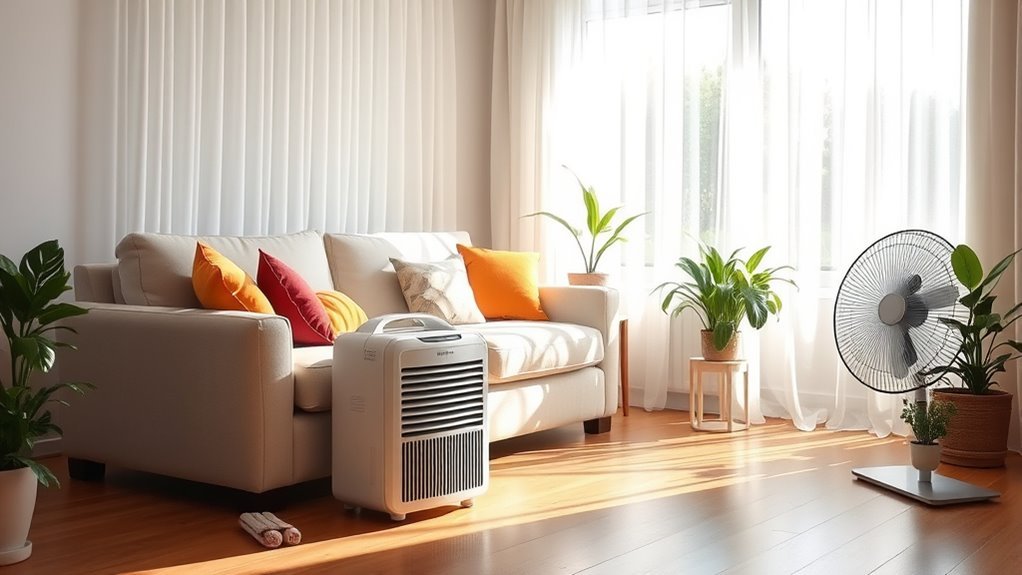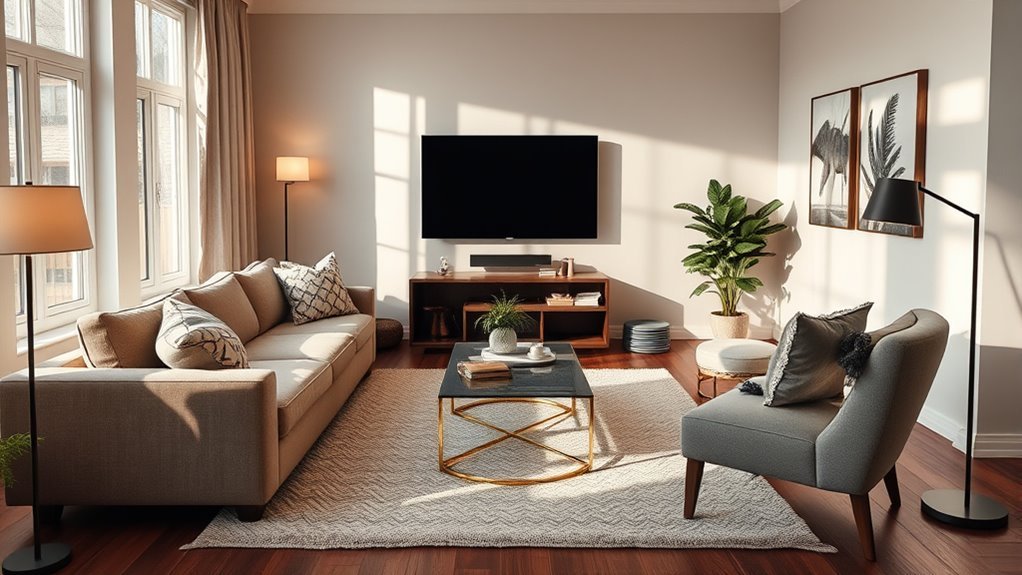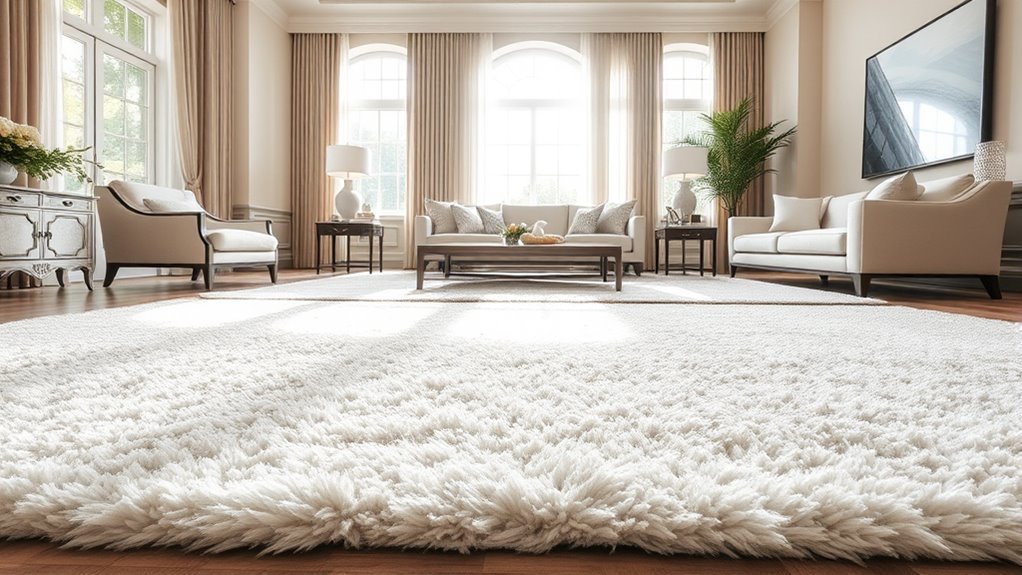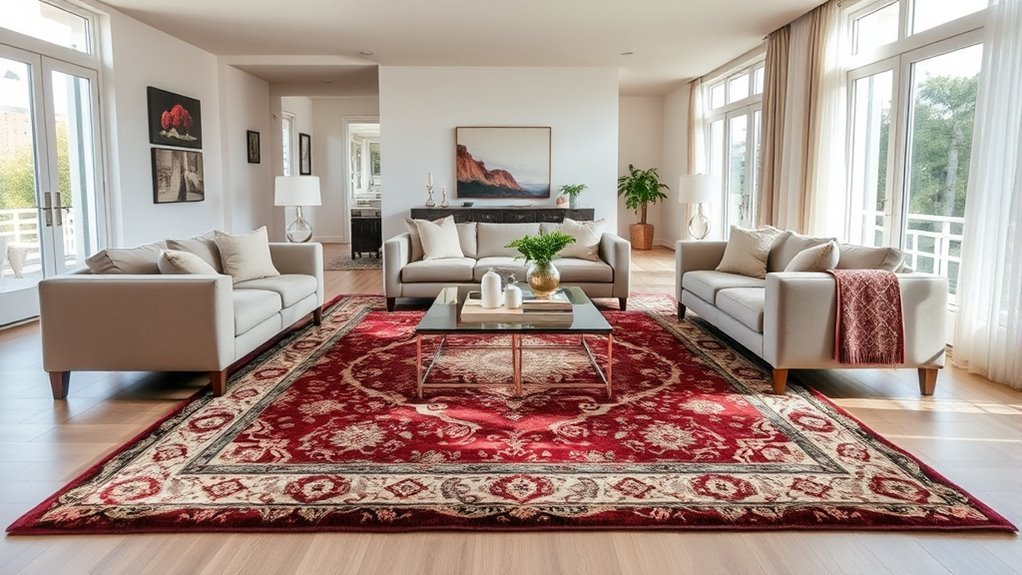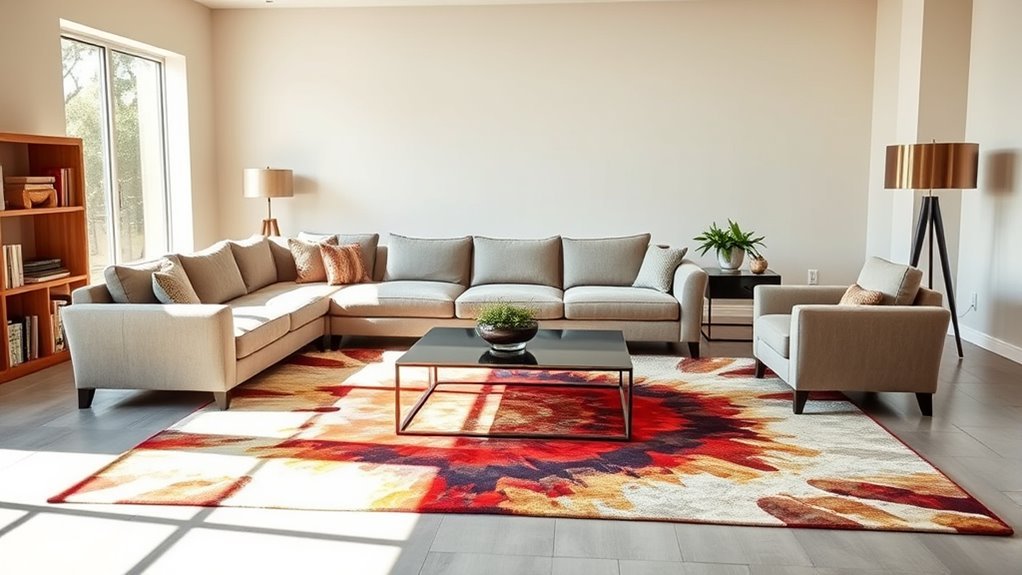
Choosing the right furniture scale for your living room starts with one simple question: will each piece fit the room, the people using it, and the paths people walk through every day? When scale is right, the room feels comfortable, balanced, and easy to move through. When it is off, even beautiful furniture can feel cramped, awkward, or disconnected.
Quick Answer
To choose furniture that fits your living room scale, measure the room, mark each piece on the floor with painter’s tape, keep main walkways around 30–36 inches wide, leave 16–18 inches between the sofa and coffee table, and choose rugs, lighting, and artwork that relate to the size of your largest furniture pieces.
Key Takeaways
- Measure the room, ceiling height, doorways, windows, and delivery path before buying large furniture.
- Use 30–36 inches for main walkways when possible; aim closer to 36 inches if accessibility or easy traffic flow matters.
- Keep a coffee table about 16–18 inches from the sofa so it is reachable without blocking knees or movement.
- Choose rugs large enough to anchor the seating area, not small rugs that make furniture look like it is floating.
- Treat rules like the “2/3 rule” as helpful starting points, not fixed requirements.
At a Glance
| Time Required | 30–60 minutes to measure and tape a layout; longer if you compare several furniture options |
| Difficulty | Easy to moderate |
| Tools Needed | Tape measure, painter’s tape, paper or phone notes, furniture dimensions, and optional room-planner app |
| Cost | Usually free if you already own a tape measure and painter’s tape |
Understanding the Importance of Furniture Scale in Your Living Room
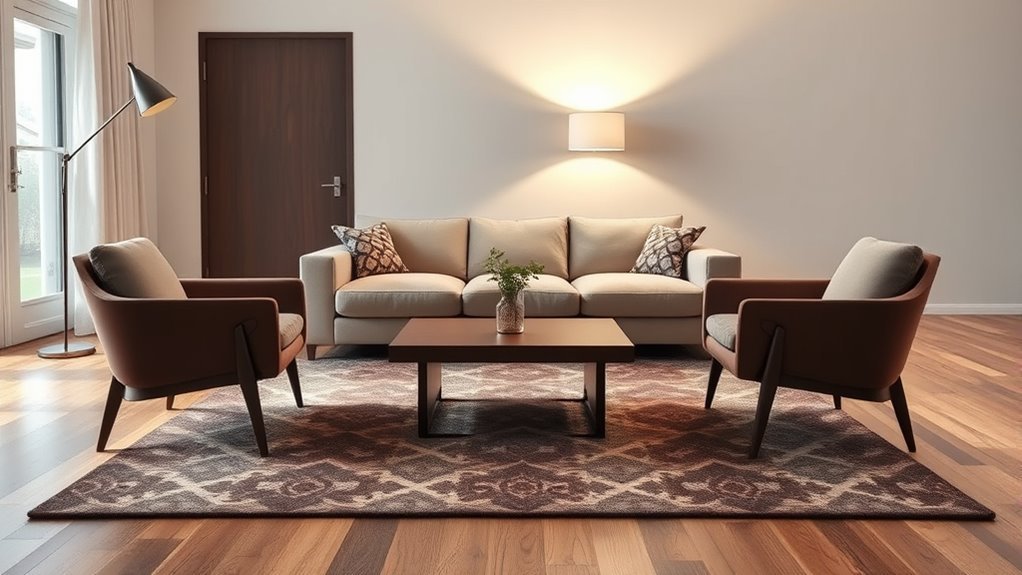
Furniture scale is the relationship between a piece of furniture and the room around it. A sofa that is too large can block walkways and overpower the space. A sofa that is too small can look lost, especially on a long wall or under a tall ceiling.
Proportion is slightly different. It describes how pieces relate to each other. A delicate side table beside a bulky sectional may feel too small. A huge coffee table in front of a slim loveseat may feel heavy. Good scale and proportion help the room feel intentional instead of crowded or unfinished.
Note: Living-room layout measurements are usually design guidelines, not building-code requirements for private homes. If you need an accessible layout for a wheelchair, walker, or mobility aid, aim for wider paths and confirm the user’s real turning and reach needs.
Measure Your Living Room Before Choosing Furniture
Before you shop, measure the room from wall to wall. Write down the length, width, and ceiling height. Then mark fixed features that affect furniture placement: doors, windows, fireplaces, built-ins, radiators, vents, outlets, stairs, and open walkways to nearby rooms.
Do not stop at the room itself. Measure the delivery path too. A sofa may fit the living room but fail to fit through the front door, stairwell, elevator, hallway turn, or tight entry.
- Room length and width: Measure the full usable floor area.
- Ceiling height: Note whether the room feels low, standard, tall, or vaulted.
- Door and window swing: Keep furniture clear of door paths and window treatments.
- Delivery path: Measure door widths, hallway widths, stair turns, elevator openings, and ceiling height along the path.
- Focal point: Mark the fireplace, TV wall, view, or main conversation zone.
Pro Tip: Measure twice: once at floor level and once at the widest point where furniture will pass. Trim, handrails, door hardware, and stair railings can reduce usable clearance.
Living Room Spacing Cheat Sheet
Use these measurements as practical starting points. Adjust them for your room size, furniture depth, household needs, and how people actually move through the space.
| Main living-room walkways | 30–36 inches when possible; 36 inches is more comfortable and better for accessibility-minded layouts |
| Sofa to coffee table | About 16–18 inches |
| Coffee table length | About one-half to two-thirds the sofa length as a visual starting point |
| Side table height | Close to the height of the sofa or chair arm |
| Dining or game table clearance | At least 32 inches where no one passes behind; 36 inches to edge past; 44 inches to walk past |
| Area rug | Large enough for at least the front legs of major seating pieces to sit on the rug |
| Artwork above sofa | Often looks balanced at about one-half to two-thirds the sofa width |
For accessibility-minded planning, the U.S. Access Board notes that accessible routes generally need a 36-inch continuous clear width. For seating and dining clearances, the National Kitchen & Bath Association planning guidelines recommend more space when traffic passes behind seated diners.
Recommended Products

Soft & Durable: This 8x10 area rug low-pile combines soft faux wool fibers with a 0.25-inch height for comfort. Tight weaving reduces shedding and edge fraying, making it perfect for high-traffic areas like living rooms, bedrooms, and entryways

Ultra-Soft Low Pile Rug: Gent drizz living room rugs 8x10 made of Upgraded durable low pile faux wool fibers, 0.25'' thick, featuring a soft fuzzy density surface, soft and pliable to the touch, providing great comfort for your bare feet. The low pile makes it easy for your Large area rug to clean and is perfect for homes with kids and pets

Machine Washable & Easy to Clean: The surface features water-repellent performance for simple cleanup when drinks spill accidentally, reducing the chance of liquid soaking deep into fibers. You can wipe spills quickly with a towel, remove local stains via spot cleaning with a damp cloth, or regularly vacuum for daily upkeep. The whole rug supports machine washing for deeper cleaning
How to Choose Furniture That Fits the Scale of Your Living Room
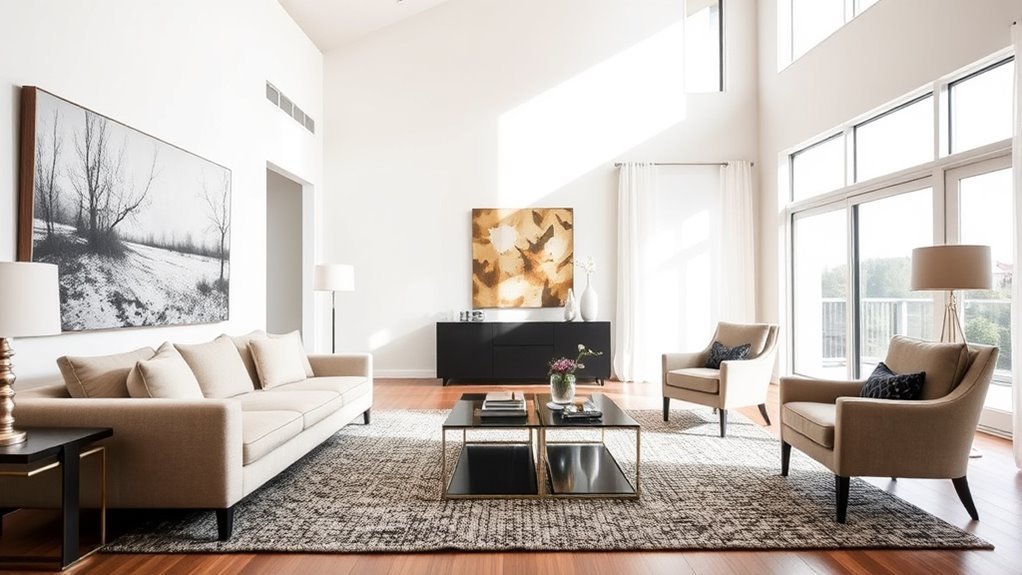
Start with the largest piece first. In most living rooms, that is the sofa or sectional. Once that piece fits, it is easier to choose chairs, tables, rugs, lamps, and storage that support the layout instead of fighting it.
Recommended Products

2-in-1 Convertible Sleeper Sofa for Smart Space Living: This Ball & Cast 86" convertible sectional sleeper sofa transforms from a stylish L-shaped couch into a comfortable sofa bed in seconds, maximizing seating and sleeping space in compact homes. Ideal for small apartments, living rooms, and guest-ready spaces, it is designed to optimize everyday living in limited spaces with ease and comfort. Overall size: 85.43" L × 53.54" W × 33.46" H, please measure your space before purchase.
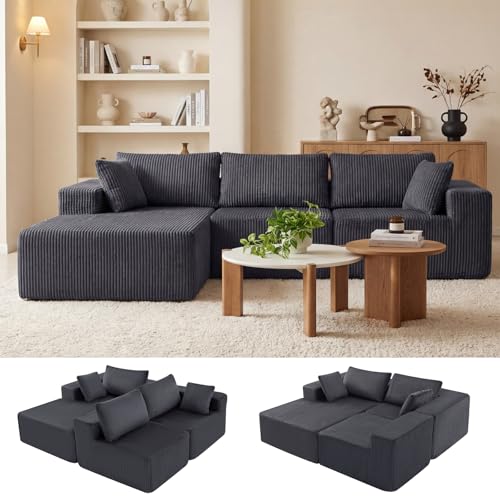
Deep Seating Comfort: The cloud couch offers an oversized 108" length and 55.75" seat depth, giving adults and teens room to stretch out, curl up with a book, or binge-watch your favorite shows for hours in complete comfort

【105" SPACIOUS U-SHAPE】Measuring 105"L × 35"W × 48"D, this U-shaped sectional couches fits seamlessly into most living spaces. 23" deep seating and 10" wide armrest pillow effortlessly satisfies all your relaxation needs.
Choose the Sofa First
A sofa should fit the wall or seating zone without blocking the main route through the room. If the sofa sits on a long wall, a small loveseat may look under-scaled. If the room is narrow, a deep sectional may eat up the walkway. Check the sofa’s width, depth, seat height, back height, and arm style before deciding.
The “2/3 rule” can help: a sofa often looks balanced when it takes up around two-thirds of the wall or zone behind it. Treat this as a visual guide, not a strict rule. Windows, side tables, walkways, and focal points may change the best size.
Match Chairs to the Sofa
Accent chairs should feel related to the sofa in seat height and visual weight. A very low lounge chair can look odd beside a tall, upright sofa. A bulky recliner can overpower a slim apartment sofa. Pair heavier pieces with other pieces that have enough size or texture to hold their own.
Size the Coffee Table
A coffee table should be easy to reach but not so close that people bump their knees. A gap of about 16–18 inches from the sofa works well in many rooms. For length, start with a table that is about one-half to two-thirds the length of the sofa, then adjust based on traffic flow and table shape.
Use the Right Rug Size
A rug that is too small can make the furniture look scattered. In many living rooms, the rug should be large enough for the front legs of the sofa and chairs to sit on it. In a larger room, all legs can sit on the rug for a more grounded look. In a small room, a rug that nearly fills the seating area can make the layout feel calmer and more connected.
Allowing for Proper Walking Space and Traffic Flow
Traffic flow is the path people naturally take through the room. Before arranging furniture, decide where people enter, where they sit, how they reach side tables, and whether they need to pass through the living room to reach another space.
- Keep main walkways around 30–36 inches wide when possible.
- Aim closer to 36 inches for easier movement, mobility aids, or busy family rooms.
- Do not place the coffee table or ottoman in the main path from one room to another.
- Keep doors, drawers, cabinets, and recliner footrests clear when opened.
- Leave enough space behind dining or game-table chairs for people to pull out seats comfortably.
Warning: Do not plan only from a top-down floor plan. Recliners, cabinet doors, nesting tables, swivel chairs, and ottomans need extra movement space that may not be obvious on paper.
Use Painter’s Tape to Visualize Your Layout
Painter’s tape is one of the easiest ways to test furniture scale before you buy. Tape the exact width and depth of the sofa, chairs, coffee table, console, and rug on the floor. Then walk through the room as you normally would.
- Mark the sofa or sectional first.
- Add the coffee table outline 16–18 inches from the sofa.
- Tape accent chairs and side tables.
- Mark the rug size last so you can see whether it anchors the whole seating area.
- Open doors, drawers, and recliners to test real clearance.
- Take a photo from the room entrance to check visual balance.
If the taped outline feels tight before the furniture arrives, the real piece will usually feel even tighter. Choose a smaller size, a slimmer arm style, raised legs, or a layout with fewer pieces.
Key Architectural Features Impacting Furniture Scale
Your living room architecture should guide the scale of your furniture. Ceiling height, windows, doors, fireplaces, alcoves, and built-ins all affect what looks balanced and what gets in the way.
Ceiling Height Considerations
In rooms with lower ceilings, low or medium-height furniture can help the space feel less crowded. Avoid stacking too many tall, heavy pieces against every wall. In rooms with high or vaulted ceilings, add vertical balance with taller bookcases, floor lamps, curtains hung higher, large-scale art, or a taller plant.
The goal is not to make every piece tall. The goal is to keep the lower half of the room comfortable while giving the eye a few vertical elements to connect the furniture to the architecture.
Window Placement Effects
Windows affect both furniture placement and furniture height. Avoid blocking low windows with bulky furniture unless privacy or storage matters more than the view. If a sofa sits under a window, check the sill height and make sure the sofa back does not awkwardly cover the glass or interfere with curtains.
| Window Feature | What to Measure | Furniture Decision |
|---|---|---|
| Sill height | Floor to bottom of window | Choose sofa backs or consoles that do not block too much glass |
| Window width | Trim edge to trim edge | Center furniture or art so the wall does not feel lopsided |
| Curtain stack | Wall space beside the window | Leave room for panels to open without crowding side tables |
| Door or walkway nearby | Clear path around the opening | Avoid deep chairs or tables that pinch the entry route |
Architectural Nooks Integration
Architectural nooks, alcoves, and recessed walls can be helpful if you size furniture to fit them. A shallow alcove may suit a console, bench, cabinet, or reading chair. A deeper nook may hold a desk or built-in shelving. Measure width, depth, and height before placing furniture there.
Built-ins and fireplaces also affect scale. If one side of the fireplace has a heavy bookcase, the other side may need a chair, art, plant, or lamp with enough visual weight to balance it.
Arranging Furniture for Balanced Aesthetics and Functionality
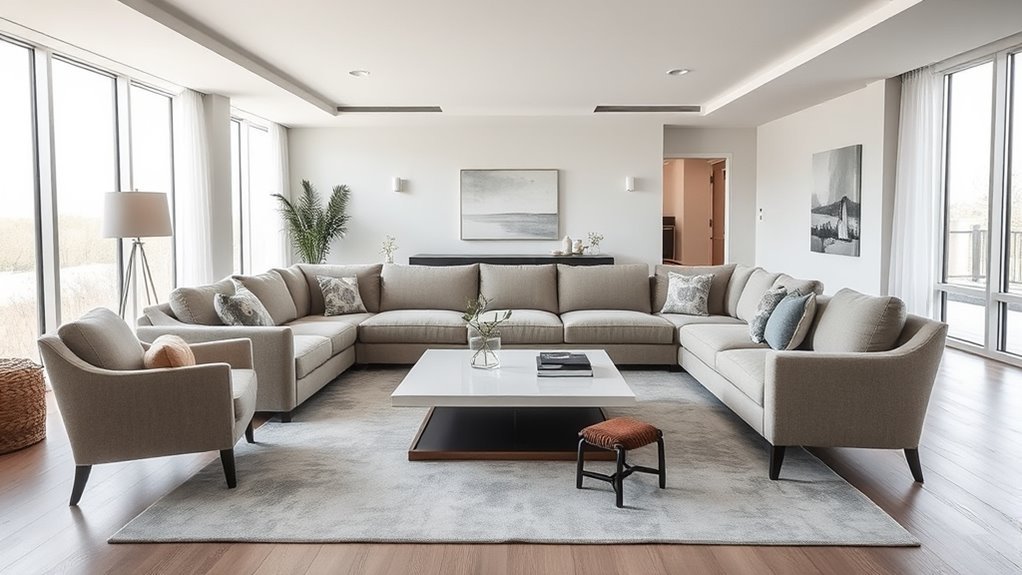
A balanced room does not have to be perfectly symmetrical. It simply needs visual weight distributed in a way that feels steady. If one side has a large sectional, the other side may need a pair of chairs, a tall lamp, or a substantial cabinet. If one wall has heavy built-ins, avoid placing all the remaining large pieces on the opposite wall unless the walkway still works.
- Place the largest seating piece first.
- Keep the main path clear before adding accent furniture.
- Use a rug to connect the seating pieces.
- Balance bulky furniture with lighter pieces on legs, glass, open bases, or slimmer profiles.
- Choose fewer large pieces instead of many small pieces when the room feels cluttered.
A room usually feels more spacious when the walking path is obvious, the rug anchors the furniture, and each major piece has room to breathe.
Common Mistakes to Avoid When Scaling Furniture
Most scale problems happen before furniture ever enters the room. They come from buying by eye, ignoring traffic flow, or choosing pieces one at a time instead of planning the whole layout.
Ignoring Room Dimensions
Buying a sofa without measuring the room is the fastest way to create a scale problem. Always compare the furniture dimensions with the wall length, walkway clearance, rug size, and delivery path.
Overlooking Clearance Space
A living room can look good in a photo and still feel frustrating if the clearances are too tight. Check the route from the entry to the sofa, from the sofa to the coffee table, from the seating area to the TV or fireplace, and from the living room to nearby rooms.
Misjudging Furniture Proportions
Scale problems are not always about a piece being too big. Furniture can also be too small. Tiny tables beside deep sofas, small rugs under large sectionals, and undersized artwork above wide furniture can make a room feel unfinished.
Forgetting the Delivery Path
Measure every doorway, hallway, elevator, stair landing, and turn before ordering large furniture. Check whether legs can be removed, whether the piece arrives boxed or assembled, and whether the delivery team needs extra clearance to rotate it.
Troubleshooting Furniture Scale Problems
If the room still feels off after measuring, use the problem you notice first to guide the fix.
- The room feels cramped: Reduce furniture depth, choose open-base pieces, remove extra accent chairs, or replace a large coffee table with nesting tables.
- The room feels empty: Add a larger rug, wider coffee table, taller lamp, larger artwork, or a second seating piece.
- The ceiling feels too high: Add tall curtains, vertical art, bookcases, floor lamps, or a large plant.
- The room feels narrow: Use slimmer arms, oval or round tables, and fewer pieces along the walking path.
- The furniture feels disconnected: Use a rug large enough to touch the front legs of the main seating pieces.
- The layout blocks conversation: Pull chairs closer, angle them toward the sofa, and keep the coffee table within reach.
Apps That Help You Check Furniture Scale
Room-planning apps can help you test scale before moving furniture or ordering online. IKEA Kreativ is IKEA’s free virtual room designer for trying IKEA products in realistic rooms or scans of your own space. Planner 5D lets you create a room layout, add doors and windows, drag in furniture, and preview the design in 3D.
Digital tools are helpful, but still confirm the final measurements with a tape measure. App models may not include every molding, radiator, outlet, stair angle, or delivery obstacle in your home.
Recommended Products

**Brighter Green Laser & 1/16" High Accuracy** – Equipped with advanced green beam laser technology, this laser measure is 4X brighter than standard red lasers, providing clearer visibility for indoor measuring, dim rooms, workshops, warehouses, and renovation projects. With up to 1/16-inch accuracy and a 330 ft measuring range, it helps contractors, remodelers, appraisers, and DIY users complete precise distance, area, volume, and layout measurements with confidence.


**Brighter Green Laser & 1/16" High Accuracy** – Equipped with advanced green beam laser technology, this laser measure is 4X brighter than standard red lasers, providing clearer visibility for indoor measuring, dim rooms, workshops, warehouses, and renovation projects. With up to 1/16-inch accuracy and a 200 ft measuring range, it helps contractors, remodelers, appraisers, and DIY users complete precise distance, area, volume, and layout measurements with confidence.
Essential Tips for Ensuring Your Furniture Fits Perfectly in Your Living Room
- Measure the room before shopping, not after finding a piece you love.
- Start with the sofa or sectional, then size everything else around it.
- Keep main walkways around 30–36 inches where possible.
- Use painter’s tape to test the real footprint.
- Choose a coffee table that is reachable but not in the way.
- Use a rug that anchors the seating area.
- Match side tables to the seat or arm height of nearby furniture.
- Balance low furniture with vertical elements such as curtains, lamps, plants, or art.
- Measure the delivery path before ordering.
- Take a photo of the taped layout from the doorway to judge balance more objectively.
Frequently Asked Questions
What is the 2/3 rule for living rooms?
The 2/3 rule is a design guideline that helps furniture feel balanced. For example, a sofa often looks right when it takes up about two-thirds of the wall or seating zone behind it, and artwork often looks balanced when it is about one-half to two-thirds the width of the furniture below. It is a starting point, not a strict requirement.
How much space should be between a sofa and coffee table?
In many living rooms, 16–18 inches between the sofa and coffee table works well. This keeps the table close enough for drinks and remotes while leaving enough room for knees and movement. In a very small room, a round, oval, or nesting table can make the spacing feel easier.
What is the 2/3 rule for couches?
For couches, the 2/3 rule usually means choosing a sofa that fills about two-thirds of the wall or furniture zone. This helps the sofa look substantial without overwhelming the room. Adjust the rule if you need space for side tables, door swings, floor lamps, or walkways.
How wide should living room walkways be?
Aim for 30–36 inches for main living-room walkways when possible. A 30-inch path can work in a tight room, but 36 inches usually feels easier and is a better target for accessibility-minded layouts. Keep the clearest path between doorways, seating, and nearby rooms.
Is there an app that helps you arrange furniture?
Yes. IKEA Kreativ lets you test IKEA products in realistic rooms or scans of your own space, while Planner 5D lets you build a 2D room plan and preview it in 3D. Use apps for planning, but confirm final dimensions with a tape measure before buying.
Conclusion
The best living room furniture scale comes from measuring first, choosing the largest pieces carefully, and protecting the paths people use every day. Use design rules like the 2/3 guideline as flexible starting points, not fixed laws. When your sofa, tables, rug, lighting, artwork, and walkways all relate to one another, the room feels more open, comfortable, and finished.
Sources
- U.S. Access Board — Chapter 4: Accessible Routes — supports the 36-inch clear-width accessibility benchmark.
- National Kitchen & Bath Association — Kitchen Planning Guidelines — supports walkway and seating-clearance recommendations.
- IKEA Kreativ — verifies IKEA’s current virtual room-design tool.
- Planner 5D Room Planner — verifies 2D/3D digital room-planning features.