
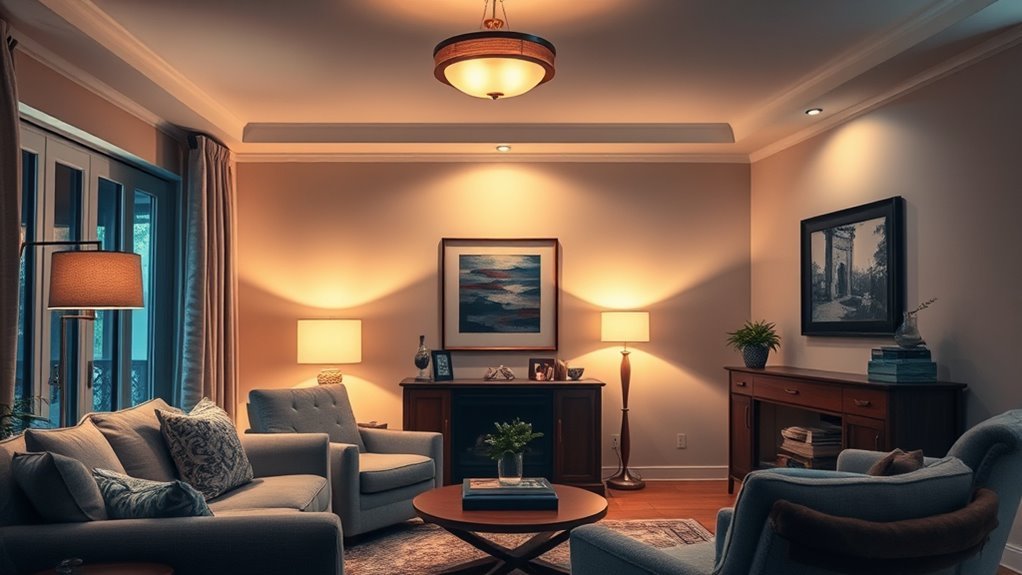
Layered living room lighting works best when every light has a job. Instead of relying on one bright ceiling fixture, build the room with three coordinated layers: ambient lighting for overall brightness, task lighting for reading or hobbies, and accent lighting for artwork, shelves, texture, and mood. The result is a room that feels comfortable at night, practical during daily use, and flexible enough for movie nights, hosting, or quiet reading.
Quick Answer
To layer living room lighting, start with soft ambient light, add task lamps where people read or work, then use accent lights to highlight artwork, shelves, plants, or architectural details. Choose warm bulbs around 2700K to 3000K, use dimmable LEDs when possible, and place lights at different heights to reduce shadows and glare.
Key Takeaways
- Use three layers: ambient lighting for overall glow, task lighting for specific activities, and accent lighting for depth and focal points.
- Choose bulbs by lumens, not watts, and look for warm color temperatures around 2700K to 3000K for a cozy living room feel.
- Put lamps and fixtures at different heights so the room does not look flat or shadowy.
- Use dimmable LED bulbs only with compatible dimmers, and check the fixture rating before changing bulbs.
At a Glance
| Time Required | 30 minutes for a lighting audit; 1 to 3 hours for basic lamp and bulb updates |
| Difficulty | Easy for lamps and bulbs; moderate if adding plug-in sconces or smart controls; hire a licensed electrician for hardwired fixtures |
| Tools Needed | Notepad, tape measure, dimmable LED bulbs, table lamps, floor lamps, plug-in sconces, smart plugs or smart bulbs, and optional picture lights |
| Cost | Budget updates can start with new bulbs or a lamp; larger upgrades cost more if you add sconces, dimmers, or hardwired ceiling fixtures |
Start With a Room-by-Room Lighting Plan
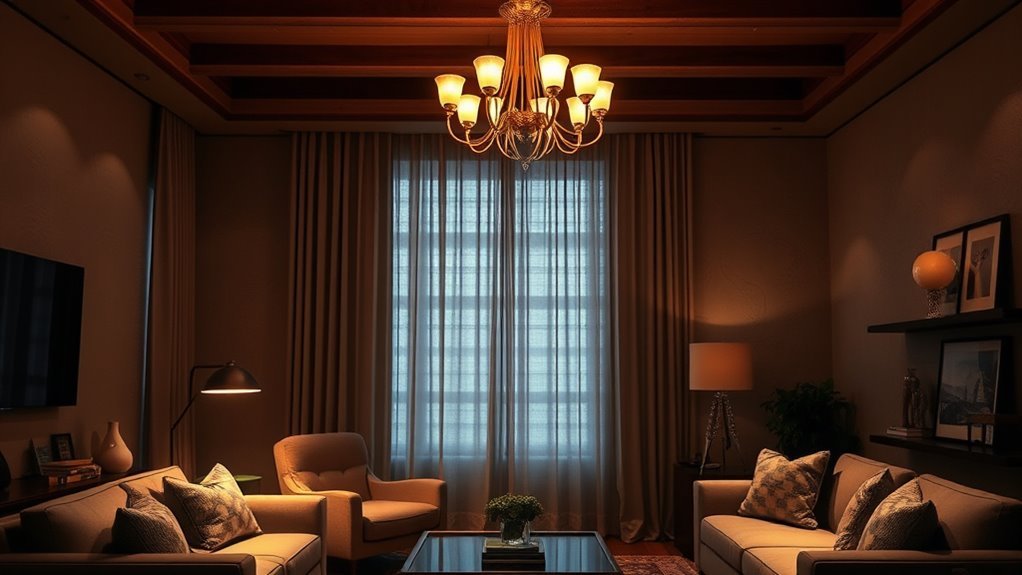
Before buying another lamp, walk through your living room at three times of day: morning, late afternoon, and evening. Notice where natural light helps, where shadows collect, and where the room feels too bright or too dim. This simple audit keeps you from solving every problem with one harsh overhead light.
Make a quick list of the room’s zones. Most living rooms have a sofa zone, a reading chair, a TV wall, a coffee table area, shelves, artwork, windows, and at least one dark corner. Each zone should have the right type of light for how it is used.
- Identify shadows: Look for corners, shelves, and seating areas that feel dull after sunset.
- Check glare: Sit on the sofa and look toward the TV, windows, shiny tables, mirrors, and framed art. If a bulb reflects into your eyes, it needs a shade, dimmer, lower output, or new position.
- Check bulb color: For a cozy living room, use warm white bulbs around 2700K to 3000K. If you need clearer task light, a slightly higher warm-neutral bulb can work in a reading lamp.
- Check brightness: Compare bulbs by lumens, not watts. Lumens tell you brightness; watts tell you energy use.
- Check switch control: Note which lights are controlled from the wall, which are controlled at the lamp, and which would be more convenient with smart plugs, smart bulbs, or dimmers.
Note: More light is not always better. A comfortable living room needs the right light in the right place, not maximum brightness everywhere.
The Three Layers of Lighting: Ambient, Task, and Accent
Layered lighting works because each layer solves a different problem. Ambient light helps you move around safely, task light supports close-up activities, and accent light adds shape, depth, and personality.
| Lighting Layer | What It Does | Good Living Room Examples |
|---|---|---|
| Ambient | Provides the room’s overall glow. | Ceiling fixtures, chandeliers, recessed lights, flush mounts, uplights, cove lighting. |
| Task | Adds focused light for reading, games, puzzles, writing, or hobbies. | Table lamps, adjustable floor lamps, swing-arm lamps, plug-in wall lamps. |
| Accent | Highlights features and creates visual interest. | Picture lights, wall sconces, LED strips, shelf lights, small spotlights. |
The goal is balance. If your living room has only a ceiling light, faces may look shadowed and the room can feel flat. If it has only lamps, corners may feel underlit. If it has only accent lighting, it may look stylish but not function well for daily life. The strongest rooms use all three layers together.
Step 1: Audit Your Current Lighting Setup
A successful lighting scheme starts with a thorough audit of your current setup. Stand in each corner, sit in every main seat, and turn lights on one at a time. This shows you what each fixture is actually doing.
- Map your dark spots: Mark the corners, shelves, and seating areas that still look dim after the main lights are on.
- Find harsh spots: Look for exposed bulbs, downlights directly over faces, and reflections on the TV or framed glass.
- Check color consistency: Mixing warm yellow bulbs with cool blue-white bulbs can make the room feel uneven. Keep most living room bulbs in the same warm range.
- Review lamp height: Seated eye level is a good guide. A lampshade should shield the bulb so you see the glow, not the bare bulb.
- Check outlets and cords: Plan lamp placement around safe outlet access. Avoid running cords through walkways.
Warning: Do not exceed the wattage rating printed on a fixture or lampshade label. Use bulbs approved for enclosed fixtures when required, and hire a licensed electrician for new hardwired fixtures, wall dimmers, or any wiring you are not trained to handle.
Step 2: Establish Ambient Lighting for Overall Illumination
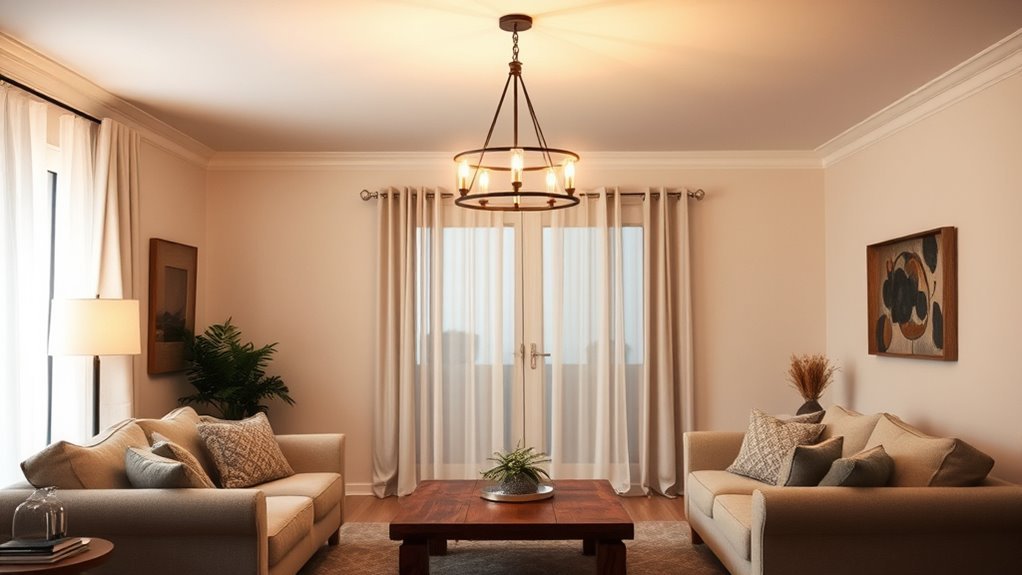
Ambient lighting is the foundation. It should make the room easy to navigate without making it feel washed out. Good ambient light often comes from a ceiling fixture, chandelier, recessed lights, flush mount, track lighting, or indirect uplighting from floor lamps.
If the room has one central ceiling fixture, use it as a base, not the whole plan. A single overhead light can create shadows under eyes, brows, shelves, and furniture. Balance it with side lighting from lamps or sconces so the room feels softer and more even.
For most living rooms, warm white light around 2700K to 3000K creates a relaxed atmosphere. Choose LED bulbs for frequently used fixtures because they use far less energy than traditional incandescent bulbs and are widely available in warm color temperatures. When buying bulbs, check the Lighting Facts label for brightness in lumens, light appearance in Kelvin, estimated yearly energy cost, and lifespan.
Pro Tip: If your living room feels gloomy even with the lights on, try adding one upward-facing floor lamp in a dark corner. Bouncing light off the ceiling can make the whole room feel taller and calmer.
Step 3: Add Task Lighting for Specific Activities
Task lighting makes the room useful. It gives you focused light exactly where you need it, without forcing the entire room to be bright. In a living room, task lighting usually belongs near seating, side tables, game tables, writing spots, or hobby areas.
- For reading: Place a floor lamp or table lamp beside the chair or sofa, slightly behind the shoulder of the reader.
- For games or puzzles: Use a shaded pendant, adjustable floor lamp, or pair of table lamps around the activity surface.
- For laptop work: Add a lamp that lights the tabletop without reflecting directly on the screen.
- For conversation: Keep task lights shaded and warm so people can see each other comfortably without glare.
Adjustable shades are especially helpful because they let you point light down toward a book or table instead of across the room. If a lamp is too bright, switch to a lower-lumen bulb, add a dimmer-compatible bulb, or use a shade with better diffusion.
Step 4: Incorporate Accent Lighting for Visual Interest
Accent lighting is what makes a living room feel finished. It brings attention to artwork, bookshelves, plants, stone, wood, alcoves, built-ins, or a fireplace wall. This layer is not usually meant to light the whole room. Its job is to create depth.
Highlight Artwork Elegantly
Accent lighting plays an essential role in highlighting artwork and turning it into a focal point. Picture lights, wall sconces, and small adjustable spotlights can all work well.
- Position picture lights or sconces so the light reaches the art evenly without shining into your eyes.
- Use warm bulbs around 2700K to 3000K for most living rooms so artwork does not look cold or harsh.
- Choose LED bulbs with good color rendering when accurate colors matter.
- Use dimmers or smart scenes so art lighting can be brighter while hosting and softer during movie night.
Create Focal Points
Every living room needs a few places where the eye naturally lands. Accent lighting can create those focal points without adding clutter. Try a small spotlight on a plant, LED strip lighting under floating shelves, or a pair of sconces flanking a fireplace.
| Accent Lighting Type | Best Use | Placement Tip |
|---|---|---|
| Wall sconces | Artwork, fireplace walls, hall openings, symmetry. | Use in pairs when you want a balanced, formal look. |
| Picture lights | Framed artwork and gallery walls. | Choose a width that suits the frame and keep glare off glass. |
| LED strips | Shelves, media cabinets, coves, and built-ins. | Hide the strip so you see the glow, not the dots. |
| Adjustable spotlights | Plants, sculpture, textured walls, architectural details. | Aim carefully so the beam lands on the object, not people’s eyes. |
| Plug-in uplights | Dark corners and large plants. | Place behind furniture or greenery for a soft background glow. |
Choosing the Best Lighting Fixtures and Bulbs for Your Living Room
The right fixture matters, but the bulb inside it matters just as much. A beautiful lamp with the wrong bulb can feel harsh, dim, blue, or glaring. Use the fixture for style and placement, then use the bulb specifications to control the light quality.
- Brightness: Shop by lumens. A higher lumen number means a brighter bulb. Use lower lumens for mood lamps and higher lumens for task lamps.
- Color temperature: Choose 2700K to 3000K for warm living room comfort. Use slightly clearer warm-neutral bulbs only where you need more visual clarity.
- Color rendering: Look for a CRI of 80 or higher for most indoor residential use. Higher CRI bulbs can make fabrics, art, wood tones, and paint colors look more natural.
- Dimmability: If a fixture is on a dimmer, choose bulbs labeled dimmable and confirm the dimmer is compatible with LED bulbs.
- Bulb shape and base: Match the bulb base, size, and fixture type. A bulb that is too tall, too wide, or not rated for the fixture can create heat, fit, or glare problems.
For a balanced living room, mix fixture types instead of repeating the same lamp everywhere. A strong plan might include a ceiling fixture for ambient light, a floor lamp beside the sofa, a table lamp on a side table, and shelf or picture lighting for accents.
The most comfortable living rooms do not use one bright source. They use several softer sources placed where people actually sit, walk, read, watch, and gather.
Recommended Products

[Smooth Dimmable] With stepless dimmable range from 800lm down to 10%, adjust LED light bulb brightness of your space according to preference; No buzz & No flicker, smooth and comfortable lighting experience

【Dimmable & Versatile】Smoothly adjust brightness with TRIAC dimmer compatibility. Tailor your lighting from soft to bright, ideal for relaxing evenings or task-focused environments. Not compatible with smart dimmers
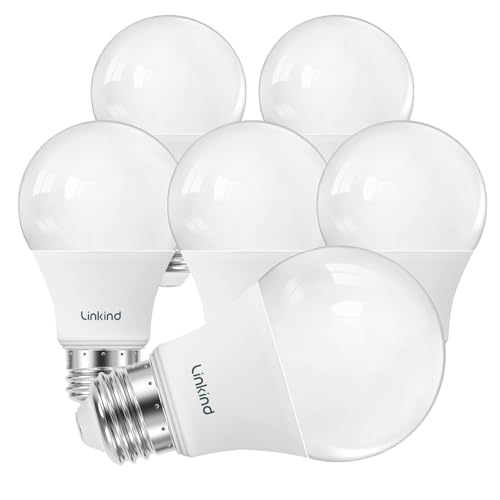
✔ 2700K WARM YELLOWISH LIGHT: The A19 dimmable LED light bulbs give off 800 lumens of 2700k cozy color light. Easy installation with the standard medium screw base E26. NOTE: Please confirm the Kelvin (K) value. This is the most accurate way to select your desired light color. This bulb is 2700K light, which produces a WARM YELLOWISH light. It is not a Bright White or Daylight White bulb. If you prefer a whiter light, please consider our 4000k Cool White or 5000K Daylight options.
Using Dimmers for Perfect Lighting Atmosphere
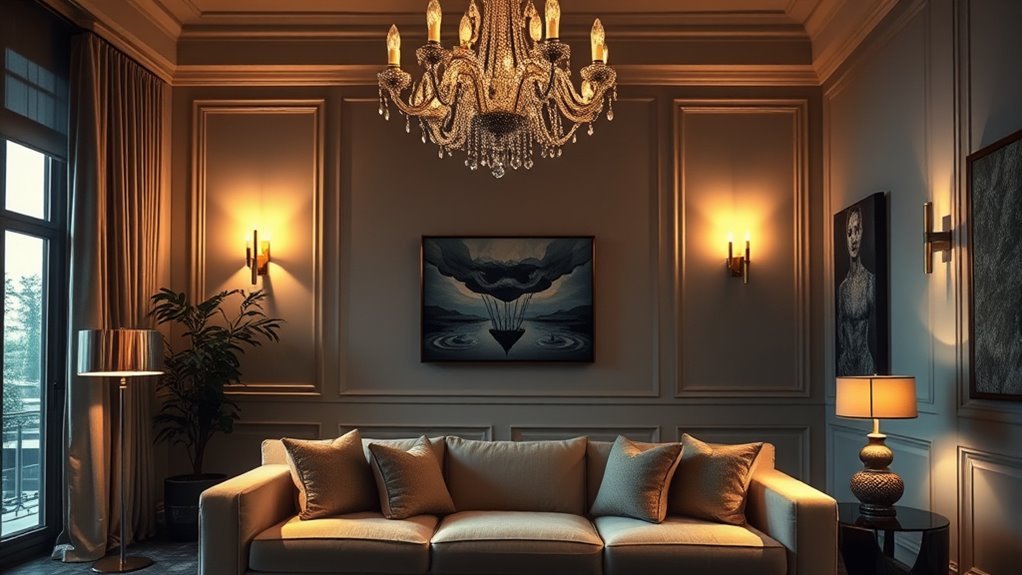
Dimmers make layered lighting more flexible. They let you lower the ceiling light for a movie, brighten task lighting for reading, or soften accent lighting in the evening. They also help one room serve several moods without changing fixtures.
| Lighting Type | Dimming Guidance |
|---|---|
| Incandescent | Usually dims smoothly, but uses much more energy than LED. |
| LED | Use bulbs labeled dimmable and pair them with an LED-compatible dimmer. |
| CFL | Only dim CFLs that are specifically labeled for dimming. |
| Halogen | Usually dims well but runs hotter and uses more energy than LED. |
| Smart bulbs | Dim through the app, voice assistant, or smart switch system recommended by the manufacturer. |
If lights flicker, buzz, pop on suddenly, or fail to dim smoothly, the bulb and dimmer may not be compatible. Replace the bulb with a dimmable LED from a reputable brand or upgrade the dimmer to one designed for LED loads.
Recommended Products
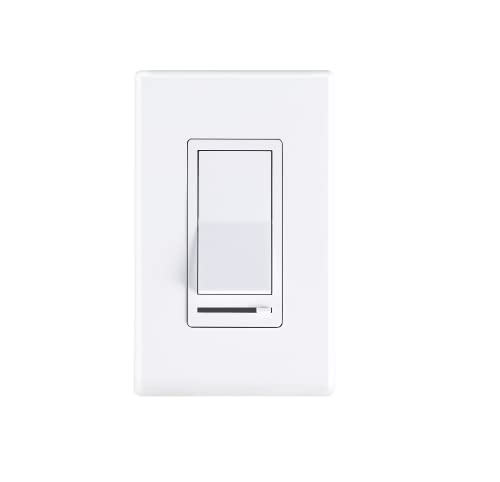
3-Way Single Pole Compatible Slide control dimmer.If UP is off(DOWN is on) after wiring, try switching around the two red wires to reverse the on/off direction

THE GOLD STANDARD IN DIMMING: Lutron’s advanced technology provides smooth LED dimming used for everyday light bulbs to reduce flicker, buzz, and delay to enhance comfort and ensures consistent dimmer switch reliability across LED lighting
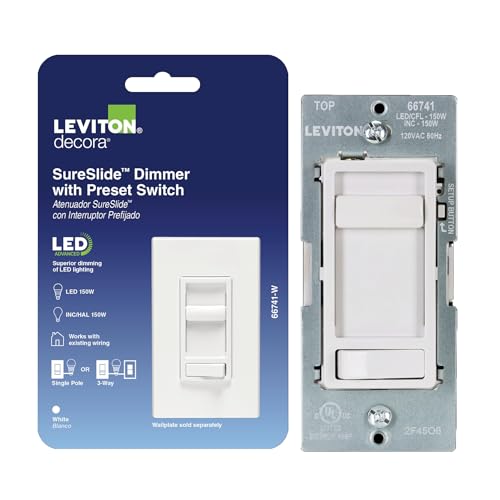
SET THE VIBE – SureSlide Dimmer Switch delivers smooth, reliable lighting control to adjust overhead lights—from bright task lighting to a soft ambient glow to create the perfect atmosphere
How to Use Smart Lighting Without Making the Room Complicated
Smart lighting can make layered lighting easier, especially when your living room has several lamps. The simplest setup is to put plug-in lamps on smart plugs or use smart bulbs in table and floor lamps. Then create scenes such as “Reading,” “Movie,” “Guests,” and “Evening.”
Keep smart lighting simple by grouping lights by purpose:
- Ambient group: ceiling fixture, uplight, or main lamps.
- Task group: reading lamp, game table lamp, or desk lamp.
- Accent group: shelf lights, picture lights, and LED strips.
For best results, use warm white scenes for relaxing and slightly brighter task scenes for reading or working. Avoid using strong saturated colors as your everyday living room light; they work better as occasional accents.
Recommended Products

ADD A SWITCH TO YOUR LAMPS: Avoid walking through a dark room to turn your lamps on or off. Simply plug the lamp into the lamp dimmer/switch and put the Pico remote at the entrance of the room. Perfect for bedrooms with nightstand lamps or living rooms that have lamps

Add a Wall Switch Anywhere without Wiring: Suraielec wireless wall switch and outlet receiver kit controls indoor lighting fixtures, plug-in pendants, lamps, and hard-to-reach appliances; no in-wall wiring, WiFi, or fixture replacement needed; an easy, economical solution for remote control of your lights

Stability Upgrade Quick Connection:Supports Bluetooth or WiFi connection.The improved WiFi technology let you quick connection and stay stable,no disconnection worries. Please keep the smart plug connected to your stable 2.4GHz network.(Note: Only 2.4Ghz WiFi)
Renter-Friendly Ways to Layer Living Room Lighting
You do not need a renovation to improve living room lighting. Renters can create a layered look with plug-in fixtures and portable lighting.
- Use plug-in wall sconces beside a sofa or reading chair.
- Add a floor lamp behind a sectional to brighten a dark corner.
- Place battery or rechargeable picture lights above artwork.
- Use LED strip lighting under shelves or inside media cabinets.
- Put lamps on smart plugs for easy scene control without rewiring.
- Choose warm bulbs with matching color temperatures so the room feels intentional.
The key is to hide cords carefully, avoid trip hazards, and use cord covers where a cord must run along a wall.
Common Living Room Lighting Mistakes to Avoid
Even beautiful rooms can feel uncomfortable when the lighting is off. Watch for these common mistakes:
- Using only one overhead light: This often creates shadows and a flat look.
- Ignoring task lighting: A cozy room still needs practical light for reading and hobbies.
- Mixing too many bulb colors: Warm and cool bulbs in the same room can make the design feel mismatched.
- Choosing bulbs by watts: Watts measure energy use. Lumens measure brightness.
- Leaving bare bulbs exposed: Use shades, diffusers, or frosted bulbs to reduce glare.
- Skipping dimmers: Full brightness all the time makes a living room less flexible.
- Forgetting the TV: Avoid placing bright bulbs where they reflect on the screen.
Frequently Asked Questions
What are the best color temperatures for living room lighting?
Warm white bulbs around 2700K to 3000K are usually best for living rooms because they feel soft, cozy, and flattering. For a reading lamp or hobby area, you can use a slightly clearer warm-neutral bulb, but avoid very cool daylight bulbs unless you need high-detail task light.
How can I integrate smart lighting into my living room?
Start with the lamps you use most often. Add smart bulbs or smart plugs to table lamps, floor lamps, and accent lights, then group them into scenes such as Reading, Movie, Guests, and Evening. Keep the color temperature warm for everyday use and reserve colored light for occasional accents.
What are the common mistakes in living room lighting?
The biggest mistakes are relying on one overhead fixture, using bulbs that are too cool or too bright, forgetting task lighting, exposing bare bulbs, and skipping dimmers. Another common issue is placing lights where they reflect on the TV, mirrors, or framed glass.
How do I choose the right height for light fixtures?
Use seated eye level as your guide for lamps. The shade should cover the bulb when you are sitting so the light feels soft, not glaring. For pendants or chandeliers, consider ceiling height, furniture placement, traffic paths, and whether the fixture blocks sight lines across the room.
Can I mix different lighting styles in my living room?
Yes. You can mix modern, vintage, rustic, or minimalist fixtures as long as they share a common thread, such as finish, shape, shade color, or bulb temperature. Keep the light color consistent and repeat at least one material or finish so the mix looks intentional.
How many lamps should a living room have?
Most living rooms need at least three to five light sources, depending on size and layout. A small room may need a ceiling fixture, one table lamp, one floor lamp, and one accent light. A large or open-plan room may need separate lighting zones for seating, TV, reading, and display areas.
Should all living room bulbs match?
They do not need to be the same brand or brightness, but the color temperature should usually be consistent. For example, use warm white bulbs throughout the room, then vary the lumens based on purpose: lower lumens for mood, higher lumens for reading or detailed tasks.
Conclusion
Layering living room lighting is one of the fastest ways to make the room feel more comfortable and more useful. Start with a simple audit, build a warm ambient base, add task lights where people actually read or work, and finish with accent lights that highlight the best parts of the room. Choose bulbs by lumens, keep the color temperature warm, use dimmers safely, and place fixtures at different heights. With a balanced mix of ambient, task, and accent lighting, your living room will feel softer, smarter, and easier to enjoy every day.
Sources
- U.S. Department of Energy — Lighting Principles and Terms — backs up ambient, task, and accent lighting definitions, Kelvin guidance, glare, illumination, and CRI guidance.
- U.S. Department of Energy — Lumens and the Lighting Facts Label — backs up buying bulbs by lumens, not watts, and using package labels for brightness and light appearance.
- U.S. Department of Energy — Lighting Choices to Save You Money — backs up LED energy efficiency, LED availability, and lighting controls guidance.
- U.S. Department of Energy — Lighting Design — backs up matching light quality and quantity to function, using task lights where needed, and considering daylighting.
- U.S. Department of Energy — Lighting Controls — backs up dimmer use, LED dimmer compatibility, timers, sensors, and control guidance.
- Federal Trade Commission — Light Bulb Packaging Labels — backs up Lighting Facts labels and the difference between lumens and watts.



[…] Nordic Design Blog — How to layer living room lighting. Consulté le 03/09/2026 […]