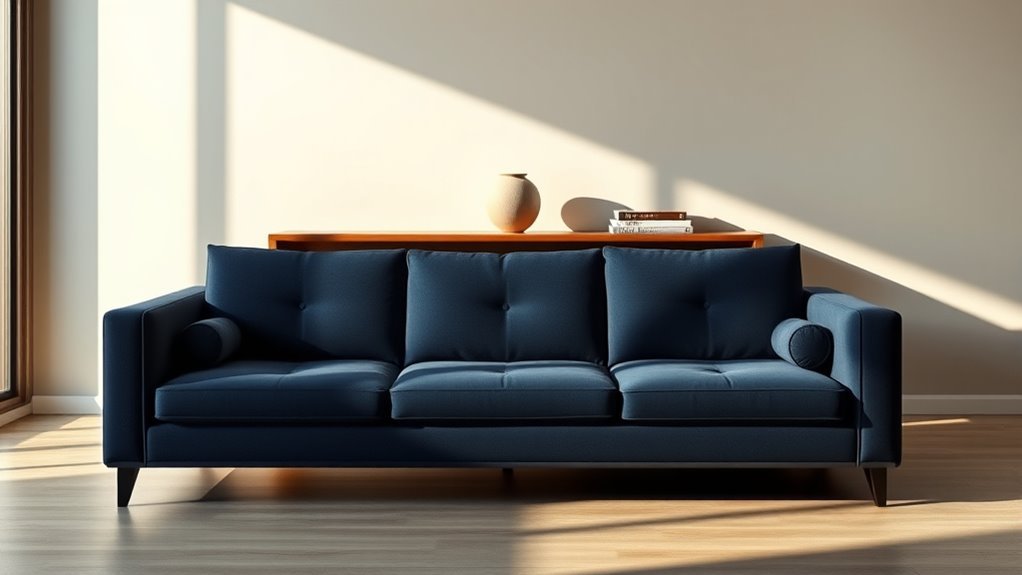
For most sofas, the best console table behind a sofa sits at or 1-2 inches below the sofa back, measures about two-thirds of the sofa length, and stays 10-15 inches deep when people walk behind it. If the table sits in dead space where nobody walks, a slightly deeper piece can work, but only after you map the footprint on the floor. Measure the fixed sofa frame, not loose cushions, before you buy.
Quick Answer
A console table behind a sofa should usually sit at sofa-back height or 1-2 inches lower. For length, choose about 50-75% of the sofa length, with two-thirds as the safest starting point. Keep the depth around 10-15 inches in walkways, and leave 30-36 inches of clear path behind the table where people need to pass.
Key Takeaways
- Measure the sofa frame height, not the loose cushion height, before choosing a console table.
- Pick a table that sits at sofa-back height or 1-2 inches lower for the cleanest line.
- Use two-thirds of the sofa length as the safest starting point, then adjust within a 50-75% range.
- Keep table depth between 10-15 inches in active walkways.
- Leave 30-36 inches of open clearance where people need to walk behind the sofa.
What’s in This Article
- Console Table Size Cheat Sheet
- How to Measure Your Sofa for the Perfect Console Table Size
- What Should Be the Ideal Height for Your Console Table?
- What’s the Two-Thirds Rule for Your Console Table Length?
- Why Console Table Depth Matters for Your Space
- How to Choose a Console Table Based on Your Sofa Style
- How to Size a Console Table for Sectionals and Open Layouts
- Tips for Maintaining Walkway Clearance Behind Your Sofa
- How to Assess Your Lifestyle Needs for Console Tables
- Enhancing Your Living Space With Console Table Decor
- Common Mistakes to Avoid When Sizing a Console Table
- Sources and Measurement Notes
- Frequently Asked Questions
- Final Thoughts on Selecting the Right Console Table Size
Console Table Size Cheat Sheet
Use this quick sizing chart before you shop. It turns the main sofa-table rules into measurements you can check with a tape measure in under a minute.
| Measurement | Best Starting Point | How to Adjust It |
|---|---|---|
| Height | At sofa-back height or 1-2 inches lower | Use the fixed sofa frame, not loose cushions |
| Length | About two-thirds of sofa length | Stay within 50-75% for most rooms |
| Depth in a walkway | 10-15 inches | Choose 10-12 inches if the path is tight |
| Depth in unused space | 12-20 inches | Use only when the table does not block traffic |
| Clear walking path | 30-36 inches | Measure from the table edge to the next obstacle |
Recommended Products

Note: Total Length: 78.8 inches — Made by combining two 39.4-inch sofa tables.

【Make Narrow Spaces Useful Again】 Designed for tight spaces, this 5.9"-wide slim behind couch table fits neatly into small gaps and brings extra order to your living room. Great for placing your phone, drinks, or a small lamp—keeping essentials within reach without taking up extra space.

Adjustable Height for Flexible Use: Easily raise or lower the tabletop to your preferred height—perfect for standing, sitting, or switching between tasks. Ideal for work-from-home setups, casual dining, or as a flexible space behind your sofa.
How to Measure Your Sofa for the Perfect Console Table Size
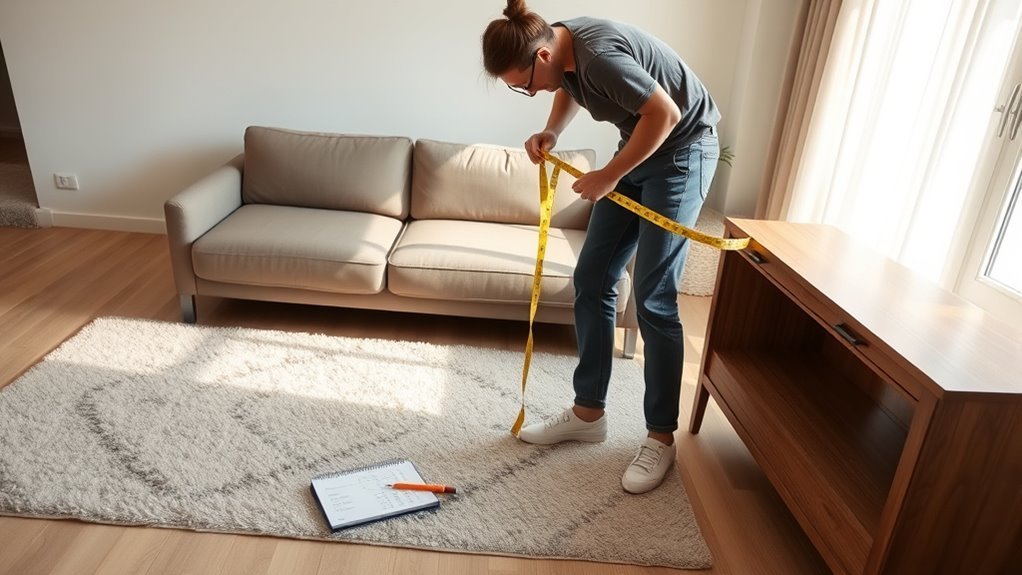
Start with the sofa height because it controls the whole arrangement. Measure from the floor to the top of the fixed sofa frame, and don’t include loose back cushions. Your console table should sit at that height or 1-2 inches lower.
Next, measure the full sofa length. Choose a console table that spans about 50-75% of that length for visual balance. For example, a 90-inch sofa often pairs well with a 54- to 60-inch console table, while 45-67 inches is the wider usable range.
Then measure the space behind the sofa. Tape the planned table footprint on the floor, including depth, side overhang, and walking space. Aim for 10-15 inches of table depth in active pathways, and keep 30-36 inches of open walkway clearance where people need to pass.
What Should Be the Ideal Height for Your Console Table?
The ideal console table height should line up with the sofa back or sit slightly below it. Most standard sofas work best with tables between 28 and 32 inches tall. This height keeps the table useful without blocking sightlines.
If your sofa has a low back, a table that is a couple of inches taller can still work, but it needs to look intentional from the seating area and the walkway. For the safest look, keep the table 1-2 inches lower than the sofa back. That small height gap helps the sofa and table feel connected.
Pro tip: Measure the sofa frame before shopping, then bring that number with you so you don’t guess in the store.
Recommended Products
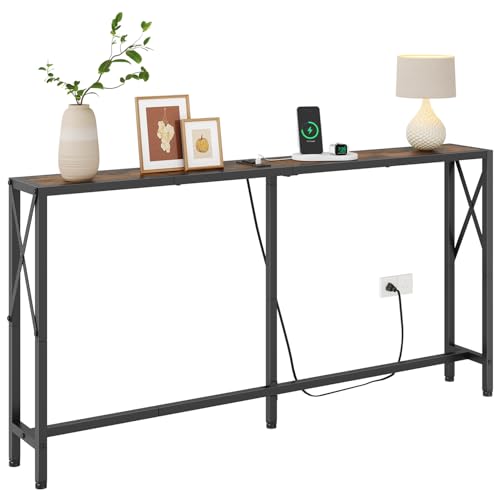
Sofa Table With Charging Station: We know what you need, the sofa table is equipped with 2 outlets, 2 USB ports and 78-inch power cord. In addition, you can place the power strip where you like by adjusting the tabletop section. Let your mobile phone, laptop, lamp and other electronic devices charge in an orderly manner

Adjustable Height 24" to 36": This sofa table adjusts in 1-inch increments with clear height markings, helping you match the tabletop to low, standard, or taller sofas without guesswork.

Behind Couch Table with Outlets: The narrow console table comes with built-in 2 plug outlets, 1 USB ports, 1 Type-c Ports and a 59" long power cord. With all the functions required for charging, the skinny sofa table is suitable for your mobile phone, laptop, desk lamps or tablets
What’s the Two-Thirds Rule for Your Console Table Length?
The two-thirds rule says your console table should measure about two-thirds of your sofa length. For a 90-inch sofa, that points to a table around 60 inches long. This rule gives the table enough presence without making it compete with the sofa.
Use the two-thirds rule as your starting point, not a hard command. A table closer to 50% can work in a compact room, while a table near 75% can work behind a long sofa in an open plan. Avoid tables longer than the sofa because they usually make the furniture line look awkward.
Recommended Products

Multifunctional Console Table: This slim console table can be a console, a couch table behind sofa or a display stand, changeable and versatile. The thick and textured style can work well with various scenes. Whether it is placed at the entrance, in the living room, in the corridor or in the dining room, this industrial narrow console table shows unique charm and improves the quality of your home decoration as a whole

Premium E1 MDF Material - Crafted with high-grade E1 MDF material that meets green sustainable development standards, safe for family daily use. Featured with delicate natural oak wood grain on the surface, restoring original natural texture to bring a warm, close-to-nature home vibe
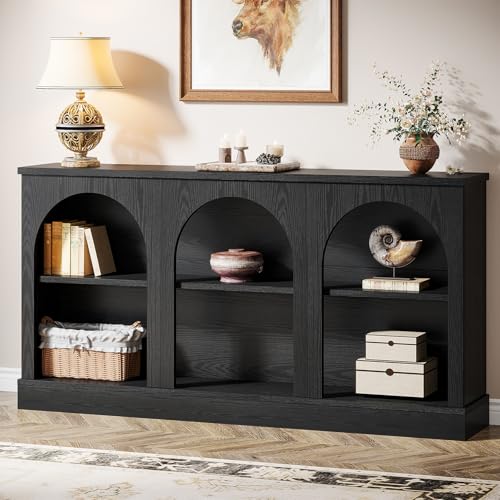
Spacious Storage Space: With an expansive top surface measuring 62.99" W x 11.81" D, this console sofa table is every decorator's fantasy. It provides ample space to exhibit your prized collectibles and decorative pieces. The additional lower shelving offers more room to organize and display your treasures, keeping daily essentials neatly stowed.
Why Console Table Depth Matters for Your Space
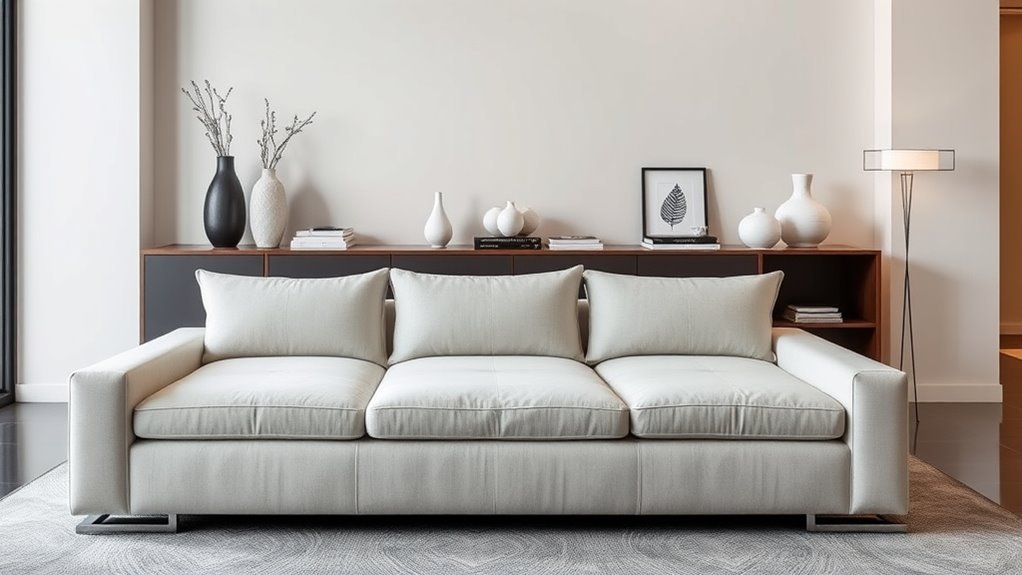
Console table depth affects both style and movement. A shallow table keeps the room open, while a deeper table gives you more surface space. The best depth depends on whether people walk behind the sofa.
Optimal Walkway Clearance
Keep 30-36 inches of open clearance behind the sofa and console table where people walk often. This spacing helps guests move through the room without squeezing past furniture. In tight rooms, choose a table closer to 10 inches deep.
For small decor items, a 10-12 inch depth often works well. For lamps, trays, or drinks, choose 14-15 inches if the walkway still feels open. Avoid tables deeper than 15 inches in busy walkways because they can make the room feel tight.
Visual Balance Consideration
A depth of 10-15 inches gives most rooms the right mix of function and balance. Slim tables help small rooms feel more open. Deeper tables can work in larger spaces because they add utility without crowding the sofa.
Match the depth to the scale of the room. A bulky table behind a slim sofa can feel heavy, while a tiny table behind a large sofa can look lost. The best choice supports the sofa instead of pulling attention away from it.
Functional Use Assessment
Think about what you want the console table to hold each day. If you only need space for a vase, books, or a small tray, choose a slimmer table. If you want lamps, drinks, or storage baskets, choose a deeper design.
Depth also affects safety and comfort. Sharp corners and crowded walkways make the area harder to use. Choose rounded corners or a narrower table if kids, pets, or guests move through the space often.
How to Choose a Console Table Based on Your Sofa Style
Your sofa style should guide the shape, size, and visual weight of the console table. Traditional sofas often pair well with longer tables that measure 50-75% of the sofa length. Wood, turned legs, or simple drawers can match that classic look.
Modern sofas usually work better with clean, narrow console tables. A slim metal, glass, or simple wood table supports the sofa without making the area feel busy. Low-profile sofas can handle slightly taller tables, but the table should still sit close to the sofa back height.
For sectionals, measure only the straight section where the table will sit. Don’t measure the full sectional unless the table will run behind the entire back. This keeps the console table sized to the actual placement.
How to Size a Console Table for Sectionals and Open Layouts
Sectionals and open layouts need a more careful fit because the sofa often defines the room. Place the console table behind the longest straight back, not behind the chaise or angled section. This keeps the table useful and visually grounded.
In an open floor plan, use the console table to mark the edge of the seating area. Choose a table long enough to feel intentional, but keep the walkway clear. A narrow table with drawers or a lower shelf can add storage without closing off the room.
Tips for Maintaining Walkway Clearance Behind Your Sofa
Good walkway clearance keeps the room easy to use. Aim for 30-36 inches between the back edge of the console table and the next wall, cabinet, or furniture piece. This gives people room to walk without turning sideways.
Keep the console table depth between 10 and 15 inches when the space behind the sofa is part of a route. After parties or room changes, check the area again. Chairs, baskets, and decor can shift into the walkway and make the path feel tight.
Optimal Clearance Dimensions
For the best fit, leave a small working gap between the sofa and console table. A 1-3 inch gap works in tight rooms, while 4-6 inches gives you more room for cleaning. You usually don’t need a 6-12 inch gap unless the room has extra depth.
Use this quick guide when you plan the layout:
| Layout Need | Recommended Measurement |
|---|---|
| Walkway clearance | 30-36 inches |
| Console table depth in a walkway | 10-15 inches |
| Gap between sofa and table | 1-3 inches tight, 4-6 inches for easier cleaning |
Avoiding Pathway Obstructions
Keep the area behind the sofa clear of baskets, cords, and oversized decor. A console table should help organize the room, not create a new obstacle. Use trays, small lamps, and low-profile decor to keep the surface neat.
If the walkway feels tight, choose a slimmer table before you move the sofa. A 10-inch-deep table can still hold keys, books, and small decor. It also helps the space feel open.
How to Assess Your Lifestyle Needs for Console Tables
Your lifestyle should shape the table you choose. If you entertain often, choose a table with enough depth for drinks, lamps, or serving trays. If you prefer a clean look, choose a narrow table with simple decor.
Think through these needs before you buy:
- Choose durable materials if you have kids or pets.
- Use drawers or shelves if you need hidden storage.
- Pick a slim table if the walkway feels narrow.
- Match the finish to nearby furniture for a cohesive room.
Enhancing Your Living Space With Console Table Decor
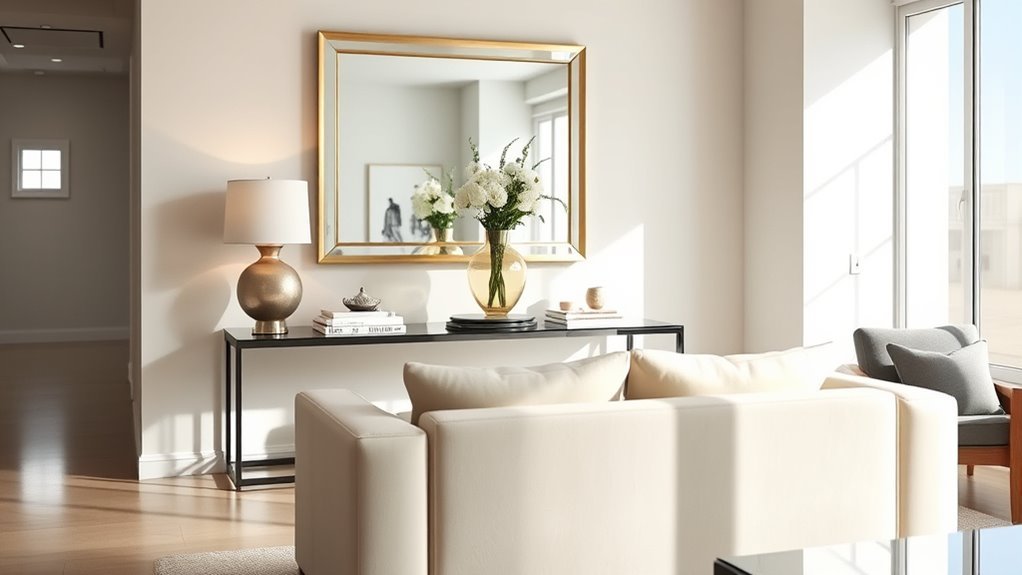
Decor can turn a console table into a strong focal point. Start with a lamp, vase, framed art, or stack of books. Then add one smaller item to create height and contrast.
Keep the surface edited, not empty. A tray can hold remotes, candles, or keys while keeping the table tidy. Group decor in odd numbers for a natural look, but leave enough open space so the table still feels calm.
Common Mistakes to Avoid When Sizing a Console Table
The most common mistakes come from guessing instead of measuring. A table that sits too high can block the sofa and look top-heavy. A table that sits too low can look disconnected from the sofa.
Length and depth matter just as much. A short table can look like an afterthought, while a deep table can block the walkway. Measure first, then choose a style that fits those limits.
Ignoring Height Guidelines
Don’t include cushion height when you measure the sofa. Cushions compress and shift, so they can give you a false number. Measure the fixed back frame instead.
A console table 1-2 inches lower than the sofa back usually looks best. This height keeps sightlines clear and gives the arrangement a relaxed feel. It also prevents lamps and decor from towering over the seating area.
Overlooking Length Proportions
Many people choose a console table that looks good alone but not behind the sofa. Use the sofa length as your starting point. A table that measures 50-75% of the sofa length usually feels proportional.
For a 90-inch sofa, look for a table between about 45 and 67 inches long. The two-thirds rule points you toward about 60 inches. Use the shorter end in small rooms and the longer end in spacious rooms.
Sources and Measurement Notes
This guide uses common interior-design measurement rules and adapts them to behind-sofa console tables. For height and length, designer guidance often recommends a console at the same height or a few inches lower than the sofa back and at least two-thirds of the sofa length. For traffic flow, layout guidance commonly uses about 3 feet of walkway clearance.
- Emily Henderson Design recommends keeping a sofa console the same height or a few inches shorter than the sofa back.
- Emily Henderson Design also uses at least two-thirds of the sofa length as a starting point.
- Good Housekeeping cites designer advice to leave at least three feet for walkways in living room layouts.
Frequently Asked Questions
How Big Should a Console Table Behind a Couch Be?
A console table behind a couch should usually sit at sofa-back height or 1-2 inches lower. It should measure about 50-75% of the sofa length and stay 10-15 inches deep in active walkways. These measurements create balance while keeping the walkway clear.
What Size Console Table Works for a 90-Inch Sofa?
For a 90-inch sofa, a 60-inch console table is the safest starting point because it follows the two-thirds rule. You can usually adjust within about 45-67 inches based on room size, sofa style, and walkway clearance.
What Is the 2/3 Couch Rule?
The 2/3 couch rule means your console table should measure about two-thirds of your couch length. For a 90-inch couch, that points to a table around 60 inches long. You can adjust slightly based on room size and traffic flow.
Should You Put a Console Table Behind a Sofa?
Yes, a console table behind a sofa can add storage, lighting, and style. It works especially well when the sofa floats in an open room. Make sure the table fits the sofa height and leaves enough space to walk behind it.
Can a Console Table Be Taller Than a Sofa?
A console table can be slightly taller than a low sofa, but it should not tower over the back. As a safe rule, keep it at sofa-back height or 1-2 inches lower. If you go taller, stay within a couple of inches and check that it does not block sightlines.
How Far Should a Console Table Sit From the Sofa?
A 1-3 inch gap between the sofa and console table usually works in tight layouts. Leave 4-6 inches if you want easier cleaning access. In very narrow rooms, the table can sit closer as long as it does not rub the sofa fabric.
Is a Sofa Table the Same as a Console Table?
People often use the terms sofa table and console table interchangeably. A sofa table usually sits behind a sofa, while a console table can also work in an entryway, hallway, or dining area. For this guide, the sizing rules focus on console tables placed behind sofas.
Final Thoughts on Selecting the Right Console Table Size
The right console table should support your sofa, not fight with it. Start with three numbers: sofa back height, sofa length, and available walkway space. Then choose a table that sits close to sofa-back height, spans about two-thirds of its length, and stays 10-15 inches deep in active walkways.
Before you buy, tape the table footprint on the floor and walk around the sofa once. If the path feels clear and the table line sits below the sofa back, the size will usually feel balanced. Add a lamp, tray, or greenery, then leave some open space so your living room stays polished and easy to use.