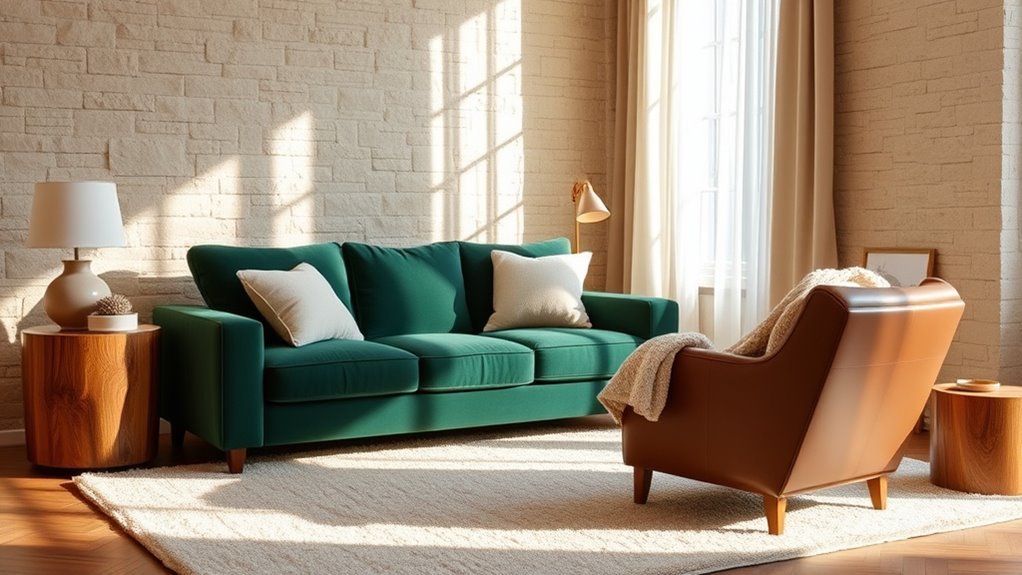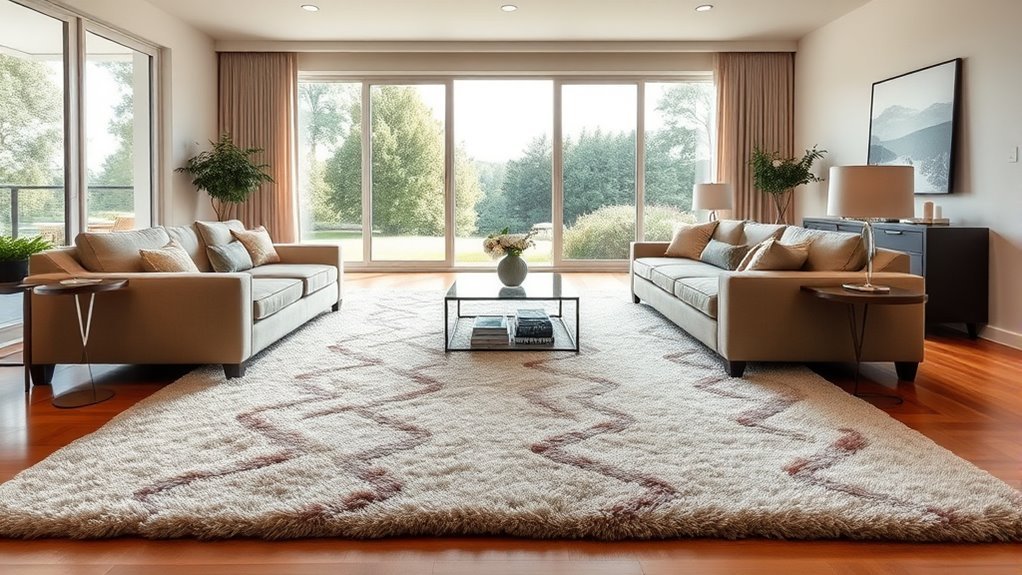
Choosing the right living room rug size and placement is one of the fastest ways to make a seating area feel finished. The best rug is usually large enough to connect your sofa, chairs, and coffee table, while still leaving enough visible floor around the room for balance and easy movement.
Quick Answer
For most living rooms, choose an 8×10 or 9×12 rug and place at least the front legs of the sofa and chairs on it. Use a 6×9 rug for compact seating areas and a 10×14 rug for large rooms where all furniture can sit fully on the rug.
Key Takeaways
- A rug should usually be large enough for all furniture legs or at least the front legs of the main seating pieces to rest on it.
- Use painter’s tape before buying so you can see how a 6×9, 8×10, 9×12, or 10×14 rug will fit your exact layout.
- Leave visible floor around the rug instead of pushing it wall-to-wall; in many rooms, 12 to 24 inches of border looks balanced.
- A rug pad helps keep the rug stable, adds comfort, and protects both the rug and the floor underneath.
At a Glance
| Time Required | 15 to 30 minutes to measure, tape, and compare sizes |
| Difficulty | Easy |
| Tools Needed | Steel measuring tape, painter’s tape, notebook, and your furniture measurements |
| Cost | Free to plan; rug and rug pad costs vary by size, material, construction, and retailer |
Understanding the Importance of Rug Size in Living Rooms
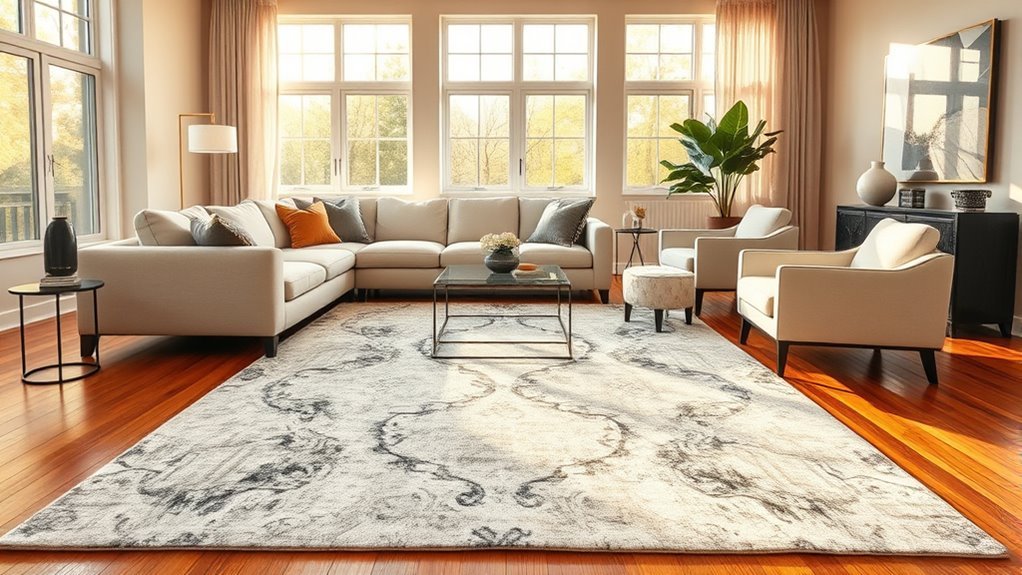
When it comes to decorating your living room, the right rug size does more than add color or softness. It defines the seating zone, makes furniture feel connected, and helps the room look intentional instead of scattered. A rug that is too small can make the furniture feel like it is floating around the room, while a larger rug can anchor the arrangement and make the space feel calmer.
As a practical rule, the rug should usually fit either all legs of the main furniture or at least the front legs of the sofa and chairs. Interior design sources commonly recommend this approach because it visually links the seating pieces and gives the living room a cohesive foundation. For more detailed expert guidance, see the placement advice from Architectural Digest and The Spruce.
In a compact living room, a 6×9 rug may be enough for a small seating group. In many average living rooms, an 8×10 or 9×12 rug gives better coverage. In a large living room or open-plan space, a 9×12 or 10×14 rug often works better because it can hold more of the furniture and clearly define the conversation area.
Measuring Your Living Room for the Perfect Rug Sizes
Before you shop, measure the room and the furniture layout. Rug size should be based on how the furniture sits, not just the wall-to-wall dimensions of the room.
Accurate Room Measurements
Use a steel measuring tape to measure the longest and widest parts of the living room. If the space is irregular, has a fireplace, bay window, built-ins, or angled walls, sketch the shape and note anything that affects the rug footprint. Also check door swings, floor vents, and walkways so the rug does not create bunching or block movement.
Furniture Layout Considerations
Next, measure the seating area itself: sofa width, chair placement, coffee table width, and the distance between furniture pieces. The best rug should extend beyond the main furniture enough to feel intentional. If your sofa is against a wall, the rug can slide under the front third of the sofa. If your sofa floats in the room, the rug should usually extend behind the sofa or be large enough to hold the whole seating arrangement.
Pro Tip: If you are deciding between two rug sizes and both fit your budget, the larger size is usually safer. A slightly larger rug can make the seating area feel connected, while a too-small rug often makes the room look chopped up.
Use the Painter’s Tape Test
Use blue painter’s tape to outline the rug size on the floor. Tape out a 6×9, 8×10, 9×12, or 10×14 rectangle, then walk around the room as you normally would. Make sure the taped rug does not cut awkwardly through walkways, stop short of chair legs, or crowd doors. This simple test is one of the easiest ways to avoid ordering the wrong size.
Best Rug Sizes for Your Room
The right rug size depends on the room, the furniture, and the effect you want. Use this chart as a starting point, then confirm with measurements.
| Rug Size | Best For | Placement Tip |
|---|---|---|
| 5×7 | Very small rooms, apartments, or coffee-table-only layouts | Center it under the coffee table; avoid using it if it looks disconnected from the sofa and chairs. |
| 6×9 | Small living rooms and compact seating areas | Works best when the front legs of a small sofa or chairs can touch the rug. |
| 8×10 | Average living rooms and standard sofas | A strong choice for front-legs-on placement with a sofa, chairs, and coffee table. |
| 9×12 | Medium to large rooms, sectionals, and larger seating groups | Often allows front legs or all legs of the main pieces to sit on the rug. |
| 10×14 | Large rooms and open-concept living areas | Best when you want all furniture legs on the rug and a clearly defined lounge zone. |
For a balanced look, many designers suggest leaving visible floor between the rug edge and the walls rather than covering the room wall-to-wall. In many living rooms, 12 to 24 inches of visible floor works well, but smaller rooms may need a narrower border.
Recommended Products

Ultra-Soft Low Pile Rug: Gent drizz living room rugs 8x10 made of Upgraded durable low pile faux wool fibers, 0.25'' thick, featuring a soft fuzzy density surface, soft and pliable to the touch, providing great comfort for your bare feet. The low pile makes it easy for your Large area rug to clean and is perfect for homes with kids and pets

Soft & Durable: This 8x10 area rug low-pile combines soft faux wool fibers with a 0.25-inch height for comfort. Tight weaving reduces shedding and edge fraying, making it perfect for high-traffic areas like living rooms, bedrooms, and entryways

Durable & Premium Quality: Crafted from soft faux wool and top-notch recycled polyester fibers, our area rugs 8x10 boast robust, meticulously hand-wrapped edges. So Lbris's living room rugs 8x10 offer not just long-lasting durability and resistance to shedding, but also unparalleled comfort, making them ideal for high-traffic spots like living rooms and bedrooms
Essential Placement Tips for Living Room Rugs
Placement matters as much as size. A good rug layout should support conversation, keep furniture balanced, and make the room easy to move through.
All Legs on the Rug
This is the most polished option for large rooms. The sofa, chairs, coffee table, and side tables all sit fully on the rug. Choose this layout when the room has enough space for a large rug and you want the seating area to feel complete and grounded.
Front Legs on the Rug
This is the most flexible layout for many living rooms. Place the front legs of the sofa and chairs on the rug, with the back legs off the rug. This creates a visual link between the pieces without requiring the largest possible rug.
Floating Rug Layout
A smaller rug can float under the coffee table only, but this works best in very compact spaces or layered layouts. Be careful with this option: if the rug is too small, it may look like an island rather than part of the seating area.
Warning: Thin rugs, curled corners, and rugs without pads can slide or bunch, especially on hard flooring. Use a properly sized rug pad, check that doors clear the rug, and flatten curled edges before the room is used.
Rug Placement for Sectionals and Open-Plan Rooms
Sectionals and open-plan rooms need extra attention because the rug often defines the whole living zone.
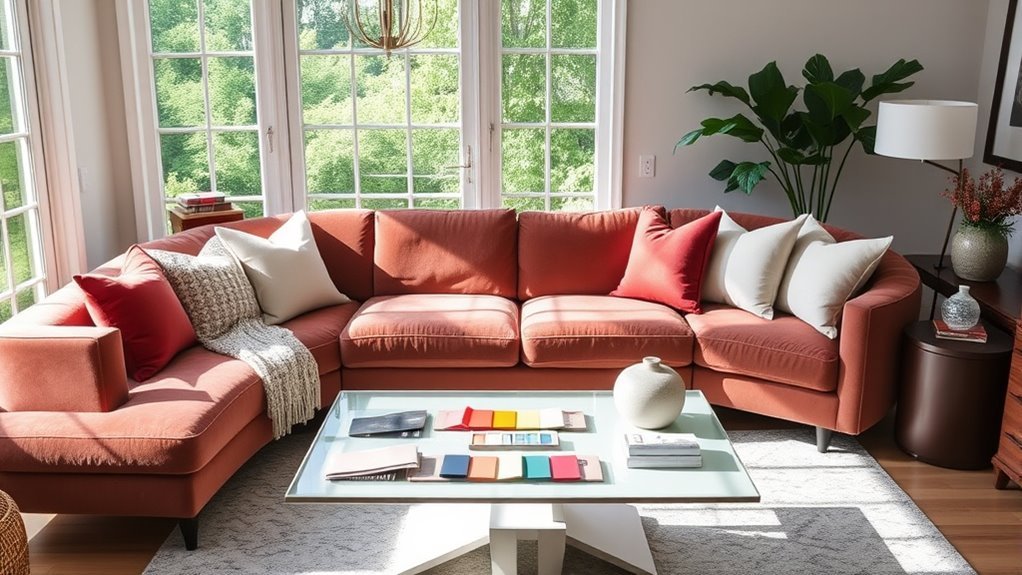
For a sectional, choose a rug that follows the shape of the seating area. An 8×10 can work for a smaller sectional, but a 9×12 or 10×14 usually looks more balanced with larger L-shaped or U-shaped sectionals. Try to keep the chaise or extended seat connected to the rug so it does not feel cut off.
In an open-plan living room, use the rug as a boundary. The rug should separate the lounge area from the dining area, kitchen, or walkway without blocking circulation. If you use more than one rug in the same open space, they do not have to match perfectly, but they should share at least one element, such as color family, texture, pattern style, or tone.
Recommended Products

[DURABLE QUALITY HANDMADE CONSTRUCTION]: Hand-knotted by skilled artisans for a truly unique textured look and feel

The handmade, hand-tufted construction adds durability to this rug, ensuring it will be a favorite for many years.
Standard vs. Custom Rugs: Which to Choose?
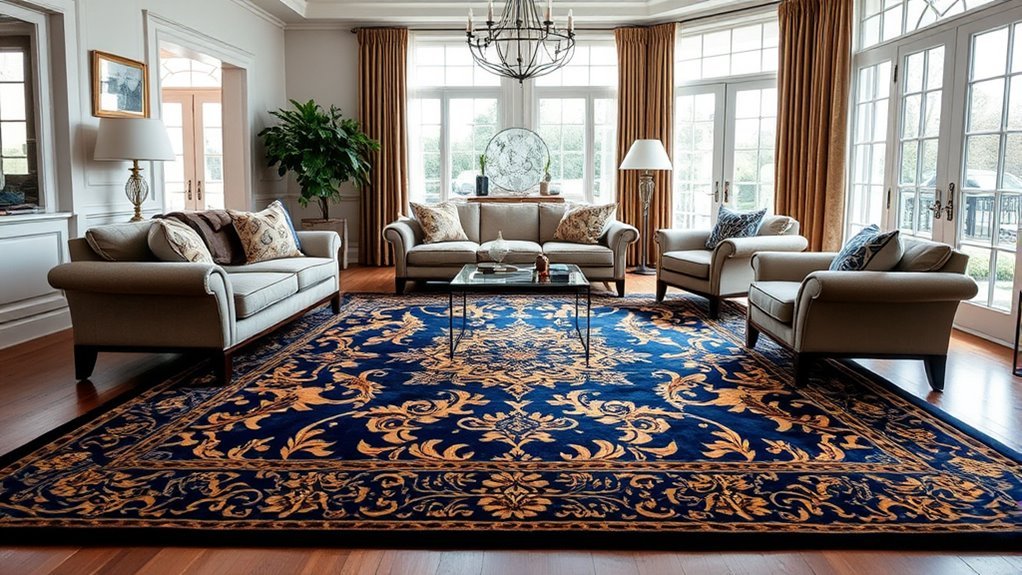
Standard rugs are easier to shop for and usually more affordable. Custom rugs are helpful when your room has unusual dimensions, built-ins, angled walls, or a furniture layout that falls between common sizes.
| Aspect | Standard Rugs | Custom Rugs |
|---|---|---|
| Sizing | Available in common dimensions such as 5×7, 6×9, 8×10, 9×12, and 10×14 | Made to fit exact room dimensions or unusual furniture layouts |
| Placement | Works well when your furniture fits a common layout | Useful when standard sizes leave awkward gaps or crowd walkways |
| Cost | Often more budget-friendly and faster to buy | Usually a higher investment because it is made to order |
| Style | Many ready-made colors, patterns, and materials are available | Gives more control over dimensions, border, material, and finish |
Choose a standard rug if one of the common sizes fits your seating area cleanly. Choose a custom rug if you have measured carefully and every standard size looks too narrow, too long, or poorly aligned with the room.
Visualizing Your Living Room Rug Placement
To visualize your rug before buying, map the rug footprint with painter’s tape and place the furniture where it will actually sit. Then check three things: whether the front legs of the furniture touch the rug, whether the coffee table feels centered, and whether the rug leaves comfortable walking paths.
You can also use a retailer’s “view in room” tool if available, but do not rely on digital previews alone. Always confirm the real measurements, especially if your living room is narrow, angled, open-concept, or connected to a doorway.
Note: Rug sizes are usually listed in feet, but the exact finished size can vary slightly by manufacturer. Check the product details before buying, especially when the rug must fit between built-ins, doors, or vents.
Enhancing Your Living Room’s Style With Color and Pattern
Once the size is right, color, pattern, texture, and pile height help the rug support the overall design. The goal is not to match every item perfectly. The goal is to make the rug feel connected to the sofa, walls, curtains, art, and accent pieces.
Choosing Complementary Color Schemes
Start with the colors already in the room. A neutral rug can calm a room with bold furniture, while a patterned rug can become the focal point in a simple space. If the room is small, low-contrast colors can help the space feel more open. If the room feels flat, a deeper or more colorful rug can add warmth and weight.
Mixing Patterns Effectively
When mixing patterns, vary the scale. Pair a large-scale rug pattern with smaller patterns on pillows or curtains, or use a subtle rug if the room already has busy upholstery. Keep at least one repeated color across the room so the mix looks intentional.
- Use a shared color palette: Repeat one or two colors from the rug in pillows, throws, art, or accessories.
- Balance bold and quiet pieces: Let either the rug or the furniture be the statement, not every item at once.
- Match pattern scale to the room: Large patterns can feel dramatic and cozy, while smaller patterns often feel softer and easier to layer.
Choosing the Right Material and Pile
Living rooms usually need a rug that can handle regular foot traffic. Low- to medium-pile rugs are often easier to vacuum and move furniture across. Wool is valued for durability and softness, while many synthetic fibers are chosen for stain resistance, affordability, and easy cleaning. High-pile or shag rugs can feel cozy, but they may be harder to clean under coffee tables and in busy family rooms.
Creating Visual Balance
For visual balance, look at the rug in relation to the sofa, walls, and room shape. A rug that mirrors the room’s shape usually feels natural: rectangular rugs for long rooms, square rugs for symmetrical seating areas, and round rugs only when they support the furniture layout. Avoid choosing a rug based on color alone if the size does not support the furniture.
Common Living Room Rug Mistakes to Avoid
A living room rug can be beautiful and still feel wrong if the scale or placement is off. Avoid these common mistakes before you buy.
- Buying too small: A small rug may save money, but it can make the furniture look disconnected.
- Ignoring walkways: The rug should define the seating area without cutting through the main walking path.
- Skipping the rug pad: A pad improves grip, comfort, and rug longevity.
- Forgetting door clearance: Check nearby doors so they do not catch or curl the rug.
- Choosing style before size: A beautiful rug in the wrong size will still look awkward.
- Over-layering: Layering can work, but too many small rugs can make the room feel cluttered.
Frequently Asked Questions
What is a good size rug for my living room?
A good rug size depends on the seating area. For many living rooms, an 8×10 or 9×12 rug works well because it can connect the sofa, chairs, and coffee table. Use a 6×9 for a compact room and a 10×14 for a large room or open-plan layout.
Should I get an 8×10 or 9×12 rug?
Choose an 8×10 rug if your living room is average-sized and you want the front legs of the sofa and chairs on the rug. Choose a 9×12 if you have a larger sofa, sectional, wider chair spacing, or enough room for more furniture legs to sit on the rug.
Is a 9×12 rug big?
Yes, a 9×12 rug is considered a generous living room size. It is often large enough for front-legs-on placement and may fit all legs of smaller chairs or tables, depending on the layout. It works especially well in medium to large living rooms.
Should I get a 5×7 or 8×10 rug?
Choose an 8×10 rug if your room can fit it because it will usually connect the furniture better. A 5×7 rug is best for very small rooms, coffee-table-only layouts, or layered looks. If the 5×7 does not touch any seating pieces, it may look too small.
How far should a rug go under a sofa?
At minimum, the rug should usually go under the front legs of the sofa. If the sofa floats away from the wall, a larger rug that extends behind the sofa can look more balanced. If the sofa is against a wall, the rug can sit under the front third of the sofa.
Do I need a rug pad in the living room?
Yes, a rug pad is a smart choice for most living rooms. It helps reduce slipping, adds cushioning, protects the floor, and can help the rug wear more evenly. Choose a pad made for your floor type and trim it so it stays hidden under the rug.
Conclusion
Selecting the perfect size and placement for your living room rug starts with measuring the seating area, not guessing from the room size alone. In most homes, the best rug is large enough to hold at least the front legs of the sofa and chairs, with enough visible floor around the edges for breathing room. Tape out the size first, choose a layout that fits your furniture, add a rug pad for stability, and then use color, pattern, and texture to create a living room that feels warm, balanced, and welcoming.
Sources
- Architectural Digest — expert rug-size rules for furniture placement, wall clearance, and painter’s tape visualization.
- The Spruce — guidance on all-legs-on and front-legs-on rug placement.
- The Spruce Rug Size Guide — common rug sizes for living rooms and other rooms.
- Southern Living — living room rug mistakes, size guidance, and rug pad recommendations.
- Better Homes & Gardens — common rug mistakes, painter’s tape testing, materials, and rug-pad advice.
- House Beautiful — expert guidance on rug sizing, placement, materials, and rug pads.