Disclosure: As an Amazon Associate, we earn from qualifying purchases. If you click a link on this page and make a purchase, we may receive a small commission at no extra cost to you.
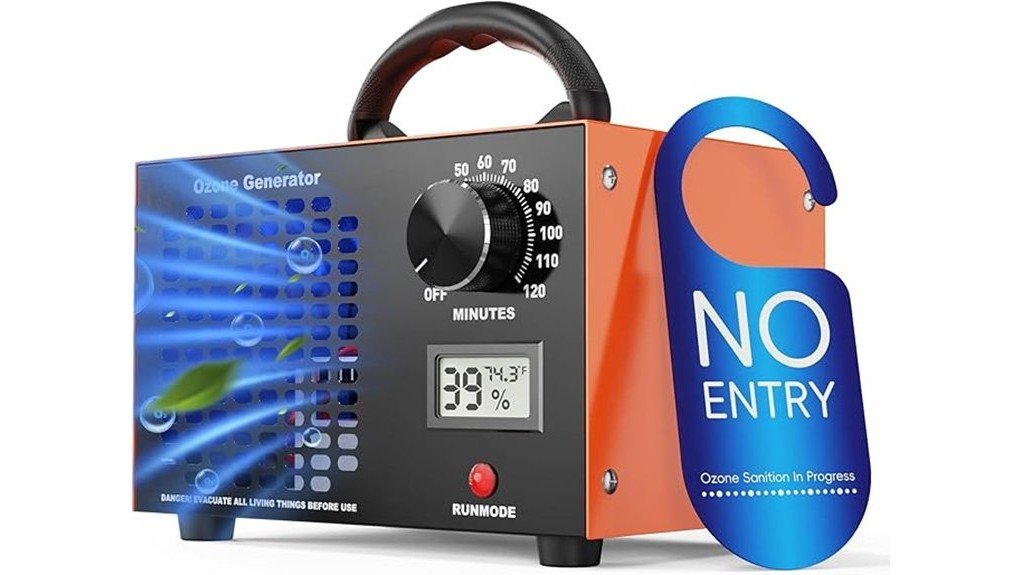
Stubborn smoke, pet, musty, or vehicle odors can remain even after you remove the obvious source, but an ozone generator is not a normal air purifier that you should run around people. The DDHTSAL SS-Y01 Ozone Generator is a high-output unit with a claimed maximum output of 120,000 mg/h, coverage up to 5,000 sq. ft., a 120-minute timer, and temperature and humidity display. Those features make it convenient for controlled treatment of unoccupied spaces, but the safety limits are just as important as the output rating. This review explains where the machine may make sense, where it does not, and what you should understand before using ozone indoors.
Quick Verdict
Rating: 7/10, Recommended with caveats
Best For: Controlled odor treatment in completely unoccupied cars, garages, basements, kitchens, and other enclosed spaces after the odor source has been addressed.
Bottom Line: The DDHTSAL SS-Y01 combines very high claimed ozone output with simple timer controls and useful temperature and humidity information. Its major tradeoff is that ozone is a respiratory irritant, so this is not an everyday occupied-space air cleaner and should be used only with strict safety precautions.
Key Specifications
| Specification | Detail |
|---|---|
| Brand | DDHTSAL |
| Model | SS-Y01 |
| Product type | Portable ozone generator |
| Maximum claimed ozone output | 120,000 mg/h |
| Claimed coverage | Up to 5,000 sq. ft. |
| Timer | Adjustable up to 120 minutes |
| Environmental display | Temperature and humidity |
| Approx. dimensions | 7.87 × 5.32 × 5.51 inches |
| Approx. weight | 3.31 lb. |
| Suggested applications | Cars, garages, kitchens, bathrooms, basements, boats, and other enclosed areas |
| Critical safety note | Operate only in an unoccupied space and ventilate thoroughly before reentry. |
Key Takeaways
- The DDHTSAL SS-Y01 has a manufacturer-claimed maximum ozone output of 120,000 mg/h and coverage up to 5,000 sq. ft.
- A 120-minute timer lets you start a treatment and leave the area instead of remaining near the running generator.
- The built-in display shows temperature and humidity, but it does not measure the actual ozone concentration in the room.
- The unit is meant for unoccupied-space odor treatment, not continuous air cleaning around people or pets.
- Ozone treatment should come after you remove or correct the odor source, such as smoke residue, pet waste, damp materials, or a moisture problem.
- The high-output design can also increase the consequences of incorrect use, so careful treatment time and post-treatment ventilation matter.
What Is the DDHTSAL SS-Y01 Ozone Generator?
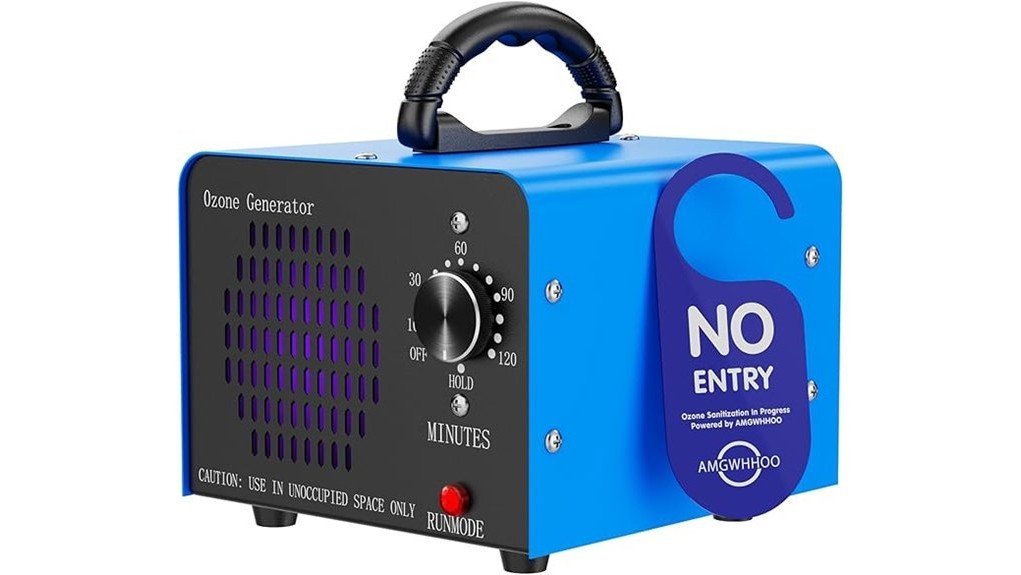
The DDHTSAL SS-Y01 is a portable ozone generator designed for treating odors in enclosed, unoccupied areas. Instead of trapping particles in a filter, it intentionally produces ozone, a reactive gas that can interact with some odor-causing compounds.
The standout specification is its claimed 120,000 mg/h maximum ozone output. The seller also markets the machine for spaces up to 5,000 sq. ft., although actual ozone concentration depends on room size, airflow, furnishings, ventilation, treatment time, and other conditions. You should treat the coverage figure as a manufacturer rating rather than proof that every 5,000-square-foot space needs the same runtime.
At about 7.87 × 5.32 × 5.51 inches and 3.31 pounds, the SS-Y01 is compact enough to move between a garage, basement, vehicle, or other treatment area. Its 120-minute timer and environmental display make the controls simple, but they do not remove the need for careful ozone safety.
Who Should Buy It?
Best For
- You have a stubborn odor in a space that can be completely vacated during treatment.
- You want a portable unit for occasional car, garage, basement, kitchen, or similar odor-treatment jobs.
- You understand that ozone treatment complements source removal and cleaning rather than replacing them.
Skip If
- You need an air cleaner that can operate safely while people or pets remain in the room.
- You mainly need dust, pollen, or particle filtration, which requires filtration rather than an ozone generator.
- You are trying to solve active mold, moisture, smoke residue, or another contamination source without first removing the underlying problem.
Before You Buy: This is not a HEPA-style air purifier for occupied rooms. Ozone can irritate the respiratory system, and a 120-minute timer or lack of ozone smell does not prove that a treated area is safe to reenter.
How Ozone Generators Work on Odor Problems
Ozone generators convert oxygen into ozone. Because ozone is highly reactive, it can interact with certain compounds associated with stubborn odors. That is why these machines are commonly marketed for smoke, pet, musty, vehicle, and similar odor-treatment jobs.
However, the effect should not be confused with conventional filtration. The SS-Y01 does not capture dust or pollen in a HEPA filter, and ozone does not remove the physical source of a smell. If a carpet contains pet contamination, a wall has smoke residue, or a basement has an active moisture problem, you still need to clean, remove, repair, or remediate that source.
The same reactivity that gives ozone its odor-treatment role creates its main limitation. High concentrations can irritate lungs and can react with indoor materials and chemicals. That makes controlled, unoccupied use essential.
120,000 mg/h Output and Coverage
The SS-Y01 is advertised with a maximum output of 120,000 mg/h, placing it among very high-output consumer ozone generators. The claimed coverage is up to 5,000 sq. ft., which may appeal if you need to treat larger enclosed areas instead of a small closet or single vehicle.
More output is not automatically better. Ozone concentration can rise faster in a small room, vehicle cabin, or tightly sealed space than it does in a large open area. Treatment time should therefore be based on the actual space and the manufacturer’s instructions rather than simply turning the unit to its maximum setting.
Timer and Controls
The adjustable timer runs for up to 120 minutes and then shuts the ozone generation cycle off. This is one of the most practical features because you should not remain inside the treatment area while the machine is producing ozone.
The timer is still only a time control. It is not an ozone sensor and cannot confirm that the concentration has fallen to a safe level after treatment. Ventilation and proper reentry procedures remain necessary after the machine stops.
Temperature and Humidity Display
The front display provides temperature and humidity information. That gives you useful environmental context and is more informative than a basic ozone generator with only a mechanical timer.
There is an important distinction, however: temperature and humidity readings do not tell you the room’s ozone concentration. You should not use the display as a substitute for following the product’s safety instructions or any professional ozone-monitoring procedures required for your application.
Pro Tip: Remove the odor source and complete normal cleaning before considering ozone treatment. Ozone is much less useful if contaminated carpet, spoiled material, smoke residue, pet waste, or excess moisture remains in place.
Best Spaces for Ozone Treatment
The SS-Y01 makes the most sense in enclosed areas that you can fully vacate and ventilate afterward. Suitable situations may include:
- Car interiors: for lingering odors after the source has been cleaned or removed.
- Garages: where stubborn odors remain after spills, stored materials, or other sources are addressed.
- Basements: for residual musty odor after moisture intrusion or damp materials have been corrected.
- Kitchens: for persistent cooking or smoke odors after surfaces and ventilation systems are cleaned.
- Bathrooms: only after leaks, damp materials, mildew sources, or ventilation problems are corrected.
- Boats and other enclosed spaces: when the area can be fully emptied of people and animals during treatment.
Do not treat the 5,000 sq. ft. rating as permission to use the same cycle length everywhere. A vehicle cabin, small bathroom, and large basement can reach very different ozone concentrations with the same machine.
How It Performs in Real Use
For Vehicle Odor Treatment
The compact 3.31-pound design makes the unit easy to carry to a car or other vehicle. This can be useful after you have removed the source of smoke, food, pet, or musty odors. Because a vehicle cabin has far less air volume than a large room, conservative use and thorough ventilation are especially important.
For Basements and Garages
The high claimed output gives the SS-Y01 more capacity than many low-output portable units. It may be useful when residual odors remain in a larger basement or garage. It should not, however, be used as a substitute for correcting water leaks, removing mold-damaged material, cleaning chemical spills, or improving ventilation.
For Kitchen and Household Odors
Cooking and smoke odors can cling to porous surfaces. Ozone treatment may be considered after normal cleaning, source control, and ventilation have been tried. Remove people and pets from the space before operation, and do not expose food to ozone unnecessarily.
For Occasional Versus Daily Use
This product makes more sense as an occasional treatment tool than as an everyday air-quality device. If you want continuous improvement while a room is occupied, ventilation, source control, and appropriate particle or activated-carbon filtration are generally more suitable approaches.
How to Use It Correctly
- Find and remove the odor source first. Cleaning or remediation should come before ozone treatment.
- Remove people and pets. Do not remain inside the treatment area while the generator is operating.
- Check the room carefully. Consider items that may be vulnerable to prolonged ozone exposure, including some rubber, wiring insulation, fabrics, plants, and sensitive materials.
- Position the generator securely. Keep its air openings unobstructed and use a stable surface.
- Choose the treatment time carefully. Follow the manufacturer’s instructions rather than assuming maximum output and maximum runtime are required.
- Leave the area before starting treatment. Use the timer so the machine can shut down without you entering the room during ozone generation.
- Ventilate after treatment. Open doors and windows and provide fresh-air exchange before normal occupancy resumes.
- Do not rely only on smell. The absence of a noticeable ozone odor does not by itself prove that the space is safe for reentry.
Safety and Ventilation
Safety is the most important part of owning this type of product. Ozone is a lung irritant, so the generator should be operated only in a fully unoccupied space. Keep people and pets away during treatment.
The seller’s instructions associated with this model call for opening doors and windows and ventilating the space after treatment. The original guidance mentions 30 to 60 minutes, but you should not interpret any fixed number of minutes as a universal guarantee of safe reentry. Ozone concentration depends on output, room volume, ventilation, surfaces, temperature, humidity, and treatment duration.
Ozone can also react with materials and indoor chemicals. Prolonged or repeated exposure may affect some rubber products, wire coatings, fabrics, dyes, plants, and other sensitive items. That makes a powerful 120,000 mg/h machine a tool that requires more caution, not less.
For professional restoration jobs or situations where you cannot confidently control exposure and reentry, consider professional guidance instead of relying only on the timer.
Cleaning and Maintenance
Keep the generator dry and free of heavy dust buildup, and make sure its air openings are not blocked. Unplug the unit before inspecting or cleaning it, and follow the product manual for any servicing of internal ozone plates or electrical parts.
The temperature and humidity display should also remain visible and undamaged so you can monitor environmental conditions. Do not assume that normal-looking temperature or humidity readings mean the ozone concentration is safe.
Pros and Cons
Pros
- Very high claimed maximum output of 120,000 mg/h.
- Manufacturer-rated coverage of up to 5,000 sq. ft.
- 120-minute timer supports unattended treatment after you leave the area.
- Temperature and humidity display provides useful environmental information.
- Compact 3.31-pound design is easy to move between treatment locations.
Cons
- Cannot be used as a normal air purifier around people or pets.
- The display measures temperature and humidity, not actual ozone concentration.
- High output increases the need for careful treatment time, ventilation, and reentry procedures.
What Buyer Feedback Suggests
The original review reports that buyers appreciate quick odor-treatment results and straightforward controls. Those comments are plausible for a machine with a mechanical timer and high claimed output, but odor results can vary widely depending on the source, room size, treatment time, and cleaning completed beforehand.
Specific Amazon star ratings and review totals are not repeated here because the direct Amazon review page was not available during this editorial verification. That avoids presenting a rating or review count that may have changed.
Is It Worth the Price?
The SS-Y01 is positioned as a consumer-level high-output ozone generator rather than a professionally monitored restoration system. Its strongest value points are the 120,000 mg/h claimed output, compact size, two-hour timer, and built-in temperature and humidity display.
It is worth considering if you specifically need occasional ozone treatment in spaces that can be emptied and ventilated afterward. It offers much less value if your actual goal is everyday air cleaning, particle removal, allergen filtration, or solving an active mold or moisture problem.
The main limitation is therefore not the feature list. It is the narrow range of situations where intentional ozone generation is appropriate and can be safely controlled.
How It Compares to Alternatives
If your main concern is dust, pollen, smoke particles, or everyday occupied-room air cleaning, a properly sized HEPA air purifier is a more appropriate category. For gaseous odors and volatile compounds, activated-carbon filtration combined with source removal and ventilation may also be more practical for routine use.
Professional odor or fire-restoration services are another alternative when contamination is severe or when ozone concentration and reentry need to be managed carefully. The DDHTSAL SS-Y01 makes the most sense when you specifically want a portable ozone-treatment device and fully understand its occupied-space limitations.
Frequently Asked Questions
Can you stay in the room while the DDHTSAL SS-Y01 is running?
No. This ozone generator should be operated only in an unoccupied space. People and pets should leave before ozone generation begins, and the space should be thoroughly ventilated before normal occupancy resumes.
Does the display measure ozone concentration?
No. The built-in display shows temperature and humidity. Those readings can help you understand room conditions, but they do not tell you how much ozone remains in the air.
Will this ozone generator remove mold?
You should not use ozone as a replacement for mold remediation. If mold or damp material is present, correct the moisture source and remove or clean contaminated materials using appropriate remediation methods before considering odor treatment.
Is the 120,000 mg/h setting suitable for every room?
No. That figure is the unit’s claimed maximum output, not a recommended dose for every space. A vehicle or small bathroom has much less air volume than a basement or garage, so treatment conditions can differ significantly.
Can you use it to remove smoke or pet odors?
Those are among the odor situations for which the unit is marketed. You should first clean or remove the actual smoke residue, pet contamination, or other odor source because ozone treatment does not replace physical cleaning.
How long should you ventilate the room after treatment?
The product guidance associated with this model mentions opening doors and windows and ventilating for 30 to 60 minutes. Treat that as product guidance rather than a universal guarantee because ozone levels can vary with room size, airflow, treatment time, furnishings, and other conditions.
Can ozone damage furniture or electronics?
Repeated or high ozone exposure can affect some materials, including certain rubber products, electrical wire coatings, fabrics, dyes, and other sensitive materials. Avoid unnecessary treatment time and follow the product instructions for the space you are treating.
Who should skip this ozone generator?
Skip it if you need a purifier that can run continuously around people or pets, or if you mainly need particle filtration. It is also a poor substitute for professional remediation when you have serious smoke damage, active mold, chemical contamination, or another unresolved source problem.
The Bottom Line
The DDHTSAL SS-Y01 is worth considering when you specifically need a high-output portable ozone generator for controlled treatment of a completely unoccupied area. Its 120,000 mg/h claimed output, 120-minute timer, compact size, and temperature/humidity display are useful strengths, but buyers who need everyday occupied-room air cleaning should choose a safer filtration-based solution instead.
Our verdict remains 7/10, Recommended with caveats: capable for the right odor-treatment job, but only when its safety limitations are taken seriously.