Disclosure: As an Amazon Associate, we earn from qualifying purchases. If you click a link on this page and make a purchase, we may receive a small commission at no extra cost to you.
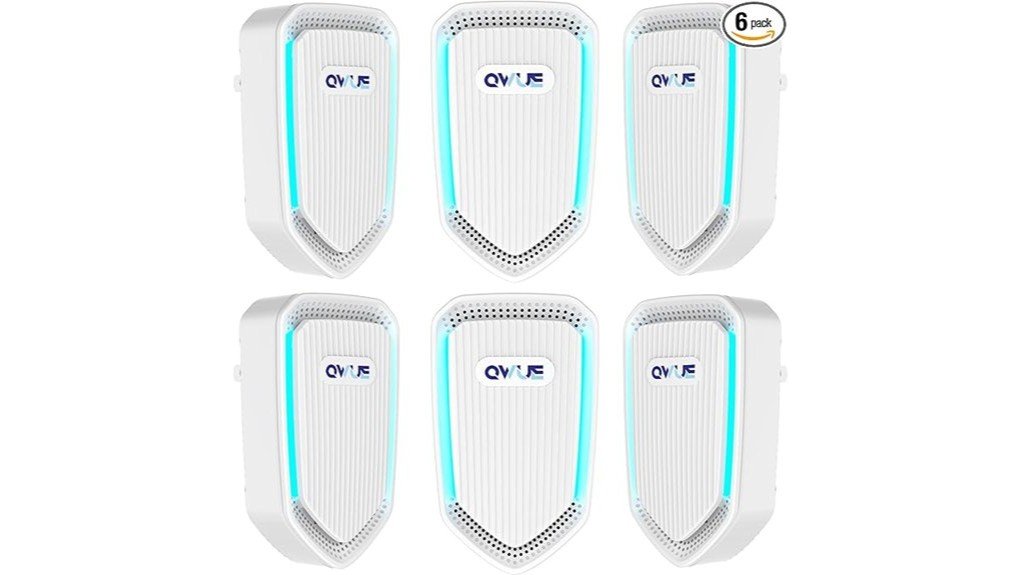
A small plug-in ionizer can look appealing when you want less equipment, no replacement filters, and one device for several rooms. The QWUE 6 Pack Plug In Air Purifiers, model PH01-6, gives you six compact negative-ion units that plug directly into AC outlets and are rated at just 2 watts. The main attraction is simple operation and low routine maintenance, but an ionizer works differently from a fan-driven HEPA purifier and should not be treated as a direct substitute. This review explains what the QWUE six-pack actually offers, where it makes sense, and the important ozone and performance questions you should consider before buying.
Quick Verdict
Rating: 5.5/10, Recommended with significant caveats
Best For: Buyers who specifically want a six-pack of compact, filterless plug-in ionizers and understand how ionization differs from mechanical filtration.
Bottom Line: The QWUE PH01-6 is compact, low-power, filter-free, and convenient for spreading several units around a home. Its main tradeoff is that important performance figures are inconsistent across listings, and product-specific low-ozone certification was not verified during this review.
Key Specifications
| Specification | Detail |
|---|---|
| Brand | QWUE |
| Model | PH01-6 |
| Product Type | Plug-in negative-ion air ionizer |
| Pack Quantity | 6 units |
| Color | White six-pack variant |
| Filter | No replaceable filter |
| Technology | Negative-ion technology |
| Power Source | AC outlet |
| Listed Wattage | 2 watts |
| Listed Dimensions | 0.98 in D x 2.36 in W x 3.74 in H |
| Listed Item Weight | 13.6 oz |
| Included Components | 6 air ionizers and 1 user manual |
| Noise | Marketed as quiet; exact dB figures are inconsistent across current listings |
| Coverage | Current listing data gives conflicting room-size figures, so treat coverage claims cautiously |
What Is the QWUE 6 Pack Air Ionizer?
The QWUE PH01-6 is a set of six small electrical ionizers designed to plug directly into wall outlets. Instead of drawing room air through a replaceable HEPA-style filter, the units use negative-ion technology. That makes the design compact and removes the recurring task of buying filters.
Ionization is not the same process as mechanical filtration. An ionizer electrically charges airborne particles, which can encourage them to attach to other particles or settle onto nearby surfaces. That means some material may leave the airborne state without being physically trapped inside the device. You may therefore need normal surface cleaning in addition to operating the units.
Before You Buy: Do not assume this product provides HEPA-equivalent particle removal. We also could not verify product-specific CARB low-ozone or UL 2998 zero-ozone certification during this review, so check the current packaging, manual, and seller information before using an ionizer in an occupied room.
Who Should Buy It?
Best For
- You specifically want a filterless ionizer rather than a fan-and-filter purifier.
- You want several compact plug-in units for different rooms instead of one larger appliance.
- You value low listed power consumption and minimal filter maintenance.
Skip If
- You want verified HEPA filtration, a published CADR, or physically captured particles.
- You need clearly documented low-ozone certification before using an electronic air cleaner.
- You are expecting a small plug-in device to solve serious smoke, mold, ventilation, or indoor pollution problems by itself.
Compact Plug-In Design
The most practical advantage is size. The current listing gives dimensions of approximately 0.98 x 2.36 x 3.74 inches, so the body takes much less floor or tabletop space than a conventional fan-driven purifier. Because the six-pack includes separate units, you can distribute them rather than moving one purifier from room to room.
The direct plug-in format also removes a loose power cord from the setup. You should still check that the unit fits your outlet without blocking a second socket or interfering with nearby plugs. Keep the device accessible rather than hiding it behind furniture where airflow around the outlet is restricted.
How the Negative-Ion Technology Works
The QWUE PH01-6 is marketed around negative-ion technology. Ionizers electrically charge airborne particles. Once charged, particles can attach to surfaces or combine with other particles and settle. This is different from a HEPA purifier, which uses airflow to pull particles into filter media and retain them there.
That distinction matters when you compare products. A filterless ionizer may save you from buying replacement filters, but it does not give you the same straightforward way to inspect and replace a loaded filter. It can also leave settled material on walls, floors, furniture, or other nearby surfaces, so regular cleaning still matters.
You should also be cautious with broad odor claims. Many household odors come from gases and volatile compounds, not just suspended particles. An ionizer should not be assumed to remove all odor sources, and source control or ventilation may be more effective when cooking fumes, smoke, litter boxes, dampness, or chemicals are the real problem.
Power Use and Noise
Amazon currently lists the QWUE PH01-6 at 2 watts. That is a low listed power draw compared with many fan-driven room purifiers. Because there is no conventional high-airflow fan described in the verified specifications, the unit is also marketed for quiet operation.
However, the exact noise number deserves caution. Product data available across listings does not agree on the dB figure. For that reason, it is more accurate to describe the design as intended for quiet operation instead of promising a specific measured sound level.
Cleaning and Maintenance
The filterless design means you do not have a disposable HEPA cartridge to replace on a schedule. That reduces one ongoing expense, but it does not make the entire air-cleaning process maintenance-free. Because charged particles can settle onto nearby surfaces, normal dusting and cleaning remain part of using an ionizer.
Follow the supplied user manual for any device-specific cleaning instructions. Unplug the unit before cleaning it, keep liquids away from electrical parts, and do not insert objects into openings. If the housing, plug, or outlet becomes damaged or unusually hot, stop using the unit and address the electrical issue before plugging it back in.
Pro Tip: If you use an ionizer, clean the floor and nearby hard surfaces regularly. Ionization can cause charged particles to settle instead of collecting them inside a replaceable filter.
How It Performs in Real Use
For a Bedroom
The compact body is easier to place in a bedroom than a large floor purifier, and the product is designed without the strong airflow associated with many fan-based units. That may appeal to you if equipment noise and floor space are major concerns. However, verify the product’s ozone-emission information before relying on an ionizer for continuous occupied-room use.
For Kitchens and Pet Areas
The listing markets the units for cooking smells and pet-related odors, but you should keep expectations realistic. Cleaning the source of an odor, using an exhaust fan, improving ventilation, emptying litter, or removing smoke generally addresses the cause more directly. Think of the ionizer as an optional air-treatment device, not a replacement for those steps.
For Multi-Room Use
The six-unit package makes the most practical sense when you want several plug-in devices spread around a home. You can place separate units in rooms that have suitable outlets without carrying one machine between spaces. Still, more ionizers are not automatically better. Follow the manufacturer’s instructions and avoid exceeding any recommended number of units for a given space.
For Dorms, Hotels, or Offices
The small plug-in format is easy to transport compared with a full-size purifier. Before using it away from home, confirm that the electrical outlet and voltage are appropriate and that the property allows plug-in air-treatment devices. It is not a battery-powered purifier, and the verified product uses AC power.
Placement Tips for Better Results
- Use an open outlet: Do not wedge the unit behind a bed, sofa, curtain, or large cabinet.
- Keep it dry: Avoid locations where the device could be splashed or exposed to excess moisture unless the manual specifically permits that environment.
- Do not overload outlets: Make sure the plug sits firmly and does not share an unsafe adapter or overloaded extension setup.
- Clean nearby surfaces: Charged particles can settle around the room, so vacuuming and wiping surfaces still matter.
- Follow the manual: Use the manufacturer’s placement, operating, and cleaning instructions instead of assuming that adding more units will improve performance.
Compatibility and Safety
Ionizers deserve more safety scrutiny than a simple passive filter because electronic air-cleaning technologies can produce ozone as a by-product. Ozone can irritate the respiratory system, so product-specific ozone testing or certification is a useful buying factor. During this review, we did not verify a CARB low-ozone listing or UL 2998 zero-ozone certification specifically for QWUE model PH01-6.
That does not prove the product exceeds an ozone limit, but it means you should not assume a zero-ozone claim without documentation. Check the current packaging, user manual, manufacturer information, and applicable local requirements. If you specifically need an air cleaner for asthma, allergies, smoke exposure, or another health concern, ask a qualified professional what type of filtration is appropriate for your situation.
The original product copy also does not provide enough evidence to promise that the ionizer is automatically safe around every child or pet. Keep electrical devices where children or animals cannot tamper with them, follow the manual, and choose a product with clearly documented safety credentials when that is a priority.
Pros and Cons
Pros
- Six separate ionizers are included for multi-room placement.
- Compact direct-to-outlet design uses little physical space.
- Filterless operation avoids recurring replacement-filter purchases.
- Amazon currently lists low 2-watt power consumption.
- Simple package includes the six units and a user manual.
Cons
- It does not provide conventional HEPA-style particle capture.
- Current listings contain conflicting coverage and noise specifications.
- Product-specific CARB or UL 2998 ozone certification was not verified during this review.
Is It Worth the Price?
The QWUE PH01-6 makes the strongest value case through quantity and low-maintenance design rather than proven high-end purification performance. You receive six compact units and do not need replacement filters, which may appeal to you if your priority is putting simple plug-in ionizers in several rooms.
The value is less convincing if your main goal is measurable particle filtration. No verified CADR was found for this model, and the available coverage information is inconsistent. If you want documented filtration performance, spending more on a conventional purifier with published CADR data and replaceable filter media may give you clearer evidence of what the machine can do.
How It Compares to Alternatives
The Levoit Core Mini-P takes a more conventional approach with three-stage filtration and a published CADR, but it is a larger single-room appliance that requires a filter. The Coway Airmega 150 is another fan-driven option with a pre-filter, deodorization filter, HEPA filter, published CADR, and automatic airflow controls. Both approaches physically move air through filter media rather than relying primarily on ionization.
The QWUE six-pack makes more sense if compact plug-in placement and avoiding replacement filters are your main priorities. If measured particle removal and documented filtration are more important, a conventional filtered purifier is the easier category to compare using CADR, room-size testing, and replacement-filter specifications.
Frequently Asked Questions
Does the QWUE PH01-6 use a replaceable filter?
No. The verified listing identifies it as a filterless negative-ion device. You avoid replacement-filter purchases, but particles are not captured in a HEPA cartridge for you to remove and discard.
Is this a replacement for a HEPA air purifier?
Not if your goal is conventional mechanical filtration. A HEPA purifier draws air through filter media, while this QWUE model uses ionization to charge airborne particles. Those are different air-cleaning methods.
How many ionizers come in the package?
The verified PH01-6 package contains six QWUE ionizer units. Amazon also lists one user manual among the included components.
How much electricity does the QWUE air ionizer use?
The current Amazon specification table lists 2 watts. Actual electricity cost depends on your local utility rate, how many units you operate, and how long you leave them running.
How large a room can one unit handle?
The available listing information is inconsistent. One current specification field lists 450 square feet, while other marketing text gives a substantially different range. Because no verified CADR or independent room-performance data was found, you should not treat either figure as guaranteed cleaning coverage.
Does the QWUE ionizer remove household odors?
The product is marketed for pet, cooking, and smoke odors, but odor sources can include gases that an ionizer does not physically filter. Cleaning the odor source and improving ventilation may still be necessary.
Can an air ionizer produce ozone?
Ionization technologies can produce ozone as a by-product, although the amount depends on the device. We could not verify product-specific CARB low-ozone or UL 2998 zero-ozone certification for model PH01-6, so check the current product documentation before use.
Is the QWUE PH01-6 safe around children and pets?
The available product information is not enough to make a blanket safety promise for every child, pet, or household. Keep the electrical device out of reach, follow the supplied manual, and verify current ozone and electrical-safety credentials if those concerns affect your buying decision.
The Bottom Line
The QWUE PH01-6 is worth considering if you specifically want six compact, low-power, filterless ionizers and are comfortable with the limits of ionization technology. You should skip it in favor of a well-documented filtered purifier if you need verified CADR performance, HEPA-style particle capture, or clearly confirmed low-ozone certification.
Its strongest advantages are the six-unit package, small plug-in design, 2-watt listed power use, and lack of replacement filters. Its biggest limitation is uncertainty around some performance claims and product-specific ozone certification, which is why the overall recommendation remains cautious.
Ready to Decide?
Check the latest product details, current documentation, and price before you buy.