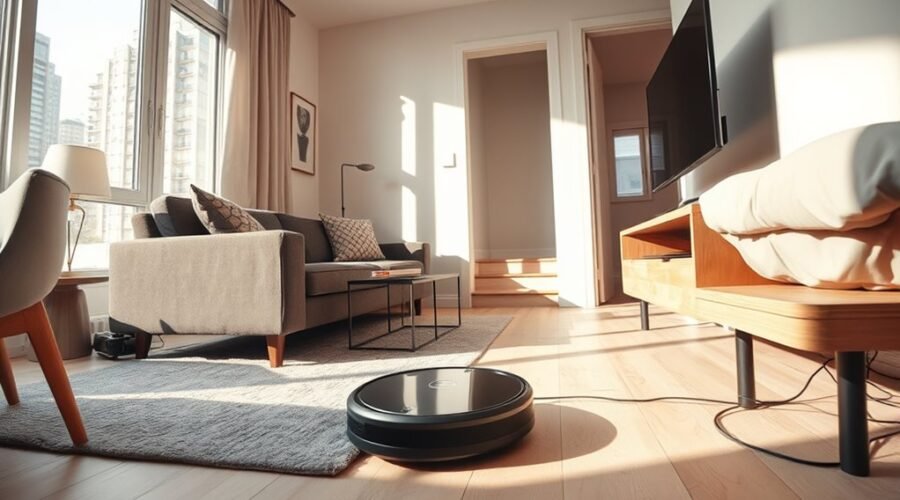
Small apartments can be deceptively difficult to keep clean, with limited floor space, narrow paths, and furniture that blocks movement. A robot vacuum can help with daily upkeep, but only if the layout suits its strengths and the machine is chosen carefully. Dustbin size, battery life, and docking access matter more in tight homes than many expect, and the tradeoffs become clear once the room shape and cleaning habits start to work against the device.
Why Small Apartments Are Hard to Clean
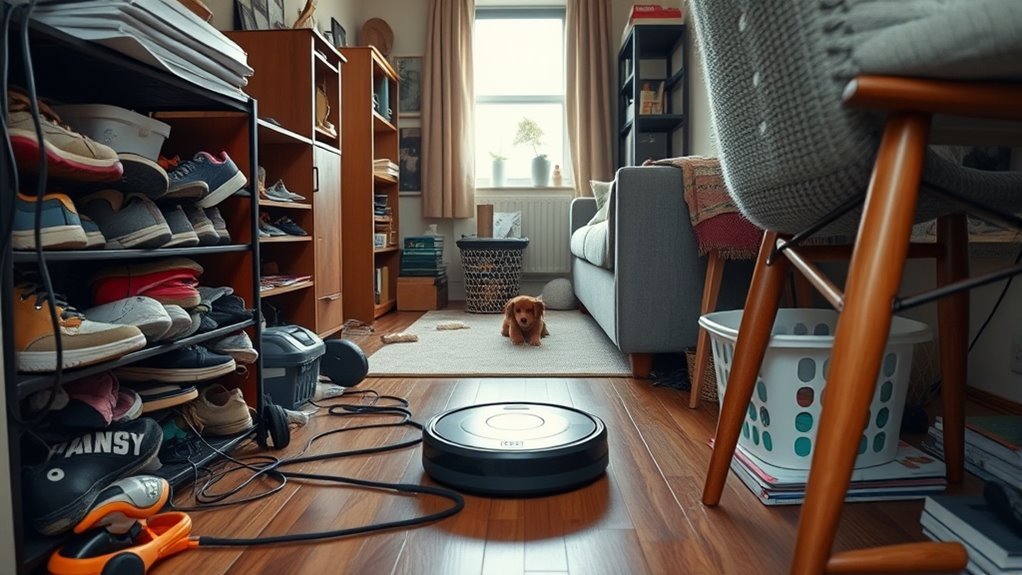
Small apartments are often harder to clean than larger ones because their layouts leave little room to maneuver. Tight furniture arrangements create obstacles in corners, along baseboards, and beside beds, where dust gathers fast.
In small spaces, cleaning under shelves and low furniture is difficult with standard tools, and the result is often missed debris. Limited storage space also restricts the use of full-size vacuums, pushing residents toward compact options that fit a crowded home.
Limited storage space pushes residents toward compact vacuums, while low furniture leaves debris behind.
On hard floors, dust and crumbs remain visible, yet reaching every edge still requires careful movement. Robot vacuums may seem useful, but they face navigation challenges in cramped rooms, especially around cables and thick thresholds.
Stairs and split-level layouts add another barrier, since many devices cannot move between levels. For many small apartments, effective cleaning depends on tools that can clean effectively without demanding extra storage or constant rearrangement.
When a Robot Vacuum Makes Sense
A robot vacuum makes practical sense in small apartments where daily upkeep is needed and floor space is limited.
Its compact body can move through tight layouts, reach under furniture, and handle routine dust, crumbs, and pet hair with little oversight.
For busy households, scheduled runs and app control can keep hard floors presentable while reducing the effort of repeated manual cleaning.
Daily Upkeep
For apartment dwellers, a robot vacuum makes the most sense as a daily upkeep tool rather than a deep-cleaning solution. In small apartments, its compact size supports daily cleaning on hard floors and low-pile carpet, helping residents clean with minimal effort.
Programmable schedules let the robot vacuum run while people are away, preserving time and reducing routine chores. Many models include HEPA filters, which can improve indoor air quality by capturing allergens and pet dander during regular passes.
Its limited but steady use helps prevent dust and debris from building up, keeping the space consistently presentable. For households seeking freedom from constant manual vacuuming, this approach offers practical convenience without demanding attention.
Small-Space Navigation
Robot vacuums are especially effective in apartments because their sensors and smart mapping systems are built to move through tight corners, furniture clusters, and narrow layouts with minimal intervention.
In small apartments, this navigation supports efficient cleaning without constant supervision. Their compact design lets them pass under beds, sofas, and other low furniture, reaching dust that larger machines often miss.
Many models clear thresholds up to 0.8 inches, which helps them move between rooms without stalling. A scheduled cleaning session can run while residents are away, reducing the need for daily effort.
Performance improves when obstacles are removed and the dustbin is emptied regularly, since clear paths and maintenance help the vacuum preserve its route, avoid delays, and keep liberation from repetitive chores practical.
Robot Vacuum Benefits for Small Apartments
In many small apartments, a robot vacuum offers a practical way to maintain clean floors without taking up much storage space.
A robot vacuum for small homes is especially useful because its small size and lightweight build make it easy to store after use. Its low profile helps it move under sofas, beds, and other low furniture, where dust often collects in tight spots.
For residents seeking liberation from constant chores, programmable cleaning schedules support frequent cleaning without requiring attention during the day. Many models can clean effectively on hard floors and low-pile rugs, reducing the need for repeated manual sweeping.
HEPA filters add another benefit by trapping fine dust, pet hair, and common allergens, which can improve indoor air quality. Regular use can also reduce the burden of deep cleaning, helping keep the apartment consistently tidy with minimal effort.
Best Robot Vacuum Features for Tiny Homes
When space is limited, the most practical robot vacuums are those built with a compact design and low profile so they can reach under furniture and move through narrow areas with ease.
In small apartments, that form factor matters because tight spaces leave little room for bulky equipment or repeated manual cleaning.
Advanced navigation, especially LiDAR mapping and AI obstacle recognition, helps robot vacuums move efficiently around chairs, cables, and clutter without wasting time or becoming trapped.
Advanced navigation, especially LiDAR mapping and AI obstacle recognition, helps robot vacuums avoid clutter and clean efficiently in tight spaces.
Programmable cleaning schedules add flexibility, allowing routines to run while occupants are away, supporting a cleaner home without constant attention.
Edge cleaning is equally important, since corners and baseboards often collect debris in compact layouts.
A strong filtration system, including HEPA filters, helps capture allergens and pet hair, which is valuable in confined rooms where air can feel stale.
For tiny homes, these features favor ease, independence, and consistent upkeep.
Robot Vacuums Vs Stick And Upright Cleaners
Although robot vacuums are well suited to daily upkeep in apartments, especially on hard floors, they are not always the best choice for every cleaning task.
In small homes, robot vacuums can quietly maintain floors on a schedule, helping residents save time and reduce routine labor.
Yet a stick or upright vacuum usually offers more suction power and better deep cleaning, particularly on carpet or in homes with pets.
Upright models clean thoroughly but need more storage space, while stick vacuums are lighter, more versatile, and often include attachments for edges and tight areas.
Robot vacuums are convenient, but their dustbin capacity and cleaning strength can be limited.
Practical cleaning tips favor using robot vacuums for maintenance and a stick or upright vacuum for weekly reset cleans.
Higher-cost models clean more automatically, and certain features help, but the best choice depends on the apartment’s surfaces, storage, and how much hands-on cleaning remains acceptable.
How to Prep a Small Apartment for a Robot Vacuum
Preparing a small apartment for a robot vacuum starts with removing clutter from the floor, including cables, pet toys, and other small objects that can interrupt navigation and reduce cleaning performance.
In a small apartment, robot vacuums work best when pathways stay open and the cleaning tool can move without frequent interruptions. A central docking station should be placed where it is easy to reach, allowing the unit to recharge and resume coverage efficiently.
Regular checks help identify obstacles, such as loose rugs or threshold edges above 0.8 inches, before they cause a jam. Low furniture should also be reviewed, since some models may enter while others cannot.
Using the app to set zones and a regular schedule can direct cleaning to high-traffic areas when the apartment is empty. Quiet operation, often under 65 dB, supports this routine.
Sensors to avoid barriers help the machine clean effectively with minimal supervision and preserve freedom from constant floor maintenance.
Best Apartment Layouts for Robot Vacuums
Robot vacuums perform best in apartment layouts that leave open floor space and limit the number of obstacles between rooms. In such plans, the best vacuum can move freely, map paths efficiently, and clean effectively without repeated rerouting.
Hard floors support steady travel, and low thresholds under 0.8 inches let robot models cross between spaces with little interruption. Open studios, one-bedroom apartments, and compact layouts with wide doorways usually suit these systems well.
Galley kitchens can also work when the pathway stays clear and the machine includes cleaning modes for narrow turns. Cluttered spaces reduce performance, especially when small obstacles, cables, or loose items remain on the floor.
For that reason, apartments with disciplined storage and regular cleaning schedules give the machine the strongest results. In liberated living spaces, automation is most useful when surfaces stay accessible and the floor plan allows the device to operate with minimal human intervention.
Where Robot Vacuums Struggle in Tight Spaces
In tight apartment spaces, robot vacuums are most likely to struggle where physical barriers and dense furnishings interrupt movement.
In tight layouts, high thresholds above 1.5 inches can trap a unit in one zone, limiting access between rooms and reducing independence. Cables, chair legs, and crowded furniture complicate clutter navigation, causing missed spots or stalled sensors.
Even when movement is possible, many models cannot clean even on thicker carpet, so low hair and debris may remain embedded. Small dustbin capacity also demands frequent emptying, which can require manual intervention in cramped corners.
Multi-level homes add another limit because most robot vacuums cannot navigate stairs or split-level changes without help.
For apartment dwellers seeking liberation from constant sweeping, robot vacuums are worth considering, but only when the floor plan is open enough to match their mechanical limits and avoid repeated interruptions.
Top Robot Vacuums for Tiny Apartments
For tiny apartments, the best robot vacuums are the ones that combine strong cleaning with compact, obstacle-aware design. In small apartments, a robot vacuum should move freely, avoid clutter, and clean effectively on hard floors without demanding constant supervision. The Narwal Freo Pro stands out for strong suction and tangle-free handling, useful when pet hair collects along edges. The Narwal Freo Z Ultra uses AI-driven decisions to adapt in narrow rooms. The Narwal Freo Z10 adds adaptive cleaning strength for pet owners who need reliable hair pickup.
| Model | Best use | Key strength |
|---|---|---|
| Narwal Freo Pro | General use | Strong suction |
| Narwal Freo Z10 | Pet hair | Adaptive cleaning |
| Dreame X40 Master | Tight layouts | Advanced navigation |
The Dreame X40 Master, with compact docking solutions, supports easier placement in limited spaces. The L50 Ultra offers similar practicality, helping a robot vacuum remain useful without crowding liberated living space.
Frequently Asked Questions
Are Robot Vacuums Good for Apartments?
Yes, robot vacuums suit apartments, offering space efficiency, navigation technology, smart features, and varied cleaning modes. Their battery life and noise levels matter. Performance depends on floor types, pet hair, and regular maintenance tips.
What Is the Best Robot Vacuum for Apartment Living?
Narwal Freo Pro and Dreame X40 Master seem supreme for apartment living, almost absurdly capable. Budget options, pet hair handling, smart features, noise levels, floor types, maintenance tips, space efficiency, brand comparisons, user reviews all matter.
How to Set Boundaries for a Robot Vacuum?
He sets boundary settings using app controls, room mapping, and virtual walls, then reinforces limits with magnetic strips near furniture obstacles. He adjusts for floor types, pet hair, and cleaning schedules, revising zones as layouts change.
What Are the Limitations of Robot Vacuums?
Robot vacuums have limits: modest suction power, limited battery life, mixed performance across floor types, variable noise levels, frequent maintenance needs, weak navigation skills, small dust capacity, inconsistent smart features, and a wide price range.
Conclusion
In small apartments, a robot vacuum can be a practical daily helper, especially when floors stay clear and the dock is easy to reach. For example, a studio renter with limited storage may find that a compact model keeps dust under control between deeper cleans, even if it cannot match a full-size upright on carpets or corners. Overall, the best results come from choosing a space-friendly machine, maintaining it regularly, and respecting its limits.