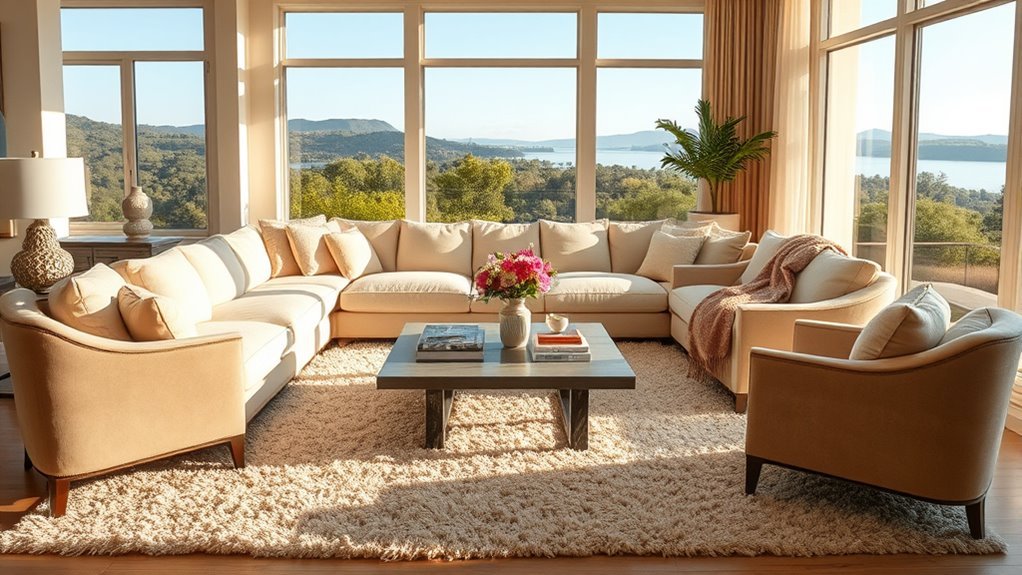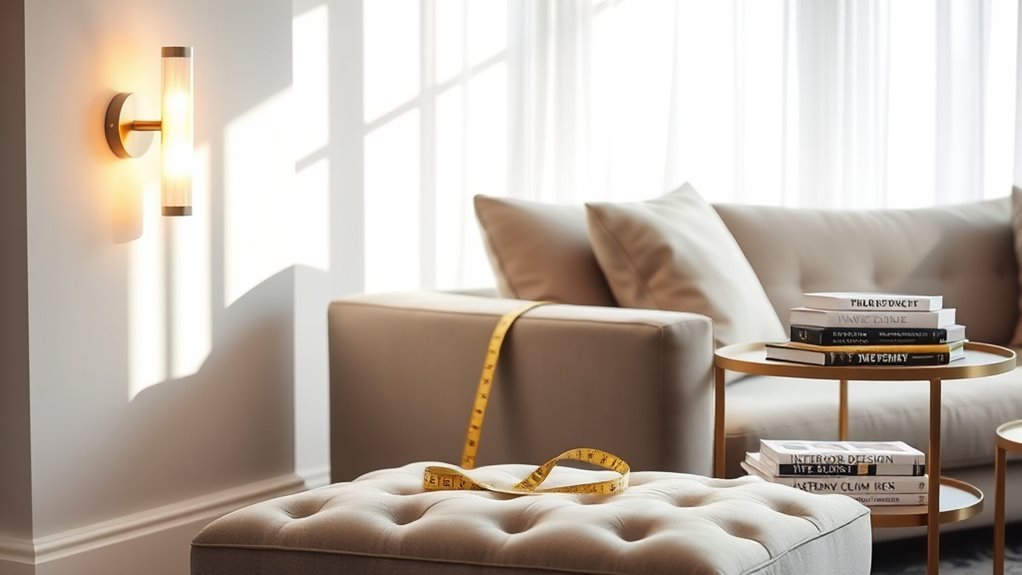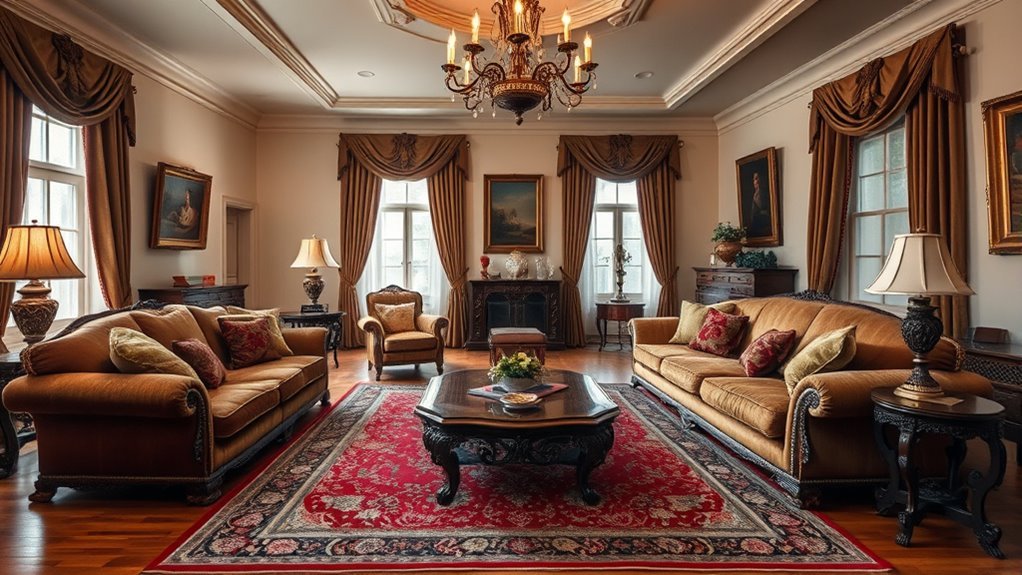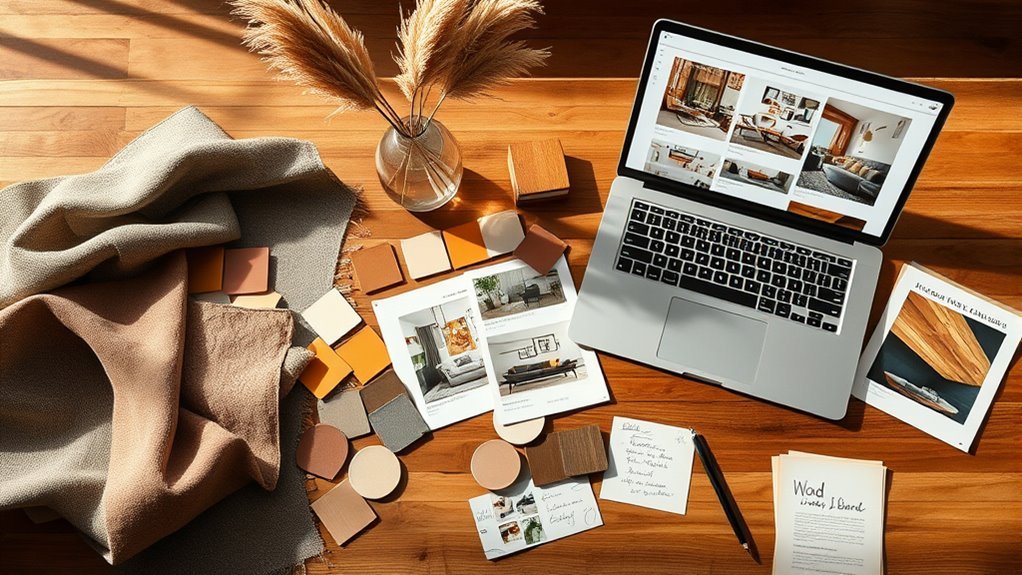
A living room focal point gives the eye a clear place to land and helps the room feel intentional instead of scattered. It might be a fireplace, a beautiful window, a media wall, a large artwork, a built-in bookcase, or a statement sofa. The best focal point is not always the biggest object in the room; it is the feature that supports how you actually use the space.
Quick Answer
A living room focal point is the main feature that naturally draws attention and organizes the room. Choose one primary focus, arrange seating and lighting around it, then use color, texture, art, and accessories to support it without creating visual clutter.
Key Takeaways
- Start with the room’s strongest feature, such as a fireplace, window, artwork, media wall, or built-in shelving.
- Use one primary focal point, then make secondary features quieter so the room feels balanced.
- Arrange seating, rugs, lighting, and accessories to frame the focal point and support conversation.
- Use contrast in color, scale, texture, or lighting to make the focal point stand out.
- Edit nearby decor so the focal point feels intentional, not crowded.
At a Glance
| Time Required | 15–30 minutes to identify the focal point; 1–3 hours to restyle furniture, lighting, and decor |
| Difficulty | Easy to moderate, depending on whether you are rearranging decor or mounting heavy pieces |
| Tools Needed | Measuring tape, painter’s tape, level, lamps, artwork, rug, pillows, plants, or decorative objects |
| Cost | $0 if you rearrange what you own; $25–$300+ for paint, lighting, art, shelving, or textiles |
What Is a Living Room Focal Point and Why Does It Matter?
A living room focal point is the main visual anchor in the space. In design language, it relates to emphasis: the part of a design that catches attention and helps guide the viewer’s eye. In a living room, that anchor might be architectural, decorative, or functional.
A clear focal point matters because it helps every other choice make sense. Once you know what should get attention first, it becomes easier to place the sofa, choose the rug size, hang art, layer lighting, and decide which accessories deserve space.
Without a focal point, the room can feel busy even when it is tidy. With one, the space often feels calmer, more cohesive, and easier to enjoy.
Common Examples of Living Room Focal Points
The easiest focal point is usually something your room already has. Look for the feature that naturally pulls your attention when you enter.
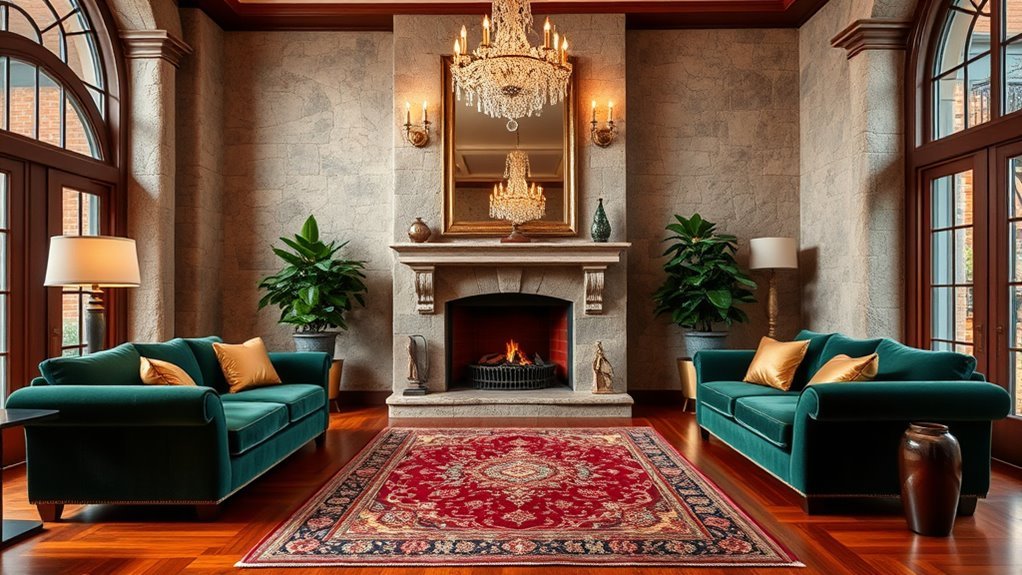
- Fireplace: A classic gathering point that can be strengthened with art, a mirror, sconces, or a balanced mantel arrangement.
- Large window or view: Ideal when the room has beautiful natural light, garden views, city views, or dramatic curtains.
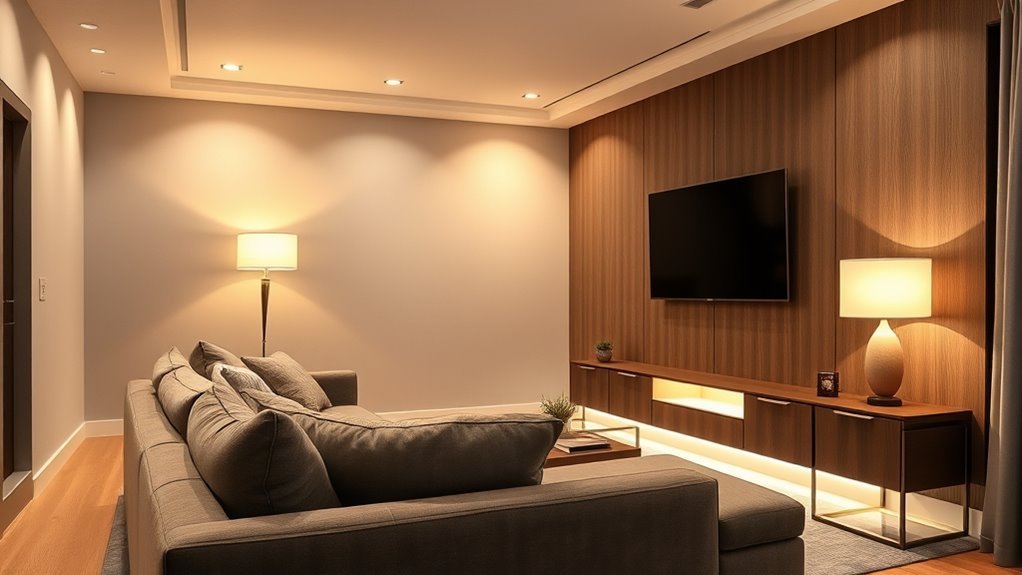
- TV or media wall: Practical for everyday living, especially when styled with built-ins, low cabinets, books, plants, or textured wall treatments.
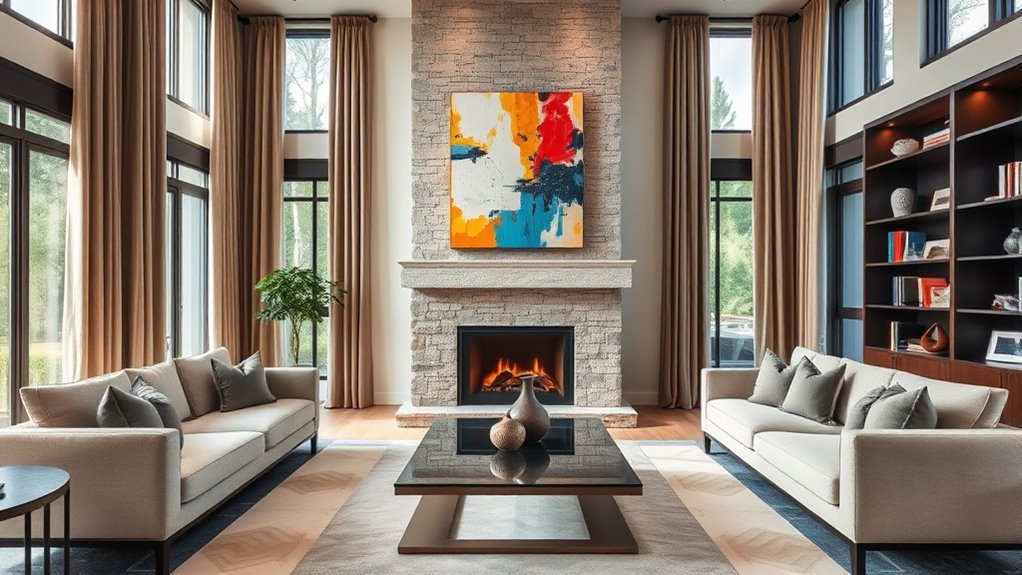
- Statement artwork: A large canvas, framed print, textile art, or gallery wall can become the room’s visual anchor.
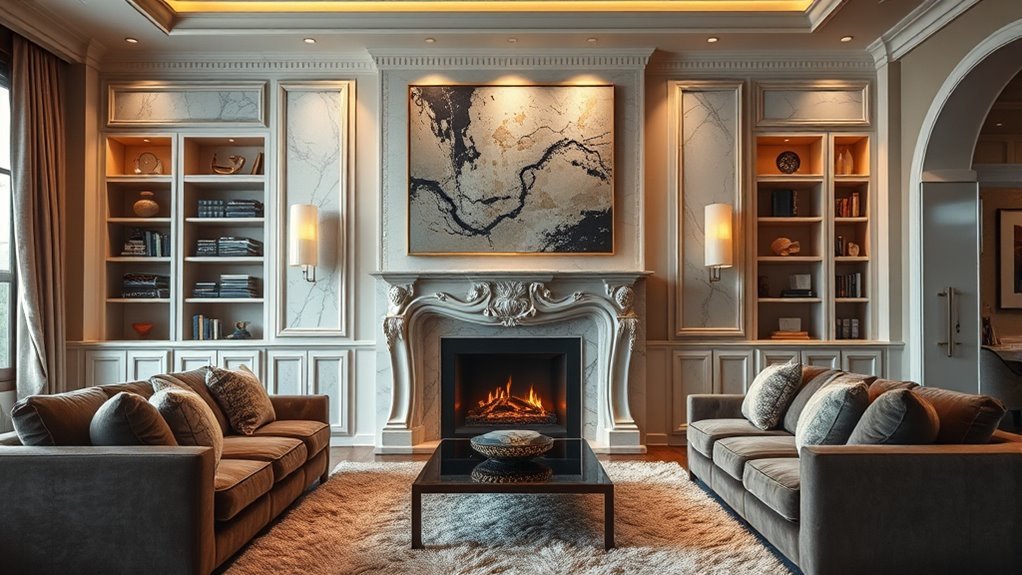
- Built-in shelving: Bookcases, display shelves, and storage walls can create a strong focal point when styled with rhythm and breathing room.
- Statement furniture: A bold sofa, sculptural chair, vintage cabinet, or oversized coffee table can lead the room’s personality.
- Architectural detail: Exposed brick, ceiling beams, arched openings, paneling, or a niche can become the feature worth highlighting.
- Lighting: A chandelier, oversized pendant, pair of sconces, or dramatic floor lamp can pull the room together.
How to Identify the Dominant Living Room Focal Point?
To find the dominant focal point, stand at the main entrance to the living room and notice where your eye goes first. Then ask whether that feature supports how the room is used. A beautiful window may be the visual focal point, but a TV may be the functional focal point. A fireplace may be both.
- Start with architecture. Fireplaces, windows, built-ins, beams, and feature walls usually have the strongest natural presence.
- Check sightlines. The focal point should be easy to see from the doorway and from the main seating area.
- Consider daily use. If the room is mainly for conversation, the focal point can be a fireplace or coffee table. If it is mainly for movie nights, the media wall needs to be planned intentionally.
- Choose one primary feature. A room can have secondary moments, but one element should lead.
- Reduce competition. If every wall has a bold color, oversized art, and heavy shelving, nothing feels special.
Pro Tip: Take a quick photo from the doorway. A photo makes visual clutter easier to spot and helps you see whether the focal point is actually clear.
What Supporting Elements Enhance Your Focal Point?
Supporting elements should frame the focal point, not fight with it. The strongest rooms use a mix of furniture placement, lighting, scale, color, texture, and editing.
Recommended Products

FINIAL and LAMP POLE are SILVER, NOT GOLD. They may appear GOLDEN due to the WARM LIGHT, as shown in the picture. ( BULB IS NOT INCLUDED)
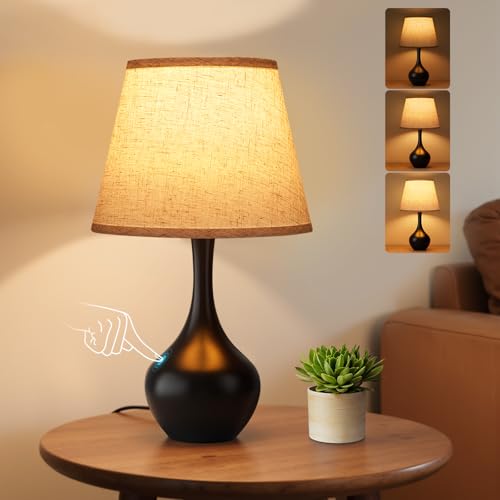
【Gently Touch to Adjust the Brightness】Just gently touch on anywhere of the bedroom lamp's body to adjust the brightness: read on the high light, relax on medium light and fall asleep on low light. The bedside lamps create a cozy and inviting atmosphere that's perfect for unwinding after a long day .Please note the touch lamp is powered by a corded electric source but not compatible with smart plugs.
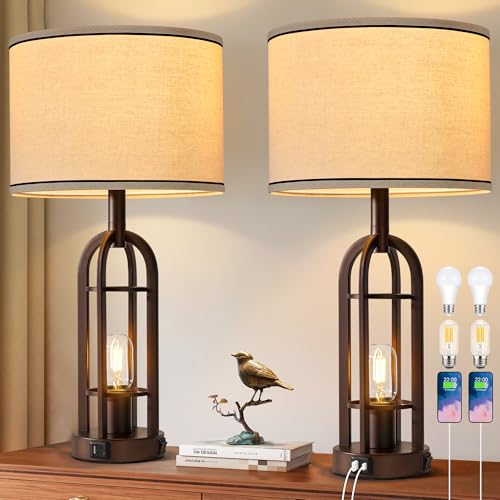
Farmhouse & Industrial Design: Featuring an upgraded drum lampshade paired with a sturdy metal body, these vintage table lamps combine farmhouse and industrial style for a warm yet modern look; ideal as living room table lamps, bedroom table lamps, or rustic bedside lamps
Complementary Decor Choices
Choose decor that repeats one or two details from the focal point. If your focal point is a blue artwork, echo that blue in a pillow, vase, or book spine. If it is a stone fireplace, add natural textures such as wood, linen, ceramic, or woven baskets.
Keep the area around the focal point edited. A mantel, media console, or shelf should have enough negative space for each object to breathe. Try grouping decor in varied heights, such as a tall lamp, medium vase, and low stack of books.
Note: Balance does not always mean perfect symmetry. A tall plant on one side of a fireplace can balance a chair and floor lamp on the other side if the visual weight feels even.
Strategic Furniture Arrangement
Furniture should make the focal point easy to enjoy. In most living rooms, the sofa or main chairs should face the focal point directly or at a comfortable angle. If the room is used for conversation, avoid pushing every seat toward a screen; angle chairs inward so people can talk naturally.
- Use the rug as a frame. The front legs of the main seating pieces should usually sit on the rug so the focal area feels connected.
- Keep traffic clear. Leave enough walking space around the seating group so the focal point does not block movement.
- Layer lighting. Use ambient lighting for the room, task lighting for reading, and accent lighting to highlight art, shelving, or texture.
- Respect scale. Large walls usually need larger art, grouped art, built-ins, or a bold treatment. Tiny decor on a large wall can look accidental.
How to Use Color and Texture to Create a Striking Focal Point
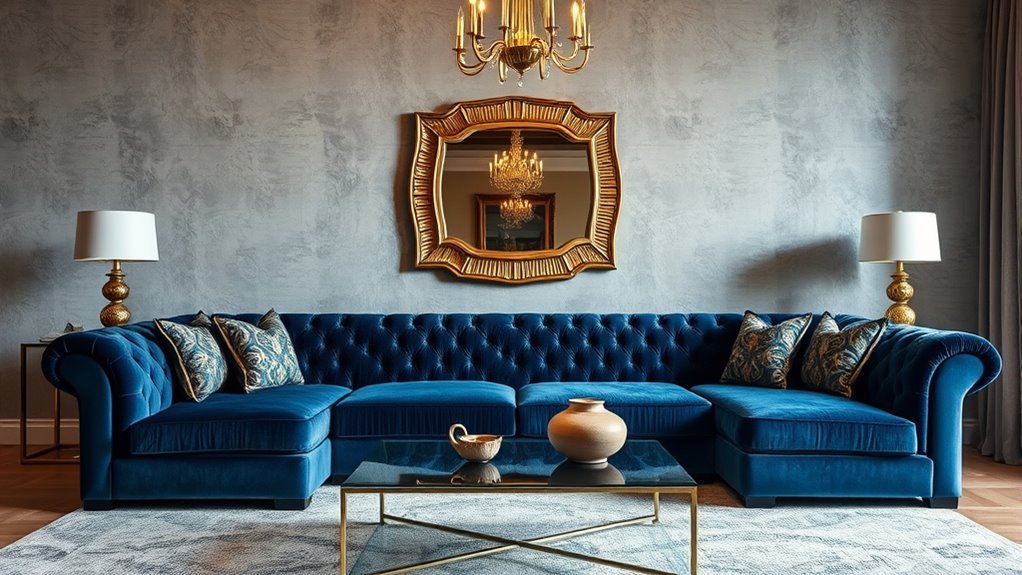
Color and texture are two of the easiest ways to create emphasis. The elements of art include color and texture, and both can change how strongly an area stands out.
For color, choose one approach:
- Accent wall: Paint or wallpaper the wall behind the focal point so it feels intentional.
- Color echo: Repeat the focal point’s main color in small accents across the room.
- Contrast: Place a light object on a dark wall, a bold artwork on a neutral wall, or a warm wood piece against cool paint.
- Quiet frame: Keep nearby colors soft so the focal point has room to stand out.
For texture, mix surfaces that look and feel different. A smooth marble coffee table, nubby boucle chair, woven shade, linen curtain, velvet pillow, or rough brick wall can all add depth. The goal is not to use every texture at once; it is to create contrast around the feature you want noticed.
A strong focal point usually works because one area has more contrast, scale, light, texture, or meaning than the surrounding space.
Defining Your Focal Point With Wall Treatments and Art
Wall treatments and art are especially helpful when the room lacks a fireplace, large window, or built-in feature. They can turn a plain wall into a clear design moment.
- Large-scale art: Choose one piece that is wide enough to relate to the sofa or console beneath it.
- Gallery wall: Use consistent spacing, a shared color palette, or matching frames to keep the display cohesive.
- Wallpaper: Patterned wallpaper works well behind a sofa, media wall, or fireplace.
- Paneling or molding: Picture-frame molding, vertical slats, or shiplap can add depth without relying on bright color.
- Mirrors: A mirror can reflect light and make a smaller living room feel more open, especially above a mantel or console.
Warning: Use proper anchors for heavy mirrors, shelves, and large artwork. For electrical changes, hardwired sconces, or structural work, hire a qualified professional.
Recommended Products
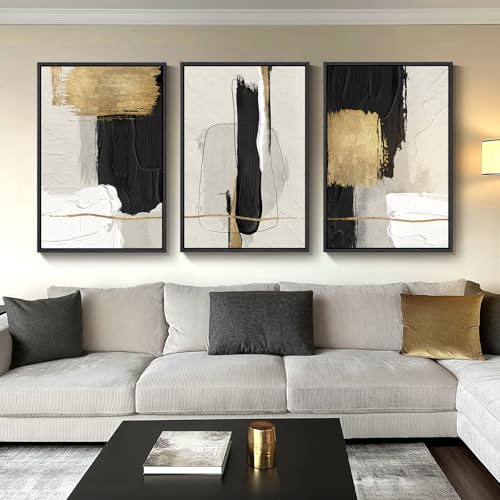
[Framed Wall art]: A set of 3 large contemporary minimalist black white and gold abstract wall art each 24x36 inches, 3 pieces totaling 36" H x 72" W. The sturdy 1.38-inch solid wood frames feature a sleek black finish that complements a variety of home decor styles

【Canvas Wall Art Size】 This is a modern canvas print measuring 29" H x 58" W.(73cm*147cm) For the best look, please measure your wall space before buying to make sure this size is just right for your decorating expectations.

【Framed Wall Art】Large framed pastel grunge forest tree landscape wall arts, encased in robust wood-colored frames, each measuring 24x36 inches (totaling 36"H x 72"W). These nature-inspired abstract artwork pieces enhance any space with a sense of tranquility and modern charm, adding a touch of vintage elegance with their minimalist design.
How to Effectively Use Multiple Focal Points in a Living Room?
Many living rooms have more than one strong feature. A room may include a fireplace, TV, window, and gallery wall. The key is to create hierarchy: one primary focal point and one or two quieter secondary moments.
If the fireplace and TV compete, try one of these solutions:
- Combine them: Place the TV above or beside the fireplace only if the viewing height is comfortable.
- Balance them: Put the TV on built-ins near the fireplace and use matching materials or colors to connect both features.
- Zone them: Create one seating angle for the fireplace and another for the screen in a larger room.
- Quiet one down: Use a frame-style TV, dark wall color, or closed storage so the screen does not dominate when off.
| Focal Point | Best Purpose | Design Support |
|---|---|---|
| Fireplace | Warmth and gathering | Balanced seating, mantel decor, sconces, or artwork |
| Gallery wall | Personality and art | Consistent spacing, picture lights, and quiet surrounding decor |
| Large window | Natural light and views | Curtains, low-profile furniture, and seating that keeps the view open |
| Media wall | Everyday viewing | Built-ins, cable management, low storage, and soft lighting |
Easy Ways to Boost Your Focal Point’s Impact
You do not always need a renovation to make a focal point stronger. Small changes in color, texture, lighting, and scale can make a major difference.
Use Bold Colors
Bold color works best when it is intentional. A saturated paint color behind a fireplace, a rich sofa fabric, or a colorful piece of art can make the focal point feel confident. To keep the room balanced, repeat the color once or twice in smaller accents.
| Color Choice | Focal Point Idea | Likely Effect |
|---|---|---|
| Warm red, rust, or terracotta | Accent chair, rug, or art | Can add energy and warmth |
| Deep blue or charcoal | Media wall or fireplace wall | Can feel grounded and polished |
| Moss green or olive | Built-ins or painted shelving | Can feel natural and calm |
| Golden yellow or ochre | Pillows, lamps, or artwork | Can brighten a neutral room |
Incorporate Unique Textures
Texture makes a focal point feel layered. It also helps a neutral room look finished without relying on bright color.
- Feature wall: Try shiplap, limewash, grasscloth, wood slats, brick, stone, or textured wallpaper.
- Contrast elements: Pair rough surfaces, such as brick or stone, with smooth ceramics, glass, or metal.
- Layered textiles: Add a rug, curtains, pillows, or throws that support the focal area.
- Decorative accessories: Use baskets, books, plants, sculptural objects, or framed textiles to add depth.
Small-Room and Rental-Friendly Focal Point Ideas
A small living room still needs a focal point, but it should not overwhelm the space. Choose one feature that adds impact without taking up too much floor area.
- Use peel-and-stick wallpaper: A removable pattern behind the sofa can create a renter-friendly accent wall.
- Hang one oversized artwork: One large piece often looks calmer than many small pieces.
- Choose a narrow console: Style it with a mirror, lamp, and a few objects to create a compact focal wall.
- Frame the window: Hang curtains high and wide to make the window feel more important.
- Use lighting: A sculptural floor lamp can create a focal point without drilling into walls.
- Style vertical space: Tall bookcases or wall-mounted shelves can draw the eye upward.
Recommended Products

Sleek Design for Modern Corners: This floor lamp combines a matte metal base with a natural linen shade for a clean, minimalist look. Its slender profile allows it to fit snugly into tight spaces beside sofas, armchairs, or beds, complementing contemporary, Scandinavian, or industrial decor

【Super Bright & Save Energy】Yikuneng bright floor lamp used advance high brightness LED, 18W LED floor lamp equivalent to traditional 200W halogen lamp, provide excellent lighting for reading, do homework, working, and breastfeeding without hurting your eyes. Save 90% energy mean save your money on electricity bill.

LED Floor Lamp for Living Rooms: This standing lamp is equipped with high - quality LED lamp beads that reach a brightness level of 1050 lumens. The light power is 14.5W while the light is strong enough for reading and illuminating the entire room.
Common Focal Point Mistakes to Avoid
If your living room still feels off, the problem is often not the focal point itself. It is usually the number of competing elements around it.
- Too many statement pieces: Choose one lead feature and let the others support it.
- Art that is too small: Small art on a large wall can look disconnected. Go larger or group pieces together.
- Weak lighting: A beautiful fireplace, artwork, or shelf wall can disappear in poor lighting.
- Furniture facing the wrong way: Seating should support the room’s purpose, whether that is conversation, TV viewing, or relaxing by the fire.
- Cluttered surfaces: Mantels, shelves, and consoles need negative space so the eye can rest.
- Ignoring cords and devices: A media wall looks more polished when cables, remotes, and speakers are managed.
How to Maintain Balance and Cohesion Around Your Focal Point?
A focal point should stand out, but it should still belong to the room. Balance comes from repeating colors, materials, shapes, or textures in small ways across the space. Unity comes from making those parts feel related instead of random.
Use these simple checks:
- Repeat one material. If the focal point includes wood, repeat wood in a table, frame, lamp, or bowl.
- Limit the palette. Pull two or three colors from the focal point and use them throughout the room.
- Vary height. Combine tall, medium, and low elements so the arrangement feels layered.
- Leave breathing room. Do not fill every shelf, wall, or table surface.
- Check the view from the doorway. The room should have one clear lead feature when you walk in.
When the focal point, furniture, lighting, and accessories work together, the living room feels more relaxed and easier to use.
Frequently Asked Questions
What is a focal point in a living room?
A focal point is the main feature that draws attention and helps organize the room. In a living room, it might be a fireplace, window, TV wall, artwork, built-in shelving, statement sofa, or dramatic light fixture.
What does focal point mean in interior design?
In interior design, a focal point is the area of emphasis. It gives the eye a clear place to land and helps create visual hierarchy, balance, and cohesion in the room.
What is an example of a focal point in interior design?
A fireplace with artwork above it is a classic focal point. Other examples include a large window, gallery wall, media wall, bold sofa, built-in bookcase, textured accent wall, or oversized pendant light.
How do you determine the focal point of a room?
Stand at the main entrance and notice what catches your eye first. Then consider architecture, sightlines, furniture placement, natural light, and how the room is used. Choose the feature that is both visually strong and practical for daily life.
Can a living room have more than one focal point?
Yes, but one focal point should lead. Secondary focal points should be quieter or placed in separate zones. For example, a fireplace can be the main feature while a gallery wall or reading corner acts as a supporting moment.
What if my living room has no obvious focal point?
Create one with a large artwork, wallpapered accent wall, painted media wall, styled console, built-in shelving, oversized mirror, statement lighting, or a bold sofa. Keep nearby decor simple so the new feature stands out.
Conclusion
Your living room’s focal point is the feature that gives the room direction. Whether it is a cozy fireplace, a sunlit window, a media wall, a gallery wall, or a statement piece of furniture, it should make the space easier to understand and more enjoyable to use. Choose one main feature, arrange furniture to support it, repeat color and texture thoughtfully, and edit the surrounding decor. With a clear focal point, your living room can feel more balanced, personal, and welcoming.
Sources
- The J. Paul Getty Museum: Principles of Design — supports emphasis, balance, movement, rhythm, and unity as core design principles.
- The J. Paul Getty Museum: Elements of Art — supports the role of color, texture, line, shape, form, and space in visual design.
- W3C Web Accessibility Initiative: Images Tutorial — supports the need for appropriate image text alternatives.
- Google Search Central: SEO Starter Guide — supports descriptive image alt text and placing images near relevant text.
- Schema.org: Article and Schema.org: FAQPage — support the structured data types used for this article and FAQ section.