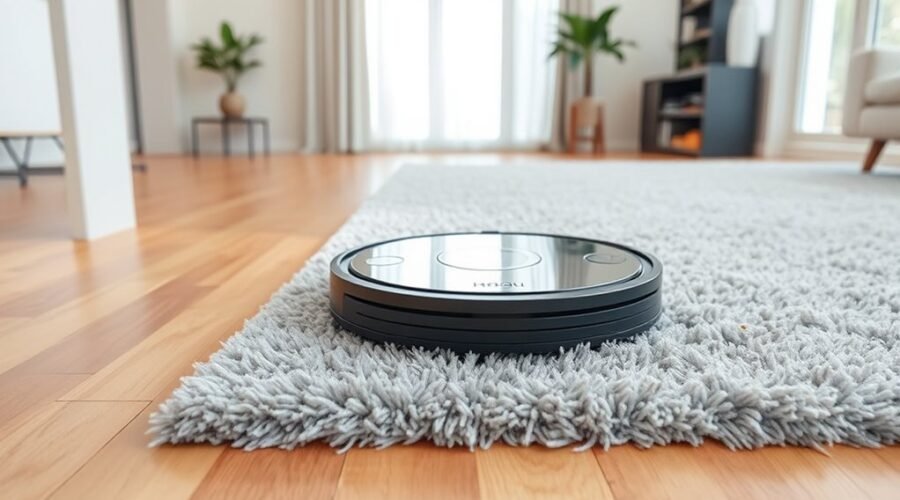
Carpet Boost is a robot vacuum feature that raises suction when a carpeted surface is detected. It relies on resistance sensing to measure wheel drag and surface load, then adjusts power in real time. The result is stronger pickup on fibers and lower energy use on hard floors. Yet the detection logic is not always straightforward, and some carpets trigger it more reliably than others.
What Does Carpet Boost Mode Do?
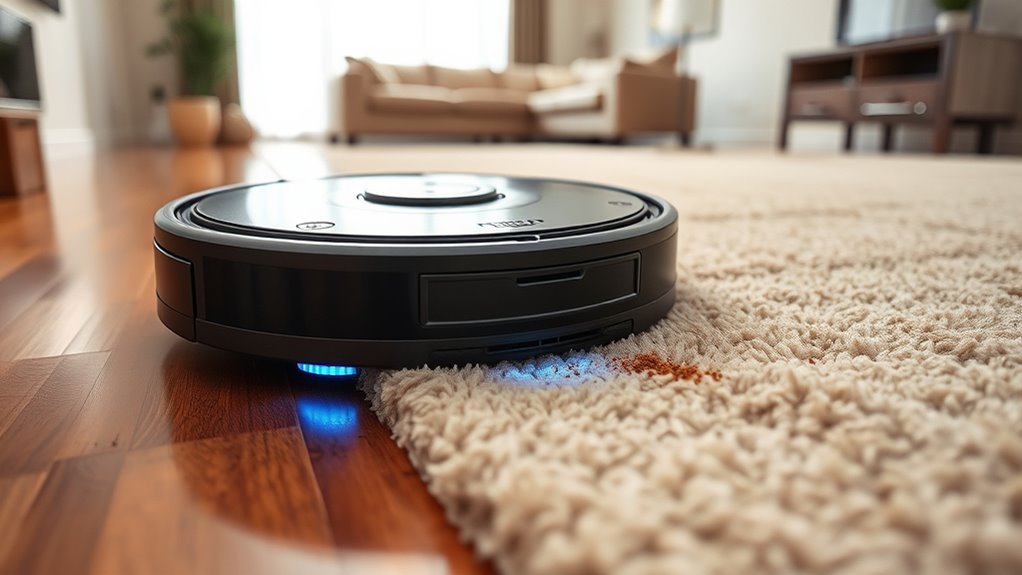
Carpet Boost mode automatically increases a robot vacuum’s suction when its sensors detect the added resistance of carpet fibers.
Carpet Boost mode automatically increases suction when sensors detect carpet fibers, improving cleaning on plush surfaces.
This carpet boost function automatically increases airflow only when needed, so cleaning on plush surfaces becomes more effective without wasting power on hard floors. It is designed to extract embedded dirt and pet hair from high-pile and shag carpets, where standard suction may be insufficient.
When the machine leaves carpet and returns to a hard floor, suction drops back to normal, preserving battery life and reducing unnecessary wear. The behavior supports efficient, selective cleaning rather than constant maximum output.
For full operation, the feature must be enabled in the app settings before a cleaning run.
In practice, carpet boost gives the vacuum targeted force, letting users clear dense fibers with less manual intervention and more control over energy use.
How Carpet Boost Detects Carpet
Carpet Boost typically relies on resistance sensing to distinguish carpeted surfaces from hard floors.
When increased resistance is detected, the vacuum automatically raises suction to match the surface load.
This surface type recognition supports efficient cleaning while reducing unnecessary power use.
Carpet Resistance Sensing
Through resistance sensing, the robot detects carpet by measuring the drag encountered as it moves across the floor. This carpet detection method lets boost mode respond without user intervention, preserving autonomy and reducing manual control. When resistance rises, the vacuum infers a softer, denser surface and increases suction. On hard floors, drag remains lower, so standard operation continues.
| Surface | Drag | Result |
|---|---|---|
| Tile | Low | Normal cleaning |
| Low-pile carpet | Higher | Boost mode |
| Shag carpet | Variable | Possible miss |
| Surface | Drag | Result |
| Tile | Low | Normal cleaning |
| Low-pile carpet | Higher | Boost mode |
| Shag carpet | Variable | Possible miss |
Auto Suction Adjustment
Automatic suction adjustment allows a robot vacuum to detect carpeted surfaces and raise power without manual input.
In Carpet Boost, sensors monitor movement resistance as the machine travels across flooring. Higher drag indicates carpet fibers, prompting the controller to automatically increase suction for stronger debris pickup. This response improves extraction of fine dust and pet dander from plush surfaces while preserving carpet texture.
When resistance falls on hard floors, suction returns to its normal setting, reducing energy use and extending battery life. The process operates continuously, requiring no user intervention and enabling efficient cleaning across mixed surfaces.
Surface Type Recognition
Surface recognition in Carpet Boost relies on resistance sensors that detect the increase in drag when the robot shifts from hard flooring to carpet. This surface type recognition method measures load changes at the wheels or drive system, allowing Carpet Boost to classify flooring without manual input.
Once carpet is identified, suction rises automatically to extract embedded dust and debris. On hardwood or tile, the system returns to standard output, preserving energy and reducing noise.
Detection can be less reliable on shag or very dark carpets, where sensor readings may falter. For effective operation, Carpet Boost must remain enabled in settings.
Accurate surface type recognition supports efficient cleaning while reducing the burden of oversight on the user.
Why Carpet Boost Improves Cleaning
Carpet Boost improves cleaning by increasing suction on carpeted surfaces, where fibers create greater resistance and trap debris more deeply.
The higher airflow helps dislodge embedded particles and lift them from plush piles more effectively than standard hard-floor operation.
As a result, pickup performance improves on dust, dirt, and allergens retained within the carpet structure.
Stronger Suction On Carpets
When a robot vacuum enters carpeted areas, Carpet Boost increases suction to better counter the added resistance of plush fibers and extract embedded dirt, dust, and pet dander. This automatic response preserves efficient motion while delivering strong suction where it matters most.
Carpet Boost typically performs best around 8,000 to 15,000 Pa, a range suited to many home carpets, including high-traffic zones. It senses greater drag on contact and raises output accordingly, reducing the gap between floor type and cleaning force.
- Detects carpet resistance
- Raises suction automatically
- Supports deep carpet penetration
- Maintains textile integrity
For users seeking autonomy from manual adjustments, activation and carpet compatibility remain essential.
Better Pickup Of Debris
With suction already elevated on carpeted surfaces, Carpet Boost also improves debris capture by increasing lift force against fibers that trap dirt, dust, pet hair, and allergens.
By detecting resistance changes, the robot vacuum distinguishes carpet from hard flooring and raises suction power instantly, without user intervention. This targeted response is especially effective on high pile and shag carpets, where particles settle deep below the surface.
Greater airflow and lift force help remove fine dust and embedded debris that standard settings may leave behind. Carpet Boost consequently supports deeper extraction, cleaner fibers, and more consistent maintenance over time.
Regular use can reduce residue buildup, preserve carpet condition, and improve overall cleanliness with minimal effort from the user.
Why Carpet Boost Doesn’t Activate
Carpet Boost may fail to activate if the robot cannot reliably identify the carpet boundary, particularly on low-pile, small, dark, or patterned rugs that confuse its sensors. In such cases, the carpet may appear as hard flooring, and the robot vacuum damage can be avoided by not forcing engagement.
Carpet Boost may not engage on low-pile, dark, or patterned rugs that confuse the robot’s sensors.
- Low-pile or small rugs may evade detection.
- Dark or patterned surfaces can defeat sensor logic.
- Shag or high-pile rugs may trigger refusal or stall risk.
- Misaligned extractors, worn treads, or loose edges reduce traction and sensing.
When traction drops or resistance rises, the control system may suppress Carpet Boost to preserve the drive train and maintain safe operation.
Regular inspection, alignment, and edge security improve recognition and restore reliable activation.
Best Carpet Boost Settings
Ideal Carpet Boost settings balance suction, pass count, and surface protection: for most carpets, a suction range of 8,000 to 15,000 Pa is effective, while advanced units can use up to 22,000 Pa on dense pile.
Carpet boost should engage automatically on carpet, then sustain higher suction only long enough for deep cleaning without excessive wear. Max or Max+ modes improve pickup, and Multi Pass or Deep Clean settings increase agitation for embedded debris.
Edge Clean after the main pass helps recover particles displaced toward skirting boards. Mop functions should remain disabled on carpeted zones to prevent dampness and fiber damage.
The best configuration is thus one that matches pile density, limits unnecessary runtime, and preserves the carpet surface.
When the robot vacuum applies carpet boost precisely, cleaning becomes more autonomous and less dependent on manual intervention. Such tuning supports cleaner rooms with fewer compromises, letting users reclaim time while maintaining control over performance and material safety.
Tips for High-Pile Carpets
When cleaning high-pile carpets, the robot vacuum should have Carpet Boost enabled so suction rises automatically on plush surfaces and reaches at least 15,000 Pa for effective removal of embedded dirt and pet hair.
On deep fibers, consistent suction prevents debris from settling and preserves cleaner rooms with less manual intervention.
- Use dual rubber rollers or floating brushes to increase agitation and reduce tangles.
- Schedule multi-pass cleaning 2–3 times weekly for thorough extraction.
- Inspect brushes and filters weekly to sustain strong suction and efficiency.
- Keep Carpet Boost active during carpeted runs to maintain adaptive performance.
High-pile textiles demand controlled power, not brute force. Proper Carpet Boost settings support liberated, hands-off cleaning by letting the machine respond to changing pile depth without constant oversight.
Regular maintenance keeps the system responsive, while routine cleans limit buildup before it becomes entrenched.
Best Robot Vacuums for Carpet
For carpeted homes, the most effective robot vacuums combine high suction, reliable carpet detection, and adaptive cleaning behavior.
The Roborock S8 MaxV Ultra stands out with advanced carpet sensing and dual rubber rollers, delivering strong lift on deep carpet fibers.
The Ecovacs DEEBOT X8 Pro Omni adds high peak suction and mop lifting, preserving carpet dryness during floor changes.
The Roborock Saros 10 automatically engages Carpet Boost, raising suction when carpet is detected and improving debris extraction with minimal user intervention.
The Ecovacs DEEBOT X5 Pro Omni offers dependable navigation and consistent carpet detection, making it suitable across mixed surfaces and varied pile heights.
For most carpeted homes, models in the 8,000 to 15,000 Pa range provide the best balance of traction and efficiency.
Such systems reduce dependency on manual labor, allowing occupants to reclaim time while maintaining cleaner carpet, boost performance, and more autonomous household care.
Frequently Asked Questions
What Setting Should My Vacuum Be on for Carpet?
Carpet settings should favor Carpet Boost or Max suction, with Multi Pass for deeper extraction. This improves vacuum efficiency, especially on dense fibers. Regular adjustment to traffic and pile height preserves performance and autonomy.
What Are the Downsides of Using a Robotic Vacuum Cleaner?
Robot vacuum limitations include weak performance on thick carpet, sensor errors on dark surfaces, and obstacle entrapment. Maintenance challenges such as brush tangles and clogged suction reduce reliability, requiring frequent intervention rather than autonomous liberation.
Is It Okay to Run a Robot Vacuum Every Day?
Yes, daily use is generally acceptable; concerns about wear are overstated. For households seeking liberation from chores, regular daily cleaning reduces dust and pet hair, while supporting carpet care through consistent, low-impact maintenance.
What Is the Best Robot Vacuum for Cleaning Carpets Only?
Roborock S8 MaxV Ultra and Ecovacs DEEBOT X8 Pro Omni are strong choices for carpet cleaning only; their vacuum technology offers 8,000–15,000 Pa suction, dual rubber rollers, and reliable carpet detection for plush surfaces.
Conclusion
Carpet Boost helps robot vacuums adjust suction automatically when resistance sensors detect carpet, improving pickup of embedded debris without wasting battery on hard floors. One useful statistic to note is that carpets can trap several times more dirt than smooth flooring, which explains why higher suction matters so much in these areas. For homes with mixed surfaces, this adaptive feature can deliver cleaner carpets, better efficiency, and more consistent overall performance.