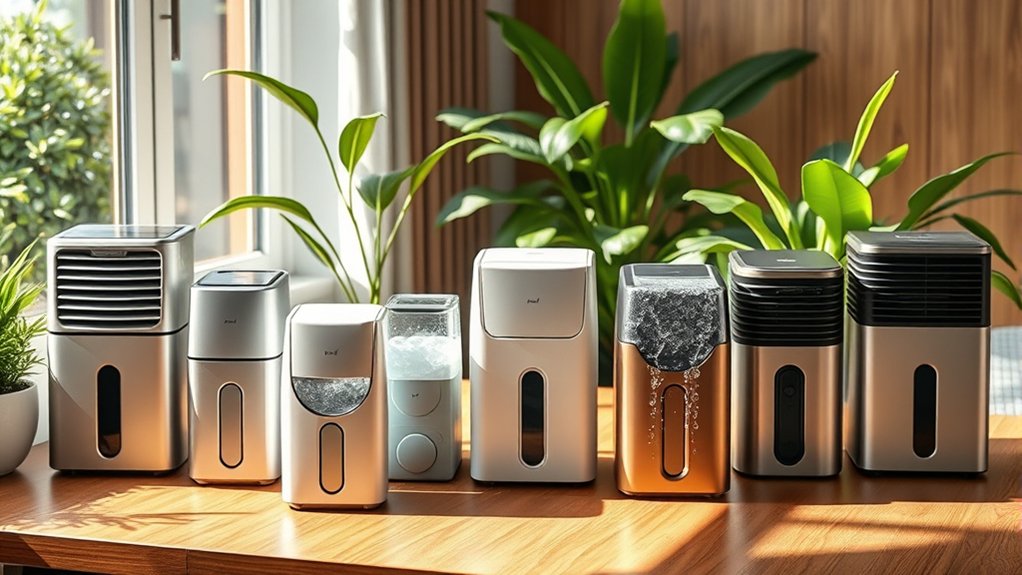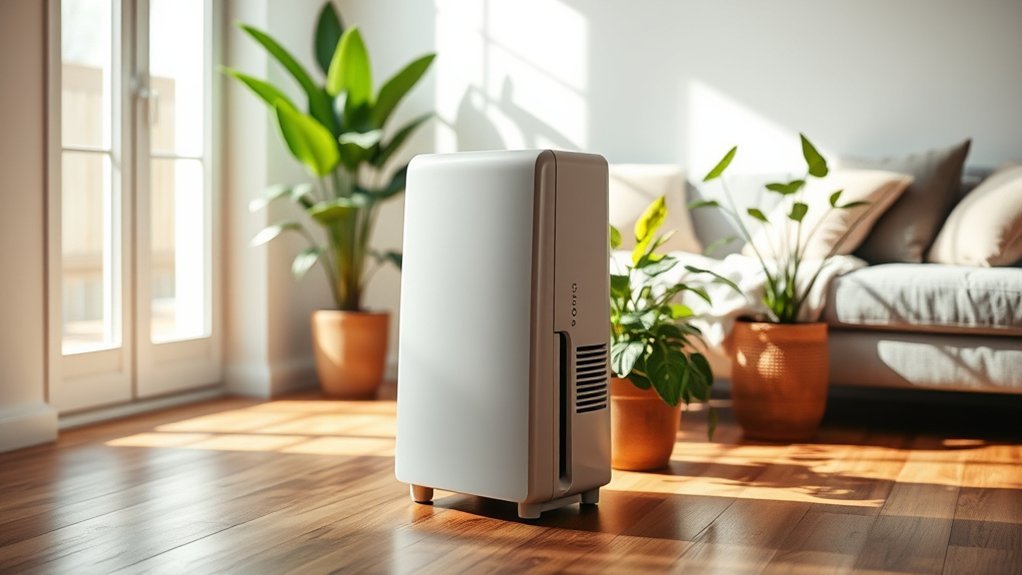
Last updated: September 12, 2026 · Reviewed against EPA, CARB, ENERGY STAR, AHAM, and UL guidance.
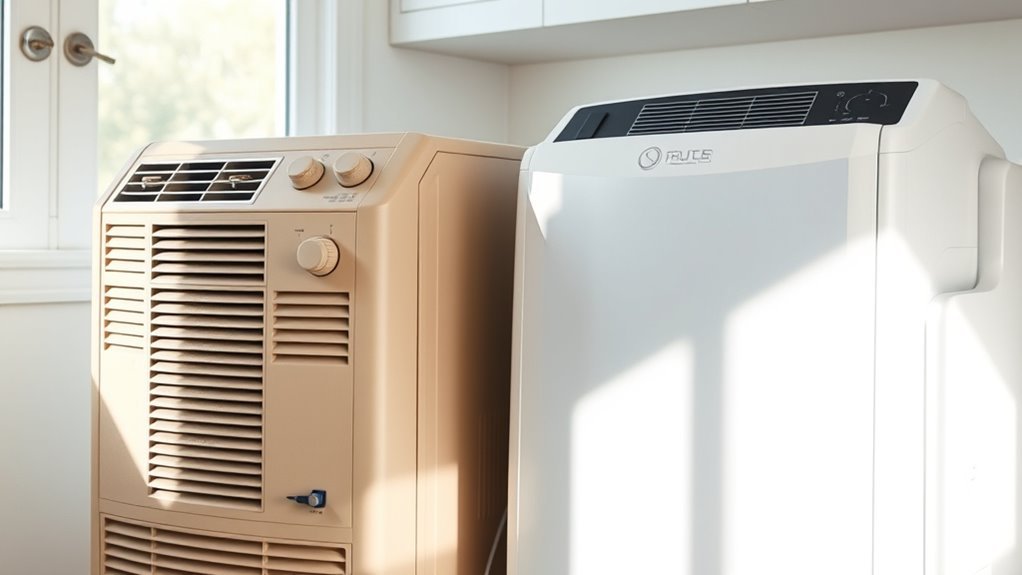
A dehumidifier with an ionizer lowers excess moisture and adds a limited particle-control feature. The dehumidifier removes water from the air. The ionizer releases charged ions that attach to some airborne particles, especially fine particles, so they may clump, settle on surfaces, or get pulled into the unit’s filter more easily.
That can make a damp room feel fresher, but it does not make the machine a true HEPA air purifier. For mold prevention, the moisture control matters most. For smoke, wildfire particles, heavy dust, or allergies, a properly sized HEPA air purifier with a verified CADR is usually the stronger tool.
Quick Answer
An ionizer on a dehumidifier releases charged ions that attach to small airborne particles. This can help particles clump together, settle, or get caught by the unit’s filter while the dehumidifier lowers moisture. It may improve freshness, but it does not replace HEPA filtration, ventilation, or moisture repairs.
| Problem | Best tool | What the ionizer adds |
| Dampness, condensation, musty humidity | Dehumidifier | No drying effect; it only affects particles. |
| Fine particles, smoke, pollen, allergy triggers | HEPA air purifier with proper CADR | May reduce some floating particles, but removal is less predictable. |
| Odors, gases, VOCs | Source control, ventilation, and substantial activated carbon | May reduce some particle-bound odors, not most gases. |
Key Takeaways
- The dehumidifier controls moisture; the ionizer targets some airborne particles by charging them.
- Ionizers can make particles settle on surfaces, so regular dusting and vacuuming still matter.
- Avoid ozone-generating products in occupied rooms and look for CARB certification or UL 2998 validation when available.
- For allergies, smoke, dust, or wildfire particles, a properly sized HEPA air purifier is usually stronger than an ionizer feature.
- For mold, fix the moisture source first; neither an ionizer nor a dehumidifier removes existing mold from surfaces.
What Does an Ionizer Dehumidifier Do?
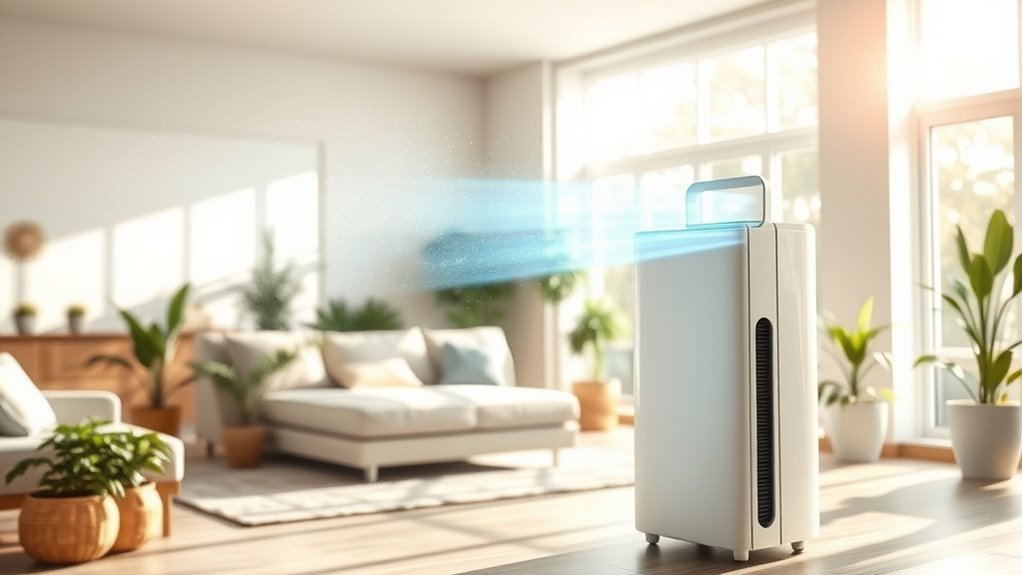
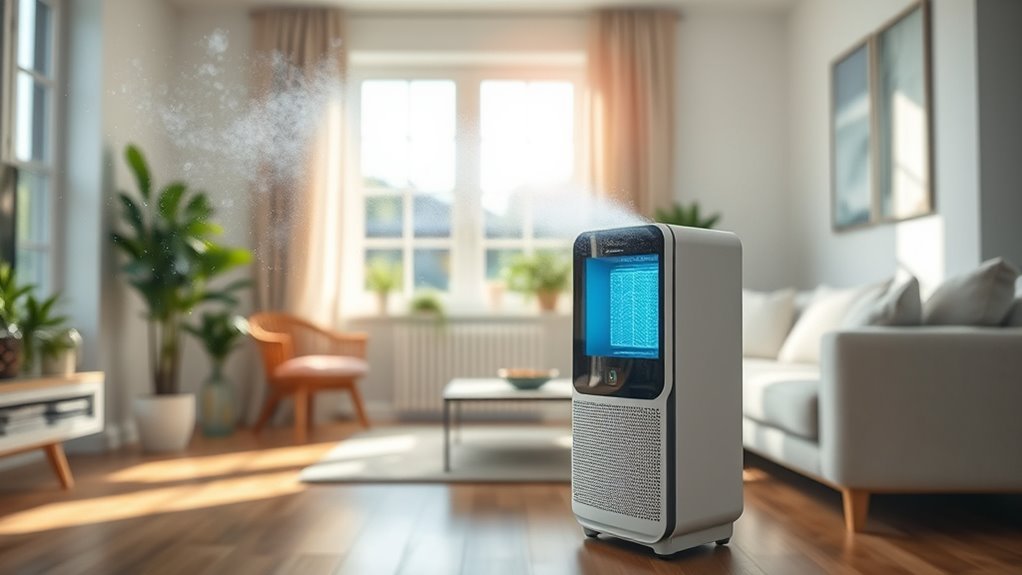
An ionizer dehumidifier removes moisture from the air and adds an ionizing feature that releases electrically charged particles, usually negative ions or both positive and negative ions. Those ions can attach to tiny airborne particles such as fine dust, smoke particles, and some odor-carrying particles. Once charged, the particles may clump together, settle onto surfaces, or become easier for the unit’s filter to capture.
The moisture-control part is usually the more important feature. The U.S. EPA recommends keeping indoor relative humidity below 60%, and ideally between 30% and 50%, to help reduce conditions that support mold growth and dust mites. A dehumidifier helps you stay in that range, especially in basements, bathrooms, laundry areas, and damp bedrooms. See the EPA’s mold and humidity guidance for more detail.
Note: An ionizer does not “dry” the air. The dehumidifier dries the air. The ionizer only affects how some particles behave in the air.
Recommended Products

Semiconductor dehumidifiers use thermoelectric cooling to remove moisture from the air. They create a drier, more comfortable environment by reducing humidity and improving air quality.

【The Undisputed Champion — Industry-Leading Dehumidifier Brand】When you choose AEOCKY, you get double market validation. According to data independently verified by Stackline, a leading third-party data analytics company, AEOCKY was an industry‑leading dehumidifier brand on Amazon U.S. in 2025. This means you’re not just choosing a flagship product from a market leader, but a top-performing brand backed by independent market data and trusted by millions of real users, delivering the ultimate combination of performance, quality and trust.
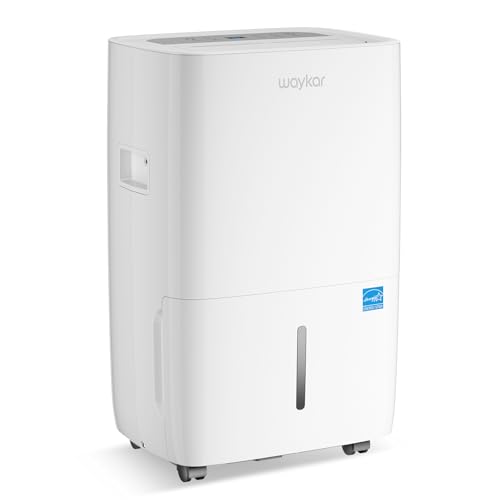
【80 Pint Capacity for Up to 5,000 Sq.Ft Spaces】Quickly removes excess moisture from basements, bathrooms, bedrooms, RVs, and other large living areas, delivering 80 pints per day (95°F, 90% RH).conditions. Designed as a powerful dehumidifier for basement, home, and large spaces, it helps eliminate damp air, condensation—and pet-related odors caused by excess humidity. Even during humid seasons, it works continuously to maintain a dry, comfortable, and healthier indoor environment.
How Do Ionizer Dehumidifiers Clean the Air?
Ionizer dehumidifiers clean the air in a limited way. The fan pulls room air into the unit. The dehumidifier condenses moisture from that air. If the ionizer is switched on, the device also releases charged ions into the airflow or room. These ions can attach to small particles and change how they move.
There are three possible outcomes:
- Filter capture: charged particles may clump together and become easier for the unit’s filter to catch.
- Surface settling: charged particles may fall onto floors, furniture, curtains, walls, or electronics.
- Partial odor reduction: some odor-carrying particles may be reduced, but gases and VOCs usually need activated carbon or another gas-phase filter.
This is why an ionizer can make a room feel fresher, but it should not be treated as a complete air-cleaning system. The EPA’s Guide to Air Cleaners in the Home explains that no air cleaner removes all indoor pollutants and that source control, clean ventilation, and filtration are the main ways to improve indoor air.
The practical takeaway: an ionizer can support particle control, but real indoor-air improvement still depends on moisture control, filtration, ventilation, and cleaning.
What Can an Ionizer on a Dehumidifier Not Do?
An ionizer is easy to overestimate because the effect is invisible. Use this feature as a small add-on, not as the main indoor-air solution.
- It does not remove moisture. Only the dehumidifier function removes water from indoor air.
- It does not fix mold growth. You still need to repair leaks, dry wet materials, clean visible mold safely, and keep humidity controlled.
- It does not reliably remove gases. Carbon monoxide, radon, carbon dioxide, and many VOCs need source control, ventilation, or specialized filtration.
- It does not replace CADR-rated filtration. For smoke and fine particles, choose a HEPA air purifier sized to the room.
Benefits of a Dehumidifier With an Ionizer
A dehumidifier with an ionizer can be useful when you want humidity control with a small air-freshening bonus. The benefit is strongest when the unit also has a decent filter, a working humidistat, and enough moisture-removal capacity for the room.
Cleaner Indoor Air
The ionizer may help reduce the amount of fine dust and other small particles floating in the air by charging them. If the unit has a filter, some of those particles may be captured as air passes through. If they settle instead, they are no longer floating at breathing height, but they still need to be removed from surfaces.
This can help in rooms that feel stale or dusty, but expectations should stay realistic. In EPA-reviewed testing, ion generators removed dust, tobacco smoke, pollen, and fungal spores less effectively than HEPA filters or electrostatic precipitators. For people who need serious particle removal because of allergies, smoke, wildfire pollution, or asthma triggers, a dedicated air purifier with a properly sized Clean Air Delivery Rate (CADR) is usually a stronger choice. AHAM’s air cleaner directory and CADR guidance can help you compare tested air cleaners.
Better Humidity and Mold Control
The dehumidifier side helps most with mold prevention. Mold grows when moisture problems are ignored, so lowering humidity can make the room less hospitable to mold and mildew. This is especially useful in basements, closets, laundry rooms, crawl-space-adjacent rooms, and bathrooms without strong ventilation.
The ionizer may reduce some airborne particles under certain conditions, but it should not be described as a room disinfectant. EPA guidance says bipolar ionization is still an emerging technology, and its safety and effectiveness are less documented than established filtration. If your main concern is mold, fix leaks, improve drainage, ventilate wet rooms, and keep humidity in the recommended range.
Better Filter Performance
Ionization can help some particles clump, which may make them easier for a filter to catch. That can reduce visible dust recirculation in some rooms. However, this only matters if the unit has a filter that is maintained correctly. A clogged, dusty, or wet filter will not work well.
Pro Tip: If your dehumidifier has an ionizer, clean the prefilter on schedule and wipe nearby surfaces more often. Some charged particles may settle instead of staying in the air.
Downsides of Ionizer Dehumidifiers
The main downside is that the word “ionizer” can make the unit sound more powerful than it is. Ionizers can help with some particles, but they do not solve every indoor-air problem. They also raise safety questions if the product produces ozone.
Ozone Exposure Risks
Some ionizers and electronic air cleaners can produce ozone as a byproduct. Ozone is a lung irritant, and products that intentionally generate ozone should not be used in occupied rooms. The EPA warns that ozone generators sold as air cleaners have not been approved by federal agencies for use in occupied spaces and can cause health problems at high concentrations. For scale, the FDA caps ozone output from indoor medical devices at 0.05 ppm and OSHA limits workplace exposure to 0.10 ppm averaged over eight hours — levels that EPA testing found some ozone-generating units can exceed several times over on a high setting, even in rooms larger than the space they were rated for. Read the EPA’s ozone generator guidance before using any product marketed around ozone.
Warning: Do not use an ozone generator in an occupied room. If a dehumidifier or air cleaner has an ionizer, look for CARB certification or UL 2998 validation, and turn the ionizer off if anyone notices coughing, throat irritation, chest tightness, or worsened asthma symptoms.
California’s Air Resources Board requires many indoor air-cleaning devices sold in California to be certified, and electronic air cleaners must meet an ozone emission concentration limit of 0.050 parts per million. CARB also notes that certification does not prove the device is effective at removing pollutants or guarantee overall health safety. You can check CARB’s certified air cleaning device list.
Limited Particle Removal
Ionizers are not as dependable as mechanical filtration for removing particles from a room. A true HEPA air purifier physically traps particles in a dense filter. An ionizer may cause particles to stick to surfaces instead. That can lower what is floating in the air for a while, but it also means dust may collect on furniture, walls, bedding, and electronics.
Ionizers also do not remove carbon monoxide, carbon dioxide, radon, or most gases. For odors, smoke smells, and VOCs, you generally need source control, ventilation, and enough activated carbon or another gas-phase filter. A thin carbon sheet in a small dehumidifier is usually not enough for heavy odors.
Not a Medical Solution
A dehumidifier with an ionizer should not be used as a medical treatment for asthma, allergies, mold exposure, or respiratory symptoms. It may make a room feel more comfortable, but symptoms should be handled with a qualified healthcare professional and by removing the actual trigger when possible.
Bipolar vs. Standard Ionizers
Standard ionizers usually release negative ions. Bipolar ionizers release both positive and negative ions. Manufacturers may market bipolar ionization for broader air-cleaning performance, but results depend on product design, airflow, room size, maintenance, and independent testing. Do not treat “bipolar” language as proof of safety or effectiveness by itself.
| Feature | Standard Ionizer | Bipolar Ionizer |
| Ion type | Usually negative ions | Positive and negative ions |
| Best use | Light particle clumping and freshening | Potential particle interaction only when supported by product-specific testing |
| Main concern | Particles may settle instead of being removed | Evidence and safety depend heavily on product design and testing |
| What to check | Ozone emissions, filter type, and on/off control | UL 2998, CARB certification, and independent performance data |
The safest rule is simple: do not pay extra for “bipolar” language alone. Look for test data, ozone-safety validation, a real filter, and a clear way to turn the ionizer off.
Recommended Products

【3 Adjustable Modes with Indicator Light】 Features three adjustable operating modes with visible indicator lights, including a night mode option. Simple touch control makes it easy for adults, seniors, and busy households to adjust lighting and performance as needed.

【Air Ionizers For Home】The air purifier plug has a simple and stylish design, making it a discreet yet effective wall ionic air purifier plug. It is small, lightweight, and compact. Take it with you on the go, plug and play, save space and replace bulky, expensive air purifiers.

See Your Air Improve: With CleanSense IQ, watch the display as your air quality adjusts in real time. No guessing your air quality––just fast, visible results. Percentage displayed corresponds to concentration of particles measured (between PM 1.0 -10). Higher percentage means lower concentration of particles in air.
Who Should Avoid or Limit the Ionizer Feature?
You may want to leave the ionizer off, or choose a non-ionizing dehumidifier, if the room is used by:
- someone with asthma, COPD, or frequent respiratory irritation;
- babies, young children, older adults, or anyone medically sensitive to air pollutants;
- pets or anyone who reacts poorly when the feature runs;
- people who notice coughing, throat irritation, headaches, or chest tightness when the ionizer runs.
If you mainly need moisture control, you can usually buy a good dehumidifier without using the ionizer at all. A separate HEPA air purifier is often the better tool when particle removal is the priority.
How to Choose an Ionizer Dehumidifier
Choose the dehumidifier first and treat the ionizer as a secondary feature. A weak dehumidifier with a fancy ionizer will not solve damp air.
Recommended Products

Reduce excess moisture and make your living space more comfortable with a home dehumidifier.

LOWER POWER CONSUMPTION DEHUMIDIFIER - Wantech dehumidify and air purify combo has much lower operating costs and is kinder to the environment. Enjoy Eco-friendly lifestyle, enjoy reduced power bills than other devices

Simultaneous Air Purification and Efficient Dehumidification: The DH16 dehumidifier goes beyond merely regulating humidity levels in your home, encompassing a dual functionality that includes potent air purification. Tailored for home spaces, this compact unit seamlessly integrates HEPA filtration. This ensures not only optimal moisture control but also exceptional purification by trapping 99.97% of fine particles, such as dust, pet dander, and smoke, as small as 0.1 microns
Check Ozone Safety First
Look for CARB certification if the product is sold in California or claims to be ozone-safe; CARB’s own limit for electronic air cleaners is 0.050 ppm. For bipolar ionization, the EPA recommends devices that meet UL 2998 validation for zero ozone emissions, which requires levels below 0.005 ppm — about a tenth of the CARB threshold. Avoid products that advertise ozone as the cleaning method for normal occupied-room use.
Match the Capacity to the Room
Dehumidifier capacity is measured in pints of water removed per 24 hours. ENERGY STAR explains that the right capacity depends on the size of the space and how damp it is: for a room under 2,000 sq. ft., plan on roughly 20–30 pints/day if it’s slightly to moderately damp, 25–40 pints/day if it’s very damp, and 30–50 pints/day or more if walls or floors are sweating or seeping — larger rooms need more capacity on top of those ranges. A slightly oversized unit is often better than an undersized one — ENERGY STAR’s own guidance says it’s better to oversize than undersize — because it can reach the target humidity faster and cycle off instead of running nonstop. You can use ENERGY STAR’s dehumidifier buying guidance to compare capacity and efficiency.
Look for Real Filtration
If the unit only has a basic washable screen, the ionizer may mostly make particles settle around the room. For better air cleaning, look for a replaceable particle filter. If odor is a major concern, look for meaningful activated carbon, not just a thin deodorizing sheet.
Compare Maintenance, Noise, and Drainage
A good ionizer dehumidifier should be easy to live with. Check the filter-cleaning schedule, tank size, noise rating, auto-restart feature, humidistat accuracy, and continuous drain option. The ionizer coil itself draws only a small amount of power next to the compressor and fan, so switching it on rarely moves the needle on your electricity bill, and it should not add noise on its own — if a unit gets noticeably louder with the ionizer on, that points to the fan or compressor rather than the ionizer. If a dehumidifier is louder than you expected in general, see our guide on why dehumidifiers get loud and how to fix it. A continuous drain hose is especially useful in basements and laundry rooms where you do not want to empty a tank every day.
How to Use an Ionizer Dehumidifier Safely
- Set the humidity target first. Aim for about 30% to 50% relative humidity when possible, and keep it below 60% to discourage mold-supporting dampness.
- Place the unit where air can move. Keep the intake and exhaust clear of curtains, walls, furniture, and laundry piles.
- Run the ionizer only when needed. If the room already smells fresh and dust is under control, the dehumidifier mode alone may be enough.
- Ventilate when you can. Use bathroom fans, kitchen exhaust, and clean outdoor air when outdoor conditions are good.
- Clean surfaces regularly. Charged particles can settle on shelves, floors, electronics, and bedding.
- Maintain the filter. Wash or replace filters on schedule so captured particles do not reduce airflow — see our guide on finding your dehumidifier’s filter if you’re not sure where to look.
- Stop using the ionizer if irritation appears. Turn it off if anyone notices coughing, throat irritation, chest tightness, or worsening asthma symptoms.
Frequently Asked Questions
Should I use the ionizer on my dehumidifier?
Use it only if the model is low-ozone or ozone-safe, the room is well maintained, and no one in the room is sensitive to respiratory irritants. If you only need to control dampness, the dehumidifier function alone is usually enough.
Is it safe to be in a room with an ionizer?
It depends on the device. Avoid ozone-generating products in occupied rooms. For ionizers, look for CARB certification or UL 2998 validation, follow the manual, and turn the feature off if anyone notices coughing, throat irritation, or chest tightness.
Does an ionizer dehumidifier remove dust?
It may reduce some dust floating in the air by charging particles so they clump, settle, or get caught by a filter. It does not make dust disappear. You still need to clean surfaces and maintain the filter.
Should I leave the ionizer on all the time?
Usually no. Run the dehumidifier to hit the humidity target first. Use the ionizer only when needed for light freshening, and leave it off if the product lacks ozone-safety validation or anyone feels irritation.
Do air purifiers dry indoor air?
Most air purifiers do not dry indoor air. They move air through filters or cleaning technology. A dehumidifier dries air by removing moisture, which is why it is the right tool for damp rooms, condensation, and musty humidity.
What are the downsides of an ionizer?
An ionizer may produce ozone, may cause particles to settle on surfaces instead of removing them, and usually does not remove gases, VOCs, carbon monoxide, carbon dioxide, or radon. It is best used as a supplement, not as your main air-quality solution.
Does an ionizer dehumidifier kill mold?
No. It may reduce some airborne particles, but it does not fix mold growth. To control mold, remove the moisture source, clean existing mold safely, improve ventilation, and keep indoor humidity below 60%, ideally between 30% and 50%.
Is a dehumidifier with an ionizer better than an air purifier?
Not for particle removal. A dehumidifier with an ionizer is better for dampness plus light air freshening. A properly sized HEPA air purifier is usually better for dust, pollen, smoke particles, and fine particulate pollution.
Does the ionizer add to the electricity bill or make the unit louder?
Usually not by much. The ionizer coil draws far less power than the compressor and fan that do the actual dehumidifying, so turning it on has only a small effect on energy use — check the spec sheet if you plan to run it around the clock. The ionizer itself shouldn’t add noise either; if the unit gets louder with the ionizer on, that’s more likely the fan or compressor than the ionizer.
Conclusion
A dehumidifier with an ionizer gives you humidity control plus a modest air-freshening feature. The dehumidifier does the heavy lifting by removing moisture, helping prevent musty rooms and damp conditions. The ionizer can help some small particles clump, settle, or get caught by a filter, but it is not magic and it is not a substitute for HEPA filtration, ventilation, or fixing moisture problems.
If you want one, choose carefully. Look for the right pint capacity, energy-efficient operation, a real filter, a humidistat, easy drainage, and credible ozone-safety certification. Then use the ionizer as a bonus feature, not the whole plan. Cleaner air still comes from the boring stuff that works: control the source, keep humidity in range, filter the air, ventilate when possible, and clean the dust that tries to act like it pays rent.