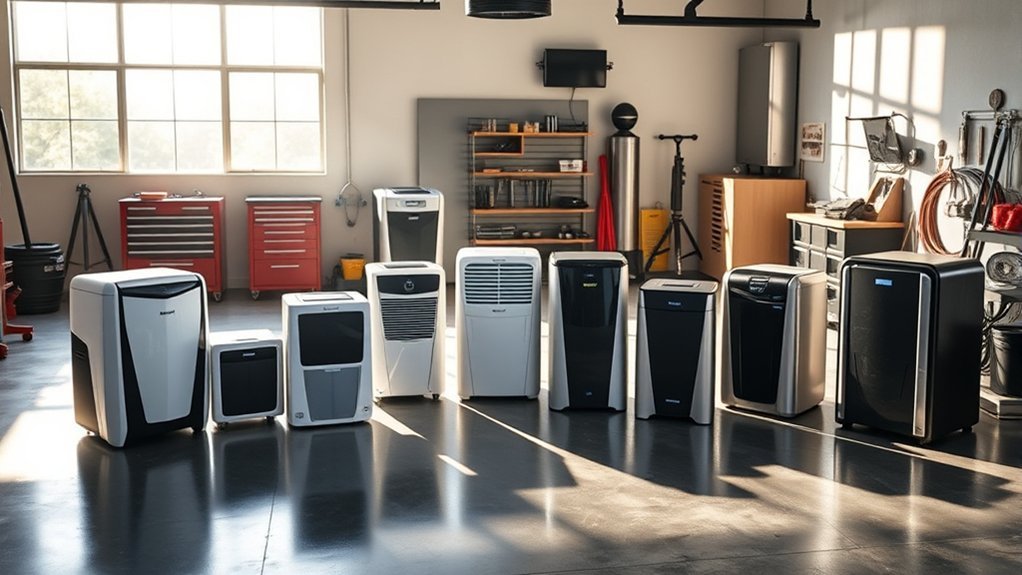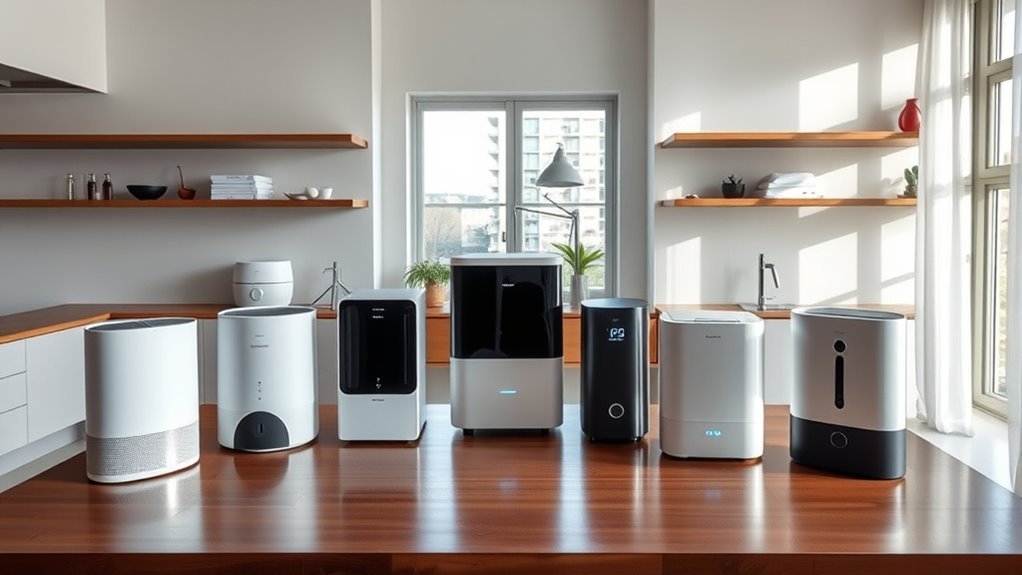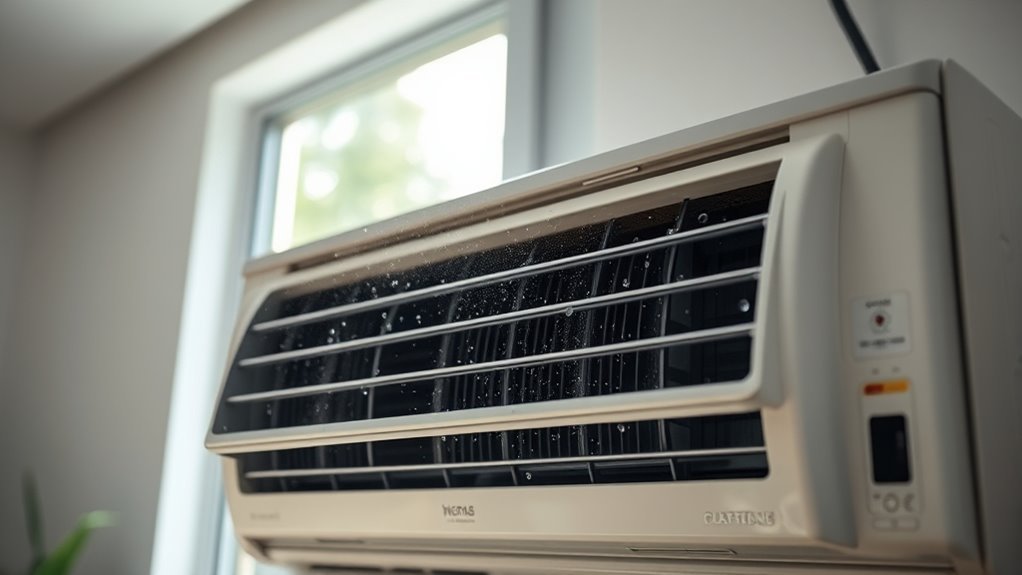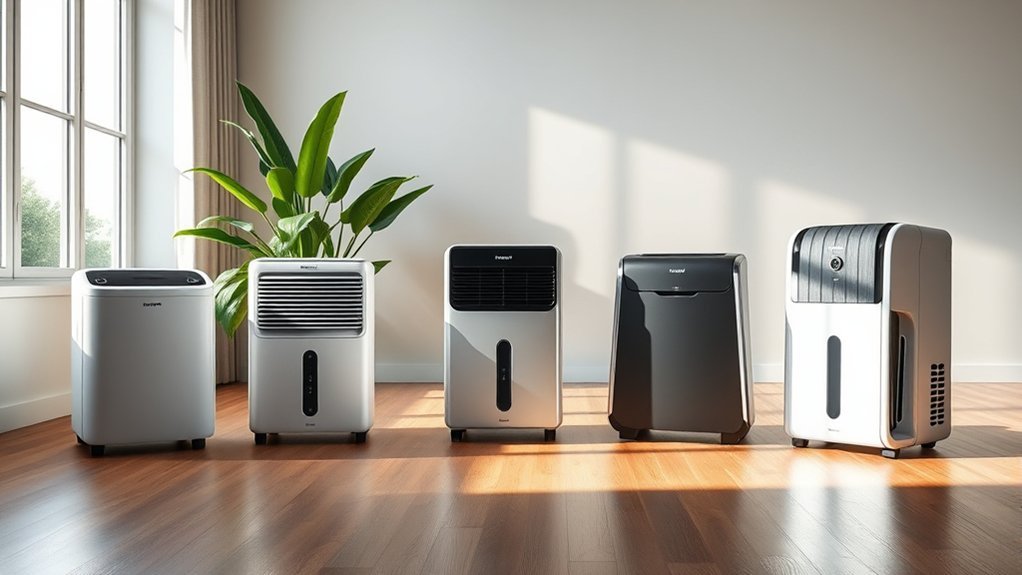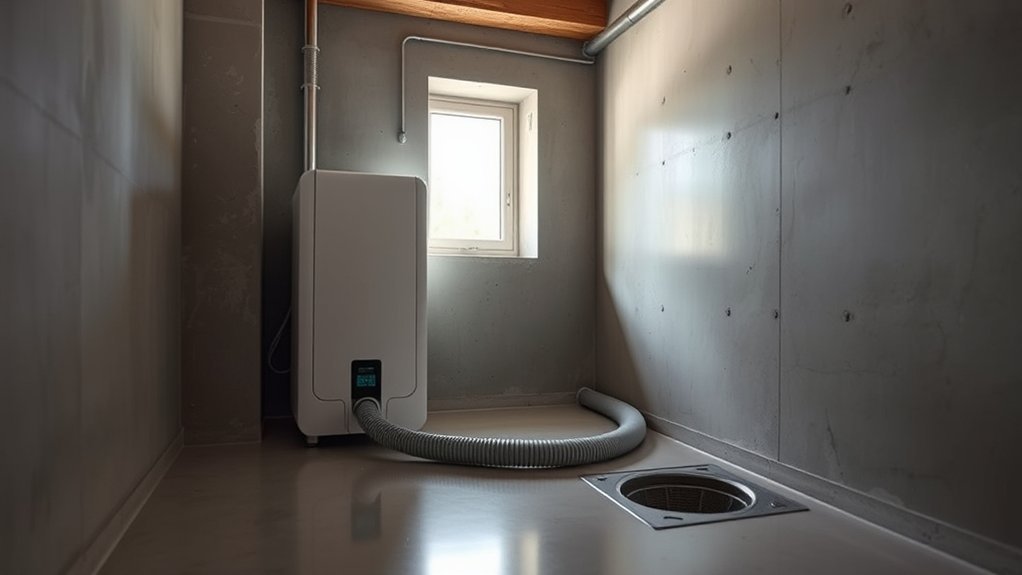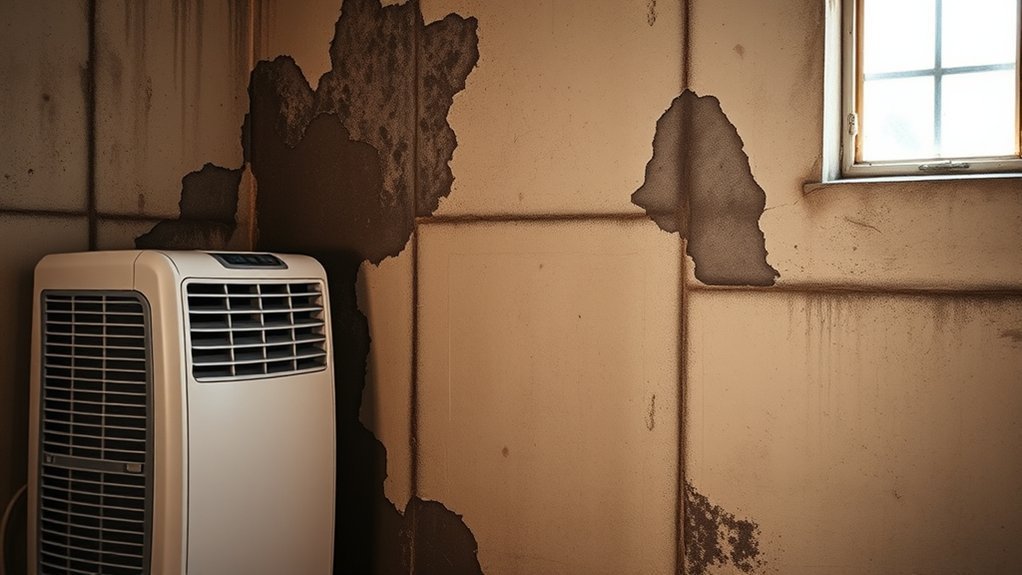
A dehumidifier does not kill mold or remove mold from walls, ceilings, furniture, carpet, or drywall. What it does is lower indoor humidity so mold has less moisture to feed on. That makes a dehumidifier useful for prevention and regrowth control, but visible mold still has to be cleaned, removed, or professionally remediated at the source.
Quick Answer
No, a dehumidifier does not kill mold. It lowers relative humidity, which makes the room less favorable for new mold growth. For best results, keep indoor humidity below 60%, ideally between 30% and 50%, then clean visible mold and fix the leak, condensation, or dampness that caused it.
Key Takeaways
- A dehumidifier helps prevent mold by reducing moisture, but it does not clean, kill, or remove established mold colonies.
- The EPA recommends keeping indoor relative humidity below 60%, ideally between 30% and 50% when possible.
- Visible mold still needs physical cleanup, and porous materials such as carpet, ceiling tiles, insulation, and some drywall may need removal.
- A HEPA air purifier can reduce airborne spores, but it cannot fix damp materials or replace mold remediation.
- Call a professional if the mold covers more than about 10 square feet, keeps coming back, involves HVAC, follows flooding or sewage, or affects someone with asthma, COPD, immune suppression, or severe allergies.
At a Glance
| Time Required | 15 minutes to set up a dehumidifier; several hours to several days to lower humidity, depending on room size, moisture load, and drainage. |
| Difficulty | Easy for humidity control; moderate to professional-level if visible mold, porous materials, or water damage are involved. |
| Tools Needed | Dehumidifier, hygrometer, drain hose or collection tank, gloves, eye protection, N95 or better respirator for small cleanup, detergent, clean cloths, and trash bags for contaminated porous items. |
| Cost | Usually the cost of a hygrometer and a properly sized dehumidifier; professional remediation costs more and depends on contamination size, materials, and water damage. |
Does a Dehumidifier Kill Mold?
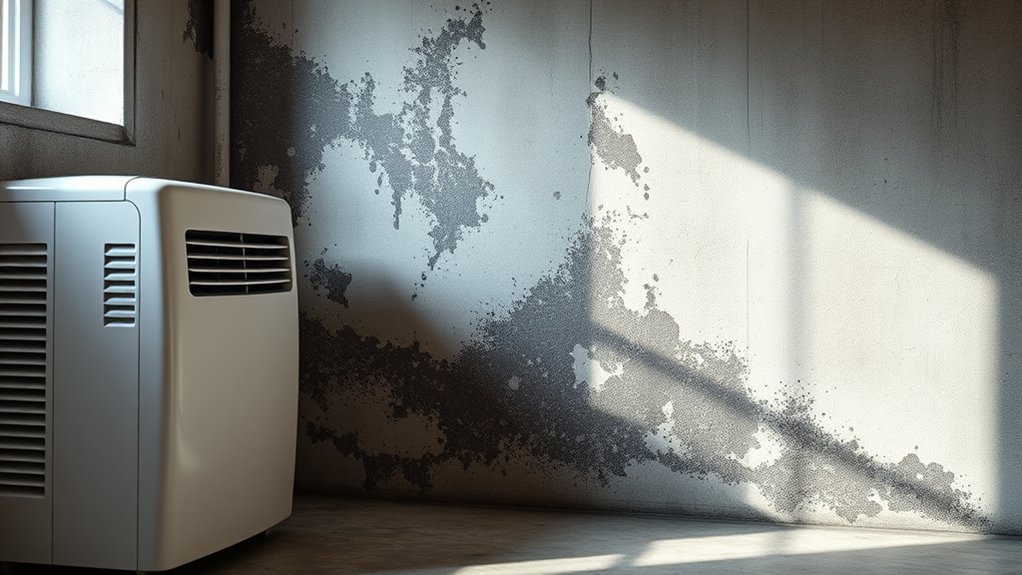
No. A dehumidifier does not kill mold spores, remove mold stains, disinfect contaminated surfaces, or pull mold out of porous materials. It works by removing water vapor from the air, which lowers relative humidity and makes the space less friendly to mold growth.
The distinction matters. Mold needs moisture to grow, so a dehumidifier can help prevent new growth and reduce the chance that cleaned areas will become moldy again. But if mold is already visible or musty odors are coming from damp materials, drying the air is only one part of the fix.
The EPA explains that there is no practical way to eliminate all mold and mold spores indoors. The way to control indoor mold growth is to control moisture. That means you need both parts of the job: lower the humidity and remove the mold or water-damaged material.
Note: A dry mold colony is not the same as a removed mold colony. Mold can become inactive when moisture drops, but spores and fragments may remain on the surface until the material is cleaned or removed.
How Dehumidifiers Affect Mold Growth
A dehumidifier changes the indoor conditions that let mold spread. When relative humidity stays high, damp surfaces, condensation, and porous materials can support mold growth. When humidity is controlled, mold has less moisture available.
The EPA recommends keeping indoor relative humidity below 60%, ideally between 30% and 50% if possible. That range is a prevention target, not a cleanup method for existing mold.
| Humidity level | What it means for mold |
|---|---|
| Above 60% | Mold risk rises, especially if surfaces are cool, damp, dusty, or poorly ventilated. |
| 50%–60% | Better than high humidity, but still worth watching in basements, bathrooms, laundry rooms, and crawl spaces. |
| 30%–50% | The preferred prevention range for most homes when it can be maintained comfortably and safely. |
| After cleanup | Stable humidity helps reduce the chance of regrowth, but only if the water source has been corrected. |
The best use of a dehumidifier is prevention and maintenance: keep materials dry enough that mold has less chance to start, spread, or return after cleanup.
What a Dehumidifier Can and Can’t Do
A dehumidifier is useful, but it has limits. It controls moisture in the air. It does not repair leaks, clean contaminated materials, or disinfect a room.
| A dehumidifier can help with | A dehumidifier cannot do |
|---|---|
| Lowering indoor humidity | Kill mold growing on surfaces |
| Reducing condensation on windows, pipes, and cool surfaces | Remove mold stains or embedded contamination |
| Helping cleaned areas stay dry | Fix plumbing leaks, roof leaks, foundation seepage, or poor drainage |
| Reducing the chance of regrowth after proper cleanup | Make moldy carpet, insulation, drywall, or ceiling tile safe by itself |
What to Do If You Already Have Mold
If mold is already visible, start with the source of moisture. A dehumidifier can help dry the air, but mold will keep coming back if water is still entering the area.
- Find and fix the water problem. Look for plumbing leaks, roof leaks, foundation seepage, condensation, damp crawl spaces, wet insulation, or poor bathroom and kitchen ventilation.
- Dry wet materials quickly. EPA guidance says water-damaged areas and items should be dried within 24–48 hours to help prevent mold growth.
- Clean hard surfaces. The EPA recommends scrubbing mold off hard surfaces with detergent and water, then drying completely.
- Remove badly contaminated porous materials. Mold can grow into the empty spaces and crevices of porous materials, so ceiling tiles, carpet, insulation, and some drywall may need to be thrown away if they are moldy.
- Run the dehumidifier after source control. Once leaks and wet materials are handled, use the dehumidifier to keep humidity in the prevention range.
Warning: Do not rely on a dehumidifier for large mold problems, sewage contamination, flood damage, mold inside HVAC systems, or mold affecting someone with asthma, COPD, immune suppression, severe allergies, infants, or older adults. In those cases, get professional guidance before cleaning or staying in the affected area.
Recommended Products
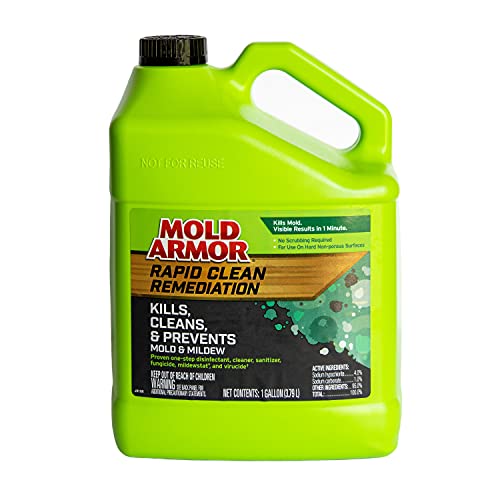
MOLD ARMOR Rapid Clean Remediation kills, cleans, and prevents mold and mildew with visible results in 1 minute.

EFFECTIVE MOISTURE ABSORPTION - Specially designed crystals help reduce excess humidity in enclosed spaces
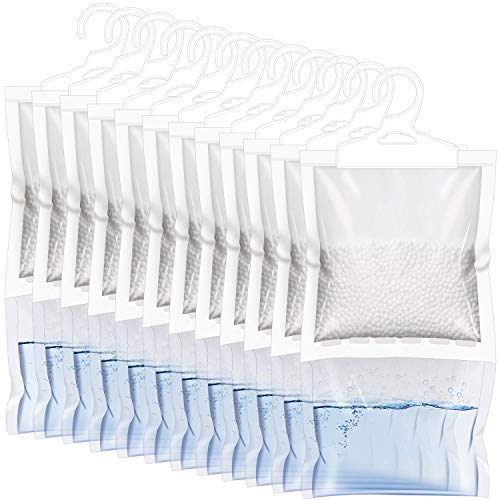
❤Effctive Absorbing (No Scent): Dehumidifier bags use Spherical calcium chloride to enlarge the area to absorb quickly.,Protects clothes and items from excess moisture damage.
How to Use a Dehumidifier for Mold Control
To use a dehumidifier for mold control, treat it as part of a moisture-control plan, not as a mold-removal tool.
- Measure the room first. Place a separate hygrometer in the damp area so you know the actual relative humidity where the mold risk exists.
- Set the target humidity. Aim for 30% to 50% relative humidity when possible, and keep it below 60% at all times.
- Close outside air leaks while running the unit. Keep windows and exterior doors closed unless you are intentionally ventilating during cleanup.
- Place the unit where air can move freely. Leave open space around the intake and exhaust. Do not push the unit tight against walls, curtains, boxes, or furniture.
- Use continuous drainage when possible. A drain hose or pump prevents the bucket from filling and shutting the unit off in a damp basement or crawl space.
- Clean the tank, filter, and drain parts regularly. Follow the manufacturer’s instructions so the unit does not hold stagnant water or dust buildup.
- Keep monitoring after the room feels dry. Basements and bathrooms can swing back above 60% after rain, showers, laundry, or seasonal humidity changes.
Pro Tip: Do not trust only the dehumidifier’s built-in display. Put a small hygrometer across the room or near the dampest wall so you can see whether the whole space is actually staying below 60%.
Best Places to Use a Dehumidifier
A dehumidifier works best in moisture-prone spaces where humidity often rises, air movement is weak, or building materials stay cool and damp. The most useful rooms are usually basements, bathrooms, laundry rooms, kitchens, crawl spaces, storage rooms, and finished rooms built below grade.
In a basement, a dehumidifier can reduce musty odors and damp air, but it cannot stop liquid water coming through cracks, walls, floors, or a failed sump system. In bathrooms and laundry rooms, it can help after showers or indoor drying, but exhaust fans and ventilation still matter. In crawl spaces, it may help only after drainage, vapor barrier, insulation, and air-sealing problems are addressed.
For ideal performance, place the unit near the damp zone but not where airflow is blocked. Keep interior doors open if you want one unit to affect connected rooms. If the space is divided by walls or closed doors, you may need more than one unit or better air circulation.
Choose the Right Size and Drainage Setup
Dehumidifier “size” usually means how much water the unit can remove in 24 hours, measured in pints per day. ENERGY STAR notes that the capacity you need depends on the size of the space and how damp that space is before dehumidification.
Choose a model based on:
- Room size: Larger rooms need more moisture-removal capacity.
- Dampness level: A slightly humid bedroom needs less capacity than a wet basement with musty odors and condensation.
- Drainage: A bucket works for occasional use, but a hose or pump is better for basements and crawl spaces.
- Temperature: Cold basements may require a unit designed to operate well at lower temperatures with auto-defrost.
- Maintenance access: You need to reach the filter, tank, hose, and outlet safely.
An undersized unit may run constantly without reaching the target humidity. An oversized unit can cost more than needed, but in very damp spaces, extra capacity and continuous drainage may be worth it.
Recommended Products

【The Undisputed Champion — Industry‑Leading Dehumidifier Brand】When you choose AEOCKY, you get double market validation. In 2025, AEOCKY was an industry‑leading dehumidifier brand on Amazon US. This means you’re not just choosing a flagship from a market leader, but the top choice proven by millions of real users—representing the ultimate combination of performance, quality, and trust.

【Reduce humidity - Enhance comfort】:Massive Capacity + Wide Coverage. This dehumidifier has dehumidification capacity ranging 45- 80 pints—outperforming standard units while covering 4,500 sq. ft. of living space. Great dehumidifier for basements, large house, garages, bedroom, bathroom and gyms where excess humidity triggers cause unpleasant odors and discomfort. The result? A noticeably drier, fresher, and more comfortable environment for your entire family.

𝐄𝐍𝐄𝐑𝐆𝐘 𝐒𝐓𝐀𝐑 𝐌𝐨𝐬𝐭 𝐄𝐟𝐟𝐢𝐜𝐢𝐞𝐧𝐭 𝟐𝟎𝟐𝟓 𝐟𝐨𝐫 𝐋𝐨𝐰𝐞𝐫-𝐂𝐨𝐬𝐭 𝐃𝐚𝐢𝐥𝐲 𝐔𝐬𝐞:Designed for powerful moisture removal with energy-conscious performance, this Vellgoo ENERGY STAR Most Efficient 2025 dehumidifier helps control humidity while reducing unnecessary energy waste. Ideal for humid seasons and large spaces that require long-running moisture control.
Why Mold Keeps Coming Back
Mold keeps coming back when the moisture problem is still active. Lowering the air humidity helps, but it does not correct damp drywall, hidden leaks, wet insulation, condensation inside walls, or porous materials that remain contaminated.
Hidden Moisture Sources
Even after visible cleanup, mold can return if hidden moisture keeps feeding it. Look beyond the surface patch. Check under sinks, behind toilets, around tubs, near windows, around HVAC equipment, behind baseboards, under carpet, in closets against exterior walls, and around foundation walls.
- Inspect plumbing, roof, window, and foundation leak paths.
- Check condensation points, especially on cold pipes, windows, and poorly insulated exterior walls.
- Use a hygrometer and, when needed, a moisture meter to confirm that materials are drying.
If a dehumidifier lowers room humidity but one wall, floor, or ceiling area stays damp, you likely have a source problem that needs repair.
Spores in Porous Materials
Porous materials can hold mold below the surface. Drywall paper, wood, carpet padding, fabric, insulation, and ceiling tiles can trap moisture and contamination in small spaces that surface wiping does not reach.
That is why the dehumidifier alone is not enough. It can dry the room air, but it will not pull mold out of drywall, carpet, or insulation. If a porous item is moldy and cannot be cleaned thoroughly, removal may be safer than repeated drying and wiping.
Humidity Triggers Regrowth
When indoor humidity rises above 60% for long periods, mold risk increases again. This is especially common after heavy rain, seasonal humidity, poor ventilation, indoor laundry drying, or a bathroom exhaust fan that vents poorly.
- Keep indoor humidity between 30% and 50% when possible.
- Repair moisture sources before depending on a dehumidifier.
- Confirm that cleaned surfaces remain dry after rain, showers, laundry, and seasonal changes.
When It’s Not Enough
Lowering indoor humidity helps stop mold from spreading, but it does not remove established growth or hidden contamination. A dehumidifier is not enough when the mold source is active, the material is damaged, or the affected area is too large for safe homeowner cleanup.
The EPA says that if the moldy area is less than about 10 square feet, roughly a 3-foot by 3-foot patch, many homeowners can handle the cleanup themselves. Larger areas, major water damage, hidden mold, HVAC contamination, sewage, or recurring growth should be evaluated by a qualified professional.
Lower humidity can slow mold, but it will not remove established growth, repair water damage, or make contaminated porous materials clean.
You should also be more cautious if anyone in the home has asthma, COPD, immune suppression, severe allergies, or persistent respiratory symptoms. The CDC warns that people with chronic respiratory diseases such as asthma or COPD may have trouble breathing when exposed to mold and should not take part in cleanup.
Pair It With a HEPA Air Purifier
A HEPA air purifier can help reduce airborne particles, including mold spores, while a dehumidifier controls moisture. The two devices solve different parts of the problem.
Recommended Products

Cleaner Air In Minutes: Purivortex is proven to filter common pollutants from your home’s air. This air purifier purifies rooms up to 880 ft² in one hour. It can purify a 215 ft² room in about 15 minutes, giving you noticeably fresher air in a short time. Breathe clean, crisp air and feel the difference in your space. (*Tested in an ISO 17025 certified laboratory under typical residential room ventilation conditions.)

MOOKA B-D02L AIR PURIFIER FOR LARGE ROOM: With the high-efficiency filtration system, the air purifier covers an area up to 1076 ft². 6 air changes per hour in 215 ft², 1 air changes per hour in 1076 ft². Modern design fits in any space from small to large rooms, bedrooms, living rooms, offices, nurseries, kitchens and basements. Perfect for pet owners, babies, children, the elderly, or anyone wanting to improve the air quality

𝐀𝐇𝐀𝐌 𝐕𝐞𝐫𝐢𝐟𝐢𝐞𝐝 & 𝐇𝐢𝐠𝐡 𝐂𝐀𝐃𝐑 𝐕𝐚𝐥𝐮𝐞: Certified by the Association of Home Appliance Manufacturers, this air purifier provides reliable performance with a Smoke/Dust/PM2.5 CADR of 226 CFM (384 m³/h) and a Pollen CADR of 244 CFM (415 m³/h). AHAM certification guarantees effective, high-speed air purification for your home.
HEPA Captures Airborne Spores
The EPA explains that a HEPA filter can theoretically remove at least 99.97% of dust, pollen, mold, bacteria, and other airborne particles at 0.3 microns. That makes HEPA filtration useful when spores are airborne during normal activity or after disturbed materials.
Still, HEPA filtration is not remediation. It does not dry a wall cavity, remove mold from carpet, or fix a leak. It only filters air that passes through the purifier.
Better Results Together
For a mold-prone room, the stronger approach is:
- Fix the moisture source so new water is not entering.
- Clean or remove contaminated material so existing mold is not left in place.
- Run a dehumidifier to keep the room below 60% relative humidity.
- Use a HEPA purifier to reduce airborne spores and particles, especially during and after cleanup.
If odors remain after cleanup and drying, an activated carbon stage may help with some smells, but persistent musty odor usually means there is still damp material or hidden mold somewhere.
Frequently Asked Questions
Can mold grow even with a dehumidifier?
Yes. Mold can still grow if humidity stays above 60%, if surfaces remain wet, if there is a hidden leak, or if contaminated porous materials were never removed. A dehumidifier helps control air moisture, but it does not guarantee that every surface in the room is dry.
Should you use a dehumidifier if you have COPD?
A dehumidifier may help keep humidity in a safer prevention range, but it is not a medical treatment. If you have COPD, asthma, immune suppression, or severe allergies, avoid cleaning mold yourself and consider professional help if mold is visible or smelled. Ask your healthcare provider for personal advice if symptoms worsen indoors.
What pulls mold out of the air?
A true HEPA air purifier can capture airborne mold spores that pass through the filter. Good HVAC filtration can also help if the system is clean and properly maintained. Filtration reduces airborne particles, but it does not remove mold growing on damp surfaces.
Can you live in a house with mold in the basement?
It depends on the size of the problem, whether mold can be smelled in living areas, and who lives in the home. A small isolated patch may be manageable with proper cleanup and moisture repair. Large, recurring, hidden, or musty mold problems should be treated seriously, especially if anyone has asthma, COPD, allergies, immune suppression, or ongoing respiratory symptoms.
Will mold die if you dry it out?
Drying can make mold inactive and slow its growth, but it does not reliably remove spores, fragments, staining, or contamination. Once moisture returns, mold can grow again. That is why drying should be paired with cleanup and source repair.
Should you run a dehumidifier all day for mold?
Run it long enough to keep the room below 60% relative humidity, ideally 30% to 50%. In a damp basement, that may mean continuous operation with a drain hose. In a bathroom or laundry room, it may only need to run after moisture-producing activities.
Can a dehumidifier make mold worse?
A working dehumidifier usually reduces mold risk, but poor maintenance can create problems. Empty and clean the tank, clean or replace filters as directed, keep the drain hose clear, and make sure the unit is not blowing air across visible mold during cleanup.
Conclusion
A dehumidifier does not kill mold. It lowers indoor humidity so mold has a harder time growing, spreading, or returning after cleanup. That makes it a useful prevention tool, especially in basements, bathrooms, laundry rooms, crawl spaces, and other damp areas.
For real mold control, use the full sequence: fix the moisture source, clean or remove contaminated materials, keep humidity below 60%, and monitor the area with a hygrometer. Add a HEPA air purifier if airborne spores or musty air are a concern, but do not treat filtration or dehumidification as a substitute for cleanup.
Sources
- U.S. Environmental Protection Agency: Mold — supports the core principle that indoor mold control depends on moisture control.
- U.S. Environmental Protection Agency: Mold Course Chapter 2 — supports the humidity target of below 60%, ideally 30% to 50%.
- U.S. Environmental Protection Agency: Mold Cleanup in Your Home — supports hard-surface cleaning, porous-material removal, and the roughly 10-square-foot cleanup threshold.
- Centers for Disease Control and Prevention: Mold Clean Up Guidelines and Recommendations — supports safety guidance for people with allergies, immune suppression, asthma, and COPD.
- U.S. Environmental Protection Agency: What is a HEPA filter? — supports the HEPA 99.97% at 0.3 microns filtration statement.
- ENERGY STAR: Dehumidifiers — supports dehumidifier capacity and sizing guidance.