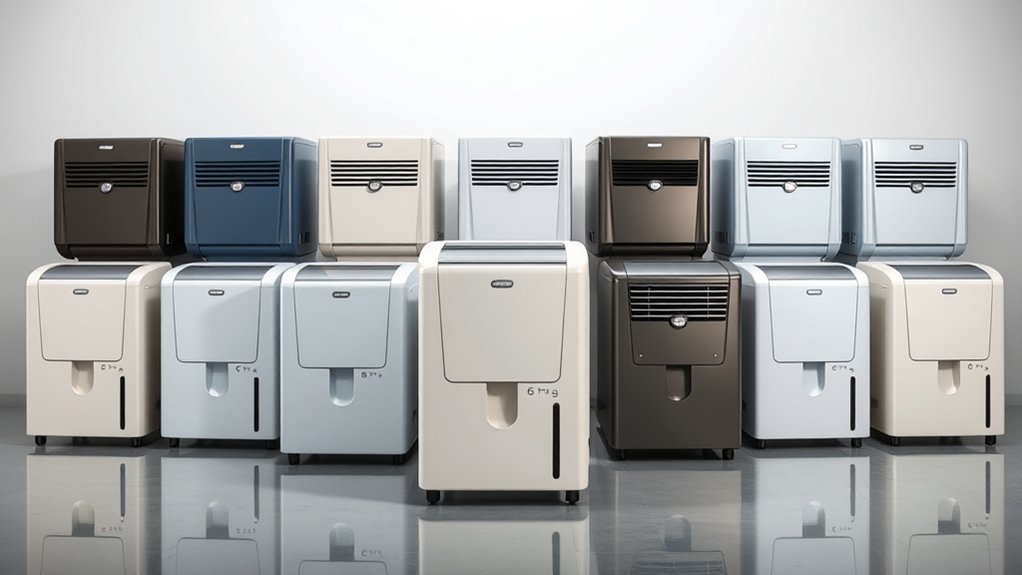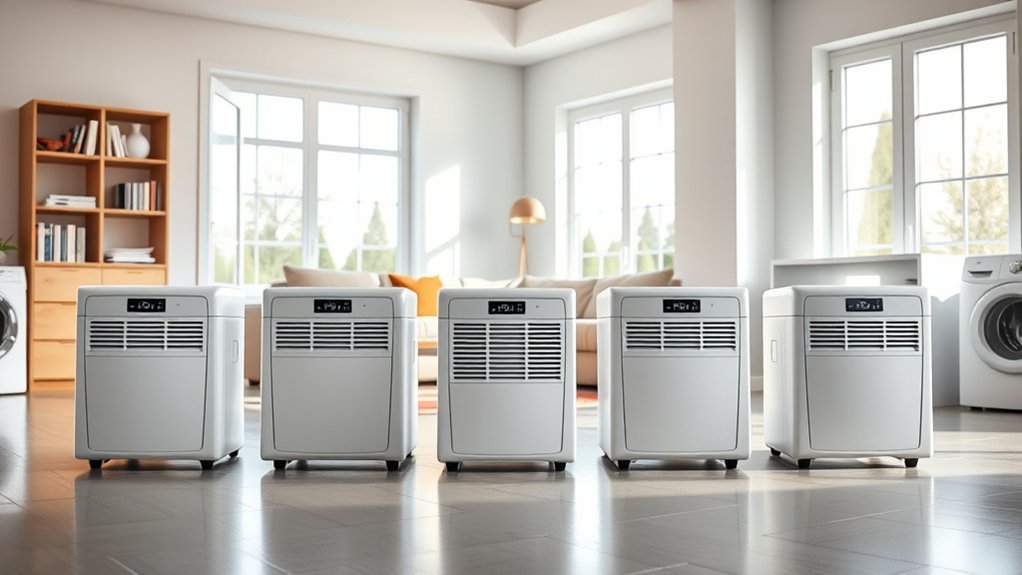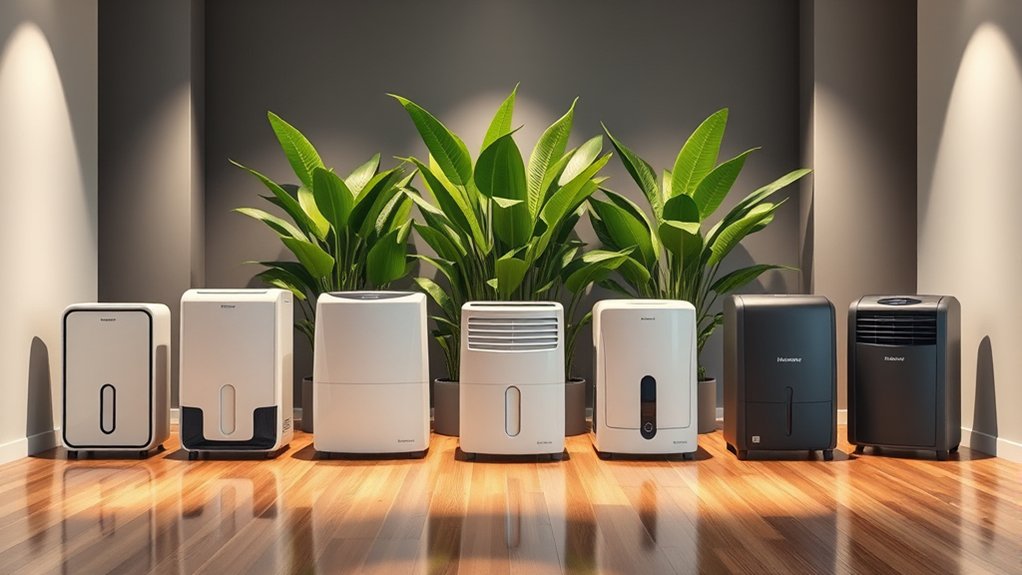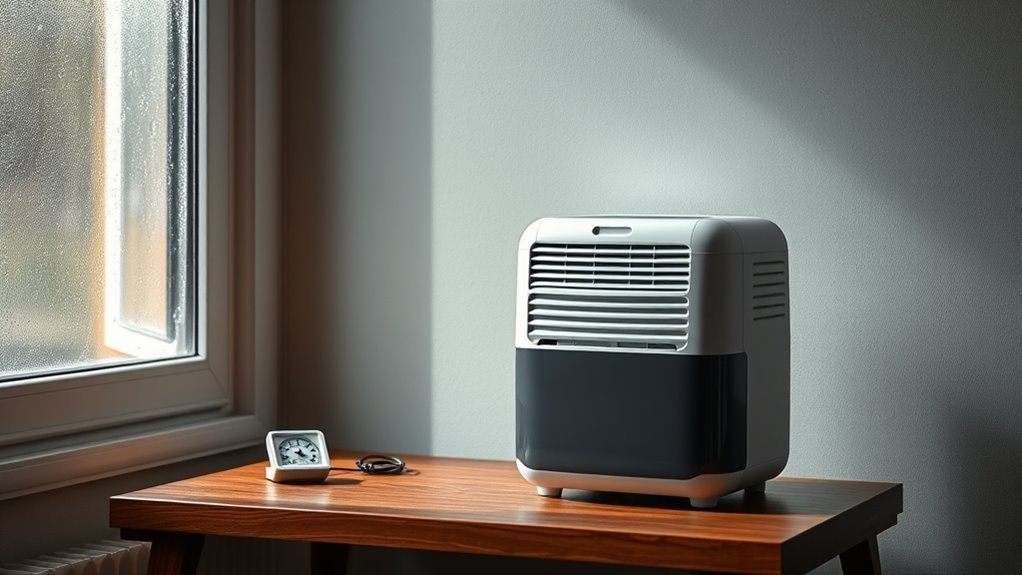
Mini dehumidifiers are good for mild moisture control in small enclosed spaces such as closets, cabinets, RVs, laundry corners, and some small bedrooms or bathrooms. Their main advantages are compact size, quiet operation, and low power draw. Their main limitation is moisture-removal capacity: many thermoelectric models collect water in hundreds of milliliters per day, so they are not substitutes for full-size dehumidifiers in wet basements, large rooms, active leaks, or persistent high humidity.
Last updated: August 19, 2026
Quick Answer
Mini dehumidifiers are good when you need mild humidity control in a small, enclosed area. They can reduce light condensation and closet moisture, but their extraction capacity is limited. For example, one current 500ml Pro Breeze thermoelectric model lists up to 250ml of moisture removal per day. If humidity remains above 60%, dampness keeps returning, or you have leaks, standing water, or visible mold, address the moisture source and use a properly sized higher-capacity dehumidifier when needed.
Key Takeaways
- Mini dehumidifiers work best in small, enclosed spaces where the moisture problem is mild.
- Use a hygrometer to judge performance. EPA guidance says to keep indoor relative humidity below 60%, ideally around 30% to 50% when possible.
- Thermoelectric Peltier units are compact and quiet but remove much less water than higher-capacity compressor dehumidifiers.
- Daily extraction matters more than tank size or advertised room coverage.
- If humidity stays high despite continuous operation, investigate the moisture source instead of simply adding more tiny units.
At a Glance
| Best For | Closets, cabinets, RVs, boats, laundry nooks, and small rooms with mild dampness; bathrooms only where the manufacturer permits use and the appliance can stay outside splash zones |
| Not Ideal For | Wet basements, flood cleanup, active leaks, large open rooms, structural dampness, or mold remediation |
| Tools Needed | A basic hygrometer, tape measure, suitable outlet, and enough clearance around the air intake and outlet |
| Buying Focus | Daily extraction, operating-temperature range, tank design, automatic shutoff, noise, and whether the unit can actually lower measured room humidity |
Evidence Note: This is an informational guide, not a hands-on product test. Manufacturer extraction, noise, coverage, and power figures below are identified as manufacturer-listed specifications. Actual moisture collection changes with temperature, relative humidity, airflow, room size, and the amount of moisture entering the space.
Are Mini Dehumidifiers Good for Small Spaces?
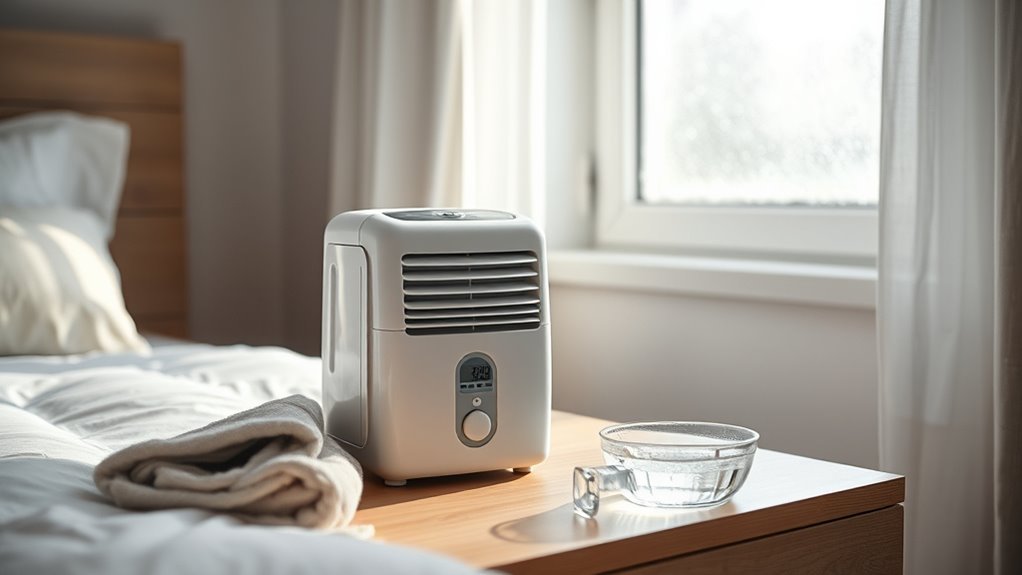
Yes. Mini dehumidifiers can be useful for small spaces when the humidity problem is light. They are especially practical where a full-size appliance would be bulky, such as a wardrobe, storage cabinet, RV, boat cabin, small bedroom, or another enclosed area.
The important question is not whether the tank collects some water. It is whether the unit lowers the relative humidity in the space. A mini unit may collect visible water and still be too weak if humid air enters the room faster than the appliance removes moisture.
The EPA recommends keeping indoor relative humidity below 60%, ideally between 30% and 50% when possible. The CDC recommends keeping home humidity no higher than 50% all day to help prevent mold. Use a separate hygrometer to check whether your room is moving toward that range rather than judging performance from the water tank alone.
Pro Tip: Put a hygrometer in the room before buying. If the space repeatedly stays above 50% to 60% relative humidity, moisture control may help. If humidity is already in a comfortable range, extra dehumidification may be unnecessary.
How Mini Dehumidifiers Work
Mini dehumidifiers remove moisture in different ways depending on their technology. The most common compact options are thermoelectric Peltier units and renewable or powered desiccant units. Small compressor dehumidifiers are larger but remove substantially more moisture.
| Type | How It Removes Moisture | Best Use | Main Limitation |
|---|---|---|---|
| Thermoelectric Peltier | Cools a small surface so water vapor condenses into a tank | Warm, enclosed spaces with mild moisture | Low extraction compared with compressor units |
| Renewable desiccant | Silica gel or another desiccant absorbs water vapor and is regenerated later | Closets, safes, cabinets, RV storage, and other very small enclosed spaces | Not designed to dehumidify a persistently damp room quickly |
| Compact compressor | Uses refrigerant coils and a compressor to condense much larger amounts of water | Bedrooms, offices, laundry rooms, and other rooms needing stronger humidity control | Larger, heavier, and usually louder than tiny thermoelectric units |
Peltier Mini Dehumidifiers
Many countertop mini dehumidifiers use thermoelectric, or Peltier, technology. A small fan pulls humid air across a cooled surface. Water condenses on that surface, drains into a tank, and the drier air returns to the room.
Peltier models are popular because they are compact and compressor-free. For example, the Pro Breeze 500ml Mini Dehumidifier currently lists Peltier technology, a 0.5L tank, up to 250ml daily extraction, 33 dB operation, and a 15–30°C working-temperature range. Treat the extraction figure as a manufacturer-listed maximum rather than a promise of daily room performance.
The Eva-Dry EDV-1100 currently lists approximately 33 dB operation, 22-watt power use, and automatic shutoff when its reservoir is full.
Desiccant Mini Dehumidifiers
Desiccant units absorb moisture into a drying material instead of relying on a small cold plate. The term covers several different designs, from passive moisture absorbers to powered rotary-desiccant room dehumidifiers.
Renewable silica-gel units are useful in closets, safes, cabinets, RV storage areas, and other spaces where continuous electrical operation is inconvenient. For example, the Eva-Dry E-333 uses renewable silica gel, operates without a cord while absorbing moisture, and is plugged in later to regenerate the desiccant.
These renewable units are best treated as slow moisture-control tools for enclosed storage spaces. They are not substitutes for powered room dehumidifiers when a bedroom, basement, or laundry area stays humid every day.
Automatic Shutoff and Water Tanks
Many powered mini dehumidifiers use a small removable tank and automatic full-tank shutoff. This keeps the appliance from continuing to collect water after the reservoir reaches capacity.
Tank capacity and extraction capacity are different. A larger tank means you may empty it less often. It does not prove that the unit removes water faster.
Where Mini Dehumidifiers Work Best
Mini dehumidifiers work best when the space is enclosed and the moisture load is modest. They become less effective in open layouts because new humid air continually mixes into the area.
| Space | Mini Dehumidifier Fit | What to Watch |
|---|---|---|
| Closet or wardrobe | Good fit for light dampness and musty conditions | Leave airflow space around powered units |
| Bathroom | May help with lingering humidity after showers | Use exhaust ventilation first; follow the appliance manual and keep electrical units outside splash zones |
| Small bedroom | Can help when moisture is mild and the room stays reasonably warm | Measure RH rather than relying on advertised coverage |
| RV, boat, or camper | Useful in compact enclosed areas | Check leaks, ventilation, available power, and manufacturer-approved use |
| Basement | Usually too weak unless the area is very small, warm, enclosed, and only mildly humid | Persistent basement dampness normally needs source control and higher extraction capacity |
How Mini Dehumidifiers Perform in Real Life
Mini dehumidifier performance depends on room size, starting humidity, temperature, airflow, and how quickly new moisture enters the space. A small unit may collect visible water without producing a large change in room humidity.
For tiny Peltier units, manufacturer-listed extraction is commonly expressed in milliliters or ounces per day rather than the pint-per-day ratings used for higher-capacity portable units. ENERGY STAR explains that portable dehumidifier capacity should be selected using both the size of the space and its dampness level.
This is why daily extraction matters more than an impressive-looking tank or square-foot coverage claim. Treat advertised coverage as a secondary guide. Compare the extraction rate, operating conditions, room RH, temperature, and whether the area stays enclosed.
A mini dehumidifier is successful when it lowers or controls measured humidity in its target space. Water in the tank proves that condensation occurred; it does not by itself prove that the appliance is large enough for the room.
How to Tell If a Mini Dehumidifier Is Actually Working
Use a hygrometer and a simple 24-hour comparison instead of judging the appliance by sound, warm air, or tank level alone.
- Record the starting RH and temperature. Put a separate hygrometer in the target space and note the reading.
- Close the space as normally used. Keep exterior windows closed and avoid repeatedly opening a closet or small room during the test.
- Run the unit for 24 hours. Follow the manufacturer’s operating-temperature, clearance, and safety instructions.
- Record the ending RH and collected water. If the tank fills, note how long the unit remained stopped before it was emptied.
- Judge the humidity trend. The goal is movement toward a reasonable indoor range, not a particular amount of water in the tank.
| What You See | What It Usually Means |
|---|---|
| RH trends downward toward the target range and water collects | The unit is having a measurable effect in that space |
| Tank collects water but RH stays above 60% | The moisture load may exceed the unit’s extraction capacity, or new moisture is continuously entering |
| Little water collects and RH is already around 30% to 50% | Low collection may be normal because there is little excess moisture to remove |
| Little water collects while RH remains high | Check temperature, airflow, room size, blocked vents, operating instructions, and whether the unit is simply undersized |
Why Temperature Matters
Thermoelectric output can fall in cool rooms. For example, Pro Breeze lists a 15–30°C working-temperature range for its 500ml Peltier model. That does not mean every mini dehumidifier shares the same range, so check the operating-temperature specification for your exact unit before using it in a cool basement, garage, or unheated storage space.
Note: A low water level in the tank does not automatically mean the room is dry. The room may already be near its target RH, or the appliance may be too small, too cold, poorly positioned, or unable to keep up with the moisture entering the area.
Which Mini Dehumidifier Type Fits Each Use Case?
Choose the technology and extraction capacity before choosing a particular product. If you are ready to compare individual models, see the separate guide to the best dehumidifiers for small spaces.
| Use Case | Suitable Type | Feature to Prioritize |
|---|---|---|
| Closets, cabinets, and safes | Renewable desiccant or very small Peltier unit | Compact size, quiet operation, and simple maintenance |
| Bathroom or laundry nook | Peltier for light residual humidity; higher-capacity model if moisture is persistent | Automatic shutoff, adequate extraction, and manufacturer-approved placement |
| Small bedroom or home office | Quiet Peltier for mild moisture or compact compressor model for persistent high RH | Low noise plus enough extraction to change measured humidity |
| RV, boat, or camper | Compact electric model or renewable desiccant unit approved for the location | Stable design, suitable power requirements, and secure moisture collection |
| Large or persistently damp room | Properly sized compressor or other higher-capacity dehumidifier | Published daily capacity, humidistat, and drainage options |
Recommended Products

POWERFUL 2,500 SQ. FT. COVERAGE - Stop letting sticky, heavy air dictate your comfort. The BANABIE dehumidifier utilizes a high-efficiency rotary compressor to deliver heavy-duty moisture removal, extracting 32 pints daily (at 95°F, 90%RH). Engineered with a smart integrated airflow system, this unit effectively covers up to 2,500 Sq. Ft., ensuring that your basement, crawl space, or large open floor plans stay bone-dry

Semiconductor dehumidifiers use thermoelectric cooling to remove moisture from the air. They create a drier, more comfortable environment by reducing humidity and improving air quality.
Mini Dehumidifier Pros and Cons
Mini dehumidifiers solve a specific problem: they fit where larger appliances do not. The tradeoff is lower moisture-removal capacity.
| Pros | Cons |
|---|---|
| Compact enough for shelves, counters, closets, and RVs | Limited extraction compared with higher-capacity room dehumidifiers |
| Thermoelectric models can operate quietly | Small tanks may require manual emptying |
| Simple controls and easy setup | Performance depends strongly on room conditions |
| Useful for targeted moisture control | Cannot repair leaks, remove established mold, or solve structural dampness |
How Size and Capacity Affect Performance
Capacity matters more than the word “mini.” A tiny unit may be adequate for a closet but struggle in a bedroom even if its advertised coverage appears large.
Check these numbers and conditions before buying:
- Daily extraction: how much water the unit is rated to remove over 24 hours under stated or manufacturer test conditions.
- Tank capacity: how much collected water the reservoir can hold before it must be emptied or the unit shuts off.
- Operating-temperature range: the temperatures at which the manufacturer specifies the unit should operate.
- Recommended room size: a secondary manufacturer guide that should not replace extraction and measured RH when choosing a unit.
ENERGY STAR’s portable-dehumidifier guidance sizes higher-capacity units according to both square footage and how damp the space is. If a room is consistently damp, has wet spots, or stays above the target humidity range, increase capacity rather than relying on a tiny unit solely because it fits on a shelf.
How to Choose the Right Mini Dehumidifier
Start with the moisture problem, not the appearance or advertised coverage of the appliance.
- Measure humidity first. Use a separate hygrometer and observe the room under normal conditions.
- Identify the moisture source. Check for shower steam, indoor laundry, leaks, condensation, outdoor humidity, or poor ventilation.
- Match capacity to the space. A cabinet requires far less extraction than a bedroom.
- Compare daily extraction. Look for ml/day, oz/day, liters/day, or pints/day and note any stated test conditions.
- Check tank size separately. Tank capacity tells you how often you may need to empty the unit, not how quickly it dries a room.
- Look for automatic shutoff. This prevents powered units from continuing to collect when their tank is full.
- Compare noise ratings. A published dB figure is especially useful in bedrooms and offices.
- Check the operating-temperature range. Do not assume a countertop Peltier unit is appropriate for a cold garage or basement.
- Decide whether you need a humidistat or continuous drainage. Those features are more common on higher-capacity units.
Recommended Products

✔ EASY TO USE: This mini dehumidifier is spill and mess free. Just hang and go! Non-toxic, child and pet safe! Your small rooms will be dry and odor free. Works for areas up to 333 cubic feet.
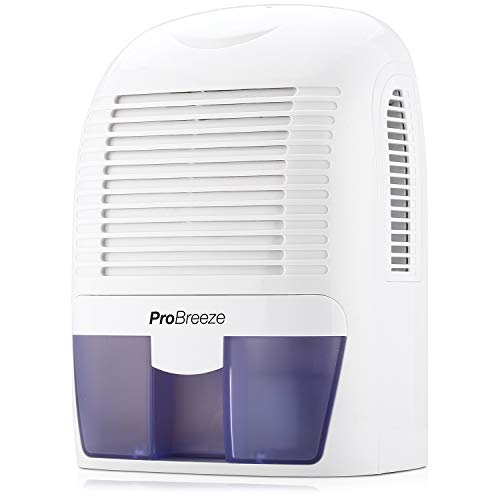
COMPACT & SMALL DEHUMIDIFIER: Lightweight, compact, and portable, this mini dehumidifier removes up to 18 oz of water per day with a 52 oz water tank capacity. They can cover up to 3000 cubic feet (250 sq.ft), leaving ample space for the appliances to function as dehumidifiers for bathroom and moisture absorbers for closet.

【360° Circular】 The cylinder design of the cordless dehumidifier increases the moisture-absorbing area and the 360° circular air inlet makes moisture absorption more efficient.
Placement, Maintenance, and Safety Tips
Correct placement improves airflow and makes your humidity test more meaningful.
- Place powered units on a stable, level surface.
- Keep the air intake and outlet clear according to the manufacturer’s clearance instructions.
- Keep doors and exterior windows closed when you are trying to control one enclosed area.
- In bathrooms, follow the product manual and keep electrical appliances away from showers, tubs, sinks, spray, and standing water.
- Empty and clean water tanks as directed by the manufacturer.
- Remove dust from vents and filters where fitted.
- Use the supplied power adapter or other manufacturer-approved power connection.
- Do not route extension cords through wet areas.
Warning: A dehumidifier can reduce airborne moisture, but it does not remove mold that is already growing or repair the source of water intrusion. Fix leaks and other moisture problems promptly. If mold or water damage is extensive or keeps returning, follow appropriate remediation guidance or get qualified professional help.
Mini Dehumidifier Noise, Heat, and Power Use
Thermoelectric mini dehumidifiers can be quieter than compressor models because they do not use a refrigeration compressor. Noise still varies by fan, housing, operating mode, placement, and the surface underneath the unit.
Power draw should be considered together with extraction. The Eva-Dry EDV-1100, for example, currently lists 22-watt operation, while the Pro Breeze 500ml model lists low-power thermoelectric operation. Low wattage does not automatically mean efficient humidity control: a unit that runs continuously without reducing RH may be the wrong size for the job.
When a Full-Size Dehumidifier Makes More Sense
Move to a higher-capacity dehumidifier when the moisture load exceeds what a mini can remove. Large rooms, persistent basement humidity, indoor laundry loads, recurring condensation, and continuously damp materials can require much more daily extraction.
Choose a higher-capacity unit or investigate the moisture source when you notice:
- Relative humidity remaining above 60% despite extended operation
- Little or no downward RH trend during a controlled 24-hour test
- Condensation returning every day
- Persistent musty odors
- Water stains, seepage, or damp building materials
- Visible mold
- A full mini-dehumidifier tank without meaningful improvement in room RH
- A room that is open, large, cold, or outside the mini unit’s stated operating conditions
For higher-capacity portable units, compare pint-per-day capacity, a built-in humidistat, filtration, drainage options, operating temperature, and ENERGY STAR-certified options where appropriate.
Recommended Products

【Ideal for Large Homes & Basements (Up to 5,000 Sq. Ft)】The Waykar 80 pint dehumidifier efficiently removes up to 80 pints of moisture per day in high-humidity conditions (95°F, 90% RH). In warmer, damp spaces like basements (86°F, 80% RH), it removes 62 pints/day. This dehumidifier for basement is perfect for large areas such as basements, bathrooms, bedrooms, and living rooms. Customize your space by adjusting the humidity level from 30% to 80%, creating a drier and healthier environment
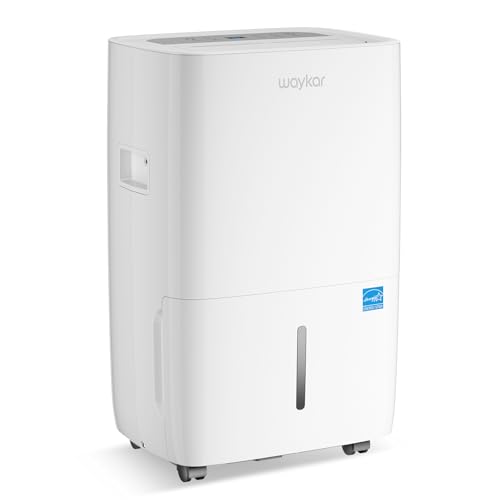
【80 Pint Capacity for Up to 5,000 Sq.Ft Spaces】Quickly removes excess moisture from basements, bathrooms, bedrooms, RVs, and other large living areas, delivering 80 pints per day (95°F, 90% RH).conditions. Designed as a powerful dehumidifier for basement, home, and large spaces, it helps eliminate damp air, condensation—and pet-related odors caused by excess humidity. Even during humid seasons, it works continuously to maintain a dry, comfortable, and healthier indoor environment.

ROOM SIZE & HUMIDITY GUIDANCE: Coverage is based on standard test conditions and may vary with temperature, humidity, airflow, and moisture sources. For 40-50% RH, use continuous drainage and keep the space enclosed. In open areas, humidity may stay around 50-55% RH; for lower humidity, consider a higher-capacity model, even in a smaller space. Humidity readings may vary by location due to normal air circulation and do not necessarily indicate a product issue.
Frequently Asked Questions
Do mini dehumidifiers actually work?
Yes, but only within their capacity. A mini dehumidifier can control mild moisture in a small enclosed space. Judge it by whether a separate hygrometer shows relative humidity trending downward, not simply by whether water appears in the tank.
How much water should a mini dehumidifier collect?
There is no single normal amount. Manufacturer-listed extraction varies by model, and actual collection changes with temperature, humidity, airflow, and moisture load. For example, the Pro Breeze 500ml mini model currently lists up to 250ml per day. Use room RH as the main performance check.
How long does a mini dehumidifier take to work?
Water may appear in the tank within hours when conditions are warm and humid, but room-level humidity changes can take longer. Compare starting and ending RH over about 24 hours under normal room conditions. If RH remains high or does not trend downward, the space may need more capacity or better moisture-source control.
Where should I place a mini dehumidifier?
Put it in the enclosed area where humidity is highest, on a stable surface with the manufacturer’s required clearance around its intake and outlet. Keep exterior windows closed during use. In bathrooms or other wet areas, follow the appliance manual and keep electrical units outside splash zones.
Will a mini dehumidifier work in a basement?
Only in limited conditions. A mini unit may help a very small, warm, enclosed basement area with mild humidity. A large, cool, persistently damp basement normally needs more extraction capacity plus checks for drainage, seepage, leaks, and other moisture sources.
Can a mini dehumidifier stop mold?
It can help reduce excess humidity that supports mold growth, but it cannot remove existing mold or repair a leak. Clean affected materials appropriately, correct the moisture source, and use dehumidification afterward to help keep relative humidity controlled.
Conclusion
Mini dehumidifiers are worth considering for mild, targeted moisture control in small enclosed spaces. Their compact size and quiet operation can make them useful in closets, cabinets, RVs, and lightly humid rooms, but the real test is whether measured relative humidity improves.
Use a hygrometer before and after running the unit, compare daily extraction rather than tank size alone, and check the manufacturer’s operating-temperature range. If humidity remains above 60%, the room shows little improvement after a controlled test, or moisture keeps returning from leaks or damp materials, move to a higher-capacity solution and correct the source of the moisture.
Sources
- U.S. Environmental Protection Agency — Mold Course, Humidity — supports indoor relative-humidity targets and moisture-control guidance.
- Centers for Disease Control and Prevention — Mold — supports keeping home humidity no higher than 50% and addressing leaks and ventilation.
- ENERGY STAR — Dehumidifiers — supports portable-dehumidifier sizing by space size and dampness level.
- Pro Breeze — 500ml Mini Dehumidifier — supports the example Peltier specifications, including extraction, tank capacity, noise, and operating range.
- Eva-Dry — EDV-1100 Petite Electric Dehumidifier — supports the example 22-watt power use, approximately 33 dB operation, and automatic shutoff.
- Eva-Dry — E-333 Renewable Mini Dehumidifier — supports the renewable silica-gel example and regeneration process.