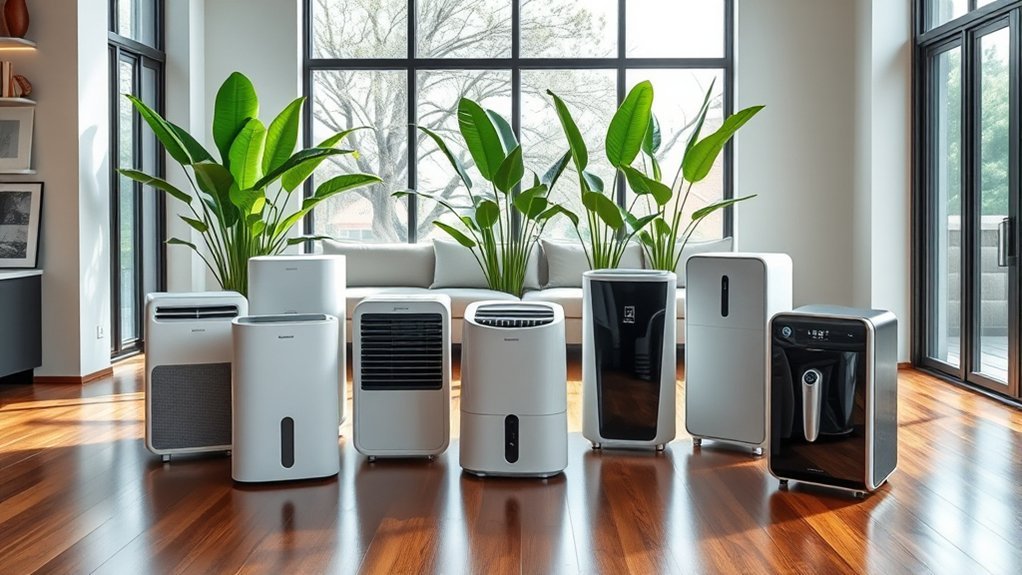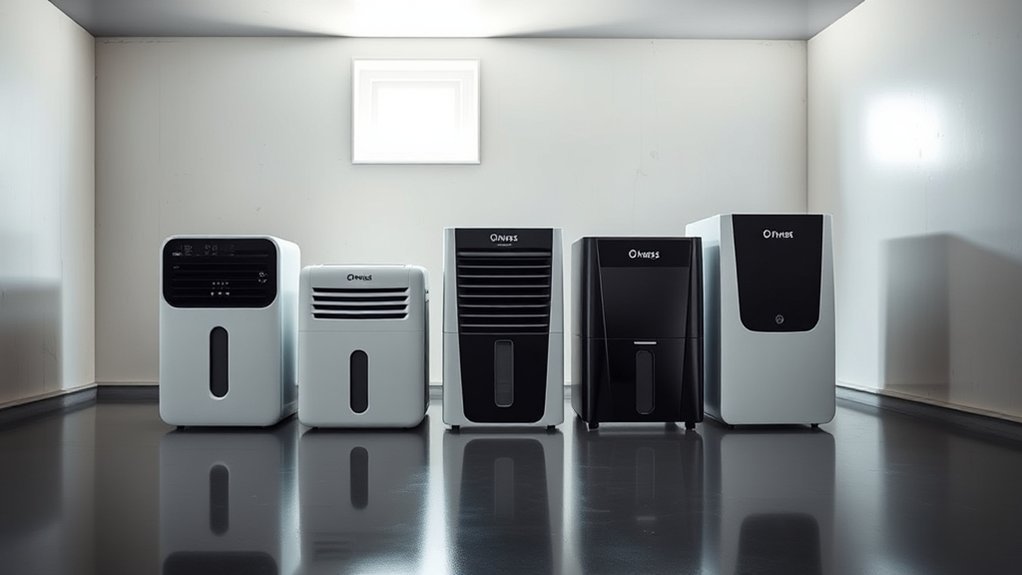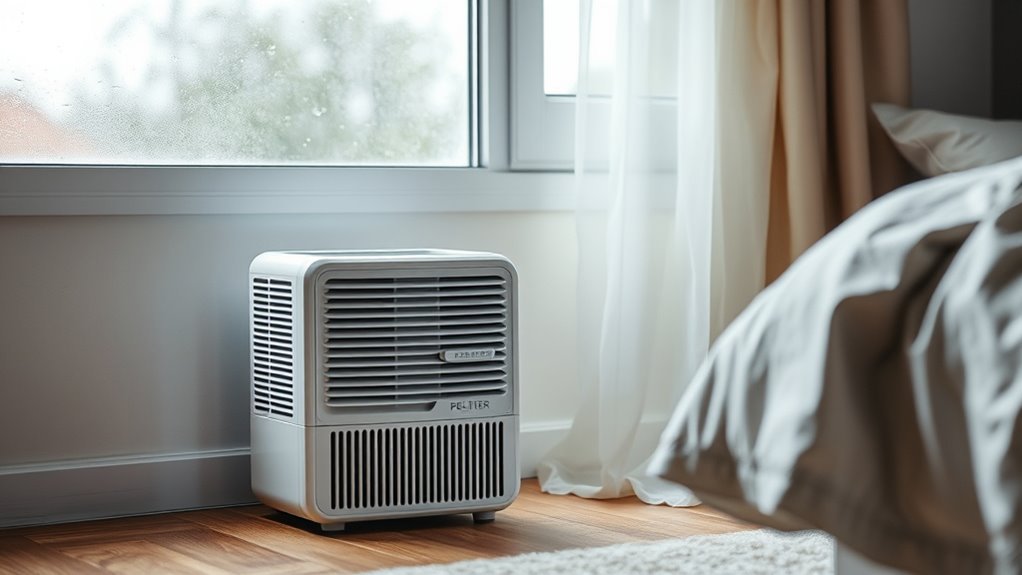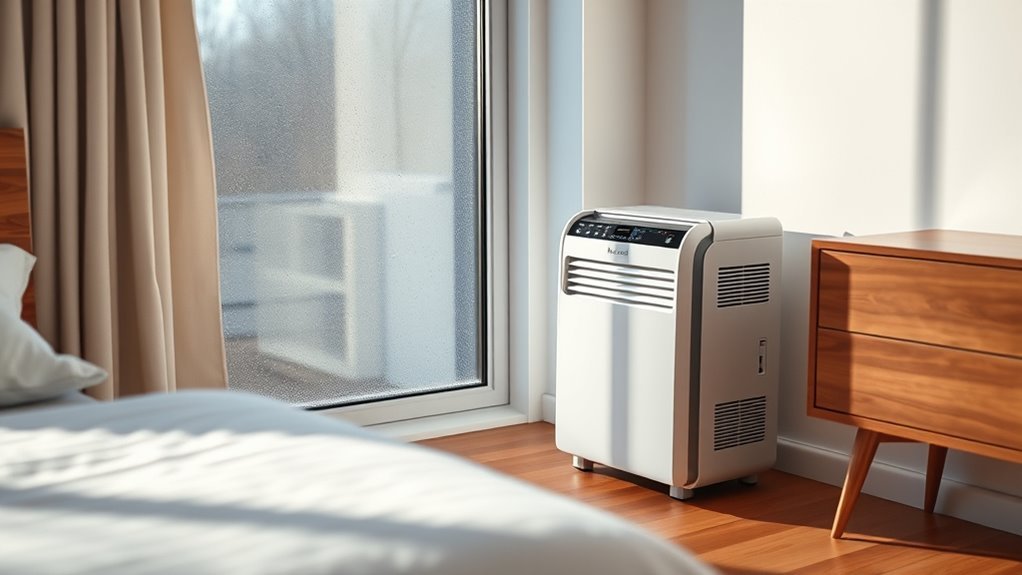
Yes, where you put a dehumidifier matters. The best spot is usually a central, open area in the dampest room, with clear space around the vents, a level floor, safe access to an outlet, and an easy way to empty or drain the tank. Good placement helps the unit pull in moist air, move dry air back through the room, and hold a healthier indoor humidity level without wasting energy.
Quick Answer
Put a dehumidifier in the dampest room, near the center if possible, with the intake and exhaust vents unobstructed. Keep it on a flat, dry surface, away from splash zones, heat sources, curtains, and tight corners. Use a hygrometer and aim for about 40% to 50% relative humidity.
Key Takeaways
- Choose the dampest room first, such as a basement, laundry area, crawl-space-adjacent room, or bedroom with condensation.
- Keep the dehumidifier in an open area with enough clearance for airflow; do not trap it in a closet, tight corner, or behind furniture.
- Use exhaust fans for bathrooms and kitchens first, and never place a powered dehumidifier where it can be splashed or sit on a wet floor.
- Measure humidity with a hygrometer instead of guessing. For mold prevention, keep indoor humidity no higher than 50% when possible.
- If you use continuous drainage, keep the hose sloping downward to a drain or use a pump when water must move uphill.
At a Glance
| Time Required | 10 to 20 minutes for placement and setup; longer if routing a drain hose |
| Difficulty | Easy |
| Tools Needed | Hygrometer, owner’s manual, clean filter, optional drain hose or condensate pump |
| Cost | Usually $0 if you already own the unit; about $10 to $50 for a basic hygrometer |
Where Should You Put a Dehumidifier?
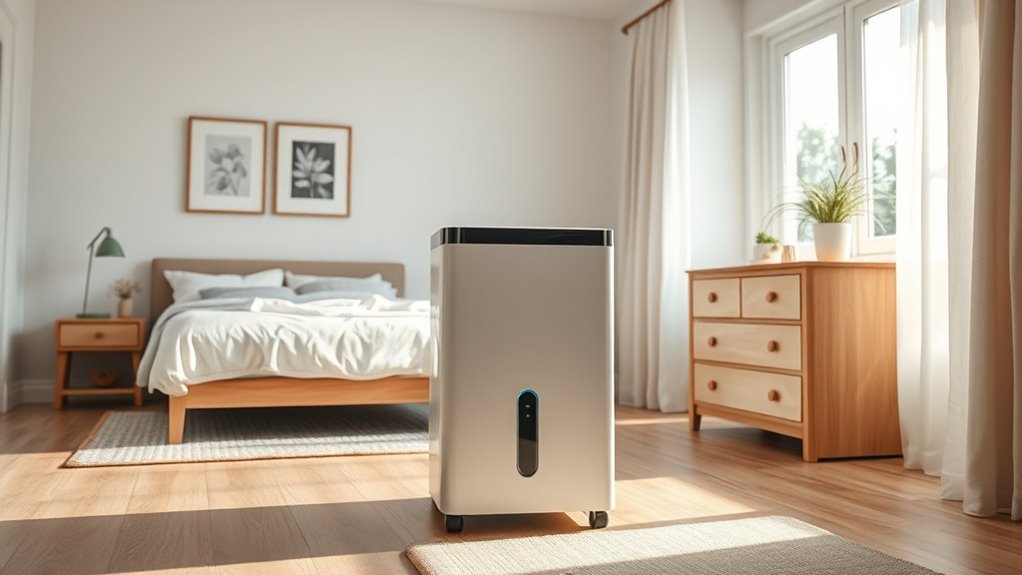
Place your dehumidifier where the humidity problem is strongest and the airflow is least restricted. In most homes, that means a basement, laundry room, utility room, finished lower level, or bedroom with musty smells or window condensation. If the whole floor feels damp, start with the most humid room and leave interior doors open so air can move between connected spaces.
The unit should sit on a flat, stable, dry surface. Keep it away from walls, curtains, storage bins, and furniture unless your owner’s manual says the model can be placed against a wall. Many portable units need open air around the intake and exhaust vents, and ENERGY STAR notes that units without top-mounted discharge should be kept away from walls and furniture so air can circulate freely.
Warning: Never place a plugged-in dehumidifier on a wet floor, next to a bathtub or shower, where it can be splashed, or where the cord can sit in water. Follow the manufacturer’s electrical and clearance instructions, and avoid extension cords unless the manual specifically allows them.
Pick the Right Room for Dehumidifier Use
Start with the room that shows the clearest signs of excess moisture. A hygrometer gives you the best answer, but you can also look for musty smells, condensation on windows or pipes, damp walls, peeling paint, clammy air, or stored items that feel soft or musty.
The EPA says moisture control is the key to mold control and recommends keeping indoor humidity below 60%, ideally between 30% and 50%. The CDC recommends keeping indoor humidity no higher than 50% all day long to help prevent mold growth. A dehumidifier can help with that goal, but it should not be used as a substitute for fixing leaks, seepage, or poor ventilation.
| Room or Area | Best Placement | Watch For |
|---|---|---|
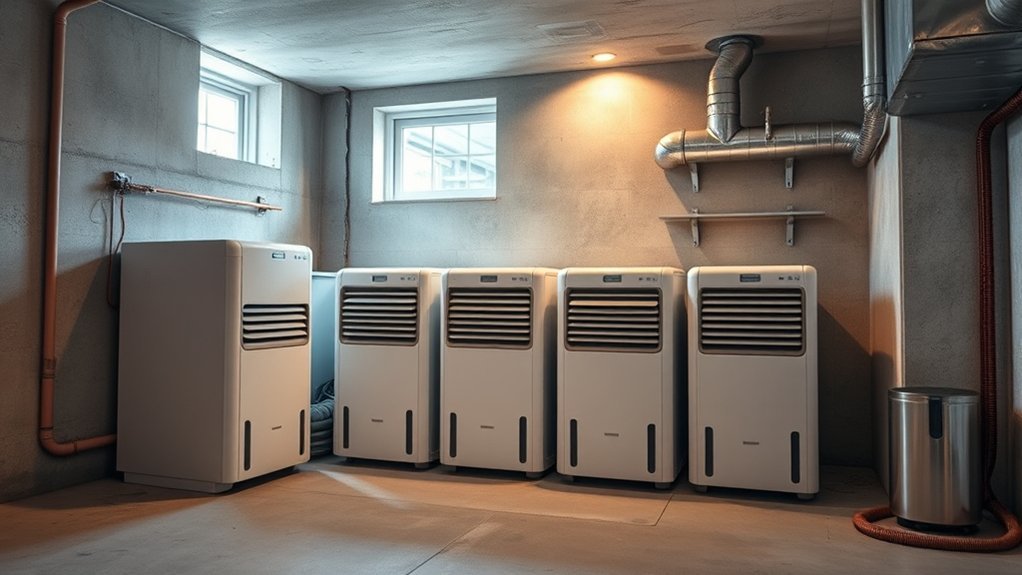
| Basement | Central open space, near the dampest zone or floor drain | Seepage, cold temperatures, blocked vents, full bucket |
| Laundry room | Open floor area near, but not touching, wet laundry or appliances | Dryer vent leaks, lint, hose kinks, water spills |
| Bedroom | Away from bedding, curtains, and walls; low-noise setting if needed | Noise, over-drying, blocked airflow, bright display lights |
| Bathroom | Usually outside the bathroom door after showering, with the fan used first | Splash risk, GFCI/outlet safety, steam spikes, poor fan ventilation |
| Kitchen | Not usually the first choice; use range hood or exhaust fan first | Grease, heat, steam, blocked filters, splashes |
Recommended Products

Wellness Indicator: This humidity meter with humidity level icon indicates air conditions - DRY/COMFORT/WET, allowing this humidity sensor to ensure you’re always aware of changes to your home/household with just a quick glance

Smart Features: The Govee Wireless Thermometer Hygrometer supports all basic functions as well as smart functions such as remote monitoring and temp humidity graphs. Our humidity meters are reliable and easy to use for homes, greenhouses and more.(Only supports 164ft Bluetooth connection)

Face Icon Comfort Indicator: Humidity temperature gauge features face icons to indicate DRY/COMFORT/WET air conditions, quickly informs you how to adjust your humidifier or dehumidifier to achieve optimal comfort.
Why Center Placement Works Better
Center placement works better because the unit can pull moist air from more directions and send drier air back into the room with fewer obstacles. This is especially helpful in basements, large bedrooms, and laundry rooms where moisture is not coming from one tiny spot.
A corner can still work if it is the only safe, open location, but it should not block the intake or exhaust. If the unit runs constantly but the far side of the room still smells damp, move it closer to the middle or use a fan to improve air movement.
Better Air Circulation
A dehumidifier needs moving air. When the vents are crowded by walls, bins, curtains, or furniture, the unit has to process the same small pocket of air again and again. That slows moisture removal and can make the unit cycle poorly.
Use this simple placement checklist:
- Set the unit on a flat, dry, stable surface.
- Keep the intake and exhaust vents clear.
- Leave the clearance recommended in your owner’s manual.
- Keep the air path open, especially in front of vents.
- Close exterior doors and windows while the unit runs.
- Check the hygrometer after a few hours and adjust placement if readings stay high.
Pro Tip: Put a small hygrometer across the room from the dehumidifier. If the reading near the unit is low but the far-side reading stays high, airflow or unit capacity is the problem.
Wider Moisture Coverage
Central placement improves coverage, but the right unit size still matters. A small unit in a very damp basement may run constantly and never reach the target humidity. ENERGY STAR explains that dehumidifier capacity is measured in pints per 24 hours and depends on both room size and how damp the space is.
If a room feels damp, smells musty, or has damp spots on floors or walls, choose capacity based on those conditions rather than square footage alone. A slightly oversized dehumidifier with auto mode is usually better than an undersized one that never catches up.
How Close Should a Dehumidifier Be to Walls?
Keep the dehumidifier far enough from walls and furniture for air to move freely. The exact distance depends on the model, so check the owner’s manual first. If your manual gives no clear number, give the unit generous breathing room on the intake and exhaust sides and avoid pressing it into a corner.
Some units have top-mounted discharge and may be approved for wall-adjacent placement. Others need space behind, beside, or in front of the cabinet. If you are unsure, leave more clearance, not less.
Good wall spacing helps you:
- Prevent blocked intake and exhaust airflow.
- Reduce overheating or frost-related cycling.
- Keep curtains, bedding, and storage boxes away from vents.
- Reach the bucket, filter, controls, and drain connection easily.
Where You Should Never Put a Dehumidifier
Do not place a dehumidifier anywhere it cannot breathe, drain safely, or stay dry. The worst locations are closed closets, tight corners, behind furniture, on wet floors, beside splash zones, next to heat sources, or in dusty work areas where coils and grills can clog.
Kitchens and Bathrooms
Kitchens and bathrooms create short bursts of steam. A dehumidifier can reduce leftover moisture, but it is not the first tool to use while cooking or showering. The EPA recommends running bathroom fans or opening windows when showering and using exhaust fans or windows when cooking or running the dishwasher. The CDC also recommends exhaust fans in kitchens and bathrooms that vent outdoors.
Use this rule: ventilate first, dehumidify second. After a shower, running a dehumidifier outside the bathroom door can help dry nearby air, but do not put the appliance where it can be splashed. In kitchens, keep the unit away from grease, heat, sinks, dishwashers, and cooking steam.
Closed or Tight Spaces
Closed or tight spaces are poor locations because the unit cannot move enough air through the room. A closet, cabinet, cramped alcove, or blocked corner can cause weak drying and extra strain on the machine.
| Placement | Result | Better Choice |
|---|---|---|
| Closed closet | Low airflow and weak drying | Open room with the closet door open |
| Tight corner | Blocked vents and uneven humidity | A more central open spot |
| Near shower, tub, or sink splash zone | Electrical hazard | Dry hallway or safe open area nearby |
| Dusty workshop area | Clogged coils, grills, and filter | Cleaner nearby space with clear airflow |
Best Rooms for a Dehumidifier
The best room is the one with the highest humidity reading or the clearest signs of dampness. Basements are often the top priority because they sit below grade and can collect moisture from seepage, condensation, and poor airflow. Laundry rooms are also good candidates because wet clothes and dryer vent problems can load the air with moisture.
Bedrooms can benefit from a dehumidifier if they have condensation, musty smells, damp exterior walls, or allergy triggers linked to humidity. Choose a quieter setting, keep the unit away from bedding, and avoid over-drying the air.
For whole-floor moisture, start in the dampest open area and leave interior doors open. For one-room moisture, close that room’s door while running the unit so the dehumidifier is not trying to dry the entire house.
Recommended Products

Semiconductor dehumidifiers use thermoelectric cooling to remove moisture from the air. They create a drier, more comfortable environment by reducing humidity and improving air quality.

2500 Sq. Ft High-Efficiency Dehumidifier – The KNKA basement dehumidifier features a quiet, high-performance compressor that removes up to 34 pints of moisture per day (at 95°F, 90% RH). Ideal for basements, offices, bathrooms, bedrooms, kitchens, stockrooms, living rooms, laundry rooms, garages, crawlspaces, or RVs. It helps maintain optimal humidity between 50%–70% for healthier, more comfortable living

【45-80 Pints for 4500 Sq.Ft Moisture Control】:This dehumidifier for basement and home features flexible 45–80 pints dehumidification output with an ultra-wide 4500 square feet coverage range, offering premium whole-space moisture control. No matter damp basement, humid bathroom, quiet bedroom for restful sleep, large living room, or compact RV traveling space, this multi-functional dehumidifier for home effortlessly sucks up excess moisture,, maintaining ideal humidity levels for all indoor environments.
Set the Right Humidity for Your Home
For most damp-control situations, set the humidistat around 45% to 50% relative humidity and adjust based on comfort, condensation, and your hygrometer readings. If mold prevention is the priority, keep indoor humidity no higher than 50% when possible. Avoid setting the target extremely low unless your manual or a qualified professional recommends it, because over-dry air can feel uncomfortable.
The EPA recommends keeping indoor humidity below 60% and ideally between 30% and 50% to help control moisture and mold risk.
Use a hygrometer in the room, not just the reading on the dehumidifier. Built-in sensors can be affected by air right around the unit. If the room reads 55% to 60% after hours of running, check for open windows, leaks, blocked vents, an undersized unit, or a full tank.
Note: A dehumidifier controls moisture in the air. It does not fix roof leaks, plumbing leaks, foundation seepage, or existing mold. If you see or smell mold, clean it safely and fix the moisture source.
How to Drain a Dehumidifier Properly
You can drain a dehumidifier by emptying the bucket or by using continuous drainage. Bucket drainage is simple, but the unit will shut off when the bucket is full. Continuous drainage is better for basements, laundry rooms, and spaces where the unit runs for long periods.
For gravity drainage, place the dehumidifier higher than the drain point and keep the hose sloping downward the whole way. Avoid kinks, raised loops, crushed hose sections, and hose ends sitting in standing water. If the water must drain upward into a sink, window, or higher pipe, use a model with a built-in pump or an approved condensate pump.
- Turn off and unplug the unit before attaching the hose.
- Use the hose size and fitting recommended in the owner’s manual.
- Attach the hose firmly to prevent leaks.
- Run the hose downhill to a floor drain, sump, or approved drain point.
- Test the setup and check for leaks during the first cycle.
- Clean the hose if flow slows or water backs up.
Clean the Filter and Boost Efficiency
A clean filter helps the dehumidifier move air and hold the target humidity without extra strain. Check the filter at least monthly during heavy use, or more often in dusty rooms, laundry areas, or basements. Wash or replace it according to the owner’s manual.
Also check the bucket, float switch, drain hose, grills, and coils. Keep the unit away from sawdust, lint, pet hair, and storage clutter. If the dehumidifier suddenly gets louder, runs constantly, or collects less water than usual, maintenance or placement may be the cause.
| Problem | Likely Cause | Fix |
|---|---|---|
| Humidity stays high | Open windows, undersized unit, leak, blocked airflow | Close exterior openings, move the unit, check capacity, fix moisture source |
| Unit runs but collects little water | Room already dry, cold air, dirty filter, wrong setting | Check hygrometer, clean filter, raise room temperature, adjust humidistat |
| Water leaks near hose | Loose fitting, kinked hose, hose running uphill | Reconnect hose, remove kinks, slope downhill, use pump if needed |
| Frost or frequent shutoff | Cold room or restricted airflow | Follow low-temperature guidance, defrost if needed, improve airflow |
Consider Temperature and Unit Size
Placement is only part of performance. Temperature and capacity matter too. ENERGY STAR says frost can form on condensing coils if air temperature drops below 65°F, which can hurt performance and cause the compressor to cycle without removing moisture well. If your basement, garage, or utility space gets cold, choose a model rated for lower-temperature use or one with an anti-frost feature.
Capacity is measured in pints per day. Slightly damp rooms need less capacity than wet rooms with seepage, sweating walls, or laundry drying. If your dehumidifier never reaches the target humidity after good placement and maintenance, the unit may be too small for the space or the moisture source may need repair.
Recommended Products
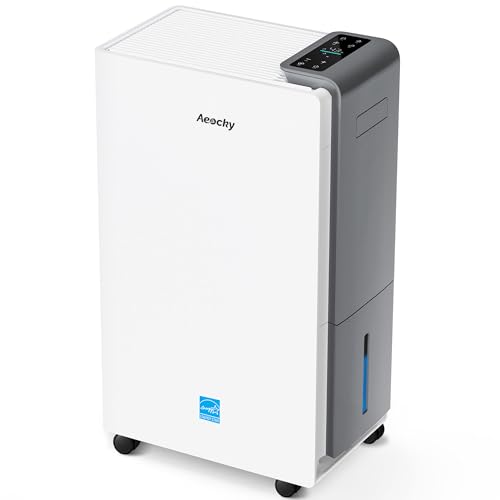
【ENERGY STAR 25 ≠ ENERGY STAR Most Efficient 2025】Don't fall for competitors' word games. With only 2.6% of ENERGY STAR models earning "Most Efficient 2025" title, these options are exceptionally rare on the market. RHEA-001 is one of the few to truly hold this top-tier certification. Many brands use misleading phrases like "Energy Star Efficient 25" or "Energy Star 25" to imply a standard they haven't met. Choosing them is a risk.With AEOCKY, you get verified performance and the peace of mind of authentic, top-tier efficiency.

Tackle Whole-Home Humidity on Your Terms: Three modes — Auto, Continuous, and Manual — give you precise control over moisture removal to match the exact needs of your space
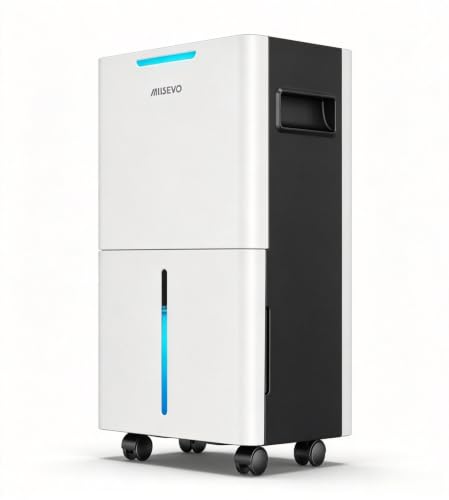
High Efficient Dehumidifier — Equipped with a high-performance compressor, Whether it’s your basement, bedroom, bathroom, living room, bathroom, crawlspace, or even an RV, this dehumidifier effectively keeps your environment dry, comfortable, and healthy.
Frequently Asked Questions
Where should you not place a dehumidifier?
Do not place a dehumidifier in a closed closet, tight corner, behind furniture, on a wet floor, next to a shower or tub, beside a heat source, or in a dusty workshop area. The unit needs dry, stable footing and clear airflow around its vents.
Should you use a dehumidifier if you have COPD?
A dehumidifier may help if your home is damp because controlling humidity can reduce conditions that support mold. However, it is not a COPD treatment. If you have COPD, asthma, allergies, or another lung condition, ask your clinician what humidity range is best for you, especially if dry air worsens symptoms.
Where is the best spot to put a dehumidifier?
The best spot is an open, central area in the dampest room, with clear space around the vents and safe access to power. Basements, laundry rooms, and musty bedrooms are common choices. Use a hygrometer to confirm the room is staying near 40% to 50% relative humidity.
Should dehumidifiers be placed high or low?
Most portable dehumidifiers work best on a low, flat, dry floor surface because they are designed to sit there safely and collect water in a bucket or drain connection. Raise the unit only if the manual allows it and you need gravity drainage to a lower drain point.
Should doors and windows be open when using a dehumidifier?
Close exterior doors and windows while the dehumidifier runs. Otherwise, the unit keeps pulling in humid outdoor air and works harder. Interior doors can stay open if you want to dry a connected area, but close the room door if you are targeting one damp room.
Can a dehumidifier get rid of mold?
No. A dehumidifier can help prevent future mold by lowering moisture, but it does not remove existing mold. If you see or smell mold, clean it safely, dry the area, and fix the moisture source so the problem does not return.
Conclusion
The best place for a dehumidifier is the dampest room, in an open spot with clear airflow, safe power, and easy drainage. Avoid wet floors, splash zones, closed closets, and blocked corners. Then use a hygrometer to confirm the result. If the room stays above 50% relative humidity, check the placement, filter, drain setup, room temperature, unit size, and any hidden moisture source.
Small placement changes can make a big difference. Give the unit room to breathe, set a sensible humidity target, keep the filter clean, and fix leaks or ventilation problems instead of asking the dehumidifier to solve them alone.
Sources
- U.S. Environmental Protection Agency: A Brief Guide to Mold, Moisture and Your Home — backs up moisture control, indoor humidity range, leak response, ventilation, and mold prevention guidance.
- Centers for Disease Control and Prevention: Mold — backs up mold health cautions, no-higher-than-50% humidity guidance, ventilation, and chronic lung disease caution.
- ENERGY STAR: Dehumidifiers — backs up capacity, energy efficiency, placement, drainage options, and low-temperature performance notes.
- WHO Guidelines for Indoor Air Quality: Dampness and Mould, via NCBI Bookshelf — backs up respiratory-health evidence related to dampness and mold.